

READY TO SELL Sustainable ecommerce ONLINE?
Get a store built for you in 5 days, plus training and support to help you start, run, and grow your Alternative business.

Explore practical delivery choices for UK online shops. Compare services, collection, dispatch timing and checkout information without making unsupported environmental promises.

Delivery is part of the product experience, and small online shops often face pressure to label one option as the “green” choice. In practice, the outcome depends on the parcel, the route, the delivery network, customer behaviour and whether the order arrives successfully. No delivery method is automatically the best fit for every business.
Instead of promising a universal environmental benefit, review how your shop dispatches orders and give customers clear, realistic options. This guide covers practical delivery choices for UK sellers, from combining parcels to collection and more accurate checkout information.
Write down what happens after a customer checks out. Which carrier or service do you use? How often do you dispatch? Are products shipped individually or together? What packaging is needed? Where do customers most often receive their orders, and what happens if nobody is available?
A small soap maker may pack twice a week and send most orders through one standard service. A furniture seller may use a specialist carrier for bulky goods. Their delivery decisions are different because parcel size, handling needs, storage and customer availability differ.
Look at actual order records and customer enquiries. If customers frequently ask for a safe place, a delivery window or a collection option, that can guide improvements more reliably than copying a competitor’s “eco delivery” label.
Ask carriers what their delivery services include and which information they can provide. Depending on the service, this might include tracking, delivery preferences, collection points, parcel dimensions, missed-delivery handling and service coverage. Compare like with like, including delivery speed and reliability.
A slower option is not automatically better if it leads to repeated failed delivery attempts or a replacement shipment. A fast service is not automatically worse if it consolidates parcels efficiently or prevents time-sensitive goods from spoiling. Avoid broad environmental claims unless you have suitable evidence for the specific service and order context.
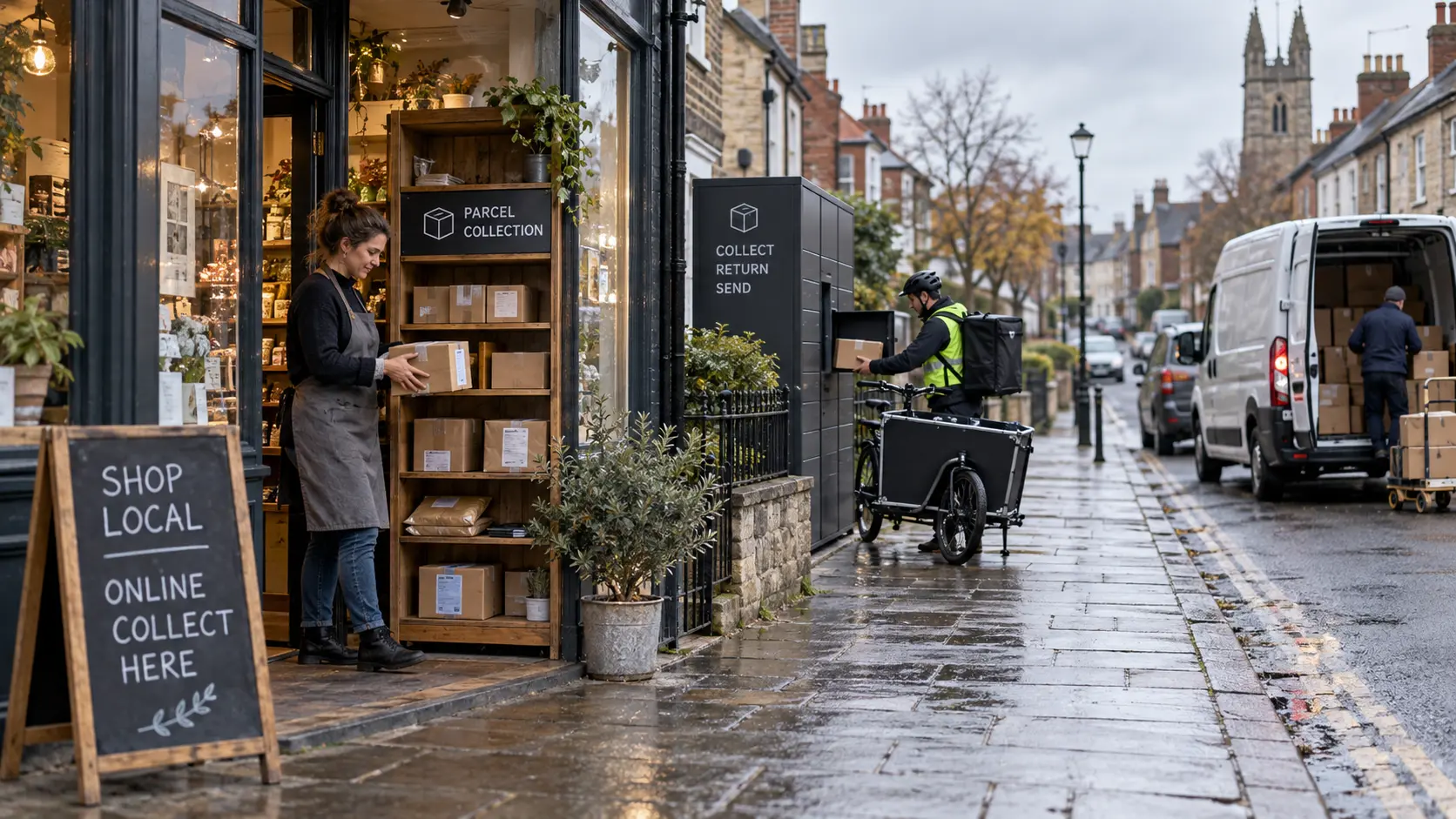
Where your business can support it, local collection may suit nearby customers. State the collection address or process, opening times, lead time and how the customer will know the order is ready. Do not offer collection if it creates confusion or requires someone to travel an unreasonable distance for a small parcel.
Some carrier networks offer collection points or lockers. These can give customers more control over when they collect, but availability varies by area and the customer still needs to reach the location. Tell buyers how to choose a location and what identification or collection code may be required, based on the carrier’s current instructions.
For orders containing multiple items, one combined parcel may be easier than several separate shipments when the products are available at the same time and can be packed safely together. But delaying a ready item for a backordered product may frustrate a customer. Explain split shipments or dispatch timing at checkout so people can make an informed choice.
Checkout is not the place for vague promises. Show the delivery cost, estimated timeframe, destinations covered and any limitations before the order is placed. If customers can choose between home delivery, a collection point or local collection, explain each in neutral language.
For instance, a shop could label options “Standard home delivery: estimated 2–3 working days” and “Collect from our studio: ready after confirmation.” This tells the customer what to expect without implying that one option is environmentally superior.
Consider the products you sell. Perishable goods, made-to-order items, large parcels and products needing careful handling may require specific delivery arrangements. Tell customers when dispatch begins, whether a signature is needed and how to get help if a parcel is delayed.
Small shops can sometimes batch packing tasks into planned dispatch windows. This may make order preparation easier to manage, but do not hold orders beyond the delivery promise shown to customers. Share a clear dispatch schedule and set expectations before checkout.
Suppose a maker posts orders on Tuesday and Friday. A customer ordering late on Friday should know whether the parcel is expected to leave that day or on Tuesday. A short delivery note can prevent confusion and reduce avoidable support messages.
Review stock location and packing readiness too. If some items ship from a fulfilment partner and others from your studio, separate shipments may be normal. Make sure product pages and order emails explain this where it affects the customer.
Delivery decisions and packaging decisions connect. The parcel needs to suit the carrier’s size and weight limits, and protect the item during normal handling. A package that fails may mean a replacement, extra journey and poor customer experience.
Before switching to a smaller mailer or a different service, test representative orders. Check for movement, leaks, crushed corners, broken components and ease of opening. Keep a record of damage and returns by product and service so you can spot a pattern.
Our guide to reducing packaging waste in online orders explains how to right-size parcels without removing protection that a product needs.
Words such as “green delivery,” “zero-impact shipping” or “carbon-neutral parcel” can lead customers to assume more than a service actually provides. If a carrier makes a specific environmental claim, read what it covers, whether it applies to the route you use and what evidence is available.
When you cannot substantiate a comparative claim, describe the service plainly instead. You can explain delivery speed, collection options, packaging instructions or how customers can combine items without saying that the choice eliminates environmental impact.
Not automatically. It depends on the service, route, parcel and whether the delivery succeeds. Compare the specific options you can offer, and avoid broad claims unless they are supported by relevant evidence.
That is a pricing and customer-experience decision, not an environmental claim. Work out the delivery cost, product margin and any threshold carefully. Show the terms clearly and do not hide the cost in a way that misleads customers.
It may work when you can offer a safe, accessible collection point and customers are nearby. Explain the location, available times, lead time and confirmation process. Let customers decide whether it suits them.
Good delivery choices begin with the needs of your products and customers. Review the services you use, test the parcel, explain the options clearly and keep an eye on what happens after dispatch. Small, evidence-led changes are easier to maintain than a sweeping promise you cannot substantiate.
For more ideas, browse the MLFG Sustainability page, compare packaging options for small UK shops and explore our sustainable-products resource.
Make Local for Global helps small businesses plan and set up ecommerce websites with clear product information and practical customer journeys.
PREFERRED SOURCE
Like what you’re reading? Add Make Local for Global as a preferred source on Google to see more of our articles when you search.
Build your online presence without having to figure out everything yourself.