

READY TO SELL Dog Food ONLINE?
Get a store built for you in 5 days, plus training and support to help you start, run, and grow your Alternative business.

Learn how to sell dog food online: choose a focused range, check labels and supplier records, calculate delivery costs and plan storage, returns and customer support.

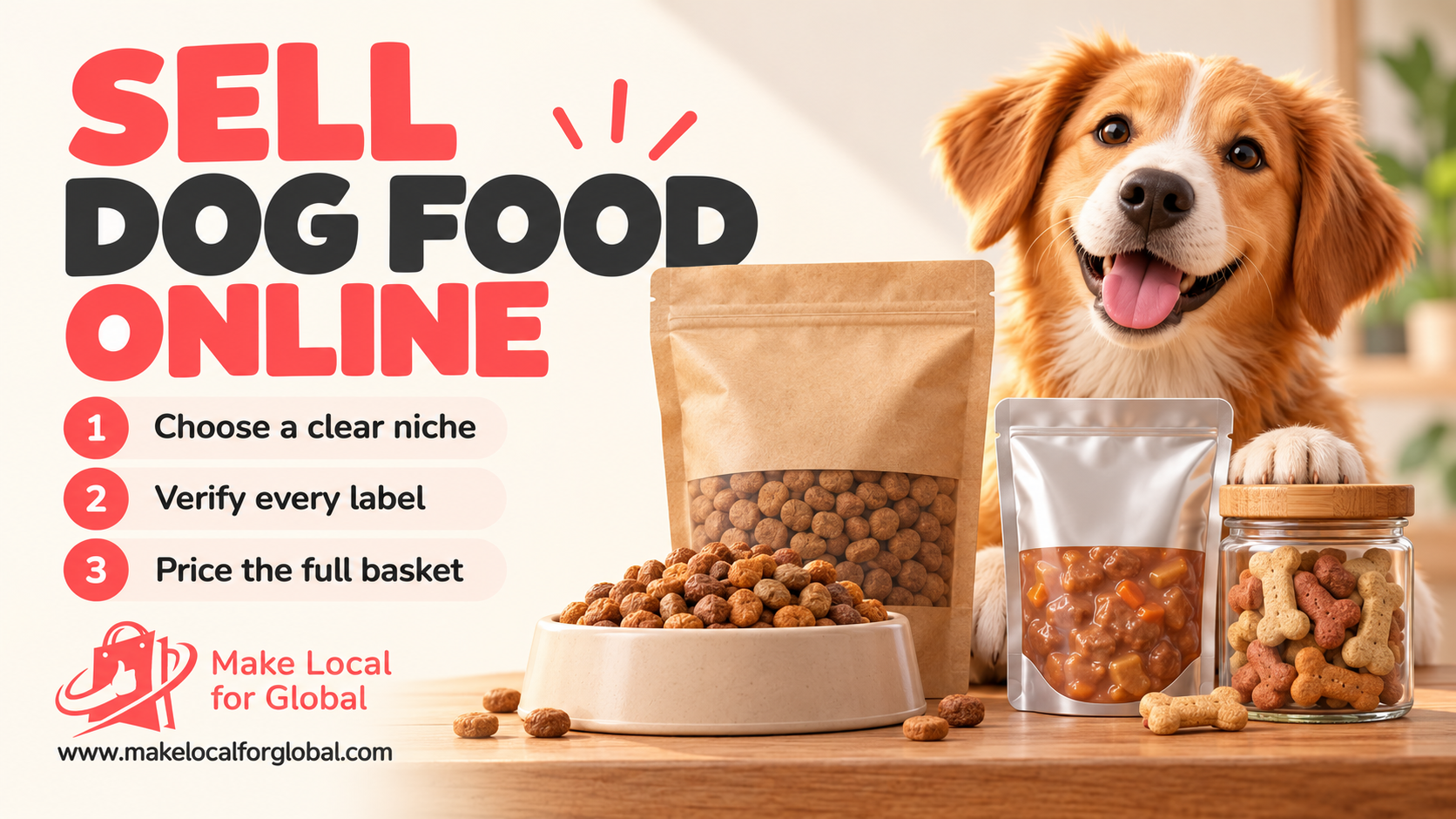
A dog food shop can look simple from the outside: choose a few bags, put them online and send them to customers. The hard work sits in the details. A seller needs to know which dogs and owners a range serves, what each pack claims, how the stock was made and labelled, and what it costs to deliver a heavy or temperature-sensitive order.
To sell dog food online, start with products from a traceable supplier, choose one clear buyer group, inspect the full label and model the delivered order cost before buying stock. Keep the first range small enough to explain and support. If you plan to make or repack food yourself, contact the relevant authorities before you produce anything: manufacturing can need feed-business registration or approval, and products containing animal by-products can need APHA or DAERA approval too.
Dog food is a regulated animal feed product. This is a business planning article, not veterinary or nutritional advice. Do not use a sales page to diagnose a dog, prescribe a diet or promise treatment. Refer individual health questions to a veterinary professional and verify the current rules for the product and territory in which you sell.
Use the Single Product Product Page Assessment to review feed type, label details, pack size, price and delivery information on one product page.
“Dog food for every dog” is a difficult starting point. It asks a new business to hold too many formats, sizes and life-stage options, and it leaves a buyer unsure which product page to open. Pick an audience whose questions you can answer from supplier documents and product information.
Possible first audiences include:
These are different buying jobs. A customer comparing a large dry-food sack may care about cost per kilogram, pack freshness and delivery. A buyer of training treats may care more about size, texture, ingredients and how the pack closes. A chilled-food customer needs reliable storage and a delivery service that suits the product. A specialist diet customer may expect a precise formula and a knowledgeable support route.
Talk with likely buyers before you buy stock. Ask what they purchase now, how often they reorder, what size arrives conveniently, what information they compare and what has made them switch. Ask what a delivery failure would mean for them. Record exact phrases, but collect a dog’s health details only when there is a clear business need and a suitable privacy process.
Use a simple evidence sheet. Record the customer type, current product format, pack size, buying frequency, typical delivery expectation, common question and the source of your evidence. A few interviews do not prove a market, but repeated questions can show which product page or bundle to test first. Keep demand evidence separate from compliments: “I like this idea” is weaker than a customer asking for a price, joining a wait list or placing a paid order.
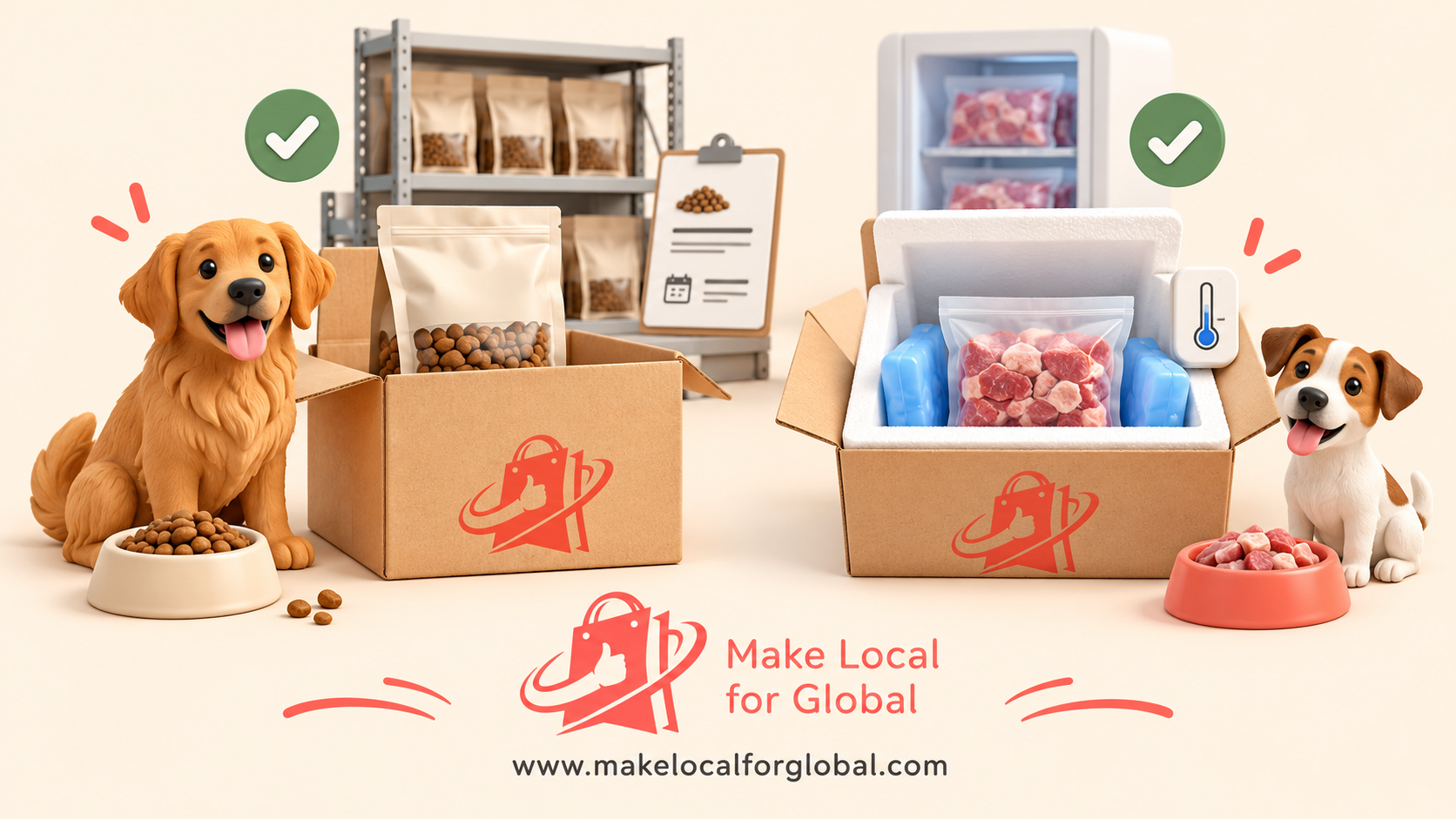
Dog food is not one product type. The format changes stock control, storage, parcel design, delivery cost, product page content and the questions a seller must answer. Choose a narrow category before comparing suppliers.
Kibble and other dry foods often have a longer unopened shelf life than chilled products and can be simpler to store. They are dense and heavy, though. A single low-priced bag can cost more to deliver than its gross margin supports. Bags need protection from punctures, moisture and crushed corners, and the outer shipping pack must handle the product weight.
Compare pack sizes with the household’s use and storage space in mind. A large sack may have a better price per kilogram yet be awkward to carry or store after opening. Smaller packs can suit trial purchases and flats, but their packaging and delivery cost per kilogram may be higher. State the net quantity and explain which pack sizes are available; do not imply that one size is right for every dog.
Cans, trays and pouches can suit owners who prefer a wet format or buy single portions. The outer carton can be heavy and cans can dent or puncture nearby packs if they move in transit. Use dividers or protective packing where needed, and make the number of units in a multipack obvious in the title, image and basket.
Check the supplier’s handling and storage information. Make sure product pages state the quantity per tray or pouch and whether the pack is complete or complementary feed. Do not treat “wet” as a feeding plan; the label and manufacturer’s guidance define how that product is meant to be used.
Chilled and frozen raw or cooked products have a different operational burden. The seller must understand the specified temperature range, storage limits, dispatch method, delivery window, packaging validation and process for a delayed parcel. Insulated packaging and cold packs add weight, volume and cost. A normal parcel service may not be suitable.
Raw products require careful handling information for customers and staff. GOV.UK guidance explains controls on raw pet-food materials, approved suppliers and transport, testing, leak-proof packaging and safe handling. Do not start a raw product line from a home freezer based on a supplier’s verbal reassurance. Confirm which activity is regulated, what approvals apply, who is responsible for the cold chain and how a failed delivery is handled before listing it.
Treats can provide a narrower starting range with different pack sizes and price points. They still count as pet food and must be labelled and marketed accurately. A chew’s size, texture and intended use may matter to a buyer, but avoid telling people that a product prevents dental disease or treats a condition without legal support for that exact product.
Toppers and other complementary foods should be clearly described as additions rather than a complete daily diet. A buyer should not need to infer this from a small line on the back of a pack. Keep complete food, complementary food, treats and supplements distinct in navigation, product cards and filters.
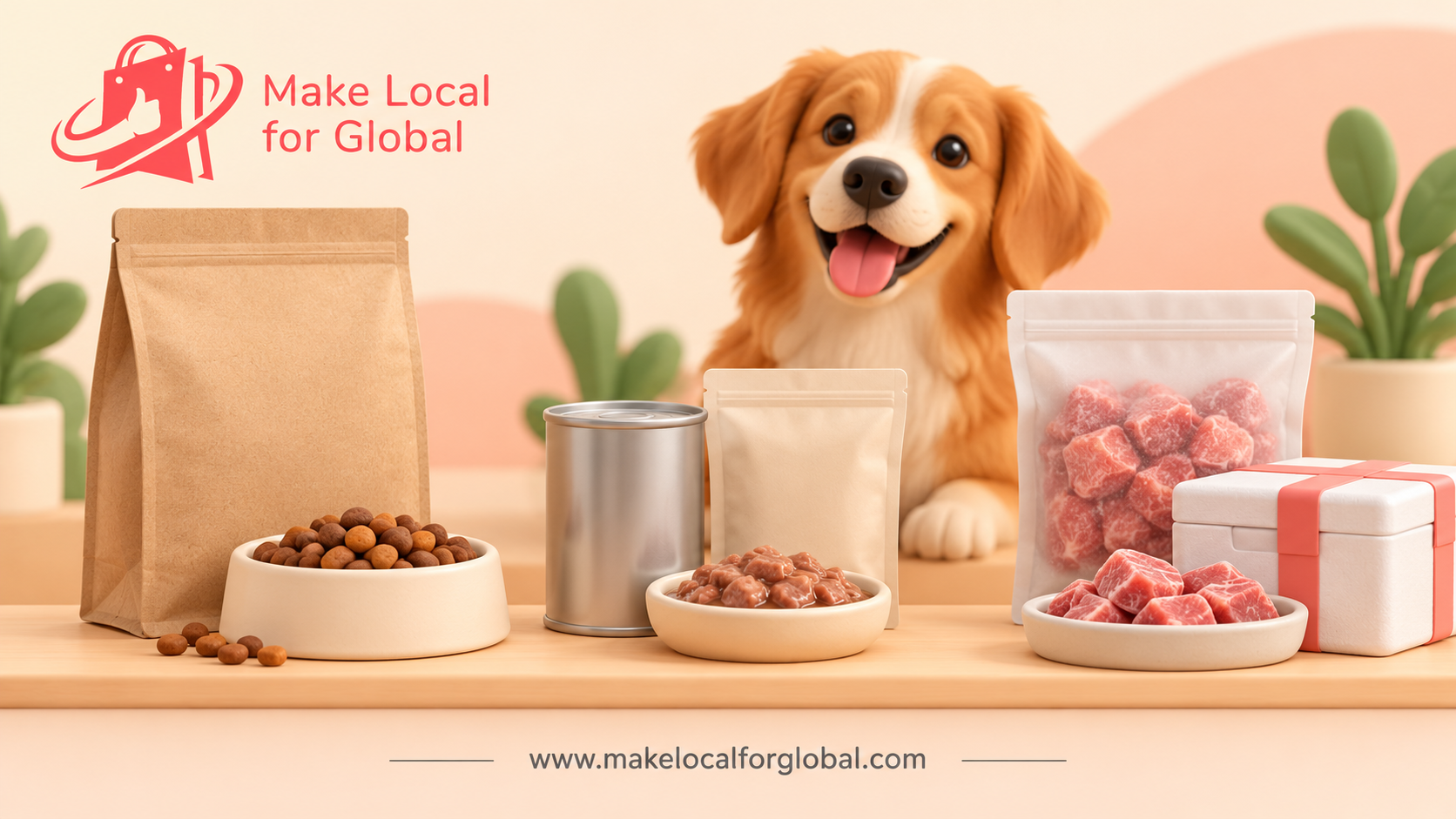
Give each product a clear role. A small launch may have one complete dry food in two pack sizes, a matching wet multipack and one complementary treat. Another shop may start with a tightly defined set of puppy products from a supplier that can provide current product data. The right shape depends on the audience and supply evidence.
| Range role | Example offer | What a buyer needs to compare |
|---|---|---|
| Entry | Smaller pack from the same supplier | Net weight, feed type, ingredients and delivered price |
| Core | Main pack size for a chosen audience | Life-stage statement, feeding guide and repeat availability |
| Multipack | Several wet trays or pouches in one order | Unit count, total weight, storage and delivery protection |
| Add-on | Treat or complementary topper | Intended use, feeding direction and whether it is complete |
| Trial | Small sample or starter bundle, if supplied lawfully | What is included, quantity per item and the full delivered price |
Do not invent a “good, better, best” ladder from price alone. A premium label is not evidence of suitability for a particular dog. Explain observable differences such as format, pack size, ingredient declaration, product range or supplier service. Keep health, digestibility and nutrition comparisons tied to objective evidence for the exact product.
Limit the number of variants until orders show what customers need. A single food might have several recipes, pack sizes, life-stage statements and delivery options. Each one creates another stock record and another chance to pick the wrong item. Use the manufacturer’s item code, barcode, pack weight and recipe name in your own stock sheet.
Avoid bundles that create a feeding plan by guesswork. A bundle can combine related products for convenience, but the customer should see every item and quantity. If a product is complementary, state that on the bundle page. Suggest that treats or toppers replace a complete food only when the manufacturer’s instructions say so.
Set a range review date. Use reorder points based on supplier lead time, units sold and shelf-life remaining. If a product has not sold, check whether the audience, information, price, availability or delivery promise is the issue before adding another recipe. Reduce the range if stock is approaching its best-before date or a supplier cannot confirm the next batch.
The operating model affects responsibility, cash use and the customer experience. Write down who owns the stock, who dispatches it, whose name appears on the pack, who handles a product complaint and who provides batch information.
This is often the clearest pilot route. Ask for a current catalogue, wholesale price list, product data, label images, case quantity, minimum order, stock availability, lead time, shelf-life policy, damaged stock process and returns terms. Confirm that the supplier is authorised to sell the products into your market and that the product code matches the manufacturer’s records.
Request recent examples of batch traceability and the process for a withdrawal or recall. A supplier’s general statement that it is “fully compliant” is not enough. You need to know which party maintains records, who informs customers and what happens to affected stock. Save the supplier’s legal name, address, invoices, product codes and communication about each batch.
Supplier fulfilment can reduce the stock you finance, but it does not remove the need to check product details or delivery promises. Ask where the stock is held, how inventory updates reach your shop, what carrier is used, how a split shipment appears to the customer and how a missed delivery is reported. Test an order to your own address before advertising a dispatch promise.
Confirm that the supplier can keep the product in its required conditions and that the parcel will arrive with the right label and customer paperwork. Clarify who handles a damaged bag, leaking pouch, thawed parcel, wrong recipe or short-dated item. Put a written service-level agreement around stock confirmation, dispatch cut-off, tracking and escalation.
Importing adds checks for the country of origin, import route, product documentation, labelling, duties, transport and applicable animal by-product controls. Confirm the exact product and market route with the relevant authority before placing an order. A label prepared for another country may not contain the information required for your market.
Private label can give a shop a distinct offer, but a new name on the bag does not make the seller’s work smaller. Confirm who is the feed business operator, whose name and address appear on the label, who approves the artwork, who keeps the technical file, and who coordinates a recall. Obtain written permission for every claim and image. Never copy a competitor’s product copy or assume that the factory is responsible for every duty.
Making dog food is a separate business with more demanding controls. The Food Standards Agency’s animal-feed business guidance identifies manufacture and placing compound feeds on the market as activities that can require registration. Processing animal by-products into pet food can require APHA approval in Great Britain or DAERA arrangements in Northern Ireland. Home production does not remove those duties. Commercial raw pet food cannot be made in a domestic kitchen under the published guidance.
Contact Trading Standards or the competent authority and describe the ingredients, process, premises, storage, packaging and sales route before production. Do not buy equipment, print labels or accept orders until the authority confirms the required route. This article does not determine whether a particular kitchen, product or operator qualifies for approval.
A good product file starts before the first case arrives. Ask each supplier the same questions so that you can compare answers side by side.
Keep an evidence folder per product. Include the signed supply terms, purchase invoice, label image, ingredient and analytical declaration, feeding directions, storage directions and dated correspondence. Use a version date so staff can tell when a supplier has changed the recipe or pack artwork. Retire old images quickly when they no longer match the product.
Check sample cases from the same supplier route you expect to use for customer orders. Inspect pack seals, print quality, case protection, barcode readability, batch mark and best-before date. Record the date received, number of units and condition. Compare the physical item with the website page before you take payment.
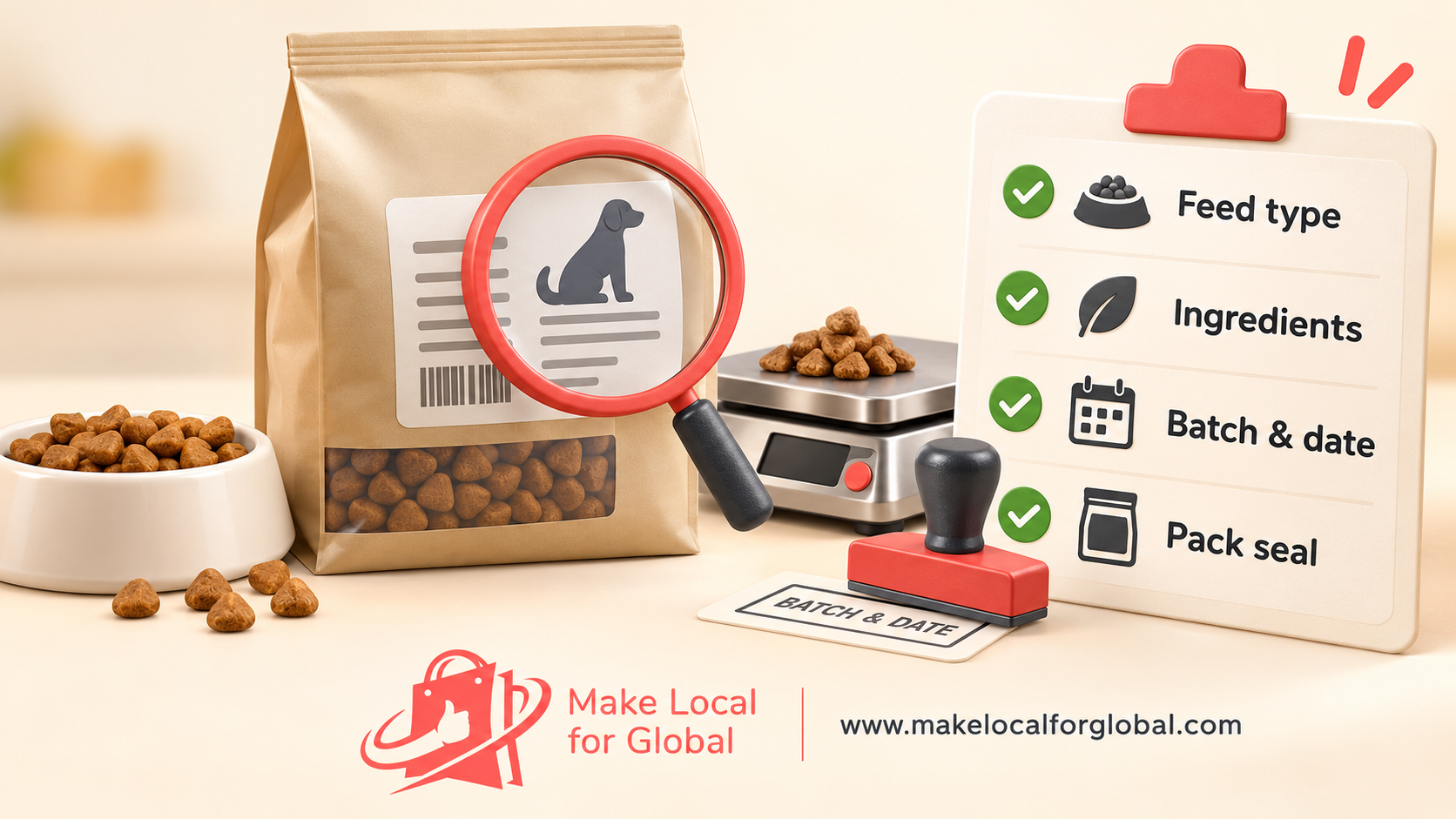
Use the current pack and supplier documents as the source for each listing. A front-of-pack photo alone rarely gives a buyer enough information to compare products. Add a clear image of the back panel where it helps, then transcribe the relevant facts accurately.
Build a label checklist that can be completed for every SKU:
Labelling rules vary by territory and product. The Food Standards Agency’s pet-food guidance describes ingredient declarations by category and safeguards for extra information: claims must be objective, measurable and supportable, must not mislead, and must not make medicinal claims. Check the actual label requirements with current FSA or DAERA guidance for your market, rather than treating this checklist as a legal label template.
Write the product page in the same sequence a customer uses to decide. State the feed type near the start. Show recipe and pack size. Explain what arrives, how many packs are in the multipack, where the full ingredients and feeding directions can be found, how to store it and which delivery option applies.
Avoid rewriting a formula as a promise. “Made with chicken” is not the same as “allergy safe”. “Grain free” does not mean suitable for every dog. “Natural”, “premium”, “sensitive” and “veterinary” can carry expectations; use them only where the exact product documentation supports the wording and the claim complies with the rules. Never claim that food treats, prevents or cures a disease without the necessary legal basis.
Do not answer individual feeding questions as if you were a veterinary professional. You can point customers to the label and manufacturer’s directions. For a dog with symptoms, a diagnosed condition, a prescribed diet or a change that raises concern, advise the owner to speak with their vet. Keep customer service focused on the product, order and label information.
Dog food sits within animal-feed controls. The rules depend on what your business does: retailing sealed products, importing, storing, transporting, manufacturing or placing feed on the market can be treated differently. The Food Standards Agency’s “Starting an animal feed business” guidance lists feed activities and says to contact the local authority for registration or approval advice. It lists retailing pet food among activities that do not require registration or approval under the feed hygiene regulation, though other activities and separate rules may apply.
Do not apply a retailer exemption to a manufacturer or importer without checking. A shop that only resells sealed retail packs may have a different position from a business that makes, repacks, stores feed for distribution or sells feed materials. A marketplace seller’s role can be fact-specific. Describe the real process to Trading Standards, Environmental Health or the relevant authority and keep the response.
Products made from animal by-products raise additional controls. GOV.UK guidance on using animal by-products to make pet food says APHA approval is needed to process animal by-products into pet food in England, Scotland and Wales; a local-authority feed-business approval or registration may be needed too. Northern Ireland uses DAERA routes. The rules set limits on materials that can be used and include packaging, testing and handling controls for certain products. Raw, frozen and processed products should not be treated as one regulatory category.
The Food Standards Agency and GOV.UK guidance pages are updated over time. Recheck the territory, product type and activity before launch. Ask an authority or suitably qualified adviser where your process is unclear. Keep the date and link of the guidance you relied on in the product compliance file.
Use claims only when you have evidence for the exact product and current pack. Ask a supplier for the source document, permitted wording, test basis and scope. Keep claims consistent across the product title, images, paid ads, filters, social copy and printed inserts.
Claims about food being “complete”, “hypoallergenic”, “single protein”, “grain free”, “for puppies”, “for sensitive digestion” or “veterinary” should be checked carefully. The same phrase may mean a defined formulation feature, a marketing term or a claim with specific conditions. Do not infer a regulatory meaning from a competitor’s use of the phrase.
Do not assume dog food is zero-rated as ordinary food. HMRC’s VAT Notice 701/15 says pet food is standard-rated when it is biscuit or meal for cats or dogs, specially prepared for a pet species, canned or packaged as pet food, or held out for sale as pet food. The notice identifies a limited treatment for certain foods for working dogs, with conditions and exclusions. Ask an accountant or HMRC to confirm how your exact product is treated, especially for a working-dog claim or mixed-use product.
For a VAT-registered seller, calculate the customer price and contribution using the correct VAT treatment. A VAT-inclusive shelf price is not the same as the net sales amount. A business below the VAT registration threshold may have different accounting mechanics; do not copy a registered seller’s margin calculation without adjusting it.
Dog food is consumed, so buyers need confidence that a pack is the one they ordered and reaches them in saleable condition. Make a receipt and dispatch checklist before volume grows.
At goods-in, match the delivery note to the purchase order. Record product code, recipe, count, batch or lot marking, best-before date and visible damage. Quarantine a leaking, open, wet, badly dented or otherwise suspect pack. Ask the supplier what to do; do not quietly put questionable stock back on the shelf.
Use first-expiry-first-out rotation where date marking applies. Keep products within the manufacturer’s storage conditions and separate them from cleaning products, strong odours, pests, damp and direct sunlight. For frozen stock, record receipt and storage checks in the way your approved process requires. Do not rely on a single thermometer reading to prove a complete cold chain.
At pick time, scan or check the product code and variant against the order. Confirm the pack count and outer condition. Use a second check for mixed cases, subscriptions and bundles. Add a batch record to the order system where your traceability process requires it, so you can identify affected customers if a supplier or authority reports a safety issue.
Run a simple recall exercise before launch. Pick a sample batch from the shelf, find its supplier invoice, determine which orders contain the lot and draft the customer-contact steps. Set a named person who can stop listings, pause a campaign and contact the supplier. A written process is more useful than a folder of documents no one can retrieve.
Delivery is a product decision. A shop that sells a 12kg sack has different parcel economics from one that sells a small bag of training treats. A chilled meal has different carrier and storage needs from sealed shelf-stable kibble.
For dry food, check the bag’s seal and outer carton strength. Protect corners, avoid sharp void-fill that can puncture the pack, and test the parcel with a realistic courier drop and stacking simulation. The trial should mimic the route: parcel dimensions, weight, box fill, tape and label location. Photograph the result and note any abrasion or split seam.
For cans and trays, prevent movement and metal-on-metal contact. Use dividers or inner trays when a case contains several units. Test a mixed order with a heavy bag and wet food so the kibble does not crush the cans. Show multi-pack count in the shipment check and in your customer email.
For chilled or frozen goods, confirm the carrier’s service, delivery days, permitted packaging and temperature validation with the supplier. State any cut-off time and delivery area before checkout. Decide what happens when a parcel is delayed, refused, left outside or delivered after a customer is away. A carrier’s “next day” service does not itself prove temperature control.
Use packaging that is safe, practical and not oversized. A very large box can increase billable volume, arrive damaged or make home storage harder. Weigh and measure the finished parcel, not the bare product. Price the packaging system at actual order level, including tape, liner, gel pack, protective insert, labels and labour.
Price from the order that the customer buys, not from the supplier’s unit price alone. Include product cost, inbound freight, storage or handling, packaging, pick labour, payment fees, marketplace or platform fees, delivery, expected damage or refund cost and customer acquisition.
Example: one 2.5kg bag of shelf-stable dog food sold for £24.95 including VAT. It assumes the seller is VAT registered, the item is standard-rated, and the cost inputs below are net of recoverable VAT. These are example inputs, not supplier or carrier quotes.
| Order line | Example amount | How to replace it |
|---|---|---|
| Customer payment, including 20% VAT | £24.95 | Use the actual checkout price and VAT treatment |
| Net sales value after output VAT | £20.79 | £24.95 divided by 1.20 |
| Product cost | £8.40 | Supplier invoice for the exact pack |
| Inbound freight share | £0.45 | Allocate the delivery cost across received units |
| Outer packaging and tape | £0.55 | Cost the complete tested parcel |
| Pick and pack labour | £0.65 | Record the minutes and loaded hourly cost |
| Payment fee assumption | £0.62 | Replace with the fee on this transaction |
| Customer delivery | £3.25 | Use the carrier quote for this weight and zone |
| Refund or damage allowance | £0.50 | Use your own returns and damage history |
| Customer acquisition allocation | £1.25 | Divide campaign cost by attributable orders |
| Estimated contribution before fixed overhead | £5.12 | Net sales less listed variable costs |
Illustrative only. Replace these figures with supplier, platform and carrier quotes for your own order.
The arithmetic is £20.79 net sales less £15.67 in listed variable costs, leaving £5.12 before rent, software, insurance, wages not already counted, tax and other fixed overhead. It is a planning illustration, not a forecast. If the customer pays shipping separately, include that income and the tax treatment. If you sell several bags in one parcel, redo the calculation for the basket; do not apply the single-item delivery cost to every order.
Run three cases: one bag, a two-bag basket and a mixed food-and-treat order. The larger basket may improve the delivery cost per kilogram, but it can need a stronger box and more labour. A free-shipping threshold should follow actual contribution data. Do not choose it by copying a competitor.
Keep contribution separate from profit. Contribution helps cover fixed costs; it does not mean the business has earned that amount after overheads or tax. Track the value of discounts, refunds, failed deliveries and price changes so you can see whether a promotion produces orders that still contribute.
The page should make it easy to identify the product without turning into a veterinary consultation. Start with the precise product and format, then show facts that help a buyer compare.
For a 2.5kg adult dry food, a clear title might read “Adult dry dog food, chicken recipe, 2.5kg bag”. The description can state that the listing is for one sealed bag, reproduce the manufacturer’s complete-feed statement if present, give storage advice from the pack and show the link to the full product information. A title that says only “Premium chicken dog food” leaves out format and pack size.
Include:
Show the entire price, including delivery terms, before the customer reaches the final payment step. If shipping varies by weight, say how it is calculated. If cold-chain restrictions apply, display them before the basket. Explain what happens when a product is temporarily unavailable, so a customer is not silently sent a different recipe.
Use product photography that matches the item shipped. Avoid images with an old recipe, an obsolete weight, a different pack count or a claim absent from the current label. A lifestyle photo can provide context, but the product and label images should remain clear. Do not use another brand’s packaging or a generated label that could be mistaken for real compliance information.
Food and feed returns need more care than a reusable accessory. A sealed, correctly stored item may be handled differently from an opened pack, but consumer rights still apply to goods that are faulty, damaged or not as described. Check current consumer law for the precise situation and publish a fair, clear policy. Avoid a blanket “no returns” statement that suggests buyers lose statutory rights.
Write simple routes for common cases:
Keep replies factual and calm. Record order number, product code, batch if known, date, issue, evidence and action. Share only the details needed with the supplier or authority. Review complaint patterns each month; repeated split bags may indicate a packaging test failure, and repeated confusion about feed type may call for a clearer page.
A small branded shop gives you control over product information and repeat-customer emails, but you need to attract visitors and answer service questions. A marketplace may offer discovery and checkout features, but its fees, listing rules, delivery metrics and restrictions can change. Read the live terms before building your margin around one channel.
Choose one primary route for the first test. Set up a simple product catalogue with clear category labels such as dry food, wet food, treats and complementary products. Use filters only where supplier data supports them, such as pack size, format or label-stated life stage. A filter can help a buyer narrow a large catalogue; it can mislead if information is incomplete.
Plan stock and customer messages together. A good system should show available quantity, supplier lead time, batch details where needed, order status and the delivery service selected. Keep a separate record of manual changes so that a staff member does not promise stock that a supplier has withdrawn.
If you plan subscriptions, let customers see interval, price, next dispatch date, how to skip or cancel, and what happens if the product becomes unavailable. Do not sign a customer up to repeat orders without a clear choice. Test the whole cancellation flow yourself before launch.
Use the words a buyer uses, but make each page useful before making it keyword-rich. Product pages should target the specific food, format and pack. Helpful support pages can explain how to read a dog-food label, compare cost per kilogram, choose a bag size for household storage or prepare a food order for delivery.
Possible query themes to research in Search Console and customer conversations include:
Do not create a page for every phrase if the answer would repeat. Group close questions into one clear resource and link that resource to relevant products. If the business does not sell frozen goods, do not build a page implying it can fulfil a cold-chain order.
Use original photos of your own stock and packaging tests. Give each image an accurate file name and alt text that describes what is shown, such as “Three sealed dry dog food bags in different pack sizes”. Do not put a list of search terms into alt text. Add structured product data only when it reflects the visible offer and the platform’s current requirements; markup cannot guarantee a search feature or position.
Internal links should guide the next useful step. Readers exploring a dog product range can visit the existing guide to selling dog toys online. The Product To Sell archive helps sellers compare other product ideas. Link to a page that matches the sentence rather than repeating the same generic anchor.
The Shipping and Delivery Mini Course covers full order costs, delivery promises, tracking and the handling steps that affect a food order.
Create a small test around one audience and one range. A test can use a landing page, a local collection option, a supplier-backed fulfilment pilot or a limited stock purchase. Decide what evidence would justify a reorder before you spend on advertising.
Measure:
Look at behaviour by product. A visitor may compare a 12kg bag but buy a smaller pack after learning the shipping cost. A customer might add treats to a food order when the page explains the pack size and intended use. A product could earn clicks but generate repeated questions about the same label statement. Each result suggests a page, range or fulfilment change to test.
Set thresholds from your own economics. For example, you might require a minimum number of completed orders at a target contribution, or a set number of repeat purchases within the product’s normal buying cycle. A generic conversion-rate benchmark is not a replacement for your basket value, delivery zones, customer type and stock cost.
Change one major variable at a time. If you change the price, pack size, shipping threshold and product description in the same week, you will not know which change affected orders. Keep a dated note of what changed, which audience saw it and what happened.
Each recipe and pack size ties up cash, shelf space and attention. Begin with a small set supported by an audience and supplier data. Add variants after questions or orders show a real need.
Supplier pages can lag behind formula or packaging changes. Compare live product text with the actual label and current documents. Remove outdated images and claims as soon as a product changes.
A cheaper kilogram may arrive in a pack too large for the buyer’s storage space or cost more to ship. Show total basket price, delivery and pack size so the comparison has context.
A heavy bag can use most of its contribution on one carrier charge. Calculate by weight zone and actual parcel dimensions. Set a shipping threshold only after modelling the basket and testing the box.
An insulated box, cold packs and a next-day label are not proof of safe transport. Confirm the process, carrier and incident plan with the supplier and relevant authority before taking orders.
Sales staff can share product facts and label directions. They should not diagnose, recommend a therapeutic diet for an individual dog or promise a health result. Train staff on when to direct the customer to a vet.
Without lot records, a seller may struggle to identify affected stock or customers. Record the supplier, product, date and batch details needed for traceability and practise retrieving them.
Putting food into a new bag may change the business activity, label responsibility and hygiene requirements. Contact the competent authority before buying machinery or accepting a private-label order.
Choose one audience, one feeding occasion and one product format. Speak with likely buyers and review the questions they ask at retail or in online communities. Record the exact product sizes they buy and the delivery arrangements they already use.
Create a one-page range hypothesis. State the customer, problem, product type, first pack sizes, buying occasion and reason to test. Add a short list of evidence you still need. If you cannot say why each item belongs in the range, remove it until you can.
Send the same supplier questions to several candidates. Collect product data, current label images, price, case size, lead time, shelf-life terms and batch process. Ask who handles a recall, complaint and damaged parcel.
Describe your activity to Trading Standards or the relevant authority. Explain whether you will retail sealed food, import, store for distribution, dropship, private-label, repack or manufacture. Ask about registration, approval and territory-specific requirements. Save the response with the date.
Inspect sample packs from the supply route you plan to use. Check seals, labels, lot marks, best-before dates, barcode and case protection. Create a product information sheet from the exact pack and supplier documents.
Calculate unit and basket contribution, including VAT treatment, inbound freight, packaging, labour, delivery and a realistic refund or damage allowance. Test a one-item order and a mixed basket. If the margin is too thin, adjust pack, carrier, selling price or range before you launch.
Build the first product pages with exact pack images and clear information. Publish the delivery and returns terms. Train anyone who answers questions on what the label says and when to refer a customer to a vet.
Start with a limited audience or order volume. Review parcel condition, service times, product questions, basket contribution and stock age. At day 30, decide whether to reorder, change the page, test another pack size or stop the range. Record the evidence behind the decision.

Retailing sealed pet food is treated differently from manufacturing or repacking. The Food Standards Agency guidance lists retailing pet food among activities outside registration and approval under the feed hygiene regulation, though other duties may apply. Tell your local Trading Standards office what you will do and confirm the requirements for your business.
The published animal-feed guidance lists retailing pet food as an activity that does not require feed-hygiene registration or approval. Importing, manufacturing, storage, transport or other activity can change the position. Ask the competent authority about your full operating model rather than relying on a short online summary.
Do not assume that home production is exempt. Manufacturing complete or complementary feed can require registration, and processing animal by-products can require APHA approval in Great Britain or DAERA approval routes in Northern Ireland. Commercial raw pet food cannot be made in a domestic kitchen under current published guidance. Contact the authorities before you start.
Show the exact product, pack quantity, feed type, current ingredients or composition, manufacturer’s feeding and storage instructions, delivery terms and clear product photographs. Use only claims supported for that product and label. Direct individual health or diet questions to a vet.
Not usually when it is packaged or held out for sale as pet food. HMRC’s VAT Notice 701/15 treats packaged pet food and dog biscuits or meal as standard-rated, with a limited conditional treatment for certain working-dog foods. Check the exact product and claim with HMRC or an accountant.
You can use a supplier-dispatch model if the arrangement supports accurate stock, delivery and customer service. Confirm how batches are identified, how packs are stored, which carrier is used and who handles damage, delays, refunds and recalls. Test an order before you promise a delivery time.
Confirm the product’s storage requirements, approved supply route, packaging, carrier, delivery area and incident procedure with the supplier and relevant authority. Raw and frozen food can require controls that do not apply to shelf-stable kibble. Do not rely on ordinary parcel tracking as evidence of temperature control.
There is no fixed number. Start with a small range for one buyer group, sourced from suppliers who can provide current product data and dependable stock. Choose pack sizes and formats that you can store, ship and explain accurately. Expand after enquiries and orders show what people need.
Calculate from the customer payment and subtract the correct VAT, product cost, inbound freight, packing, labour, payment and platform fees, delivery, customer acquisition and a realistic allowance for damage or refunds. Compare both single-item and multi-item baskets. Contribution is not net profit after fixed overhead and tax.
Before you buy stock, choose a customer, verify the product and label, check the authority route for your activity and calculate the delivered basket. If those checks are clear, test a small range and measure the questions and repeat orders it produces.
If you have selected a buyer, product range and delivery service, contact MLFG to discuss an ecommerce website for your dog food shop.
PREFERRED SOURCE
Like what you’re reading? Add Make Local for Global as a preferred source on Google to see more of our articles when you search.

Build your online presence without having to figure out everything yourself.