READY TO SELL Ballet Tutus ONLINE?
Get a store built for you in 5 days, plus training and support to help you start, run, and grow your Alternative business.

A practical guide to selling ballet tutus online: choose your first buyer, check samples, plan sizing and safety information, calculate order costs and test a focused product range.

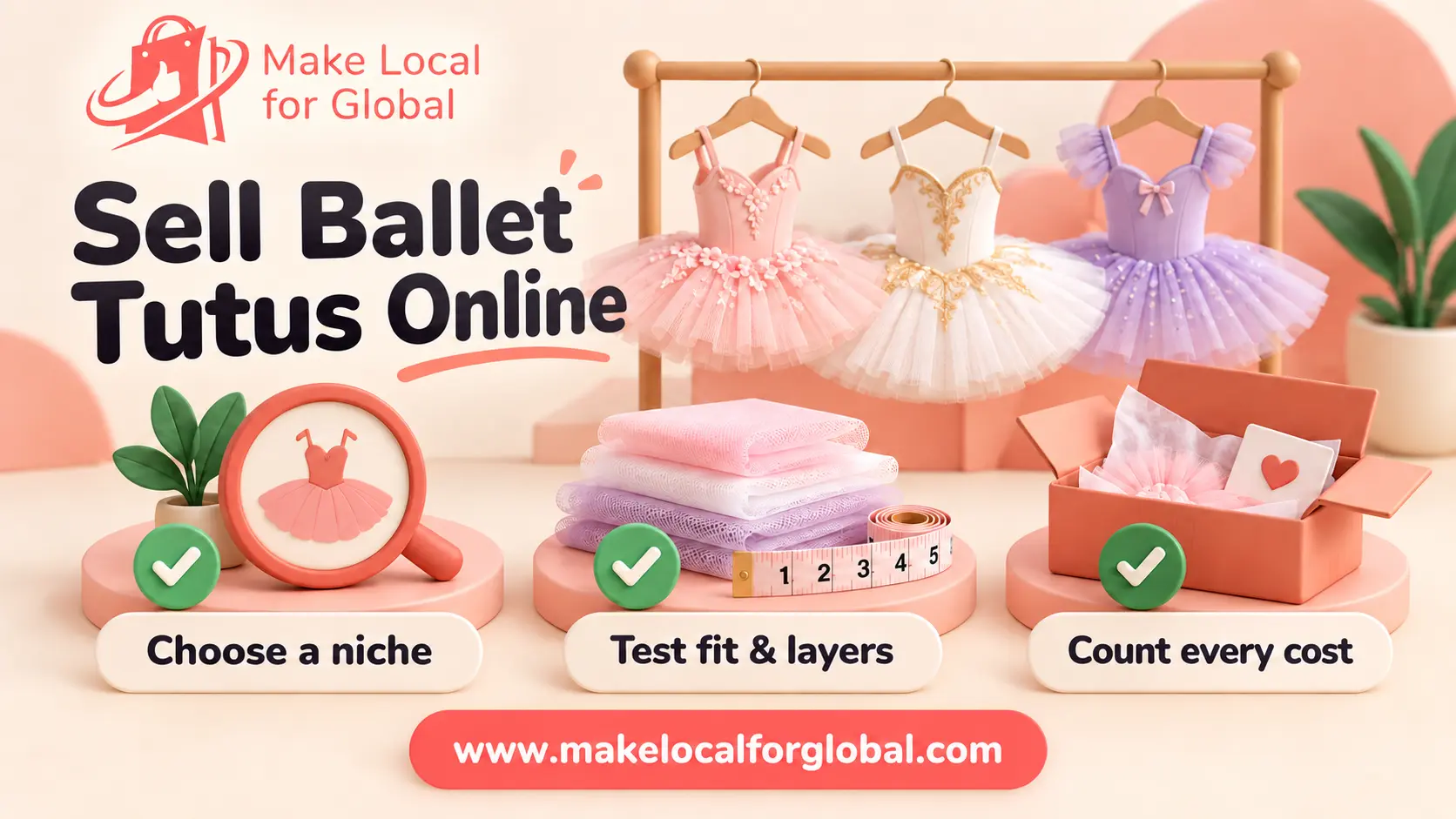
Selling ballet tutus online can work as a focused specialist shop, but buyers need more than a pretty product photo. They need to understand who each tutu suits, how it fits, what the layers feel like, how to care for it and when it will arrive.
Start with one clear buyer and a small range. Test samples, show real measurements, calculate the full cost of an order and explain any child-safety or textile-label details that apply to your products.
Make Local for Global helps small businesses set up an ecommerce website and learn how to manage their products online.
“Ballet tutus” covers several different shopping needs. A dance student may want a comfortable practice skirt. A parent may be looking for a recital costume. A dance teacher may need coordinated pieces for a group. A gift buyer may want a child’s dress-up set.
Each buyer asks different questions. A dancer checks movement, waist comfort and care. A parent may need the correct size by a performance date. A teacher may care about colour matching, repeat availability and a dependable delivery window.
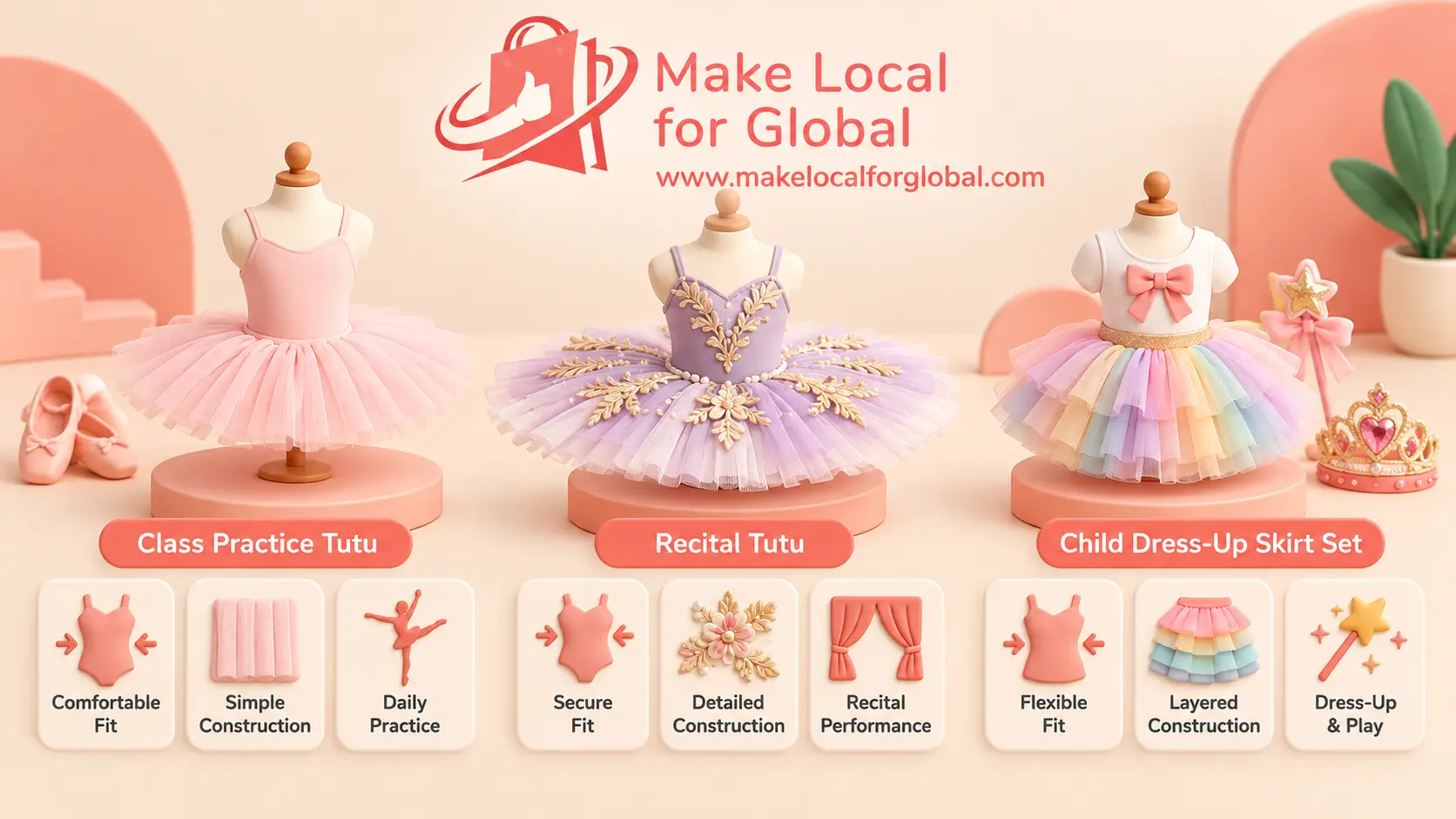
A small opening range keeps buying, photography and sizing work manageable. Begin with two or three styles that serve the same buyer. Add colours or embellishments only when they answer a real customer preference.
| Range role | Example offer | What the product page should explain |
|---|---|---|
| Entry | Simple practice tutu | Waist fit, skirt length, layer count and care |
| Core | Recital tutu in a small colour set | Embellishments, movement, colour accuracy and dispatch date |
| Group order | Coordinated set for a dance school | Available sizes, colour matching, order minimum and lead time |
These are sample range roles, not claims about market demand. Check buyer interest before committing to stock.
Keep bespoke choices controlled at first. A made-to-order tutu can offer custom colour or length, but spell out the choices, production time and measurement process. State which changes are possible and which are not.
If you expect to serve dance schools, ask about a repeat order process. A saved size list, named colour reference and agreed reorder window can reduce back-and-forth for both sides.
Compare local makers, specialist dancewear wholesalers and manufacturers offering private label. The lowest unit price is only one part of the decision. Ask about fabric composition, sample costs, minimum quantities, production time, packing, defect handling and repeat-stock consistency.
Inspect the sample in daylight and under indoor lighting. Check the waist elastic for twists or rough joins. Gently stretch it, inspect stitching around gathered layers and look for loose decorations, sharp edges, uneven hems or strong odours.
Try the tutu through the movement it is intended for. A practice skirt should stay secure during turns and bends. A recital style should sit as shown in the product photographs. Record the result for each size and colour.

For textile products sold in England, Scotland and Wales, official guidance says labels must show fibre content. If different parts have different fibre content, each part may need to be identified. Retailers and manufacturers share responsibility for accurate textile information. Read the current GOV.UK textile labelling guidance and ask Trading Standards or a qualified adviser about your exact product and supply chain.
A child’s tutu may be ordinary clothing, a costume or a toy depending on its design, intended use and how it is marketed. Do not assume one label or marking covers every case. If your product is marketed for costume or play use, check the current rules with the Office for Product Safety and Standards toy-safety guidance for Great Britain. Northern Ireland has a separate route for some product rules.
For child clothing, pay close attention to cords, ties, long trailing pieces, small parts and embellishments. The Office for Product Safety and Standards has published a 2026 risk example about cords on clothing for young children. Read its child-clothing cord risk assessment and get product-specific advice before selling a design with these features.
Keep supplier invoices, product specifications and any safety assessment or test evidence. The UK product-safety guidance says sellers have responsibilities for products they supply and should retain information that helps identify their suppliers. Start with the GOV.UK advice for product businesses. Rules vary by product and destination, so check again before selling outside Great Britain.
If you have product details, photographs and prices ready, MLFG’s funded Launchpad may suit some startups without an existing website. Check the eligibility rules before applying.
“Small, medium and large” does not tell a buyer whether a tutu will fit. Give the waist measurement range, skirt length and intended wearer group. Explain how the elastic sits and whether a layer or leotard is expected underneath.
Use consistent lighting and a neutral background for colour photographs. A pale pink can look different on a phone screen than it does in daylight. Name colours plainly and add a note that screens can display shades differently.

A useful title might read “Blush recital tutu, child sizes 5–10”. The description can then cover intended use, waistband range, skirt length, materials, care, dispatch estimate and what is included. Use the same size names in the chart, dropdown and packing slip.
For a related dancewear example, see MLFG’s ballet shoes online business page.
Set a price after adding the costs tied to a typical order. The following example is illustrative only. Replace every figure with your own supplier quote, carrier price and payment fee.
| Cost per order | Example | How to check it |
|---|---|---|
| Tutu purchase cost | £14.00 | Supplier invoice, including inbound freight allocation |
| Protective packaging | £1.20 | Mailing bag or box, tissue and label |
| Delivery paid by seller | £3.50 | Your carrier’s actual service and parcel size |
| Payment fee allowance | £0.90 | Use your provider’s current fee schedule |
| Returns and defect allowance | £1.40 | Estimate, then replace with your own return records |
| Promotion cost per order | £2.00 | Campaign spend divided by attributed orders |
| Illustrative total cost | £23.00 | £14.00 + £1.20 + £3.50 + £0.90 + £1.40 + £2.00 |
Illustration only. Figures are not supplier quotes, market prices or a forecast. VAT treatment and tax obligations depend on the business.
If the example tutu sells for £36 and the seller pays £23 in the listed costs, £13 remains before fixed overheads, tax and the owner’s time. That is a contribution estimate, not net profit. Add website costs, storage, photography, insurance, unsold stock and any packaging or returns cost not included above.
Test a few prices against the product’s real quality and the buyer’s alternatives. If the price only works when every parcel is delivered cheaply and no customer returns a size, the offer may need a different supplier, bundle or fulfilment approach.
Tulle can arrive creased or crushed if it is packed loosely. Test a mailer or shallow box with a sample. Check the tutu after a simulated delivery, then refine tissue, folding and moisture protection without adding unnecessary bulk.
Publish realistic dispatch times for stocked and made-to-order items. A recital buyer may be working to a fixed date, so show the order cut-off, production time and delivery service before checkout. Send tracking where available and tell customers how to report a parcel problem.
Online customers in Great Britain usually have a 14-day period to cancel a distance purchase after receiving goods, subject to the rules and exceptions that apply. The Consumer Contracts Regulations set out return and refund timing. Read the Consumer Contracts Regulations 2013 and take advice for custom-made items or other exceptions before writing your policy. A faulty or misdescribed product has separate consumer rights.
Keep a simple return log: style, size, reason, condition on return and whether the size chart or product page could have answered the question. If several buyers return the same size, remeasure the garment and update the chart or supplier specification.
Choose channels your buyers already use. A dance-school partnership may suit recital sets. Search-led product pages may help buyers looking for a practice tutu by size or colour. Short video can show how the layers move, but it should not replace a measurement chart.
Keep the first month small enough to learn from. The aim is to check buyer interest, product quality and order economics before you widen the range.

Choose one buyer group, interview potential customers, order a small number of samples and inspect them. Build a product page with measurements and care details, then test a limited range before buying more stock.
Show the front, back and construction close-ups. Include waist range, skirt length, materials, care instructions, what is included, available colours, dispatch timing and a clear returns policy.
You can develop a children’s range, but intended use, design and marketing can affect which product rules apply. Check the relevant official product-safety guidance and get advice for the exact product before listing it.
Costs depend on the stock model, sample fees, minimum order, packaging, delivery, website and promotion. Build a budget from written quotes and leave room for returns, defects and unsold sizes. The worked example above shows how to lay out the calculation.
Small stock holdings can support quick dispatch for tested sizes. Made-to-order can reduce finished stock, but lead times and measurements need careful handling. Compare sample performance, supplier timing and buyer expectations before choosing.
A clear shop can bring your styles, measurements, delivery details and customer questions together. Make Local for Global helps small businesses set up an ecommerce website and manage products online.
PREFERRED SOURCE
Like what you’re reading? Add Make Local for Global as a preferred source on Google to see more of our articles when you search.

Build your online presence without having to figure out everything yourself.