
READY TO SELL Journals ONLINE?
Get a store built for you in 5 days, plus training and support to help you start, run, and grow your Alternative business.

Learn effective strategies to sell journals online, avoid common mistakes, and build a sustainable business that connects with the right audience.


Journals are one of those products people buy when they want a fresh start.
New job, new term, new year, a breakup, a burnout, a “I can’t keep all this in my head anymore” moment.
That’s why journals sell year-round – not just in January.
If you want to sell journals online, you don’t need to out-Amazon Amazon. You need a clear niche, a product that feels lovely to use, and an online shop that makes buying easy.
This guide walks you through how to design, price, photograph, market, and sell journals online – whether you make them by hand, print on demand, or curate and resell stock.
The word “journal” covers everything from blank notebooks to guided planners.
If you try to sell to everyone, your shop will feel generic and people won’t know why yours is special.
Pick one main lane first. You can expand later, but clarity sells faster than variety.
Journals have two big buyer types:
You can sell to both, but your product photos and listings should make gifting obvious if you want those sales.
The best journal products are easy to understand in one glance.
That means clear layout, clear use case, and obvious quality signals.
Journal buyers are surprisingly picky, especially if they use pens.
They want to know if it bleeds, ghosts, or feels flimsy.
Be clear about:
If you don’t know the exact gsm, don’t guess. Describe how it performs: “thicker paper that handles ink well with minimal show-through”.
Most journals fail because they ask too much from the user.
Simple, repeatable formats sell best:
Undated is a big win for customer satisfaction because people don’t feel they’ve “ruined” it by missing a week.
Stationery looks simple, but costs add up: printing, paper, packaging, and postage.
And if you’re handmade, your time is a major cost.
Price ladders make buying easier and increase order value.
| Offer | Best for | Why customers like it | Why it helps you |
|---|---|---|---|
| Mini journal | Impulse and add-on buyers | Low commitment, cute, portable | Raises order value with bundles |
| Guided journal (hero product) | Most buyers | Clear purpose and structure | Easiest to market consistently |
| 2-pack bundle | Gift buyers and planners | Feels like value, longer use | Higher order value, better shipping efficiency |
| Gift-ready premium edition | Occasions and holidays | Looks thoughtful and special | Higher margin with packaging upgrade |
Journals are emotional purchases. Your shop should feel calm, clean, and reassuring.
People should be able to understand what the journal is for within five seconds.
Stationery sellers often get stuck in website perfection mode.
Fonts, colours, layouts… suddenly it’s been three weeks and you’ve made no sales.
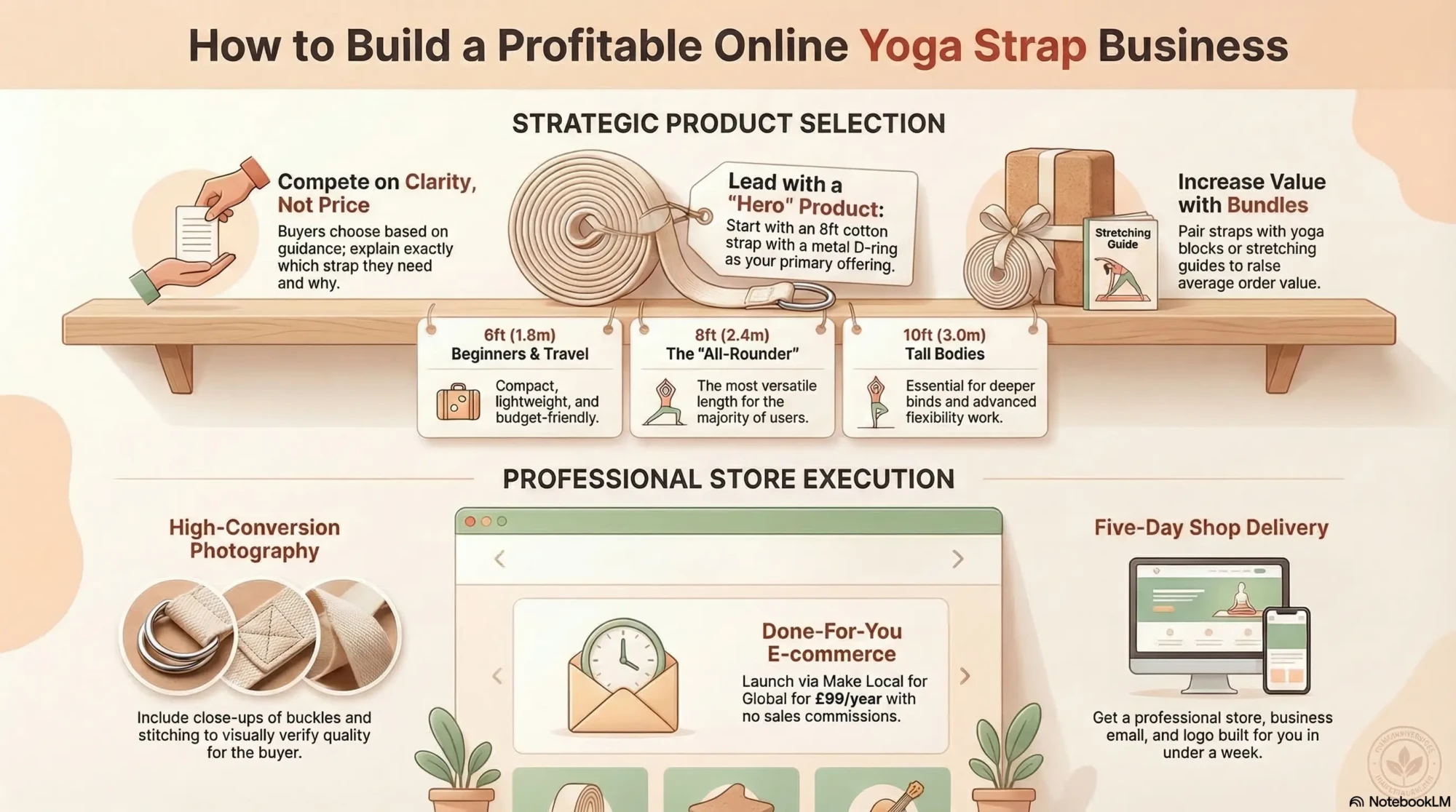
Make Local for Global sets up your ecommerce shop for you, so you can start selling journals without wrestling with tech.
You can book a free consultation to talk through your niche and product range.
Or choose the simple option to Get your website for £99/year.
Journal photos should make people want to touch the paper.
Since they can’t, you need to show texture and detail.
For guided journals, include one photo with a page lightly filled in.
It helps buyers imagine themselves using it and makes the prompts feel less intimidating.
Journals sell when your marketing makes people feel understood.
Not judged. Not pressured. Just gently helped.
Stationery buyers love matching sets. If it suits your brand, add:
Even one add-on can raise order value without needing more customers.
Journals are easy to ship, but they’re easy to damage if you pack lazily.
Corner dents lead to refunds, especially for gifts.
Journals are trust products. Reviews matter.
Ask customers to review with one prompt:
Those comments sell your next orders.
Your first 200 sales come from clarity, repetition, and social proof.
Pick one product you can market consistently.
Build the best product page you can: page previews, clear promise, and who it’s for.
Don’t constantly invent new products. Show the same product from different angles.
Interior flips, prompt highlights, paper close-ups.
Once you get reviews, place them on product pages and use them in marketing.
People trust other buyers more than they trust your adjectives.
Impulse plays a role here. Journals are small enough that people buy when they’re feeling hopeful.
If checkout is clunky, you lose that moment.
If you want a professional ecommerce shop without building it yourself, you can Get your website for £99/year.
Or if you want help structuring your shop, book a free consultation.
Once the hero journal sells, add a bundle that feels useful:
That’s how you raise order value without increasing workload too much.
These mistakes slow sales and increase returns.
People won’t buy a journal if they can’t see the pages.
“High quality” means nothing. Tell people paper feel, binding, and what the prompts do.
One strong journal beats ten confusing options.
Rigid mailers cost money. Build it into your pricing.
Sell first, tweak later. Momentum beats perfection.
Yes, especially guided journals, gratitude journals, and niche journals for specific goals. They sell best when you show interior pages, explain the purpose clearly, and make them feel giftable.
Price based on production cost, packaging, shipping materials, fees, and profit. Then create a price ladder with an entry product, a hero product, and a bundle. Bundles help increase average order value and reduce postage pain.
Guided journals often sell more easily because they promise an outcome and feel “made for me”. Blank journals can do well when paper quality is excellent and the design is strong. Many shops do best with one of each.
Use calm, practical messaging. Show page flips, share one prompt at a time, and talk about realistic habits like “10 minutes a day”. Customers buy when they feel understood, not when they feel pressured.
You can sell through marketplaces, but a website helps you control presentation, show page previews properly, and build a brand. A done-for-you shop setup can get you selling faster without tech stress.
To sell journals online, you need three things: a clear niche, page previews that build trust, and a shop that makes buying easy.
Start with one hero journal, collect reviews, and add one smart bundle to raise order value.
If you want a professional ecommerce site without doing the setup yourself, you can Get your website for £99/year.
Or if you want help shaping your niche and product pages, book a free consultation.
People buy journals because they want to feel more in control. If your product genuinely helps, it will sell.