

READY TO SELL architectural prints ONLINE?
Get a store built for you in 5 days, plus training and support to help you start, run, and grow your Alternative business.

A practical guide to selling architectural prints online: pick a focused style, build sets that increase order value, reduce returns with better size guidance, and launch a shop that converts décor browsers into buyers.

Architectural prints sell because they make a space feel intentional.
They’re the décor equivalent of a crisp white shirt: clean, confident, and they work almost anywhere.
But if you want to sell architectural prints online as a business, you can’t just upload pretty photos and hope for the best.
You need a clear niche, strong trust signals (paper quality, sizing, framing), and product pages that make choosing ridiculously easy.
Architectural prints are a high-intent purchase.
People don’t usually browse them casually – they search because they’re decorating a room, finishing a gallery wall, buying a gift, or trying to make a new flat feel like home.
That means you can build consistent sales if your shop speaks their language: locations, styles, sizes, and how it will look on the wall.
Different audiences buy for different reasons, which is why clear collections are everything.
These buyers love clarity and consistency.
If your shop looks curated, they trust you.
Use these naturally in headings, category names, and FAQs.
Notice how specific it gets: style, city, and room.
Your shop should mirror that.

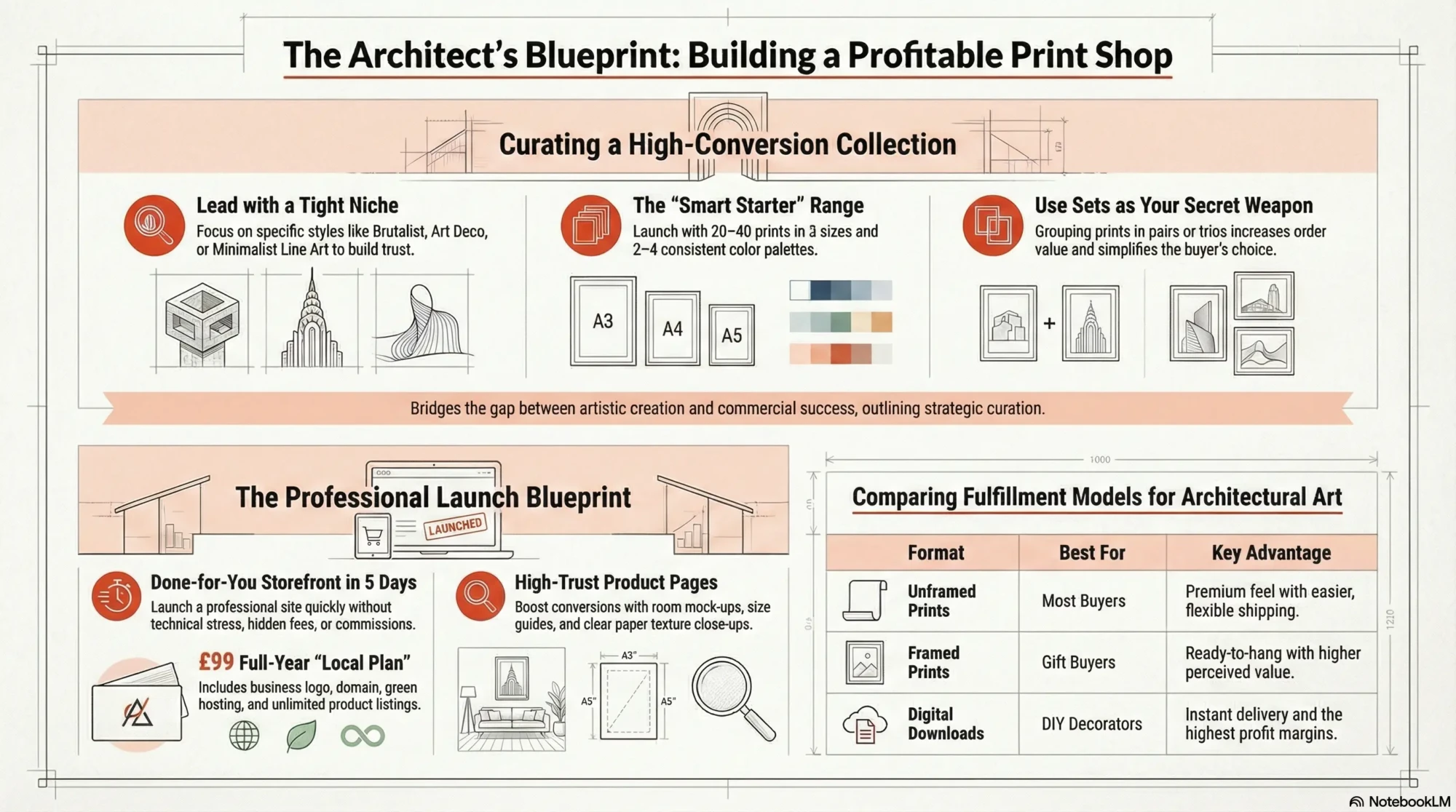
Architectural prints work best when your style is consistent.
Buyers like to purchase sets that feel like they belong together.
So pick a lane first, then expand.
Pick one as your lead identity so your shop feels curated.
Curated shops sell faster than “a bit of everything” shops.
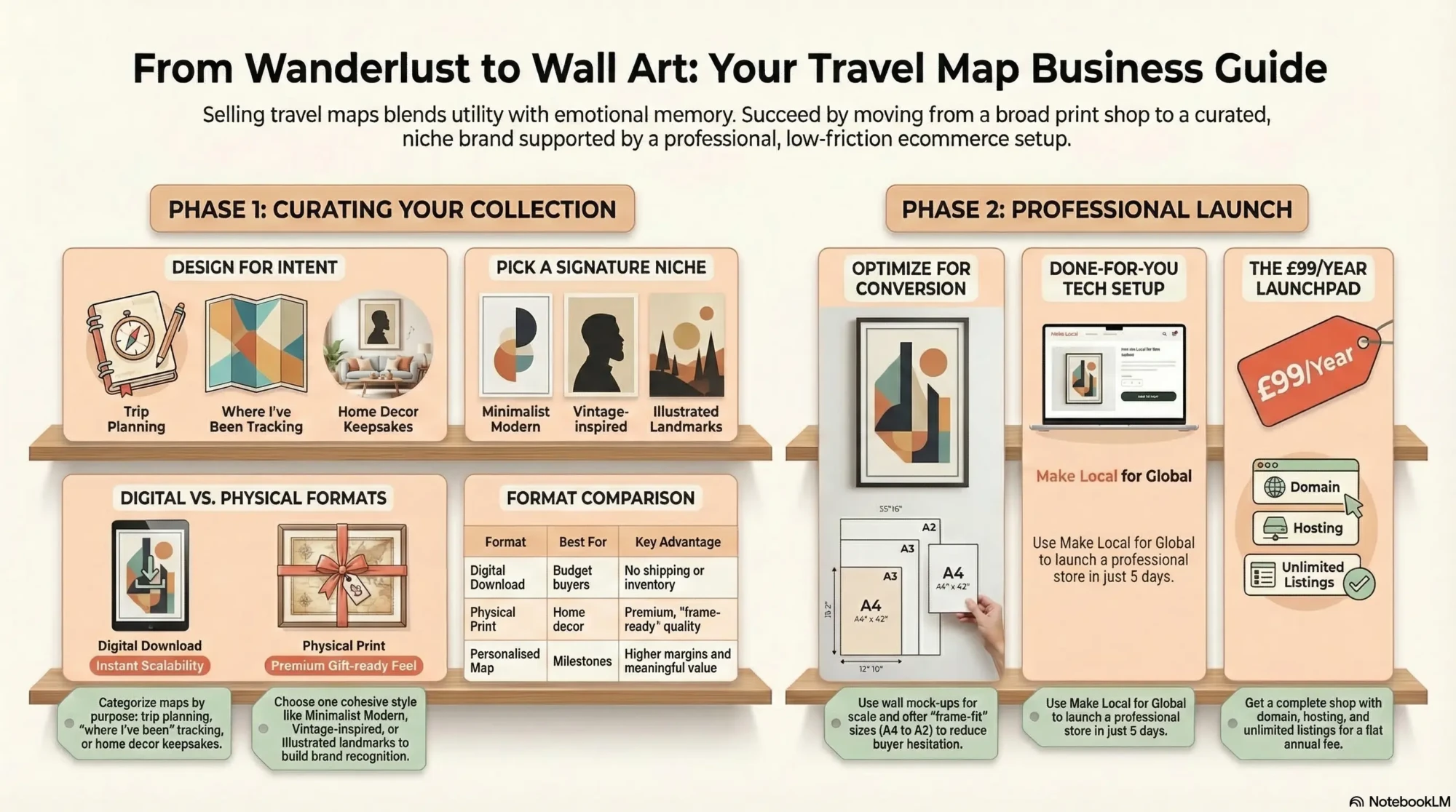
This is where you choose your business model.
High margin and no shipping, but more customer support because people struggle with printing, sizing, and paper choice.
The easiest and most reliable start for most sellers: premium feel, easier shipping, and buyers can choose their own frames.
Higher perceived value and great for gifting, but heavier shipping and higher damage risk.
Works well for large statement pieces, but it’s bulkier and returns can be costly.
If you’re starting from scratch, begin with unframed prints in a few popular sizes and add framing later.
Most wall art shops fail because they overwhelm customers.
Start with a clean range that makes buying easy.
Sets are your secret weapon.
They increase average order value and remove the “what matches?” problem.
When customers can find themselves in a collection name, they buy.
Print buyers compare quickly.
Your pricing needs to feel justified with quality and presentation.
Also offer bundle pricing carefully, so it feels like a win without destroying your margins.
Returns in wall art usually happen because of two things: size confusion and colour expectation.
You can prevent both.
Don’t rely on one image and hope.
Wall art buyers need context to commit.
This helps customers choose and helps you position multiple offers if you have them.
| Format | Best for | Pros | Cons | How to position it |
|---|---|---|---|---|
| Unframed print | Most buyers | Premium feel, easier shipping, flexible framing | Customer needs a frame | “The easiest way to upgrade a wall” |
| Framed print | Gifting and ready-to-hang buyers | Looks finished, higher perceived value | Higher shipping cost, damage risk | “Unbox, hang, done” |
| Digital download | Budget buyers and DIY decorators | Instant delivery, high margin | Printing confusion, more support | “Print today, style tonight” |
Prints get damaged when they bend, scuff, or arrive with corner dings.
So packaging isn’t optional.
Add a small note explaining how to flatten rolled prints and you’ll reduce customer stress immediately.
Architectural prints are a long-game product.
They don’t need constant reinvention.
They need consistent presentation and smart collections.
These topics match real buyer intent and lead naturally to sets and bundles.
People buying wall art often browse for days.
That’s why having your own shop and email list matters.
You can sell on marketplaces, but you’ll often lose control over branding and how you explain paper quality, sizing, and sets.
Your own ecommerce shop is the better long-term move because you can build a curated experience, create bundles, and guide customers to the right size and style.
Make Local for Global offers a done-for-you ecommerce setup for small sellers who want a clean, professional shop without wrestling with tech.
You can book a free consultation to plan your collections and shop structure, or Get your website for £99/year and launch with a shop designed to convert.
Most buyers do well starting with a medium size for living rooms and hallways because it feels substantial without dominating the wall, but the best way to prevent wrong choices is to show size comparisons and include exact measurements and room mock-ups so customers can picture the scale before they buy.
Framing usually makes prints look more finished and giftable, but unframed prints sell well because buyers like choosing frames that match their décor, so offering unframed prints with clear frame recommendations and optional framed upgrades can suit both preferences.
Yes, because monochrome architecture tends to work with most colour schemes and styles, which is why it sells consistently, especially when you offer matching sets that help buyers build a gallery wall without overthinking it.
Premium comes from paper quality, consistent colour, crisp detail, and presentation, so showing close-ups of the print texture, using clean lifestyle images, and describing the paper and printing in plain English helps buyers trust they’re buying something that will look good on the wall.
Digital downloads offer high margins and instant delivery but require more customer support around printing, while physical prints feel more premium and reduce user error, so many sellers start with physical prints and add digital later once their style and best sellers are clear.
PREFERRED SOURCE
Like what you’re reading? Add Make Local for Global as a preferred source on Google to see more of our articles when you search.

Build your online presence without having to figure out everything yourself.