

READY TO SELL ceramic vases ONLINE?
Get a store built for you in 5 days, plus training and support to help you start, run, and grow your Alternative business.

Learn how to sell ceramic vases online: choose a focused range, check samples, price fragile delivery and prepare listings that answer buyers’ questions.

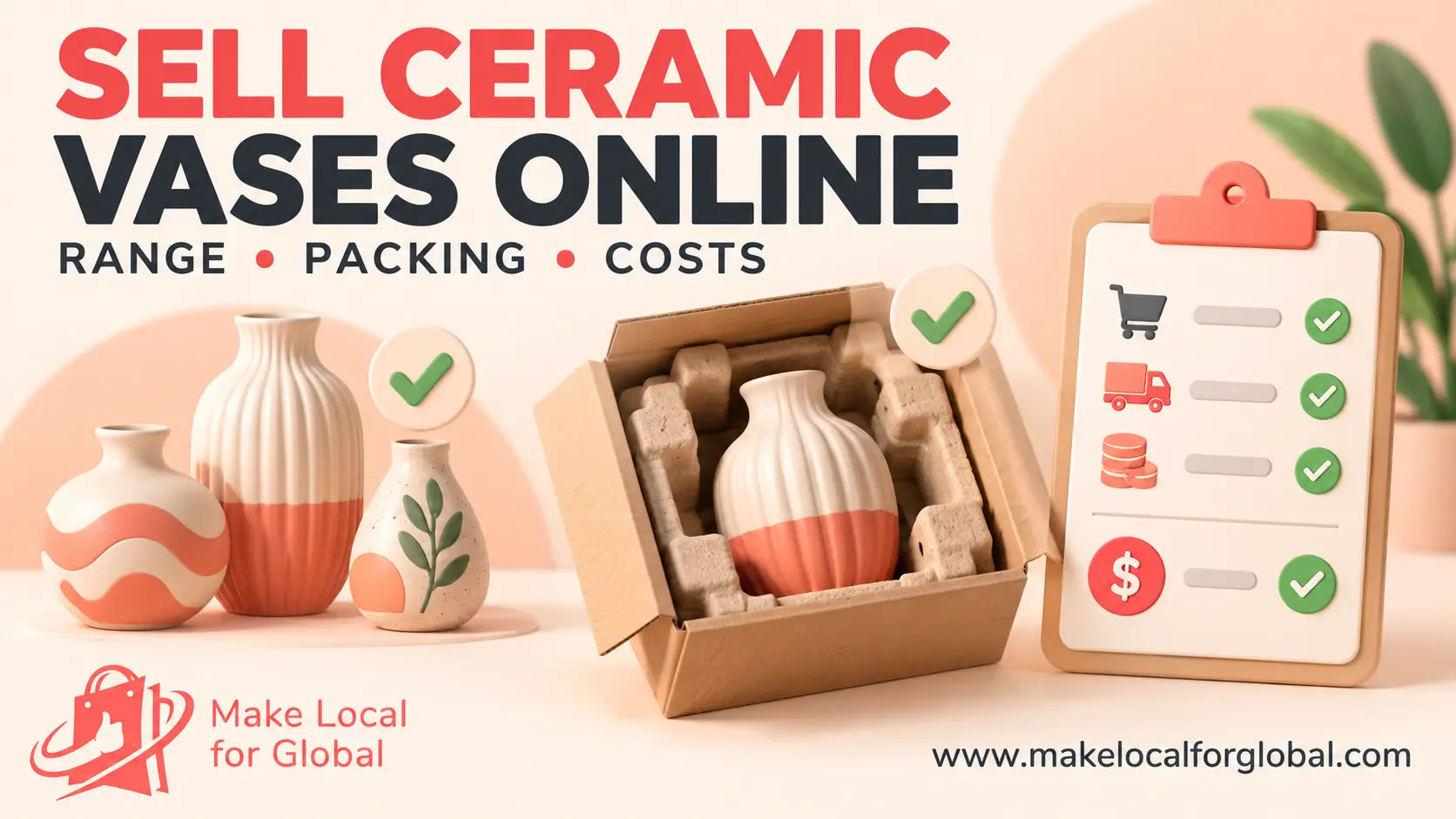
If you want to sell ceramic vases online, start with a small range you can describe accurately, price with every order cost included and pack well enough to protect each piece in transit. Vases can be practical, decorative or both, so clear dimensions, honest water-use guidance and strong product photos help the right buyer choose.
This guide covers product selection, sample checks, pricing, product pages, packaging and a 30-day launch plan. It is written for makers, small retailers and sellers testing a ceramics range.
Planning your first product budget?
Map the one-off and recurring costs before buying stock, packaging or photography.
A new shop does not need dozens of shapes. Begin with a clear customer and a few pieces that work together in style, price and size. A focused range is easier to photograph, explain, store and replenish.
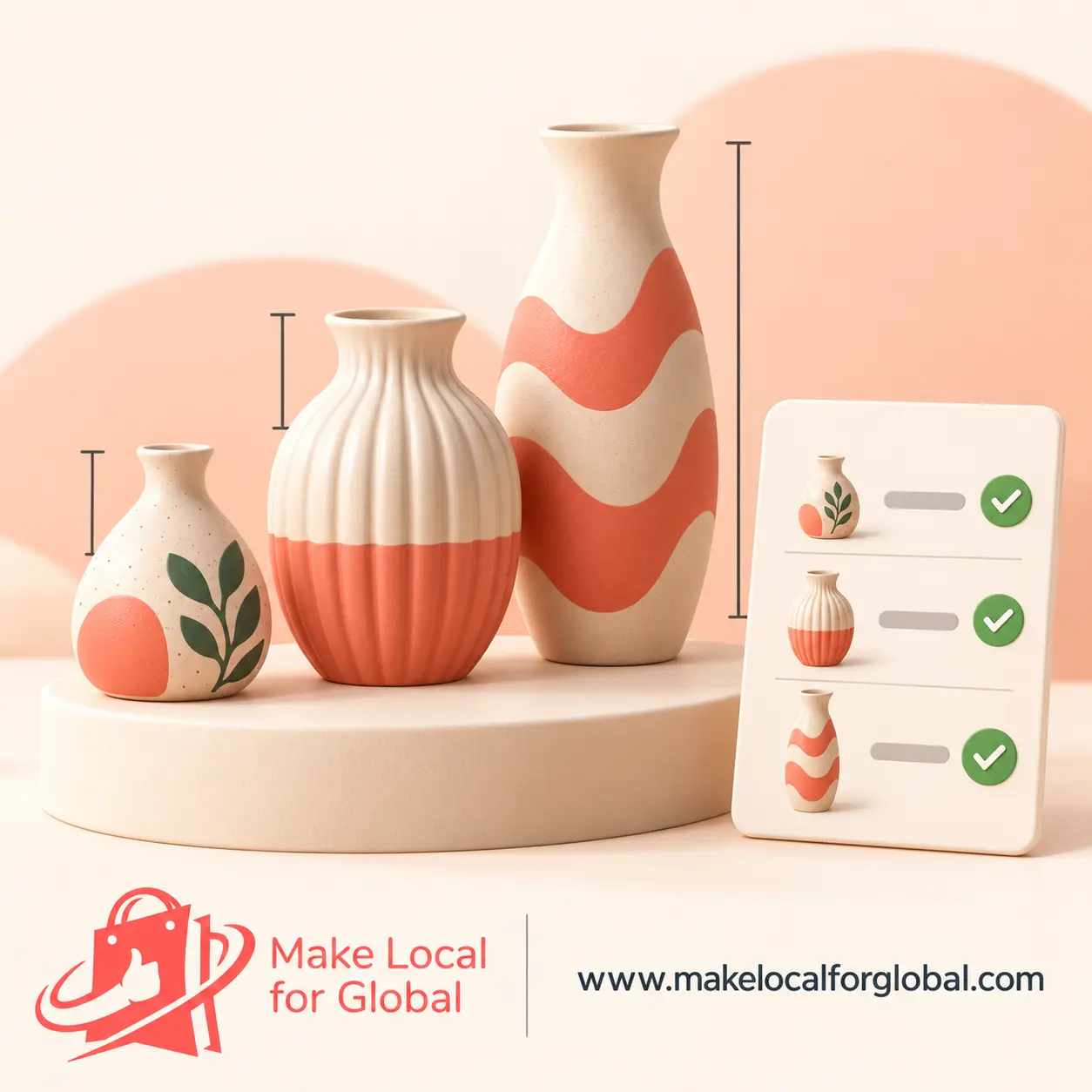
| Format | Possible buyer need | First test |
|---|---|---|
| Bud vase | A compact accent or small gift | Check opening size, stability and the minimum order value needed to cover packing. |
| Tabletop vase | A versatile piece for a shelf or table | Photograph it beside familiar objects and state exact dimensions. |
| Statement vase | A larger decorative feature | Weigh the packed parcel and price the actual delivery service before listing. |
These are merchandising examples, not guarantees of demand. Use customer conversations and small tests to choose your range.
Choose whether each item is handmade by you, made by a production partner or sourced for resale. State the maker and materials accurately. For handmade work, explain that small variations in shape, glaze or size can occur, then show the range of variation in your photos.
Look for evidence of buyer interest before committing to deep stock: ask past customers, collect sign-ups for a preview, test a limited batch or list made-to-order pieces with a realistic lead time. Avoid buying a large assortment simply because a supplier offers a low unit price.
If ceramics fit your wider homeware idea, compare the practical work involved in selling ceramic mugs online and selling candles online. Fragile items need their own sample and packaging checks.
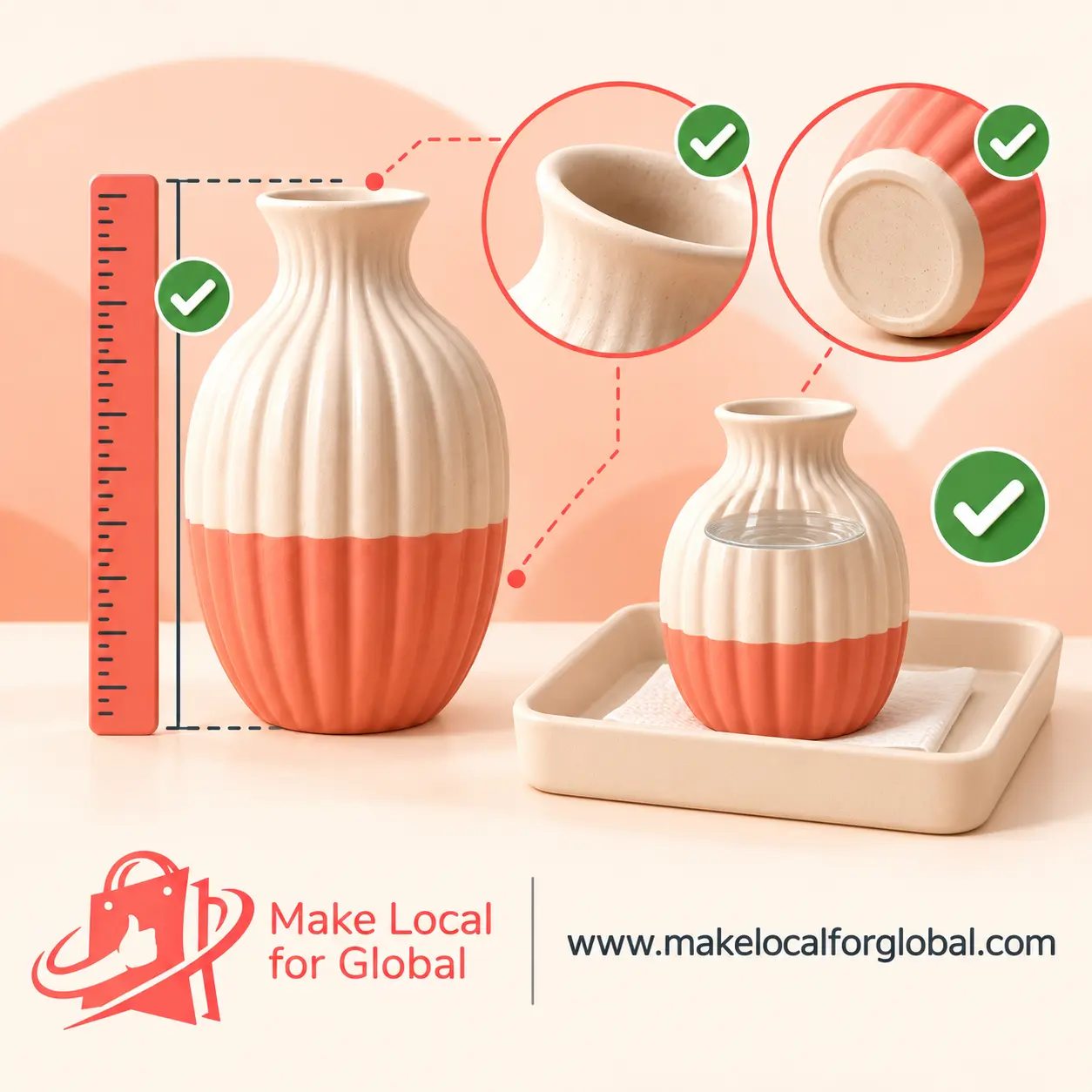
Approve a physical sample from each shape, finish and production batch. A supplier photograph cannot tell you how heavy a vase feels, whether its base sits flat or how the glaze looks in ordinary room light.
Product safety duties apply to consumer products sold in Great Britain under the General Product Safety Regulations 2005. Read the official UK Government guidance on general product safety and take advice for your product and selling model where needed. Northern Ireland has separate rules; see the government’s Northern Ireland guidance.
Calculate the contribution left after variable costs before you set a retail price. Include the landed product cost, protective packaging, delivery subsidy, payment fee, marketing cost and a sensible allowance for breakage, replacements or refunds.
| Example order at £39.95 | Cost |
|---|---|
| Vase landed cost | £14.50 |
| Protective packaging | £3.20 |
| Seller-paid UK delivery | £6.25 |
| Card fee estimate | £0.80 |
| Customer acquisition cost | £4.00 |
| Damage and refund allowance | £2.20 |
| Total variable costs | £30.95 |
| Contribution before overheads | £9.00 |
Illustration only. The £0.80 card fee approximates Stripe’s published standard UK card rate of 1.5% plus 20p on a £39.95 charge. Check your payment provider’s current fees. This contribution is before overheads, owner time, tax and any VAT due. Replace every figure with your own quotes and records.
A price that looks profitable before packing and delivery may leave little room for support or replacements. For a repeatable method, use our guide to pricing a product without guessing and map setup costs in the startup budget planner.
Check the numbers before you expand
Compare your landed cost, packing materials, delivery quotes and payment charges for each vase size.
A buyer should be able to understand the vase without guessing from a styled photograph. Give each size its own accurate details and use natural light so the glaze colour is represented honestly.
Use a specific page title, such as “Handmade Blue Stoneware Bud Vase, 12 cm”, where those details are true. Write the page for a person comparing pieces, rather than repeating the same search phrase unnaturally. Add descriptive alt text to meaningful product images.
Online sellers in the UK must provide key pre-contract information, including business details, product characteristics, total price and delivery arrangements. Explain your cancellation and refund process in line with the rules that apply to your business. Start with the official distance selling guidance and returns and refunds guidance.
Fragile packaging needs to hold the vase still and keep it away from the parcel walls. Choose a strong box that fits the protected item with cushioning on every side. Test the packed parcel with the carrier guidance in mind before you send paid orders.

Royal Mail advises using a sturdy, robust box, enough cushioning to keep fragile items from touching the outer walls and at least 5 cm of cushioning around the item. Read its current fragile-item packaging advice and confirm requirements with your chosen carrier. Packaging materials need to protect the piece in real handling; attractive branding is secondary to a safe fit.
Before you scale, compare the packed dimensions for each size with carrier bands. A statement vase may move into a more expensive parcel tier even when its weight seems modest. Our guides to selling bed frames online and selling acrylic coasters cover other ways product size and protection shape fulfilment decisions.
A marketplace can give you a route to shoppers already browsing, while your own shop gives you more control over the buying journey and customer experience. Check each channel’s listing rules, fees, fulfilment options and ownership of customer data before you commit.
Make your first range easy to maintain. Track visits, product-page engagement, add-to-basket activity, conversion, average order value, packing time, damage rate and contribution per order. Review the numbers by vase style and size instead of changing the whole range at once.

Many small sellers start from home, subject to their lease or mortgage terms, insurance, local requirements and the rules for their product and business. Check your own circumstances before storing stock or receiving customers.
Only if you sell them as suitable for fresh flowers or water use. Test that use and describe the result clearly. Label decorative-only pieces so buyers do not assume they hold water.
Use a sturdy carton and a tested cushioning arrangement that stops movement and keeps the vase away from the outer walls. Protect delicate rims, necks and handles, then confirm the parcel meets your carrier’s current requirements.
Include materials, finish, colour, exact dimensions, weight, water-use guidance, care, handmade variation, dispatch time, delivery details and returns information. Show scale and close-up photos of the base, rim and glaze.
A strong first collection is focused, accurately described and supported by realistic order costs. Start with samples, test protective packaging and learn from real buyer questions before you expand.
Explore more ideas in the Product To Sell article library. When you are ready to build a shop around your range, see our website design service or talk with MLFG about your next step.
PREFERRED SOURCE
Like what you’re reading? Add Make Local for Global as a preferred source on Google to see more of our articles when you search.

Build your online presence without having to figure out everything yourself.