

READY TO SELL cookie jars ONLINE?
Get a store built for you in 5 days, plus training and support to help you start, run, and grow your Alternative business.

Learn how to sell cookie jars online by choosing a buyer, comparing materials, checking supplier evidence, testing samples, costing protective delivery and launching a focused range.


Use product-specific examples to shape a focused opening range and decide what to test first.
A cookie jar can be a practical pantry purchase, a housewarming gift or a decorative kitchen object. These buyers do not make the same choice. A family may want a wide opening and a lid that is easy to lift. A gift buyer may care about pattern, colour and presentation. A home baker may prefer clear sides and a larger capacity. A collector may be searching for a maker, glaze or particular style. A bakery may want repeatable sizes that work on a counter.
Choose one primary buyer for your first range. Write down where the jar will be used, who handles it, what it will hold and which problem it should solve. A gift-focused shop might begin with one decorated ceramic jar, one understated glass option and a gift pair. A pantry-focused shop might offer three capacities in one style. Avoid combining several audiences on one page until you can explain how each product serves its buyer.
Speak with at least ten likely buyers before ordering a large quantity. Ask what they currently store, what annoys them about their current container, how they clean it, what capacity they need and which detail they check before paying. Ask what would make them choose another product. Avoid asking only whether they like your idea. A paid order, a clear request for a specific size or a question about dispatch gives stronger evidence than a compliment.
Read reviews for similar jars and record repeated complaints such as a lid that slips, a capacity smaller than expected, colour that differs from the picture, chips, rough rims, awkward cleaning or transit damage. Reviews describe personal experiences, not a full market survey. Use them as a list of questions for your supplier and sample checks. If customers repeatedly mention size, put measured dimensions and a scale photo high on your product page.
You can test interest with one or two samples and a simple page or marketplace listing. Use original photographs and state an honest dispatch date. Track qualified views, questions, add-to-basket actions and completed orders. Many page views with few baskets can point to missing information or price concerns. Questions about measurements can show which details need to be clearer. Keep the first commitment small enough that you can refund any order you cannot fulfil.
A first range should be easy to inspect, photograph, explain and replenish. Select one main material, a small number of designs and two or three useful sizes. Choose a simple entry offer, a core jar and, if the cost model supports it, a bundle. The entry option might be a compact jar in a plain finish. The core item can be the size most buyers asked about. A bundle could pair a small and medium jar for a pantry shelf or provide a gift-ready combination.
Each extra option increases the work. You need to check more samples, track more stock, write more product details, photograph more colours and answer more questions. A bundle can raise order value, but it can require a larger parcel, extra cushioning, more picking time and a different delivery charge. Calculate the bundle as a new order type instead of assuming its costs equal two single jars.
Think about material and closure together. Glass makes contents visible, yet it is heavy and breakable. Ceramic can carry a distinctive pattern, but its glaze, rim and lid fit need close inspection. Metal can offer another visual style, but dents, edges and internal coatings matter. A wooden lid or silicone seal has separate cleaning requirements from the jar body. State the material of each part instead of using a broad label that hides the product details.
Do not promise an airtight seal, dishwasher use, microwave use or freshness benefit based on a lid merely sitting on a jar. Obtain evidence from the supplier for the exact model and use. If the jar is decorative, explain that directly. A styled photo with biscuits inside can suggest food storage even when your copy says otherwise, so keep imagery consistent with the product’s intended use.
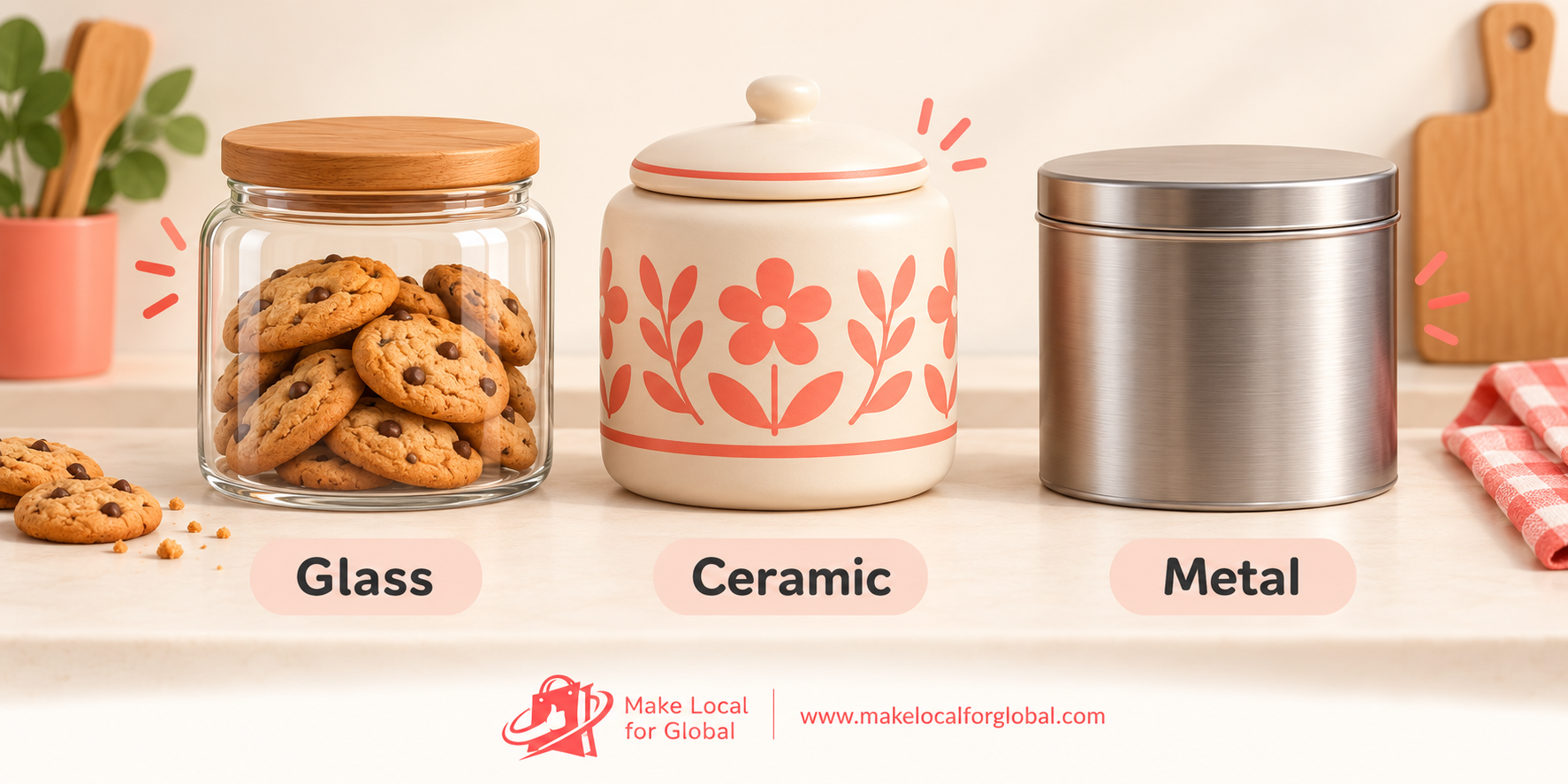
| Format | Potential buyer value | Sample checks | Parcel concern |
|---|---|---|---|
| Glass | Visible contents; many looks suit pantry use or gifting. | Opening, wall finish, lid fit, capacity and care advice. | Weight, impact protection and movement inside the carton. |
| Ceramic | Colour, pattern and shape can support a gift or display use. | Glaze, rim, chips, lid contact and food-contact evidence. | Weight, knob or handle impact and rim protection. |
| Metal | A distinct look and a different storage feel. | Interior coating, edges, seam, closure and use statement. | Dents, scratches, sharp edges and lid movement. |
Possible sources include a UK wholesaler, independent ceramic maker, trade supplier, importer or production partner. Each route changes lead time, minimum order, cost, document access and your role in supplying the product. A local supplier may let you inspect stock sooner. Direct factory buying may give more control over finish or packaging, but it can involve larger commitments and longer resolution times when the sample differs from the batch.
Ask for the supplier’s registered business name, address, invoice terms, exact product code, manufacturer or maker, sample cost, minimum quantity, lead time, restock time, packaging details, defect policy and return process. Ask which materials make up the body, lid, seal, coating, print and any accessory. Confirm which parts touch food and which uses the supplier supports. Request the relevant documents for the finished model and the market where you will sell it.
A certificate with no model number, material or finish may not tell you whether it applies to your jar. A document for a plain glass container may not cover painted decoration, a ceramic lid, a printed pattern or a new factory. Ask the supplier to link the papers to the product code and sample. Keep the reply with your invoice, specification, sample photos and inspection scorecard.
Use a simple sourcing record for every model: supplier, product code, order date, batch, quantity, invoice, document versions, materials, sample result, customer incidents and restock notes. If a customer reports a safety concern, this record helps you identify the affected goods and contact the supplier. It helps you decide whether to pause a listing, inspect remaining stock or seek advice.
Ask whether the supplier can keep the same glaze, dimensions, lid, seal and packaging on a repeat order. Agree what happens when a batch differs. A low unit cost can be offset by inconsistent finishes, high freight, slow replacement service or a costly minimum order. Compare the full landed cost and the quality controls, not only the first invoice line.
Use a practical business tool or speak with MLFG about presenting the product details and buyer steps clearly.
Order a sample through the same route and against the same specification you expect for stock. Photograph the parcel before opening it and note any crushing or puncture. Check the contents against the supplier’s packing list. Measure the jar’s height with the lid on, the widest body point, the opening and the weight. Record the method you use to measure capacity. A brim-full volume differs from the useful volume below a lid or seal.
Open and close the lid repeatedly. Check whether it seats evenly, lifts without excessive force, rattles, jams, shifts or twists. Inspect the groove and any seal for gaps or loose material. Look at the rim, base, knob, handles, seams, inside surface, glaze and decoration in bright light. Run a clean cloth over surfaces to find loose fibres, dust, rough edges or residue. Follow the supplier’s cleaning advice before any test involving food contact.
Test the use you intend to describe. If the jar is for biscuits, check whether the opening allows the buyer to load and remove them without scraping. If you plan to describe a seal, ask what the supplier has tested and under which conditions. Do not infer airtightness from a tight fit. Do not turn a single informal home test into a broad safety claim. Ask a qualified person or the supplier for testing guidance where the evidence is unclear.

Keep a scorecard for each sample: model, supplier, date received, measurements, weight, visible defects, lid function, finish, care information, documents, parcel condition and decision. Mark each line pass, follow-up or reject. One defect does not prove every unit will fail, but it does need an explanation before a bulk order. Ask for a replacement sample or a written corrective action if the supplier believes the issue was isolated.
Check more than the best-looking sample if the supplier can provide stock from different units or production batches. Look for variation in colour, height, lid fit and decoration. Ask how the maker inspects a batch and what tolerance applies to dimensions. If your page will promise a particular size, your measuring method and acceptable tolerance should be clear enough for you to handle a buyer’s question consistently.
An empty cookie jar is a consumer product. A jar advertised for food storage may be a food-contact article too. Keep those questions separate in your records. GOV.UK says packaging used for food should be suitable and marked for food contact or carry the wine-glass-and-fork symbol. It points to special rules for plastics, ceramics and cellophane, and says written evidence may be needed. Read the current Food labelling and packaging overview and follow its country-specific legislation links.
For a cookie jar, ask for evidence relevant to the finished model and the intended dry-food use. The jar can contain several materials: glass or ceramic body, glaze, printed design, lid, seal, clamp, coating or decoration. A general claim on a marketplace listing does not establish that all these parts were checked. If the supplier cannot connect the documentation to your model, ask for clarification. Hold back a food-storage claim until the evidence is sufficient for the market and intended use.
Food-contact rules and administration can differ across England, Scotland, Wales and Northern Ireland. The Food Standards Agency overview links to each national route. If you supply more than one market, check the rules for each one. Do not copy another retailer’s statement or add a compliance mark without a legal basis. Seek qualified advice if a material, use or market is uncertain.
The Office for Product Safety and Standards states that businesses which make, import, distribute or sell UK consumer products share responsibility for product safety. Its business advice on product safety covers safe use, records and traceability. Importers and own-brand sellers can take on duties beyond those of a retailer reselling goods from a UK supplier. Identify your role before ordering and keep supplier invoices, model and batch details, checks and incident records.
Do not sell stock you know or should know is unsafe. If someone reports a sharp edge, a loose component or a possible contamination issue, review the item and related batch. Pause dispatch if there may be a risk, contact the supplier, record the report and seek advice from Trading Standards or another qualified source when needed. OPSS guidance describes duties to report relevant safety concerns. A chip that is purely cosmetic and a broken shard that could cut someone require different urgency; make the assessment carefully and keep a written record.
Use claims supported by the evidence. “Cookie jar” often implies food use, so say whether your item is suitable for food storage or intended for display only. If it is for dry foods only, name that limit. Do not promise dishwasher or microwave use without model-specific evidence. Terms such as “airtight”, “keeps biscuits fresh”, “handmade” or “recycled” need a clear basis. Describe each component: a jar body may tolerate washing that the wooden lid or seal does not.
Include product cost, inbound freight, duty or import charges where relevant, packaging, selling fees, outbound delivery, pick-and-pack time, damage and return reserve, customer acquisition and a share of fixed overhead. Use current quotes and the fee schedule for your actual channel. The figures below are illustrative only. They are not market prices, supplier quotes or a profit forecast.
| Order cost line | Illustrative amount | Your own input |
|---|---|---|
| Cookie jar from supplier | £6.20 | Invoice unit cost, with a sensible allowance for defects. |
| Inbound freight per jar | £0.80 | Freight and non-recoverable charges divided by sellable units. |
| Protective parcel materials | £1.10 | Carton, inserts, cushioning, tape and void fill. |
| Payment or marketplace fee | £0.55 | Percentage and fixed fees at your actual price. |
| Outbound delivery | £3.40 | Carrier, dimensions, weight band and remote-area terms. |
| Damage and returns reserve | £0.65 | Estimate from your own dispatch and return records. |
| Customer acquisition | £2.00 | Paid cost per completed order or a stated estimate. |
| Total variable cost | £14.70 | Sum each order-related line above. |
| Illustrative item price | £24.99 | Before a separate delivery charge from the buyer. |
| Illustrative contribution | £10.29 | Price less variable cost, before fixed costs, owner pay and tax. |
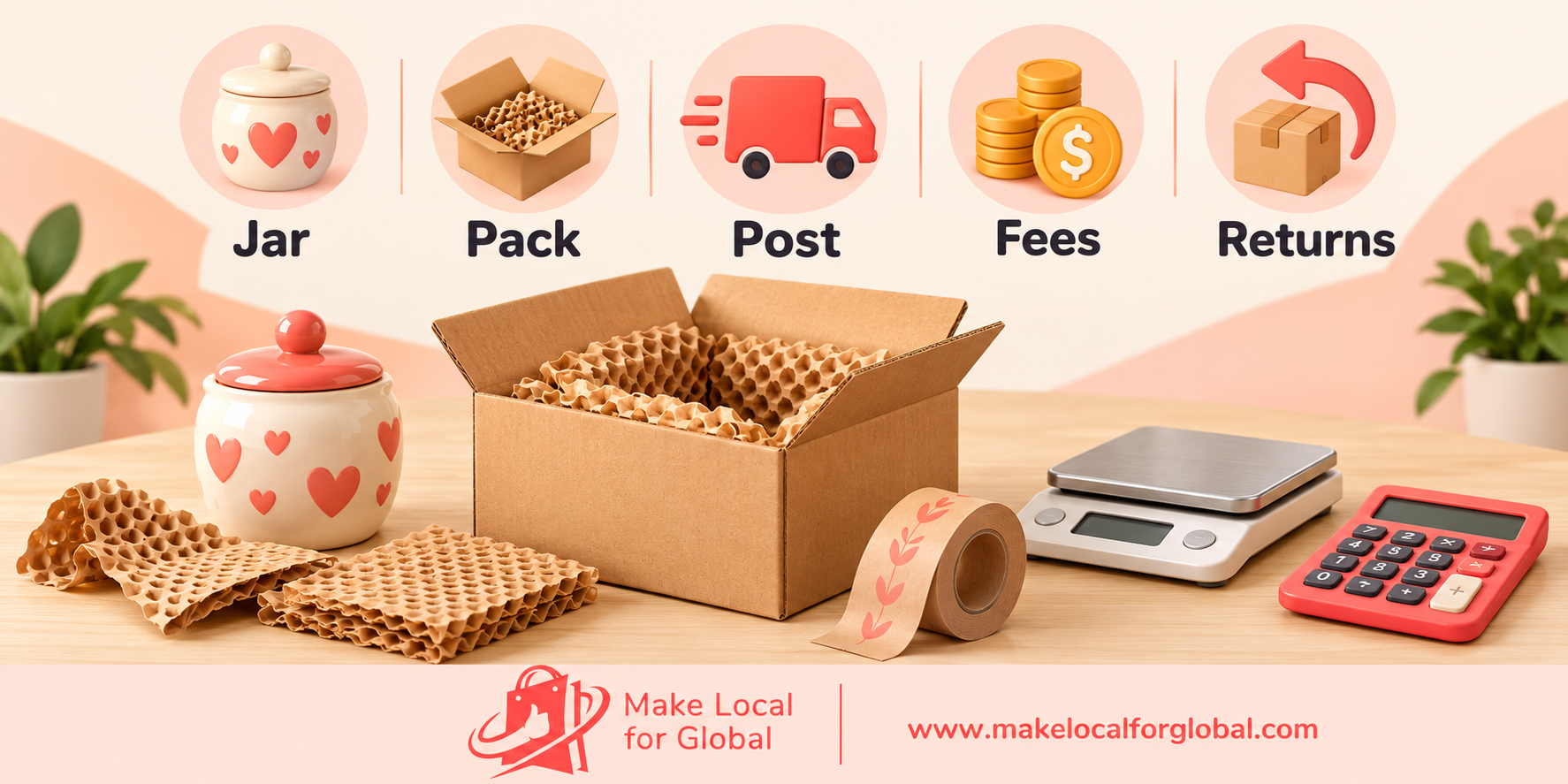
Here the arithmetic is £24.99 minus £6.20, £0.80, £1.10, £0.55, £3.40, £0.65 and £2.00. That leaves £10.29 contribution before fixed costs, owner pay and tax. Contribution is not net profit. If the buyer pays postage separately, show the amount collected and carrier cost separately so the whole order still balances. If postage is included in the item price, keep the full carrier cost in the model.
Check each fee against the current provider schedule. A percentage fee changes with the retail price and some services add a fixed charge. A two-jar bundle may need a larger carton and higher postage band. Calculate it as its own order type, including the added handling time, packaging and damage exposure. Use an expected and a high-cost delivery scenario to see whether the product remains viable outside the cheapest route.
VAT changes the figures. Keep VAT-inclusive customer prices separate from costs excluding VAT, and include input VAT recovery only where it applies to your business. Check current HMRC information or ask an accountant to review your own setup. Mixing a gross retail price with net supplier costs can overstate the contribution. The example does not include VAT and should not be read as tax advice.
List fixed monthly costs such as website fees, insurance, storage, bookkeeping, software and regular photography. Divide the total you need to cover by contribution per order. If those costs are £515 and contribution is £10.29, the break-even count for those fixed items is £515 divided by £10.29, or 50.05, rounded up to 51 orders. This figure still excludes owner pay and tax. Add those needs before using the result as a trading target.
Review the model when supplier invoices, carrier charges, damage rate or channel fees change. If the required sales count looks unrealistic, revisit the offer, delivery promise, price or sourcing route before increasing stock. A low-cost jar may not be a good choice if the buyer expects free postage or the packaging cost is high. A higher price needs a product and service that support the value to the intended buyer.
Choose an outer carton with room for cushioning on every side, then stop the jar moving inside it. Protect the lid and rim from collision, wrap detachable parts separately and add support around handles or knobs. A retail carton can help presentation, yet it may not be strong enough for shipping alone. Test the complete parcel rather than judging packaging by appearance.
Write a packing recipe that another person can follow. Record the carton size, cushioning type, lid protection, orientation, void fill, tape pattern and accessories. The closed parcel should not rattle or shift when moved gently. A fragile label does not replace cushioning. Measure the outer dimensions and weigh the packed parcel, since added protection may put it in a different carrier band.
Send representative parcels to a few addresses and ask recipients to photograph the parcel before opening it. Note the route, service, delivery time, carton condition and any movement or damage. A home test does not certify a shipping method, yet it can expose a weak step before you dispatch many orders. Keep one packed sample for internal checks and change one packaging detail at a time when investigating a failure.
Track damage by model, batch, packing method and carrier. If a knob or lid breaks, protect that point or reconsider the shape. If the jar shifts in a large carton, revise the inserts or choose a better size. Keep customer photos, the order number, packing record and supplier batch details. Arrange a fair resolution under your policy and legal duties, then use each case to improve the method.
Lead with a plain description, such as “1.2-litre glass cookie jar with removable acacia lid”. State what is included, whether the jar arrives empty, the materials of each part, capacity, outer dimensions, opening width, weight, colour, care, intended use, delivery and limitations. If the jar is ornamental, say so before checkout. A useful product page helps a buyer decide without sending several messages to discover basic measurements.
Photograph the front, side, top, lid, seal, rim, base, pattern and maker’s mark. Show the actual model in stock and include a known object for scale. Use one clean product view and one styled scene, with colour close to the real item. Do not make a product seem larger, more transparent, airtight or more decorated than it is. If biscuits are shown inside, make sure your food-use wording is supported by product evidence.
| Page detail | Example | Question answered |
|---|---|---|
| Capacity | 1.2 litres brim-full; practical fill level shown. | How much can I store? |
| Dimensions | Height with lid, body width and opening diameter. | Will it fit a shelf or biscuit? |
| Materials | Glass body, wooden lid, silicone seal. | What touches food and how do I care for it? |
| Care | Supplier-supported cleaning method for each part. | Can the lid soak or enter a dishwasher? |
| Delivery | Dispatch window, parcel type and tracking. | When will it arrive and how is it protected? |
| Returns | Contact route and return process. | What if it is damaged or not wanted? |
Give variants their own details when sizes or finishes differ. If the larger jar has a wider opening or another lid, show it beside the option. Explain whether capacity is brim-full or a practical fill amount. A comparison chart can help when you offer several sizes; keep it readable on mobile. Show measurements in a consistent unit and use the same method for every model.
Think about the phrases buyers use when they already know what they need: glass cookie jar, ceramic biscuit jar, cookie canister with wooden lid, pantry jar or gift cookie jar. Research them, then use only terms that accurately describe your stock. Do not use “airtight biscuit jar” if you cannot support the claim. Give each page its own title, description and main phrase. Similar jars need real differences in their product copy, not the colour name changed in identical text.
Use alt text to describe the image, for example “White ceramic cookie jar with red floral pattern and fitted lid”. Keep it concise and useful rather than stuffing search terms. If an infographic shows instructions, include the same information in page text. A reader should not need to decode an image to get a care limit or shipping detail.
An independent shop gives you control over product details, presentation and customer contact, but you need to bring visitors through search, content, email, partnerships or paid promotion. Marketplaces can put a listing in front of people browsing homeware, with their own fees, terms, return rules and competition. A local shop or homeware fair lets a buyer judge weight and finish, and brings stall, travel and stock costs. Compare channels by workload and order economics.
Check current seller fees, claims rules, listing image requirements, delivery settings, returns and service standards before you publish. Match your cost sheet to the account and payment method you use. If you sell at events and online, keep available stock aligned. A display sample sold in person should not remain available on the site if it was your final sellable item.
Start with a small test: publish a few accurate listings, share one useful post about capacity or lid fit, and track qualified page visits, customer questions, baskets, orders, average order value, contribution and packing time. Change one major variable at a time so you can learn from the result. Try paid promotion only after the page answers common questions and the order margin can support its real cost per sale. Views do not guarantee orders.
Helpful content can show what fits in each capacity, how to measure a shelf, how to clean separate components or how you protect a jar in transit. A short video can show scale and lid movement, without suggesting a seal you cannot substantiate. Add useful answers to the page when customers ask the same question. Treat reviews as individual experiences and avoid claiming every buyer will get the same result.
Readers planning a related homeware product may find the candle holder selling article useful for thinking about design and product choices. Sellers of larger, fragile items can compare delivery planning in the bed frame article. Browse the Product To Sell library for more product-specific planning. Keep each internal link where it answers a reader’s next question.
Store jars so rims, lids and handles cannot knock together. Keep incoming units separate from those that passed inspection. Label shelves by model and batch; update sellable counts after orders, returns, samples and damage. A simple stock record can include supplier, SKU, batch, received quantity, inspection date, sellable units, reserved units, reorder point and issue notes. Accurate counts prevent an item selling through two channels at once.
Set a reorder point from observed demand and supplier lead time. Add a buffer only if cash allows for slower stock. Do not reorder based on one busy weekend without checking whether an event or promotion drove it. If a design gets views but few sales, review photos, dimensions, price and delivery before adding stock. Slow products tie up cash and shelf space.
Use a dispatch checklist: confirm model and colour, inspect for damage, check accessories, follow the tested packing method, select the right delivery service, send tracking and save the record. For a set, count every jar and lid before sealing. A written method lets a helper prepare orders consistently and helps you identify a missed step if a parcel fails.
Make return information easy to find. The GOV.UK online and distance selling guidance says customers can usually cancel online goods orders up to 14 days after delivery, subject to applicable rules and exceptions. It covers information provided before purchase and a saved contract confirmation. Review current guidance for your market, explain how to contact you, return an unwanted jar and report damage. Do not suggest that opening a parcel removes statutory rights.
If a parcel arrives broken, request the order number and photos of the jar and outer packaging. Arrange a fair resolution under your policy and legal duties, then record whether the lid moved, the carton was crushed or cushioning was missing. Review other stock from that batch if the report suggests a product fault. Treat a sharp edge or possible contamination concern with urgency. The records help you identify the cause and decide whether dispatch should pause.
Packaging duties depend on activity, turnover, packaging supplied and producer role. Selling empty jars, importing packed stock, adding delivery cartons or putting goods under your own brand may affect which activity applies. Read the current EPR packaging guidance for small producers and the linked guidance for large producers. The formal small-producer category has set tests; it does not mean every business that sounds small.
Check the activity and threshold tests, then record packaging type and weight if your business may need the data. Recheck if turnover or packaging supplied changes. Contact the regulator or an adviser if you cannot tell which role applies. Do not assume the supplier completed your obligations just because it shipped stock in a carton.

Write one sentence about the buyer and one about what the jar helps them do. Speak with ten likely customers, read twenty relevant reviews and list the three most common concerns. Note material, size, lid and occasion preferences. Select a few sample models or pause if the need remains unclear. Set a test budget before you approach suppliers.
Ask at least three suppliers about model identity, cost, lead time, minimum quantity, restock, packing, defect handling and food-contact papers. Keep open questions visible. Request documents tied to the intended use and market. Order only the samples you can assess. Remove a model if its papers do not match the sample or if the supplier cannot explain how it should be used.
Complete your scorecard, measure each jar, photograph the actual model and test the packing recipe. Get current freight and delivery quotes. Calculate unit, inbound, package, channel fee, delivery, damage reserve and customer acquisition. Compare an expected and higher-cost scenario. Do not order bulk stock until you can set a credible price that leaves contribution.
Post a few accurate listings with images, dimensions, materials, care, dispatch and returns details. Share one useful post with a relevant audience. Track qualified visits, questions, baskets, completed orders, cancellations, contribution, packing time and damage. At day 30, decide to restock, revise, test another material or pause. Write down the evidence behind your choice.
Use a weekly scorecard for visits, add-to-basket rate, orders, average order value, contribution, questions, dispatch time and damage. A small sample cannot prove long-term demand, but it can show a page or packing problem before it becomes expensive. Review results by model instead of combining every design into one total.
If interest is strong but orders are low, compare the questions buyers asked with the page. If completed orders leave little contribution, revisit postage, fees and advertising. If one design sells and others sit, check repeat-order quality and lead time before you stock it again. Add styles in response to repeated questions and paid orders, not a single compliment.
Yes. You can buy from a wholesaler, maker, importer or production partner and sell through a shop or marketplace. Your responsibilities depend on your role, the jar and the market. Keep supplier records and check evidence for the model before describing it as suitable for food storage.
Requirements depend on materials, intended use and market. GOV.UK points to special rules for ceramics and plastics and says written evidence can be required for relevant food packaging. Ask the supplier for records tied to the exact finished model. Describe an ornamental jar as display-only if it is not intended for direct food contact.
There is no single material for every buyer. Glass shows contents, ceramic can carry decorative finishes and metal offers another visual style. Compare intended use, lid, evidence, care, weight, breakage risk and delivered cost. Choose a product your buyer wants and the supplier can document consistently.
Add product, inbound freight, packaging, channel fees, outbound delivery, damage and returns reserve and customer acquisition. Compare contribution with the price your buyer will accept. Add fixed costs, owner pay and tax before calling the business viable. Recheck your calculation when costs change.
Use a suitable carton, cushion every side, stop the jar and lid moving, and protect handles or knobs. Follow a packing recipe and send representative parcels. Track damage by model and carrier to find patterns. A fragile sticker is not a packing method.
A few well-described models make the first test easier. Each added finish brings stock, photos, supplier papers and checks. Use repeated buyer questions and orders to choose the next size or pattern.
Yes, if you can align stock, delivery promises and support. Compare current fees, rules and workloads. A marketplace can help you test interest; your own shop gives you more control over presentation. Use a mix that you can fulfil and cost correctly.
Online cancellation rights usually apply to goods, with rules and exceptions. GOV.UK says customers can usually cancel within 14 days after delivery. Check current guidance for your market and make the return steps visible. Handle faulty or damaged products under the applicable consumer rules.
Show the body, lid, top, opening, finish and scale. Include accurate measurements in the description. Pair a styled kitchen view with plain product views of the stock model. Do not imply food use or capacity that your evidence does not support.
Order enough samples to check quality and an opening quantity you can afford to sell slowly. Reorder from observed sales, cash and lead time. A high minimum order is a reason to test interest or seek another supplier before committing.
Bring your product details, cost assumptions and customer questions into a clear online shop plan.
A credible cookie jar offer matches a buyer with a documented product, accurate details and a parcel that arrives intact. Choose a few models, inspect samples and papers, calculate every cost and test a small set of listings. Use customer questions, order contribution, delivery results and damage records to guide your next purchase.
PREFERRED SOURCE
Like what you’re reading? Add Make Local for Global as a preferred source on Google to see more of our articles when you search.

Build your online presence without having to figure out everything yourself.