READY TO SELL Dog Grooming Gloves ONLINE?
Get a store built for you in 5 days, plus training and support to help you start, run, and grow your Alternative business.

Plan a dog grooming glove range with coat-specific use, sample checks, UK product safety, full order costing and clear fit guidance.


A dog grooming glove can look simple in a product photo. A buyer still needs to know whether it fits their hand, what coat it suits, how the nubs feel, how loose hair comes away and whether the glove rinses clean. A new seller needs answers to those same questions before placing a stock order.
To sell dog grooming gloves online, choose one clear use case, compare a small number of designs, test the construction and describe the product with care. Treat the glove as a grooming aid, not as a substitute for a brush or professional advice for every coat. This plan covers product choice, sample checks, UK product-safety responsibilities, order costs, search-led product pages and a measured first launch.
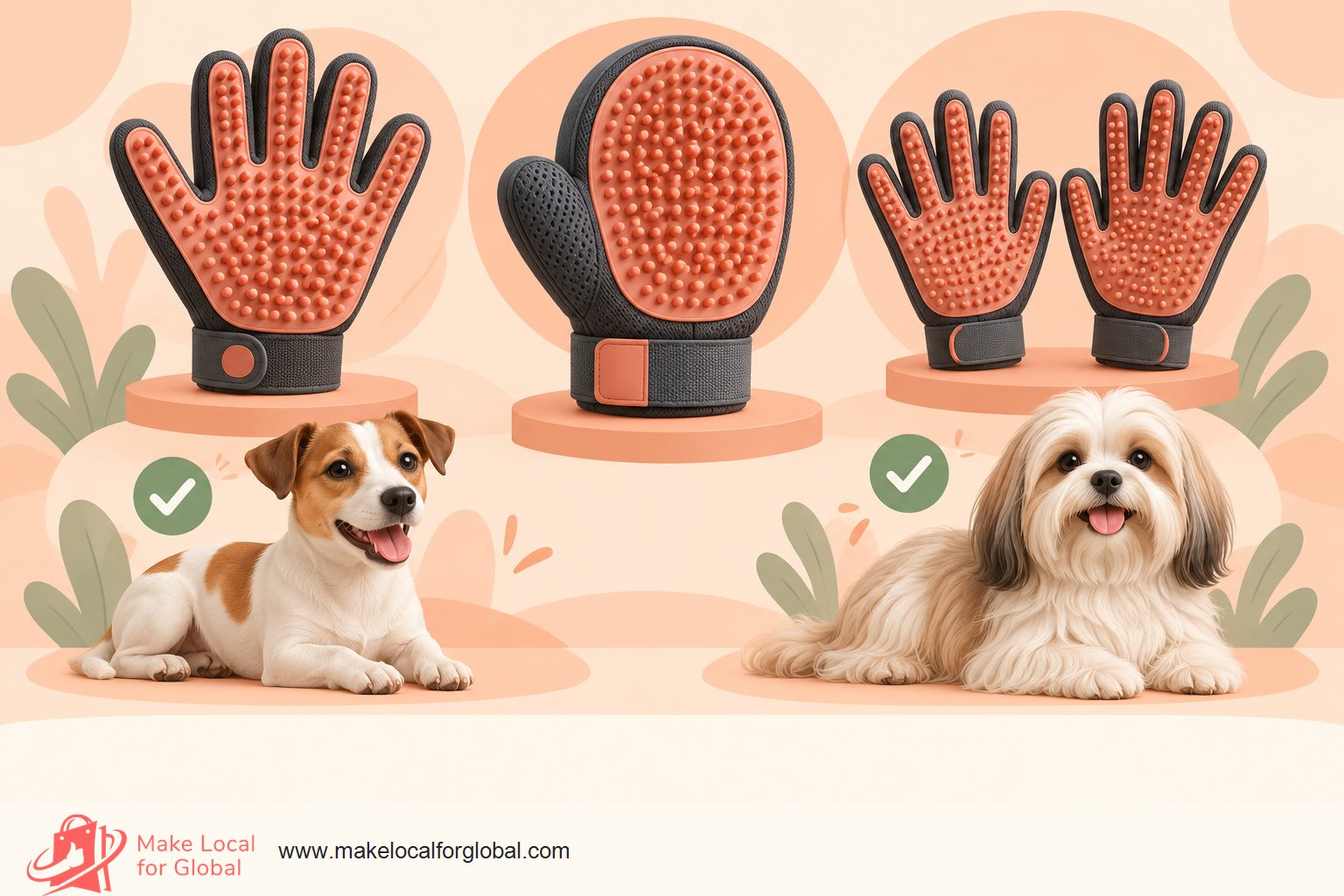
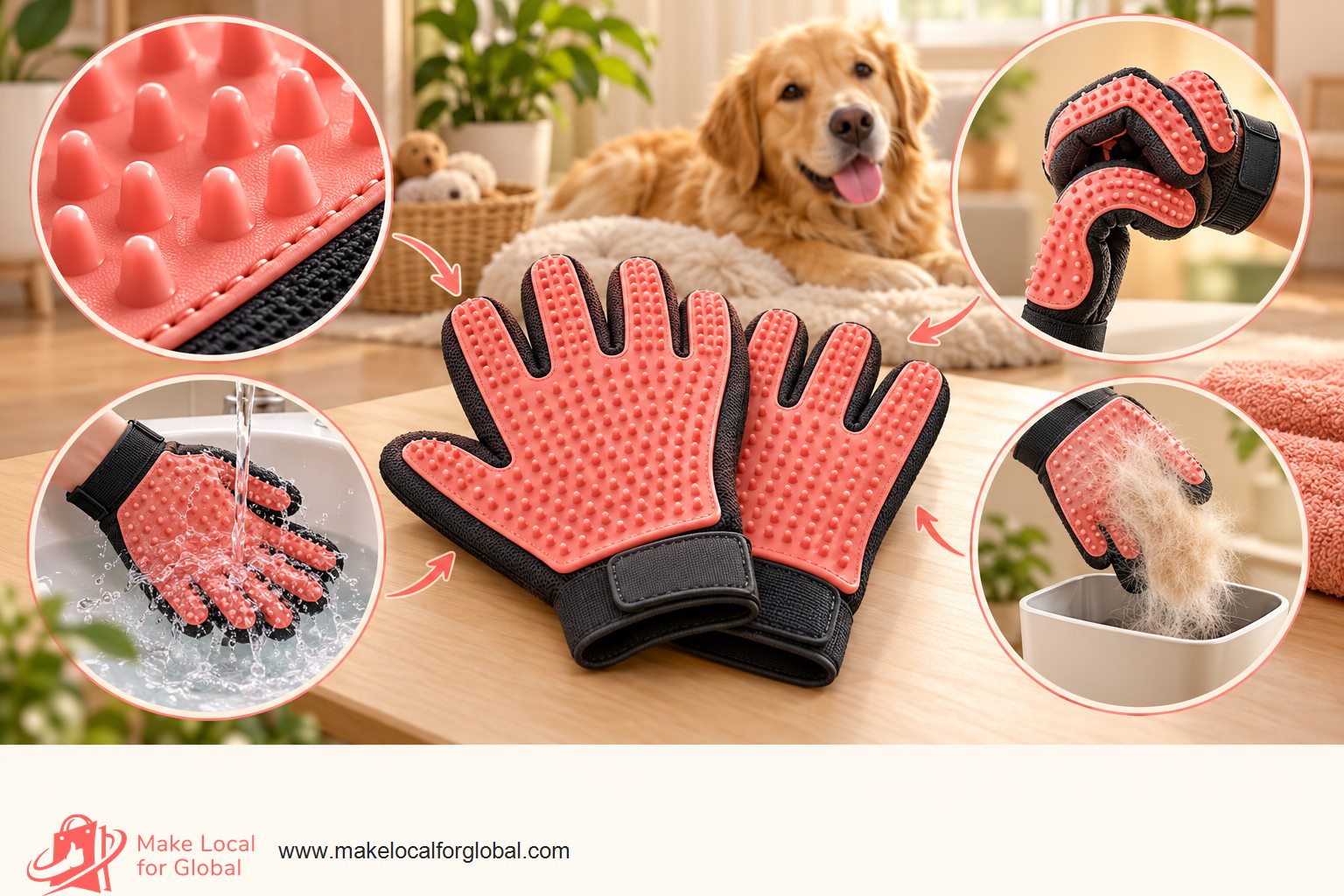
Show hand fit, coat use and cleaning details before a buyer chooses a glove.
“Dog grooming glove” covers several designs and buyer expectations. One owner may want to lift loose hair from a short coat during a gentle stroke. Another may expect a waterproof mitt for use at bath time. A professional groomer might want a durable tool for finishing work between brush or comb passes. Those are separate product jobs, so one listing should not pretend one glove is right for every dog and task.
Start with a narrow customer statement: “We sell ___ gloves for owners of ___ dogs who want to ___.” Make the blank spaces specific enough to guide the design, photos, materials and product page. Examples include a grooming mitt for owners of short-coated dogs who want to collect loose surface hair during calm brushing, or a washable pair for owners who want to rinse a dog after a muddy walk.
Speak with dog owners who have bought or used a grooming tool recently. Ask them to describe the last time they groomed their dog. Which tool did they reach for? What part of the task felt messy, tiring or hard to control? Which coat type does the dog have? How did the owner choose a glove size? What did the listing leave unclear?
Ask about a real past action, not a promise to buy a product you have not made. Questions such as “Would you pay £20 for this?” often produce a polite guess. “Which grooming tools did you use last month, and what did you dislike about them?” gives more useful detail. With consent, write a short note about the problem and the evidence the owner would need before trying another tool.
Listen for different jobs hidden inside the word “grooming”. A glove may be bought for light coat maintenance, hair collection, bath-time massage, rinsing, or a quick wipe after outdoor activity. An owner may expect one glove to do several of these tasks. Keep the listing precise about what you have tested and what it has not been shown to do.
Record each conversation in a simple table with fields for the owner’s dog, coat description, current tool, task, main complaint, glove features they asked about and a next test. Avoid retaining personal information you do not need. Ask before using a customer’s comment or image in marketing.
Look for repeated questions. If several owners ask whether the glove works on a long double coat, test that exact coat type with suitable grooming guidance. If they ask whether the glove is ambidextrous, check the thumb position and wrist opening on the physical sample. If owners are uncertain about hand size, photograph the palm measurement method and publish glove dimensions rather than saying “one size fits all”.
A short test can use a concept sheet with two or three glove designs and a realistic price range. Show a hand wearing each glove, the nub side, the fabric side and a short explanation of the intended task. Ask what the person would want to check before ordering. Track a concrete action such as a request to see a sample, a message about a size or an email sign-up. Likes alone are weak evidence of demand.
Choose a decision rule before spending on stock. For instance, you might only order a sample when six owners in the target group identify the same problem and three agree to review a real sample. Those are planning figures for a small test, not a sales benchmark. Change the figures to suit your audience and budget, then record the result, including a note when the evidence remains too limited.
These gloves use raised flexible tips on the palm and fingers. Product shapes vary: some resemble a close-fitting five-finger glove, some have a broad mitt shape, and some put nubs on one palm only. A silicone surface may suit a rinse-clean design, but material names alone do not prove the glove’s durability, feel, safety or cleaning performance. Check the exact composition and construction with the supplier.
Inspect the size of the tips, how firmly they attach to the base, whether edges feel rough, and whether the palm flexes with a hand. Fine dense nubs may feel different from larger spaced tips. There is no single nub pattern that suits every dog or task, so sample each design and use a claim such as “works for all breeds” only when reliable testing supports those exact words.
Some styles combine a textured palm with a textile back. That can change heat, fit, drying time and how water moves through the glove. A mesh back may dry more quickly than a thick fabric, but check the actual model after rinsing and air drying. A fabric panel can retain hair, smell or moisture if the seams and material trap debris.
Check the inside finish beside the palm. A rough seam or loose lining can irritate a hand or catch on nails. If the glove includes a wrist strap, measure its adjustment range, try it on different hand sizes and check that the closure does not detach under normal handling. Photograph the fastening open and closed.
A single mitt may cost less to source and pack. A pair gives the owner one glove for each hand and may be easier to use around a dog’s body. Do not assume every buyer wants two. Ask in the first interviews, then test how many people understand what is included from a product photo and title.
Write the contents plainly: “one right-hand glove” or “one pair, left and right”. Do not use a photo with two gloves and leave the quantity unstated. If you sell a pair in a gift box, show the box contents and distinguish accessories in the scene that are not included.
A glove sold for a bath should be tested with water and the use instructions supplied by the manufacturer. Do not imply it replaces a shampoo, detangling comb, slicker brush or a groomer’s advice. A gentle glove may not be suitable for knots, dense undercoat, sensitive skin or a dog that dislikes touch. Help the owner recognise the intended job and its limits.
The Royal Kennel Club notes that dog grooming needs vary by breed and coat, and suggests owners ask a breeder or groomer about the dog’s needs. Its dog care basics explain that short, medium and long coats can call for different grooming routines. Use this kind of guidance to frame the product for a suitable use case, not to make health claims about a glove.
A first collection might contain one silicone-palm design in two sizes, or one bathing glove in a pair with two colour choices. Start with variants you can inspect and explain. A catalogue with three glove shapes, four colours, two hand options and three sizes creates 72 possible combinations before bundles. Each combination creates a product record and a stock decision.
Use an entry, core and higher-value offer only if each one addresses a real buyer need. An entry item might be one glove for a clear task. The core product could be a left and right pair in the main size options. A higher-value bundle may add a storage pouch or an extra glove if the add-on serves a purpose and the complete order still works financially.
| Product route | Buyer question | Sample check | Seller task |
|---|---|---|---|
| One silicone grooming mitt | What coat or job is it meant for? | Nub firmness, edge finish and hair release | State hand fit and product limits |
| Two-glove set | Are left and right gloves included? | Check both hands fit and closures stay secure | Show both gloves and unit count |
| Bath-time glove | How does it rinse and dry? | Rinse, inspect seams and air dry fully | Explain use and cleaning steps |
| Textured textile mitt | What is the palm and back made from? | Check seams, water retention and snagging | Give verified material details |
| Grooming kit bundle | What else comes in the parcel? | Check compatibility and package contents | Cost every component and show contents |
Keep a record for each planned product code: glove type, size, pair or single unit, palm material, back material, colour, closure, supplier, sample reference and packing version. A different colour can change more than appearance if the dye, backing or production batch changes. Ask the supplier whether the same specification and test results apply to each option.
You can buy from a UK wholesaler, import a ready-made glove, commission an own-label version or make a small batch with a local pet-accessory maker. Each route gives a different mix of control, unit cost, minimum order, lead time and evidence. A low unit price is not enough to choose a supplier if you cannot inspect a sample or trace the goods.
Request the product code and written specification for the model you intend to buy. Ask for palm and backing materials, dimensions, weight, colour options, care instructions, packaging, batch identification and the location of manufacture. If the glove is advertised as food-grade, hypoallergenic, antimicrobial, recyclable, biodegradable or made from a particular compound, request evidence that applies to the actual item and intended claim.
Ask how the supplier controls changes. Does a new batch use the same silicone blend, fabric, seam pattern and dye? Will the left and right gloves come from the same specification? What happens if a shipment has a missing pair, loose nub, torn seam or different fit? Ask for defect photos, return arrangements, lead time, payment schedule and minimum order in writing.
For an imported product, ask who is responsible for the product-safety information and traceability records. Ask the supplier for manufacturer and importer details that belong on the packaging or product record where applicable. Obtain accurate commercial invoices and freight terms. The person buying stock must understand which business is importing the goods and which obligations that role brings.
A UK wholesaler can let you order a smaller quantity and shorten replenishment time. Ask whether the item is already held in UK stock, what evidence accompanies it, and whether another retailer can buy an identical design. A wholesale listing is not a test report. Keep your own supplier and sample records.
Direct import can offer more control over colour, branding and pack size. It can require a larger commitment and more work on customs, shipping, product documentation and checks. Get a sample before placing a larger order. Confirm the final price, unit count, carton quantity, freight basis, production timeline and who pays for a replacement shipment if goods fail inspection.
Own-label production can help you specify the nub layout, cuff, fabric and pack. Ask for a prototype against a written drawing and identify which changes need your written approval. Keep a signed sample or dated photographs as the comparison item for the production run. For a small seller, the extra design time and minimums may outweigh the benefits until a specific customer need is proven.
A local maker may support a small test or distinctive material choice. Confirm whether every unit can be made to the same dimensions, how the material is sourced and which safety checks the maker has done. If a product is hand assembled, define what counts as a defect and how you will check each item before it is dispatched.
Score each route against the same questions. Give more weight to reliable samples, documented material information, order flexibility and traceability than to a catalogue claim. Record the answer and evidence, not only a score.
Avoid paying for a large order based on a catalogue image or video call alone. Compare a physical sample with the product description and keep a dated record. If the supplier cannot answer a safety or material question, pause the order and seek appropriate advice.
A sample test is more useful when it follows a written checklist. Give every design the same inspection. Record the sample date, supplier, product code, material, size, colour, glove count, result and photographs. Keep the sample until you have inspected the first delivered batch.
Try the glove on more than one hand size within your expected customer group. Record palm width, finger length, cuff opening, wrist closure and whether the thumb sits naturally. Note whether it is a left glove, right glove, reversible mitt or pair. Check whether the hand can open and close without the glove slipping or twisting.
Move the wrist and fingers as a person would during a grooming stroke. Test the closure and any adjustable strap. Do not pull so hard that you damage a sound glove, but check whether light repeated use loosens the stitch, elastic or fastener. Measure the glove flat and give buyers a guide that states the measurement points.
If one size is offered, publish the glove measurements and a simple method for comparing them with the buyer’s hand. Do not label it “one size fits all” when you have not tested a broad range of hands. If you offer two sizes, make the distinction visible on the product page and on each package label.
Look closely at each raised tip, the edge where the palm meets the fabric and the finger channels. Check for rough flashing, sharp points, missing sections, split material or a tip that can be removed with a light pull. Review the stitching where the thumb meets the palm and around the cuff. Check whether lining or threads catch on fingernails.
Flex the glove through ordinary hand movement and repeat the motion. Note whether seams open, the backing wrinkles or a coating separates. Rub the glove against a clean fabric sample to see whether colour transfers or nubs snag. This is a basic seller screen, not a formal material or durability test.
Rinse the glove using the care method supplied with the product. Inspect whether hair and debris leave the palm, whether water sits in seams and how long the glove takes to dry under the stated conditions. If you plan to claim “easy to clean”, define what that means and confirm the exact version performs that way. Do not promise dishwasher safe, machine washable or quick drying without suitable confirmation.
If you test the glove with a dog, choose a calm dog whose owner agrees to the test. Ask the owner or an experienced groomer which tool is appropriate for that coat. Start with a short, gentle stroke in the direction of hair growth, away from the face, eyes, ears and sensitive skin. Stop if the dog shows discomfort or pulls away. Do not use a product trial to diagnose a skin condition or prove a medical result.
Record the coat type, glove hand, time used, area, pressure, hair collected, control, ease of rinsing and any visible snag or distress. One dog cannot prove suitability for every breed or coat. A second user may have a different hand size and technique, so keep notes distinct rather than averaging away a poor result.
The PDSA guidance on grooming pets says grooming needs vary by animal and coat, and advises owners to ask a vet or reputable groomer when unsure about a tool. The RSPCA dog grooming guidance notes that a dog may dislike touch in certain areas and should not be forced through grooming when distressed. These are useful boundaries for product instructions and marketing: describe the tool’s tested task and avoid presenting it as right for every dog.
If a sample fails, tell the supplier what happened and send photographs with the batch code. Ask for a replacement or written correction, then repeat the same checks. Do not publish a positive claim based on a different sample version from the stock you plan to send customers.
The duties depend on what you sell, how you source it and where the customer is located. A simple grooming glove does not automatically need the same marks as electrical, toy or protective equipment. Add a CE or UKCA mark only when a rule covers that product and the required assessment supports it. Product classification can depend on design and claims, so seek advice when uncertain.
For Great Britain, the Office for Product Safety and Standards says the General Product Safety Regulations 2005 apply to consumer products and require safety in normal or reasonably foreseeable use. Its guidance describes responsibilities for producers, which can include importers, and distributors. In Northern Ireland, the EU Regulation 2023/988 product-safety rules apply from 13 December 2024. Check the correct route before offering stock across the UK or into the EU.
Keep records that allow you to identify where a glove came from and which batch you supplied. The official product-safety advice for businesses says businesses that make, import, distribute or sell consumer products are responsible for safety, and should keep supplier traceability information. Its separate manufacturer and importer guidance describes product and batch references, consumer safety information and monitoring for issues.
Create a folder for the supplier specification, sample photos, invoice, batch number, checks, complaints and corrective actions. If an owner reports a tear, loose nub, unexpected material smell or injury, record the product code and batch, stop selling the affected stock as you investigate and contact the supplier. Government guidance explains that businesses must notify the relevant authority when a product is found to be unsafe. Ask Trading Standards or an appropriate product-safety adviser for help with the exact next step.
Give customers clear use, cleaning and storage information based on the tested product. A warning should be relevant to a real risk and understandable to the person using the glove. For example, if the supplier’s instructions say to inspect a damaged glove before use, repeat that direction accurately and include it in the package. Do not add generic warnings that conflict with the maker’s instructions.
Product claims need evidence. GOV.UK’s marketing and advertising guidance on describing products says claims must be accurate and supportable. Its product labelling guidance says any label information you choose to show must be accurate, including what a product is made of and what it can do. Write “textured silicone palm” only if you have verified the palm material. Write “collects loose surface hair during gentle strokes” only if your sample check supports that description.
Avoid health claims such as “prevents skin disease”, “removes every parasite” or “stops allergies”. A grooming glove is not a veterinary treatment. Use broad “hypoallergenic”, “antimicrobial” or “safe for every dog” wording only when evidence and suitable regulatory advice support the exact claim. An owner with a dog who has a skin or coat condition should be directed to a vet or qualified groomer, not a sales promise.
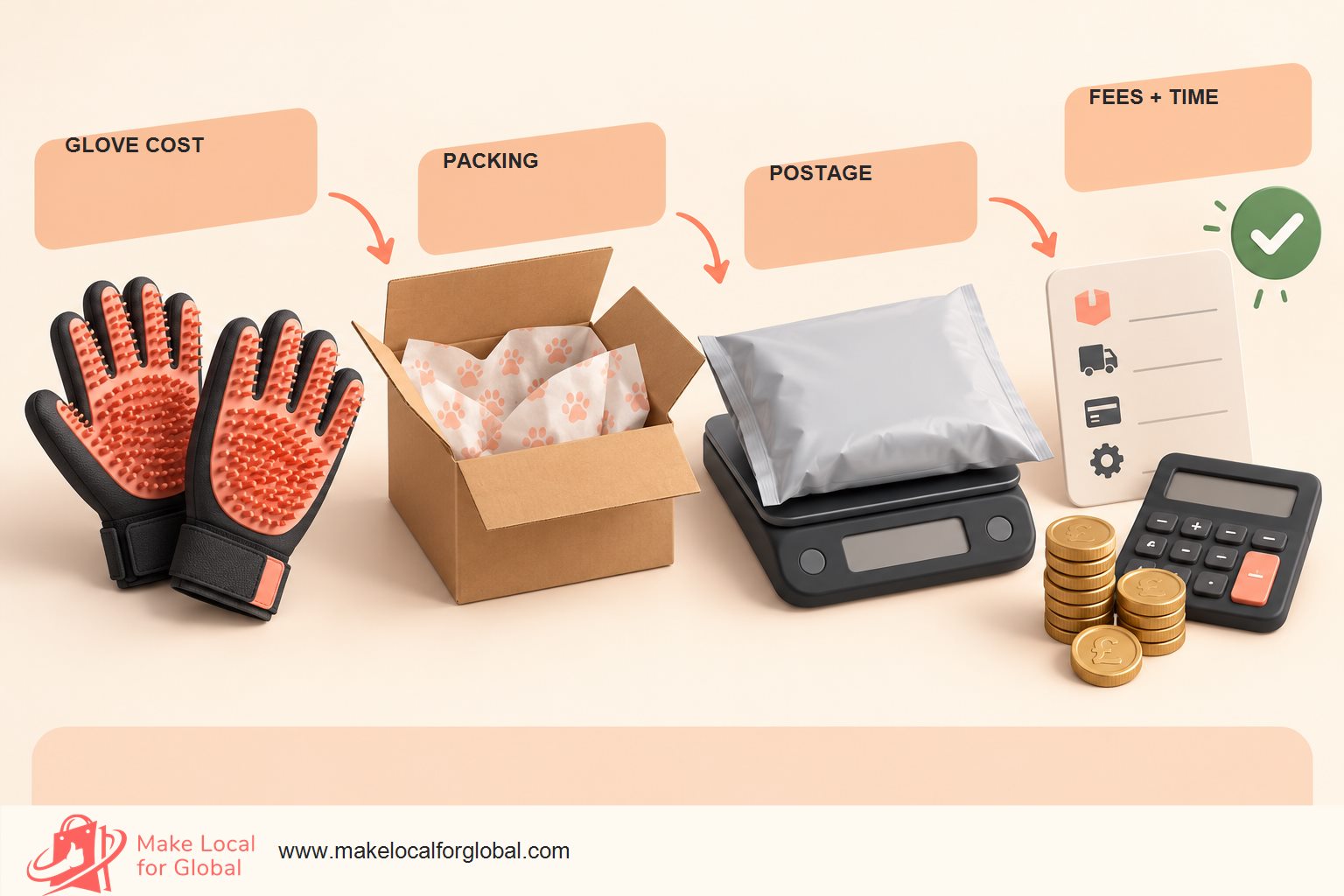
The landed cost of stock is only one part of a sale. Count the costs from buying the glove through sending it to the owner. Include stock purchase, inbound freight, import charges where they apply, inspection, packaging, platform and payment fees, dispatch labour, delivery, customer acquisition and an allowance for returns, replacements and defects.
Consider an illustrative order for one pair of gloves sold at £24.95. These are planning figures only, not a supplier or carrier quote. A seller who is not VAT registered is assumed for the simple example; a VAT-registered seller must use the correct VAT treatment for their business and customer price.
| Cost line | Illustrative amount per order |
|---|---|
| Pair of gloves from supplier | £5.40 |
| Inbound freight and import costs allocated per pair | £1.10 |
| Mailer, paper wrap and product card | £0.55 |
| Marketplace and payment charges | £1.65 |
| Outbound delivery paid by seller | £2.95 |
| Pick, check and dispatch time | £0.95 |
| Allowance for returns and replacements | £0.75 |
| Customer acquisition allocation | £2.80 |
| **Estimated variable cost** | **£16.15** |
| **Contribution before fixed costs and tax** | **£8.80** |
Arithmetic: £24.95 selling price minus £16.15 estimated variable cost equals £8.80 contribution. It is not net profit. It still has to cover recurring costs such as insurance, accounting, web hosting, photography, storage, unsold units, software and owner pay.
Replace every figure with a quote or a measured figure from your own business. The fee line changes by marketplace and payment plan. A customer’s delivery payment may be included in the platform’s fee calculation. Check the actual fee basis before deciding that postage is a pass-through. If a discount reduces the price to £21.95, contribution falls by £3.00 when no other cost changes.
If you import, allocate the customs, freight, currency conversion and handling charges over the units you expect to sell, not only the quantity in the first parcel. If an order contains a pair, divide the unit cost by the pair count accurately. If the supplier invoices each glove separately, use the cost of both gloves in the pair.
Build a separate cash plan for the first order. Suppose a supplier asks for 120 pairs at £5.40 each. The initial product bill is £648 before freight, duties, sampling, labels or packaging. Add the cost due before you can sell the stock. Then test a slow-selling case where only half the quantity sells in your target period.
A cash commitment is different from a per-order cost. Unsold stock still ties up cash. A discount at the end of the season may recover some money, yet it can leave the seller with little contribution. Model full-price sales, a modest promotion, a slower sales period and an order with a higher return rate. Choose a maximum order size based on how much the business can afford to hold.
Write down the point that would justify a reorder. It might require enough paid orders to validate the product, a return rate below a limit, no unresolved safety concern and evidence that the supplier can repeat the same specification. Track units sold by glove size, colour, pair count and batch. A high view count with few purchases may mean the listing is unclear or the product does not meet the need.
Before publishing a price, check all charges a buyer must pay. GOV.UK’s guidance on product prices in marketing says adverts need to describe the actual cost accurately, including associated charges and taxes such as VAT. The CMA’s summary on clear price information explains that unavoidable charges should be included in the total price shown to the customer. Present delivery charges clearly and show an up-to-date basket total.
Add product, inbound freight, packaging, fees, delivery, time and returns before setting the price.
A listing should make the product, pack quantity, fit, task, materials, care and limits clear before checkout. Give the buyer a useful name, not a string of search terms. A title such as “Washable dog grooming glove with silicone nubs, pair” says what the item is, one verified feature and the pack contents. Change “washable” or “silicone” to match the sample and supplier record.
Show glove length, palm width, finger length where relevant and cuff range. State whether a measurement is taken with the glove flat and whether it is for one glove or a pair. Include a hand-measurement photo with arrows. If left and right gloves differ, identify each clearly. If the glove is reversible, demonstrate how the thumb and palm sit on either hand.
Use one consistent unit, such as centimetres. If you list a single size, explain which hands it fits based on the sample checks. Avoid a size range based only on a supplier’s generic chart. If several people tried the glove, describe the range of their hand measurements and the observed fit without implying a formal test.
Say whether the glove is intended for dry brushing, bathing, wiping or another task, based on the instructions and your sample. Describe the type of coat tested. Explain the stroke direction if it is in manufacturer instructions or supported by grooming guidance. State the cleaning process and drying time only where you have measured it under conditions you can describe.
A short product description could say: “One pair of textured grooming mitts with adjustable wrist straps. Our sample check covered hand fit, a gentle short-coat grooming session and a rinse under running water. They are intended to lift loose surface hair during light grooming. Use a brush or comb suited to your dog’s coat for other grooming tasks, and stop if your dog appears uncomfortable.” Adapt the wording to the real product and only use claims that your records support.
Place limits where a buyer will see them. State whether the glove is unsuitable for removing mats, trimming nails, cleaning ears or treating skin problems. Do not describe a glove as a replacement for veterinary care. If the product is not designed for children, keep child use out of imagery and instructions. A product photo should show what is in the order and avoid implying that shampoo, a brush or a dog is included.
Research the words owners use in their questions, site search, marketplace suggestions and search data. Possible phrases include “dog grooming glove”, “dog deshedding glove”, “silicone dog grooming mitt”, “washable dog grooming glove” and “dog bath glove”. These are research ideas, not search-volume claims. Check whether the product truly meets the phrase before putting it in a title.
Use the main topic in the page title and a few relevant places where it helps a person understand the product. A product page can mention the material, glove count, coat or use case. Do not repeat “dog grooming glove” in every heading or alt text. Related product links should be useful: a grooming glove buyer may compare it with a dog toys range, or a dog collars guide if you have a pet shop collection.
Write a meta description that explains the specific value of the page, such as “Choose a dog grooming glove by fit, coat use and care instructions. See the tested features, pack contents and delivery details before ordering.” Do not promise that a page will rank or that the product will reduce every shed hair.
Use a clean background and consistent lighting. Photograph the palm side close enough to show the nubs, the fabric back, the wrist, the inner lining, the glove on a hand and the pair or pack contents. Include a size comparison with a ruler or hand measurement. If you show use on a dog, choose a calm dog, show gentle contact and name the coat type used in the sample check.
Show colour as close as practical to the actual item. Strong warmth or contrast can make silicone appear softer or darker than the shipped glove. Take a close-up of seams and the cuff. Photograph the package label when it helps a buyer understand materials, quantity or care. Add descriptive alternative text for each image, such as “Coral silicone nubs on the palm of a charcoal dog grooming glove”, rather than repeating the same keyword.
A glove should arrive clean, dry and protected from dust or damage. Choose packaging that fits the parcel size without making the glove appear larger than it is. Use a card insert only when it gives useful care and contact details. If the product arrives in a sealed bag, check the supplier’s packaging requirements before repacking.
Measure and weigh the packed order, not only the product. Record the packaging size, weight, parcel type and carrier band. Test a parcel through the fulfilment process before launch. If the cuff or raised nubs get crushed in a mailer, use a different pack and add that cost to the model.
Create a stock code that distinguishes colour, size and pair count. For example: DGG-S-CO-P2 could mean small, coral, pair of two, if that code matches your own naming system. Put the supplier batch in the stock record. Check every incoming carton against the order quantity, compare random units with the approved sample and quarantine anything with a torn seam, missing nub or wrong count.
Keep stock in clean, dry storage. Separate sizes and colours in labelled bins so a person picking an order can identify the exact product. Record returns and replacements against the batch. A returned used grooming glove may not be suitable for resale. Follow the platform and consumer rules for hygiene, condition and refund decisions; do not create a blanket rule that removes statutory rights.
Write a dispatch checklist: right glove or pair, correct size, correct colour, care leaflet, clean condition, parcel weight, address and tracking label. A repeatable check helps catch a single-glove pack mistake before it reaches the owner. If you outsource fulfilment, agree how the partner will handle batch records, damaged stock, returns and safety alerts.
A marketplace can put your listing beside related pet tools, with platform rules and fees to learn. Your own shop gives you more space for fit instructions, FAQs, video and comparisons, yet you must attract shoppers and maintain the checkout. A local pet event or grooming studio can let buyers see the glove material before ordering online. Each channel needs a different budget and measurement plan.
Choose one primary channel for the first test. Add a second only when you can keep stock, prices and product information aligned. Read the platform’s current rules for product claims, image requirements, returns and seller details. Marketplace rules can change, so check them before you list.
Track more than visits. Record page views from relevant searches, questions about fit, add-to-basket actions, completed orders, average selling price, dispatch time, return reasons and defects by batch. If customers ask “is this for a pair?” then the image or product title needs a clearer quantity. If buyers ask about coat types, the page should state the tested use and its limits.
Make a simple sales page test with two accurate headline options. One might focus on the coat task; another might make the glove count and washability clear. Keep the price and photo consistent as you test the copy. Do not claim the comparison proves a broad sales preference from a few visitors. Use the result to choose the next question or product-page adjustment.
Publish short demonstrations that answer actual buyer questions. Show how the hand fits, how the wrist closes, how the glove rinses and how you measured a sample. State the exact glove, coat, use and cleaning method shown. A video that shows a calm dog and gentle strokes helps a buyer judge the tool better than a montage of loose hair with no context.
Ask a local groomer or pet shop to review the sample for fit and use. Make clear whether the person was paid, received a product or has another connection to your business. Do not call the review independent if the reviewer had an incentive. Ask permission before using their name, image or comments.
Useful content can link the glove to related products without forcing an upsell. A dog owner who has a grooming routine may compare dog collars, dog carriers or dog waste bags for a wider pet-care range. Keep the pages connected by clear shopper intent, not by repeating the same keyword.
Online buyers need clear delivery, cancellation and returns information before they pay. The UK distance-selling rules include a cancellation period for many online orders. GOV.UK’s returns and refunds guidance says online, mail and telephone customers normally have 14 days after receiving an item to tell the seller they want to cancel, then another 14 days to send it back. Exceptions apply to certain goods. Check the current rules for your product and selling arrangement before writing a policy.
A customer may be allowed to handle goods as they would in a shop. Hygiene, condition and product-specific facts can affect how a return is handled, but do not state “no returns” for an ordinary online sale as a blanket rule. Get suitable advice if you plan to rely on an exception. Refund rights for faulty or inaccurately described products remain separate from a change-of-mind policy.
Keep replies practical. If a buyer says the glove runs small, ask which measurements they used and check that order against the product record. If a glove arrives with a seam failure, record the batch and ask for a photo if the buyer is comfortable sending one. Give a straightforward route for resolving the order, and do not ask a customer to disclose private details in a public review.
Reviews can reveal product-page gaps. Group comments into fit, comfort, coat type, cleaning, quantity, parcel and quality. Separate a defect from an expectation mismatch. If the same point appears more than once, fix the specification, sample or listing. Ask a buyer for permission before quoting their words in an advert.
A bath mitt, deshedding glove and finishing tool may have different construction and use instructions. A broad title makes a buyer guess. Name the tested task and show which coat types you have actually checked.
Colour may use a different finish or production batch. Check each colour for dye transfer, surface feel, seam quality and cleaning. Start with one or two options you can inspect, then add a shade after your supplier confirms the specification.
A catalogue may say “hypoallergenic”, “antibacterial” or “fits every breed”. Ask what evidence supports each phrase, which glove model it covers and how the test was performed. Use a specific observable feature if the claim has no evidence.
The amount of loose hair depends on the dog, coat, season, grooming routine and method. A sample test cannot prove that one glove will stop shedding. Show a real test and explain the conditions instead of showing an unrealistic pile of fur.
A photo of two mitts can lead a buyer to expect a pair. A palm width alone may not explain finger fit. State the included quantity and publish the glove’s dimensions with a clear way to compare them.
The supplier cost does not include inbound freight, fees, delivery, returns or time spent checking and packing. Use a full order calculation and revisit it when your price, platform or delivery method changes.
If a batch has a repeated fault, the seller needs to find which units remain and which orders may be affected. Keep supplier invoices, batch details, photos and complaint notes. Follow official safety guidance and seek help if an incident suggests a risk.
A relaxed dog with a glove near its coat is a clearer product scene than a dramatic before-and-after image that implies every dog responds the same way. Use an image that matches the product, show safe gentle use and make it clear whether shampoo or a brush is included.
Speak with owners of dogs whose coat and grooming routine match the product you are considering. Ask about recent tool purchases, glove fit, cleaning, loose hair and the point where they stop using a tool. Record the exact task they want help with. Review the dog-care guidance linked above and note the limits of what a glove can do.
Choose one glove style and write the buyer statement. Make a short list of the evidence needed: hand fit, material, pair count, cleaning, coat suitability, supplier traceability and a realistic price. Ask at least three suppliers the same questions and compare answers in the scorecard.
Set a sample budget and a limit for the first stock order. Do not count anticipated sales as cash you already have. Note which result would make you reject the item or ask for a new sample.
Order the samples that match the same intended use. Photograph the glove out of the package, measure its palm and cuff, check the seams, flex the hand, rinse and dry it under a recorded method. Ask a knowledgeable owner or groomer to review the use case.
If a real dog is involved, obtain the owner’s consent and stop if the dog shows discomfort. Keep the test gentle, brief and suited to the coat. Record what the glove did and what it did not do. Do not present one successful session as proof for every dog.
Choose the sample that has the clearest specification and can be supplied again. Ask for written confirmation that the bulk order uses the same materials and design. Save the supplier’s answer with the sample photos.
Use actual quotes for the pair, freight, customs, packaging, payment fees, carrier, dispatch time and return allowance. Run a slower sales case and a small discount case. Decide the maximum first order and your reorder trigger.
Write the title, description, materials, hand measurements, glove count, tested task, care instructions, limits, delivery details and returns information. Review each product claim against evidence. Ask someone who did not write the page to find the size, pack quantity and cleaning instructions without help.
Photograph the palm, back, cuff, inside, hand fit, product pair and package. Add an accurate alt description to each image. Check colour against the sample under neutral light.
Publish a small quantity if the product and records are ready. Use one sales channel and a measured promotion. A launch post can show the fit test or care method, with the exact model and conditions named. Do not describe the product as a remedy for a health issue.
Review visits, questions, sales, returns, delivery time and defects at least once each week. Record the results by glove style, size, colour and batch. At day 30, choose one action: reorder the tested version, change the listing, request a corrected sample or stop. Use the records and cash position to make the choice.
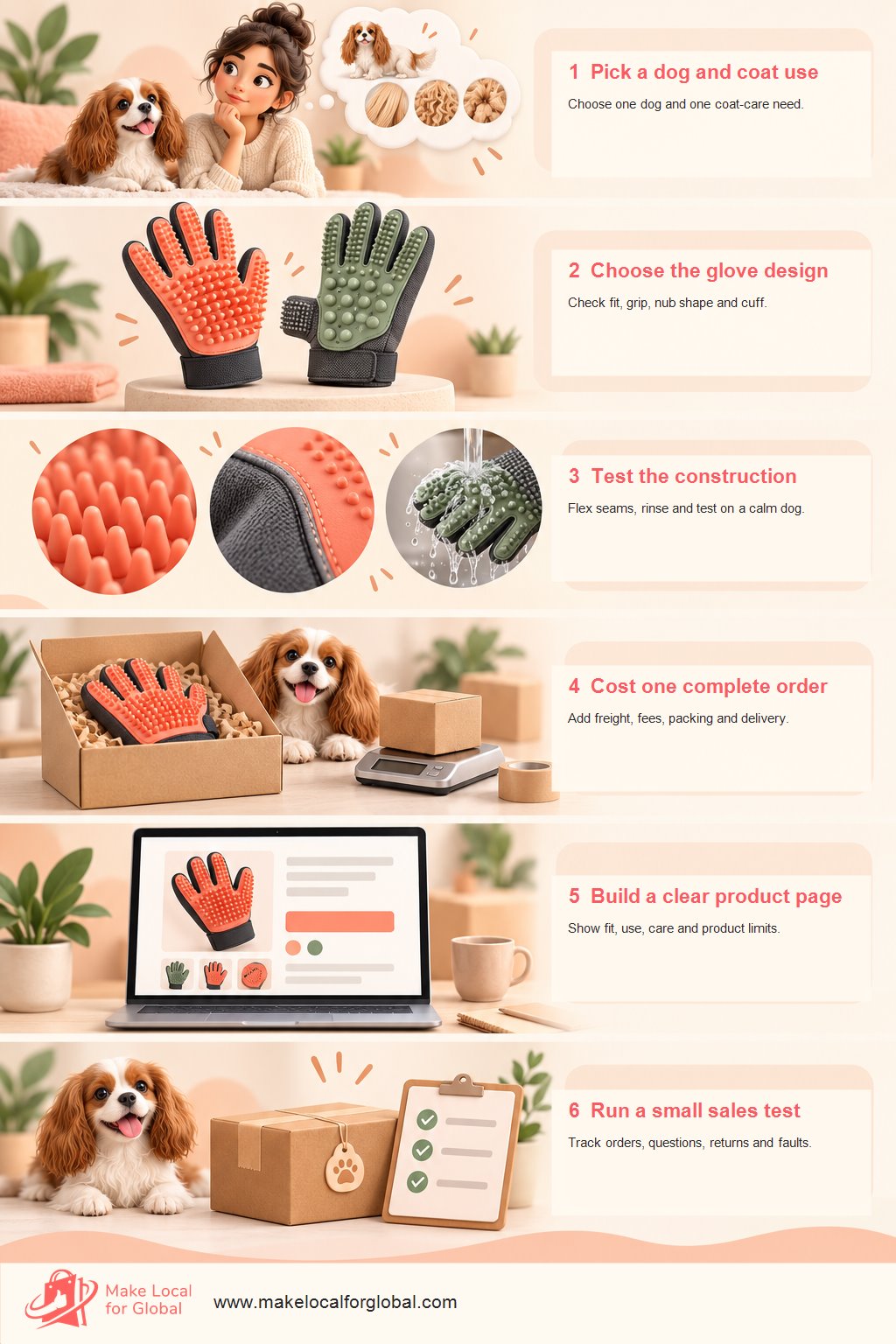
A useful launch can be small. It should give you trustworthy answers about fit, construction, owner expectations and the complete cost of a parcel before you buy more stock.
Set a sample budget and decide which evidence supports the next glove style, size or pack.
No single glove should be presented as suitable for every coat or grooming task. Coat length, texture, undercoat, skin sensitivity and the dog’s comfort matter. State which coat and task your sample checks covered, and refer owners to a vet or qualified groomer for individual advice.
Ask likely buyers and check how competitors describe quantities, then test which pack makes sense for your use case and price. Write the count in the title, product details and packaging. Show exactly what arrives in the parcel.
Get a physical sample. Measure hand fit, inspect nubs and seams, flex the glove, rinse it, check drying and review the supplier’s material, care and batch information. Use the same checklist on each colour and size. Keep the sample as a comparison for the delivery.
Do not assume either mark applies to a simple grooming glove. Marking depends on product rules and classification. Ask an appropriate product-safety adviser or Trading Standards if the design or claims create doubt, and never place a mark on packaging without a relevant requirement and supporting assessment.
Avoid unsupported claims about health, allergy prevention, antimicrobial action, complete hair removal, universal breed suitability or guaranteed results. Use exact material and care information backed by the supplier record and your own sample checks.
Add the glove, inbound freight, import charges, packaging, fees, delivery, labour, return allowance and marketing cost per order. Subtract the total variable cost from the actual selling price to find contribution before fixed costs and tax. Use your own fees and supplier quotes, then model a slower sales period.
You can sell only when the product and business meet the requirements for each destination. General product-safety rules differ between Great Britain and Northern Ireland. The OPSS guidance linked above explains the current routes. An importer may have product-safety responsibilities, so establish who imports the stock and what records and consumer information apply before listing.
Show the glove’s palm, nubs, fabric back, wrist, inside, measurements, hand fit and pack quantity. A gentle real-use photo can help when the owner and dog are comfortable and the image represents the tested use. Avoid photos that imply included products or guaranteed results.
Follow the supplier’s instructions and test the glove under the stated method. Describe how to rinse, dry and store the exact product. Do not promise machine washing, dishwasher cleaning or rapid drying without evidence for that model.
Make size, pack quantity, coat use, materials, care and limits visible before checkout. Use clear measurements and real photographs. Record each return reason and update the product or page when the same issue appears again. Keep the returns policy consistent with current consumer rules.
Start with a glove you can measure, inspect and explain. Give owners clear details about hand fit, coat use, materials, pair quantity and care. Keep batch records, price a whole order and use customer questions to decide what the business should test next.
PREFERRED SOURCE
Like what you’re reading? Add Make Local for Global as a preferred source on Google to see more of our articles when you search.

Build your online presence without having to figure out everything yourself.