Sell antique clocks: how to source, price and sell them online
Learn how to sell antique clocks confidently, find valuable pieces, avoid common mistakes, and build your own online shop with practical tips and simple steps.
Make Local for Global
Table of content
Antique clocks are one of the most rewarding products you can sell.
They’re beautiful, they have story, and buyers often fall in love fast.
They’re also one of the easiest products to mess up online, because condition, originality, and shipping matter more than almost anything.
If you want to sell antique clocks online, you’ll win by being honest, detail-obsessed, and calm – like a good dealer, not a pushy reseller.
Start with what buyers actually want from an antique clock
Some buyers want a working timepiece they’ll use every day.
Some want a decorative object with history.
Some want an investment-ish collectible (even if they won’t say that out loud).
Your listings should make it clear which kind of purchase each clock is.
Common buyer types for antique clocks
Home decor buyers who want character pieces for living rooms and hallways
Collectors who care about makers, movements, and originality
Gift buyers looking for milestone presents
Restorers who want projects and parts
Heritage lovers who want something with a story
Pick one primary buyer group first.
It shapes everything from product selection to your tone of voice.
Choose your antique clock niche so you stand out
“Antique clocks” is broad.
Specialists feel safer to buy from, even if you’re small.
Wall clocks (drop dial, school clocks, regulators)
Grandfather / longcase clocks (high value, local delivery focus)
Carriage clocks (collectible and giftable)
Alarm clocks and travel clocks (smaller, easier shipping)
Art Deco and early 20th century clocks (design-led buyers)
Start with a niche that matches your sourcing and shipping ability.
Small clocks are usually the easiest place to begin online.
Tip: Separate “working” clocks and “restoration/project” clocks into different collections. It prevents disappointment and makes your shop feel more professional.
Sourcing antique clocks without buying expensive problems
Clock sourcing is not like sourcing simple decor.
The movement matters, and so does condition, and those two things affect everything from pricing to returns.
Decide your sourcing approach
Tested and working: higher prices, higher trust, more time per item.
Untested / project clocks: lower cost, faster sourcing, but you must describe honestly.
Serviced clocks: premium, but you need proof of servicing and what was done.
Many small sellers start with “tested basic function” and build up from there.
Where antique clocks are commonly sourced
House clearances and estate sales
Antique fairs and markets
Auctions
Local dealers
Private collectors
Trade contacts once you build relationships
Wherever you source, your job is the same: check condition, document what you can, and never imply more than you know.
A practical inspection checklist before you buy
You don’t need to be a master horologist to be responsible.
But you do need to check the basics and disclose clearly.
Case condition: splits, veneer loss, chips, missing trim
Clock buyers will interpret “working” as “works perfectly forever”.
So define your terms in plain language.
“Currently running and keeping time during a short test”
“Strikes on the hour during testing”
“Not professionally serviced by us” (if true)
This isn’t being cautious – it’s being accurate.
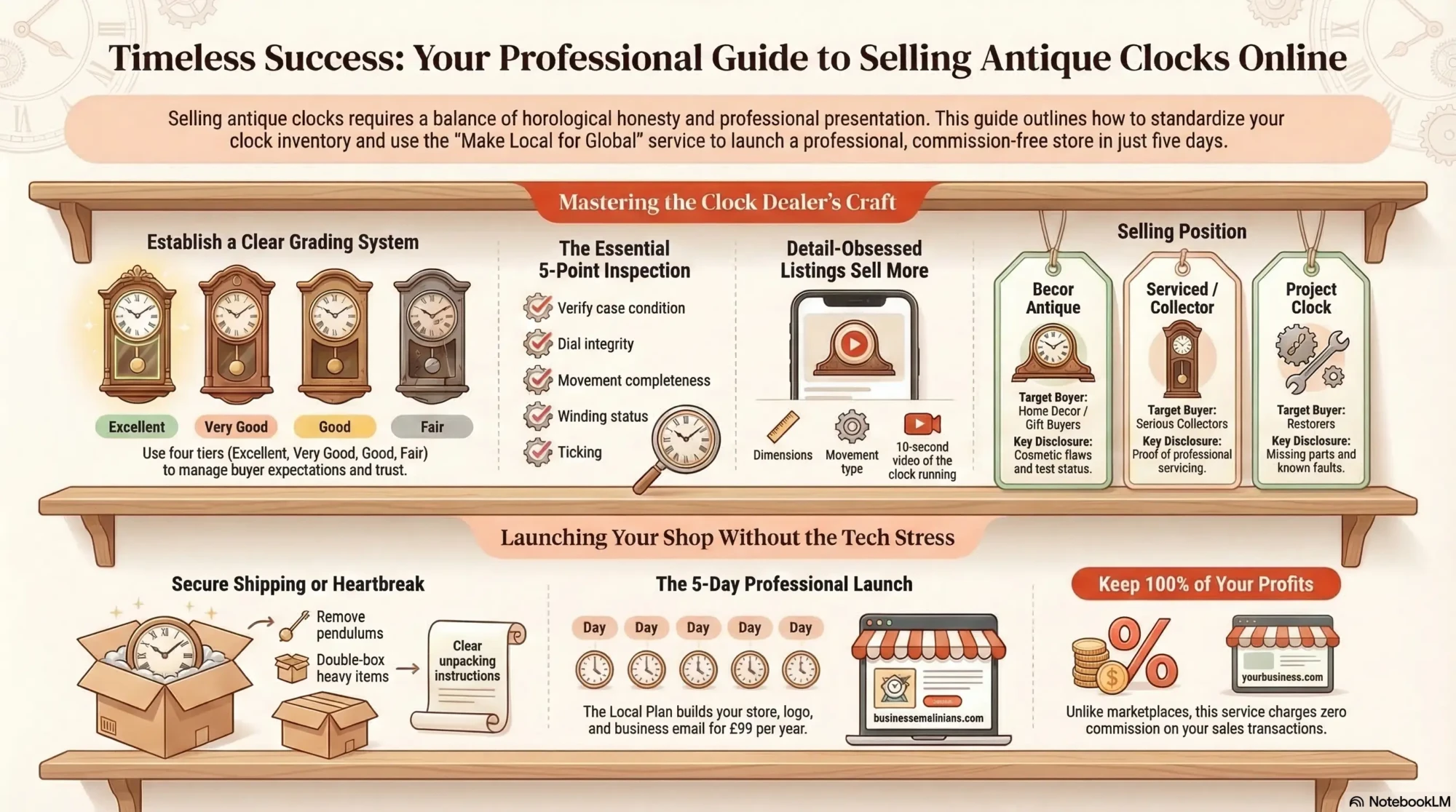
Create a condition grading system and stick to it
Use something simple:
Excellent: minimal wear for age, very display-ready
Very good: light wear, small marks, overall strong condition
Good: noticeable wear, stable, displays well
Fair / project: heavy wear or faults, priced accordingly
Then write a few lines explaining what the grade means.
Tip: Always include a short video of the clock running and, if applicable, chiming. A 10-second clip can do more for trust than a page of text.
Price antique clocks without guessing
Pricing antique clocks isn’t just about how pretty they are.
Condition, originality, and movement quality matter, and shipping risk matters too.
What affects antique clock pricing
Type and size (carriage vs longcase is a different world)
Maker and provenance (when genuinely known)
Movement type and complexity (time only vs time and strike)
Condition of case and dial
Original parts vs replacements
Servicing status (with proof)
Rarity and demand
Use three pricing tiers for your shop
Decor antique: attractive pieces sold primarily for looks, clearly tested or untested.
Working vintage/antique: running and tested, with clear limitations.
Collector / serviced: best pieces with strongest documentation and condition.
This makes your shop easy to browse and stops customers comparing apples and oranges.
Comparison table: clock selling positions
Selling position
What it means
Who buys
What to be crystal clear about
Decor antique
Sold mainly for appearance
Decor buyers and gift buyers
Test status and cosmetic flaws
Working and tested
Runs and functions during testing
Home users and collectors
How long tested and what was tested
Serviced / collector
Documented servicing and best condition
Serious buyers
Proof of service and originality
Project clock
Untested or known faults
Restorers
Faults, missing parts, sold as-is
Shipping antique clocks without heartbreak
This is where profits go to die if you’re not careful.
Antique clocks can be fragile, heavy, and full of moving parts.
Pack clocks like you expect a drop
Because at some point, there probably will be one.
Remove and wrap pendulums, weights, and keys separately
Secure moving parts so they can’t swing or rattle
Protect glass and corners with padding
Use a strong inner box and a strong outer box for heavier clocks
Prevent any movement inside the box
Include an unpacking note so customers don’t yank something important.
Be realistic about courier risk
For high-value or very fragile clocks, consider:
Specialist delivery
Local delivery options
Collection by appointment
This can reduce damage claims and make you look like a serious seller.
Returns policy: clear and calm
Antiques can be returned, but you need to set expectations.
Be clear about:
How returns must be packaged
What happens if items are damaged in return shipping
How you handle “doesn’t keep perfect time” complaints for antique mechanisms
Write it like a human, not a legal document.
Tip: Add a short “antique clocks are sensitive” note: changes in temperature, levelling, and placement can affect timekeeping. Buyers appreciate being told what’s normal.
Market antique clocks with story and trust
Antique clocks sell when buyers feel like they’re buying from a knowledgeable person, not rolling the dice.
Content ideas that sell antique clocks
“How to set up an antique mantel clock at home”
“What does time and strike mean on antique clocks?”
“How to tell if a clock is original or restored”
“How to wind an antique clock safely”
“Best places to put a clock so it keeps time”
“Antique clock care: dusting, levelling, and storage”
This kind of content builds trust and brings in the right buyers through search.
Use search terms people actually type
Antique mantel clock
Antique wall clock
Vintage carriage clock
How to wind an antique clock
Antique clock identification
Do antique clocks keep good time
Use them naturally in headings and FAQs.
Set up an online shop without the tech headache
Antique clocks are a trust product.
Your shop needs to feel credible, organised, and calm.
What your shop must do well
Separate working clocks from project clocks
Offer clear condition grading and test notes
Show lots of photos and short videos
Make shipping and returns policies visible
Work smoothly on mobile
Done-for-you ecommerce setup can help you launch properly
If you’re sourcing, testing, photographing, and packing fragile items, setting up the website can become the blocker.
Make Local for Global offers a done-for-you ecommerce setup that’s simple, affordable, and designed for small sellers who want a professional shop without wrestling with tech.
Yes, because demand is steady from decor buyers and collectors, but you need detailed listings, honest test notes, and careful shipping to avoid damage claims and returns.
What antique clocks sell best online?
Smaller clocks like carriage clocks, mantel clocks, and attractive wall clocks often sell best online because they’re easier to ship safely, while longcase clocks can sell well locally with delivery or collection options.
How do I reduce returns when selling antique clocks?
Use clear condition grading, photograph flaws, define exactly what “working” means, and include a short video of the clock running and chiming, because most returns come from mismatched expectations.
Do I need to service antique clocks before selling?
You don’t have to, but you must be honest about whether a clock has been serviced and what you tested, because buyers will pay more for documented servicing but will be unhappy if they assume it’s been done when it hasn’t.
How should I ship an antique clock?
Remove and pack loose parts separately, secure moving components, double-box heavier clocks, and prevent all movement inside the parcel, because most damage happens when parts rattle and impact points take a hit.
A practical 30-day plan to start selling antique clocks
If you want to launch without chaos, focus on trust and process.
Week 1: niche and sourcing standards
Choose your niche (mantel, carriage, wall) and your selling standard (tested vs project)
Create a condition grading system and test checklist
Source a small, high-quality first batch
Week 2: listings and media
Photograph each clock from all angles plus close-ups of flaws
Film short “running” and “strike” clips
Write listings with clear test notes and what’s included
Week 3: shipping and policies
Standardise your packing method and test it
Create unpacking instructions to include in orders
Write plain-English returns and shipping pages
Week 4: marketing rhythm
Publish two trust-building posts: winding guide and setup guide
Share short videos of clocks running weekly
Collect buyer questions and add them to product pages
Antique clocks sell when buyers trust you.
Be detailed, be honest, and treat shipping like part of the product.
Do that, and you can build a serious, profitable niche shop.
PREFERRED SOURCE
Keep finding us on Google
Like what you’re reading? Add Make Local for Global as a preferred source on Google to see more of our articles when you search.
To provide the best experiences, we use technologies like cookies to store and/or access device information. Consenting to these technologies will allow us to process data such as browsing behaviour or unique IDs on this site. Not consenting or withdrawing consent, may adversely affect certain features and functions.
Functional
Always active
The technical storage or access is strictly necessary for the legitimate purpose of enabling the use of a specific service explicitly requested by the subscriber or user, or for the sole purpose of carrying out the transmission of a communication over an electronic communications network.
Preferences
The technical storage or access is necessary for the legitimate purpose of storing preferences that are not requested by the subscriber or user.
Statistics
The technical storage or access that is used exclusively for statistical purposes.The technical storage or access that is used exclusively for anonymous statistical purposes. Without a subpoena, voluntary compliance on the part of your Internet Service Provider, or additional records from a third party, information stored or retrieved for this purpose alone cannot usually be used to identify you.
Marketing
The technical storage or access is required to create user profiles to send advertising, or to track the user on a website or across several websites for similar marketing purposes.