

READY TO SELL bath salts ONLINE?
Get a store built for you in 5 days, plus training and support to help you start, run, and grow your Alternative business.

Learn how to sell bath salts online with a focused range, supplier checks, Great Britain cosmetic rules, worked costs, clear product pages and a practical 30-day launch plan.

Bath salts can make a compact gift or personal-care range, but attractive crystals and a label are not enough to make a product ready for sale. Buyers need to know what is in the pouch, how to use it, how much they receive and who is responsible for the product.
A lower-risk starting point is often a finished product from a manufacturer that can provide the right product records. If you blend salts yourself, import them, or sell them under your own brand, the compliance work may change. Confirm who holds each duty before paying for stock.
Make Local for Global helps small businesses present products and collect enquiries through a website built around what they sell.
Start with the product, not a long scent list. Bath salts may be sold as a simple mineral soak, a fragranced blend, a single-use sachet or a gift set. Each format changes the buyer, parcel size, label space and stock decisions.
Pick one customer situation to test. It could be a small thank-you gift, a home-spa gift box, or a larger refill pouch for someone who already buys bath products. Ask potential buyers what they would choose, what information they expect and whether they prefer a jar, pouch or single-use pack. Record actual choices, not just compliments.
Bath and shower products are included in the UK Government’s cosmetics guidance. The precise classification depends on a product’s intended purpose and presentation, so check the rules before developing claims or changing the formula. For a related product idea, see our article on selling bath bombs online.
A first range can be as simple as one unscented option, one scented option and a gift-size set. Keep the ingredient list, pack size and use directions clear for each product. A small range helps you compare demand without tying cash up in many near-identical variants.
| Format | Possible buyer | Seller check |
|---|---|---|
| Single-use sachet | Gift add-on or first-time customer | Check seal strength and cost per use |
| Resealable pouch | Repeat buyer who wants one simple format | Test moisture protection and clear dosing directions |
| Gift set | Birthday, thank-you or seasonal gift shopper | Check outer-box size, breakage risk and full parcel cost |
These are product-planning examples, not claims about proven demand. Ask buyers and test a small quantity before committing to a large order.
Choose a price ladder only when each step has a clear reason. A higher-priced set might include several safety-assessed scents or gift-ready packing; it should not rely on vague promises about what the salts will do for a person.
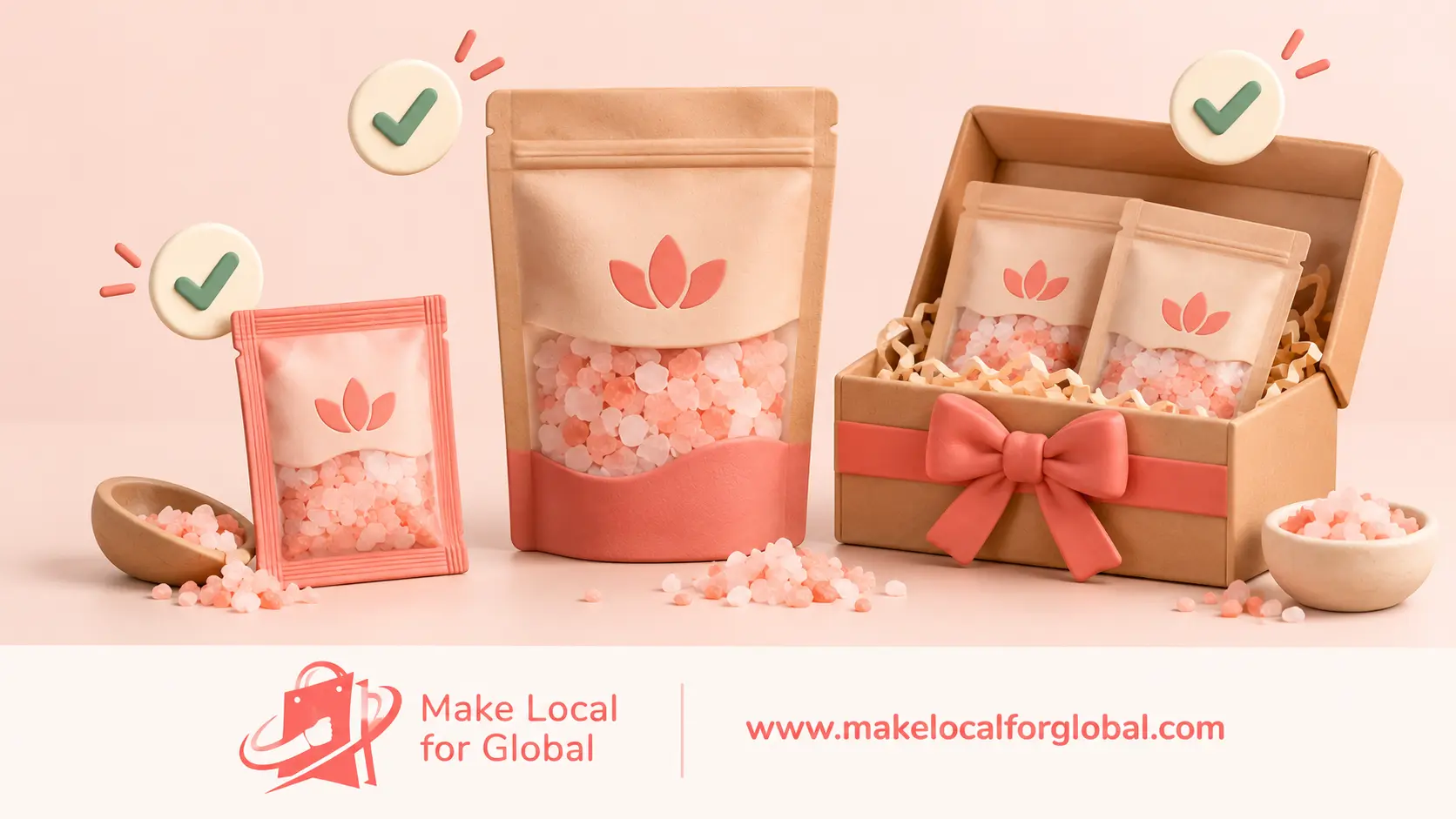
A finished, correctly documented product can reduce the amount of formulation work you take on. Ask the manufacturer for the product’s safety and label information, batch identification, ingredients, storage conditions and the name of the Responsible Person for Great Britain.
Get the arrangement in writing. Confirm whether you can sell the product under its existing brand, whether repacking is allowed, and which party handles notification, customer reports and product changes. Do not assume a supplier’s general statement that a product is “UK ready” covers your exact pack and listing.
If a distributor places a cosmetic product on the market under its own brand, it can become the Responsible Person. A Responsible Person must have a UK-established address for Great Britain. The product must have a safety assessment and Product Information File, and it must be notified to the Office for Product Safety and Standards before it is made available.
For a new blend, speak with a qualified cosmetic safety assessor before finalising the recipe or ordering printed packaging. The assessment depends on the full formula, how people will use it, the packaging and the intended exposure. A small change to scent or ingredients can mean the documentation needs review.
These notes describe Great Britain. Northern Ireland follows a separate route. If you plan to sell there or export to another market, check the relevant rules for that destination before taking orders.
Keep product claims modest and supported. Avoid statements that suggest the salts treat pain, insomnia, skin conditions or another health problem. The MHRA considers a product’s claims, ingredients, intended purpose and presentation when deciding whether it is a medicine rather than a cosmetic.
Packaging and product pages need the required details in a readable form. UK guidance lists items such as the Responsible Person’s name and address, the net weight, precautions, product function, batch identifier and ingredients. Cosmetic products must not be presented in a way that could make them mistaken for food.
Start with the official pages for making cosmetics available in Great Britain, cosmetics information for consumers and the MHRA’s borderline-products guidance. Ask a qualified assessor or Trading Standards for advice about a specific product if its status is unclear.
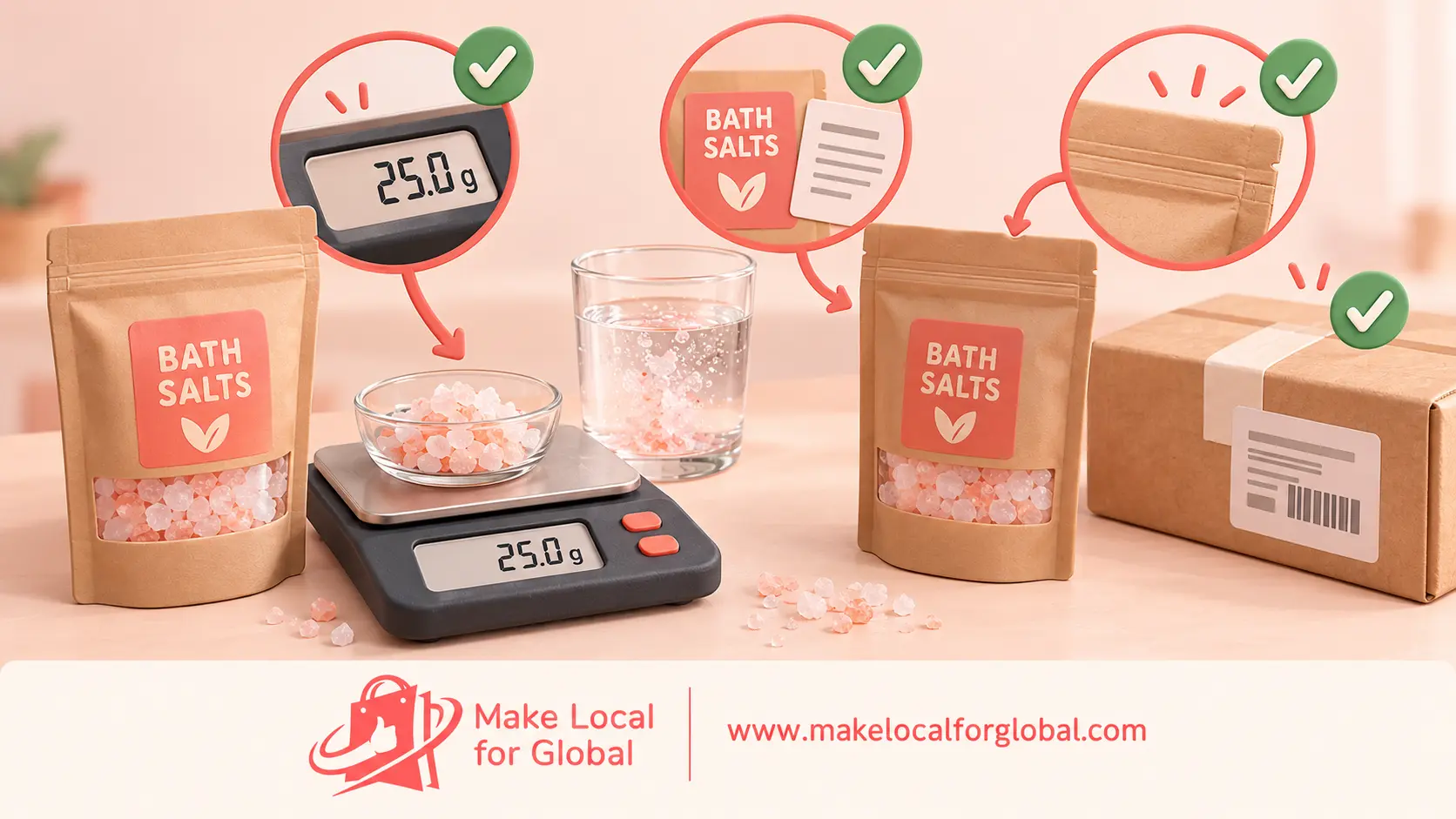
Ask for a sample from the same formula and packaging you expect to order. Keep one reference sample with the batch details and note what you checked. A sample test cannot replace the required safety assessment, but it can help you catch fulfilment and presentation issues before they reach a buyer.
Store dry salts away from moisture and keep packing materials clean. Use an outer box or mailer that protects the pouch from puncture and crushing. Never describe packaging as recyclable, compostable or plastic-free without checking the full component and local disposal guidance.
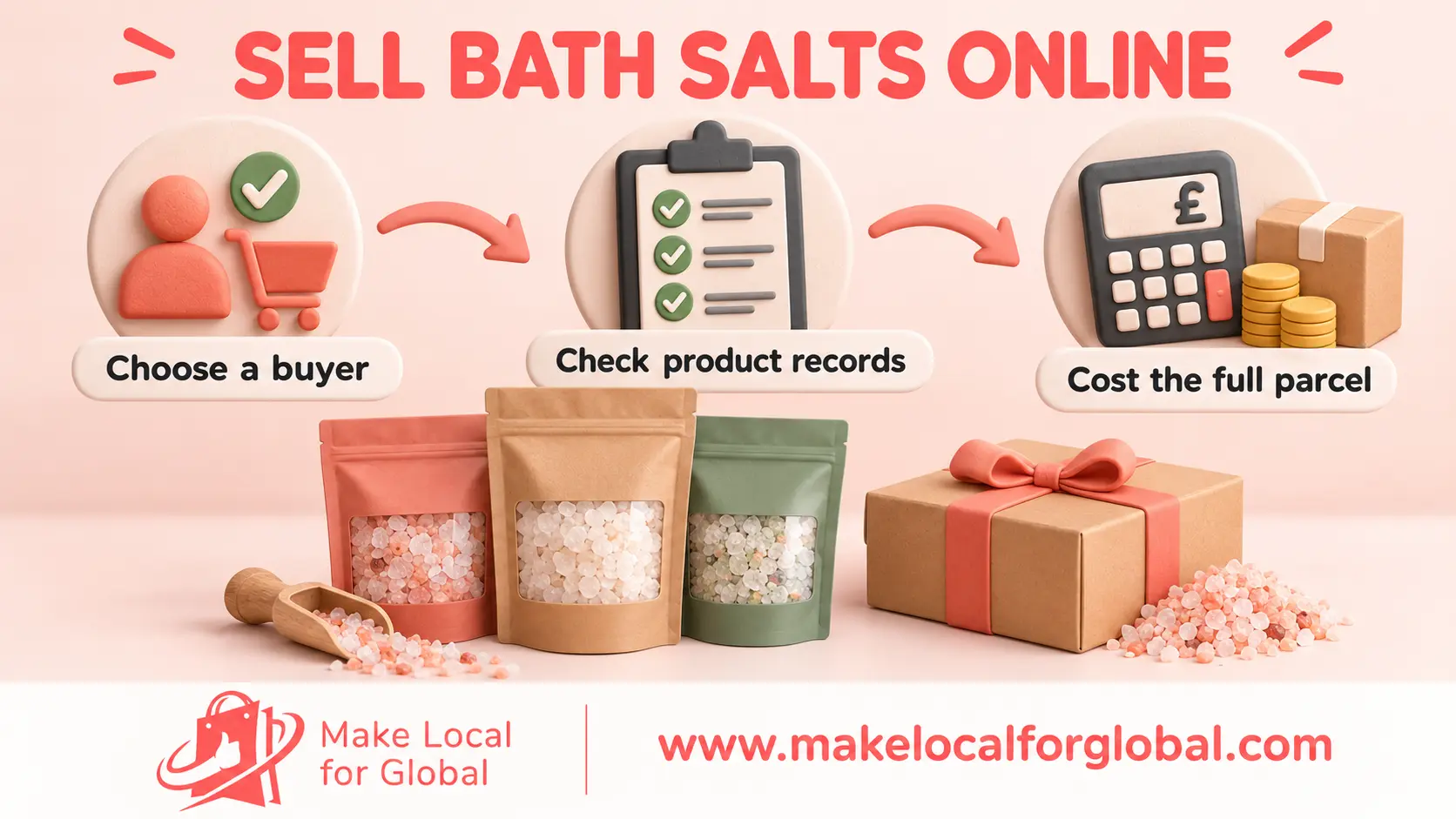
A low supplier price can hide a weak order margin. Include inbound delivery, the pouch and label, customer postage, payment fees, damage or return allowance, and any advertising cost tied to the sale.
| Illustrative order item | Amount |
|---|---|
| Customer price, 250 g pouch | £12.00 |
| Finished product or ingredients | £2.40 |
| Inbound delivery share | £0.35 |
| Pouch, label and packing materials | £0.75 |
| Postage to the customer | £3.30 |
| Payment fee allowance | £0.45 |
| Damage and return allowance | £0.45 |
| Customer acquisition allowance | £1.50 |
| Estimated contribution before overheads | £2.80 |
Illustration only. The arithmetic is £12.00 minus £9.20 of listed variable costs. It assumes the seller is not VAT-registered and the costs include any irrecoverable VAT. A VAT-registered seller should recalculate sales income and recoverable costs using their own VAT treatment. This contribution is not net profit; it excludes labour, website costs, insurance, tax and other overheads.
Replace each estimate with a supplier quote, carrier rate and payment-provider fee. Then model a one-item order and a gift bundle. If a two-item parcel costs almost the same to send, a bundle may lift contribution; if it pushes the parcel into a higher postage band, the result may be different.
A clear product page can answer the practical questions that hold up a purchase: formula, ingredients, weight, directions, pack contents and delivery.

Use a product title that gives the format and net weight, such as “Lavender-scented bath salts, 250 g pouch” only if that description matches the assessed product and label. Do not borrow a scent name, ingredient statement or claim from a supplier’s unrelated item.
Show the pouch from the front and back, the amount in a hand or scoop, the full ingredient list and a gift set beside an everyday object for scale. Keep photographs true to the colour and amount supplied. If the photo shows a ribbon, scoop or box that is not included, say so beside the image.
Online sellers must provide pre-order information such as the business contact details, product description, total price, delivery arrangements and cancellation information. Read the current GOV.UK distance-selling rules and write delivery and returns terms that match your actual process.
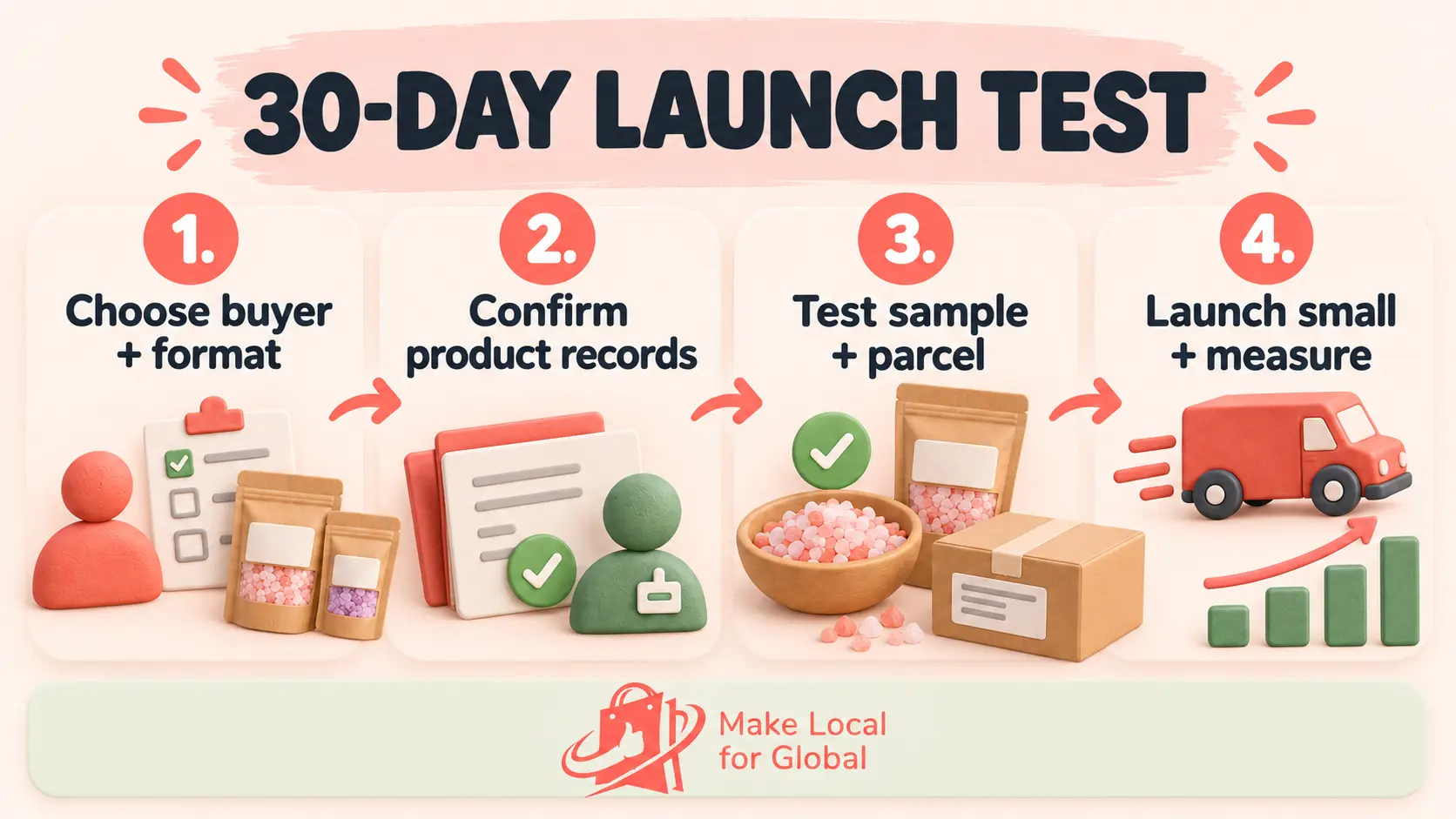
Ask 8 to 12 likely buyers which pack they would consider, what information they need and what occasion they would buy it for. Record the exact phrases they use. Pick one main buyer and one format for the first test.
Obtain written answers about the Responsible Person, safety report, PIF, notification, approved label, batch control and permission to use your brand. Pause the order if the supplier cannot explain who is responsible for each step.
Use the approved product information to inspect the sample, weigh it, check the seal and prepare a parcel. Ask two or three people to review the product page for missing facts; do not invite them to test a cosmetic product unless its safety assessment and instructions permit that use.
Once the product is ready for sale, release a limited quantity. Track product-page visits, add-to-basket actions, completed orders, questions, postage spend and any damage or complaints. Compare the result with your cost model before placing a repeat order.
Bath and shower products are included in the UK cosmetics guidance. Classification can depend on intended use and presentation, so check with a qualified adviser if your product or claims sit near the boundary with medicines or another product type.
Do not start taking orders until you have confirmed the product’s legal category and completed the requirements that apply. For a cosmetic sold in Great Britain, this includes a qualified safety assessment, a Product Information File, a Responsible Person and notification before the product is made available.
A supplier or appointed company may hold some responsibilities, but the roles must be clear for the exact product and brand. Ask for written confirmation and keep the documents you need as the seller.
Use the approved product name and formula details, net weight, clear photographs, ingredient information, directions, precautions, price, delivery timing and contact details. Avoid claims that the finished product cannot support.
Begin with a small set that you can document, store and pack consistently. A single format with one or two scent choices may be easier to test than a large catalogue with different labels and stock needs.
A bath-salts shop needs more than appealing packaging. It needs a defined buyer, reliable product records, honest claims, complete order costs and product pages that answer practical questions. Test one small range, learn from real orders, then decide what deserves a second batch.
Make Local for Global can help you plan a website that presents your products clearly and gives customers a direct way to enquire.
PREFERRED SOURCE
Like what you’re reading? Add Make Local for Global as a preferred source on Google to see more of our articles when you search.

Build your online presence without having to figure out everything yourself.