

READY TO SELL board shorts ONLINE?
Get a store built for you in 5 days, plus training and support to help you start, run, and grow your Alternative business.

Learn how to choose, test, price and sell board shorts online with a focused range, clear size information, practical fulfilment checks and a 30-day launch plan.

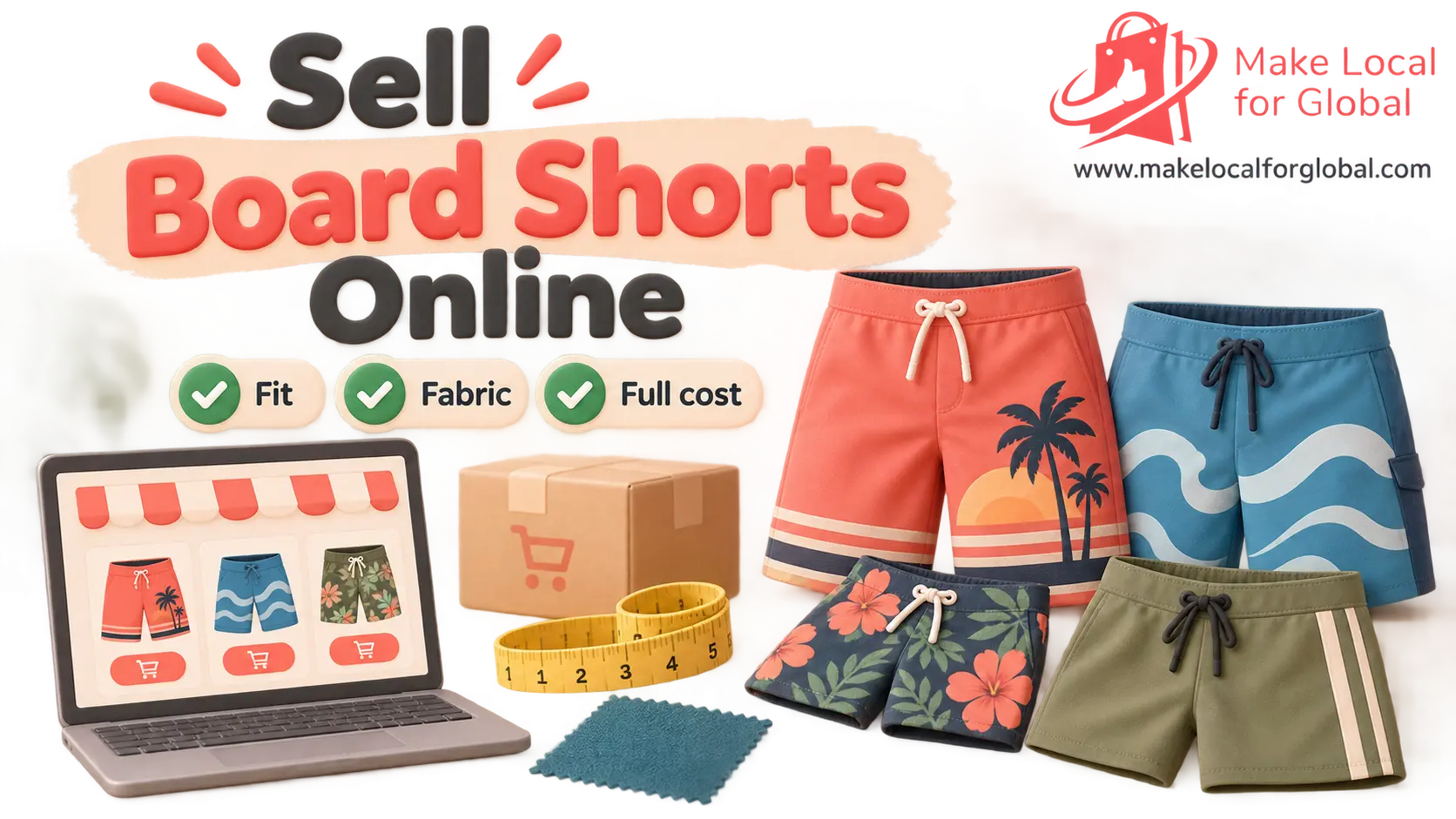
Board shorts look simple in a product grid, yet small details decide whether a shopper feels ready to buy. Waist fit, lining, pocket layout, drying time and clear size information all matter. If you want to sell board shorts online, start with a focused use case, test samples before ordering stock and count the full cost of each order.
This plan is for a UK seller choosing a first range, working with a supplier, building product pages and testing demand without tying up too much cash. It covers product choices, checks, pricing, fulfilment, customer rights and a practical first month.
A board shorts buyer wants to see the fit, fabric, pockets, lining and delivery promise before paying. MLFG can build a store where those details sit beside the product photos and checkout.
“Board shorts” can mean a beach short, a surf short, a holiday short or a casual summer short. Each buyer notices a different feature. A beach buyer may want quick drying and a secure pocket. A surf buyer may care about movement, a firm waistband and a comfortable liner. A resort buyer may value print, colour and a smart cut.
Choose one main use for your first collection. You can ask potential buyers which length they prefer, show three sample colours in a poll, or list a small pre-order test. Record clicks, replies, email sign-ups and completed orders. Do not treat likes as proof that people will pay.
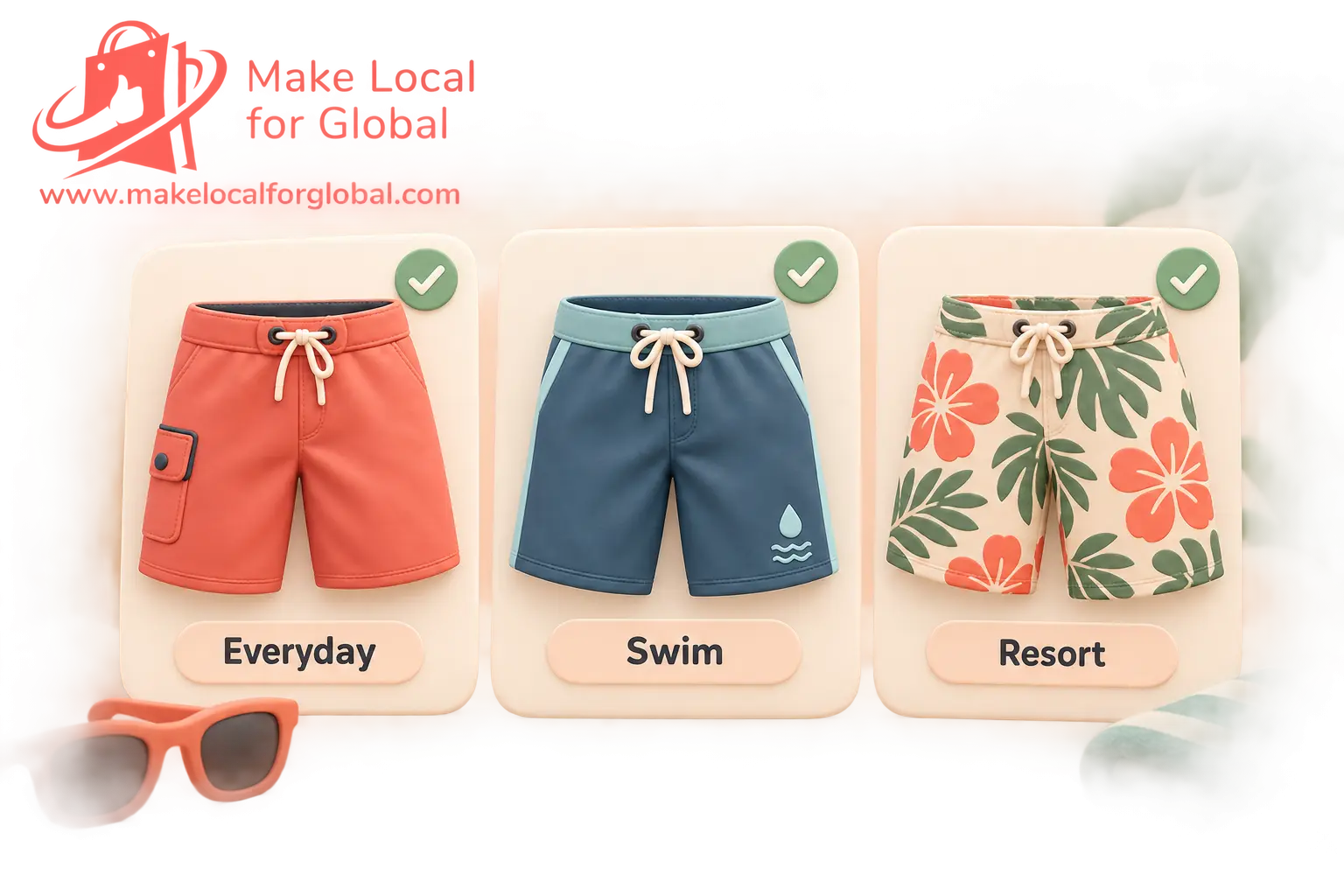
Start with three styles rather than ordering every colour and print. A plain everyday short can give you a simple entry option. A quick-dry swim short can serve beach and pool buyers. A patterned resort short can give the range a more expressive option.
| Range role | Product idea | Buyer question to answer |
|---|---|---|
| Entry | Solid drawstring board shorts | Is the fit easy to understand? |
| Core | Quick-dry swim short with secure pocket | What happens in and around water? |
| Premium | Printed resort short with refined finish | What makes the higher price clear? |
Illustrative range structure. Replace the examples with the styles your samples support.
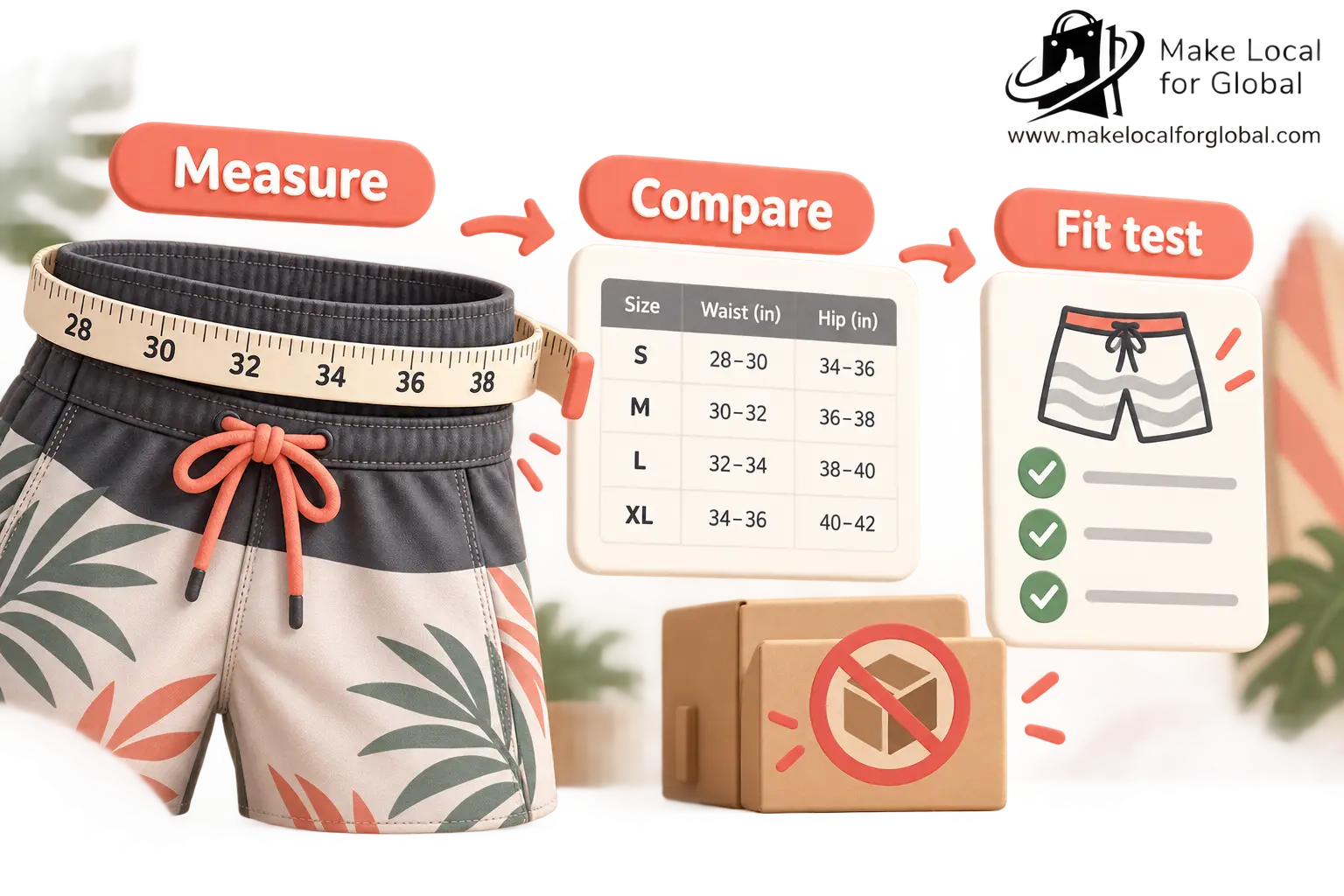
State the outseam or side length in centimetres. Say whether the short has a mesh brief, a separate liner or no liner. Show the pocket count and tell shoppers whether a pocket closes with a zip, button or flap. These details reduce questions and make a higher price easier to judge.
Ask the supplier for the fibre composition, care instructions and evidence for any quick-dry, recycled or sun-protection claim. Do not describe a pair as recycled or organic without checking the percentage and paperwork. UK government guidance says textile labels must show fibre content, including the content of separate components where they differ. Read the GOV.UK textile labelling guidance before your first order.
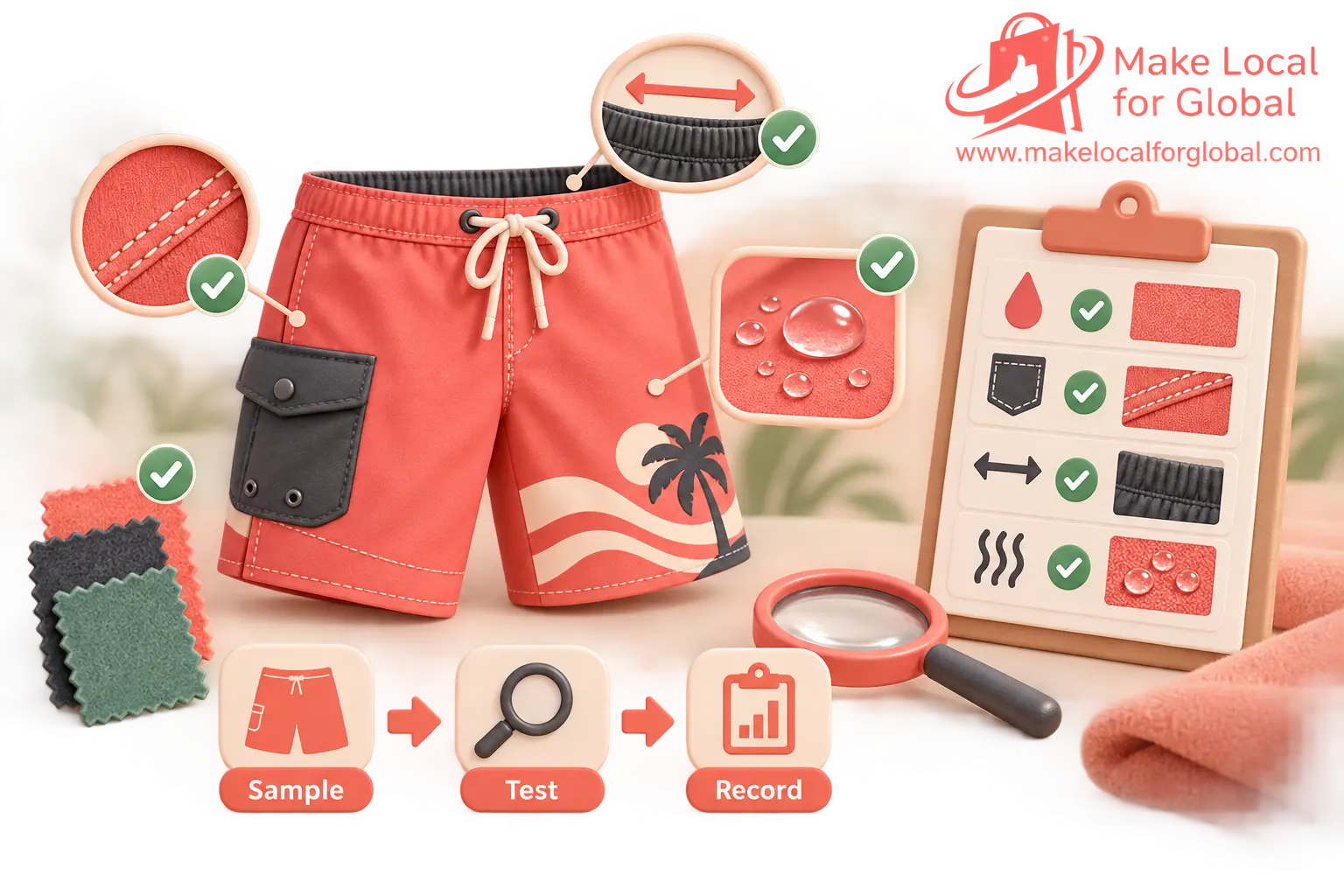
Request samples from each shortlisted supplier. Ask about minimum order quantity, grading across sizes, colour consistency, lead time, packaging, replacement terms and the records behind fabric claims. If a supplier will not share a usable size chart or material breakdown, treat that as a buying risk.
Wash the sample according to the care label. Photograph the colour before and after. Rub a light cloth over a dry and damp section, check the seams after washing, and time how long the fabric takes to dry in the same conditions. Treat the result as your own product check, not as proof of a supplier claim for every future batch.
A low supplier price does not tell you whether a board shorts order can support delivery, returns and promotion. Add product cost, inbound freight, import charges where relevant, packaging, payment fees, delivery subsidy, returns allowance and customer acquisition. Keep VAT separate in your worksheet so you know which figures include it.
| Illustrative cost per order | Amount |
|---|---|
| Board shorts landed cost | £12.00 |
| Inbound freight and duty allowance | £2.50 |
| Packaging | £0.80 |
| Payment fee allowance | £1.10 |
| Customer delivery contribution | £3.50 |
| Returns and replacement allowance | £1.60 |
| Test promotion allowance | £3.00 |
| Illustrative total cost | £24.50 |
| Illustrative selling price | £39.00 |
| Contribution before overhead and VAT treatment | £14.50 |
Illustrative arithmetic only: £12.00 + £2.50 + £0.80 + £1.10 + £3.50 + £1.60 + £3.00 = £24.50. Contribution is not net profit. Replace each allowance with your supplier, carrier, payment and advertising figures.
Use this calculation to compare a single pair with a two-pair holiday bundle. A bundle can make delivery feel more reasonable, yet it can increase size and colour complexity. Run the numbers before adding the offer.
When your samples pass their checks, MLFG can help you set up a store with product options, payments, delivery information and a simple route from social post to checkout.
A useful title might be “Quick-dry board shorts with secure zip pocket in coral”. The title names the product, use and feature without making a claim you cannot support.
Online customers have cancellation rights for many purchases. GOV.UK says a customer normally has 14 days from receiving an online order to tell the seller they want to cancel, followed by another 14 days to return it. Your policy should explain the process in plain language and protect your rights when an item has been used or damaged beyond reasonable inspection. Check the current GOV.UK returns guidance.

Keep the first fulfilment routine small enough to run yourself. Store sizes in labelled bins, use one packing checklist and inspect the item before sealing the parcel. Keep a note of the batch, order date and tracking number so a return can be handled without guesswork.
Your own website gives you a home for the full product story and customer details. Marketplaces can help you test demand, but their fees, listing rules and reporting requirements belong in the cost sheet. HMRC explains that digital platforms may collect and check seller details and report information, so check the current platform reporting guidance.
For another clothing example, read MLFG’s page on selling running shorts online. It is a useful comparison for performance details and a focused product range. You can apply the same test-and-record habit to board shorts without copying the product.
| Week | Action | Observation to record |
|---|---|---|
| Week 1 | Speak to buyers, choose one use and request samples. | Preferred length, liner, colours and price reaction. |
| Week 2 | Measure samples, wash-test fabric and photograph details. | Fit issues, colour change, drying time and supplier gaps. |
| Week 3 | Build three product pages, cost each order and create one bundle. | Page questions, margin room and checkout friction. |
| Week 4 | Run one small content test and invite a measured pre-order or first sale. | Visits, product views, add-to-basket actions, orders and return questions. |
Keep the test small enough to learn. A quiet result still tells you which part of the offer needs work.

Demand may rise before holidays and warmer weather, yet buyers can shop for indoor pools, travel and gym use during colder months. Plan content around use cases rather than relying on one short summer window.
One style can make the first stock decision easier. A small three-style test can help you learn which use and price point attracts attention. Choose the smallest range you can photograph, describe and fulfil well.
Ask for fibre composition, size grading, finished measurements, sample lead time, minimum order, colour consistency, wash-care instructions, packaging, production lead time and the evidence behind performance claims.
Yes, if the marketplace accepts the product and you can meet its listing, delivery, returns and seller-information rules. Keep your own product page and cost records so you can compare marketplace results with direct sales.
Pick one buyer, request three samples and write down the measurements before you order stock. When you know which style passes its fit, fabric and cost checks, publish a clear product page and run one small offer that gives you a useful observation.
MLFG can help you turn a tested range into a working online store with product pages, payments and practical training for day-to-day updates.
PREFERRED SOURCE
Like what you’re reading? Add Make Local for Global as a preferred source on Google to see more of our articles when you search.

Build your online presence without having to figure out everything yourself.