READY TO SELL camping stoves ONLINE?
Get a store built for you in 5 days, plus training and support to help you start, run, and grow your Alternative business.

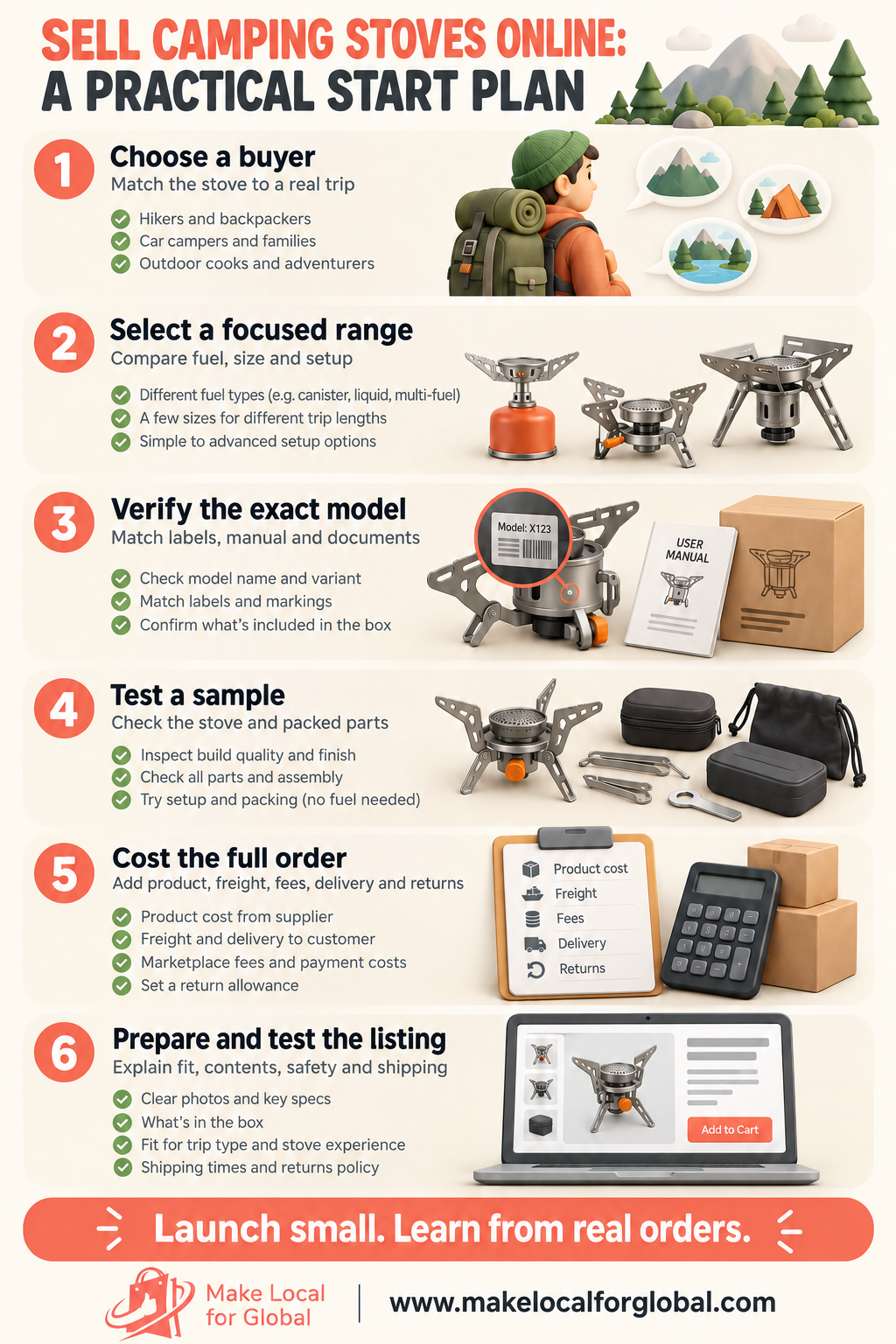
Learn how to sell camping stoves online with a focused range, verified supplier documents, clear safety information, complete order costs, confirmed delivery and a measured launch plan.

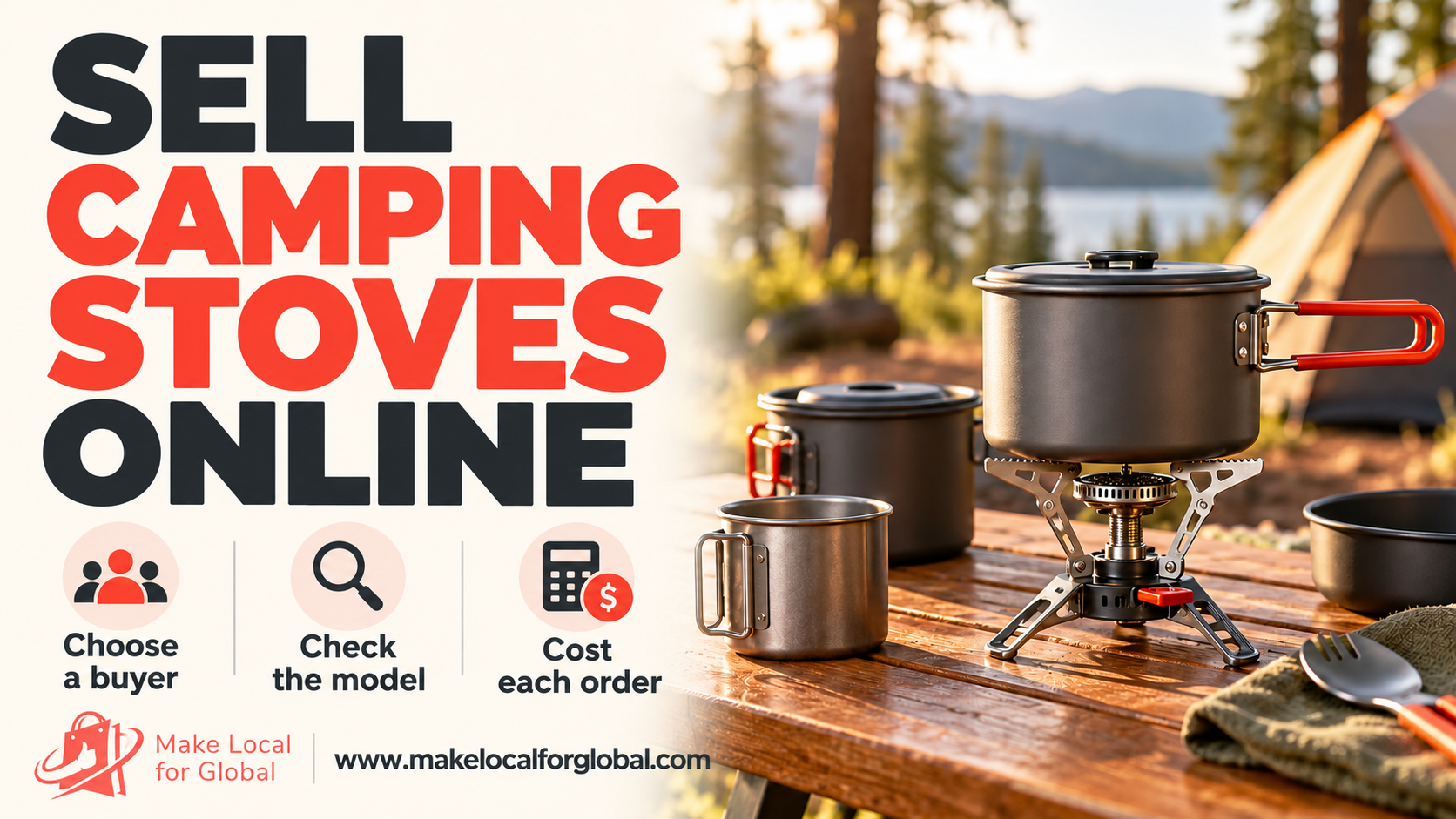
Camping stoves can look like straightforward outdoor products, yet buyers need to choose a fuel system, understand what the stove can and cannot do, check compatibility, and feel confident about safe use and delivery. A seller needs to make those decisions clear, source the right product, and calculate the full cost before ordering stock.
This guide explains how to sell camping stoves online with a focused first range. It covers customer research, stove types, supplier checks, UK product rules, safety information, product pages, pricing, shipping, stock and a measured launch plan. The example figures are illustrative only; obtain current supplier, carrier and regulatory advice for the exact products and sales destinations you choose.
For a related product reference, compare MLFG camping stove range page, then confirm every model detail with the supplier before listing it.
Turn your camping stove idea into a short checklist of buyers, products, costs and decisions before committing to stock.
“Camping stove” covers different equipment and buying situations. A backpacker may want low carried weight and a compact pack size. A family at a campsite may prioritise a stable cooking surface, simple setup and room for more than one pan. A van camper may compare two-burner units, storage dimensions and how the appliance connects to a compatible gas supply. A paddler may need gear that fits a dry bag and handles a wet trip. These buyers do not all need the same catalogue.
Choose one customer group and one main trip or activity. A shop could focus on compact stove kits for weekend backpackers, camp kitchen equipment for family car campers, or stable cooking systems for van users. Define the problem with words customers use: a kit that packs down, a stove that handles a larger pot, or a simple set for short trips. The product needs to match the stated job; a low price or dramatic product image does not prove suitability.
Talk with ten potential customers, outdoor instructors, campsite operators, walking groups or local outdoor retailers. Ask what they cooked on their last trip, how many people they fed, what equipment they carried, what failed or felt awkward, and what they checked before choosing a replacement. Ask them to show a product they already own if they are comfortable doing so. Real behaviour and specific examples give better clues than asking whether they would buy a new idea.
Write a short customer profile with practical detail: trip length, transport, number of people, cooking style, likely weather, storage limits, experience and expected budget. Do not assume all campers are expert users. A new camper may need plain-language product comparisons and clear instructions; an experienced user may want exact weight, dimensions, compatible fuel types and spare-part details. These needs can guide page structure and customer support.
Choose customers you can reach. A local walking club or campsite group may give you useful product feedback. A specialist newsletter, outdoor event or search page may help you find people comparing stoves. Be specific in your outreach and comply with the rules of each channel. Do not buy a broad inventory based on likes, a poll or a single enthusiastic comment.
Record your assumptions in a simple table: customer, use case, product need, buying concern, evidence and next test. For example, “family car campers need a stable cooker for regular campsite pitches” is an assumption until you speak with families and compare actual products. Add a date and note who gave the feedback. It becomes easier to see whether the range reflects a real pattern or a seller’s initial hunch.
Portable stoves vary by fuel, connection, burner design, size, heat output as declared by the maker, construction, controls and intended setting. Start by learning the products in the supplier catalogue. Use the manufacturer’s product classification, instructions and technical information; do not infer performance or compatibility from the shape of a burner or the name of a fuel.
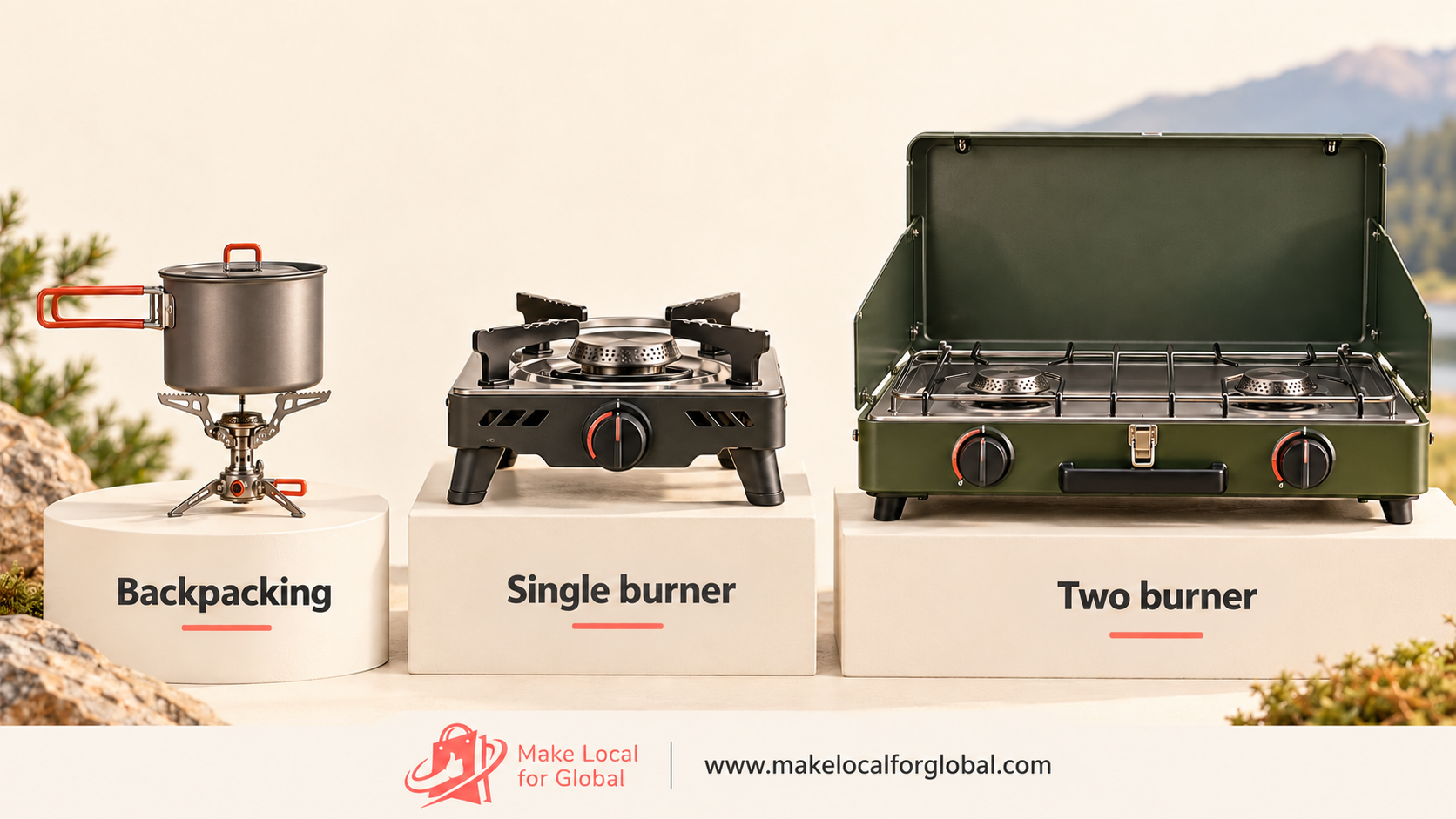
Small canister stoves are designed around a compatible gas canister connection and often appeal to hikers who value compact packing. Some systems place the canister directly beneath the burner; remote-canister designs connect the burner to a separate canister with a hose. These are different product configurations. List exactly which connection, regulator, fuel type and accessories are specified by the manufacturer. Suggest compatibility with a part from another system only after the manufacturer confirms it.
Two-burner camp cookers can suit car camping, groups and users who cook more than one item at a time. They may take more storage room and require a different fuel source, connection or support surface from a single-burner hiking stove. A bundle should name the included stove, hose, regulator, carrying case and any separately sold gas supply. A photo showing an accessory does not tell shoppers whether it is included.
Liquid-fuel stoves, wood-burning stoves and solid-fuel cookers raise different supply and use questions. Fuel compatibility, priming or handling procedures, ash, local fire restrictions and environmental conditions vary. Treat the product manual as the authority. Do not copy a demonstration video into your instructions or suggest that one fuel is interchangeable with another without written manufacturer evidence.
Electric camping cookers are another distinct category. They may rely on a campsite hookup, an inverter, a battery system or a compatible battery system. Electricity demand, plug type, battery chemistry and included accessories must be described exactly. If a product includes a lithium battery or charger, ask the manufacturer for the applicable safety and shipping documentation for that item. An electric product should not be marketed as a fuel-burning stove.
Materials and design affect care and handling. A lightweight frame may have limits on pot size or load; a windscreen or lid may be part of the appliance’s design; a piezo ignition system may have a specific maintenance method. Describe only features shown in the technical sheet. Claim that a stove is windproof, weatherproof, child-safe, spill-proof or safe for enclosed use only when the manufacturer substantiates it and applicable rules permit the claim.
Build a comparison sheet for every candidate model. Include fuel or electricity supply, number of burners, dimensions when packed and assembled, product weight, stated output, materials, included parts, required add-ons, manufacturer use instructions, product code and supplier lead time. Use units such as grams, millimetres and watts consistently. A practical comparison is more useful than a page of vague words such as “premium”, “high-output” or “ultralight”.
Keep the first range narrow: perhaps one compact hiking stove, one stable single-burner cooker and one family camping model, with compatible accessories only where supplier documentation supports them. The point is to make a few real choices easy to compare and support. Add a model when customers request it repeatedly and you can verify its paperwork, supply, delivery and after-sales needs.
Give each product a clear role. An entry option could be a manufacturer-complete stove kit with the parts needed for its stated use, if the supplier sells such a kit. A core option may serve the buyer’s main trip type. A higher-priced option could include an approved stand, storage case or compatible cookware accessory. Do not make the entry product incomplete in a way that surprises the customer at checkout.
Separate products by actual differences: fuel system, burner count, carried weight, setup, stability, compatible accessories, electricity supply and intended activity. Create separate listings for colour or minor bundle changes only when shoppers need that distinction. Too many variants make it harder to select the right part, track stock and answer questions. A small range helps you learn which use case is attracting qualified customers.
Decide whether accessories belong in the launch. A windscreen, pot support, carry case, compatible regulator or cooking set can increase order value, but it can create confusion if the connection is wrong or the item is not approved for the stove. Link only accessories the manufacturer identifies as compatible with the exact model. Show what is in the box, what is optional and what is not supplied.
Use a catalogue worksheet with one row per SKU. Record the brand and model, product code, barcode, fuel or electricity supply, included parts, dimensions, net weight, packaging dimensions, supplier, purchase price, minimum order, replenishment time, warranty terms, safety instructions, conformity documents, spare-part availability and target buyer. Add the source of each specification, such as a dated technical sheet or supplier confirmation. Do not rely on memory when two versions share similar names.
Plan how you will manage compatible fuel supplies. Some consumers expect to buy stove and fuel together, yet fuel cylinders and cartridges have separate product, storage and transport requirements. Starting with stoves and non-fuel accessories can simplify the initial range. If you intend to list fuel, speak to the supplier and carrier about the exact fuel, packaging, quantity, destination and service before making a promise on delivery.
Stock depth depends on supplier minimums, cash, storage, seasonality and demand. Ask whether a model is a regular item, a short-run colour, a revised design or a seasonal product. Find out whether a replacement can match an older unit and how spare parts are ordered. A camping season can create demand peaks, but ordering early without sales evidence can leave you with dated designs and cash tied up in stock.
Choose a range you can explain. If a visitor asks whether a stove suits an enclosed tent, which gas canister it takes, whether a regulator is included, or how to clean it, your site should direct them to accurate manufacturer information. If you cannot answer a question safely, record it and ask the supplier rather than improvising. Support capability is part of the product selection decision.
Use search suggestions, marketplace listings, outdoor forums and conversations to learn the language buyers use. Search phrases such as “lightweight backpacking stove”, “two burner camping cooker”, “camping stove kit” or “electric camping hob” reveal different intents. Treat these phrases as research prompts, not proof of monthly search demand or guaranteed orders. Record what the shopper is trying to solve alongside the phrase.
Review competitor listings for the information buyers may be missing. Note how sellers describe fuel type, connections, dimensions, packed weight, heat output, included components, compatible cookware, warranty, delivery and returns. Look for unclear differences between a stove and its accessories. Use the gap to plan a better page, not to copy a competitor’s photographs, layout, claims or wording.
Ask potential customers to compare a short list using the actual product details. Show the model, price, pack size and delivery estimate, then ask which detail would stop them buying. A small number of structured conversations can surface missing compatibility information or an unconvincing shipping charge. Record the objection in the buyer’s own words and avoid trying to persuade them during the research conversation.
Test one offer with a low-cost landing page, marketplace listing or sample event. Use an accurate product photo and a clear price, but state if the product is not yet available. Do not accept payment for an item you cannot legally place on sale, cannot supply within the stated timing or cannot document. A request to be notified, a visit to a product page or a question can show interest; it is not the same as a completed purchase.
Set a spending cap and a time limit for each test. Track qualified product-page visits, compatibility questions, email sign-ups, accessory selections, completed orders, abandoned checkouts, return requests and support time. Compare activity with the audience you aimed to reach. One hundred curious clicks from people outside your target group may be less useful than a few enquiries from serious campers.
Decide in advance how the evidence will affect your plan. If several buyers ask for an included regulator, check the supplier’s documentation and product configuration before changing the bundle. If a stove attracts interest but few customers proceed past delivery, review the shipping price and destination coverage. If users are uncertain about a product’s intended use, add verified specifications and safety information before increasing promotion.
For adjacent range ideas, read MLFG’s guide to selling camping gear online. It can help you compare outdoor products and customer needs, though tents, lights, cooking gear and stoves each carry separate use and compliance questions. Keep a separate research record for each product line.
Possible suppliers include established UK outdoor brands, authorised distributors, wholesalers and factories that make private-label equipment. A known brand can provide a history of service and documentation; a private-label route may offer greater control over packaging but it can increase your regulatory duties. Do not assume that a catalogue photograph or marketplace certificate is genuine evidence for the exact model you plan to sell.

Ask for current product instructions, specifications, declaration of conformity where applicable, test or certification records, product marking details, model and batch identification, packaging artwork, warranty terms and any safety notices or recall history. For gas appliances, confirm which gas appliance rules apply, which conformity route the product follows, and whether the documents identify the exact model and market. Get answers in writing and retain the documents by SKU.
Check the supplier’s registered name, address, trading history and business references. Ask who designed and manufactured the appliance, who owns the brand, who is the importer for the destination market and who handles product incidents. A commercial account manager may not be authorised to answer compliance questions, so request a contact who can provide technical information.
Order samples from the same model and configuration you intend to list. Inspect the unit, accessories, labels, packaging and instruction booklet. Compare the physical product against the document: model number, fuel type, fittings, markings, included parts and warnings should agree. Keep photos of the sample and a record of who supplied it and when.
Ask about quality control and production changes. Find out how the maker controls a batch, what information appears on each appliance or package, how changes are approved, and how a customer can obtain a replacement part. If a component or ignition system changes between orders, ask whether the technical file or instructions change as well. A long-running product name does not guarantee every batch is identical.
Agree commercial details before placing a large order: unit price, minimum quantity, deposit, currency, shipping term, inbound delivery, ownership and risk, damage claims, lead time, cancellations, warranty handling, spare parts and what happens if an order is delayed. For imports, calculate duty, VAT, freight, customs handling and exchange-rate exposure. A factory quote is not the same as a landed cost.
Keep documents easy to retrieve. A simple folder structure can hold supplier records, conformity documents, manuals, invoices, sample inspection photos, customer complaints, corrective actions and recall notices. Use a filename that includes model and date. If a safety question arrives, you should be able to find the product’s exact documentation without searching through unrelated supplier emails.
Camping stoves can be gas appliances, electrical appliances, solid-fuel equipment or another product type. The rules depend on how the exact product is designed, powered, marketed and placed on the market. A seller who imports products or sells them under their own brand may have more duties than a retailer buying from a UK distributor. Before selling a model, identify the applicable sector rules and confirm your role in the supply chain.
For gas appliances and fittings placed on the Great Britain market, check the current GOV.UK gas appliances guidance. It explains manufacturer and importer obligations, conformity assessment, markings, technical documentation, identification and instructions. The guidance says instructions and safety information must be clear, legible and in easily understood English. Obtain the documents for the exact stove; do not treat a generic supplier certificate as proof for every model in a range.
Great Britain and Northern Ireland have different product market arrangements. GB covers England, Scotland and Wales. Northern Ireland has separate guidance and may use a different conformity route. If your checkout accepts orders to both markets, confirm which product documents, labels and seller information apply to each destination. Do not apply a GB label assumption to an NI order without checking current rules.
Not every outdoor stove needs the same marking. The general UK guidance on placing UKCA or CE-marked products on the market in Great Britain explains that sector-specific rules determine when a conformity marking is required and how recognised CE or UKCA routes apply. Competitor marks are not evidence that your product qualifies. Do not remove, alter or cover a maker’s marking.
For products not covered by a specific regime, general product-safety requirements may apply. The Office for Product Safety and Standards explains that consumer products must be safe in normal or reasonably foreseeable use and that sellers should keep supplier traceability. If you make, import or rebrand stoves, read current product safety advice for businesses and the relevant A-to-Z guidance. Ask Trading Standards or an appropriate specialist about an unclear product classification.
Product safety continues after launch. Maintain the manufacturer, supplier, model, batch or serial data needed to identify units sold. Keep a route for customer reports, incidents and complaints. If you learn that a stove may be unsafe or non-compliant, stop affected sales, preserve the details and seek immediate guidance from the supplier and relevant authority. Read the current business notification guidance for reporting duties.
Do not assume a product remains compliant after a design revision, change of factory or new import route. Recheck the paperwork when the model, fuel connection, regulator, burner material, ignition, packaging or instructions change. Record who reviewed the change and when. A document that names a similar model may not cover the exact item you sell.
Product rules can change. Keep a review date in your compliance folder and check official guidance before adding a new electricity supply, destination or product configuration. This article gives a starting process, not a legal determination for a specific stove. Seek advice from the responsible regulator, a qualified conformity specialist or your local Trading Standards service where the answer depends on the product’s construction or supply-chain role.
Camping equipment is used outdoors and around heat, fuel and cookware. Your online listing should help buyers identify the exact model and find its official instructions before purchase. Do not bury safety information in a download that shoppers cannot locate or in a long paragraph next to an unrelated promotion.
Use the manufacturer’s wording for limitations, setup, fuel connections, maintenance, ignition and care. Include the relevant manual and label images when you have permission and the files are current. If you create a quick-start sheet, have it reviewed against the official instructions. Never replace a warning with a more casual paraphrase that could change its meaning.
Fuel-burning camping stoves should not be marketed for use inside a tent or enclosed shelter only when the appliance is designed for this use, installed and approved for that setting. Official safety advice warns that portable camping stoves can produce carbon monoxide and create a fire risk. Link to current camping safety guidance, such as the NI Direct advice on carbon monoxide during camping, and make sure your product copy does not suggest a fuel-burning cooker is a heater or indoor appliance.
Keep product claims precise. “Suitable for backpacking” should be supported by the model’s stated use, size and carry specifications. “Works in wind” needs product evidence and a clear definition. Claims such as “safe indoors”, “family-proof”, “works with all gas”, “boils in one minute” or “weatherproof” can mislead if they are not substantiated for the exact configuration and test conditions.
For electric models, show the voltage, wattage, plug, battery or electricity supply exactly as supplied. Do not claim battery-pack compatibility without manufacturer confirmation of the required rating and fit. Show which electrical accessories are included. For stoves with batteries or chargers, request relevant instructions and paperwork before sale.
Display hazard and handling details before checkout where they affect the buyer’s decision. A fuel type, compatible connector, prohibited environment, maintenance requirement, hot surface warning or local fire restriction should be visible when relevant. Safety information should not be framed as a decorative badge. Explain what the product is and direct the buyer to the official manual.
Prepare a customer-service decision tree. If a buyer asks about a different fuel, a gas leak, a flame issue, a damaged hose, a recalled item or use inside a shelter, stop routine sales advice and direct them to the manufacturer’s instructions or appropriate safety channel. Do not diagnose a damaged fuel appliance by email or recommend a repair outside the service procedure.
Good product photography reduces uncertainty. Photograph the exact stove and accessories you sell against a clean, bright background. Include a front view, side profile, packed configuration, control area, connection points, labels and the full contents of the box. A shopper should be able to see the product’s scale and how the stove differs from optional accessories.
Show dimensions and packed size in a simple graphic using the manufacturer’s values. Place a ruler beside the product only if it is not misleading, and label the units. For carried weight, state whether the number is for the stove alone or includes a case, hose, regulator or other parts. Do not use a photo perspective that makes a compact burner look larger or a family cooker look smaller than it is.
Use lifestyle photography to show context without implying an unsafe use. An outdoor cooking scene should place the stove on a stable surface and keep it away from tent walls, dry grass and flammable materials, in line with manufacturer directions. Do not stage it inside a tent, caravan or enclosed shelter to create a cosy visual. A user reading the manual beside the setup can be more helpful than a dramatic flame close-up.
Use clear labels on comparison images: “stove included”, “fuel sold separately” or “compatible accessory, sold separately” where those statements match the offer. Do not draw logos or certification marks onto the image. Keep any supplier approval or brand requirements in your asset records. Text in a thumbnail should stay short enough to read on a phone.
Capture surface details, packaging and model identification without editing away a relevant warning, label, scratch or included accessory. Retouch dust or background marks, but do not change the design, colour, connection or apparent product condition. If the image shows a sample configuration and the delivered product differs, say so on the page.
Alt text should describe what is useful in the image for a person who cannot see it. “Compact single-burner camping stove beside its carry case” is more helpful than “image 1” or repeating the whole SEO phrase. Add captions for comparisons or diagrams that need context. Avoid packing the alt text with a list of search terms.
Use an informative title that identifies the product, fuel or electricity supply, model and main differentiator. For example, if the manufacturer supports the description, “Brand model compact canister stove with fold-out supports” tells a shopper more than “Best camping stove”. Keep the title readable and use the full model number in its product details.
Start the page with a short statement about who the stove is designed for and what it does. Then present structured details: fuel type, connector, dimensions, packed weight, burner count, included items, compatible accessories, technical rating as documented, warranty, product code, safety instructions and delivery information. Label each field so buyers can compare models.
Explain compatibility with exact names. If a manufacturer lists several compatible canister types or regulators, link or reference the current document. If compatibility is uncertain, ask the supplier first. Do not rely on a customer photo or an online forum to declare a connection safe. A wrong fitting can damage property and expose a person to serious risk.
Clarify the box contents. State whether a stove, hose, regulator, pot supports, case, batteries, cable or cookware are included. If fuel is sold separately, say so near the purchase option and delivery note. If any accessory is shown in the lifestyle photo but not supplied, use a caption or product-page note.
Set out delivery limits in plain language. Stoves without fuel may be sent through ordinary services only if the carrier accepts the item and the parcel meets its rules. Gas cartridges, fuel bottles, batteries or pressurised parts can bring separate restrictions. Confirm the carrier’s current terms by product type and destination before advertising shipping. Do not promise next-day delivery until the packed model qualifies for that service.
Answer common questions close to the product details: What fuel does this exact stove use? What is packed in the case? What accessories are included? Where can the official manual be found? What is the manufacturer’s intended use? How can a customer ask about compatibility? These answers lower avoidable pre-sale messages and help shoppers select the correct product.
Use customer reviews to learn where the page needs improvement. Ask for feedback after the customer has received the product and had a reasonable opportunity to inspect it. Do not filter out negative reviews or offer a reward only for positive feedback. A useful review might mention packed size, setup clarity or delivery packaging, Route a safety report through your incident process without delay.
Begin with the supplier’s unit cost, then add every cost that changes when one order is placed. Include inbound freight, customs or duty where applicable, payment processing, pick and pack time, packaging, carrier charge, damage risk, customer acquisition, return or warranty allowance and marketplace commission where relevant. Fixed costs such as ecommerce software, insurance, accountancy, storage rent and business rates belong in a separate monthly plan.
First calculate landed cost per sellable unit. If a shipment costs £600 to bring in and contains 100 inspected stoves, inbound freight adds £6 per unit before duty, receiving labour and damaged stock are considered. If three units are unsellable after inspection, the landed cost of the remaining 97 needs to reflect the full shipment cost. Use actual quotes and a clear allocation method.
Then build the customer order cost. The example below uses invented figures for a hypothetical stove priced at £129. The assumptions do not describe a real supplier, carrier or fee schedule. Replace every row with current quotes for your own product, channel and shipment before setting a public price.
| Illustrative order item | Example amount | How to use it |
|---|---|---|
| Customer price before any tax adjustment | £129.00 | Use your planned selling price for one stove. |
| Stove landed cost | £67.00 | Supplier cost plus allocated inbound freight and import charges. |
| Protective packaging | £6.50 | Outer carton, cushioning and packing materials. |
| Outbound delivery | £15.00 | Illustrative carrier quote for this parcel size and route. |
| Payment fee | £3.00 | Example percentage and fixed fee assumption; check your provider terms. |
| Warranty, return and damage provision | £7.00 | A planning allowance based on your own order history. |
| Acquisition and handling allowance | £8.00 | Expected variable promotion and order-picking cost. |
| Indicative contribution before fixed costs and tax | £22.50 | Price less the example variable costs above. |
The contribution in the example is not net profit. It is what remains before fixed overhead, owner pay, tax and other business costs. If an order includes a discount, free delivery or a bundled accessory, recalculate the order with those changes. A contribution of £22.50 may or may not cover the monthly costs of the shop; the right decision depends on volume, return rates and the business model.
Check competitor prices for products with the same model, configuration, warranty and delivery terms. A cheaper listing may exclude a regulator or have a different kit. Compare like with like and avoid a race to the lowest headline price. If your offer includes better documentation, a clear compatibility guide or a useful accessory, explain its value in concrete terms.
Calculate a break-even sales estimate. Divide monthly fixed costs by average contribution per order. If the shop’s fixed costs are £900 and each order contributes £30 before those costs, 30 orders would cover that fixed-cost figure before tax and owner pay. This is a planning example only. Use your own cost categories and account for seasonal demand.
Review prices when supplier costs, exchange rates, delivery charges, payment fees, promotion spend or damage rates change. Keep a dated costing sheet for each model. If a product becomes unprofitable at an acceptable market price, adjust the range, supplier or channel instead of hiding the cost in an unrealistic forecast.
For more planning structure, use the MLFG free ecommerce apps to organise your launch assumptions, then compare them with real quotes and order records. A planning tool can make the arithmetic easier; it cannot confirm that the product is safe or that a supplier’s documents cover your model.

Start with the product’s packaging dimensions, weight, fragility and components. Protect controls, ignition parts, legs, supports and connection points from movement. Keep small parts in a labelled bag so they do not scratch the stove or disappear inside the carton. Use packaging that keeps the product’s own box clean if customers may keep it for storage or gifting.
Run a pack test with the actual parcel. Check whether the stove moves inside its retail box, whether a corner can be crushed, whether a control can be pressed through the packaging, and whether loose accessories can damage the finish. Ask a suitable carrier about its packaging standards, dimensions, weight limits and claims evidence. Photograph the test pack and record what changed.
Do not assume you can ship a fuel canister with the stove. Gas cartridges, liquid fuel, pressurised containers and batteries may be restricted or classed as dangerous goods, with different rules for air, road, domestic, international and marketplace services. Confirm the exact substance and package with the supplier and carrier before listing it. If you cannot verify the shipping route, sell the stove without fuel and state clearly what the customer must source separately.
Separate the product description from carrier advice. The manual tells the buyer how the product is designed to be used; the carrier tells you what it will transport and how it must be packed. A package that appears harmless to a retailer can be refused or returned if it contains a restricted component. Review carrier requirements whenever you add a fuel type, battery, accessory or destination.
Set delivery options around the parcel’s real dimensions and risk. A bulky family cooker might need a different service from a compact burner. Add tracked delivery for higher-value models where appropriate. State dispatch cut-off times and exclusions, and be clear about remote addresses or delivery areas your carrier cannot serve.
Choose packaging with care for the product and the business. Balance protection, cost, storage space, recyclability and unboxing. Use the packaging manufacturer’s specifications and check current packaging obligations for your business size and role. The UK government’s packaging EPR checker can help you identify whether extended producer responsibility rules apply to your activity.
When a parcel arrives damaged or a stove appears faulty, ask the customer to stop using the item and follow the manufacturer’s safety instructions. Request the order number, model, batch or serial details and photos of the packaging only where that is safe to do. Route product safety reports to the person responsible for supplier claims and incident management. Do not ask a customer to test a damaged fuel connection.
Your own ecommerce site gives you room to explain the differences between models, show downloadable manuals, compare accessories and answer compatibility questions. You must attract visitors, manage payments, protect customer data, maintain stock and handle order support. A site is a long-term asset when it is maintained and easy to use; it does not create demand by itself.
A marketplace can place products in front of shoppers already browsing for outdoor equipment. Check its fees, product rules, dangerous-goods restrictions, content requirements, returns process and seller account obligations. Check that the listing shows required technical and safety information. If the platform strips out important details or misrepresents a bundle, use a different format or channel.
Retail partnerships, outdoor clubs and campsite shops can build trust with people choosing gear in person. Discuss trade pricing, commission, product demos, stock responsibility, warranty support, payment dates and who handles complaints. A partner should not make unsupported claims on your behalf. Provide a current product sheet and instructions for each model they stock.
Start with one main channel and one clear customer group. Use a single product page, a measured promotion and a defined period. Give each campaign its own tracking link so you can see what leads to product-page visits, enquiries and orders. Avoid opening several channels at once if you cannot keep prices, product details and stock levels in sync.
Make checkout straightforward. Show the total price, tax treatment where applicable, delivery charge, expected dispatch and returns information before payment. Explain whether accessories and fuel are separate. Provide contact details and order confirmation. For UK online consumer sales, check the current online and distance selling guidance so your information and cancellation process are accurate.
Set a service standard you can meet during the busy season. Decide how quickly you will respond to ordinary product questions, how a safety concern is escalated, and how stock delays are communicated. Do not advertise a dispatch time your supplier cannot support. If a model is temporarily unavailable, update its stock state and give customers a clear option.
Write for a specific buyer and question. A page titled “compact canister stove for weekend backpacking” can meet a clearer need than a generic category called “camping equipment”, provided the description matches the manufacturer’s product. Use the exact model, fuel and size in the details; do not repeat the same keyword in every heading.
Build collection pages around product differences shoppers can compare: backpacking stoves, two-burner camp cookers, wood-burning designs or electric camping cookers. Each category needs genuinely different products and useful explanations. Do not create thin pages for every phrase variation or location if the page repeats the same text and does not help a buyer choose.
Publish supporting articles that answer customer questions: how to compare packed weight, what comes in a stove kit, how to read a manufacturer specification, how to plan an outdoor cooking setup, or how to care for a stove according to its manual. Have technical content checked by a person with suitable experience. Link from each guide to the exact product type or collection that answers the reader’s next question.
Use descriptive internal links. Someone researching a cooker may want to compare broader outdoor products in MLFG’s camping gear selling guide. A seller packaging camp equipment can continue to the UK ecommerce packaging guide. A electricity-based range may lead to the related charging station article. Keep the link close to the relevant paragraph and explain the relationship.
Use Search Console, site traffic reports and marketplace records and customer-support questions to find content gaps. Note the phrase, page, date and next step. If searchers repeatedly ask whether an accessory fits a particular model, add a clear compatibility table after verifying it with the manufacturer. Update the original page where possible instead of writing another page with the same intent.
Measure qualified visits, enquiry rate, accessory attachment, completed orders, return reasons, customer acquisition cost and contribution per order. Compare by channel and model. A campaign with more clicks may still lose money if its audience is poorly matched or the delivery cost blocks checkout. Use tracking to learn which page or offer needs adjustment.
Ask customers for permission before using their trip photos or reviews in marketing. Confirm the image rights, credit preference and product model. Do not repost a customer image showing a stove in a prohibited environment. Use customer content to help explain product fit, not to imply a safety test or a maker’s endorsement.
Track stock by model, fuel system, included configuration, colour and product code. Record units ordered, received, inspected, reserved, sold, returned, damaged and held for investigation. Identify each unit or carton by batch or serial information where supplied. A simple spreadsheet can work at first if it stays current and one person owns the updates.
Set reorder points using observed sales, supplier lead time, peak season and cash available. If the supplier needs eight weeks to replenish a model, decide how much stock or safety time you need before the season. Do not order several months of uncertain demand to secure a supplier volume discount. The discount can be smaller than the cost of storage or unsold models.
Keep different model versions separate. A revised regulator, connector, manual, ignition unit or package can make an old product page inaccurate. Store older and newer stock in separate locations and update listings when configuration changes. If the manufacturer issues a safety notice, you need to identify which inventory and customers could be affected.
Plan for seasonal cash flow. A camping stove business may receive more attention before holiday periods and outdoor seasons, yet customers still buy at other times. Forecast supplier deposits, inbound stock, payment settlement, promotion spend, returns and tax liabilities by month. Keep enough available cash for warranty replacements and ordinary business expenses.
Review each model after a useful sample of orders. Compare sales velocity, contribution, service questions, damage, returns, accessory fit and supplier reliability. A popular model may create too many compatibility complaints; a slower model may have clearer margins and stronger repeat demand. Change the range based on evidence and record why a product was added or removed.
Keep customer and safety records in a controlled system. Restrict access to order details, store only what you need, and set a retention period. Product traceability matters, yet it does not justify keeping unnecessary personal information forever. Keep an incident record with the product facts, action taken and date, using the minimum customer data required.
Send an order confirmation that names the model and configuration, shows the total price and gives the expected delivery information. Include the current manufacturer manual, warranty details, return instructions and a contact route. When the parcel ships, provide tracking where available. Clear messages can prevent a buyer from confusing the stove with a separate accessory or fuel item.
If the carrier delays a shipment, contact the customer before the estimated arrival date passes when you have reliable information. Give a factual update and available options. Do not promise a new date until you have a carrier or supplier confirmation. If demand rises beyond the stock you can ship, stop promoting the unavailable item or update the product page.
Handle ordinary returns according to current consumer law and your published policy. Keep faulty-product remedies separate from a change-of-mind request. A “fuel appliance” label does not remove consumer rights. Explain who pays for return delivery where the rules allow you to do so, and make sure the customer can find the cancellation process before placing an order.
When a report suggests a safety issue, treat it as a priority. Ask the customer to stop using the appliance and follow the product instructions; never instruct them to disassemble, relight or test a damaged stove. Record the model, batch or serial, purchase date, symptom and context. Contact the supplier and relevant safety contact without delay. If other units may be affected, pause sales until you establish the facts.
Use complaints to improve product pages and packing. If several buyers cannot identify an included part, photograph the box contents and label each component. If stoves arrive with damaged controls, improve the packaging and discuss the issue with the supplier and carrier. If people repeatedly ask about an accessory, add verified information near the purchase option.
Collect reviews that reflect the real experience. Ask for honest feedback and do not tie rewards to a positive rating. Respond with a calm, specific answer that protects the customer’s privacy. Move technical or safety concerns into your support process and document the outcome before posting a public reply.
Keep a short corrective-action log. Record the date, product, batch, issue, supplier contact, customer action, resolution and what changed. A record helps you spot a pattern and show how you responded. Use it to improve product pages, inspections, packaging and the range itself.
The calendar below is a sequence for testing a small range, not a promise that every product will be ready within a month. Supplier documents, import checks, seasonal stock and carrier approval can take longer. Slow down whenever a product detail or legal requirement is unclear.
Days 1–5: choose the customer. Pick one activity and buyer group. Interview campers and one or two trade contacts. Write down the questions people ask about fuel, carried weight, setup, cooking capacity, delivery and price. Choose three possible models at most and make a list of what you need to verify for each.
Days 6–10: verify products and suppliers. Request current instructions, specifications, compliance documents, model identifiers, warranty terms, pricing, stock and lead time. Order a sample where practical. Compare the delivered sample with its paperwork and stop if the model, connection, label or document does not match.
Days 11–15: inspect and cost. Photograph the sample, record the product code and included parts, and check packaging. Obtain quotes for inbound freight, payment fees, delivery and any approved shipping route. Calculate landed cost and order contribution. Decide the maximum amount you can risk in a first test.
Days 16–20: prepare the customer page. Write a title, product summary, structured specification, compatibility notes, box contents, warranty, safety information and delivery rules. Use original photos that show the exact model. Have another person compare every technical claim with the manufacturer documents.
Days 21–25: test the order process. Confirm stock counts, checkout, tax display, customer email, delivery zone, packaging and returns information. Pack a real sample parcel and confirm carrier acceptance for every included item. Use the provider-supplied test mode for checkout checks.
Days 26–30: launch one small channel test. Publish the listing when product and delivery checks are complete. Share it with the intended audience or run a modest tracked promotion. Record visits, enquiries, orders, support time, costs and delivery feedback. Pause if a safety or compatibility question cannot be answered from approved information.
At the end of the test, choose one next action: reorder the proven model, revise its page, change the channel, improve the package, add one compatible accessory or stop the range. Write the evidence beside the decision. If the sample is too small to tell, continue learning before increasing stock.
It may be possible if a supplier offers samples or a low opening order and you focus on a small range. Include sample delivery, product checks, packaging, insurance, payment and promotion in your budget. Do not spend on inventory until you have checked the supplier, product documentation and shipping route.
Choose the model that fits a reachable customer group, has clear supplier documents and can be delivered through a confirmed service. A compact hiking stove and a family cooker solve different problems. Use customer evidence and actual product specifications to select one starting point.
Fuel has its own compatibility, safety, storage and transport requirements. Ask the supplier and carrier about the exact substance, packaging, quantity, destination and service. State clearly whether fuel is included or must be bought separately. Do not promise delivery until the route is approved.
Follow the exact manufacturer instructions and current safety guidance. Portable fuel-burning stoves can create fire and carbon monoxide risks in enclosed spaces. Market a stove for tent or indoor use only when current product documents confirm its design and approval for that setting.
Requirements depend on the exact product and market. Gas appliances are subject to specific rules, and the guidance describes applicable conformity routes and documentation. Check the model’s current paperwork and the separate arrangements for Great Britain and Northern Ireland before listing.
Show the model and product code, fuel or electricity type, compatible connections, size, weight, declared specifications, box contents, accessories sold separately, official instructions, warranty, delivery and returns information. Use current manufacturer data and make safety information easy to find.
Start with the selling price and subtract landed product cost, packaging, outbound delivery, payment fees, marketplace charges, variable promotion and a realistic return or warranty allowance. Then compare the remaining contribution with fixed costs, owner pay and tax. Use actual quotes rather than a generic margin rule.
Do not assume an ordinary parcel service accepts a gas canister or liquid fuel. Check the carrier’s current dangerous-goods requirements for the exact item and route. If you cannot confirm acceptance and packaging requirements, offer the stove without fuel and explain that buyers need a compatible supply.
A few well-documented models can be easier to manage than a wide catalogue. Select products with different, clear use cases and avoid near-duplicate variants. Add a new model when customer evidence and your ability to support it justify the extra stock and compliance work.
Ask them to stop using the item and follow the product instructions. Do not diagnose or instruct them to test a damaged appliance. Record the model and batch details, contact the supplier and appropriate safety contact without delay, and pause affected sales if the issue could involve other units.
A dependable camping stove shop starts with a customer you can reach, a small range you can verify and product information people can understand. Confirm product documents, compatibility and delivery before taking an order. Use real customer questions and cost records to decide what to improve next.
When you are ready to plan your online presence, explore MLFG’s website design support or contact the team to talk through the practical steps.
Review your setup, customer experience and next steps with the support that fits your stage.
PREFERRED SOURCE
Like what you’re reading? Add Make Local for Global as a preferred source on Google to see more of our articles when you search.

Build your online presence without having to figure out everything yourself.