READY TO SELL antique maps ONLINE?
Get a store built for you in 5 days, plus training and support to help you start, run, and grow your Alternative business.

A practical guide to selling antique maps online – how to describe authenticity, price confidently, photograph details, ship safely, and build a curated shop that buyers trust.

Antique maps have that rare combo of being both useful and beautiful.
They’re history you can hang on a wall – which is exactly why people buy them.
But selling antique maps isn’t the same as selling modern prints or generic “vintage style” decor.
Buyers want authenticity, accurate descriptions, and confidence that what arrives will match the photos.
This guide shows you how to sell antique maps online, whether you’re starting a small resale business, curating a specialist collection, or turning a one-off find into a proper side hustle.
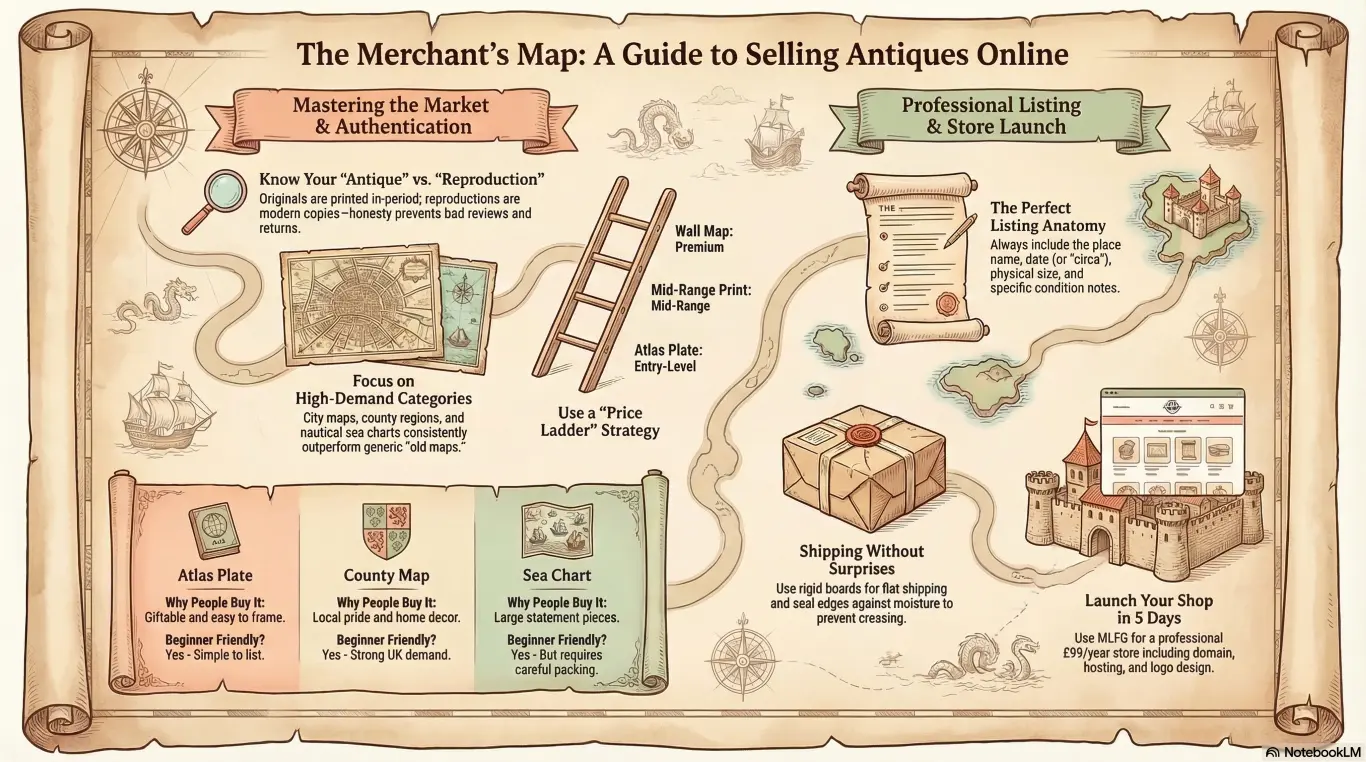
In most collector spaces, “antique” tends to mean around 100 years old or more, while “vintage” is usually newer.
But buyers don’t just care about age. They care about whether it’s an original, a later reprint, or a modern reproduction.
Those three things can look similar in a thumbnail and wildly different in value.
There’s nothing wrong with selling reproductions, but calling them antique is how you earn refunds and bad reviews.
If you’re not sure, be honest and describe what you know: where it came from, what it’s printed on, and what you can see.
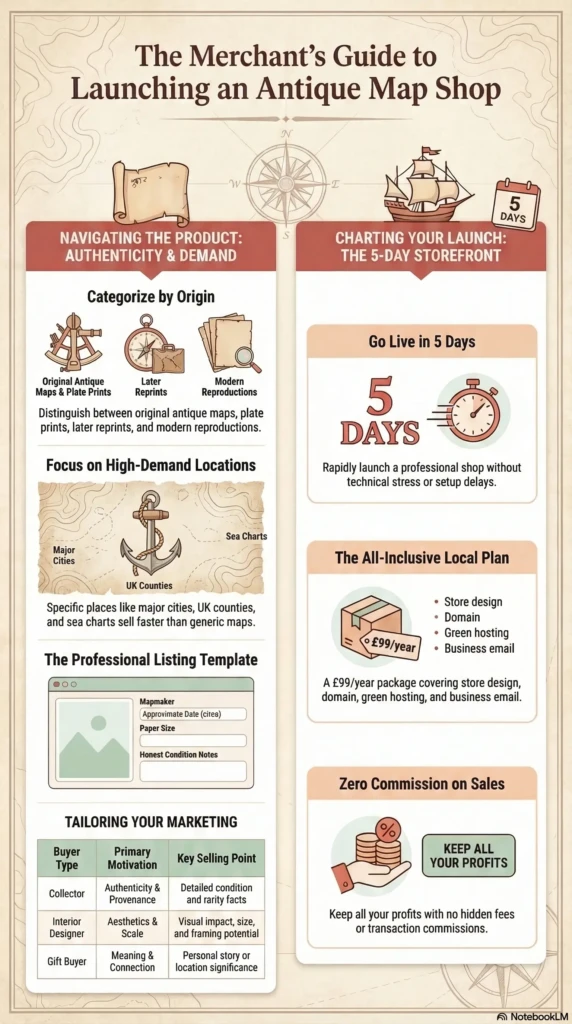
Antique map buyers aren’t one big group. They’re usually one of these:
Your listings should make it easy for all of them to say yes.
Collectors need detail. Design buyers need scale and framing guidance. Gift buyers need context and reassurance.
Some categories consistently perform because they’re easy to understand and easy to style:
Specific places beat generic ones. “Map of Yorkshire” sells faster than “old map”.
If you want to build a business, sourcing is your foundation.
You need stock that’s authentic (or clearly described), in sellable condition, and priced low enough to leave room for profit after packaging and fees.
The best early stock is “easy to explain”: popular places, decent condition, clear origin.
You don’t need to be the world’s leading cartography expert.
You do need to describe maps in a way that’s accurate, searchable, and confidence-building.
Condition is where returns are born, so be specific.
Use language like:
Avoid “great for its age” unless you explain what that means.
“Rare” is one of those words that triggers sceptical buyers.
If you genuinely know it’s scarce, explain why in plain terms (limited run, hard-to-find publisher, unusual subject).
If you don’t know, don’t guess. You can still sell it on beauty, place, and story.
Pricing is part research, part maths, part positioning.
Collectors may pay more, but they also expect more detail and honesty.
Design buyers may pay more for large statement pieces, especially if they frame well.
Price ladders help you sell to more people without discounting everything.
| Map type | Why people buy it | What affects price most | Good for beginners? |
|---|---|---|---|
| Atlas plate city map | Giftable, easy to frame | Condition, margins, recognisable place | Yes – straightforward to list |
| County or regional map | Local pride, decor | Mapmaker, age, colouring | Yes – strong UK demand |
| Sea chart / nautical map | Statement piece, coastal homes | Size, detail, cleanliness, folds | Yes – but package carefully |
| Large wall map | Big visual impact | Rarity, condition, backing/linen, shipping risk | Not at first – more risk |
Maps are tricky because buyers want to see detail.
If your photos are blurry, buyers assume you’re hiding something, even if you’re not.
Use soft daylight and avoid harsh shadows.
If the map is larger than your space, photograph it in sections and include at least one “whole map” shot, even if it’s taken from above.
Keep colours accurate. Over-editing can lead to “not as described” complaints.
The most common damage is creasing, corner dents, and moisture.
Your packaging needs to prevent bending and protect against scuffs.
There’s no perfect answer. It depends on the map’s size, paper, and condition.
When in doubt, protect the paper first and optimise later.
Antique map buyers are cautious. A messy shop makes them hesitate.
Your shop should feel calm, organised, and professional.
Your time is better spent sourcing, researching, photographing, and listing than fighting with site setup.
Make Local for Global builds your ecommerce shop for you, which is ideal if you want to look established quickly and focus on your stock.
If you want a straightforward, affordable route to a professional site, you can Get your website for £99/year.
Or, if you want to talk through how to structure a map shop and what to sell first, you can book a free consultation.
Marketing maps is easier than you think because maps naturally create curiosity.
People love seeing how places used to be drawn, named, and imagined.
Map buyers search by place, era, and mapmaker.
Include those in your titles and descriptions naturally. Example:
Collectors like to browse. They also like to be first.
If you build a small email list, you can tell buyers when new stock drops – especially for specific places and categories.
That’s how you get repeat sales without constantly chasing new customers.
Maps can sell quickly when the place is right, but your first goal is trust.
City and county maps are a great start because demand is obvious.
Pick a theme for your first collection, like:
A focused collection makes your shop feel curated, not random.
Use the same structure every time so buyers learn to trust your format.
Consistency is the “professional” signal new sellers often miss.
Collectors will wait for the right piece. Interior buyers might buy faster.
Instead of discounting quickly, improve your photos, rewrite the title, and share it again with better context.
Don’t force customers to message you for a price or shipping quote if you can avoid it.
A clean ecommerce checkout turns “I like it” into “I bought it” in about a minute.
If you want that without building the shop yourself, Make Local for Global can help – you can book a free consultation or go straight to Get your website for £99/year.
These mistakes cause most returns and disputes.
Be explicit about what the item is. Serious buyers care, and casual buyers want honesty.
Framing depends on size. Always include measurements and show scale.
Foxing and small tears are normal. Hiding them is not.
Maps arrive creased or bent and buyers won’t forgive it. Pack with rigidity and protection.
Over-saturated images create disappointment. Keep colours true to life.
Some are, especially if they’re genuine originals, feature desirable locations, come from known mapmakers, or have exceptional condition and colouring. Many antique maps are affordable too, which is why clear descriptions and pricing research matter.
Look for printing clues (plate marks, paper feel, signs it came from an atlas), check whether it’s on modern bright white paper, and compare it to known examples. If you’re not sure, describe it cautiously and focus on what you can verify rather than guessing.
Maps of specific places people care about tend to sell best: cities, counties, coastal areas, and locations tied to travel or family history. Nautical charts and decorative world maps also do well as statement wall art.
Unframed is usually easier and safer for shipping, and it gives buyers choice. Framed can sell for more, but it adds cost, shipping risk, and returns complexity unless you have strong packaging systems.
You can start on marketplaces, but a website helps you look established and lets you curate your collection properly. If you don’t want to spend weeks on setup, a done-for-you shop can get you selling faster with less stress.
To sell antique maps online, focus on trust: clear authenticity statements, consistent listings, honest condition notes, and safe packaging.
Start with popular places and a tight theme, and build from there as you learn what buyers respond to.
If you want a clean ecommerce site without making it a tech project, you can Get your website for £99/year.
Or if you want help shaping your collection and shop layout, book a free consultation.
Maps are already interesting. Your job is to present them clearly and make buying easy.
PREFERRED SOURCE
Like what you’re reading? Add Make Local for Global as a preferred source on Google to see more of our articles when you search.

Build your online presence without having to figure out everything yourself.