

READY TO SELL Business cards ONLINE?
Get a store built for you in 5 days, plus training and support to help you start, run, and grow your Alternative business.

Learn how to sell business cards online by choosing a niche, testing print quality, pricing every order and building repeat business.

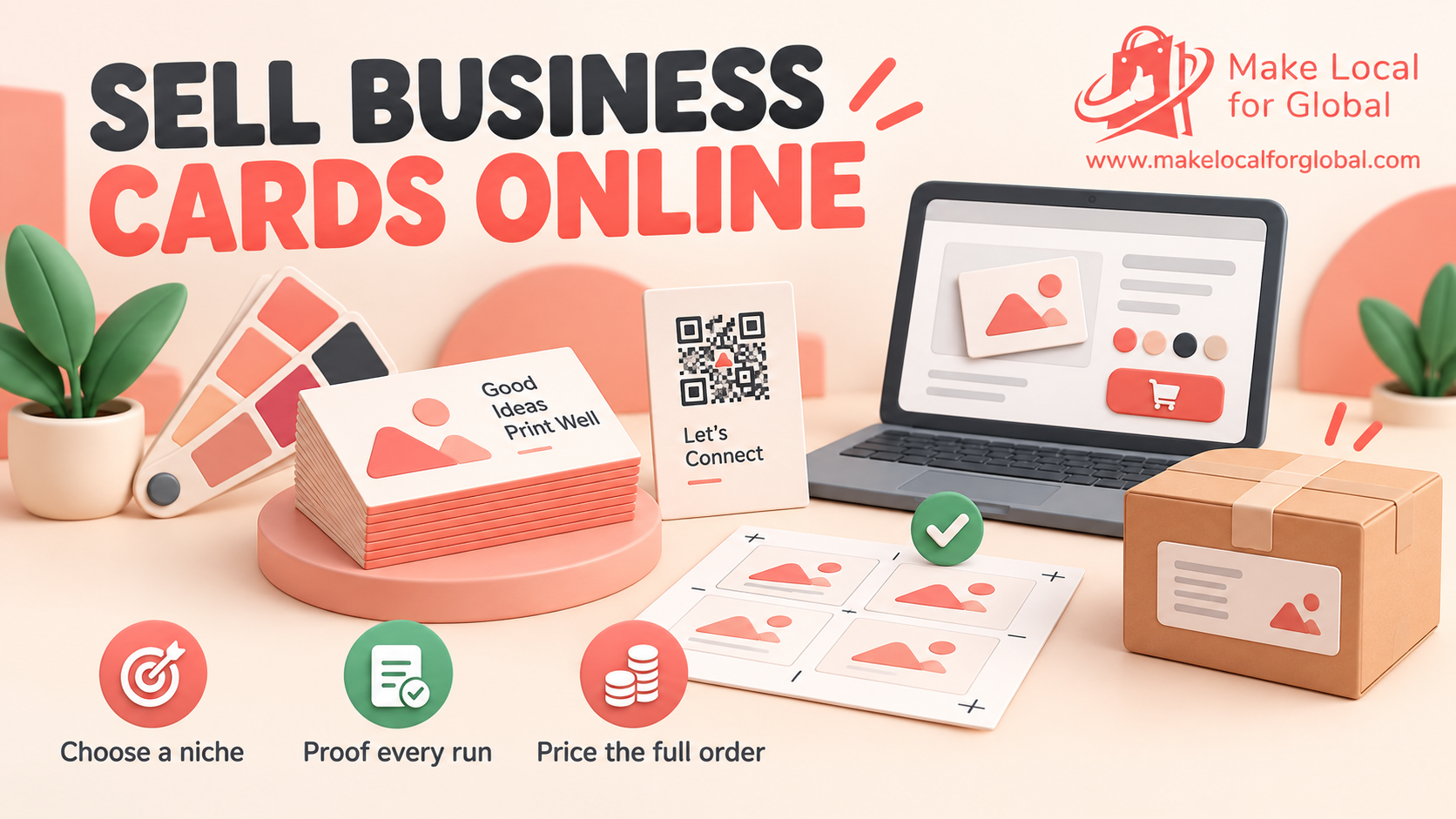
Business cards are small, yet customers notice every choice. Paper feel, colour, trim, QR code, delivery speed and proofing can decide whether a business owner orders again or asks for a reprint.
If you want to sell business cards online, start with one clear buyer and one dependable print offer. Test the artwork process, price the complete packed order and make the proof stage easy to understand. You can use the same product-testing discipline from our bamboo sheets selling guide, yet the checks here focus on print quality and repeat business orders.
MLFG can help organise your product pages, order flow and shop structure around the customers you want to serve.
Do not open with every paper stock, finish and shape a printer can supply. Choose one buyer group, learn what they need on the card and build a small range around that use.
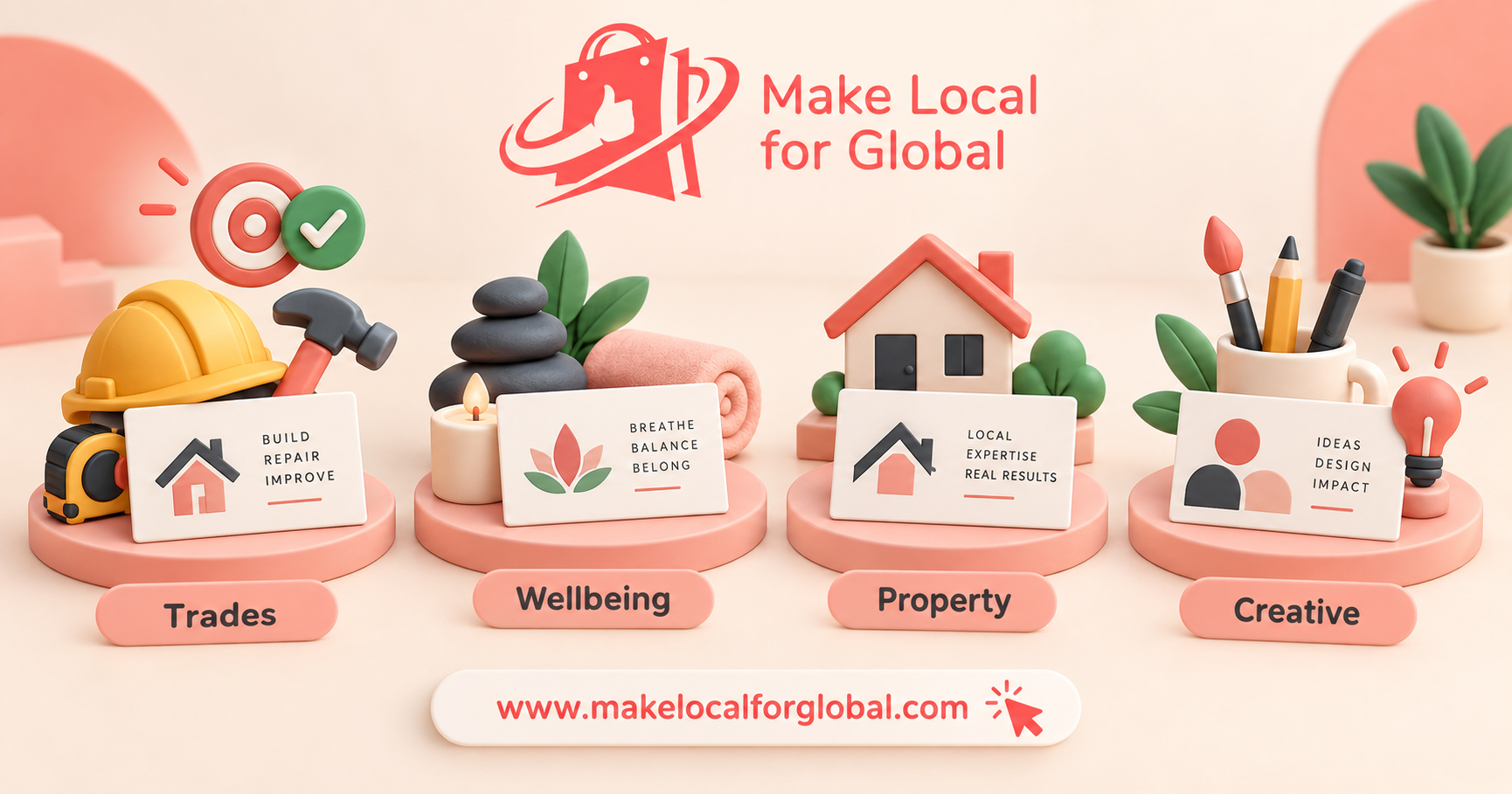
Speak to five people in your chosen niche. Ask what they hand out now, what they dislike about it, how many cards they use in a month and what information customers ask for after a first meeting.
Create three simple sample offers and show them in a short enquiry form. Track which option gets a reply, which details people ask to change and whether they want one-off cards, team packs or a repeat delivery.
| Buyer | Useful card promise | First test |
|---|---|---|
| Tradesperson | Clear contact route and service area | Offer 250 cards with a QR quote link |
| Wellbeing professional | Calm design with booking details | Show uncoated and soft-touch samples |
| Property adviser | Trustworthy team and office details | Offer team-name variations in one pack |
| Creative freelancer | A card that supports the portfolio | Show two unusual shapes beside standard size |
Use the first responses to choose the opening range. Do not treat interest as a sale until someone approves a proof or pays.
A good opening range makes the choice quick. Give customers a dependable standard card, one higher-value option and a repeat-order route.
| Offer | What it includes | Best fit |
|---|---|---|
| Standard | 85 x 55 mm, double-sided print, one stock and square corners | New businesses and everyday networking |
| Premium | Heavier stock, soft-touch or foil option and a stronger proof process | Consultants, property and design-led brands |
| Repeat pack | Saved artwork, easy quantity choice and a faster reorder route | Teams, venues and local service businesses |
Check each printer’s current specification before you publish a size, stock or turnaround promise.
A UK print guide from HOLO Print describes 85 x 55 mm as a common UK finished size and recommends 3 mm bleed on every edge. Treat that as a production reference, then confirm the exact file size with your chosen printer.
Your supplier controls much of the customer experience. A low unit price does not help if colours shift, trimming cuts through a phone number or the reprint process is unclear.
The FSC UK chain-of-custody guidance explains how certified material is tracked through the supply chain. Ask your printer what claim applies to the finished card before you use FSC wording or a logo in your shop.

Keep a dated photo of the approved proof and the final delivery. That record helps you compare a reprint and gives the printer clear evidence if a problem appears.
Customers compare the pack price. You need to know the contribution left after every cost needed to complete that order.
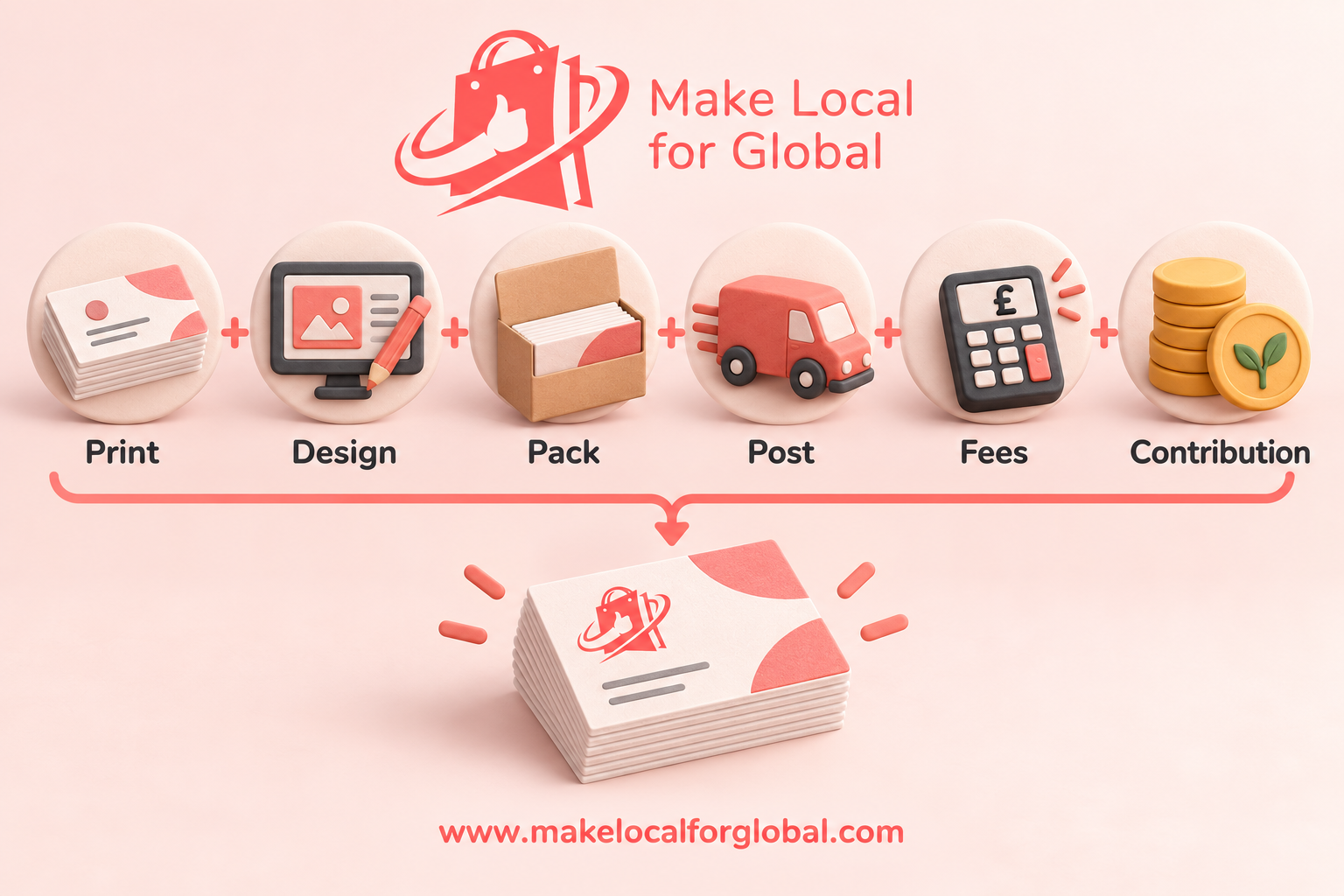
The figures below are an illustration, not a market quote. They assume a customer pays £39.00 before VAT for 250 double-sided cards and the seller uses a payment fee of 1.5% plus 20p.
| Order line | Illustrative amount |
|---|---|
| Customer price before VAT | £39.00 |
| Print run | -£9.50 |
| Artwork setup or design time | -£6.00 |
| Inbound delivery from printer | -£2.00 |
| Sleeve, mailer and label | -£1.20 |
| Payment fee at 1.5% plus 20p | -£0.79 |
| Customer delivery subsidy | -£2.50 |
| Correction or reprint reserve | -£1.50 |
| Contribution before marketing and overhead | £15.51 |
| Acquisition test | -£5.00 |
| Contribution after acquisition test | £10.51 |
Illustrative figures are before VAT and are not net profit. Add software, labour, refunds, tax, storage and other overheads to your own model.
Show design and delivery as separate options if your buyer values speed or wants to supply their own artwork. A repeat pack can carry a smaller design charge, yet it still needs a margin that covers customer service and the printer’s current price.
MLFG can help shape a shop process that makes product options, payment steps and customer information easier to manage.
A business-card product page should help a buyer approve the right file before payment. Treat the page as part product catalogue and part artwork checklist.
Use a short upload form with a visible file limit and a confirmation screen that repeats the name, phone number, email address, website and QR destination. Ask the customer to approve the final proof in writing.
Give the customer a clear way to request a correction before print. A short approval window helps you protect the production slot without making the process feel rushed.
Business cards are often personalised. Your policy should explain what happens after a proof is approved, what happens if the printer makes an error and how you handle a customer mistake.
The GOV.UK returns guidance lists personalised or custom-made items as an exception to the normal change-of-mind refund route. Faulty or misprinted goods still need a suitable remedy, so state your correction and reprint process in plain language rather than using the custom-made exception as a blanket answer.
Before checkout, the GOV.UK online and distance selling guidance says customers need clear information about your business, the goods, price, payment, delivery and cancellation terms. Make those details easy to save in the order email.
Your strongest customer may need cards every month, not one pack once. Build offers for teams, new starters, branches, events, markets and appointment-based businesses.
If you make environmental claims, keep them narrow and evidenced. The GOV.UK Green Claims Code says claims should be truthful, clear and supported by evidence across the life cycle you describe. “Recycled”, “FSC”, “plastic-free” and “eco” do not mean the same thing.
Use four short weeks to learn before you add more finishes or buy deeper stock.
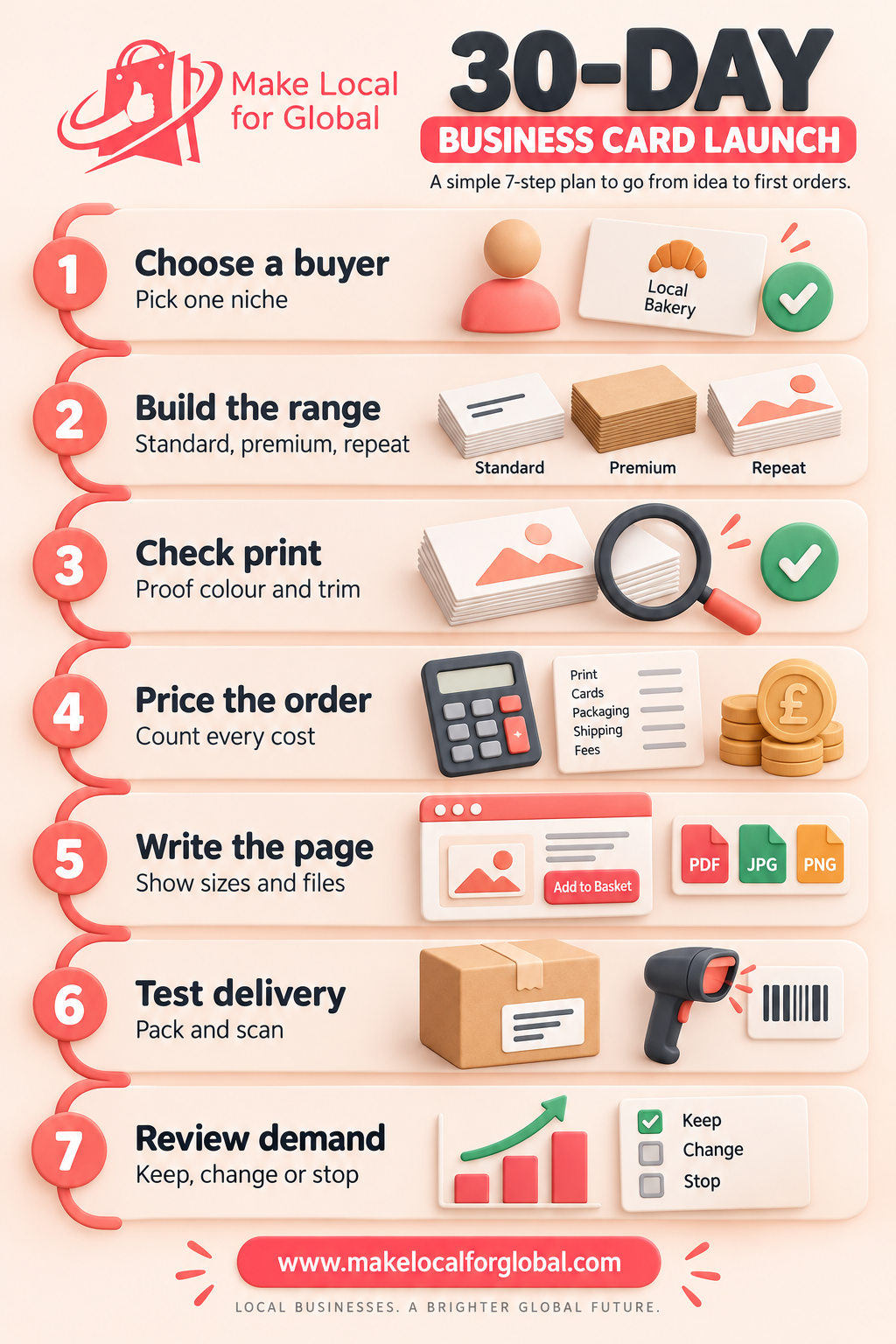
| Days | Action | Observation to record |
|---|---|---|
| 1 to 7 | Choose one niche, interview five buyers and draft three offers | Which use case and price question repeats? |
| 8 to 14 | Order samples, test proof checks and write the product page | Which stock and finish make the choice easier? |
| 15 to 21 | Open a small enquiry or pre-order test | How many people approve a proof or request a quote? |
| 22 to 30 | Fulfil the first orders and contact likely repeat buyers | What causes corrections, delays or repeat interest? |
Stop, change or continue based on paid orders, approved proofs and repeat enquiries rather than likes alone.
It can be worth testing when you focus on a buyer group that has a clear reason to reorder. Start with a small offer, a dependable print partner and a proof process that protects both sides.
85 x 55 mm is a common UK finished size. Confirm the printer’s bleed and safe-area instructions before you publish a file template.
Compare equipment, paper storage, finishing, quality control and delivery time. A trade printer can reduce equipment decisions, yet you still need samples and a clear reprint process.
Personalised or custom-made goods can fall under a change-of-mind exception, yet a faulty or misprinted order still needs a suitable remedy. Explain the proof approval and correction process before payment.
Show the finished size, stock, finish, sides, corners, artwork rules, proof timing, delivery, price, quantity and reordering route. Use close-up photos so the buyer can see the texture and finish.
Choose one buyer, test the print, price the whole order and make approval simple. Once the first offer works, add a repeat pack or a second niche from real customer questions.
If you are comparing other practical products to sell online, our guide to selling bed frames online explains how to test a bulky product, price delivery and set clear assembly expectations.
MLFG can help organise the website, product-page structure and practical launch steps behind a focused business-card business.
PREFERRED SOURCE
Like what you’re reading? Add Make Local for Global as a preferred source on Google to see more of our articles when you search.

Build your online presence without having to figure out everything yourself.