

READY TO SELL Gardening Gloves ONLINE?
Get a store built for you in 5 days, plus training and support to help you start, run, and grow your Alternative business.

Learn how to choose gardening glove styles, check fit and supplier evidence, price each order, write a useful product page and launch a small range.


Gardening gloves are a repeat-buy product, but one pair rarely suits every task. A gardener sowing seeds needs fingertip feel. Someone pruning roses may want a longer cuff. A person washing pots may prefer a coating that handles damp work. An online seller has to help buyers choose the right use and size, then make every protection claim match the product evidence.
This article covers household and garden gloves sold online in the UK, including lightweight, grip-coated, thorn-pruning and waterproof styles. It focuses on product selection, sizing, supplier checks, customer information, stock, returns and the cost of each order. Gloves sold as protective equipment against defined work risks can fall under PPE rules. The legal classification depends on the intended protection, product design and claims, so sellers should check the applicable regulations before importing or branding them.
Choose one kind of gardener, compare a small number of samples and write down what each glove can and cannot do. A clear use and size explanation can help customers choose with fewer surprises.
“Gardening gloves” covers a broad set of tasks. A buyer may be planting seedlings, turning compost, carrying pots, trimming roses, collecting thorny cuttings, clearing weeds or handling wet planters. Their needs change with the task, the weather, the garden and the way they work. A shop that tries to solve all of these with one pair risks vague product claims and disappointed customers.
Start with one buyer group. You might serve new gardeners who want a comfortable general-purpose pair, people pruning roses who need wrist coverage, allotment growers who handle soil and tools for long sessions, or gift buyers looking for a useful set. Write one sentence describing the person and job. For example: “I sell easy-to-size grip gloves for home growers who sow and pot plants each week.” Use that sentence to decide which samples belong in the first range.
Build the customer description from observed behaviour, not a stereotype. A gardener may have a small hand but prefer a looser fit. A person who has arthritis may value an easy cuff and clear sizing, but do not claim that a glove is therapeutic unless evidence supports such a claim. A gift buyer may care more about presentation and a size exchange than about a technical coating. Ask potential customers what they do and what goes wrong with their current pair.
Speak to a few people who fit the target use. Show a physical sample when possible, plus the proposed price, size chart, delivery cost and expected dispatch. Ask what they would use it for, how they currently choose a glove, what they would need to know about fit and what concerns them. Ask whether they have returned gloves before and what caused the return. Record the words they use for cuff length, grip, warmth, washing and dexterity.
Use questions that do not push for a compliment. “Would you buy this?” invites a polite yes. “Which of these two tasks would you use it for?” or “What would stop you adding it to your basket today?” gives more detail. If possible, ask for a small paid preorder or test sale with an honest dispatch date and a plan for refunding if stock is late. Do not accept money for a glove before you have confirmed the supplier can deliver the model and size range you describe.
Try one change at a time. If you change style, colour, size chart, price and packaging all at once, a positive response will not show which decision helped. Start with one question, such as whether a longer cuff matters to rose growers. Give buyers an actual sample or an accurate product page, not a design mockup that suggests a finished item is ready. Record paid orders, product-page views, size questions, exchanges, returns and customer feedback.
Use a small test to learn where interest comes from. A local gardening group, a market stall, a community growing space or a seasonal social post can reveal questions that a generic poll will miss. If a local group gives useful feedback, ask permission before using its name, logo or comments in your marketing. A few enthusiastic replies can guide your next test but cannot prove a large market or promise a sales result.
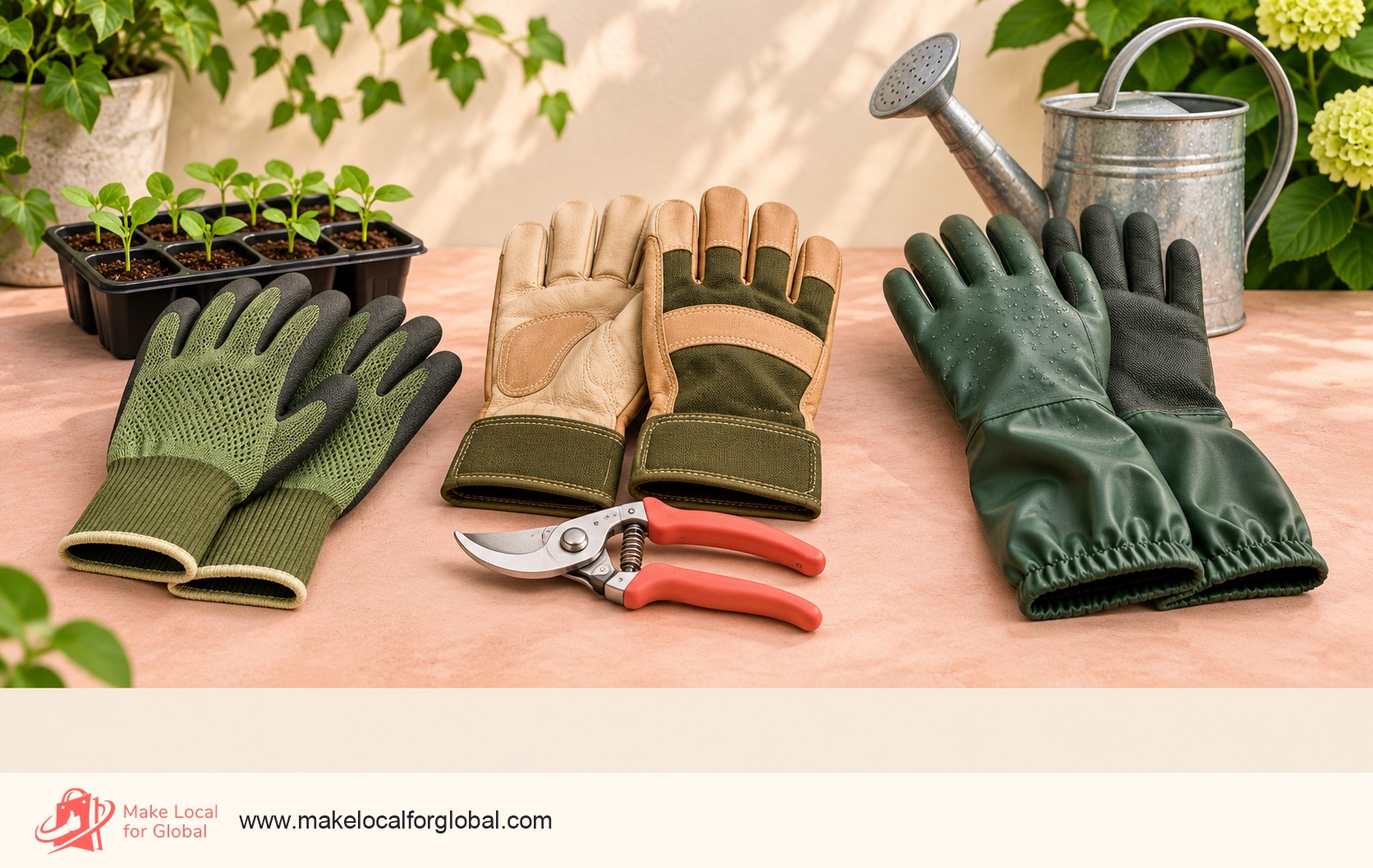
The first collection should let buyers compare meaningful differences. A new shop might offer one lightweight general-use glove, one grip-coated style and one longer-cuff pruning option. Keep colour choices limited until you know whether customers value them. Every extra colour and size increases stock positions, image work, supplier checks and the chance of a slow-moving unit.
Give each product a distinct job. A general pair may suit planting and light potting. A textured palm may help with holding tools or pots, depending on product evidence. A longer cuff may cover more of the wrist and lower forearm during pruning. A water-resistant coating may help with damp soil but may feel less breathable. Describe the actual construction rather than promising protection from every hazard.
| Glove type | Possible buyer use | What to verify before listing |
|---|---|---|
| Lightweight knit | Sowing, potting and light garden jobs | Finger feel, palm grip, size chart and care instructions |
| Grip-coated palm | Holding pots or tools where added traction is useful | Coating material, wet-grip claims, flex and coating wear |
| Longer-cuff pruning glove | Handling thorny plants or cut stems | Cuff coverage, seams, fit and the exact protection evidence |
| Water-resistant style | Damp soil, washing pots or wet-weather tasks | The maker’s water-resistance meaning, lining and drying care |
| General-purpose leather or fabric glove | A broader set of garden tasks | Material, flexibility, stitching, fit and cleaning limits |
These labels describe retail groupings, not a performance rating. A “thorn-resistant” name does not establish that every thorn or sharp object is harmless. A coated palm does not prove cut, puncture or chemical protection. Tie each claim to the supplier’s product data and the relevant test or certification if the product is regulated as PPE.
Avoid building the range from near-identical models with different names. A customer needs to understand why one pair is warmer, longer, easier to wash or better suited to a specific task. If you cannot explain the difference using verified product features, the two products may not both deserve space in the opening range.
An entry product helps a new customer try the shop with a smaller commitment. A core pair represents the main promise. A gift set might add a second pair, a trowel or a useful storage pouch, but each extra item needs a cost and a clear purpose. A bundle that combines unrelated products can increase packing work without helping a gardener.
Keep bundle contents exact. State whether a tool, seed packet, pouch or gift box is included. Show all parts together in a photograph. If you use props, name them as styling items where confusion is possible. Do not photograph gloves with a tool or protective sleeve that buyers will assume is part of the order.
Test a set against the single pair. Add the cost of the extra products, gift packaging, labour and parcel size. A set may justify a higher order value, but the added stock can complicate picking and replacements. Ask potential buyers whether they prefer a matched pair of gloves or a small starter set, then compare the answers with actual paid orders.
Fit is one of the biggest reasons a buyer hesitates. A glove can have good materials and still be uncomfortable if the fingers are too long, the palm is too tight or the cuff does not suit the person. A size label such as S, M or L means little without a chart linked to the maker’s measurements.
Ask the supplier which measurement controls sizing. Some charts use palm circumference, hand length or a combination. Do not invent a chart or copy one from another brand. Check how the supplier measures the hand and ask whether the chart refers to the glove dimensions or the wearer’s hand. Explain whether the buyer should measure the dominant hand, how to place a tape and what to do if their measurement sits between sizes.
Try each available size on several hands if you can. Record whether the thumb reaches its end, whether fingers bunch, whether the palm stretches across the knuckles, whether the cuff can be pulled on without effort and whether the glove stays in place when the wearer grips a trowel. The sample exercise helps spot a poor cut, but it does not replace the supplier’s approved size chart or a representative test process.
Tell customers how the glove is meant to fit. A close-fitting garden glove may support dexterity but should not force fingers into a bent position. A looser style may allow airflow, yet slip when a user handles small seed trays. State whether a fabric lining changes the fit or whether the user should size up. Use product-specific evidence for that recommendation.
The size curve is the amount of inventory assigned to each size. Do not divide the order evenly unless sales evidence supports that choice. Start with small quantities across the sizes the supplier offers, subject to minimum-order rules and actual storage. Track page views, size selections, sales, exchanges and stockouts by size. Reorder from evidence, not assumptions about which hands are most common.
If the supplier only sells mixed cartons, ask for the exact size split before ordering. A carton with many units of one size may create a false impression that you have a balanced range. Ask whether they can adjust the split, support a repeat order, or offer a smaller sample pack. If you cannot source a size reliably, do not imply that it will always be available.
Avoid making customers share a size guide through a product photo alone. Put the measurements in readable page text and add an accessible image if the chart helps. Explain the steps and link the chart beside the size selector. If the size differs between styles, give each product its own table or clearly call out the variations. A buyer should not have to hunt for a chart from a different glove.
Before ordering, decide whether you are selling a comfortable garden glove for ordinary handling or PPE intended to protect a person from a defined risk. Product names do not decide the legal category. The intended use, design, warnings and marketing claims all matter. A seller who advertises cut, puncture, chemical or other hazard protection needs evidence for that exact product and the rules that apply in each market.
The UK PPE guidance for Great Britain explains the product-supply requirements under the PPE regulations. The applicable conformity marking depends on the product and assessment route. For Northern Ireland, use the separate PPE guidance for Northern Ireland. Do not assume that one set of paperwork automatically covers every UK market.
Ask the supplier to identify the model, intended use, manufacturer, production location, materials, care instructions, size range and batch identification. If the glove is PPE, request the declaration of conformity, certificate or assessment evidence relevant to that model, instructions and required markings. Check that documents match the product code, manufacturer and version you are buying. A generic certificate image or a mark shown on a nearby model is not proof for the SKU in your order.
Your role in the supply chain matters. A retailer reselling a product made and labelled by another business has different responsibilities from an importer or a seller placing an own-brand product on the market. If you change the design, make a safety claim under your own label or source directly from outside the UK, ask a qualified product-compliance professional what you must do. The PPE regulations set duties for manufacturers, importers and distributors, and the details depend on the product and market.
Gardeners sometimes use plant-protection products, fertilisers, oils or cleaners. A general garden glove should not be presented as suitable chemical PPE without evidence for the exact substance and task. HSE advice says users need to follow product authorisation conditions and the label. Its guidance on using pesticides in gardens explains that these products have risks that require proper controls. If a glove supplier cannot confirm chemical compatibility, tell buyers to follow the relevant product label and use equipment specified for that job.
Long cuffs can cover more of the wrist and lower arm, but the phrase “thorn proof” can overstate what the glove does. Ask what thorn type, material and test support the statement. Describe the construction and intended pruning tasks with care. Do not tell customers that a glove makes all sharp plants safe to handle. A gardener should still use suitable tools, work carefully and follow any product instructions.
Claims about warmth, waterproofing, grip, breathability, washability, recycled content, leather origin or domestic manufacture need evidence. Request written product data and compare it with the sample. If a coating is water-resistant but not fully waterproof, use the accurate term and explain the limitation. If the glove is only suitable for light potting, say so rather than placing it beside strong protective claims.
Keep a product file for each model. Save supplier identity, invoice, order date, product code, batch, specification, size chart, labels, care instructions, compliance documents, sample photos and any change notice. Record who checked the document and when. If the supplier changes a coating or factory, pause the listing until you compare the new product with the old record.
Order samples from the same source and model you intend to sell. Use them for fit, flex, grip, durability and care checks. Take notes rather than relying on memory. The sample review helps you compare products; it does not certify PPE performance or prove that every production batch will match.
Inspect the size and shape first. Lay the glove flat and compare left and right hands. Check finger length, thumb angle, palm width, cuff opening, seam placement and lining. Pull the glove on and off several times. Flex each finger and use a small hand tool, lift a light pot and pick up a seed tray. Notice bunching, pressure, slipping, restricted movement, a cuff that rolls down or a rough seam against the hand.
Inspect material and finish. Look for loose threads, split seams, coating bubbles, thin patches, exposed stitching, uneven fingertips, holes, tacky surfaces, colour transfer and left-right variation. Stretch the palm gently within ordinary use. Do not use a test that could damage the sample and then present it as a valid performance assessment. If the supplier advertises specific protection, rely on relevant test documents rather than a home-made trial.
Test grip in the conditions the product page describes. A dry pot, damp pot and garden tool may feel different. Note whether the coating becomes slippery when wet or collects soil. Do not claim wet grip from a single sample exercise. Ask the supplier for any test method and limits behind a formal performance claim, then decide whether the product page can describe it accurately.
Check how the glove dries and cleans. Follow the maker’s instructions and record any change in shape, colour, coating, lining or grip. Do not wash a sample in a way the user manual forbids. If the product cannot be washed, state how the manufacturer says to care for it. If a damp glove must air-dry before storage, include that advice where it affects product life.
For an opening shipment, sample multiple pairs from a case. Compare construction, finish, size labels and packaging. Set a written acceptance checklist for each model, so a helper can spot the same defects you would. Put any pair that fails the inspection aside. Agree with the supplier how to report defects, who pays return freight and what evidence they need before you order stock.

The buyer cannot feel the glove from a product photo. Give them the details needed to match the glove to the task, choose a size and understand its limits. Start the description with the intended use, then state the material, palm or finger coating, cuff length, lining, sizes, care and pack contents. Use the manufacturer’s exact terms for verified product features.
Build the title around the product and its use. For example, a title might identify “long-cuff rose pruning gloves” or “grip garden gloves for potting”. Add a size or material only when the information is verified and useful. Avoid a list of search phrases such as “gardening work gloves safety thorn proof waterproof”. Search terms must match the glove and should read naturally.
Give each size its own accurate selection. State the hand measurement method, units and chart source. If a pair has a close fit, describe that only when the supplier confirms it. Include a note about what to do if someone is between sizes. Do not hide fit limitations in a footnote. A short video showing how the glove bends around a trowel can help, but do not imply it provides a certified level of protection.
Answer questions that commonly affect the purchase: Is it sold as one pair or a multi-pack? Is the cuff short or long? Which gardening tasks does the maker list? Is the glove lined? What are the care instructions? Does the product have a PPE marking and declaration when required? Which sizes are available? What is the return process for a wrong size? If a product is not suitable for pruning or pesticide work, say so.
Keep claims separate from customer opinion. A review that says “the gloves feel comfortable” is a buyer’s view, not a safety test. Do not turn it into “protects every gardener from thorns”. Obtain permission before using a customer photo or quote. Explain any limitation that could affect the buyer’s decision, such as a coating that is not suitable for prolonged water exposure.
Photograph the front and back of each glove against a neutral background. Add close-ups of the palm, fingertip, cuff, seam and lining. Show both hands and the pair together. If the glove has multiple sizes, photograph an accurate size comparison. A worn photo can show the cuff and finger fit, but choose a model hand that matches the size shown and do not digitally narrow the glove.
Use close, even lighting to show the knit and coating. A dark palm on a dark background may disappear. Use a side view to show thickness and a flat lay for shape. Include one real use image, such as a person holding a seedling or a hand tool. Do not place an unsafe object in the scene or imply a protection level that has not been verified.
Keep colour consistent with the stock. Green and brown shades can shift under warm lights or heavy filters. Include a product-scale reference only when it represents the real item. If a size chart is an image, repeat the measurements in page text for accessibility and phone viewing. Add descriptive alt text, such as “Long-cuff garden gloves beside hand pruners”, not a string of keywords.
Check the page on a phone. The selected size, price, pack quantity, delivery estimate and return information should be visible before checkout. Make sure customers can enlarge the close-up photos. If the product title says one pair but the main photo shows several, state what is included. Update images if the supplier changes the cuff, palm coating or colour.

Do not set a retail price by doubling the supplier quote. Include landed product cost, inbound delivery, import charges, packaging, pick and pack, postage, payment and marketplace fees, discounts, size exchanges, returns, customer acquisition and a damage or defect reserve. Add VAT where it applies to your business. Check whether the supplier quote includes VAT and whether your own selling price is tax-inclusive.
The table below shows an illustrative order for one pair at £19.95 with £4.95 delivery paid by the buyer. These figures are examples only, not supplier quotes or a margin recommendation. The example assumes a business that is not VAT registered. A VAT-registered seller must recalculate using the VAT treatment that applies to the products and costs.
| Illustrative order line | Cost |
|---|---|
| Pair of gloves, landed product cost | £7.80 |
| Inbound freight allocated per pair | £0.50 |
| Mailer and printed care insert | £1.10 |
| Pick and pack time | £0.90 |
| Tracked parcel charge | £3.20 |
| Payment processing charge | £0.70 |
| Size exchange and return allowance | £1.25 |
| Customer acquisition assigned to the order | £2.00 |
| Total variable order cost | £17.45 |
| Item revenue plus delivery paid by buyer | £24.90 |
| Contribution before fixed overhead and tax | £7.45 |
The arithmetic is £24.90 less £17.45, leaving £7.45 before rent, insurance, software, accountancy, tax, unpaid owner time and other fixed costs. That figure is contribution, not net profit. Replace every assumption with a real quote or invoice. Track the delivery charge as revenue and postage as a separate cost, so you can see if the parcel rate covers its service.
If contribution is too low, test one change at a time. Ask the supplier about a case price, compare a cheaper mailer that still protects the glove, test a two-pair bundle, adjust the delivery threshold or improve unpaid search visits with more useful product information. A larger bundle could raise the average order but may create a size-selection problem if buyers need different sizes. A cheaper package should still protect the product and include required instructions.
Model single pairs, multi-packs and gift sets separately. A single pair may have lower stock value, yet postage and payment fees take a larger share. A multi-pack can spread delivery cost across products, but buyers need to understand whether the pairs are identical or mixed sizes. Gift packaging can suit an occasion purchase, though it adds materials and work. Do not use one average margin to hide a product that loses money after returns.
Glove returns can come from inaccurate size charts, an uncomfortable fit, a colour that differs from the photograph, a seam problem or a product claim that created the wrong expectation. Track the reason, size, SKU, batch and outcome. Distinguish a return from a size exchange, a refund, a replacement and a supplier credit. Each has a different effect on stock and costs.
Create a return process before launch. Tell customers how to contact you, what condition an item should be in, where to send it and how long the process takes. Do not make a blanket “no returns” statement for gloves. Many online purchases have cancellation rights, and faulty-goods rights remain separate. Read the current GOV.UK guidance on online and distance selling and check the exact rules for your product and sales market.
If you receive a product safety complaint, stop and review the affected model or batch. Ask for the product code and order details, then compare them with your supplier record. Do not dismiss reports of a split seam, a coating peeling into a plant pot, a sharp protrusion or a glove that caused an unexpected reaction. Contact the supplier and seek advice from the relevant authority if the issue may affect other buyers. Keep your investigation and any action taken.
Check returned pairs before putting them back into saleable stock. Follow the manufacturer’s cleaning and care guidance. If a glove is dirty, damaged, altered or missing part of its set, do not sell it as new. Your product page and returns process should explain lawful conditions. Hygiene alone does not automatically remove consumer cancellation rights; check whether an exception actually applies to a sealed product and the way it was supplied.
Enter landed cost, postage, fees and a realistic returns allowance for each pair. A small planning tool can help you compare a single pair with a bundle before you commit to stock.
An ecommerce website gives you control over the product story, size chart, customer emails and repeat orders. It makes you responsible for attracting visitors, maintaining the shop and keeping stock accurate. A marketplace can provide discovery and checkout tools, though fees, return policies, listing rules and dispatch standards vary. A garden centre or local maker market can give a buyer a chance to try a sample, but it has event and staffing costs.
Compare channels on buyer fit, listing fees, advertising pressure, customer data, dispatch deadlines, returns, size variation fields and product compliance requirements. Calculate order contribution separately for each channel. A pair that leaves £7.45 on your website may leave less after marketplace commission or a promoted listing charge. Use current platform fee schedules before setting a price.
Start with one main place to take orders and one way to attract attention. This keeps inventory and customer messages manageable. If you add another channel, test stock synchronisation, cancellation handling and size exchange workflows before listing every size. A channel that cannot show a clear size chart or required PPE information may not suit the product.
Trade sales need a separate offer. A garden centre may ask for case quantities, barcodes, packaging dimensions, margin, payment terms, restock time and proof for product claims. A grounds maintenance contractor may need PPE documentation, work-use instructions and consistent sizing. Do not send a consumer product page as the full trade specification. Ask each buyer what evidence and reorder information their staff need.
Search terms should reflect the actual product: gardening gloves for potting, rose pruning gloves, waterproof garden gloves, grip gloves for gardening or long-cuff garden gloves. Add terms only when the item fits that use. A product that has no chemical compatibility documentation should not target searches for pesticide gloves.
Give each product page one main purpose. Write a natural product title, a concise meta description, a descriptive URL and clear headings. Use the same wording in the page and its photos. Avoid copying the same title and description across every colour or size. A product-specific description can state the glove’s use, material, cuff, available sizes and limits.
Link related pages where they answer the next question. A buyer setting up a broader garden shop may read our guide to selling garden stools online. Someone planning workwear for allotment or nursery tasks may compare selling aprons online. Keep the links natural and do not use the same keyword anchor in every paragraph.
Create supporting content from real customer questions: how to measure a hand, when a longer cuff helps, how to care for coated palms, what to check in a glove size chart and why gardening tasks need different gloves. Use photos of your actual stock. If the article discusses protection, link to official guidance and explain its limits instead of presenting a seller’s product test as independent certification.
Track search impressions, page clicks, size-chart interactions, add-to-basket events, checkout completion, paid orders, return reasons and repeat orders. If people visit but do not add a size, the chart or product details may be hard to use. If baskets do not convert, compare delivery, returns and total price. If one size sells out, record whether buyers changed to another size or left the page. Change one major item at a time and keep the result with the date.
Do not promise that search traffic or social posts will produce a set number of orders. If you use gardening influencers or customer photos, agree which product claims they can make. Ask them not to add “thorn proof”, “chemical resistant” or other protection wording unless you can verify it for the specific product.
Create one stock record per glove model, colour and size. Include the product code, supplier, batch or lot, cost, quantity available, reserved orders, reorder lead time, size chart, compliance documents and storage location. Note which items are samples, returned, damaged or waiting for inspection. A spreadsheet can work at the beginning if one person updates it after each order and delivery.
Set a reorder point using real sales and supplier lead time. If demand grows in spring, a reorder based on a quiet winter month can leave the best-selling size unavailable. Use your own weekly orders and enquiries to build a season pattern. Keep some cash for a supplier delay, a change in size mix or a batch that fails inspection. Do not reorder the whole range after one colour sells quickly.
Ask suppliers how they identify production batches and what notice they give before changing a material, coating or size chart. Compare new stock against the saved sample. If a batch has different finger length or palm coating, pause sales until you confirm the product page still matches. If a safety claim or care instruction changes, update the page and records before shipping that stock.
Pack gloves so they arrive clean, dry and identifiable. Use a mailer or box that protects the product and keeps the size label visible. A longer-cuff glove may need a larger package than a folded lightweight pair. For a gift set, separate sizes clearly and include a contents list. Add the product code to the packing slip so a buyer can identify the exact model if they have a question.
Calculate shipping from the packed order, not the glove alone. Check weight, parcel dimensions, collection fees, tracking, delivery area and compensation terms. Test a sample package through the carrier you plan to use. For a multi-pair set, check whether the packing method prevents abrasion between coatings or colour transfer from leather or fabric. Avoid adding a “plastic-free” or “recyclable” statement unless the packaging and local collection route support it.
If you import goods, fill packaging under your own brand or supply packaging to UK customers, review current packaging producer responsibilities. The GOV.UK EPR packaging guidance explains which activities and thresholds can create duties. Keep packaging material and weight records and check your exact business situation. Do not assume that a small order volume automatically removes all obligations.
Choose one buyer and one garden task for the first product. Write a short product promise, such as a comfortable grip glove for potting or a longer-cuff pair for pruning tasks supported by supplier evidence. Make a list of what the glove will not be marketed to do. Speak with likely buyers and collect the size, care and protection questions they ask.
Contact several suppliers and request the same details from each: sample price, minimum order, size curve, material, construction, care, lead time, batch traceability, defect policy and paperwork. If a supplier says the glove is PPE, ask for the model-specific declaration, product marking, instructions and conformity evidence for the market you intend to serve. Compare terms in writing.
Order samples across the proposed styles and sizes. Measure each one using the maker’s method. Try the gloves on different hands, flex the fingers and use common garden tools. Record pressure, bunching, cuff fit, palm grip and any seam issue. Photograph the label, supplier code and sample condition.
Check each claim against supplier documents. Confirm whether the glove is designed for ordinary gardening, specific mechanical risks or another form of protection. Check product-safety and PPE rules for Great Britain or Northern Ireland as relevant. Remove any claim that lacks evidence. Agree the quality-acceptance checklist and complaint path with the supplier before placing a larger order.
Use supplier and carrier quotes to complete the cost table. Include product, inbound freight, packaging, pick and pack, postage, fees, size exchanges, returns, marketing and overhead. Compare a single pair with a bundle and test a sale price after delivery. Decide how many units to order in each size based on supplier minimums and customer evidence.
Write the product title, size chart, task description, materials, cuff length, care and delivery details. Add photos of the palms, back, seams, cuff, sizes and real use. Ask someone unfamiliar with the product to choose a size from the page. If they cannot explain which use the glove supports or what it does not protect against, revise the copy.
Open the first batch with clear size availability and dispatch dates. Share the product with buyers who match the intended use. Invite a specific response about comfort, grip or sizing instead of asking for general praise. Keep any preorders within confirmed supplier stock and send an update if dispatch changes.
Review orders and support messages regularly. Record size chosen, exchange, return, defect, product question, delivery time, sales channel and contribution after variable costs. Treat a few orders as early signals rather than proof of long-term demand. At the end of the month, decide whether to restock, alter the size curve, update the page, change the pack or remove a style.

Some gloves are sold for comfort and light handling. Others are intended to protect against defined risks and can fall under PPE regulations. The product name alone does not settle the question. Check the intended use, the claims and the documents for the exact model before you describe it as protective equipment.
Different makers and cuts can fit differently. A chart from a thin knit glove may not fit a lined leather pair. Use the source chart for the exact model, state the hand-measurement method and test each size. Update the page if the supplier changes the fit or label.
A dark palm or raised pattern may look grippy but does not prove that a glove holds a wet pot or tool. Ask for test data when you make performance claims. Describe the texture and intended use accurately, and explain any limits the maker provides.
A long cuff and reinforced palm do not make a glove safe for every thorn, cut or chemical. Ask for model-specific documentation. For pesticide handling, follow the product label and use the type of glove it specifies. Do not place a general gardening glove in a search category for chemical-protective equipment.
A wide range increases stock cost and makes slow units harder to move. Test the size chart and product page first. Use actual size selections, exchanges and stockouts to adjust the size curve. Keep reorder quantities tied to supplier lead time and sales evidence.
Fit exchanges can require another parcel and more handling. Put a realistic allowance in the pricing model and track actual return reasons. Improve the chart, photos and fit copy if customers keep choosing the wrong size. Do not treat a returned or worn pair as new stock without inspection.
A folded glove photo can hide cuff length, palm coating and finger shape. Show the product from both sides, add a close-up and include a realistic use photo. A size guide should be readable in page text, not only embedded in an image.
No. A glove’s legal status depends on its intended protection, product design and claims. A comfort glove for ordinary tasks may not be PPE, but a product sold to protect against defined risks can come within PPE rules. Check official guidance and model-specific documents before selling it with protection claims.
Choose a pair for one task and buyer, such as a lightweight grip glove for potting or a longer-cuff model for pruning. Start with a small number of styles and sizes. Verify the material, fit, care and supplier documents before buying a large case.
Use the maker’s chart for the exact model. Explain how to measure the hand, what the measurements mean and what to do if someone falls between sizes. Avoid reusing a chart from another style or brand. Test samples so the chart and product page match the delivered glove.
Avoid absolute claims unless the manufacturer provides evidence that supports the exact wording and use. A longer cuff or reinforced palm may cover more of the hand, but it does not guarantee protection from every thorn or sharp stem. Explain the glove’s verified design and intended task.
Only when the exact glove is suitable for the product and task. Follow the pesticide label and its protective-equipment requirements. A general garden glove should not be presented as chemical protective without product-specific compatibility evidence.
Show the intended task, material, palm coating, cuff, available sizes, a source-backed size chart, care instructions, pack quantity, delivery and return information. Include close-up photos and state any use limits. If the glove is PPE, display the information and documentation required for the market.
Add the landed product cost, inbound delivery, packaging, labour, postage, payment or marketplace fees, returns, exchanges, discounts and customer acquisition. Compare those costs with item revenue and any delivery charge. The remainder is contribution before fixed overhead and tax, not net profit.
Not always. Product rules and markings can differ by market and by conformity-assessment route. Use the current Great Britain PPE guidance and Northern Ireland PPE guidance for the product you plan to supply.
Some customers may buy more gloves around planting or pruning periods, but the pattern will depend on your audience, product and location. Track orders, enquiries and stockouts over time. Use your own sales and supplier lead times to plan the next order instead of relying on a generic calendar.
A good gardening-glove range helps a buyer match the pair to a task, understand the size and see what claims the supplier can support. Start with samples and current records. Show fit, cuff, palm and care clearly. Price each order after postage, fees and returns. Use early sales and support questions to decide which size or style deserves the next order.
If you are building a wider garden store, compare this product with our garden stools guide and aprons article. For planning help, explore MLFG’s free business apps or contact the team.
Start with a sample, an accurate size guide and a complete delivery cost. Let the first orders tell you which style and size deserve the next restock.
PREFERRED SOURCE
Like what you’re reading? Add Make Local for Global as a preferred source on Google to see more of our articles when you search.

Build your online presence without having to figure out everything yourself.