

READY TO SELL abstract sculptures ONLINE?
Get a store built for you in 5 days, plus training and support to help you start, run, and grow your Alternative business.

A practical guide to selling abstract sculptures online: choose a clear aesthetic, show scale and texture properly, price for packaging and time, and build a shop that converts décor browsers into confident buyers.

Abstract sculptures sell because they let people say something about their taste without saying a word.
A good piece can make a room feel curated, modern, and expensive – even if the rest of the furniture is basically “whatever was on sale”.
If you want to sell abstract sculptures online as a business, you’re not just selling an object.
You’re selling mood, texture, scale, and the confidence that it’ll look right on a shelf, console table, or coffee table when it arrives.
This niche sits at the intersection of art and home décor, which is a great place to be.
Home décor buyers are happy to spend on statement pieces, and abstract work has broad appeal because it doesn’t need to “match” a specific theme.
It can be calm, bold, minimalist, brutalist, playful, or luxe – and you can build a brand around a very specific aesthetic.
Once you know who you’re selling to, your collections and descriptions write themselves.
These buyers care about scale, materials, and finish more than they care about “meaning”.
Use these as headings, categories, and FAQ prompts.
That last one is the big clue: people are terrified of buying the wrong size.

Abstract sculptures are only “too competitive” if you’re vague.
When your style is distinctive, people find you because they want exactly that vibe.
Pick one as your lead aesthetic and make your shop feel curated around it.
Customers buy faster when they can tell what your brand stands for.
This affects everything: pricing, shipping, stock, and your marketing story.
Handmade sells best when you show process, textures, and uniqueness.
It also means you need realistic production timelines and clear product photos, because customers will expect small variations.
One-of-one stock creates urgency and suits a “new arrivals” business model.
Your biggest requirement is excellent condition notes and a fast, consistent way to photograph pieces.
Made-to-order can be brilliant for reducing inventory risk.
But you must be clear about lead times and what “variation” means, especially if finishes are hand-applied.
In décor, less choice often sells better.
People want a shop that curates, not a shop that dumps options.
Pairs and sets are an easy way to increase order value while making styling simpler for customers.
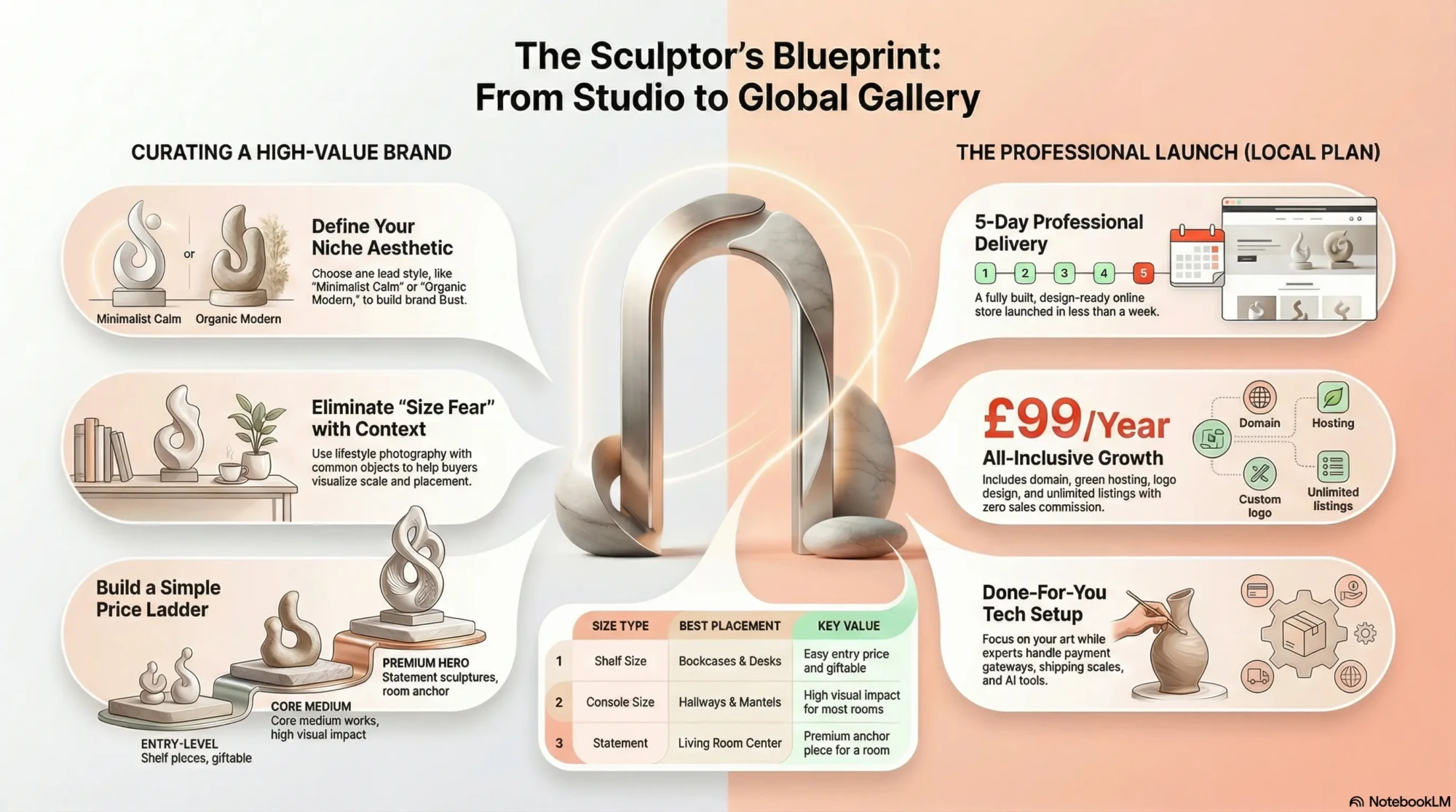
Create collections based on where the sculpture will live.
This reduces the “will this be too big?” fear.
Abstract sculptures often get underpriced by small sellers because they feel like “decor”.
But buyers are paying for design, finish, and impact.
Even if every piece is slightly different, your shop should feel consistent.
Customers like knowing you have “levels”. It helps them justify spending more.
Don’t write a gallery essay.
Just explain what makes the piece special:
Simple, confident, and specific is the goal.
Décor buyers need reassurance.
They want to know it will look good, arrive safely, and match the vibe of their space.
For abstract sculptures, texture photos are a must.
This table can live on a “help me choose” page or a blog post, and it will reduce returns.
| Size type | Best placement | Why it sells | Buyer concern | How to position it |
|---|---|---|---|---|
| Shelf size | Bookcases, sideboards, desks | Easy entry price, giftable, low-risk buy | Looks too small | “A finishing touch for shelves and corners” |
| Console size | Hallways, sideboards, mantelpieces | Visually impactful, suits most rooms | Will it fit the space? | “Your easy statement piece” |
| Coffee table statement | Living rooms, centre styling | Feels premium, anchors a room | Damage in shipping | “Gallery vibe, without gallery prices” |
| Large feature piece | Feature walls, large consoles, studios | High perceived value, designer appeal | Price justification | “A centrepiece that changes the room” |
Sculptures are fragile, oddly shaped, and often heavy for their size.
Packaging isn’t just protection – it’s your business model.
If you sell handmade pieces, include a care card and a short note about variations.
It makes the customer experience feel premium and reduces complaints.
This is the number one décor issue.
Fix it by:
Most people buying abstract sculptures aren’t trying to become art critics.
They just want their home to look good.
So talk about styling and mood, not theory.
Décor sells when it’s shown in real rooms, not floating in space.
If your pieces are one-offs, email is gold because “new arrivals” creates urgency.
You can sell on marketplaces, but abstract sculptures often get flattened into price comparison listings where the buyer can’t fully appreciate texture, finish, and scale.
Your own ecommerce shop gives you the space to sell the vibe: better photos, styling guidance, bundles, and a brand aesthetic that makes customers trust your taste.
Make Local for Global offers a done-for-you ecommerce setup for small sellers who want a clean shop without the tech hassle.
You can book a free consultation to plan your collections and product pages, or Get your website for £99/year and get your shop set up ready to sell.
Yes, because they’re a high-impact décor item with strong visual appeal, and buyers often shop emotionally when they see a piece that fits their style, but you’ll sell more consistently when you show scale clearly and describe materials and finish in a way that feels trustworthy.
A good rule is to pick a smaller “shelf size” piece for bookcases and desks, a medium piece for consoles and sideboards, and a larger statement piece for coffee tables or feature areas, and sellers can reduce returns by showing lifestyle photos and listing measurements near the top.
It depends on your audience, but ceramics and stone-like finishes often appeal to buyers wanting an artisanal feel, while metal and sleek resin pieces suit modern interiors, so your best move is to commit to one dominant material story and style so your shop feels curated rather than random.
Use protective wrapping so no part of the sculpture touches the box, prevent movement with snug padding, reinforce edges and protrusions, and double-box fragile or higher-value pieces, because damage in transit is the fastest way to lose profit and customer trust.
Most sculptures look best when you give them breathing space and pair them with one or two calmer objects like stacked books, a simple vase, or a tray, because the contrast helps the sculpture feel intentional rather than cluttered.
PREFERRED SOURCE
Like what you’re reading? Add Make Local for Global as a preferred source on Google to see more of our articles when you search.

Build your online presence without having to figure out everything yourself.