

Make Local for Global Logo

READY TO SELL Acrylic organizers ONLINE?

Get a store built for you in 5 days, plus training and support to help you start, run, and grow your Alternative business.

Sell acrylic organizers online: a UK starter playbook

A practical guide to selling acrylic organizers, from picking a profitable niche and building bundles to shipping safely and getting repeat customers.

Make Local for Global

Table of content

Acrylic organisers are one of those products people don’t realise they want until they see them used properly.

A tidy makeup drawer. A pantry that suddenly looks expensive. A desk that doesn’t feel like a paper avalanche.

And because they’re both practical and giftable, they can be a strong ecommerce business – if you sell them with clarity.

The trap is thinking you’ll just list “acrylic organisers” and wait for sales.

That’s how you end up competing on price with marketplaces and shipping heavy, scratch-prone items for tiny margins.

This guide shows you how to Sell acrylic organizers in a way that’s profitable and sane.

We’ll cover niche selection, product range planning, sourcing, pricing, packaging and shipping, product pages that reduce returns, and marketing that doesn’t require you to become an influencer overnight.

And if you want a shop that looks legit without you wrestling with tech, I’ll show you how Make Local for Global can set up your online store for you.

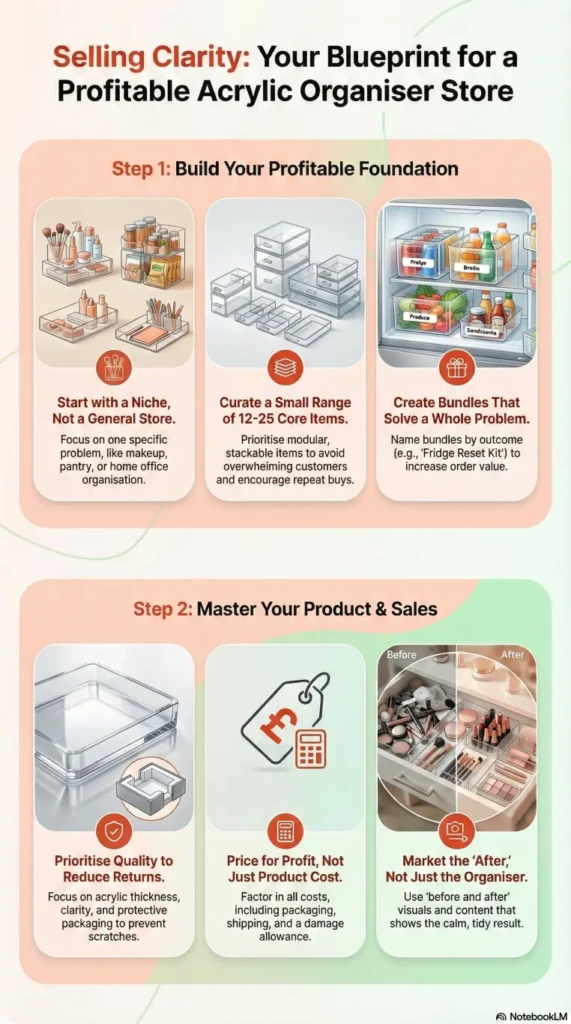
Start with a niche: “acrylic organisers” is too broad

Acrylic organisers can mean makeup drawers, kitchen containers, fridge trays, stationery caddies, bathroom shelves, jewellery boxes, and a dozen other things.

If you try to sell all of it, your shop feels like a random storage aisle.

Customers don’t know what they’re meant to buy, and you don’t know what to market.

Pick a customer with a clear problem

Here are niche angles that are easier to sell than “storage for everyone”.

  • Makeup and beauty storage: drawers, lipstick holders, brush canisters, vanity organisers.
  • Kitchen and pantry organisation: fridge bins, snack organisers, spice trays, shelf risers.
  • Home office and desk setup: file sorters, pen pots, cable tidy trays, monitor risers.
  • Bathroom and skincare routines: counter trays, cotton pad holders, under-sink organisers.
  • Jewellery and accessories: ring trays, watch boxes, sunglasses organisers.
  • Small space living: modular pieces designed for flats, rentals, and tight cupboards.

Choose one primary niche to begin with.

You can expand later, but early focus makes your photos, bundles, and content much easier.

Choose a one-sentence promise

Your promise is what makes a customer pick you over a generic listing.

Examples:

  • “Acrylic organisers that make your drawers look and feel calmer.”
  • “Modular pantry organisers that actually fit UK cupboards.”
  • “Scratch-resistant acrylic storage with clear sizing so you buy once.”
Tip: Your niche should help a buyer think, “This shop gets my problem.” If your message could fit any storage product, it’s still too vague.

Plan a range that’s easy to shop and easy to restock

Acrylic organisers are a classic “decision fatigue” category.

People want their space to look tidy, but they don’t want to measure 17 things and still order the wrong size.

So your range needs to feel curated, not endless.

Start with 12 to 25 core items

If you launch with 200 SKUs, you’ll drown in inventory and photography.

Instead, build a tight range that covers common use cases.

For example, if you’re focusing on kitchen and pantry:

  • 3 fridge bins (small, medium, large)
  • 2 snack organisers (divided and open)
  • 2 turntables (different diameters)
  • 2 shelf risers (low and high)
  • 2 drawer dividers (adjustable or modular)
  • 1 “feature” item (like a spice organiser or can dispenser)

If you’re focusing on beauty:

  • stackable drawer units (two sizes)
  • lipstick organiser (classic best seller)
  • brush holder (one design, two heights)
  • palette organiser
  • skincare tray
  • cotton pad / bud holders
  • one travel-friendly organiser

Tight range, clear purpose, fewer returns.

Build around “modules” not random items

The easiest way to get repeat customers is modularity.

People start with one drawer, then they want to match the next drawer.

So pick lines that stack, align, and look consistent.

When choosing products, look for:

  • matching widths and depths
  • stackable options with stable feet or grooves
  • consistent acrylic thickness and finish
  • clear naming that maps to measurements

Create bundles that solve a whole problem

Bundles make the buying decision easier and raise your order value without awkward upselling.

They also reduce returns because customers don’t have to guess what pairs well.

Bundle ideas that work well:

  • “Vanity starter set”: lipstick holder + brush canister + small tray
  • “Skincare routine set”: counter tray + cotton pad holder + drawer organiser
  • “Fridge reset kit”: 2 medium bins + 1 small bin + label set add-on
  • “Snack drawer kit”: divided organiser + scoop + clip set add-on
  • “Desk calm kit”: pen holder + file sorter + cable tray
Tip: Name bundles by outcome, not items. “Fridge reset kit” sells better than “3-piece organiser set” because it tells people what life looks like afterwards.

What to stock: quality factors that affect reviews and returns

Acrylic looks premium when it’s done well.

It looks cheap when it’s thin, cloudy, or arrives scratched.

Your job is to pick products that survive shipping and still look good on someone’s counter.

Acrylic thickness and clarity matter more than you think

Customers might not know the exact millimetres, but they can feel the difference.

Thicker acrylic tends to look clearer, more stable, and less “bendy”.

It also feels like it deserves the price.

When you’re sourcing, pay attention to:

  • acrylic thickness (especially on bases and walls)
  • edge finishing (smooth edges feel premium)
  • clarity (some acrylic has a slightly grey tint)
  • stability (does it wobble on a flat surface?)

Scratch resistance is a selling point

Scratches are the biggest reason acrylic gets returned.

Sometimes it’s the product, sometimes it’s the packaging, sometimes it’s unrealistic customer expectations.

You can reduce this by selecting better finishes and packing properly, but also by setting expectations clearly.

Good products usually have:

  • protective film on panels (not just a bit of plastic in the box)
  • clean moulding with fewer micro-scratches
  • non-slip feet or soft contact points for stacking

Consider alternative “looks” within acrylic

Clear acrylic is classic, but you can stand out by offering variations that still fit your niche.

  • Frosted acrylic: hides clutter better, looks softer in bathrooms.
  • Smoked acrylic: popular for modern interiors and office setups.
  • Ribbed or textured acrylic: more decorative, but still functional.
  • Mixed materials: acrylic with bamboo lids or metal handles (if your supplier quality is solid).

The key is consistency.

Don’t mix five aesthetics in one shop. Choose a look that matches your promise.

A quick comparison table: acrylic vs other organiser materials

MaterialBest forWhy customers like itWhat to watch for
Clear acrylicBeauty, pantry, drawers, everywhereLooks clean, shows contents, feels modernScratches and cracks if thin or poorly packed
Bamboo or woodWarm interiors, bathrooms, countertopsCosy look, hides mess, “natural” feelWater marks, warping, inconsistent colour
Metal wirePantries, utility rooms, garage storageStrong, airy, often cheaper to shipRust risk in damp areas, can snag items
Plastic (opaque)Budget storage and kids’ roomsAffordable, durable, hides clutterCan feel cheap, less “giftable”

This table also helps you position acrylic properly.

You’re selling “modern, clear, tidy-looking” – not just “a box”.

Sourcing: where new sellers go wrong

With acrylic organisers, sourcing mistakes are usually quiet at first.

Everything looks fine in supplier photos.

Then orders start arriving with hairline cracks, cloudy panels, or scratches that customers notice immediately.

So treat sourcing like it’s part of your brand.

Three sourcing routes that can work

  • Wholesale from established homeware brands: easier trust, more consistent quality, often higher prices and tighter margins.
  • Direct from manufacturers: better margins, more control, but you need strong QA and clear specifications.
  • Curated bundles from multiple suppliers: can be unique, but you must keep the look consistent so your shop doesn’t feel messy.

Sample everything and abuse-test the packaging

Order samples and do three tests:

  1. Visual inspection: check clarity, edges, wobble, and obvious scratches.
  2. Use test: put real items inside and see if it feels good to use.
  3. Shipping simulation: pack it like you would for a customer and give it a gentle shake and a short drop test (nothing dramatic, just realistic handling).

If it arrives looking tired after that, it’s going to arrive worse after a courier van and three sorting depots.

Ask suppliers the questions that protect you

These questions save you money later:

  • Do items ship with protective film on all acrylic surfaces?
  • How is each piece separated inside the box (dividers, foam, sleeves)?
  • Do you have batch consistency on thickness and colour?
  • What is the defect policy and replacement process?
  • Can you provide measurements that match what ships, not what’s “intended”?

If a supplier is vague, you’ll be the one dealing with customer disappointment.

Pricing: how to stay profitable with scratch-prone products

Pricing acrylic organisers is not just product cost plus a bit.

Your real costs include packaging, damage risk, and the fact that customers might order multiple sizes and return what doesn’t fit.

If you ignore that, you’ll sell plenty and wonder where the money went.

Calculate your real cost per order

Include:

  • product cost
  • inbound shipping to you (or to your fulfilment partner)
  • packaging (boxes, void fill, corner protection, tissue, labels)
  • postage (especially for larger bins)
  • payment processing fees
  • breakage and scratch allowance
  • customer support time

Even a small scratch rate can add up fast if your margins are thin.

Use price tiers that match buyer mindset

People buy acrylic organisers at different “levels”.

Build a clear structure:

  • Starter pieces: smaller items that introduce people to your range.
  • Best sellers: the everyday sizes and shapes most homes need.
  • Upgrade pieces: thicker acrylic, better finish, modular stacking, premium looks.

This makes your shop easier to browse and helps customers justify spending more on the pieces they’ll see every day.

Bundles beat discounts

Discounting can work, but it trains customers to wait.

Bundles feel like value without cheapening your brand.

They also reduce decision fatigue, which is a big barrier in this category.

Practical bundle pricing ideas:

  • slight saving when buying a “set”
  • free delivery threshold that nudges multi-item baskets
  • free small add-on (like non-slip feet or label tabs) on bundles

Be careful with “cheap” positioning

Cheap acrylic often looks cheap.

If you position as bargain storage, you will attract customers who are more likely to complain over tiny imperfections.

A better position for most small shops is “curated, reliable, looks good”.

You can still be affordable, but you don’t want to feel flimsy.

Tip: A small price increase is often cheaper than a single damaged order. Price so one replacement doesn’t wipe out your week.

Shipping and packaging: the difference between profit and pain

Acrylic organisers are awkward because they’re light for their size, but bulky, and they scratch easily.

That means you need packaging that prevents movement and surface contact.

Good packaging isn’t glamorous, but it’s one of your biggest profit levers.

Packaging rules that prevent scratches

  • keep protective film on until the customer receives it
  • wrap each piece so acrylic never touches acrylic
  • stop all movement inside the box (movement is what causes rubbing)
  • use corner protection for larger bins and trays
  • avoid overfilling boxes so lids don’t press and crack edges

Offer shipping options that fit the product

Keep checkout simple.

For most shops, two options is enough:

  • standard delivery
  • tracked delivery

If you can offer free delivery over a certain basket size, it works well here because people often need multiple items to finish a drawer or pantry.

Just set the threshold based on your margins, not vibes.

Set expectations about size and fit

Returns in this category often happen because customers didn’t measure properly.

That’s normal.

You can reduce it by making measuring easier.

Add a simple “Measure before you buy” section on category pages:

  • measure internal drawer width and depth
  • measure height if stacking
  • measure shelf spacing in fridges and cupboards

When customers feel guided, they buy with more confidence.

Handle damage issues quickly and calmly

Even with great packaging, things happen.

Have a simple process:

  1. Ask for a photo of the damage and the outer box.
  2. Replace or refund quickly when it’s clearly your issue.
  3. Track patterns: is it one carrier, one product, one box size?

Customers don’t expect perfection.

They expect fairness and speed.

Product pages that convert: what customers need to know

Acrylic organisers sell when customers can picture them in their space.

They return when customers guess the size, or feel surprised by the finish.

Your product pages should remove guessing.

Always include these details

  • Exact measurements: length, width, height (and internal measurements if relevant)
  • Use case: what it’s designed to hold
  • Where it fits: drawers, fridge shelves, vanity tops, cupboards
  • Material and thickness: describe the feel and quality clearly
  • Care instructions: how to clean without scratching
  • What’s included: lids, feet, dividers, stackers

Don’t hide the boring details.

The boring details are what help people buy.

Photography that sells organisers

You need two kinds of photos: clarity and context.

Clarity proves what it is. Context helps people imagine it.

For every product, aim for:

  • clean product photo on a plain background
  • close-up showing edge finish and clarity
  • scale photo with a ruler or common item (especially for drawers)
  • in-use photo in the niche setting (vanity, fridge, desk, pantry)
  • stacking photo if items are modular

If you can add a short video showing how pieces stack and slide into a drawer, it helps a lot.

People buy what they understand.

Write descriptions like a helpful friend

Skip the corporate waffle.

Say what it does, where it fits, and who it’s for.

A simple structure:

  • First paragraph: the problem it solves
  • Second paragraph: best uses and what it holds
  • Bullets: measurements, material, care, what’s included
  • Fit note: a short measuring reminder

Honest fit notes cut returns and build trust.

Marketing: how to sell acrylic organisers without becoming a content machine

This category is very visual, which helps.

But you don’t need to post every day or chase trends to get sales.

You need repeatable content that shows outcomes.

Choose one main channel and one supporting channel

Good combinations:

  • Instagram + email: strong for before-and-after and repeat purchases.
  • TikTok + website content: quick demos plus search-friendly guides.
  • Pinterest + website: excellent for organisation, pantry, and home ideas.

Pick the pair you can actually sustain.

Consistency beats intensity.

Content formats that convert

These are easy to repeat without reinventing your life every week.

  • Before and after: drawer chaos to drawer calm.
  • “Restock my…” videos: makeup drawer, snack drawer, skincare shelf.
  • Measuring tips: quick clip showing how to measure a drawer properly.
  • One organiser, three uses: show versatility and reduce hesitation.
  • Bundle builds: “Fridge reset kit” being placed into a fridge shelf.
  • Cleaning routine: how to keep acrylic clear without scratching.

These formats show the product doing the job, which is the whole point.

Use search-friendly content to attract buyers who are ready

Organisation shoppers often search when they’re motivated.

That’s good news because it means you can capture high-intent traffic with simple guides.

Helpful page ideas:

  • “How to organise a makeup drawer with acrylic organisers”
  • “Best acrylic organisers for pantry shelves”
  • “How to measure drawers for acrylic organisers”
  • “How to clean acrylic organisers without scratching”
  • “Are acrylic organisers worth it?”
  • “How to organise a fridge without wasting space”

Write the guide, then link naturally to the products and bundles.

No hard sell needed.

Email: the boring tool that grows repeat sales

Acrylic organisers are a repeat-buy category because people expand the system room by room.

Email helps you bring customers back without relying on algorithms.

Simple email ideas:

  • “New sizes just landed” restock email
  • “Room-by-room” organisation series (one email per space)
  • bundle highlights and seasonal resets (January, spring clean, back-to-school)
  • customer photos and setups (with permission)

Keep emails short and useful.

One idea, one clear call to shop, done.

Where to sell: why your own website matters

You can sell acrylic organisers on marketplaces.

Many people do.

The problem is you end up competing on price, and your product pages are limited.

That’s tough when your biggest success factors are measurements, clarity, and trust.

What your own website gives you

  • collections that match real use cases (makeup, pantry, desk)
  • clear sizing guides and measuring tips that reduce returns
  • bundle offers that lift order value
  • email list building for repeat purchases
  • brand trust – especially important for home products

If you want this to be more than a side hustle that ships a few boxes, your own site is a smart move.

Want a done-for-you shop setup?

Getting an ecommerce site right is more than picking a template.

You need structure, product pages that answer questions, shipping settings, and trust pages that make buyers feel safe.

Make Local for Global offers a done-for-you ecommerce setup built for small sellers and side hustlers.

You can book a free consultation to talk through your acrylic organiser niche and your starter range.

Or if you’re ready to launch, you can Get your website for £99/year and stop losing weekends to setup.

FAQ: common questions people ask before buying acrylic organisers

Are acrylic organisers worth it?

For many people, yes, because they make spaces easier to use and easier to keep tidy. Acrylic is popular because it looks clean, matches most interiors, and lets you see what you have. The key is buying the right sizes and choosing products that don’t feel thin or flimsy.

Do acrylic organisers scratch easily?

Acrylic can scratch, especially if pieces rub against each other in transit or if harsh cleaning tools are used. You can reduce this with better packaging, protective film, and simple care guidance like using a soft cloth. As a seller, clear product photos and honest descriptions help customers feel confident.

Do acrylic organisers turn yellow over time?

A soft cloth and gentle cleaning approach usually works best. Avoid abrasive sponges or gritty cleaners that can dull the surface. It also helps to rinse crumbs and dust first so you’re not rubbing particles across the acrylic.

How do I choose the right sizes for drawers and cupboards?

Measure the internal space, not the outside of the drawer. Measure width and depth, then check height if you plan to stack. If you sell modular sets, provide a simple guide and a few suggested layouts so customers don’t have to guess.

Is it worth selling acrylic organisers online?

It can be, because it’s a repeat-buy category and it suits bundles well. The businesses that do best are the ones that reduce returns with clear measurements, good photos, and packaging that prevents scratches. Trying to compete only on price is the hard route.

A practical launch checklist to start selling this month

  • Pick one niche (beauty, pantry, desk, bathroom) and write your one-sentence promise.
  • Choose a tight starter range (12 to 25 items) with modular sizing.
  • Build 3 to 6 bundles that solve a whole problem.
  • Order samples and test clarity, sturdiness, and packaging durability.
  • Create product pages with exact measurements and “best for” use cases.
  • Take photos that show both scale and real-life use.
  • Set pricing with packaging, shipping, and damage allowance included.
  • Pick one marketing channel and post repeatable before-and-after content weekly.
  • Collect emails early so customers come back room by room.

If you want to Sell acrylic organizers successfully, don’t try to be the biggest storage shop online.

Be the most helpful shop for a specific kind of space, with products that fit properly and arrive looking great.

That’s how small ecommerce brands win – steadily, profitably, and without burning out.
PREFERRED SOURCE

Keep finding us on Google

Like what you’re reading? Add Make Local for Global as a preferred source on Google to see more of our articles when you search.

Newsletter Form in Blog

Sign up for our
FREE ecommerce newsletters!


By providing your email, you agree to our Privacy and Cookie Policy, as well as our Terms and Conditions.


DOWNLOAD FREE GUIDE
ebookmockup 1

How to sell Acrylic organizers Online

Join 5,000+ others who downloaded
Blog to PDF Form
No spam, Unsubscribe any time.

Ready to Start Your Online Business?

Build your online presence without having to figure out everything yourself.

DOWNLOAD FREE GUIDE

How to sell Acrylic organizers online

A simple plan to get your first steady online orders
ebookmockup 1
  • What to do first (so you don't waste time)
  • How to price and present your Acrylic organizers
  • How to get traffic and turn it into orders
  • Join 5,000+ others who downloaded this
Blog to PDF Form
No spam, Unsubscribe any time.

Start Selling

Acrylic organizers

Withing 5 days

You’ve read the guide. Now see if you qualify for a done-for-you online store for Acrylic organizers sellers.
Find out if this is right for you in under 60 seconds.
  • No tech skills neeed
  • Store ready in 5 days
Qualifying / Questionnaire Form
  • Step 1
  • Step 2
  • Step 3
  • Step 4
  • Step 5

Answer a few quick questions and I’ll point you in the right direction.