

READY TO SELL Bar carts ONLINE?
Get a store built for you in 5 days, plus training and support to help you start, run, and grow your Alternative business.

Learn how to sell bar carts online with a focused product range, supplier checks, a worked delivery-cost example, clear product pages and a practical 30-day launch plan.


Bar carts are furniture, display pieces and practical storage in one product. That mix gives an online seller several possible customers, from someone furnishing a small flat to a gift buyer or a hospitality business looking for a mobile drinks station. A strong first range makes those uses clear and shows the cart’s size, load limits, materials and delivery requirements before checkout.
Start with a specific buyer, compare a few distinct cart designs, inspect a sample and cost the complete parcel. Use verified supplier information for safety and assembly claims, then review real customer questions before adding more stock.
Make Local for Global helps small businesses present products online and give potential customers a clear route to ask questions.
A bar cart for a compact lounge has a different job from a display trolley used at a wedding venue. One needs to fit through narrow doorways and park beside a sofa. The other may need a higher usable load, sturdy wheels and repeat supply in the same finish.
These groups are hypotheses to check, not proof of demand. Ask prospective buyers where a cart will stand, what they plan to store and which detail would stop them ordering online. Note repeated answers and use those words in your product-page outline.
Try a simple demand test before committing to a full container or a large production run. Show a few distinct designs to a small group of likely buyers, collect email enquiries or refundable reservations only where your terms allow, and ask which dimensions or features shaped their choice. A save or like is a weaker signal than a question about delivery, a quote request or a completed purchase.
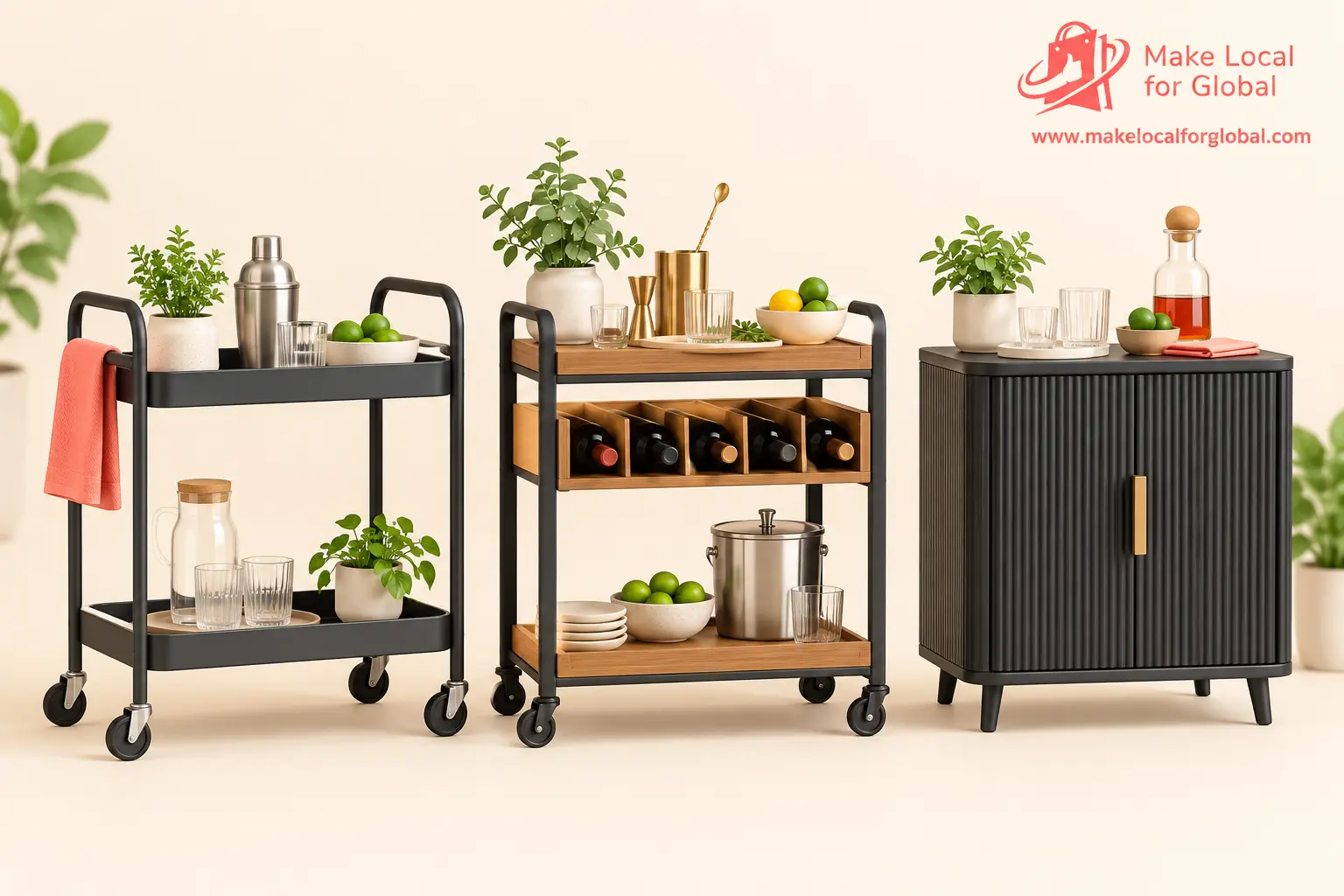
Start with three roles rather than several carts that differ only by colour. For example, offer a narrow two-tier trolley, a wider model with a bottle bay, and a more decorative fixed cart. Check buyer feedback before adding a glass-heavy design, outdoor version or hospitality model.
| Range role | Example design | Details to compare |
|---|---|---|
| Entry | Compact two-tier trolley | Overall size, shelf area, wheel type, assembly |
| Core | Wood and metal cart with bottle storage | Bottle opening sizes, finish, stated load per shelf |
| Gift or statement | Decorative cart with glass or mirrored shelves | Fragile parts, packing, cleaning and replacement pieces |
| Trade enquiry | Repeatable service trolley | Model continuity, spare parts, quantity and lead time |
Use the maker’s exact measurements and tested load figures for the model in your listing. Do not transfer a limit from a similar-looking cart.
Give each model a distinct name based on its use, such as “Narrow Two-Tier Drinks Cart” or “Bottle-Bay Entertaining Trolley”. Explain the practical change between entry, core and gift versions. A higher price needs a visible reason, such as a different material, finish, size or verified feature.
Do not claim a set saves money unless you compare its price with the individual items sold separately. If customers must buy glasses, bottles or accessories from another seller, say so in the contents list and photographs.
Bar carts commonly combine metal frames with wood, glass, mirror or composite shelves. Each material changes the weight, finish, care advice, assembly and chance of damage in transit. Ask for the specification of the exact model and finish you plan to sell.
Use public manufacturer pages as examples of the level of detail a buyer can compare. IKEA’s UK listing for the NISSAFORS trolley gives its overall dimensions, a 7 kg shelf limit, 21 kg total limit and its stated use conditions. It identifies that particular product as a storage trolley and says it is not approved for food contact. Those details apply to that model, not to every drinks cart. See the NISSAFORS product information for an example of model-specific specifications.
If your business makes, imports or sells consumer products in the UK, product-safety duties may apply. The Office for Product Safety and Standards sets out business responsibilities in its current product safety advice. Manufacturers and importers should check the separate manufacturer and importer guidance. Rules differ between Great Britain and Northern Ireland, so get advice for the market and role that apply to you.
Keep the supplier invoice, model and batch references, instructions, relevant test documents and complaint notes together. If a cart includes separate glassware or electrical lighting, check the rules and evidence for those included products too. Do not present a general furniture statement as proof for an accessory.
Assemble at least one sample using the supplied instructions. Check the build, movement and finish under ordinary intended use. Do not exceed the maker’s stated load during a check or invite customers to use the cart beyond its documented limits.
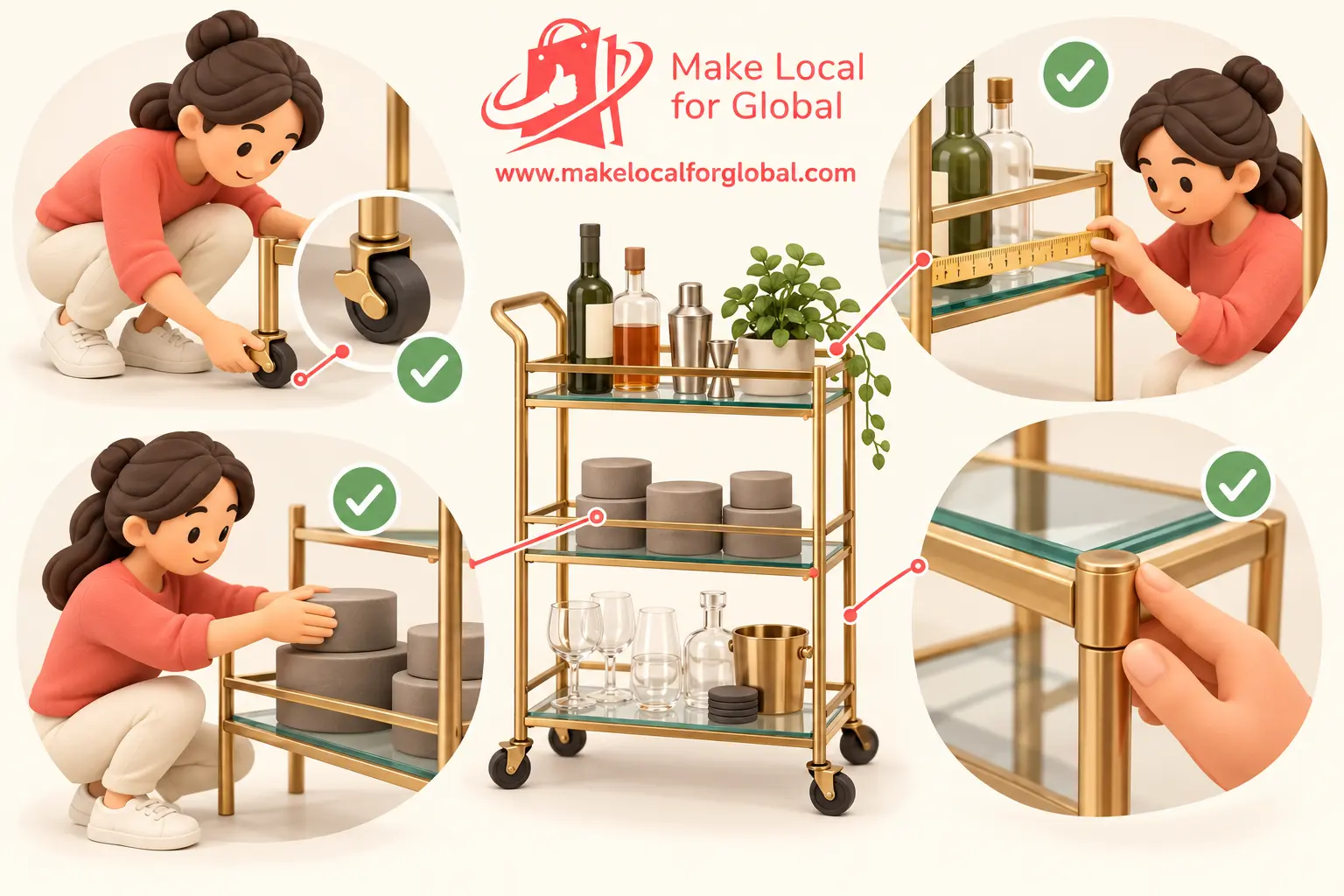
Photograph defects beside a ruler and send the supplier the model and batch reference. Ask what will change in the next production run, whether replacement parts are available and how affected stock can be identified. Keep the answer with your product records.
Clear product pages and a straightforward enquiry path help buyers check size, finish and delivery before they contact you.
Furniture can be costly to move even when its parcel is light. Check the assembled item size, flat-pack carton size, package weight and carrier surcharge rules before choosing free delivery or a checkout rate. Cost replacements for damaged shelves or missing fixings too.
The figures below are a hypothetical one-cart order. All figures are ex-VAT, including the selling price, and are illustrations rather than a supplier quote or market price.
| Illustrative order calculation | Amount |
|---|---|
| Cart selling price, ex-VAT | £139.00 |
| Cart purchase cost | £54.00 |
| Inbound freight allocation | £4.00 |
| Protective carton and materials | £5.25 |
| Payment fee allowance | £1.93 |
| Customer delivery | £12.50 |
| Damage or return reserve | £5.50 |
| Marketing cost allocated to the order | £8.00 |
| Contribution before overheads and tax | £47.82 |
Arithmetic: £139.00 − (£54.00 + £4.00 + £5.25 + £1.93 + £12.50 + £5.50 + £8.00) = £47.82. Replace each input with your own quotes and order data. This contribution is not net profit; labour, storage, insurance, software, tax and other overheads are not included.
If you are VAT-registered, model the VAT charged to customers and any recoverable input VAT separately. If you are not registered, use the amounts your business actually pays. Ask an accountant or check current HMRC material for advice that fits your circumstances.
Compare each cart with the same cost method. A heavier model may need a larger carton or two-person delivery, and a glass shelf can change the packing allowance. Do not copy a carrier price from a smaller trolley.
A useful listing gives the buyer enough detail to judge whether the cart fits their room and intended use. Include overall assembled dimensions, shelf measurements, product weight, stated load limits, materials, finish, care, assembly needs, package contents and delivery estimate.
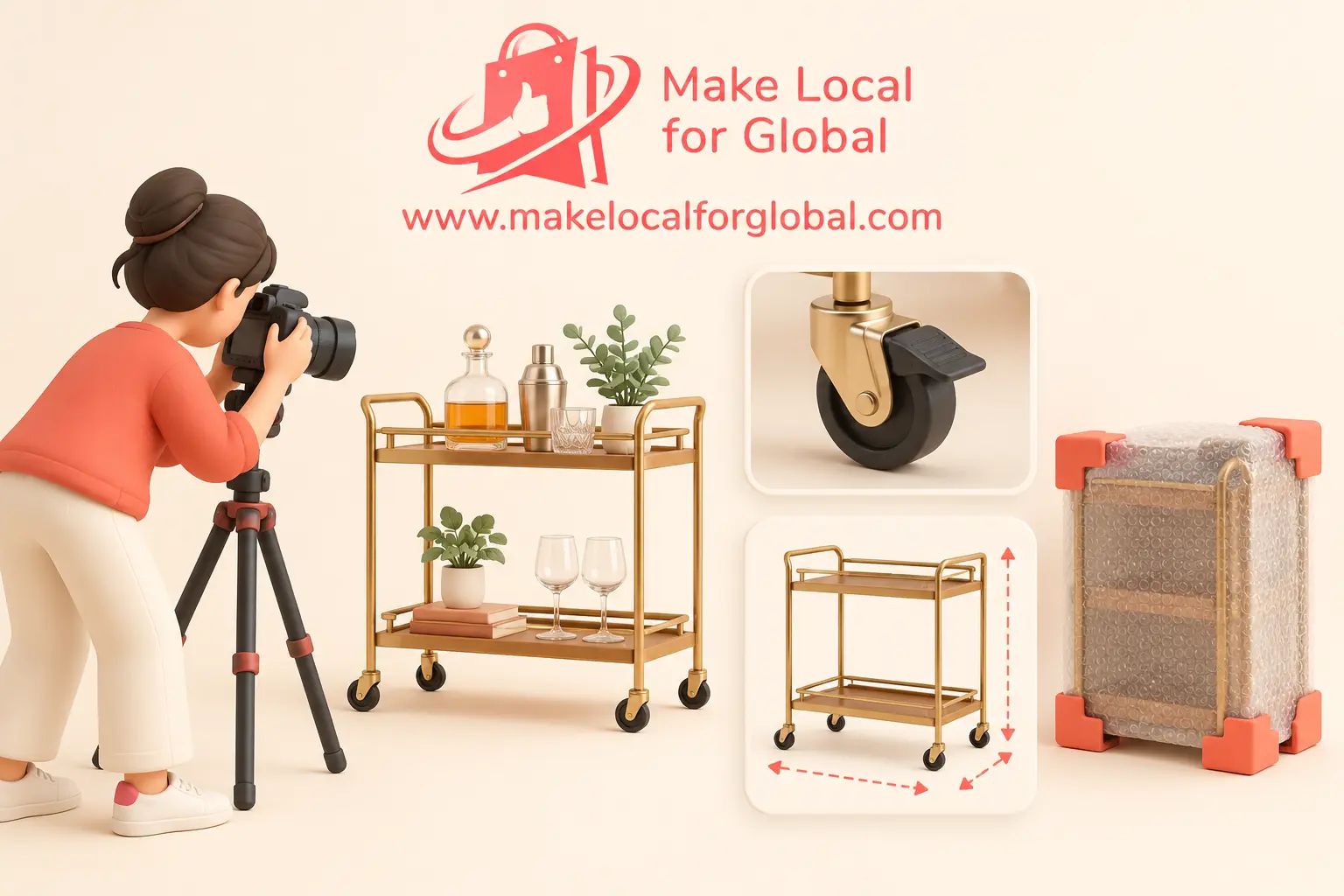
Show the cart empty in a full view, then add a close-up of the shelf edge, wheel locks, handles and storage bays. A staged image can help with scale, but include a plain product view too. List props such as bottles, glasses and plants as styling items when they are not included.
Give the total price, payment methods, delivery arrangements, expected timing, business contact information and cancellation information before checkout. The current GOV.UK distance-selling guidance explains information businesses must provide and the usual online cancellation period for goods, with exceptions and other rules to check. Write a returns page that matches your process and applicable law.
Ask the supplier how the carton protects the corners, frame and shelves, then test the packed sample with the intended carrier size. Photograph the unopened package and the unpacked components so you can compare damage reports against the packing method.
For flat-pack carts, check that the assembly guide matches the product and every fixing is named. A complete photograph of the packed parts and a short list of tools needed can reduce avoidable questions. Never suggest that a customer use the cart before assembly is complete.
Your own shop gives room for full specifications, finish options and delivery details. A furniture marketplace may help you test search demand, but compare its current fees, shipping rules and return process with your own order economics before listing. Local interior events can let buyers inspect a sample, but count travel, stall and handling costs in the test.
Try search phrases based on actual product attributes, such as “narrow two-tier bar cart”, “bar cart with bottle storage” or “small drinks trolley with locking wheels”. Use these in page headings and helpful posts only when they describe the product accurately. Track search impressions, page visits, product questions, basket starts, orders, delivery cost and returns; adjust one part of the offer at a time.
If you sell products that sit on the cart, our beer-mugs article covers range selection and breakage-aware packing for drinkware. Keep the cart and glassware listings distinct so each page answers its own buyer questions.

When buyers can compare dimensions, check delivery and ask a question easily, your online shop gives the range a stronger place to start.
Start with carts that suit a clear buyer and setting. Add glassware, bottle holders or serving accessories only when stock, compatibility, product information and delivery costs are clear for each item.
Ask the manufacturer for the total and per-shelf limits for the exact model, including any loading conditions. Publish those figures as supplied and do not infer them from a similar cart or conduct tests beyond the documented method.
Check that the carton restrains the frame and separates fragile shelves from other parts. Trial the supplier’s packing, measure the parcel and track damage by model and batch before increasing order volume.
Flat-pack products should arrive with instructions that match their parts and fixings. Show the buyer the assembly level, tools needed and approximate steps using the manufacturer’s information for that model.
Add the cart, inbound freight, packaging, payment costs, delivery, a damage or returns reserve and customer-acquisition cost. Compare the resulting contribution with the customer price, then account for VAT, labour, storage and overheads separately.
PREFERRED SOURCE
Like what you’re reading? Add Make Local for Global as a preferred source on Google to see more of our articles when you search.

Build your online presence without having to figure out everything yourself.