

READY TO SELL Beauty masks ONLINE?
Get a store built for you in 5 days, plus training and support to help you start, run, and grow your Alternative business.

A practical guide to selling beauty masks online: choose a focused skincare range, verify UK cosmetics requirements, write evidence-based claims, price orders and plan a careful launch.

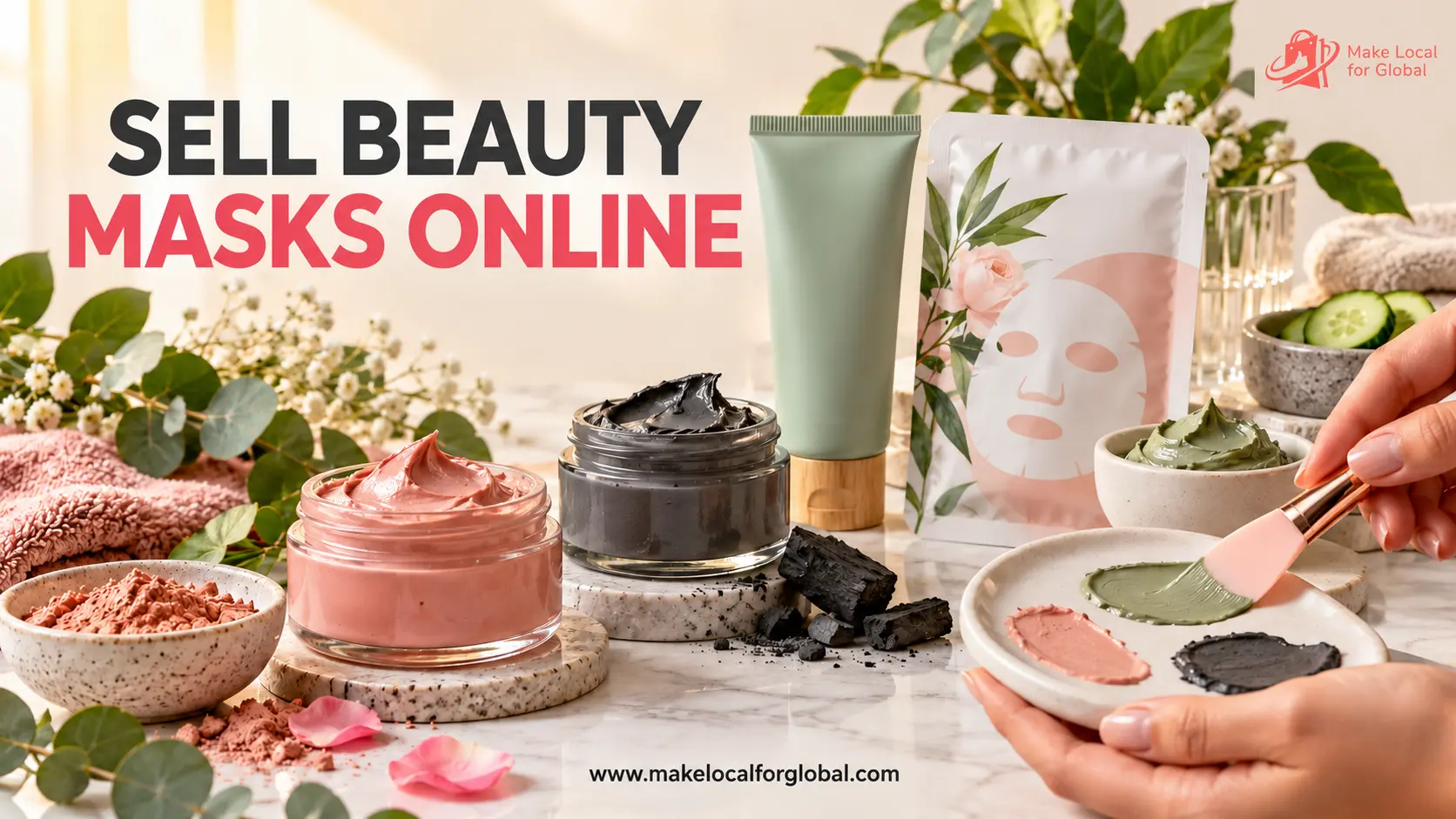
Beauty masks can make a focused skincare range: a clay mask, a hydrating cream mask and a sheet mask each offer a different format and routine. The opportunity is not simply to add attractive jars to a website. Buyers need to understand what each product is, how it is used, what is in it, and who is responsible for it.
This guide covers cosmetic facial masks, including rinse-off, leave-on and sheet formats. It does not treat LED or other powered devices as cosmetics. Start by defining a specific buyer, verify the exact product and its UK compliance position, then build product pages around clear facts rather than dramatic skin promises.
Make Local for Global helps small businesses present products online and make it easy for interested buyers to take the next step.
Present your products clearly and give interested buyers a straightforward way to enquire.
“For everyone” is difficult to merchandise. A better starting point is a real routine or shopping need that your verified range can serve. For instance, a gift shopper may value a neat set and clear instructions; a frequent traveller may prefer single-use sachets; a customer building a weekly home-spa ritual may prefer a larger rinse-off tub.
These are hypotheses, not market research. Speak to likely customers and ask what they currently buy, what confuses them on skincare listings and what would make them choose one format over another. Record exact phrases, then check whether your products genuinely answer those needs.
A small test can be as simple as showing three compliant, fully specified products to a group of potential customers and noting which details generate questions. Track qualified enquiries and purchases, not just likes. Avoid taking paid pre-orders until your product, delivery timing, cancellation terms and customer information are clear.
Choose a few products with useful differences instead of launching many near-identical formulas. A first range might compare formats and routines, provided each exact product is properly assessed and labelled.

| Range role | Possible format | Buyer information to compare |
|---|---|---|
| Starter | Single sheet mask | Ingredients, quantity, use time, disposal and single-use packaging |
| Core | Rinse-off clay or cream mask | Net weight, directions, warnings, routine fit and storage |
| Gift or bundle | Small assortment of compliant products | Exact contents, combined value, expiry or use-by details and protective packing |
| Reusable accessory | Application brush or silicone mask tool | Material, cleaning, intended use and whether it is included or sold separately |
Name products by format, size and verified distinguishing feature. Do not imply that a reusable tool is part of a set if it is only a styling prop. Explain whether a mask is rinse-off or leave-on, and avoid inventing skin-type suitability where the label and supporting evidence do not say so.
Cosmetic products for consumers in Great Britain have specific safety, responsible-person, notification and labelling requirements. A wholesaler’s assurance or a generic certificate does not automatically prove that your exact formula, brand, packaging and market are covered. Ask who the named Responsible Person is and establish your own role in the supply chain before committing to stock.

For Great Britain, the official GOV.UK guidance on making cosmetics available explains the Responsible Person’s duties, safety assessment, Product Information File, labelling and notification. The detailed Great Britain regulations guidance is useful when checking the requirements for your role. If you import, relabel or sell under your own brand, get competent compliance advice on the exact arrangement. This article is a business-planning guide, not legal advice.
Products marketed to treat acne, eczema, rosacea or other conditions may raise issues beyond ordinary cosmetic claims. Do not turn testimonials, before-and-after photos or social posts into treatment promises. If a product’s intended purpose is unclear, pause and seek specialist regulatory advice before advertising it.
Customers cannot smell a formula or feel its texture through a screen. Help them evaluate it with information that is specific, readable and consistent with the package. Include the product format, net contents, full ingredient list or a clear route to it, directions, duration, warnings, storage guidance, responsible business details and the actual package contents.
Cosmetic advertising claims need evidence and must not imply functions the product does not have. Prefer a factual statement such as “rinse-off clay mask, 75 ml” or a precisely substantiated cosmetic benefit over “cures breakouts”, “repairs eczema” or guaranteed results. Avoid implying that a natural ingredient is automatically safer or suitable for every skin type.
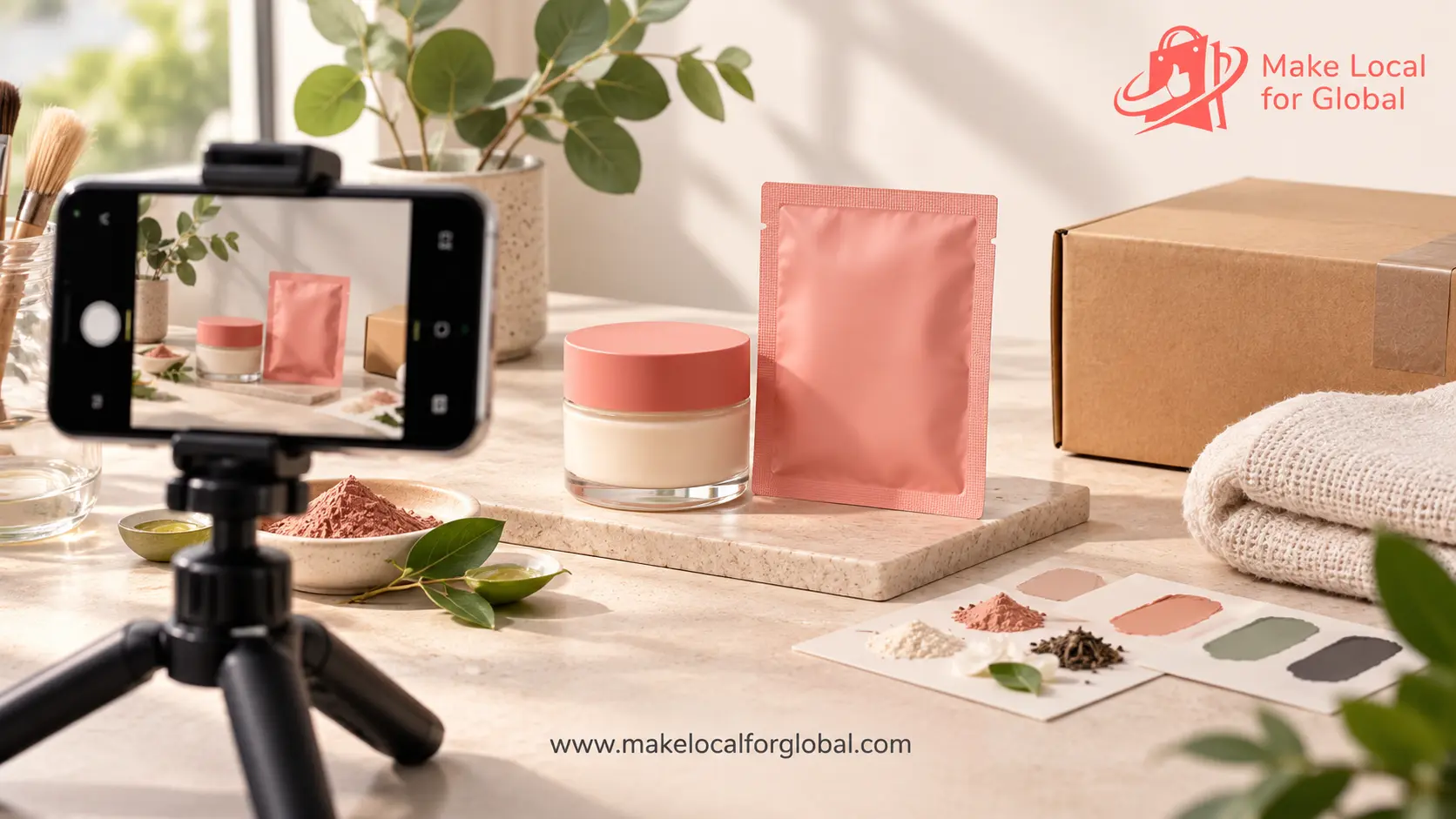
Show the sealed retail pack, readable label, quantity beside a familiar object and texture on a clean palette. A model photo can add context, but state that it is illustrative and do not present edited skin as a typical result. Include accurate captions and alternative text for accessibility.
For claims, the official guidance on marketing and advertising law is a useful starting point. Keep a simple claim file: the wording used, the evidence supplied by the manufacturer, the product version it relates to, and where the claim appears. Review the whole impression made by photos, headlines and testimonials, not just the ingredient description.
Explore MLFG plans or talk through the practical needs of your product range.
Skincare can look inexpensive to ship, but outer packaging, pick-and-pack time, marketplace or payment fees, samples and customer-acquisition costs affect the order. Make a separate calculation for a single mask, a multi-pack and a gift set. The worked example below is illustrative only; replace every figure with your own supplier and carrier quotes.
| Illustrative one-mask order, ex-VAT | Amount |
|---|---|
| Selling price | £18.00 |
| Mask product cost | £4.20 |
| Inbound freight allocation | £0.30 |
| Mailer and protective packing | £0.80 |
| Payment fee allowance | £0.55 |
| Customer delivery | £2.75 |
| Returns or damage reserve | £0.55 |
| Marketing allocated to the order | £2.50 |
| Contribution before overheads and tax | £6.35 |
Arithmetic: £18.00 − (£4.20 + £0.30 + £0.80 + £0.55 + £2.75 + £0.55 + £2.50) = £6.35. This is not net profit. It excludes labour, compliance work, storage, insurance, software and other overheads. Confirm your VAT treatment with current HMRC guidance or an accountant; do not mix VAT-inclusive prices with ex-VAT costs.
Test whether a discovery set improves order value enough to cover the extra packing and fulfilment. If offering free delivery above a threshold, calculate the threshold against typical basket sizes and actual postage. Never price a bundle as a saving unless the comparison with products sold individually is genuine and clear.
Follow the supplier’s storage conditions and rotate stock by batch or date. Keep cosmetics away from unsuitable heat, moisture or sunlight where the product instructions require it. Use clean packing materials, protect glass containers from leaks or impact, and make sure the customer can identify what has arrived without opening a sealed product unnecessarily.
Answer common questions before they become support tickets: Is it rinse-off? How much is in the pack? What is included? Where can I read ingredients and warnings? How long does dispatch take? Make the answers consistent across the product page, label photos, confirmation email and parcel insert.
A mask can fit alongside cleansers, moisturisers or bath products, but cross-selling should help the customer understand the range rather than imply an unverified routine or result. Our guide to selling bath bombs online looks at presentation, gifting and product-range choices in a related self-care category. Keep each product’s ingredients, warnings and use directions distinct.
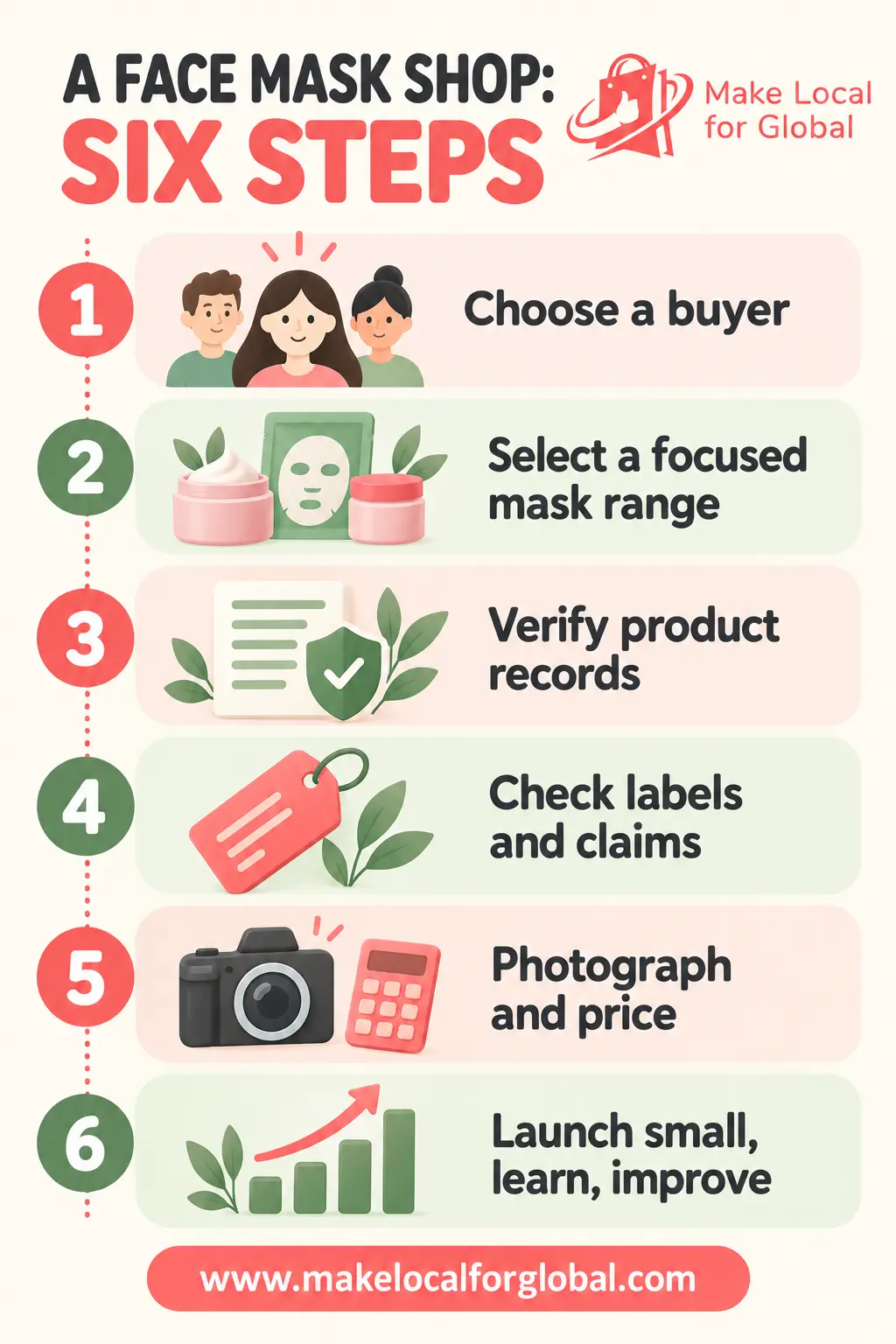
Good skincare retail depends on more than attractive packaging. A focused selection, verified product information and an easy-to-use shop give customers a better basis for deciding whether a mask suits their routine.
Make it easier for customers to understand your products and contact your business.
Possibly, but own-branding can affect who is legally responsible for the cosmetic product. Confirm the Responsible Person, product safety file, notification and label requirements for your market with competent advice before sale.
Show the exact product and quantity, format, ingredients, directions, relevant warnings, storage information, responsible business details, price and delivery terms. Keep claims aligned with evidence and with the package.
Do not assume a cosmetic can be promoted with a medical treatment claim. Claims can change how a product is regulated. Get specialist advice before using language about treating a condition or changing a customer’s health.
Start with a small set of products that differ in a way buyers understand, such as format or pack size. Expand when customer questions, repeat orders and cost data support a specific addition.
PREFERRED SOURCE
Like what you’re reading? Add Make Local for Global as a preferred source on Google to see more of our articles when you search.

Build your online presence without having to figure out everything yourself.