

READY TO SELL BBQ tools ONLINE?
Get a store built for you in 5 days, plus training and support to help you start, run, and grow your Alternative business.

Explore how to sell BBQ tools online with a focused range, practical product checks, clear safety information, realistic pricing and product pages that earn buyer confidence.

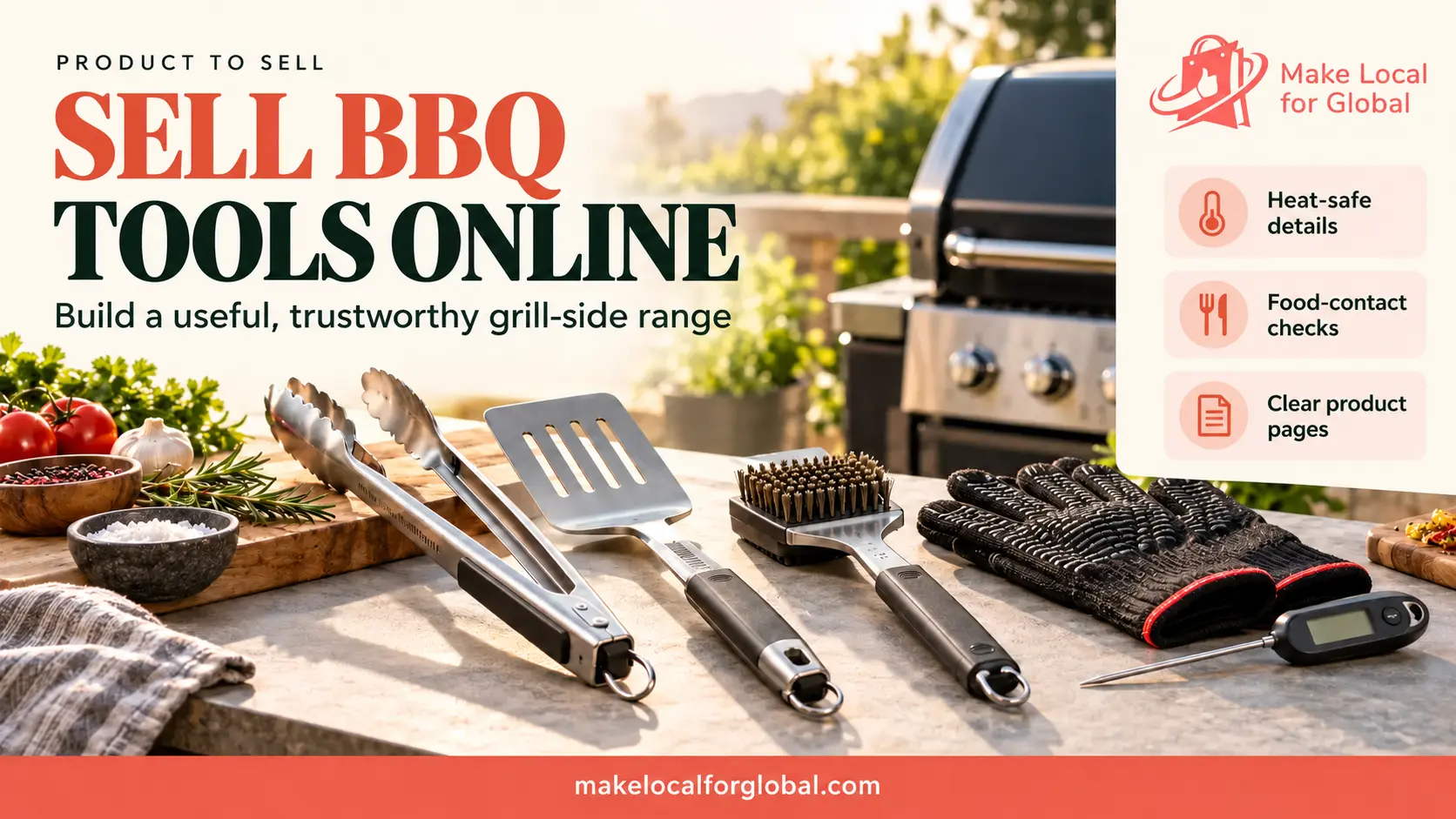
BBQ tools can work well as a focused ecommerce range because buyers want practical answers: what each tool does, how it feels in the hand, how it should be cleaned, and whether it suits their grill. A useful store sells confidence as much as stainless steel. Start small, verify every supplier claim, and make product details easy to compare on a phone.
Make Local for Global helps small businesses present products clearly, collect leads and build an online store with human support.
For a practical example of building a related outdoor-living range, see our guide to selling fire pits online. This article focuses on the tools people use to prepare, turn, clean and serve food at the grill.
“BBQ tools” is broad. A first collection might serve new home cooks buying their first set, experienced grill owners replacing worn tools, or gift buyers looking for a coordinated present. Pick one primary buyer before buying stock. Their needs shape product choice, photography, bundle size and price.
A sensible starter range could include long-handled tongs, a slotted spatula, a cleaning tool, heat-resistant gloves and an instant-read thermometer. You do not need every item on day one. Begin with a small number of well-described products, or a single coordinated set, then use customer questions and order data to decide what to add.

Before placing a larger order, request samples and inspect the details a customer will rely on. Check the joint between handle and head, smooth edges, grip when dry and damp, locking mechanisms, cleaning instructions and how securely the product is packed. For brushes, check how the cleaning head attaches and whether replacement parts are available. Never repeat a supplier’s performance or safety claim unless you have evidence for that exact product and intended use.
If a tool touches food, ask the supplier for suitable documentation about its materials and intended contact conditions, including relevant temperature limits and care instructions. Do not assume that a generic “food safe” phrase is enough. The UK Government’s food packaging guidance explains the importance of suitable food-contact materials and written compliance evidence in applicable contexts. Check the rules that apply to the specific material and market you sell into.
If you manufacture, import or sell consumer products, you also have product-safety responsibilities. OPSS guidance says products must be safe under normal or reasonably foreseeable use, and suppliers should retain traceability information and provide appropriate safety information. Read the current product safety advice for businesses and the separate manufacturer and importer guidance. Requirements differ between Great Britain and Northern Ireland, and some products have extra rules.

Plan a store around the questions BBQ tool buyers ask, then make it straightforward to contact you.
A bundle can look profitable until delivery, packaging, payment fees, returns and customer acquisition are included. Work out contribution per order before you commit to a minimum order quantity. Here is an illustrative example, not a recommended market price:
| Example order cost | Amount |
|---|---|
| Selling price | £39.99 |
| Tools, inbound freight and packing | £14.50 |
| Payment, delivery and returns allowance | £6.90 |
| Marketing cost allocated per order | £5.50 |
| Illustrative contribution before overheads and tax | £13.09 |
Example only. Replace every figure with your own supplier quotes, carrier rates, payment fees, return experience and marketing data. If VAT applies to your business, model the VAT treatment separately.
>
Test more than one offer: a single hero tool, a basic set, and a gift-ready bundle. Keep the comparison simple. If free delivery is offered above a threshold, check that the increased basket value still covers the extra shipping and fulfilment cost.
Use clear product names and original photographs from several angles. Show the tool in a hand for scale, the working end close up, how it stores, and what arrives in the parcel. State dimensions, materials, weight where useful, care, compatibility and what is included. Use plain language for limitations, such as hand-wash only or a supplier-specified temperature range. Do not promise that a tool fits every grill unless it does.
Make delivery costs, dispatch estimates, returns and business contact details easy to find. Online sellers must give customers key pre-contract information, including business identity, contact details, product description and total price. For many goods, customers can cancel up to 14 days after delivery; explain the applicable rights and any exceptions accurately. See the official distance-selling guidance for businesses.
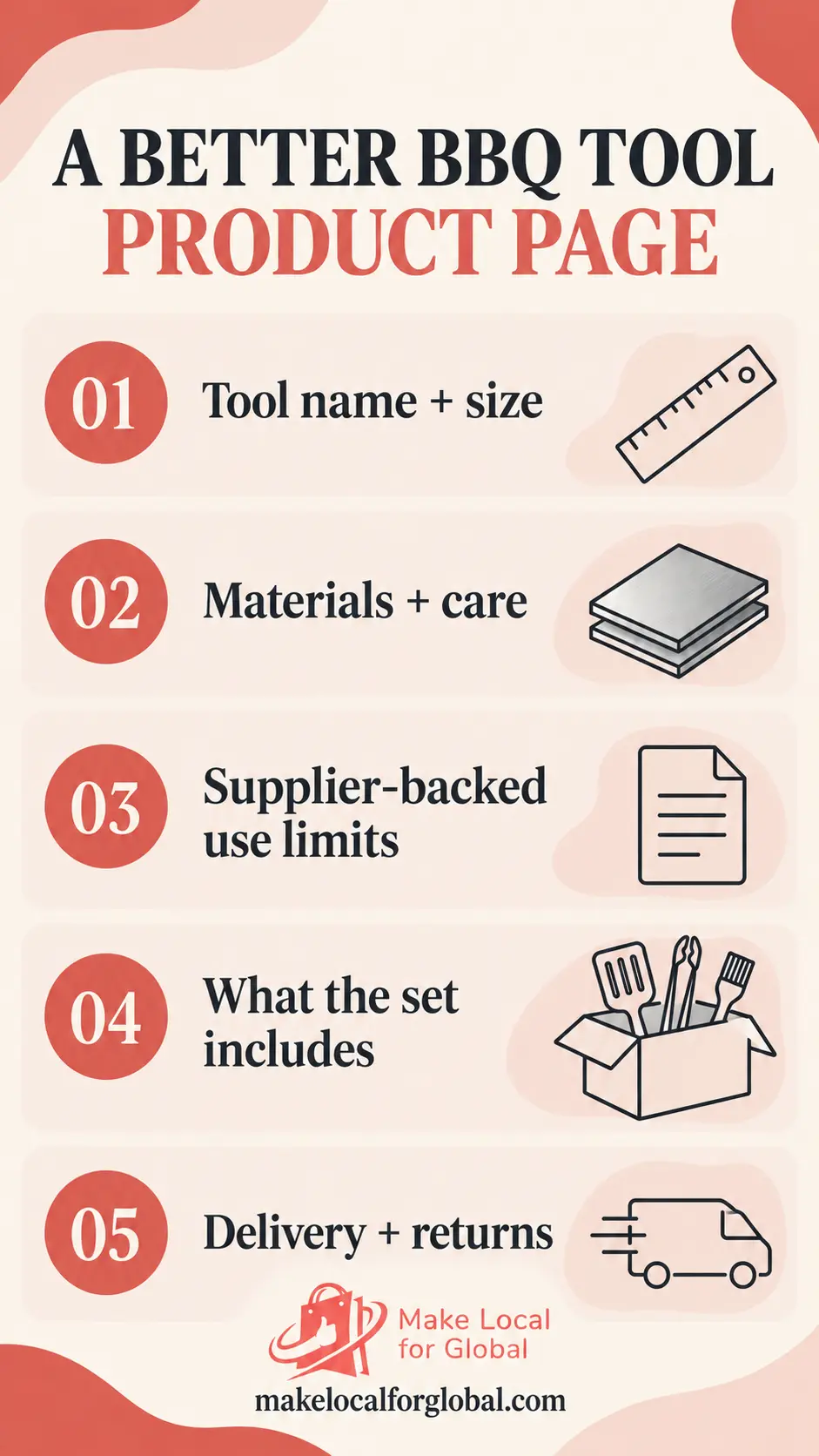
Trust comes from useful details, not exaggerated claims. Add a short care guide, answers to common questions, accurate stock information and an easy contact route. Ask early buyers what was unclear, then improve the page. Keep complaints and product incidents organised so you can identify a recurring fault and contact the supplier promptly.
BBQ tools may be seasonal, so plan stock and promotion ahead of peak demand. Test a small batch first, maintain a cash buffer for slower months, and consider complementary products only when they genuinely fit the customer’s needs. Accessories like covers or fire pits can extend an outdoor range; see our related guide to selling fire pits for another example.
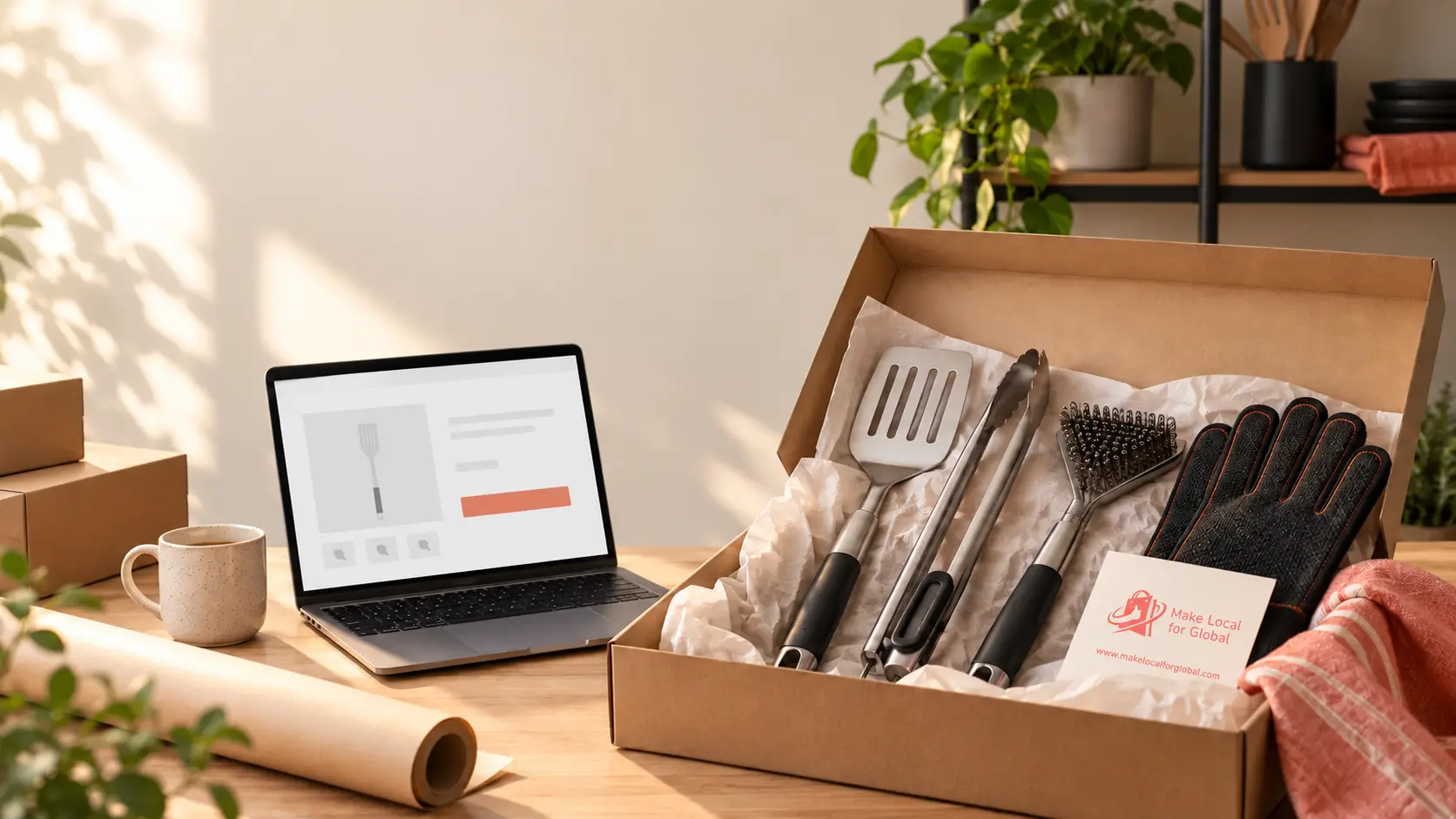
Ready to build your BBQ tools store?
Start with a focused range, clear product information and a store that makes it simple for customers to enquire or buy.
Start with a focused range, clear product information and a store that makes it simple for customers to enquire or buy.
Start with a few practical essentials that fit a clearly defined buyer, such as tongs, a spatula and a cleaning tool. Test quality and demand before expanding into multiple variations.
Identify which product rules apply to your role, market and materials. Obtain product-specific supplier documents, inspect samples, keep traceability records, provide suitable instructions and seek advice from Trading Standards or a qualified specialist where needed.
A dedicated online store gives you control over product information, customer enquiries and the buying journey. It can sit alongside marketplaces or social channels, while giving customers one reliable place to compare your range.
PREFERRED SOURCE
Like what you’re reading? Add Make Local for Global as a preferred source on Google to see more of our articles when you search.

Build your online presence without having to figure out everything yourself.