

READY TO SELL Beach Bags ONLINE?
Get a store built for you in 5 days, plus training and support to help you start, run, and grow your Alternative business.

Plan a practical beach-bag range with supplier checks, clear product details, a worked order-cost example and a 30-day launch test.


A beach bag has to carry more than a towel. Buyers may need room for snacks, suncream, wet swimwear, children’s kit or a book, and they want to know how the bag feels to carry and clean.
Start with one kind of beach trip and a focused range. This plan covers product choices, sample tests, truthful claims, order costs, delivery and a small launch test.
Make Local for Global helps small businesses set up ecommerce websites and learn to manage them. Explore the options for presenting a focused product range.
A parent packing for a family day may value a roomy main section, separate pockets and wipe-clean fabric. A swimmer heading to the pool may prefer a light mesh bag that lets damp kit air out. A couple on a short trip may choose a compact tote that folds into luggage.
Pick one buyer group first. Ask five people in that group what they carry, how far they walk and which bag details they check before buying. Show two simple product concepts with real dimensions, then note repeated questions and objections.
Those conversations help you choose what to test. They do not prove that a large order will sell. A sample, a clear product page and a small paid test provide stronger evidence.
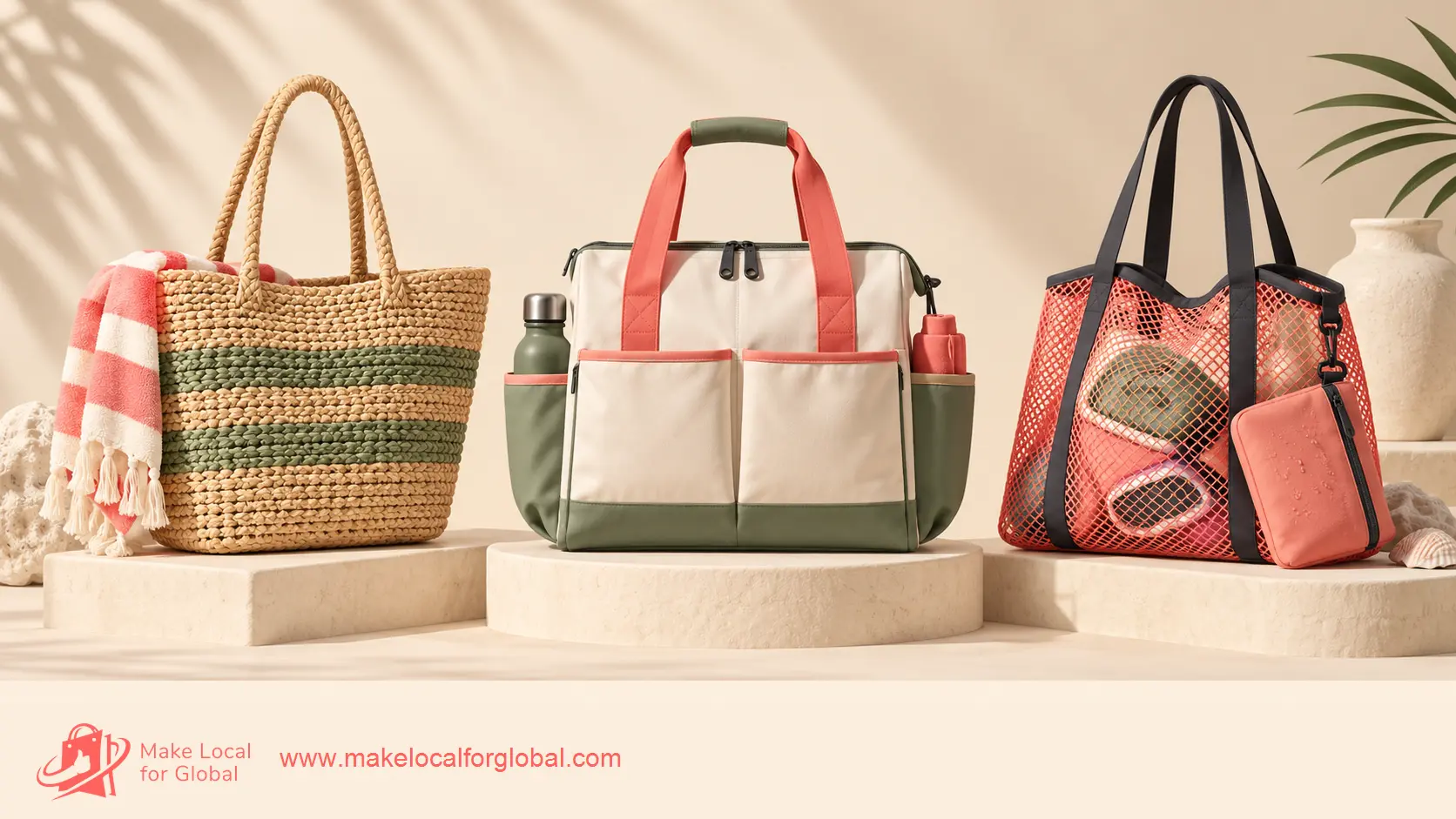
A first range can cover three different jobs without offering dozens of colours and sizes. Keep each option distinct, and make the capacity and materials easy to compare.
| Product role | Useful features to compare | Details to state |
|---|---|---|
| Everyday beach tote | Capacity, handle drop, closure, inner pocket | Dimensions, empty weight, material and care |
| Family carryall | Wide opening, base support, external pockets | What fits in a sample test, pocket sizes and strap length |
| Mesh swim bag | Mesh area, zip type, drainage and carrying options | Material, capacity and whether wet items are separated |
| Foldaway tote | Folded size, fastener, seam strength | Packed dimensions and how to fold it |
These are product roles, not test results. Check every feature against the exact item you plan to sell.
Look at established product pages to see how sellers describe measurable details. Patagonia’s UK listing for its Black Hole Tote gives a 25-litre capacity, dimensions, weight, material information and pocket details. That is a useful example of clear specification writing, not a claim that this bag is intended only for the beach.
A mesh swim bag can serve a different buyer from a zipped beach tote. State whether sand can pass through the mesh, whether a separate pouch is included and how the material should be cleaned. Avoid vague claims such as “fits everything”.
For another product carried on a day out, see our article on selling insulated picnic bags online. A bundle may make sense for a shared use, but work out parcel size and delivery cost before listing it.
Request a sample in the exact material, colour and construction you plan to buy. Ask for the item’s dimensions, empty weight, fibre or material breakdown, care instructions, minimum order, lead time and replacement policy in writing.

Ask how the supplier checks seams, handles, zips, fasteners and pocket stitching. For recycled-content or water-resistance statements, request documents that identify the product model and explain what was tested or measured.
Keep the sample notes, supplier details, invoice and product documents together. If you import or sell consumer products in Great Britain, read the current GOV.UK product-safety advice for businesses. It explains sellers’ responsibilities and the need to keep supplier records for traceability.
A low wholesale price does not tell you what one delivered order costs. Add the bag, inbound freight, packaging, payment fees, postage, a returns allowance and any paid customer acquisition.
| Per-order amount | Illustrative figure |
|---|---|
| Beach tote landed to your stock location | £6.00 |
| Inbound freight allowance | £1.00 |
| Mailer and protective packaging | £0.80 |
| Tracked delivery | £3.50 |
| Payment fee allowance | £0.75 |
| Returns or damage allowance | £1.00 |
| Customer acquisition allowance | £3.00 |
| Variable order cost | £16.05 |
| Example selling price | £24.00 |
| Contribution before overheads and tax | £7.95 |
Illustrative only: £24.00 minus £16.05 equals £7.95 contribution. This is not net profit. Replace the figures with quotes for your bag, packaging and delivery. Check whether your prices include VAT.
Compare MLFG website options for showing product details, taking customer enquiries and managing an online shop.
Use a title that names the bag and a measurable feature, such as “Family beach tote, 32 litres, zip top and washable lining”. Use a capacity only after checking how it was measured and which parts of the bag it includes.
Show the bag empty, loaded, open and folded. Add a close view of the handles, base, lining, pockets and closure. A simple scale reference helps people judge the size on a phone.

The Competition and Markets Authority says environmental claims must be truthful, clear and supported by evidence. Read its Green Claims Code guidance before describing a bag as sustainable or better for the environment. State what the claim covers, such as the fabric content, rather than making a broad claim about the whole product.
Beach bags can be bulky even when they are light. Check packed dimensions, storage volume and carrier size limits before setting a delivery charge. Use packaging that protects the bag from dirt and moisture without making a soft tote unnecessarily large to post.
Track stock by style, colour and supplier batch. Photograph the packed order if your fulfilment process needs a record of which accessories were included. Keep a simple log of damage, late deliveries and return reasons so you can spot a repeated issue.
For online orders to consumers in Great Britain, explain the seller’s identity, full price, delivery information and cancellation rights before checkout. GOV.UK says shoppers normally have 14 days from delivery to tell a seller they want to cancel, subject to exceptions. Read the current distance-selling rules for businesses and check the rules for each market where you sell.
Start with a small quantity or a limited test listing. Share useful content about what fits in each style, how to clean it and how the bag folds for travel. Use questions from potential buyers to improve the product page before increasing stock.
Track visits, questions about size, add-to-baskets, paid orders, delivery costs and returns. If people visit but do not buy, review the photos, product details and total delivered price before ordering more stock.
| Week | Actions | What to record |
|---|---|---|
| 1. Choose | Pick one buyer and compare three bag styles. Ask five people which details shape their choice. | Buyer questions, preferred size and use case |
| 2. Source | Request supplier documents, sample price, minimum order, lead time and shipping terms. | Evidence received, missing details and landed cost |
| 3. Test | Inspect the sample, take product photos, write the listing and get a packed-parcel quote. | Sample issues, delivery quote and page questions |
| 4. Review | Run a small launch, reply to questions and compare actual orders with your stock limit. | Visits, sales, delivery issues and return reasons |
Set your own stock and promotion limits. A first test gives you evidence for a reorder decision, not a sales forecast.

They may fit a summer, travel or swimming range. Test a small offer, compare the delivered price and use clear measurements before ordering larger quantities.
Check sample dimensions, handle comfort, stitching, zips, materials, care instructions, supplier records, order minimums and lead time. Pack a test parcel and price the delivery.
Only use claims supported by evidence for the exact product. Identify what was tested or what part of the bag contains recycled material, and avoid language that implies more than the evidence shows.
Show dimensions, handle drop, capacity and pocket layout. Photograph the inside and give a realistic example of what fits, based on a sample test.
Make Local for Global can help you plan an ecommerce website and get support as you learn to manage it. Talk through your range and the next steps for your shop.
PREFERRED SOURCE
Like what you’re reading? Add Make Local for Global as a preferred source on Google to see more of our articles when you search.

Build your online presence without having to figure out everything yourself.