READY TO SELL beauty blenders ONLINE?
Get a store built for you in 5 days, plus training and support to help you start, run, and grow your Alternative business.

Learn how to sell beauty blenders online with practical range ideas, supplier questions, sample tests, full-order pricing and a four-week launch plan.


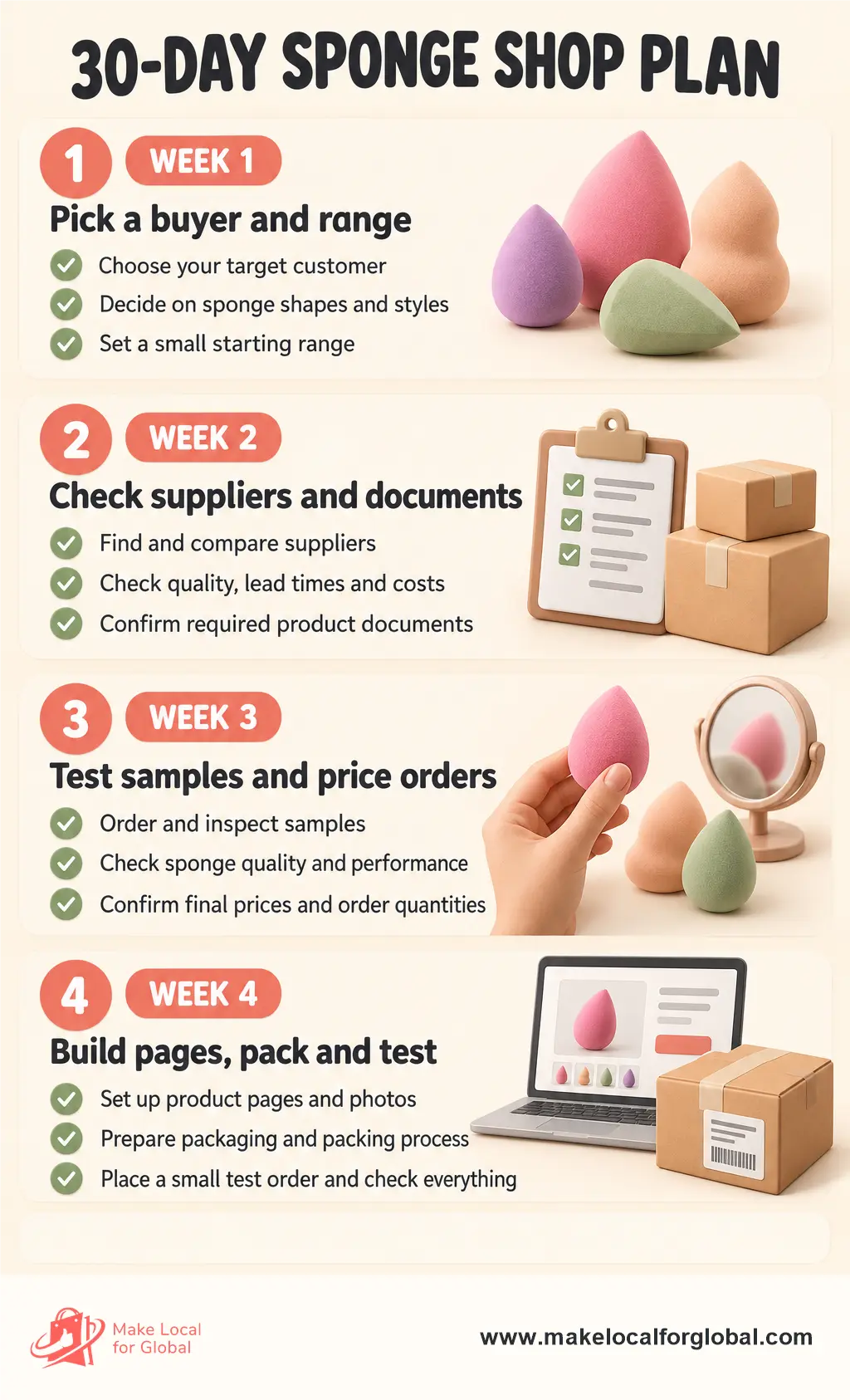
Makeup sponges look simple, yet small choices in shape, softness, sizing and care can change how well a product works for a buyer. A focused range, checked samples and honest product pages give a new shop a stronger start than buying a large mixed carton on day one.
This plan covers product selection, supplier checks, sample testing, pricing, fulfilment and a four-week launch. It is about generic makeup sponges. Beautyblender® is a brand name, so use it only for genuine goods bought through a source that permits resale.
Make Local for Global helps small businesses present products clearly and build a place for customers to enquire or buy.
Potential buyers include people who want an everyday base routine, makeup artists who need dependable replacements, students looking for a small starter set, and gift buyers who value neat presentation. Pick one group to lead with. Each has different expectations for price, pack size and product information.
For example, a beginner set could contain one rounded sponge, a mini for smaller areas and a breathable storage case. A working artist may prefer several identical sponges and a simple reorder option. Avoid launching both offers at once if the supplier, cash or storage space is limited.
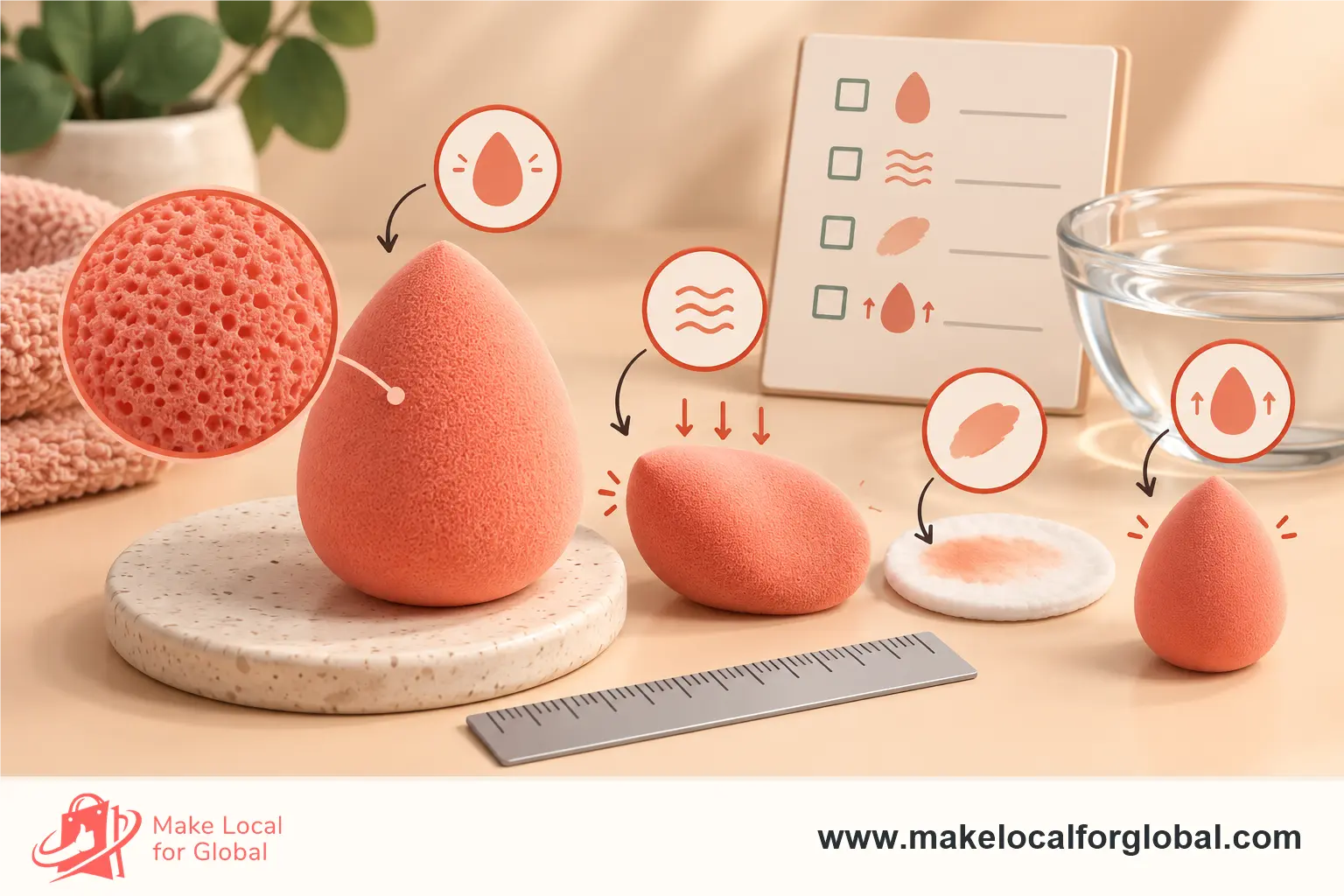
Shape names vary by maker, so ask for a drawing and measurements. A broad rounded base may suit larger areas; a pointed end can reach around the nose; a small sponge can suit travel or detailed application. These are use cases to test, not guarantees about every design.
| Offer | Buyer need | What to check | First test |
|---|---|---|---|
| Single sponge | Try the feel or replace one item | Shape, dimensions, material and care notes | Compare two samples wet and dry |
| Two-shape set | One larger tool and one detail tool | Useful difference between shapes | Ask testers to name each use |
| Starter kit | A giftable first purchase | Case, pack contents and instructions | Time a real packing trial |
| Artist multipack | Several matching tools for repeat work | Batch consistency and reorder terms | Inspect a second production batch |
Start with one core sponge and one bundle if samples support both. A bundle should solve a practical need, not just add more pieces. For instance, pair a full-size sponge with a mini only if testers can explain when they would use each one.
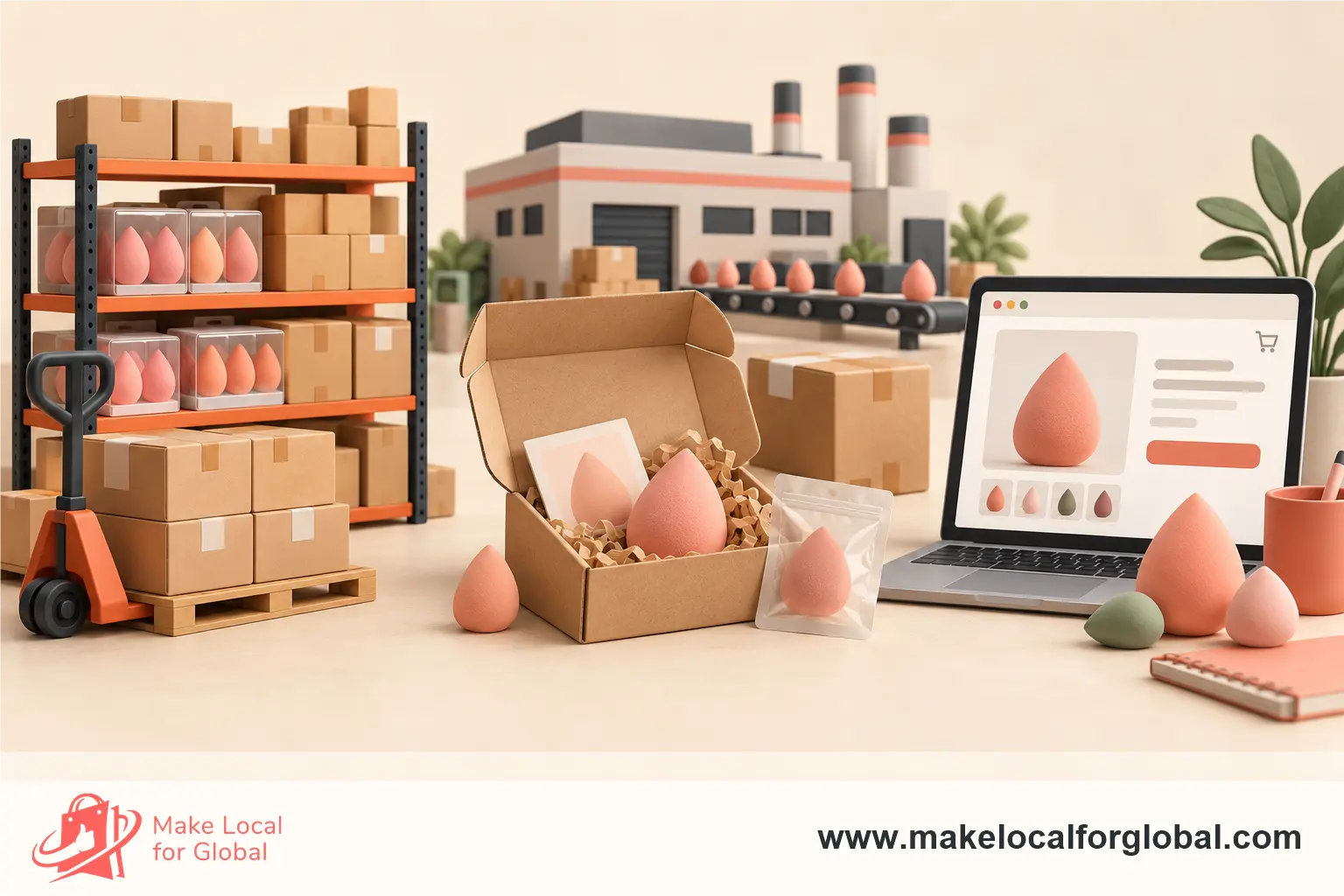
Possible routes include a UK wholesaler, an importer, a contract manufacturer or a private-label supplier. A UK supplier may make small trial orders simpler. Direct manufacturing may offer more control over colour or packaging, but can mean higher minimum quantities, longer lead times and more responsibility for checks.
UK product-safety guidance places duties on makers and importers, including keeping product identification and safety information in view. Read the current OPSS advice for manufacturers and importers before importing or placing a product on the market. Chemical restrictions may apply to substances in articles; the HSE UK REACH restrictions page explains where to check. If the sponge has an unusual coating, fragrance or treatment, obtain product-specific evidence from the supplier.
Test at least two samples from each shortlisted supplier. Use the same steps and record what you see. A simple scorecard makes supplier comparisons more useful than relying on a quick squeeze in the showroom.
Show the product, set contents, care details and a direct route to order. MLFG has a dedicated page for businesses selling makeup sponges.
For a useful first estimate, list costs for one typical order. This example assumes a UK seller offers a three-sponge set for £14.99 including VAT, with delivery included. It treats the seller as VAT-registered, so sales revenue is shown excluding 20% VAT. Most goods use the standard rate; check the current HMRC VAT rates and ask an accountant how input VAT applies to your own costs.
| Order line | Illustrative amount | How to use it |
|---|---|---|
| Customer price, including VAT | £14.99 | Displayed price in this example |
| Sales value before VAT | £12.49 | £14.99 ÷ 1.20, rounded |
| Three sponges, landed | £3.30 | Goods plus inbound delivery allocated per set |
| Printed sleeve and mailer | £0.55 | Packaging used for one order |
| Pick, pack and customer delivery | £2.50 | Assumed seller-paid fulfilment |
| Payment or marketplace fee allowance | £1.20 | Replace with the channel’s current fee calculation |
| Returns and replacement allowance | £0.45 | A planning allowance, not a forecast |
| Customer acquisition test | £1.20 | Allocated ad or sample cost |
| Estimated contribution before fixed costs | £3.29 | £12.49 minus the six costs above |
Illustration only, not a supplier quote or profit prediction. Fees, VAT treatment and costs vary. Contribution is before website costs, labour, storage, unsold stock, tax and other overheads.
Run a second version with a lower selling price or higher return allowance. If the contribution becomes too small, test a two-pack, revise the delivery offer or change the supplier quote before ordering more stock. Do not remove realistic costs to make the sheet look better.
A buyer should be able to tell what arrives, how large each piece is, what it is made from and how to care for it. Give exact measurements and set contents. Avoid unsupported claims such as “perfect for every skin type” or claims that the sponge prevents irritation.

Online orders in Great Britain and Northern Ireland have cancellation and refund rules. Read the current distance-selling requirements and returns and refunds guidance. The hygiene-seal exception applies only in defined circumstances; do not assume an opened sponge is automatically exempt. State a fair process and check how the rules apply to your product and territory.
Track each model by a short SKU, colour, supplier, batch or delivery lot, units received and units sold. When a buyer reports a tear, unusual smell or colour transfer, record the batch and pause sales of that lot until you understand what happened.
A marketplace can help you test buyer response, but fees, listing rules and competition affect the numbers. A small independent shop gives more control over product education, email capture and repeat orders. You can use both when each channel has a clear job and the stock count stays accurate.
Use specific search phrases buyers might type, such as “makeup sponge set with case”, “mini blending sponge” or “makeup sponge care instructions”. Publish useful answers: a shape comparison, a sample-test checklist, a cleaning explainer tied to your supplier’s directions, and a clear bundle comparison. Track page visits, product clicks, add-to-basket actions, orders, returns and questions.
For related product-selling ideas, see MLFG’s article on selling anti-ageing creams online. It covers another beauty category, so keep its product claims and compliance advice separate from your sponge specifications.
No. Beautyblender® is a brand name. Describe an unbranded item as a makeup sponge or blending sponge. List genuine branded goods only when your supply is traceable and your resale terms allow it.
Base the first quantity on the supplier minimum, sample results, cash available and a realistic sales test. Choose the smallest order that lets you inspect the goods and fulfil a few genuine orders without putting essential business funds at risk.
A clear use, consistent shape, useful set size, accurate care details and acceptable full-order costs. Test these with samples and real buyer feedback rather than assuming a particular material or shape will suit everyone.
Give buyers accurate product information and follow the rules that apply to the item and the place you sell it. Ask the supplier for written material details. Do not guess from colour, softness or a marketing name.
Not as a blanket rule. Distance-sale cancellation rights have a limited sealed-goods exception for items unsuitable for return for health protection or hygiene reasons after unsealing. Check the current rules and facts for your item before writing a returns policy.
Once the sample, price and fulfilment plan are checked, a useful shop page can bring the details together for buyers. See the MLFG makeup sponge page or ask about support for your own product range.
PREFERRED SOURCE
Like what you’re reading? Add Make Local for Global as a preferred source on Google to see more of our articles when you search.

Build your online presence without having to figure out everything yourself.