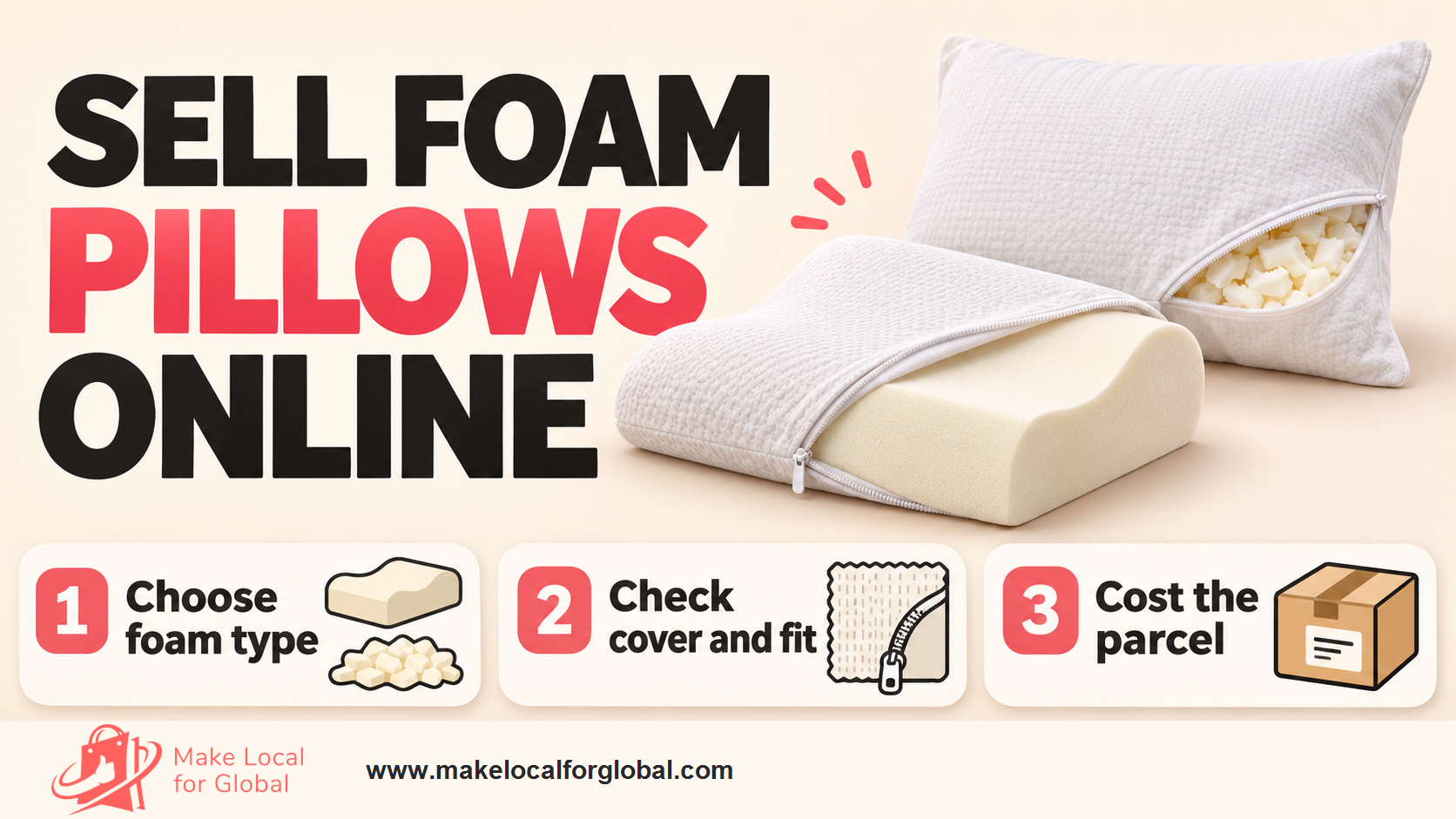


READY TO SELL bed pillows ONLINE?
Get a store built for you in 5 days, plus training and support to help you start, run, and grow your Alternative business.

Learn how to sell bed pillows online, from choosing a range and checking samples to pricing, product pages, safety, delivery and a practical 30-day launch plan.

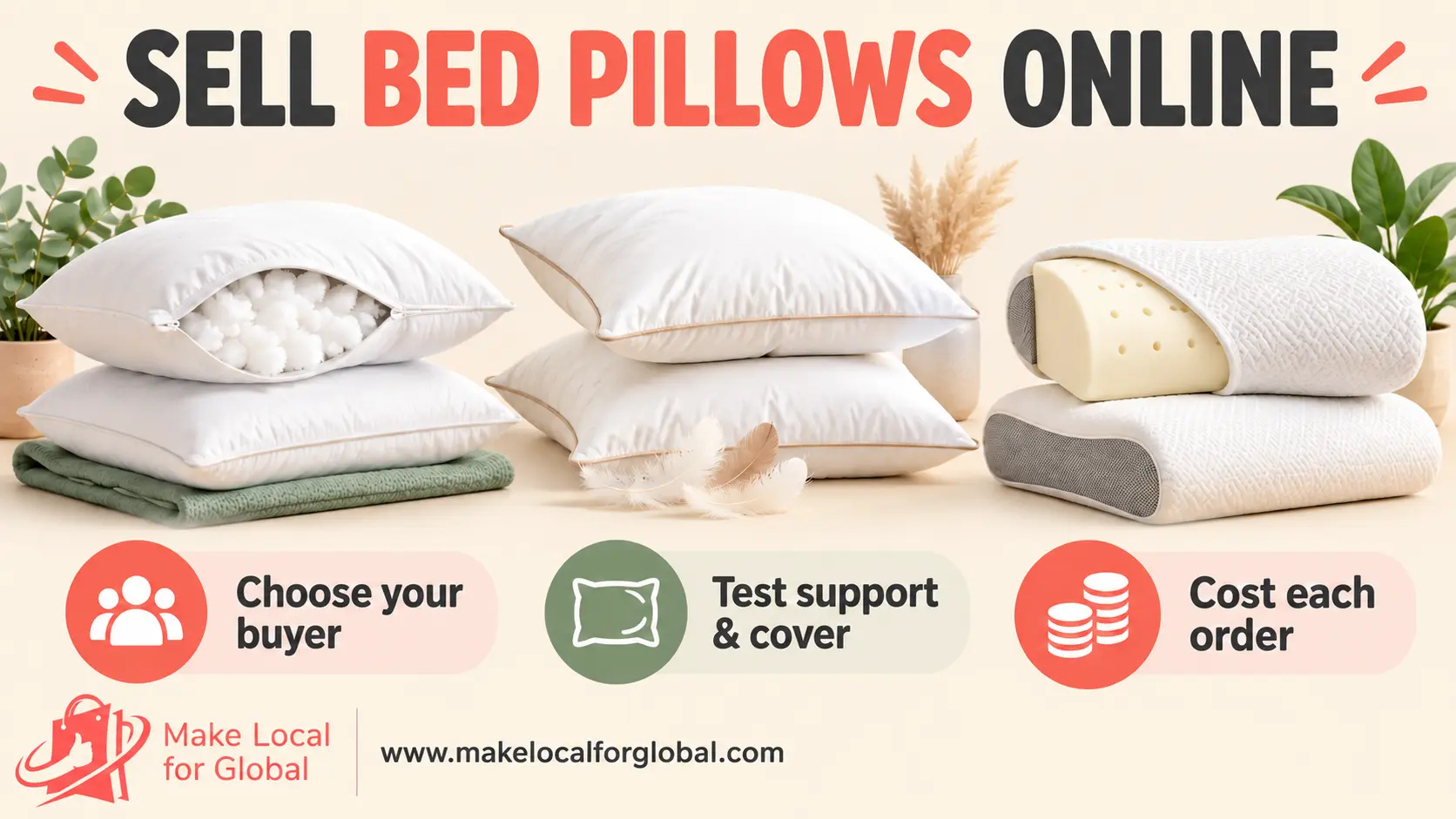
A pillow can look simple on a product grid, but shoppers are choosing size, feel, filling, support, care and value, often without being able to touch it. A clear range and honest product pages make that decision easier, reduce avoidable returns and help a small bedding business earn trust.
Make Local for Global helps small businesses present products clearly and create a stronger route from browsing to buying.
Start with a small number of products that solve distinct shopping needs. A concise range is easier to explain, photograph, stock and improve than a catalogue full of near-identical options.
Build a comparison around real product differences, not invented labels. If “hotel feel” or “cooling” appears in a name, describe the materials or construction behind it and avoid promising a health outcome.

Measure every pillow yourself and show dimensions in centimetres. UK standard pillows are commonly around 48 × 74 cm, but names and actual measurements vary between suppliers. Treat that as a useful reference, not a substitute for the dimensions of your own stock.
| Product detail | What to show | Why it helps |
|---|---|---|
| Pillow dimensions | Width × length in cm, plus a note if measurements are approximate | Customers can compare with a pillowcase they already own |
| Pillowcase fit | Compatible case size and whether the case is included | Avoids confusion between the pillow and its cover |
| Pack contents | One pillow, pair, or other quantity; list all included items | Makes the displayed price easier to understand |
| Compression | Whether the pillow arrives vacuum-packed and how to restore its shape | Sets a realistic expectation for unboxing |
Dimensions shown on product pages should come from your own supplier specification or measurements.
Ask suppliers for a written specification covering the outer fabric, filling composition, dimensions, fill weight, care instructions, country of origin, packaging, minimum order, lead time and defect process. Confirm whether each detail applies to the finished pillow, its cover or its filling. These may be different materials.
Order samples before committing to a large run. Measure them, check seams and closures, compare the listing description with the product in hand, and wash only as directed. Keep a record of the sample, supplier documents, batch or lot reference and any changes agreed later.

The wholesale price is only one part of the cost. Include packaging, inbound freight, storage, payment fees, fulfilment, customer service, expected damage or returns and the marketing needed to reach buyers. If you offer free delivery, include that cost in the calculation rather than treating it as free.
| Illustrative cost per order | Example |
|---|---|
| Pillow pair landed cost | £14.00 |
| Protective packaging | £1.40 |
| Pick, pack and delivery contribution | £4.60 |
| Payment fee allowance | £1.00 |
| Returns, damage and support allowance | £1.50 |
| Estimated variable cost | £22.50 |
| Example selling price | £39.00 |
| Contribution before overhead and tax | £16.50 |
Illustration only, not a recommended market price. Replace every figure with your own current supplier, carrier and payment costs. The £16.50 is not net profit: it excludes fixed overhead, marketing and tax.
Calculate several scenarios: a single unit, a pair, a bundle with pillowcases, and a discounted promotion. Check that every option remains viable after its actual packaging and delivery cost. Compare like-for-like products before setting a retail price, but do not compete on price alone if your range offers clearer specifications, traceable materials or stronger service.
Online shoppers cannot squeeze the pillow or inspect a label in person. Your product page should make the important details easy to scan on a phone.

Do not use medical or therapeutic promises such as curing pain or treating a condition unless you have appropriate evidence and have checked the rules that apply to those claims. Focus on verifiable attributes: materials, dimensions, construction, care and tested features.
A well-structured online shop can help customers compare options, understand delivery and take the next step with confidence.
Use a consistent setup, neutral light and true-to-life colour. Include at least one image that shows the full pillow, one that reveals its texture and construction, and one that demonstrates its size. Keep props simple so the product remains the focus.
If a pillow is shown inside a pillowcase, make clear whether the case is included. Avoid retouching that changes the colour, loft or shape. Add descriptive alt text that explains what the image shows, not a string of search terms.
Choose packaging that protects the product from moisture, dust and handling without making the parcel unnecessarily bulky. Test a packed sample through your intended delivery route. Check that the package can be labelled and handled safely, and tell customers whether compression is used and how long recovery may take.
Publish delivery estimates that reflect actual processing times. Have a plan for late parcels, damaged packaging, incorrect variants and a customer who says the product does not match the description. UK online sellers must provide required pre-contract information and follow distance-selling and cancellation rules. Check the current official guidance for your business and the parts of the UK you serve.
Build the returns process around clear instructions and the law, not a blanket assumption that every bedding product is exempt from cancellation. Explain how customers should contact you, what happens next and how refunds are handled.
Textile labelling rules apply to many textile products sold in Great Britain. GOV.UK guidance says the label must show fibre content, including where relevant the fibre content of components with different compositions. Check that supplier labels and your online descriptions match the product you actually sell. Northern Ireland can have different requirements, so verify the rules for each market before expanding.
Keep supplier identity, invoices, product specifications and batch information together so you can trace stock and respond quickly if a safety or quality issue arises. Review the current product-safety obligations for your role as a manufacturer, importer or retailer. This article is practical guidance, not legal advice.
Take particular care with products intended for babies. Do not market a pillow for infant sleep: the UK product-safety alert on baby sleep pillows reports serious risks. Check the alert and relevant current guidance before sourcing, listing or promoting any product intended for babies or young children.
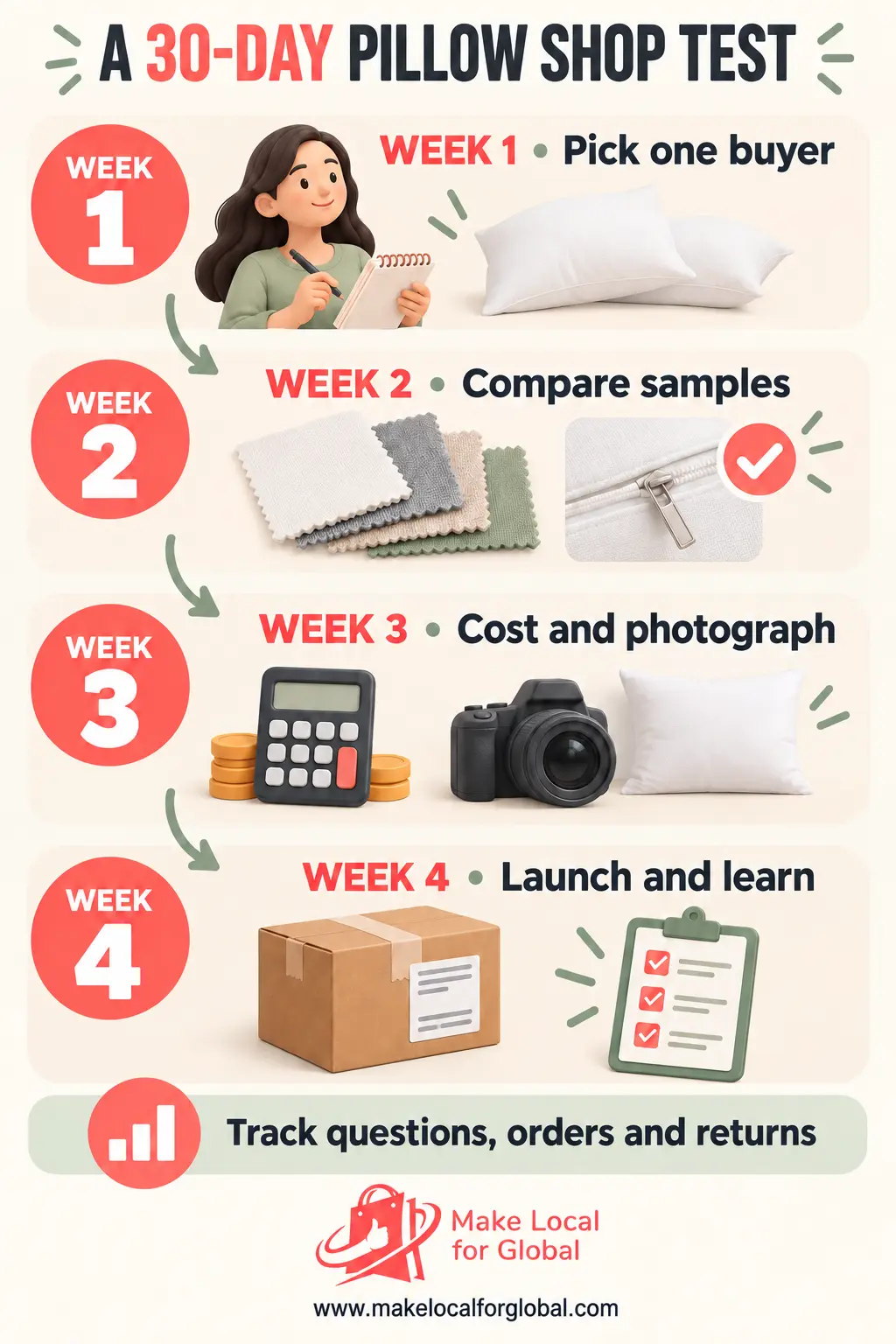
Begin with one clear customer group and a small set of useful messages. Explain who the range is for, how products differ and what makes your sourcing or service dependable. Use email updates, useful bedding-care content and product comparisons to give interested shoppers a reason to return.
After launch, review which product pages get views, which variants convert, what customers ask before ordering and why returns happen. If people repeatedly ask whether pillowcases are included, move that detail closer to the price. If a certain size produces confusion, add a measurement image. Use customer feedback to improve the page, while asking permission before using names, photos or testimonials.
State the size, filling and cover composition, pack quantity, construction, care instructions, delivery information and any relevant limitations. Explain terms such as “firm” using a consistent method and make clear what is included in the order.
Potentially, but private labelling does not remove your responsibilities. Agree specifications and quality checks with the manufacturer, keep traceability records, use accurate textile information and check the product-safety and consumer rules that apply to your role and market.
Start with a focused range and make comparisons easier. Clear measurements, candid product photography, reliable delivery information and responsive support can distinguish a small business without relying on unverified performance claims or unsustainable discounts.
Test both only if your supplier, packaging and economics support them. Show the quantity prominently, calculate delivery and contribution for each option, and make the single-versus-pair price difference easy to understand.
If you are also building a coordinated bedding range, see our guide to selling bed linens online. A clear product story across pillows, pillowcases and other bedding can help shoppers understand how the pieces work together.
Make Local for Global can help you plan a clearer online presence for your business. Start with a practical conversation about your products, audience and next step.
PREFERRED SOURCE
Like what you’re reading? Add Make Local for Global as a preferred source on Google to see more of our articles when you search.

Build your online presence without having to figure out everything yourself.