

READY TO SELL beer brewing kits ONLINE?
Get a store built for you in 5 days, plus training and support to help you start, run, and grow your Alternative business.

Planning to sell beer brewing kits? Compare starter bundles, check ingredient and allergen information, test a sample, price the parcel and plan a small launch.

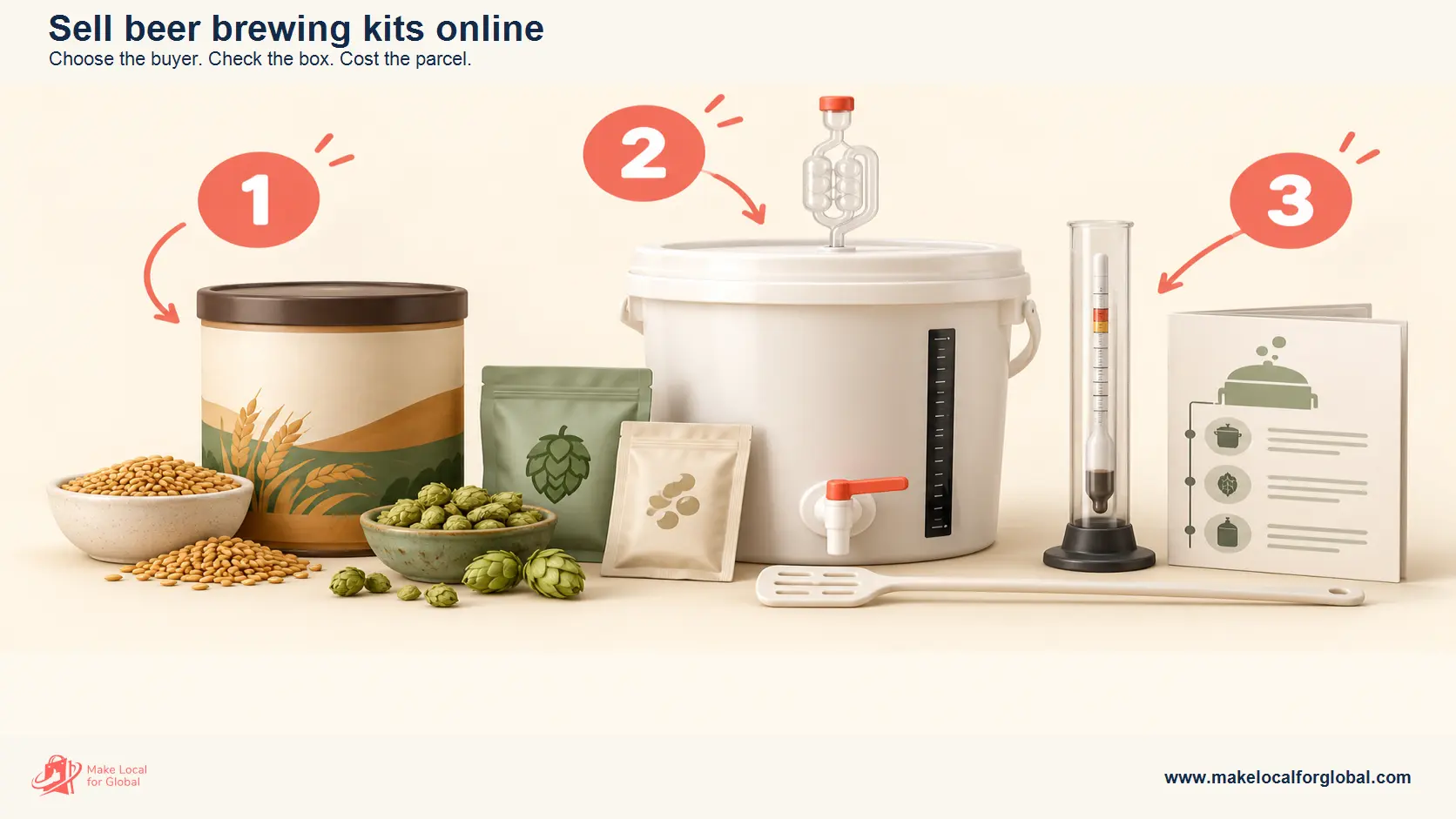
A home-brewing kit is more than a tin of malt extract. A first-time buyer needs to know what is in the box, what extra equipment is needed, how much beer the kit is intended to make and how long the process takes. Clear answers can set a small specialist shop apart.
Start with one type of home brewer, check every ingredient and component, test the packed kit, then price a real parcel. This plan covers range choices, supplier questions, UK food and product checks, order costs and a measured first launch.
Compare website options for showing kit contents, brew volume, compatibility and delivery details clearly.
A new brewer may want a straightforward extract kit, clear instructions and one list of equipment they still need. A regular home brewer may already own a fermenter and bottles, then look for a particular style, hop addition or refill. A gift buyer may value a tidy box and a simple explanation of what the recipient must supply.
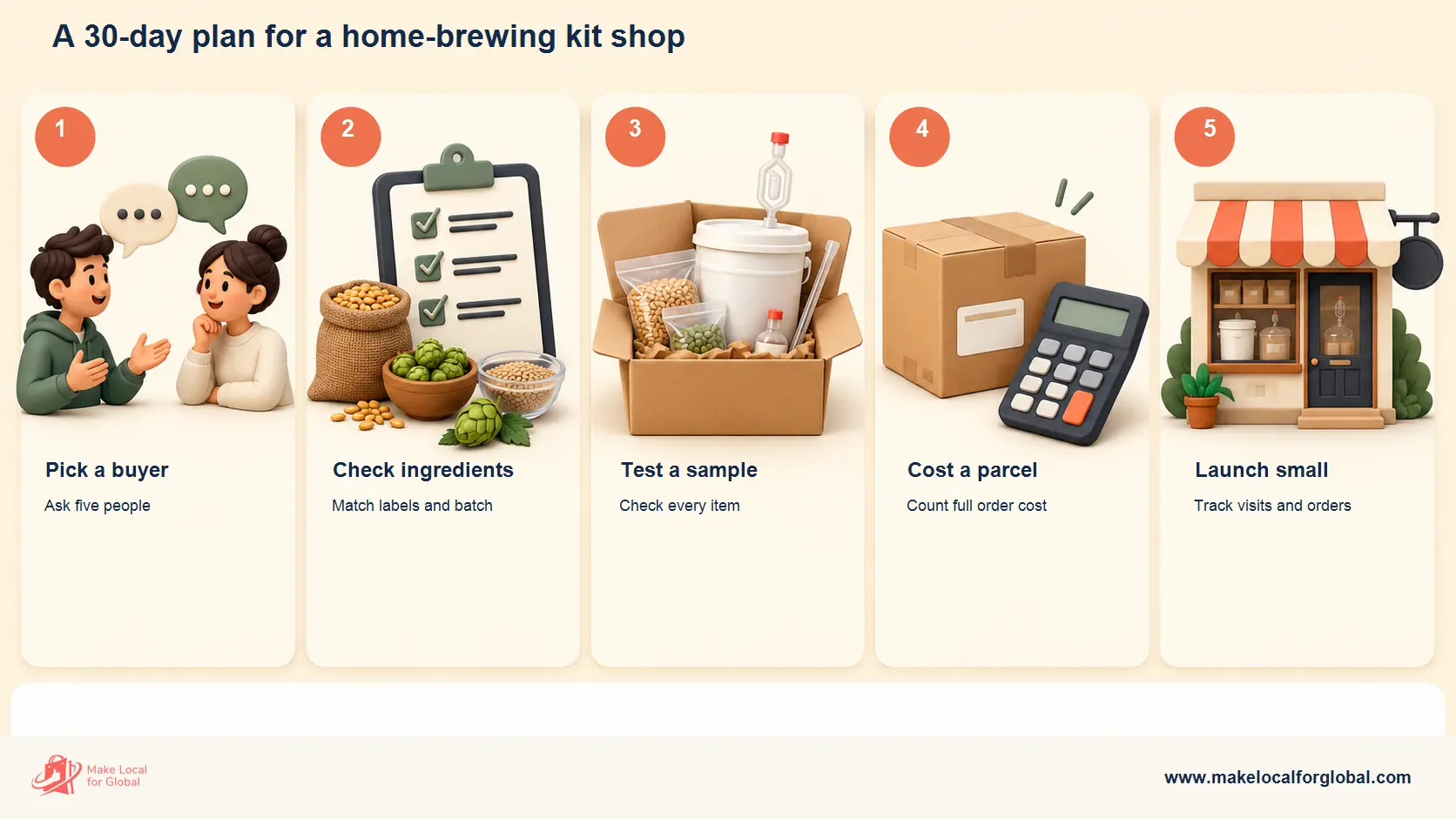
Pick one group first. Ask five people who match it what they have brewed, which step felt confusing and what they would expect to find in a starter box. Show two sample product cards and note the questions they ask before they choose. This gives you a better opening range than buying several similar recipes without a reason.
Home-brewing products can mean a recipe kit, a complete equipment bundle, loose ingredients or replacement items. They do not solve the same problem. Muntons describes its Flagship kit as producing 35 pints, with malt extract, hop pellets and yeast. Treat that as a specification for that named range, not a promise for other products.
| Product role | Typical contents | Buyer questions to answer |
|---|---|---|
| Recipe or extract kit | Concentrated malt, yeast and recipe additions | What volume, style, extra sugar or equipment does it need? |
| Starter equipment bundle | Fermenter, tap, airlock, cleaner or sanitiser, measuring tools | What is included, what is missing, and which kit sizes fit? |
| Refill or recipe upgrade | Ingredients for another batch, dry hops or flavour additions | Which equipment and base recipe are compatible? |
| Bottling and serving add-on | Caps, tubing, bottles, labels or a serving vessel | How many bottles, which sizes, and are caps or cleaning items included? |
Kit contents vary. Confirm the current manufacturer specification for each model.
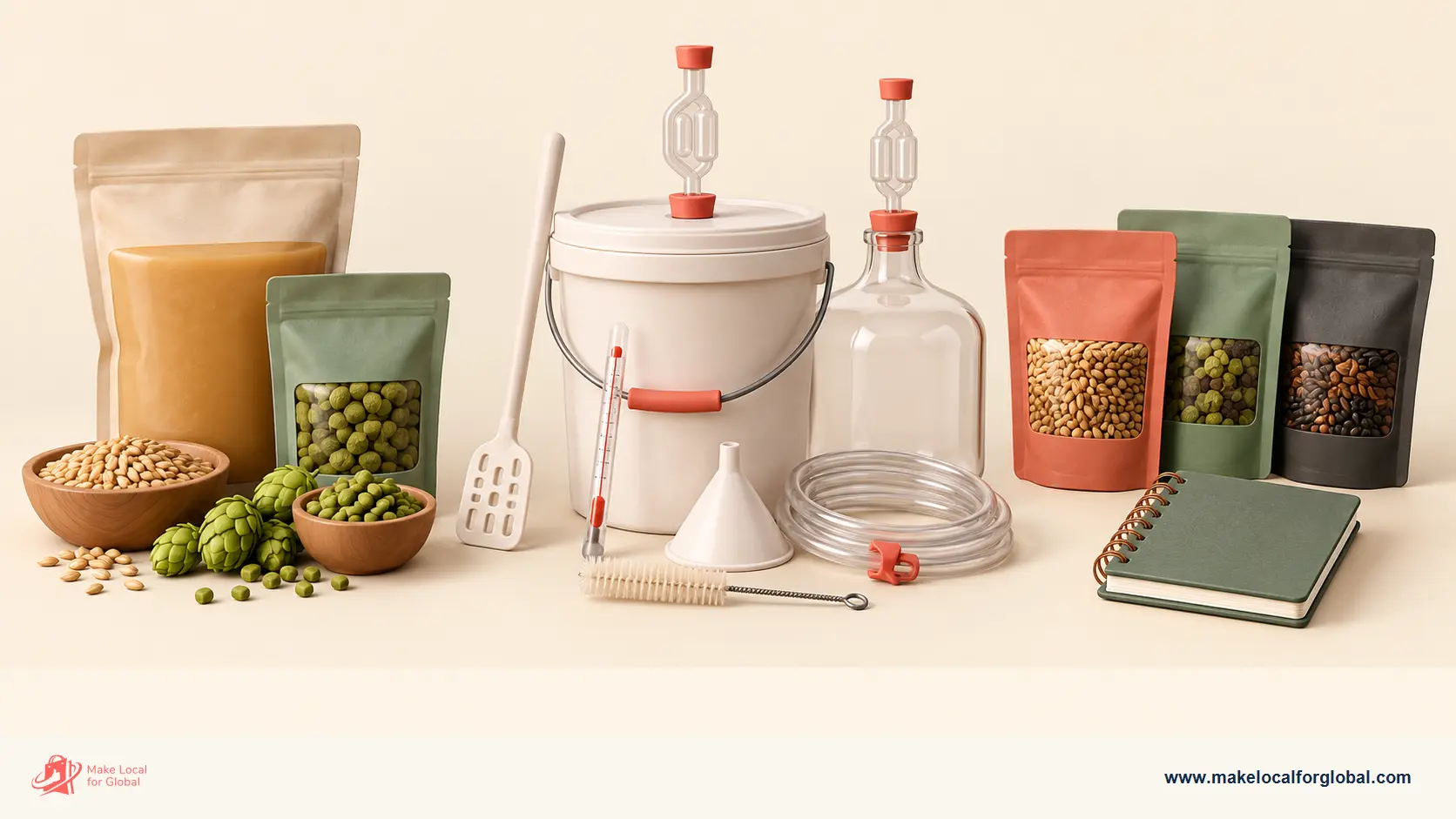
Make the entry option genuinely usable, set a core kit for the buyer you chose, and offer one relevant add-on. A refill can bring a returning buyer back; an unneeded bundle can just increase the price. If you sell mugs too, see MLFG’s article on choosing and packing beer mugs for another home-bar product angle.
Ask suppliers for exact product codes, current ingredient specifications, allergen information, storage conditions, date codes, batch identification, instructions, minimum order quantities and lead times. For equipment, request material and use details, cleaning advice and any safety documents that apply. Keep answers tied to the product version you receive.
If you import or sell consumer equipment, the Office for Product Safety and Standards says businesses must check that products meet safety and relevant labelling duties. Read its advice for product businesses, keep supplier and batch records, and check any electrical or chemical product against the rules that apply to that item.
Beer kits can contain food ingredients such as malt extract, hops, sugar and yeast. If your business sells food, ask the local authority which food-business registration and hygiene duties apply. The Food Standards Agency says a new food business should register with its local authority at least 28 days before trading.
For prepacked ingredients sold online, make ingredient and allergen information easy to find before checkout and available with the product at delivery. The FSA says distance-selling customers must receive allergen information before they complete a food purchase and when it arrives. Barley contains gluten; check every recipe, supplier statement and cross-contact notice rather than copying a label from a different kit.
HMRC treats some food and non-food parts of home-brewing kits differently for VAT: its manual says the home-brewing exception applies to food or food ingredients; equipment is standard-rated. A mixed bundle can need careful classification, so ask an accountant or HMRC about your exact products and keep the answer on file.
Selling brewing ingredients or equipment is not the same activity as producing beer for sale. HMRC says businesses producing alcoholic products such as beer need alcoholic products producer approval, except where an exemption applies, and commercial brewing brings separate duty and food-business steps. If you plan to brew, package or sell the finished drink, get advice from HMRC and your local authority before you start. Do not describe a kit as a finished alcoholic product.
A product page can separate ingredients from equipment, show allergens and explain what the buyer needs before starting.
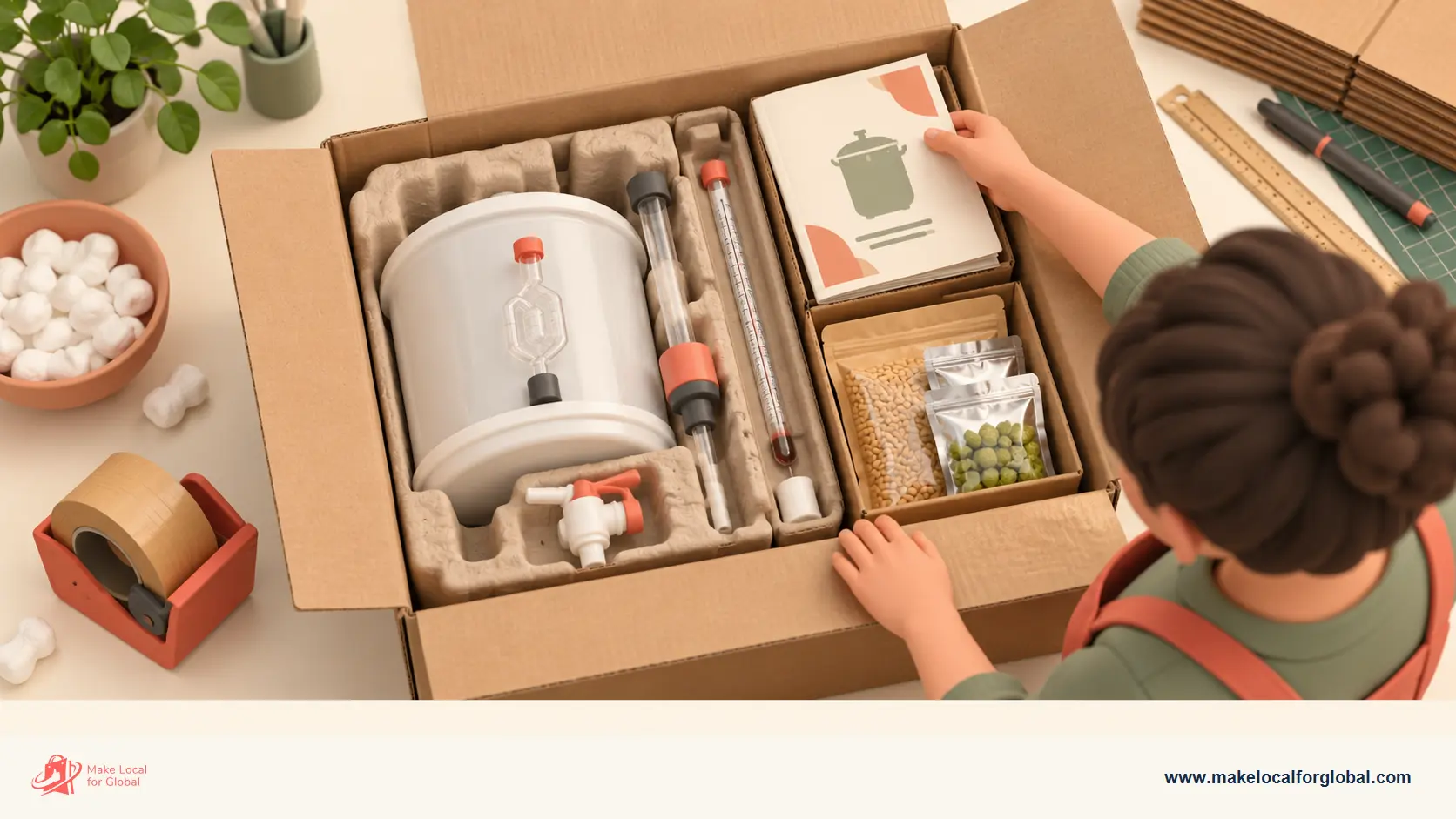
Buy a sample before placing a larger order. Check the carton, product seals, ingredient names, dates, instruction sheet and every accessory. Photograph the contents laid out in order. Then ask someone new to home brewing to find the brew volume, extra items required, cleaning directions and support contact without your help.
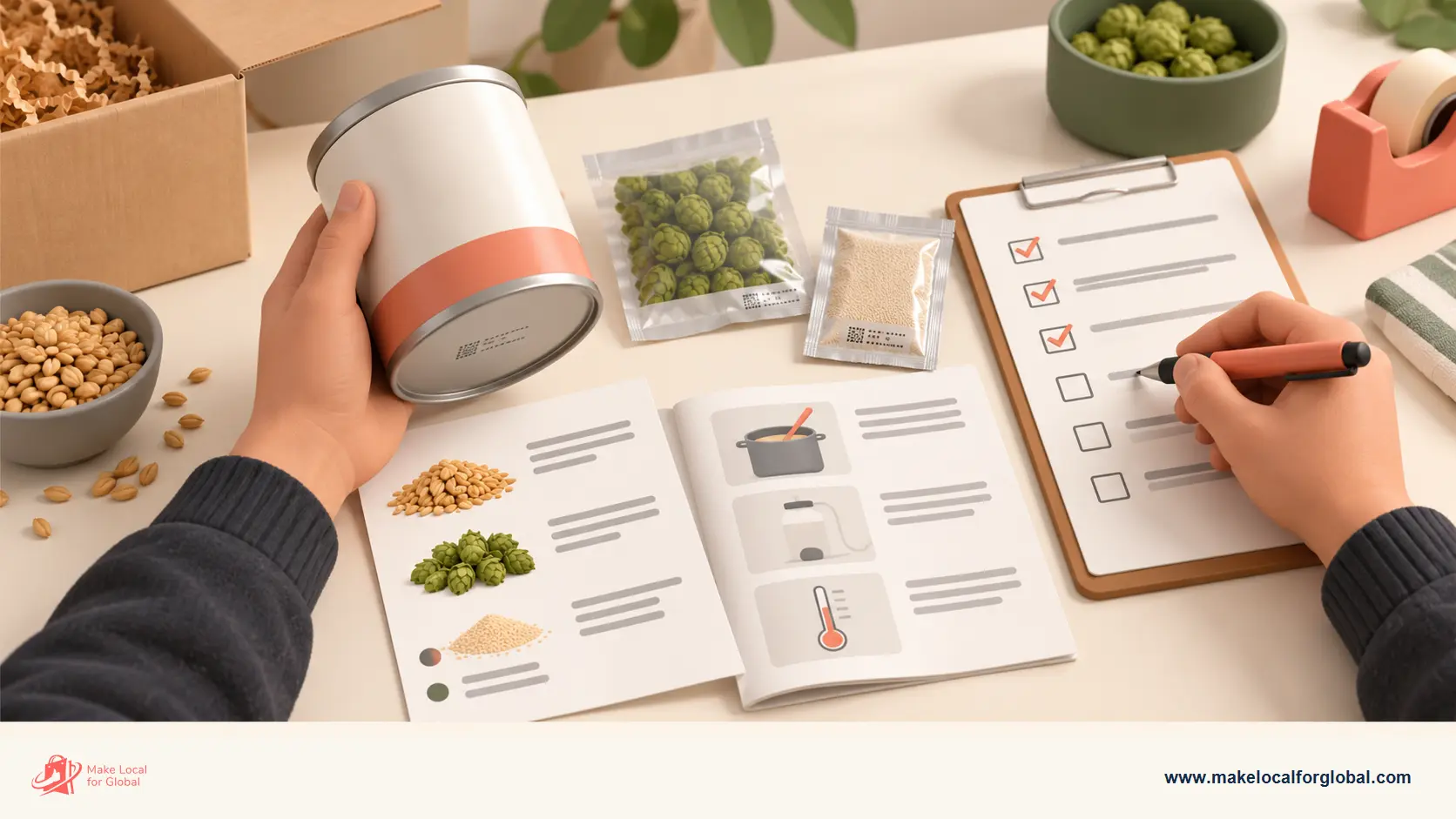
Do not change a supplier’s use or safety directions to make the kit sound easier. If a cleaner, sanitiser or other included product has its own label and handling advice, make sure the buyer receives it intact and can read it.
A fermenter bundle can take up space when its ingredients are light. Add the inbound cost of the kit, box, protective packaging, carrier charge, payment fee, damage or returns allowance and the cost to attract an order. These numbers are a made-up planning example, not a supplier quote or a claim about typical prices.
| Per-order item | Illustrative amount |
|---|---|
| Landed starter kit | £18.00 |
| Protective carton and fill | £1.60 |
| Tracked delivery | £4.95 |
| Payment fee allowance | £1.10 |
| Damage and returns allowance | £1.50 |
| Customer acquisition allowance | £4.00 |
| Illustrative variable order cost | £31.15 |
| Example selling price | £49.95 |
| Contribution before overheads and tax | £18.80 |
Illustrative only: £49.95 minus £31.15 equals £18.80. Assumes the seller is not VAT-registered and the landed kit cost includes any VAT charged by the supplier. If VAT-registered, calculate sales and reclaimable input VAT using your actual treatment. This is contribution, not net profit.
For most UK businesses, VAT registration is required when taxable turnover for the last 12 months exceeds £90,000 or is expected to pass that amount in the next 30 days. Check HMRC’s current VAT registration rules and get advice about the rate and treatment for the exact kit and any bundle.
Get a carrier quote with the finished parcel dimensions and weight, not a guess based on the ingredient tin. A fermenter kit may need a different carton from a refill. Record the packed measurements, test the drop protection with a sample shipment and use the same assumptions when comparing single-item orders with bundles.
For online consumer orders, state the price, delivery method and charge, contact details and cancellation information before checkout. GOV.UK explains the information required for distance sales and the usual right to cancel within 14 days after delivery, subject to exceptions. Ask a qualified adviser how food products and opened consumables affect your returns process; do not publish a blanket “no returns” rule.
Use a product title that names the kit type and its verified output. For example: “West Coast IPA extract kit, stated 35-pint yield, hop pellets included.” Use a yield only when the manufacturer lists it for that exact product. Do not promise a particular alcohol strength if the maker’s evidence does not support the exact claim.
Show the sealed ingredients, equipment, instruction pages, carton size and a photo of everything included. Add a separate “you will need” list. On ingredient-based food products, put accurate allergen information where customers can see it before buying and repeat it at delivery. Link to the maker’s current instructions instead of hosting an old PDF without a version date.
Compare your page with an established maker’s current specification. Muntons, for example, describes the Flagship range by recipe contents and its stated 35-pint yield. That is a useful model for how to explain one product; your page must still match your own stock and supplier documents.
Your own ecommerce site can hold the full instructions, compatibility notes and allergen details. A marketplace can help you learn which styles shoppers search for, but check its rules for food products and age-sensitive categories before listing. A local home-brew club, gift shop or taproom may offer a small wholesale test; use a written price and restock arrangement.
Test one kit page and one adjacent refill before ordering a large quantity. Make a short demonstration of what is in the box, publish a checklist for choosing a first kit and answer recurring setup questions. Measure product-page visits, questions about missing equipment, add-to-baskets, completed orders, delivery cost and returns. Set a maximum trial quantity and a date to review results.
If a product gets interest but buyers leave after seeing the delivery price, test a smaller parcel or clearer shipping display. If people ask whether a fermenter is included, move that answer near the price and product title. Let actual questions guide the next edit.
| Week | Actions | What to record |
|---|---|---|
| 1. Pick | Choose one buyer, compare three kits and ask five people which details they need to choose. | Top questions, preferred styles, equipment already owned |
| 2. Verify | Request product codes, ingredients, allergen data, storage notes, batch details and supplier terms. | Missing documents, supplier response, minimum order |
| 3. Test | Inspect a sample, check the instructions, build one product page and quote the parcel. | Sample faults, pack size, carrier price, page questions |
| 4. Learn | Offer a capped quantity, answer queries and compare visits with orders before reordering. | Visits, baskets, orders, delivery issues, returns |
Set a spending cap and review date before launch. The first month is a test, not a sales forecast.
You can sell home-brewing ingredients and equipment, but check food-business, labelling, consumer and product-safety requirements for the products you supply. Brewing beer for sale is a separate activity with HMRC approval and duty rules.
If your kit contains food ingredients, check the applicable rules and supplier information. FSA guidance says allergen information for food sold online must be available before purchase and when the order arrives.
That depends on the maker’s specification. State whether the box contains ingredients, fermenting equipment, cleaning products, bottles and any extras. Give buyers a separate list of what they must supply themselves.
Do not assume the rules for selling finished alcoholic drinks apply in the same way to ingredients and equipment. If your offer includes finished beer or your business will produce alcoholic products, ask your licensing authority and HMRC which approvals apply.
Check a sample, list every included part, use protective packaging and quote the carrier with the parcel’s real dimensions. Make ingredients, storage needs and instructions clear before the customer orders.
A specialist shop can make it easier to separate recipe kits, equipment and refill packs. Make Local for Global helps small businesses set up an ecommerce website and learn to manage it. Talk through your range and what buyers need to know before they order.
Show the real contents, set out your shipping terms and give buyers a clear route to ask a question.
PREFERRED SOURCE
Like what you’re reading? Add Make Local for Global as a preferred source on Google to see more of our articles when you search.

Build your online presence without having to figure out everything yourself.




