

READY TO SELL cocktail shakers ONLINE?
Get a store built for you in 5 days, plus training and support to help you start, run, and grow your Alternative business.

Learn how to sell cocktail shakers online: compare shaker styles, check samples, cost every order and build a practical 30-day launch plan.

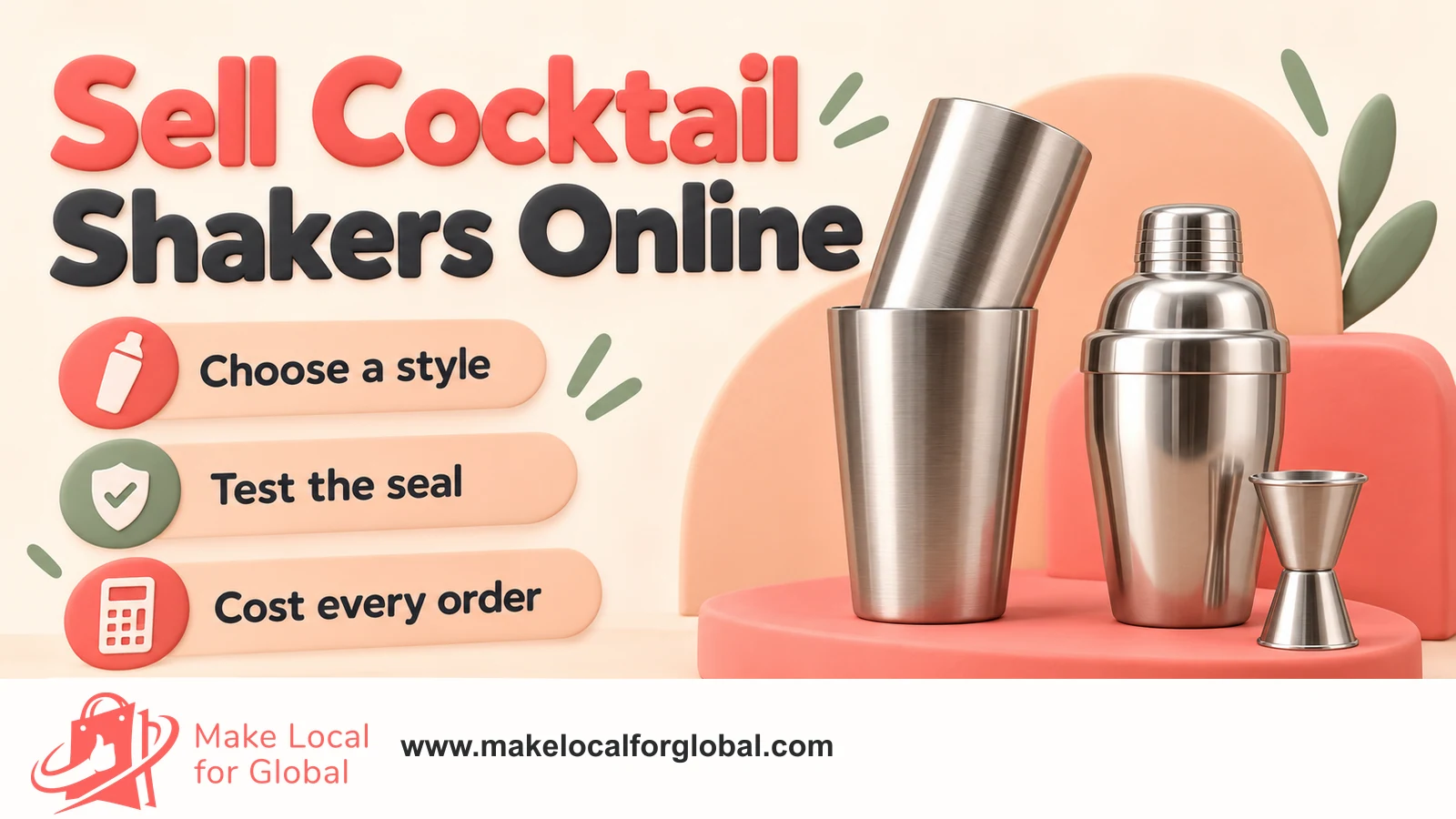
Cocktail shakers look simple, yet buyers need to judge how the pieces fit, what the set includes and whether it will stand up to regular use. A new online seller can start with a small choice of shaker styles, inspect real samples, show each part clearly and cost the full parcel before ordering stock.
Map your first range, sample spend and delivery costs before committing to a large order.
“Barware for everyone” makes a broad and costly first range. Pick one likely buyer and the job they want the shaker to do. A beginner setting up a home bar may prefer a complete set with clear instructions. A keen home bartender may want a Boston shaker and a separate strainer. A bar or restaurant may care more about repeat supply, replacement parts and how the tool holds up to frequent cleaning.
Speak with five likely buyers before you place an order. Ask what they already use, what frustrates them, whether they are buying for themselves or as a gift, and what should be included. Record the exact questions. If people ask whether the cap leaks, whether a jigger is included or how to separate the tins, answer those points on the product page.
Choose a practical starting position, such as “easy-care cocktail shaker sets for people building a small home bar”. It gives you a basis for the first products, images and search phrases. A specialist offer for working bartenders may need a different product specification and sales conversation than a gift set.
Start with a few products that solve different buying needs, rather than many colours of the same set. Three common constructions are Boston, cobbler and French shakers. Their capacities, fit and included parts vary by model, so use the exact manufacturer information for every listing.
| Range role | Possible offer | Buyer check | Stock decision |
|---|---|---|---|
| Starter | Cobbler shaker with integrated strainer and cap | Does the lid fit securely and come off after use? | Confirm the supplied parts and cleaning instructions. |
| Core | Boston set with two tins | Are the tin sizes clear, and is a separate strainer included? | Test the exact tin pairing and list every component. |
| Specialist | French two-piece shaker | Can the buyer seal, open and clean the parts with confidence? | Add it once buyer feedback supports the extra choice. |
| Gift bundle | Shaker with jigger and bar spoon | Are the tools compatible and separately identified? | Check the gift box, packing fit and each item’s finish. |

An IG Group product listing describes one weighted tin-on-tin shaker as an 85 cl model made from 18/8 stainless steel, checked on 16 October 2026. Treat that as one product’s stated specification, not a standard for every shaker. Ask your own supplier for written details on the steel, finish, capacity and any weights or coatings before you repeat a claim.
Think about add-ons that belong with the selected style. A Boston set may need a separate strainer and jigger; a cobbler model may include its own strainer top. A gift bundle can include a bar spoon or recipe card, but list every item and do not suggest a tool is included when it is sold separately.
Compare local wholesalers, hospitality suppliers, makers and importers. Ask for the minimum order, sample price, lead time, carton quantity, shipping terms, returns for defects and access to replacement parts. For an imported set, establish who is responsible for importing it and which documents will identify the manufacturer, material and batch.
Food-contact materials rules cover utensils intended to touch food. The Food Standards Agency overview explains the rules for England, Wales and Northern Ireland; Food Standards Scotland provides Scotland guidance. Ask for evidence suited to the exact materials and market. Do not assume that a generic “food grade” description proves the finished item complies. Some material groups have specific declaration requirements; the records needed depend on the product and applicable rules.
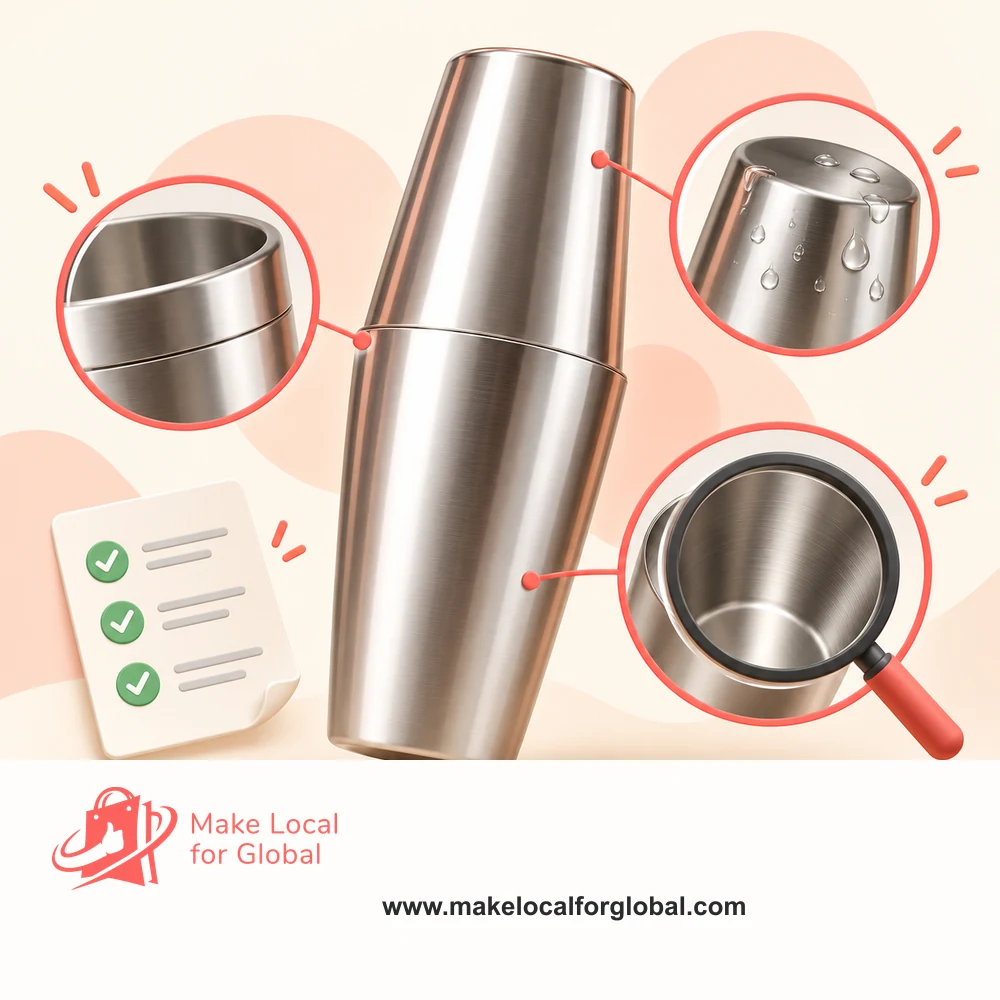
Test the real sample on a protected bench. Inspect rims for burrs or dents, join the parts as instructed and check whether they separate without excessive force. Add cold water, close the shaker, then hold and shake it over a sink in line with the maker’s directions. Look for leaks around the join and cap. Open and wash it according to the care notes, then inspect for sharp edges, loose parts, staining or a change in finish.
For a set with measuring marks, compare the marks with a measured volume and note the result. Test the strainer holes and jigger rim for rough edges. Take photos of any issue and ask the supplier to resolve it in writing before a larger order. Keep the approved sample or a dated record so future stock can be compared.
Use actual supplier, carrier and payment figures to see what each order contributes.
Here is an illustrative direct-store sale at £34.99, with standard delivery included in the price. It assumes the seller is not VAT registered and uses a standard UK card fee listed by Stripe as 1.5% plus 20p, checked on 16 October 2026. The fee calculation is £34.99 × 1.5% + £0.20 = about £0.72.
| Order item | Illustrative amount |
|---|---|
| Customer payment | £34.99 |
| Shaker set, landed cost | −£10.80 |
| Inbound freight share | −£1.60 |
| Protective packaging | −£1.40 |
| Seller-paid delivery | −£3.75 |
| Example card fee | −£0.72 |
| Customer acquisition allowance | −£3.50 |
| Return or damage allowance | −£1.25 |
| Contribution before fixed costs, labour and tax | £11.97 |
Illustration only. Replace the figures with your own quotes. The example excludes VAT, tax, owner pay, storage, shop subscriptions and other fixed overheads. Contribution is not net profit.
A marketplace may add listing, transaction or payment charges. Include those fees if that is where the order will come from. Run the calculation again for a discount, a replacement shipment and a returned item. Compare delivery prices using the packed parcel’s measured size and weight, not the empty shaker alone. Use MLFG’s product pricing steps to check the assumptions.
Use a title with the construction, material and set contents, such as “Stainless steel cobbler cocktail shaker set with 25 ml and 50 ml jigger”. Use that example only if the material and jigger marks match your stock. A useful first sentence says who the set suits and names what comes in the box.
Use close-up photos to show joins, rims, measuring marks and the inside of a strainer. A short demonstration can show how to assemble and separate the model without claiming that every buyer will find it easy. Add simple cleaning steps from the manufacturer. Avoid unsupported phrases such as “professional quality”, “leakproof” or “never rusts”.
Businesses that make, import, distribute or sell consumer goods have safety responsibilities. Great Britain and Northern Ireland use different general product-safety rules. The Office for Product Safety and Standards says sellers should keep supplier records for traceability and act on safety incidents. If you import the set, check which duties apply to you before listing it.
For online orders, tell buyers who is selling the item, what it includes, its total price, delivery terms and how cancellation works. Most eligible goods bought online can be cancelled within 14 days of delivery. Contact with food does not itself exempt a shaker set from cancellation rules; check the rules and the condition of a returned item before deciding how to handle it.
Pack each piece so metal parts cannot dent one another in transit. Use a divider or wrap for loose utensils, protect the retail box with an outer carton, then weigh and measure the complete parcel. Send one test package through your chosen carrier and inspect it on arrival. Keep a packing photo and supplier batch reference for orders that arrive damaged.

Choose one main sales route for the first test. A marketplace can put a small set of listings in front of shoppers, but its fees and product rules affect the margin. A standalone shop gives you space for comparisons and care instructions; you will need a plan to attract visitors. Start with the channel you can run well and track views, questions, orders, delivery spend and damage reports.
Use phrases buyers might search, such as “Boston cocktail shaker set”, “cobbler shaker with jigger” and “cocktail shaker gift set”. Add a short comparison of the three constructions, a cleaning demonstration and a close-up of the included parts. Link to useful background on other products to sell and the ecommerce startup budget.
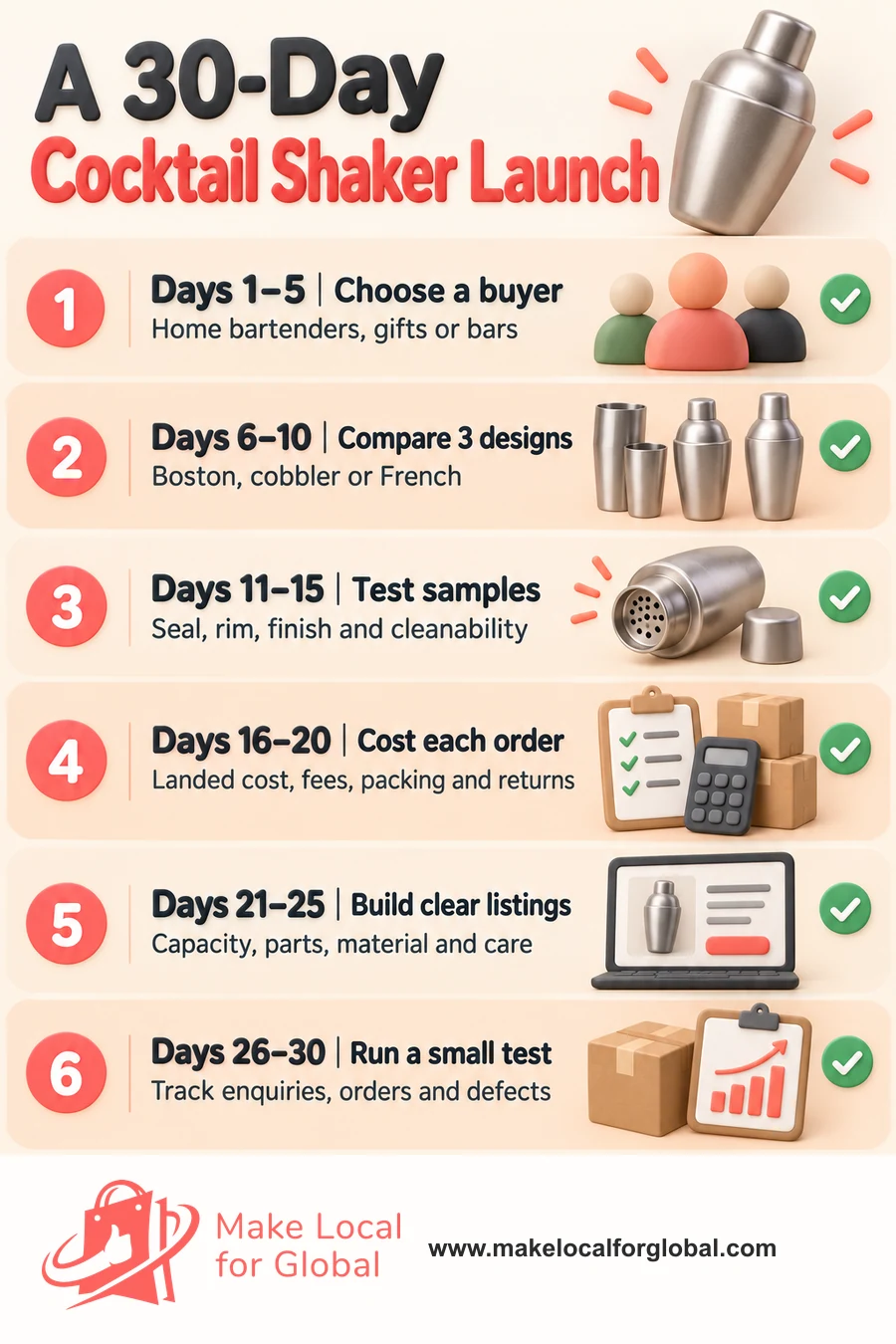
Choose the style that fits the buyer you have spoken with and that your supplier can document and restock. A small comparison of Boston, cobbler and French models can help you test demand before you stock all three.
Check the fit, rim, seal, strainer openings, jigger marks, surface finish and cleaning instructions. Try the closure with water over a sink and keep notes on the exact sample and supplier batch.
Food-contact rules apply to items intended to touch food and drink. Ask the supplier for evidence relevant to the finished shaker and its market. Documentation requirements vary by material and product construction, so check the current regulator guidance for your situation.
It depends on sample costs, supplier minimums, stock, packaging, shipping and shop fees. Start with those quotes and a small test quantity, then use the order-cost example above as a calculation method rather than a budget promise.
Most eligible online purchases can be cancelled within 14 days after delivery, subject to the applicable rules. Explain the returns process before checkout and inspect returned stock in line with consumer law and your product-safety duties.
A focused shaker shop starts with a clear buyer, a few distinct products and proof for the details shown on each page. Inspect the sample, cost a real packed order and let buyer questions guide the next stock decision. If you need help with the online shop, see MLFG website design or contact the team.
Turn your specifications, photos and fulfilment plan into a clear customer experience.
PREFERRED SOURCE
Like what you’re reading? Add Make Local for Global as a preferred source on Google to see more of our articles when you search.

Build your online presence without having to figure out everything yourself.