

READY TO SELL curtains ONLINE?
Get a store built for you in 5 days, plus training and support to help you start, run, and grow your Alternative business.

Learn how to sell curtains online with a focused range, sample checks, clear measurements, realistic pricing and a practical launch plan.


Selling curtains online can work as a focused homewares business, but product pages need to remove the guesswork that comes with buying fabric remotely. Start with a clear buyer, a small range, accurate measurements and sample-tested claims. Then cost each order with delivery, fees, packaging and a returns allowance before you place a larger stock order.
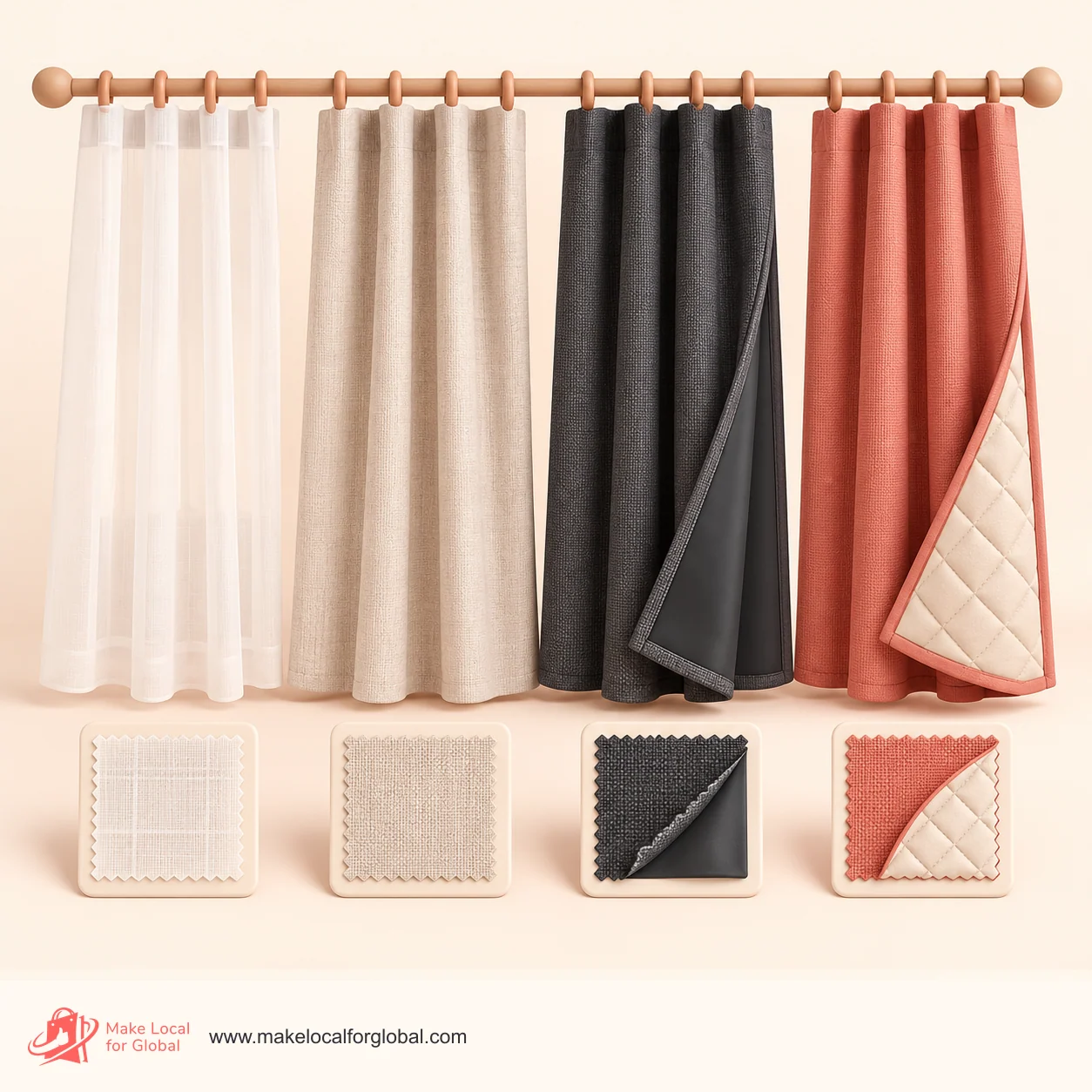
A beginner can test demand with three related options: a light-filtering style, a lined everyday style and a specialist option such as blackout or thermal curtains. The best first range is the one you can source consistently, describe accurately and pack safely.
List samples, packaging, delivery and setup costs in one place. The MLFG Startup Budget Planner helps you map the cash needed for a small online launch.
“Curtains for everyone” makes a weak starting point. Choose a buyer and a room where the product solves a clear problem. Renters may need ready-made sizes and easy installation. Parents may look for room-darkening fabric and washable care. Home renovators may pay for made-to-measure widths, lining choices and a sample service. Landlords and small hospitality businesses may need repeatable sizes, replacement stock and clear care instructions.
Speak to five likely buyers before ordering stock. Ask what they find difficult: measuring the window, choosing a heading, matching a colour, getting enough privacy or arranging delivery. Show a few fabric samples and ask which option they would request first, what room it is for and what information they would need before paying. Record exact questions; these can shape the product page.
Write a one-line buyer statement, such as: “I sell washable, lined curtains to renters who want privacy without a made-to-measure price.” Use it to choose the first products, photos and search terms. If you plan to sell blackout designs, read our specialist page on selling noise-reduction curtains for that narrower product focus.
Start with related products rather than dozens of colours and sizes. Keep the fabric family and care needs manageable, then vary one buying decision at a time: lining, light control, colour or heading. A simple good-better-specialist range helps shoppers compare value without needing a long catalogue.
| Range level | Example offer | Buyer question to answer | Stock check |
|---|---|---|---|
| Entry | Ready-made voile or unlined pair | How much privacy and daylight does it provide? | Confirm pair or single-panel quantity and colour consistency. |
| Core | Lined everyday curtains in a few neutral shades | What are the exact width, drop and heading? | Check lining attachment, seams and repeat supply. |
| Specialist | Blackout or thermal-backed curtain | What performance has been tested and under which conditions? | Keep test records and approved wording for each claim. |
Use the table as a starting point. Actual product names, specifications and performance depend on the supplier and tested item.
Make each option meaningfully different. A colour change alone may not justify a higher price. For a premium tier, offer a verified fabric, a lining choice, made-to-measure sizing or a clear sample and consultation process. If you sell custom sizes, state how customers submit measurements and what happens if a measurement is entered incorrectly.
You can buy ready-made stock from a wholesaler, work with a local maker, import finished curtains or take made-to-measure orders through a supplier. Ask each supplier for the minimum order, fabric composition, available widths and drops, heading options, care instructions, packaging dimensions, lead time, defect process and how colour batches are identified. For imports, ask who handles customs paperwork and landed delivery costs.
Order physical samples before you commit. Compare the fabric in daylight and indoor light, check whether the colour shifts, then look at the reverse and the lining. Measure the stated width and drop. Inspect the hems, seams, stitching, heading tape, eyelets and any hooks or fixings included. Wash-test only as instructed by the supplier and record any shrinkage or change in handle. Test a complete sample on the type of pole or track you plan to show in your product photos.
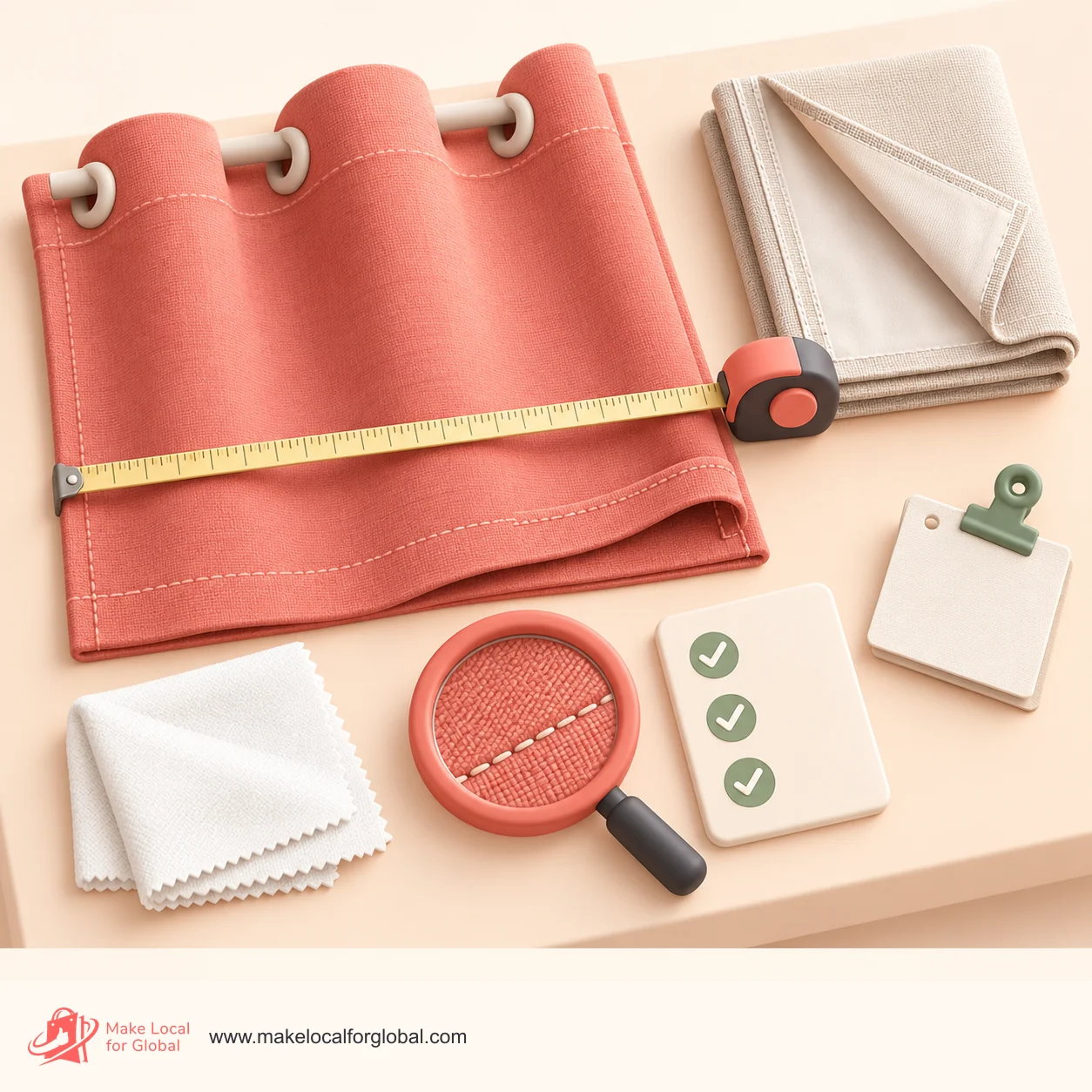
Keep a dated supplier sheet with the sample code, composition, care label, test documents and the approved product description. If a supplier cannot support a claim such as “blocks all light”, “cuts noise” or “saves energy”, do not repeat it as a fact. Describe visible construction and tested results in measured terms. If you use recycled or organic claims, keep evidence for the exact fabric and percentage rather than relying on a general supplier promise.
Curtain measurements are easy to misread. Tell shoppers whether the listed width is for one panel or a pair, and whether it refers to the flat fabric width or the finished coverage. Explain how to measure the track or pole, where to measure the drop from and how the heading changes the finished look. Do not ask customers to measure glass width if the curtain needs to cover the full track.
A sample service can reduce colour uncertainty. Offer a small swatch with a delivery time and a refund or credit rule written before launch. Keep sample colour references linked to the matching product batch. For made-to-measure, add a step-by-step measurement guide and ask the buyer to confirm their measurements before production.
Calculate contribution per order before setting a retail price. Contribution is the amount left after variable order costs; it is not net profit. The example below assumes a UK seller is not VAT registered, charges the customer £89 including delivery and has no discount. It uses the Stripe standard UK card fee of 1.5% plus 20p, checked on 16 October 2026. Confirm current fees and your own tax position before using the figures.
| Order item | Illustrative amount |
|---|---|
| Customer payment | £89.00 |
| Landed curtain pair | −£32.00 |
| Protective packaging | −£3.50 |
| Customer delivery cost paid by seller | −£6.50 |
| Card fee (1.5% × £89 plus £0.20) | −£1.54 |
| Customer acquisition allowance | −£8.00 |
| Returns or damage allowance | −£4.00 |
| Contribution before fixed costs and tax | £33.46 |
Illustration only. Stripe UK standard card pricing was listed at 1.5% + 20p when checked on 16 October 2026; fees can change. Replace every cost with your own quote. The example excludes VAT, income or corporation tax, owner pay, storage and fixed shop costs.
Check the contribution at your likely selling price, at a launch discount and after a return. Add inbound freight, import charges, payment fees, marketplace fees, packaging, delivery, sample costs and paid marketing. A long curtain may cost more to ship than a small parcel; test the packed length and weight with carriers before publishing a delivery price. Use the MLFG product pricing guide to work through the price assumptions.
Use your supplier quotes and a realistic parcel size to see what remains per sale. A small difference in shipping or returns can change the contribution on bulky curtain orders.
Use a product title that names the style, fabric or lining, heading and size. A useful example is “Natural-look lined curtains, pencil pleat, 168 × 183 cm pair”. The first paragraph should say what is included, what room need it serves and whether the size refers to one curtain or a pair.
Add a specification table, care label details, delivery estimate, sample option and returns information. Show photos in daylight and indoor light, with a colour note that explains screens can display shades differently. If you say “blackout”, state what the supplier’s test supports and note that light may enter around the edges of a fitted curtain. Avoid claiming that thermal curtains cut bills unless you have evidence for that exact claim and a fair test basis.
Measure the folded curtain and its protective outer packaging before setting postage. Keep the product dry, protect it from snags and moisture, and add a paper insert with care, heading and hanging instructions. Test one packed order for scuffing, crease marks and parcel damage. Photograph the parcel before dispatch and retain the batch or supplier code for any quality issue.
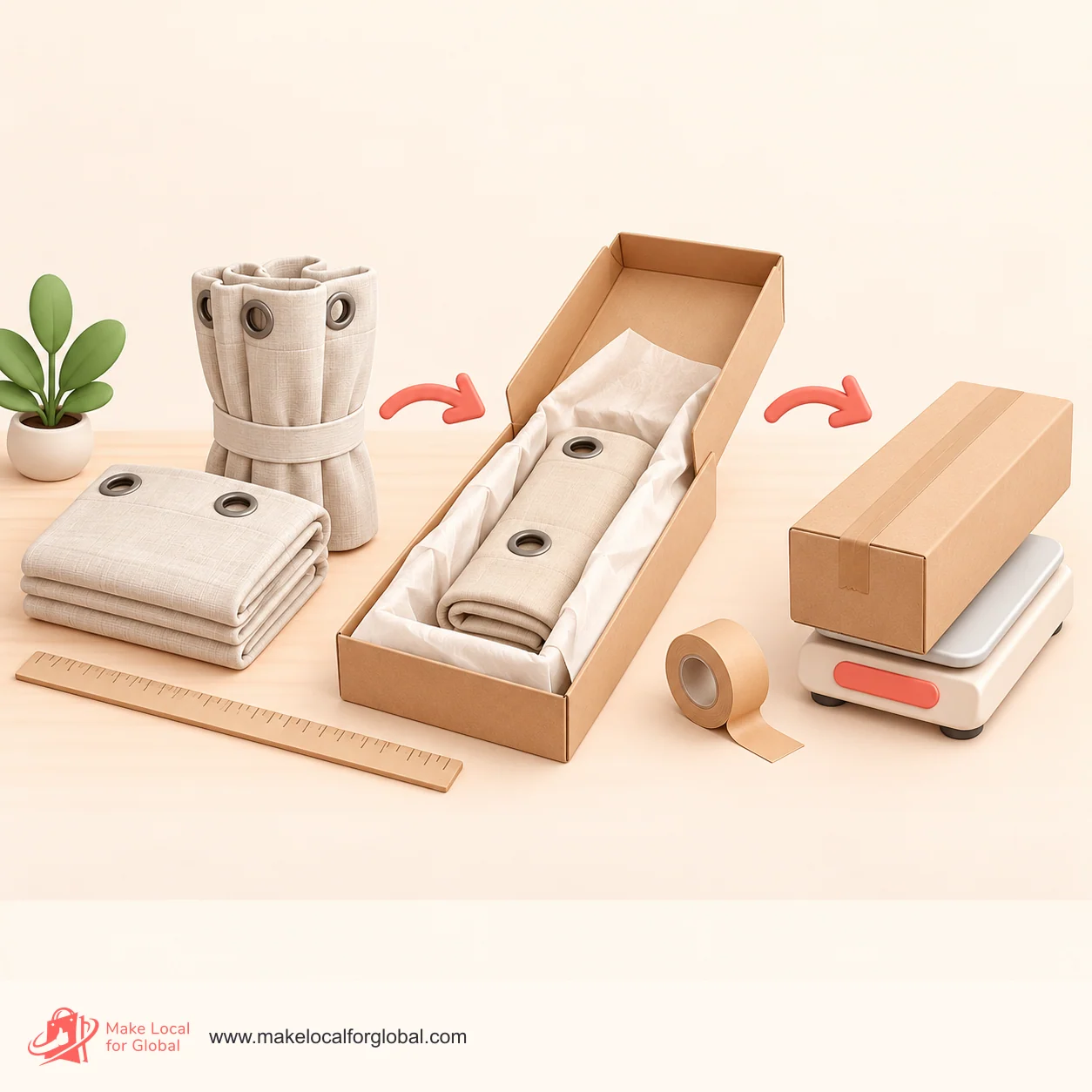
For England, Scotland and Wales, textile labelling guidance says labels must show fibre content; products with components that have different fibre contents may need each shown. Manufacturers and retailers share responsibility for the requirements. Check the current GOV.UK textile labelling guidance and seek advice for your product and sales territory. Northern Ireland has separate product rules for some matters.
Product safety responsibilities can apply whether you make, import, distribute or sell curtains. General product safety rules for Great Britain and Northern Ireland differ; GOV.UK says EU Regulation 2023/988 applies in Northern Ireland from 13 December 2024, while the General Product Safety Regulations 2005 continue to apply in Great Britain. Read the OPSS business product safety advice and the specific Northern Ireland guidance. Keep supplier records, product identification and safety information relevant to the item.
Online sellers must show key information before purchase, including the product description, total price, delivery terms and cancellation information. For most eligible online goods, a customer can tell the seller they wish to cancel within 14 days after delivery. Exceptions exist, including some goods made to a customer’s specifications. Check the current distance selling rules and returns guidance before writing your policy. Curtains sold to hospitality venues may have additional fire-safety expectations; do not advertise fire performance without evidence for the relevant item and buyer setting.
A marketplace can help test product photos and search demand with a limited range, though fees and listing rules affect the margin. A standalone shop gives you more control over measurement help, swatch requests and product education. You can start with one sales channel and a clear fulfilment routine, then add another once you can answer common fit questions and dispatch orders reliably.
Test specific searches such as “lined curtains 168 cm drop”, “ready-made blackout curtains pair” and “linen-look curtains for a small bedroom”. Use these phrases naturally in product titles, headings, image descriptions and helpful questions. Publish a short measuring demonstration, a fabric comparison and a room photo with the heading visible. Track product-page views, sample requests, cart starts, completed orders, fit questions and returns each week. If people click but do not order, ask whether price, size, colour certainty or delivery details are blocking a decision.

Yes. Begin with physical samples and a narrow ready-made range, or test made-to-order supply with clear lead times. Cost photography, packaging, returns and shipping before you buy stock. Do not take payment for items you cannot supply within the date shown.
Ready-made curtains are simpler to list and fulfil, with fewer customer measurement steps. Made-to-measure options can serve buyers with unusual windows, but need accurate ordering, measurement confirmation, production checks and clear cancellation terms.
Choose styles that match the buyer interviews and supplier evidence. A small set might include a light-filtering option, a lined everyday pair and one tested specialist style. Keep the number of sizes and colours low until the first orders show what people ask for.
Explain size, panel quantity, fullness, heading, lining and what hardware is included. Show the curtain in a room and close up. Give a practical measuring method, accurate colour notes, care instructions, delivery timing and returns terms before checkout.
Textile labelling rules apply to sellers in England, Scotland and Wales, with fibre content shown on the label. Requirements can vary by territory and product construction. Check current official guidance for the item you plan to sell and where you will send it.
A curtain shop becomes easier to run when every listing answers the same key questions: what is included, how it fits, what it is made from, how it is cared for and what delivery costs. Start with a small, testable range and let real customer questions guide the next order. If the shop needs product-page or website support, see MLFG website design or contact the team.
Turn your measurements, fabric notes and delivery plan into a shop customers can use with confidence. Explore website support or ask MLFG about the next step for your product range.
PREFERRED SOURCE
Like what you’re reading? Add Make Local for Global as a preferred source on Google to see more of our articles when you search.

Build your online presence without having to figure out everything yourself.