

READY TO SELL Dessert Plates ONLINE?
Get a store built for you in 5 days, plus training and support to help you start, run, and grow your Alternative business.

Plan a dessert-plate range with product checks, food-contact evidence, a worked order-cost example, careful packing and a practical first-month launch.


Dessert plates are small enough to look simple in a product photo, yet a parcel can arrive with a chipped rim, a glaze that differs from its listing, or a shape that does not stack in a real kitchen cupboard. A new seller has to get the product, proof of food contact suitability, packing method and delivered price right at the same time.
Yes, you can sell dessert plates online through a focused tableware shop, a marketplace or your own ecommerce site. Begin with a clear buyer and use case, compare a small number of plate styles, inspect samples and test the packed parcel before committing to a large order. Your listing should show the plate’s diameter, usable surface, height, weight, care instructions, set contents and the evidence behind any food-safe or dishwasher claim.
This article sets out a practical route from product choice to first orders. It covers plate types and materials, supplier checks, UK food-contact and consumer responsibilities, a worked cost example, product-page content, photography, fulfilment, stock decisions and a first-month launch test.
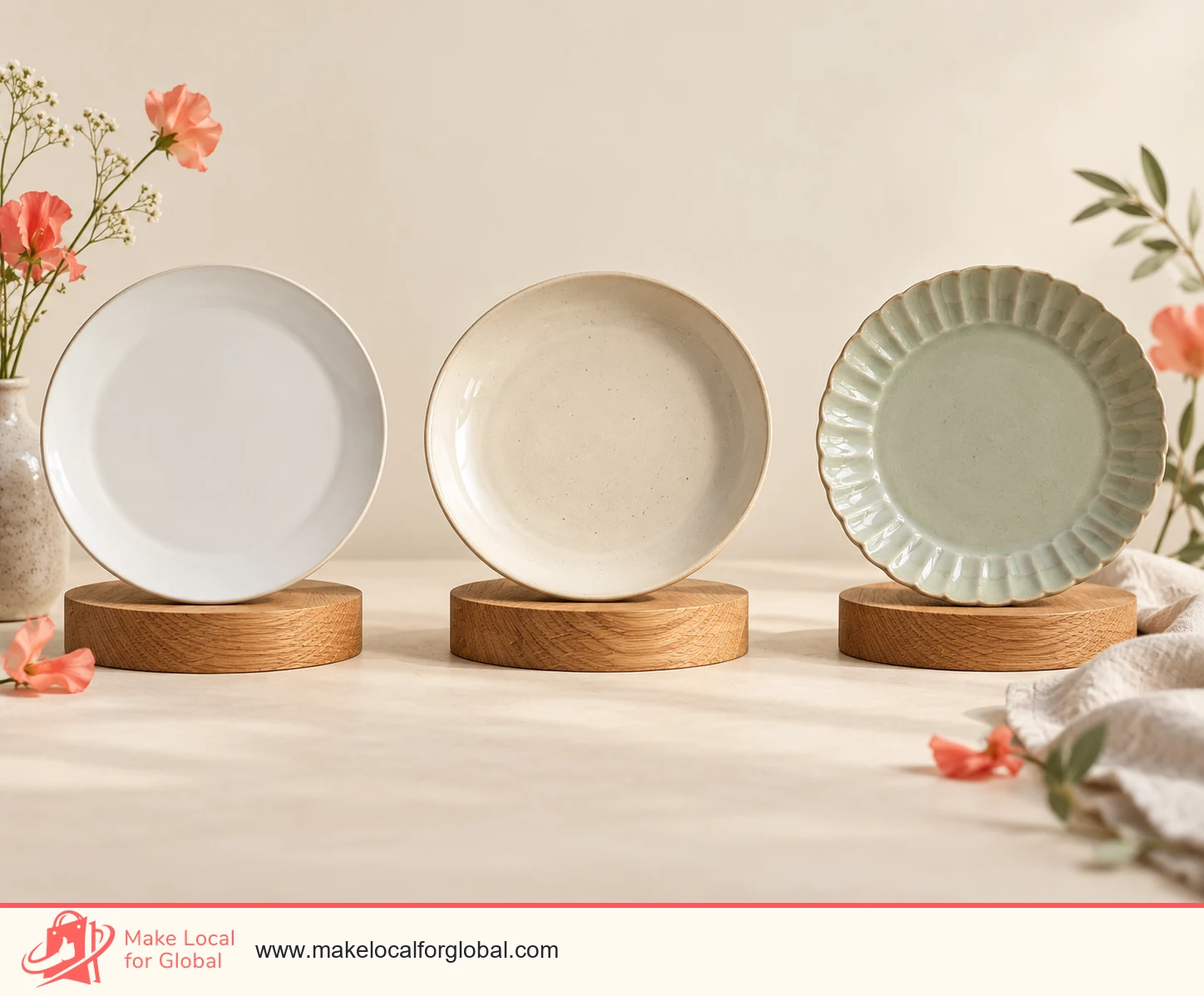
“Dessert plate” can describe a small side plate, a cake plate with a raised rim, a shallow coupe, a decorated piece for gifting, or part of a coordinated dinnerware set. Each format suits a different meal and home. A clear first buyer helps you decide which form, diameter, material, finish and pack size to test.
Write one buyer statement before opening supplier catalogues. Examples include a set of everyday cake plates for a first flat, a pair of handmade plates for serving pastries, a compact set for a small household, or a coordinated gift for someone who enjoys afternoon tea. These are hypotheses. They are not proof that people will buy.
Ask people who match the intended buyer what they serve on a small plate, how many they use at once, where they keep them and what frustrates them about their current plates. Ask whether they have bought tableware online recently and what helped them trust the listing. A recent purchase and a concrete storage or serving problem give you more useful information than a polite response to a mood board.
Use short interviews, a small survey or conversations at a local craft or food event to understand the occasion. Ask buyers to compare two or three concept cards with accurate dimensions, material and indicative delivered price. Record which details change their choice: a wide rim for cake, a low edge for small desserts, a stackable shape, a glaze colour, or a two-piece rather than four-piece pack.
Keep the questions neutral. Instead of asking “Would you buy these?”, ask what the person uses now, when they last bought plates, how many they purchased, what they paid and whether a plate arrived damaged. Ask what they would need to see before ordering another set. These answers may point to a practical gap, such as missing underside photographs or unclear pack quantities.
Observe the language people use. A buyer may search for cake plates, side plates, small plates, tea plates, dessert plates or a particular style. Use these phrases as research notes, then describe the product accurately. Do not add every related phrase to a page if the shape or use does not match.
Create a simple landing page, a marketplace draft or a waitlist with truthful product details. Show whether the item is a sample, in stock, made to order or not yet available. Do not take money for goods you cannot supply on the terms shown. Track qualified enquiries, requests for a colour or size, waitlist sign-ups and paid orders separately.
A useful concept test compares a few distinct offers rather than many tiny variations. For example, compare an everyday four-plate set, a two-plate gift pair and a mixed set of two patterns. Use the same photo quality and price context for each. If one receives more interest, ask why before interpreting the result. A picture may attract attention, but repeat questions about delivery or safety may show that the product page needs clearer proof.
Set a limit on the test before you begin. Decide how much you will spend, how long you will collect responses and what evidence would justify ordering samples. A test with ten meaningful conversations can uncover confusing dimensions or packaging concerns, but it cannot predict the total market. Treat it as a way to improve the next decision, not a sales forecast.
Choose your dessert-plate offer before you order stock
Compare plate shapes, pack sizes, food-contact evidence and full delivered costs.
Begin with a few products that serve one buyer or occasion. A broad catalogue of unrelated tableware creates more supplier checks, photographs, stock variants, packaging sizes and customer questions before you know which offer works.
| Range role | Dessert plate example | Buyer question | Evidence to show |
|---|---|---|---|
| Entry item | Pair of plain cake plates | Can I try the style without buying a full set? | Exact quantity, diameter, finish and packed contents |
| Core item | Four matching plates | Does this cover the way I usually serve dessert? | Plate count, dimensions, stack height and care guidance |
| Gift item | Decorated pair in a gift box | Will it arrive ready to give? | Box contents, wrap quality, gift note options and dispatch timing |
| Mix-and-match item | Set of two colours or patterns | Do the designs work together on the table? | Actual colour photographs and variation notes |
| Premium item | Hand-finished or small-batch plate | What makes this piece different? | Maker, process, finish variation and truthful care details |
These are possible roles, not a required number of listings. Two well-tested products can be a better opening range than a dozen colours with uncertain demand. If you use a bundle, state the exact number of plates, pattern mix, packaging and accessories. Show the saving calculation only where the individual prices were genuinely offered.
Flat plates with a subtle rim are easy to serve and stack, though the rim reduces the flat area available for food. Coupe shapes have a gently curved edge and can give soft desserts a little containment. A raised rim may help with fruit or sauce, but affects the plate’s height and cupboard fit. A scalloped or fluted edge can create a decorative look, but the shape and rim thickness should be shown clearly in the listing.
Do not assume that a supplier’s name for a plate describes the same size used by another seller. Compare actual diameter, usable flat area, height and rim profile. Use a ruler in product photographs or a simple size diagram so a shopper can understand scale. If a plate is sold for cake, pastry or small meals, describe that use as a suggestion rather than a guarantee about portion size.
Single plates, pairs and four-piece sets each have different order economics. A single can suit replacement or collecting, but the packaging cost may take a large share of its selling price. A pair can work as a gift or small household offer. A four-piece set can spread fixed parcel costs over more items, though it carries more weight and breakage exposure. Test each offer in the actual shipping carton before deciding which is practical.
Each colour, pattern, size and pack count creates another variant to describe and track. Three patterns across two pack sizes already create six combinations. Each can require its own stock count, image, barcode or supplier order line. Begin with the options that buyer conversations support and add more only when requests or purchases provide a reason.
For handmade or reactive-glaze ceramics, explain that small differences may appear between pieces if that is true of the product. Do not use this wording to excuse defects, major colour shifts or inconsistent quantities. Photograph several plates from the same production run and explain what variation a buyer may see. If the listing shows a plate with a specific rim mark, food styling or stand, say whether those items are included.
Write down the version you sampled: supplier, model or SKU, dimensions, declared material, finish, date received and test observations. When the next batch arrives, compare it against the record. A supplier can change a glaze, clay body, mould or packaging without the product page changing automatically.
The material affects weight, edge strength, appearance, price, stacking, cleaning and shipping. Ask the supplier for the exact composition and production details of the model you plan to sell. Do not infer that a plate is porcelain, stoneware, bone china or handmade from a photograph or a broad shop category.
Porcelain is often presented as fine and smooth, but thickness, body, firing and shape vary by product. A thin edge may be more vulnerable in transit than a heavier profile. Ask for the model’s net weight, rim thickness if available, dimensions and packaging information, then examine a physical sample.
Stoneware can have a substantial feel and varied glaze styles. Surface texture, foot ring, glaze coverage and stacking shape differ across products. Look at the underside and rim, not only the top. A rough foot ring can mark a plate beneath it, and an uneven base can wobble on a table.
Earthenware includes products with different bodies and finishes. Do not assume that a material category alone tells you durability or food-contact compliance. The finished article, its glaze, decoration and intended use matter. Get documentation for the exact product and intended market, then consider independent testing when the supplied evidence is unclear or inconsistent.
Some sellers may compare glass, enamelled metal or other plate forms with ceramic options. Each creates different care, weight and safety questions. Glass can chip or break; metal may scratch or react with particular foods if unsuitable; a coating can wear. Ask the supplier what the product is made from, what foods and uses it is intended for, and what cleaning instructions apply.
Wood or plant-fibre serving pieces may appear in the same online search results, but they are not interchangeable with a glazed ceramic plate. If you sell them, research their own food-contact, cleaning and care requirements. Keep your product claims tied to the tested item and avoid saying “food safe” based solely on a generic supplier message.
Inspect the glaze for pinholes, cracks, crawling, sharp edges, uneven colour, exposed body and marks on the food-contact surface. Check that decals or metallic decoration are positioned and described accurately. If a product is not suitable for a microwave, dishwasher or oven, make that limitation visible before checkout.
Ask for evidence behind claims such as lead-free, cadmium-free, dishwasher-safe, microwave-safe, chip-resistant or suitable for hot food. Require the evidence to identify the specific product, glaze and supplier. A certificate for a different line or a material safety sheet for raw ingredients may not demonstrate that the finished plate performs as claimed.
Use cautious, clear listing language. If the manufacturer states a plate is dishwasher safe, keep the document and identify the model it covers. If the instructions recommend handwashing, repeat that direction. Use claims such as “unbreakable”, “scratch-proof” or “non-toxic” only when evidence supports them and they accurately describe foreseeable use.
Plates that touch food are food-contact articles. Treat supplier paperwork, traceability and claims as part of product selection, not as a task to postpone until after you buy stock.
In Great Britain, food-contact materials are subject to general requirements and specific rules. Ceramic articles have additional rules on lead and cadmium migration and declarations of compliance. The ceramic articles rules cover England and Wales, with separate regulations for Northern Ireland. Check the rules for the territory where you place products on the market and for any country to which you export.
The legislation for ceramic articles addresses limits on the transfer of lead and cadmium from ceramics intended to contact food, testing and a written declaration at relevant marketing stages. Ask the supplier for a declaration of compliance and supporting test information for the exact item. Keep the record with the invoice, SKU and batch details. If the supplier cannot identify the tested article or glaze, pause the purchase and ask for clarification.
General food-contact requirements apply to other materials too. The material must not transfer constituents to food in quantities that could endanger health, cause an unacceptable change in food composition or impair taste and smell. A seller should not create a safety statement based on a product title. Request records from the manufacturer or importer and check the rules for the material and destination.
General product safety obligations can apply to consumer goods in addition to food-contact laws. The Office for Product Safety and Standards guidance describes the general safety duties for producers and distributors in Great Britain. Northern Ireland has a different general product safety regime following changes that took effect in December 2024. Keep records of your supplier, product identity, batches, complaints and any action taken if a hazard or defect is reported.
Online sales bring consumer information and cancellation duties. Before a customer orders, give a clear description, total price, delivery costs and timing, business contact details, payment information and applicable cancellation information. Distance-selling customers usually have a 14-day cancellation period after receiving goods, subject to the rules and exceptions. GOV.UK’s returns guidance explains when a customer can cancel and receive a refund; distance-selling guidance lists information to provide before an order. Check current official guidance for your sales territory before publishing the policy.
This is a starting checklist, not legal advice. Rules can differ between Great Britain, Northern Ireland and overseas markets. If you import plates, private-label them or sell a design with uncertain documentation, get qualified product-compliance advice before placing a commercial order.
Possible sourcing routes include a UK wholesaler, a specialist tableware distributor, a pottery studio, an importer, a manufacturer or a private-label supplier. Each route affects minimum order quantities, lead time, design control, documentation, unit cost and who can answer a product-safety question.
Start a supplier comparison sheet with the same questions for each candidate. Ask for the current catalogue page, product code, material, dimensions, piece weight, carton quantity, minimum order, sample price, lead time, country of manufacture, shipping terms, packaging specification, replacement policy and food-contact records. Note whether answers refer to the exact item or only to a broad range.
If ordering from a wholesaler, ask whether the stock is already held locally, whether batches may differ, and how quickly damaged units can be replaced. If sourcing directly from overseas, include freight, customs, duties, insurance, import administration, cash tied up during transit and the time needed to resolve a problem. A low unit price does not show the total landed cost.
Ask how each plate is packed at the factory and whether dividers, sleeves or protective corners are included. Request carton dimensions, gross weight, pieces per carton and photos of the packaging. For a private-label order, ask who is responsible for the compliance declaration and what name or address must appear on the product or packaging. Keep written answers linked to the supplier’s model number.
Buy one or more samples before placing a stock order. Photograph the parcel before opening it, then record whether the outside carton is dented, wet or punctured. Open it carefully and note how the supplier immobilised each plate. These observations help you distinguish factory packing weaknesses from the design of your own outbound parcel.
Check the sample under bright, even light. Inspect the top, rim, underside, foot ring and decoration. Use a flat surface to check for wobble. Look for cracks, chips, glaze pinholes, rough spots, exposed ceramic, sharp points and marks that may transfer to another plate. Compare multiple pieces if the product will be sold as a set.
Measure diameter at more than one point, height, rim width, weight and stack height. Record actual measurements beside supplier specifications. If plates do not stack securely, test the full set you expect customers to buy. A neat stack of two may shift when six are placed together.
Follow only the care and use tests supported by the supplier’s instructions. Do not improvise high-temperature, impact or chemical tests that could damage a sample or expose you to risk. If dishwasher or microwave claims matter to the offer, seek documented test support for the model. Record the instructions and any observed change in finish, colour or stability after ordinary permitted use.
Use a repeatable scorecard so your choice does not depend on which sample looked best in one photograph. Score each item from one to five and add notes rather than relying on the total alone.
| Check | What to record | Why it matters |
|---|---|---|
| Dimensions | Diameter, height, rim and stack height | Confirms the listing and cupboard expectations |
| Surface | Glaze consistency, pinholes, decoration and foot ring | Finds visible defects and finish variation |
| Stability | Wobble, nesting and stack movement | Helps assess table use and storage |
| Weight | Individual and packed parcel weight | Affects handling and shipping cost |
| Evidence | Declaration, tests, model identity and care claims | Supports accurate food-contact information |
| Packaging | Dividers, movement, corner protection and carton condition | Points to breakage risks before dispatch |
| Supplier | Response speed, batch records and replacement terms | Indicates how issues may be resolved |
Reject a sample with an unresolved crack, sharp edge, unclear material or missing safety documentation. Do not lower the standard just to justify a sample fee already paid. The sample can prevent a much larger mistake.
Plan the sample, parcel and first sales test
Bring plate checks, packaging tests, full order costs and the launch measure into one practical plan.
Tableware can look profitable when you compare the selling price with a unit quote. That calculation leaves out the costs that appear between supplier and customer. Build a cost sheet for each pack size and use a current quote for postage, packaging and marketplace fees.
The example below is illustrative, not a supplier quotation or earnings forecast. Assume a four-plate set sells for £42.00 including standard UK delivery. The seller is not VAT registered for this example, and figures are simplified. A real business should use its own tax position, payment terms, fees, damage history and shipping quote.
| Per order item | Illustrative cost |
|---|---|
| Four plates at £5.20 each | £20.80 |
| Inbound freight and import allocation per set | £2.40 |
| Protective carton, dividers and paper wrap | £2.10 |
| Parcel delivery to customer | £4.25 |
| Marketplace and payment costs, assumed for illustration | £4.20 |
| Damage and return allowance | £1.50 |
| Customer acquisition allocation | £2.00 |
| Total variable order cost | £37.25 |
| Customer payment | £42.00 |
| Contribution before fixed overhead and tax | £4.75 |
The arithmetic is: £42.00 − (£20.80 + £2.40 + £2.10 + £4.25 + £4.20 + £1.50 + £2.00) = £4.75. This contribution is not net profit. It does not include photography, sample purchases, insurance, bookkeeping, storage, software, owner time, corporation or income tax, or other fixed costs. Replace every assumption with your own numbers before setting a price.
A plate order may be returned after a change of mind, a wrong expectation or a defect. Some returns can be resold after inspection; others may be unsellable. Estimate the cost of return postage where you pay it, inspection time, replacement packaging, refunds, customer support and the value of damaged goods. Do not assume that every returned plate can re-enter stock.
Use a conservative allowance until you have order history. For example, if you expect one damaged set in every 40 parcels and the landed replacement cost is £24, the expected product-loss cost is £0.60 per order before extra postage or support time. That is a planning assumption only. Review it against your own recorded incidents and update it when you have evidence.
Check channel fees from current official pages before modelling the price. Marketplace percentages may apply to delivery charges, and payment processing or advertising may add separate costs. Fees can change and vary by country, account and service. Put them in separate rows so you can replace a rate without rebuilding the spreadsheet.
If you are VAT registered, distinguish the price the customer sees, VAT collected and costs where VAT can be reclaimed. Do not treat VAT as revenue. Ask an accountant or use current HMRC guidance for your situation. For exports, model duties, VAT, delivery and returns separately for each target market.
Compare similar items, but do not copy a competitor’s price without checking the offer, brand, packaging, shipping and quality. A handmade plate and a mass-produced plate may have different costs and buyer expectations. A low price can become an expensive offer if the set needs thick protective packaging or has a high replacement rate.
Calculate the contribution at several plausible selling prices. Add a small sensitivity table for postage, fee rate, breakage and acquisition cost. Ask what happens if the parcel costs £1 more to ship or the promotion raises acquisition cost. If a small change removes the contribution, the range may need a different pack size, sourcing route or price.
Show delivery costs before checkout and avoid hidden extras. If you offer a gift box, make it clear whether it is included or optional. A transparent price helps buyers compare the complete purchase and reduces surprises at the final step.
A plate listing should help a person picture the item at the table and understand whether it suits their cupboard, meal and care routine. Start with a precise title such as “Hand-painted blue floral dessert plates, 20 cm, set of two” only when every detail is accurate. Do not state “hand-painted” if the pattern is printed.
Write the first paragraph around the plate’s use, material and pack quantity. Follow with a specification list that includes:
Avoid using “set of four” in a way that makes the customer think cutlery, stands, napkins or food are included. If a serving photograph contains props, state which items form part of the order. Put the count in both the product title or variant selector and the specification area.
Use a clean overhead image to show the shape and pattern, a side angle to show rim and depth, and an underside photo to show the foot ring or maker’s mark. Include a dimension image with a ruler or diagram. A hand, cake slice or standard object can give a sense of scale, but it should support rather than replace exact measurements.
Photograph several units if glaze or handmade variation is expected. Use honest lighting and avoid editing colour so heavily that the product looks unlike the delivered item. A thumbnail can communicate the category and a few useful checks; detailed product photos should help a shopper inspect the actual finish and pack contents.
For a set, show the full quantity clearly. Photograph one plate alone and the full stack or arrangement. If you offer several patterns, use a dedicated image for each selectable option. A buyer should not need to infer which colour will arrive from a group photograph.
Use the main phrase naturally in the title, first section and metadata where it reads well. Related phrases may include cake plates, side plates, small dessert plates or ceramic dessert plates, but only when they describe the actual item. Make each page distinct if you offer different shapes or patterns. Reusing identical copy across every design gives shoppers little reason to compare the products.
Use headings for decisions a new seller must make: choosing a shape, checking a sample, calculating parcel costs and writing a listing. Add descriptive image text for accessibility. The alt text should identify what the image shows, not repeat a string of search terms. Keep product details consistent between photos, variant labels, dimensions and checkout.
Answer common questions near the purchase area: What arrives? How large is each plate? Can the set go in a dishwasher? How is it packed? Is the pattern identical on every plate? What happens if an item arrives damaged? Only give the answer your product record supports.
Design packaging around the shape and likely parcel handling. Ceramic plates are vulnerable at edges, so the packed stack needs separation, restraint and cushioning. A box that is too large lets pieces move; a box that is too tight can place pressure on rims. Test a full order using the packaging you plan to send. For another fragile homewares example, see our guide to selling candle holders online.
Use clean materials intended for shipping the product. Protect each plate with an appropriate sleeve or separator, cover the rim, and stop movement between items. Fill empty spaces without putting concentrated pressure on a single point. Keep the stack centred and test whether it shifts when the sealed carton is gently moved in each direction.
Do not use a single drop test as proof that every parcel is safe. Follow carrier guidance and seek packaging advice for fragile goods. Use a repeatable internal test appropriate to your operation, record the carton and packing method, and inspect a sample after the test. The goal is to identify weak points, not to claim an item is damage-proof.
Measure the final carton and weigh it with all inserts. Check carrier size bands, maximum weights, surcharges and compensation limits. Confirm whether the service accepts fragile items and what evidence is required for a claim. Consider tracking or signed delivery for higher-value sets, but include the cost in the price model.
Photograph the packed order before sealing, especially for a new packing method or a valuable order. Keep the order number, batch or supplier lot, parcel dimensions, weight, carrier and dispatch date together. If a customer reports a break, ask for the information needed to understand where the failure occurred and respond in line with your terms and legal responsibilities.
Publish a clear return policy that matches current consumer law. A change-of-mind cancellation is not the same as a damaged or misdescribed product. Explain how a buyer can contact you, how to return an item and what happens if a plate arrives broken. Avoid blanket “no returns” language for online sales.
When damage is reported, respond calmly and ask for photos of the item and outer packaging if they help establish what happened. Do not delay a valid remedy during a carrier claim investigation. Record the issue, check whether the same batch or packing method has produced similar reports and decide whether to pause a listing or supplier order.
If an item is returned, inspect it under a consistent process. Separate unopened, resaleable stock from used, chipped or uncertain pieces. Do not quietly return a damaged item to the shelf. Update your damage allowance and packaging notes using actual cases.
A marketplace can provide product discovery and familiar checkout, but its fees, listing rules, customer relationship limits and policies shape the offer. A standalone shop gives you more control over branding, product education and bundles, but you are responsible for bringing visitors and maintaining the store. A local craft fair or pop-up can let buyers handle a sample and give direct feedback, though in-person selling has its own costs and stall conditions.
Choose one main sales channel for the first test. Keep stock counts in one source of truth and make sure sold-out variants are removed or clearly marked. If you list the same set on several channels, account for orders immediately so you do not sell the last unit twice.
Create practical content that answers a tableware question. Show how to compare a plate’s diameter, what fits in a small cupboard, how a set is packed, or how different rim shapes work with cake and fruit. Use real samples and accurate dimensions. A short video can demonstrate stack height or the underside finish, but it should not imply care or safety performance that you have not verified.
For local outreach, approach independent bakeries, tea rooms, gift shops or event planners only when the design and order quantity fit their needs. Ask whether they buy tableware, what sizes they use and what evidence they request. Do not assume that a business wants wholesale stock simply on account of its dessert service. A buyer may need a different durability, price, replacement and invoicing arrangement.
Track visits, add-to-cart actions, questions, orders, average pack size, delivery cost, damage reports and returns. A high number of visits without orders may point to price, trust or product-page clarity. A sale followed by repeated questions about the pattern can reveal an unclear option selector. Use records before adding more advertising spend.

Fragile stock ties up space and cash. Start with a quantity that you can store safely and inspect. Keep cartons off damp floors, protect them from impact and label each design and batch. Avoid stacking heavy cartons beyond supplier guidance or placing weight on exposed plate rims.
Use a stock record that includes product code, pattern, pack count, supplier, received date, quantity, sample status, defects and reorder lead time. Count saleable sets, damaged pieces and samples separately. If a set loses one plate, record whether the remaining pieces can be sold as singles or whether they should be held for replacement use.
Set a reorder point based on actual demand, supplier lead time and cash available. Do not reorder only after compliments or saved posts on a listing. Check paid orders, contribution, breakage, return reasons and remaining shelf life of the design. A new pattern can create more choice, yet it can leave cash sitting in a slow variant.
Plan for replacement pieces. If a supplier sells plates only by carton, find out whether single replacements are possible. A replacement policy can help a customer, but the cost and stock availability need to be planned. Do not promise a replacement timeframe that depends on an unconfirmed supplier.
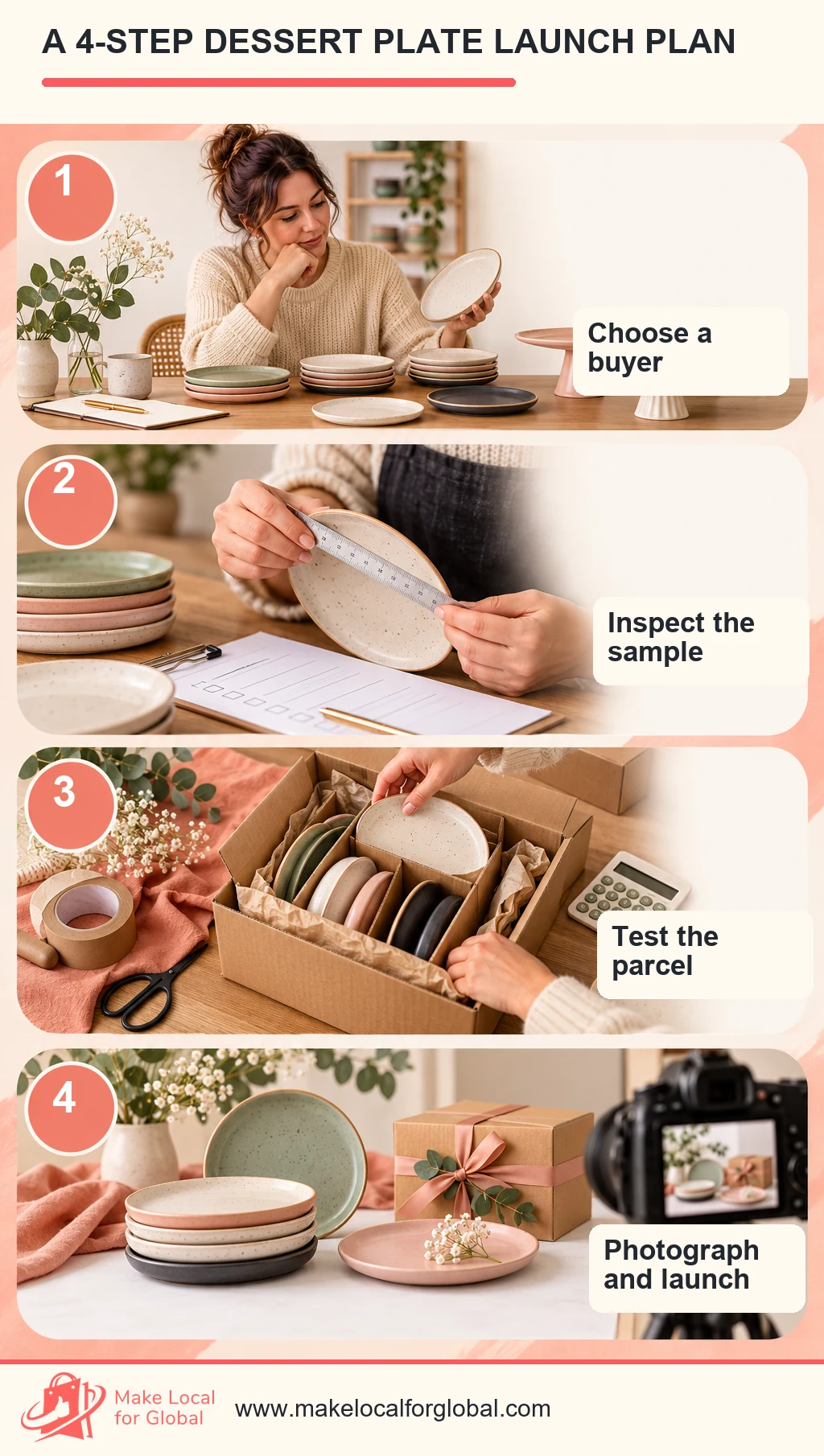
This plan keeps the first commitment small. Adjust the timing for the supplier’s sample and production lead time. The point is to complete checks in order and use what you learn.
Write one buyer statement and list three serving occasions. Speak with five to ten likely buyers. Ask what they use now, pack size, cupboard space, preferred shape, price expectations and what they need to see when ordering online. Record exact language and objections.
Shortlist two or three product concepts. Ask suppliers for the exact product code, dimensions, material, care details, food-contact records, minimum order, sample price, carton information and lead time. Remove options with unclear product identity or no usable documentation.
Order samples and record their condition on arrival. Measure each plate, inspect the glaze and foot, test the stack and compare the supplied information. Ask a second person to review the sample and listing details without being told which product you prefer.
Pack a test order using the carton, dividers and protection you plan to use. Weigh and measure the sealed parcel, review carrier terms and check the contents after a controlled internal handling test. Revise the packaging if plates touch, shift or put pressure on the rim.
Replace illustrative values in your cost sheet with current supplier, freight, packaging, channel, delivery and return estimates. Calculate contribution for the pair, four-piece set and any gift option. Include customer acquisition and a breakage allowance. Check what happens if delivery or advertising costs rise.
Photograph the sample from above, side, underside and in a full set. Prepare a dimension diagram and identify what is included. Write accurate titles, specifications, care instructions, returns information and answers to common questions. Ask a person unfamiliar with the product to choose the right pack and tell you what will arrive.
Publish a limited quantity or a clearly described made-to-order offer. Tell early customers how long dispatch takes. Share one useful demonstration of size, packaging or table setting with the audience you identified. If you run a paid test, set a maximum budget first and track its cost by order.
At the end, review orders, questions, conversion, contribution, damage, returns and customer comments. If visitors ask about plate size, improve the diagram. If damage occurs at the rim, adjust the separator or carton. If one pack size sells and another does not, compare its contribution and storage cost before reordering. Add a pattern only when it answers a supported buyer request.
Yes, but check product safety, food-contact documentation, accurate product descriptions and online consumer information before selling. Ceramic plates have specific lead and cadmium migration requirements. Confirm the current rules for Great Britain, Northern Ireland and any export destination that applies to your business.
There is no single size that all suppliers use for the term. Measure each model and publish its actual diameter, height and usable surface. If you compare it with a familiar item, use that example only as a visual aid rather than a substitute for dimensions.
Choose a material that suits the buyer, price and care needs, then verify the exact sample and documentation. Porcelain, stoneware and earthenware can differ in thickness, glaze, weight and shape. A material name alone does not prove food-contact suitability or durability.
Test the pack sizes buyers use and model the packaging and delivery costs for each. A pair may suit gifting or a small household; a four-piece set may better match repeat use. Select based on buyer evidence and the contribution after variable costs, not an assumed standard.
Separate plates, protect rims, prevent movement and test the packed parcel using the actual carton and inserts. Check carrier size limits and compensation terms. Record the packing method and review every damage report before reordering.
Use the claim only when the manufacturer’s documentation supports it for the exact model and finish. Keep a copy of the evidence and repeat any care limitations clearly. Do not infer performance from the material category or from a different product in the same collection.
Request the product code, material, dimensions, weight, intended use, care instructions, food-contact declaration or test evidence, minimum order, sample terms, carton details, lead time and damage or replacement process. Keep the response connected to the model and batch you buy.
Add unit cost, inbound freight, packaging, customer delivery, channel and payment fees, breakage and return allowance, and acquisition cost. Compare the full variable cost with the price paid by the customer. The remainder is contribution before fixed overhead and tax, not net profit.
Show the plate overhead, from the side and underneath, plus the complete set and a dimension reference. Photograph each selectable colour or pattern accurately. State whether props and gift boxes are included.
Yes, if the maker can provide consistent product information, safe food-contact evidence where required, clear lead times and a realistic replacement plan. Explain genuine finish variation and photograph pieces that represent the range. Avoid accepting more orders than the maker can fulfil.
A good first dessert-plate range starts with one serving occasion and a real buyer. Choose a small set of shapes, request evidence for the exact product, inspect the sample and test the outbound parcel. Make each listing clear about dimensions, materials, care, quantity and what arrives.
Calculate each order with the full delivery and damage cost. Keep the first stock commitment within the cash and storage you can manage. Use questions, paid orders, contribution and breakage reports to decide what to change next. A buyer should be able to choose the set, understand the care instructions and know what happens if an item arrives damaged.
Check the plate listing before opening orders
Review dimensions, material, pack count, care evidence, images, delivery and returns before inviting buyers to order.
PREFERRED SOURCE
Like what you’re reading? Add Make Local for Global as a preferred source on Google to see more of our articles when you search.

Build your online presence without having to figure out everything yourself.