
READY TO SELL Headbands ONLINE?
Get a store built for you in 5 days, plus training and support to help you start, run, and grow your Alternative business.

Choose a headband niche, check fit and fabric, compare suppliers, calculate the full order cost and test a small UK launch before committing to stock.

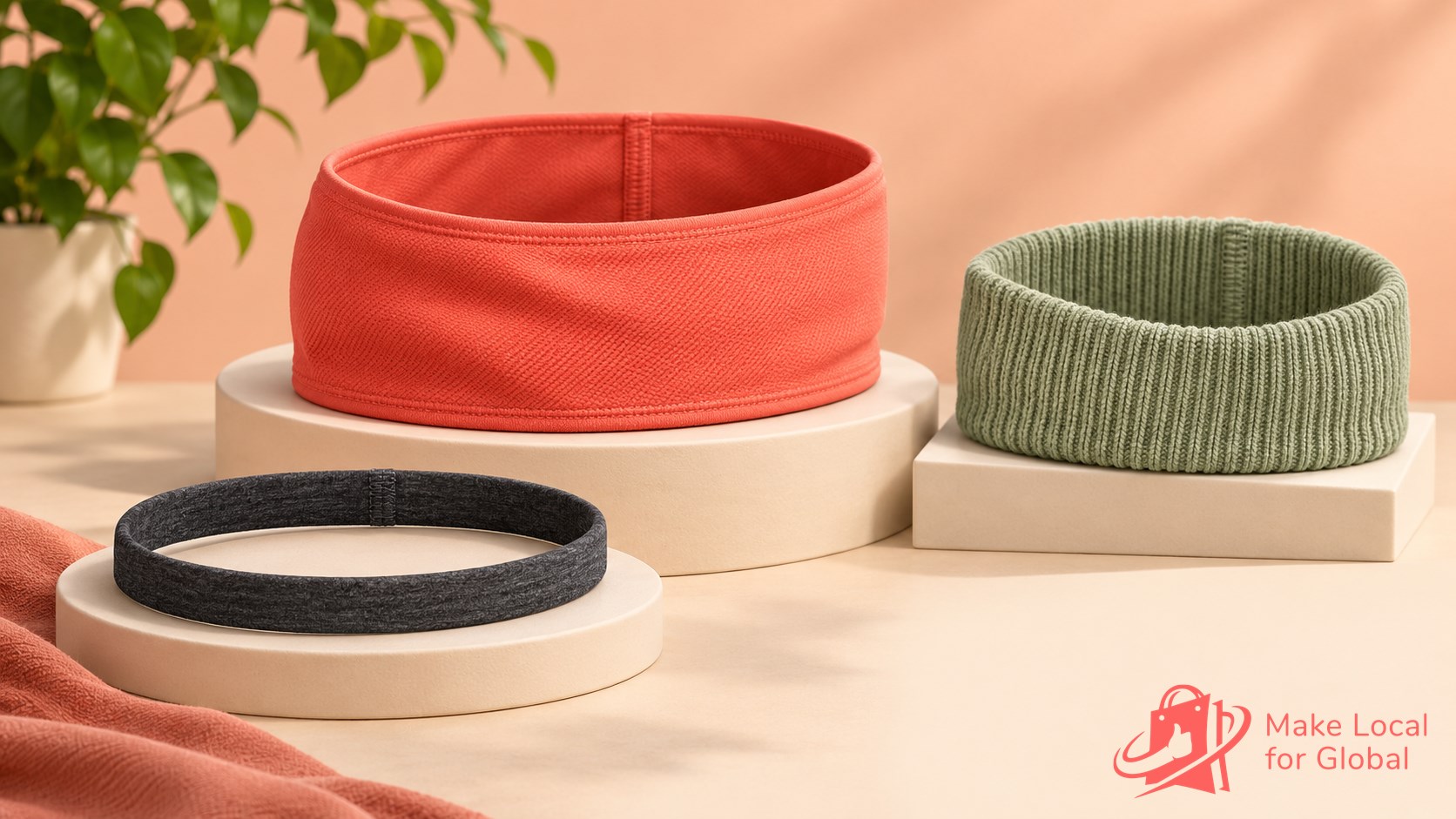
Headbands look simple on a product grid. Selling them well takes more thought: buyers need to picture the fit, understand the fabric, and know whether a band is suited to a run, a cold commute, a skincare routine or an everyday outfit. A small seller can compete through a clear use case, reliable construction and honest product information instead of listing dozens of near-identical colours.
To sell headbands online, choose one buyer and one use case first, then build a compact range around width, fabric, fit and finish. Order samples, test them after washing and repeated wear, calculate every cost attached to a customer order, and publish photos and measurements that answer the questions a buyer would ask before trying the band.
This gives a new business a manageable way to test demand. You can learn which construction people prefer before tying money up in a wide stock order.
Before placing a stock order, write down your likely buyer, the problem the headband solves and the first small test you can afford. MLFG’s free product tools can help you review the idea and its cost assumptions.
“People who wear headbands” is too broad to guide your buying, design or product page. Choose a group with a recognisable reason to buy. That reason will affect the band’s width, fabric, grip, colours, price and the information your listing must show.
Sports customers may want a soft band that keeps hair away from the face during a run, gym session or cycle. They will ask whether it stays in place when damp, whether it feels hot, and how it behaves after washing. Do not claim that a band improves performance or prevents injury. Show what the sample does in an ordinary wear test and state the limits of that test.
Everyday buyers may care more about a comfortable fit, low-profile seams and colours that work with clothing they already own. A wide fabric wrap can suit a different style preference from a slim elastic band. A twisted front or tied detail can make a product feel more like an accessory, though it adds construction points that need checking.
Cold-weather customers may look for a thicker knit or fleece-lined design. These buyers need clear information about warmth, fabric feel, care and how the band sits over or around the ears. A skincare or makeup user may prefer a soft, washable band that keeps hair back at home. These bands should not be presented as medical or skin-treatment products.
Other potential buyers include dancers, yoga students, team-sport participants, children’s gift buyers and people seeking hair accessories for a particular event. Each group brings different fit, safety, styling and stock questions. Avoid serving all of them in a single launch range. Pick one main group, then test whether a second use case shares enough product requirements to belong in the same shop.
Start with conversations that ask about past behaviour. Ask people which band they last bought, what made them keep or return it, where they wear it and what failed first. “Would you buy this?” often earns a polite yes without giving a useful signal. Ask a potential customer to compare two real samples, choose between two use cases or join a clearly described waitlist instead.
Use a small test with a defined limit. For example, show three finished sample styles to a relevant local sports club, dance group or independent clothing shop. Record how many people handle each sample, which one they choose, what they ask about fit and how many take a concrete next step. A compliment is not an order. A paid preorder, a deposit where the terms are clear, or a request for a specific restock is stronger evidence.
Online tests can compare two product page concepts, but do not treat a few clicks as proof of demand. Track the source of visits, product-page views, email sign-ups, add-to-basket actions and completed purchases separately. If traffic is tiny, the result may be inconclusive. Keep the test open long enough to include the audience’s normal buying cycle, and record what you changed between versions.
Headbands can vary by shape, fabric, width, fastening, decoration and intended use. A new seller should choose a small number of differences that customers can understand. Five options that all look and feel alike create stock and photography work without giving the buyer a clear reason to choose.
| Type | Likely buyer need | Check before listing | Range risk |
|---|---|---|---|
| Slim elastic band | Low-bulk hair control for exercise or daily wear | Stretch recovery, grip, seam feel and width under tension | A narrow band may roll or press uncomfortably for some wearers |
| Wide fabric wrap | More coverage, a softer feel or a visible outfit accessory | Coverage, heat, edge finish and whether it slips over hair | A one-size claim may not fit a broad range of head sizes |
| Knit or fleece band | A warmer accessory for cooler days | Lining, seam bulk, pilling, wash care and ear coverage | Seasonal demand can leave stock after the weather changes |
| Twist-front or bow style | A decorative piece with a more visible shape | Twist security, bulk, symmetry and how the detail sits in profile | Extra seams and joins can vary between production units |
| Adjustable or tie-back band | A way to change tension or fit | Tie length, secure fastening, comfort and snag points | More parts can add returns, repair questions or assembly cost |
Use this as a first comparison, then check the details of the actual sample and supplier specification.
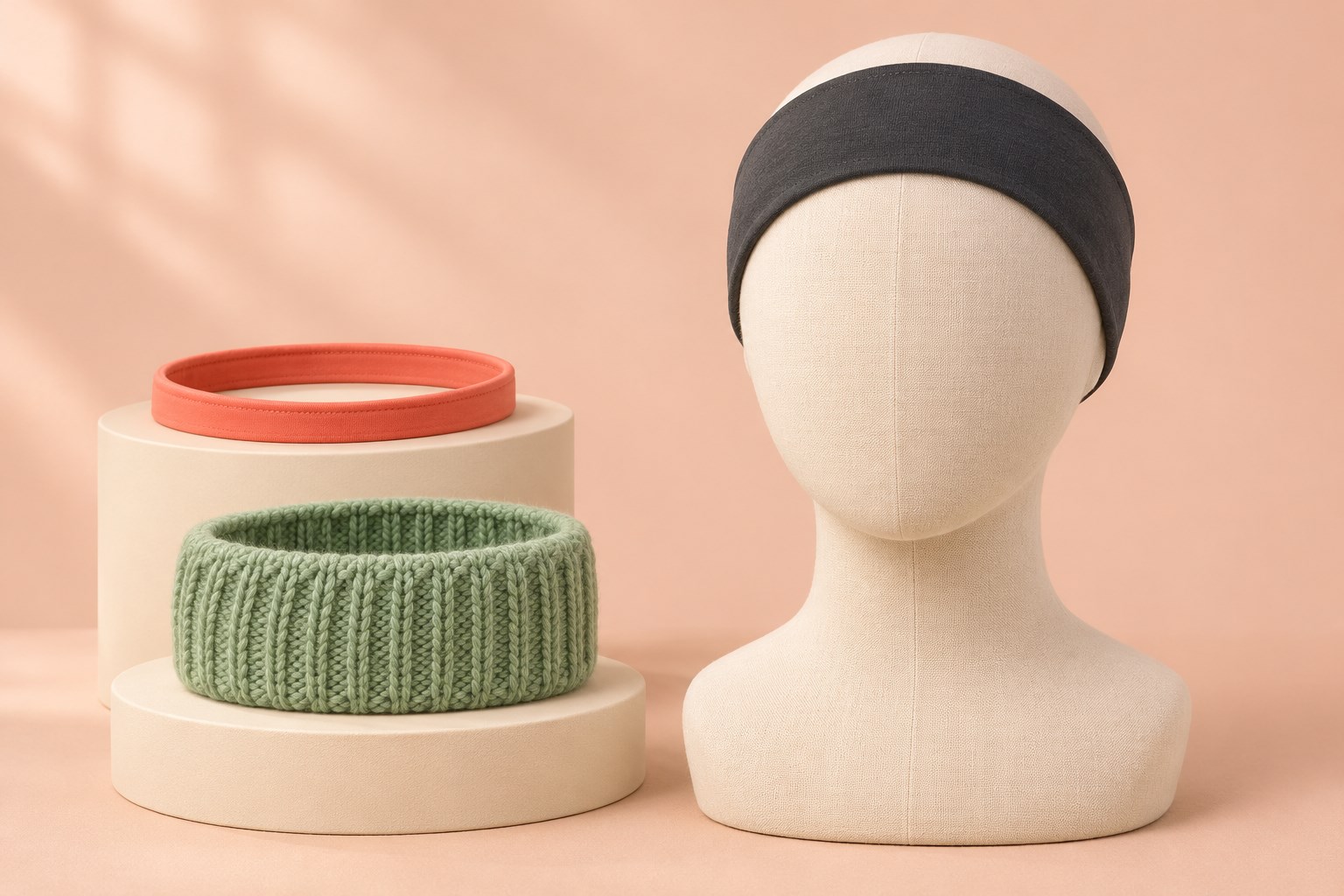
For a first collection, consider one core construction in two widths, then add one contrasting style only if it serves the same audience. A sports-focused range might start with a slim band and a wider option in two colours. A winter range might use one knit construction in two neutral shades, with a single brighter colour as a test. This makes it easier to compare customer response without multiplying every style by every colour.
Each colour, width and pattern becomes a separate stock decision. Before adding a variation, write down who it is for and what choice it gives the buyer. If you cannot explain the difference in one useful sentence, it may belong in a later test rather than the opening range.
Give each SKU a clear code that connects to the style, colour and size where relevant. Keep the code on the supplier order, stock record, product page and returns note. A simple code such as “SP-WIDE-COR” may represent a wide sports band in coral. Do not rely on a colour name alone when similar shades or multiple batches are in stock.
Decide whether a bundle solves a real buying problem. A two-pack can help a customer keep one band in a wash rotation or one in a gym bag. A colour set may suit a gift buyer. Compare the bundle’s packaging, shipping weight and discount with the total contribution from selling items separately. A lower bundle price can increase basket value yet still weaken the order if the saving is larger than the extra contribution.
A supplier’s material name does not tell you how a headband will feel after a workout or six washes. Fabric, elastic, lining, stitching, dye and finish all affect comfort and lifespan. Ask for the fibre composition and care instructions for the exact style you intend to sell, then check whether the delivered sample matches the paperwork.
Headbands may use cotton, polyester, nylon, viscose, elastane or mixtures of fibres. These names alone do not prove that a product is breathable, sweat-wicking, non-slip, hypoallergenic or sustainable. Ask the supplier for the precise composition of the outer fabric, elastic, lining and any separate trim. Where a claim depends on a test, request the test method, report date and product or material reference covered by that report.
Check what “recycled”, “organic”, “bamboo” or “natural” means in the supplier’s documents. A trade name or catalogue label is not enough evidence for a specific fibre or environmental statement. Keep your wording close to what you can support. If the supplier changes a fabric source, repeat the checks before carrying a previous claim onto the new batch.
Turn the band inside out. Look at the seam allowance, thread ends, elastic joins, lining attachment and the point where a twist or bow is secured. Run a finger over the inner edge and wear the band for a realistic period. An attractive front can hide a scratchy join or a seam that creates pressure near the ear.
Check whether the band returns close to its original shape after gentle stretching. Record the relaxed width and length, stretch it by a repeatable amount, then measure it again after it rests. This is a comparison check, not a formal laboratory test. Note the time, temperature, sample code and method so you can compare suppliers consistently.
Colour should be checked in daylight and under indoor lighting. Compare samples next to each other, with the same neutral background, and decide what level of variation you will accept. Photograph the approved colour reference. A small variation between batches can matter when a shopper expects two bands in a set to match.
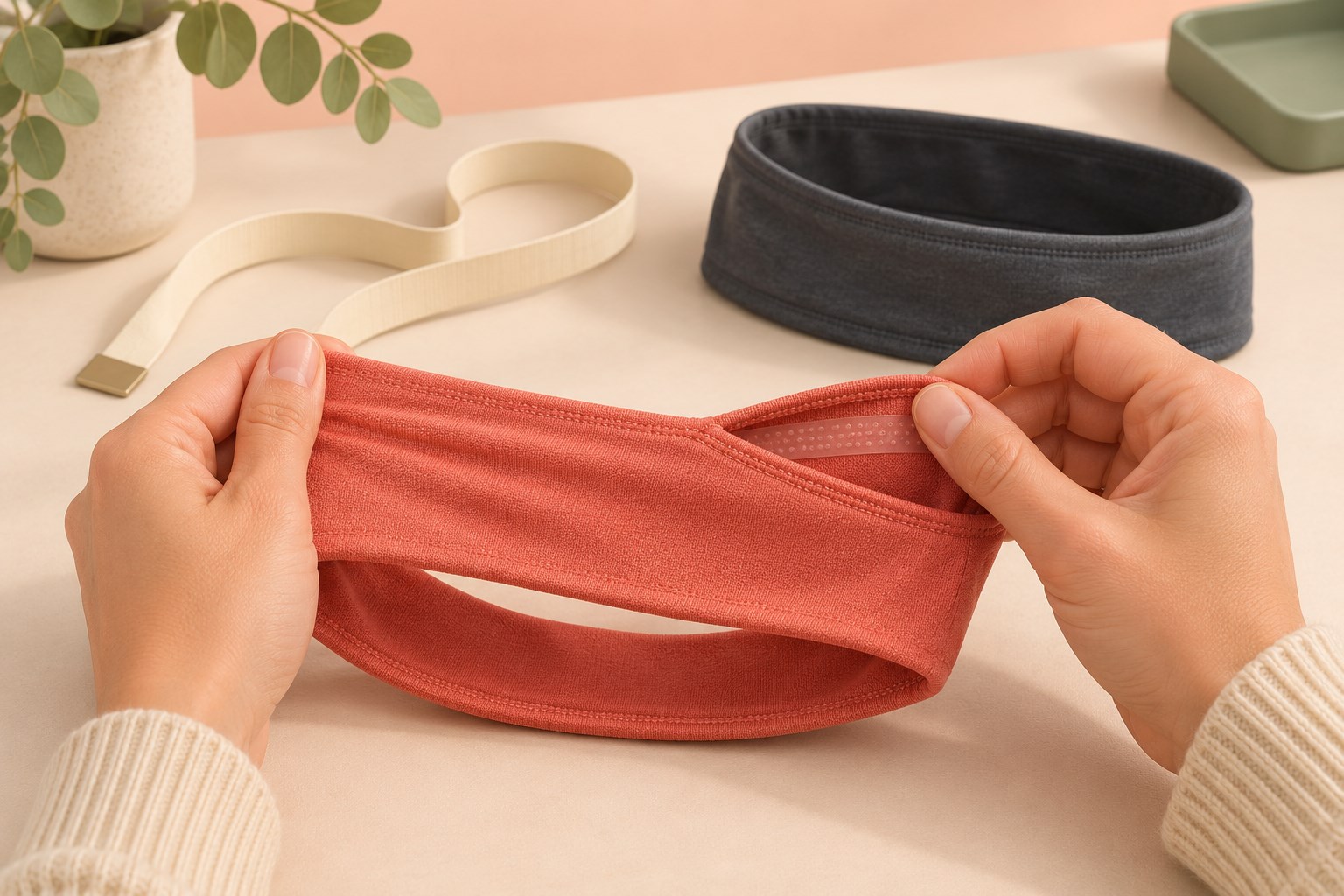
You can make headbands yourself, commission a maker, use a small UK manufacturer, import finished goods or work with a supplier that holds stock. Each route gives you a different balance of control, minimum order, lead time and unit cost. Pick the route that matches the product promise you want to make and the amount of stock risk you can absorb.
Making the bands yourself can help you refine fit, fabric and decoration in small batches. It takes production time, so include your own labour in the product cost rather than treating it as free. A handmade offer should state who made the product and which parts vary, without using “handmade” to excuse a poor finish.
Working with a local maker can shorten communication loops and make sample changes easier. Ask how many units they can repeat at the same quality, how they schedule work and whether they can document fabric lots. A low opening quantity can be helpful, but the per-unit cost may be higher than a larger run.
Importing can widen your choice of construction and price points. It can add freight, customs handling, taxes, currency movement, longer lead times and extra responsibility. If you import products into Great Britain, product-safety guidance says manufacturers and importers need to demonstrate relevant compliance and keep suitable records. The rules can differ for goods placed on the Northern Ireland market. Start with the relevant GOV.UK product-safety guidance and check the position for the country where you plan to sell.
Describe the intended buyer, use case, target dimensions, fibre content, colour references, stitch detail, elastic behaviour, packaging and care information. Ask the supplier to confirm which details they can control and which may vary. A clear brief makes sample feedback specific: “the join feels bulky behind the left ear” is more useful than “make it nicer”.
Before paying a deposit, get written answers to these questions:
Order samples from more than one supplier if the main decision is still open. Compare the same type of band, use the same test sequence and record the result. A lower quote may be poor value if the sample slips, the stitching varies or the supplier cannot answer a material question.
One sample tells you what one unit is like. It does not show how consistent a full batch will be. Use a repeatable process and ask different people to wear the band if the target customer includes varied head shapes, hair textures or hairstyles. Record observations rather than relying on memory.
Do not turn an informal sample test into a lab claim. You can say that you tested a sample for repeated wear and washing if you accurately explain what you did. A statement such as “stays in place all day” needs evidence that fits the words and the expected conditions. A statement such as “tested by our team during three short runs” is narrower and easier to support when that is what actually happened.
Set pass and fail criteria before reviewing the results. For instance, reject a sample if a seam scratches, the band loses its shape after the agreed wash sequence, or a join pulls apart under normal handling. If all samples fail the same criterion, revisit the design brief rather than ordering from the least poor option.
Textile and consumer-product rules depend on where a product is placed on the market, the product details and your role in the supply chain. This is a practical starting point, not a substitute for checking the rules that apply to your business and destination.
For England, Scotland and Wales, GOV.UK’s textile-labelling guidance says textile products must show fibre content and that different components with different fibre content may need their own composition shown. Retailers and manufacturers share responsibility for compliance. Check the current textile-labelling guidance for the exact product and presentation you plan to sell. The guidance page states that it applies to England, Scotland and Wales; check current Northern Ireland rules separately before selling there.
Confirm the supplier’s fibre details against the actual band. If the outer fabric and lining differ, do not collapse them into one vague claim. Keep the supplier’s specification, invoices, batch identifiers and any test documents together. Put clear material information on the product page, and check whether a sewn label, hang tag, package label or product description is required for your situation.
Care directions should reflect the sample and supplier’s verified instructions. If a band is hand-wash only, do not show it in a listing as machine washable. If a dye, trim or elastic needs special care, make that visible before purchase. Clear care details help protect the product and reduce avoidable complaints.
In Great Britain, the General Product Safety Regulations 2005 form the general safety baseline for consumer products where a product-specific rule does not take precedence. Northern Ireland follows a different general product-safety regime. The Office for Product Safety and Standards explains that sellers must not supply consumer products they know, or should have known, are unsafe, and that suppliers should be identifiable in business records. Read the current product-safety advice for businesses, then check the separate guidance for the market you serve.
Take extra care if you market headbands for babies or children. Age claims, small detachable parts, cords, intended use and product presentation may trigger additional safety considerations. Do not imply a children’s product is suitable for sleep, restraint or protection unless that intended use and the relevant requirements have been checked. A general adult accessory should not be relabelled as a children’s item without a fresh review.
Headbands are difficult to assess through a single front-facing product photo. Show the band flat, inside out, on a display form and in a real use setting. Add a short video only if it shows a true feature such as how the band stretches or where it sits. Avoid beauty filters or colour changes that make the fabric look different from the item sent.
State the relaxed circumference or length, width at the narrowest and widest points, and how the band is intended to sit. If a product stretches, explain that dimensions are measured at rest and give a clear range only when you have tested that range on people. Do not use “one size fits all” as a substitute for measurements.
Describe the material composition in plain language, name the lining if present, and give care instructions. If colour can vary by screen or batch, say so without using that note to excuse a large mismatch. Distinguish a sewn-on bow from a tied bow, a fixed twist from a removable detail and a narrow band from a wide wrap.
Title: Wide Coral Running Headband with Soft Inner Grip
Opening description: “A wide fabric headband for keeping hair back during a walk, gym session or short run. The coral sample shown is 8 cm wide at its broadest point and measures 48 cm around when relaxed. The inner grip strip is visible in the close-up. Check the fit notes below before choosing your size.”
Product details: List the verified fibre composition, lining, relaxed dimensions, care, package contents and dispatch timing. State whether the item is made by you or sourced from a named supplier where appropriate. If a colour or pattern is printed, show a close-up so a buyer can judge the scale.
This example only works if those details match the actual product. Replace every illustrative measurement and claim with the sample’s verified specification. Avoid copying one description across all styles when width, material or care changes.
A low purchase price does not automatically create a workable product. Add the costs that happen before and after a sale, then compare the remaining contribution with the time and overhead required to run the business. Keep the figures for a single headband order separate from monthly software, insurance, photography and other business overheads.
The worked example below is hypothetical. It assumes the seller is not VAT registered, so the selling price is shown as the money received and supplier costs are the amounts actually paid. Replace each number with a written quote, actual carrier rate or measured fee. Do not treat the result as net profit.
| Per-order item | Illustrative cost | What to check |
|---|---|---|
| Headband landed at your packing location | £3.10 | Unit quote plus inbound freight and any import charges allocated per unit |
| Protective sleeve and mailer | £0.55 | Actual packaging used for the order, not the supplier’s unit sleeve alone |
| Payment processing allowance | £0.65 | Your provider’s current percentage and fixed fee at this basket value |
| Postage paid by seller | £2.95 | A packed parcel’s weight, dimensions, service and delivery region |
| Pick and pack time or service | £1.20 | Your labour or fulfilment charge per order |
| Returns and replacement allowance | £0.60 | A realistic average based on the return route and damaged or lost parcels |
| Customer acquisition cost | £3.00 | Ad spend or campaign cost divided by resulting first orders |
| Total variable cost | £12.05 | Add the costs actually attached to this order |
| Customer price | £19.95 | State whether delivery is included or charged separately |
| Contribution before overhead and tax | £7.90 | £19.95 minus £12.05 |
Illustrative arithmetic only. This is contribution, not net profit. It excludes fixed overheads, income or corporation tax, unsold stock and any costs not listed. Change the assumptions to match your own order.
If the seller is VAT registered, VAT treatment changes the calculation. At a standard 20% rate, use the VAT fraction of one-sixth for a VAT-inclusive price. For a £19.95 sale, £19.95 × 1/6 is £3.325, which rounds to £3.33 output VAT; subtracting that rounded amount leaves £16.62 before eligible input VAT recovery and other costs. HMRC explains the fraction in its VAT Notice 700. The exact treatment depends on the business and supply, so check current HMRC rules or speak with an accountant before using a VAT-inclusive price in a margin forecast.
Run a second version of the calculation for a two-pack. Add the extra product and packaging, then use the packed parcel’s actual size and weight. If a bundle saves only 40p in postage but discounts the customer by £3, it may reduce contribution even when the order total is higher.
Set a minimum contribution that leaves room for overhead and later marketing tests. If a paid advert costs £3 per first order, compare that amount with the contribution before advertising. If the order has £4 of contribution before acquisition, spending £3 may leave too little room for repeat purchase uncertainty and monthly expenses. A higher price is not automatically the answer: first review whether the buyer sees enough value, whether the product cost is justified and whether the delivery offer is clear.
Use MLFG’s B2C Pricing Lab to list the product cost, packaging, delivery, payment and order-level costs before settling on a price.
A marketplace can help you test how shoppers respond to a style, but its rules, fees, search placement and access to customer data can change. A social platform can make short demonstrations easy, yet discovery may depend on regular content and platform changes. Your own store gives you more control over page structure and customer communication, but you must bring visitors to it.
Write down the trade-off before selecting the first channel. Include listing charges, payment fees, shipping settings, returns process, customer data access and how a buyer will find the product. Read each platform’s current seller documentation before committing stock or building a forecast around its fee schedule.
For a local test, an independent gym, running club, salon, dance school or gift shop may let you hear buyer questions directly. Agree the wholesale price, sale-or-return terms, payment timing, stock responsibility and display needs in writing. A retailer order can be useful demand evidence, but do not assume every first order will repeat.
People may search for “wide running headband”, “soft winter headband”, “twist front headband” or “headband that stays in place”. Use phrases that accurately describe the product and create a distinct page for a genuinely different range. Do not create thin pages that change only the colour name. A useful page explains fit, fabric, care, images, delivery and the buyer’s reason for choosing that style.
Plan supporting pages around actual questions: how to measure a headband, how to wash a fabric band, how a running style differs from a winter style, or how to choose a gift set. Link the related pages where the reader needs the next step. For example, someone comparing hair accessories may find the hair accessories selling guide useful. A seller deciding on a narrower adjacent product can compare the hair ties guide. Sellers considering another small accessory can use our hair clips selling guide to compare range and fit decisions.
On your own site, use descriptive category names and a clear breadcrumb path. Keep product titles distinct, place the main product details near the top and make delivery, returns and contact information easy to reach. Check pages on a phone before promotion: the measurements, colour options, photos and add-to-basket action should be easy to find without horizontal scrolling.
For a practical store brief, decide which pages must exist at launch, who supplies each product detail and what evidence supports each claim. MLFG’s free Website Brief Builder is available alongside other business tools; check the current app page for its available tools before you start. Do not buy a store plan until you have compared its costs and features with your expected order volume.
Use photographs of the product you will send, not a generic render that hides construction. A headband is a small item, so close-ups matter. Show the inside edge, seam, elastic join, texture, scale on a head or display form, and the way the band sits from the front and side.
Keep the background consistent so buyers can compare colours. Add one scale reference such as a ruler in a separate measurement image, but do not let the ruler cover the item. Use daylight where possible, avoid filters that shift coral toward red or sage toward grey, and check the image on a phone screen. If a shade varies between batches, update the photograph and product description when the new batch arrives.
A useful image sequence is: front view, side view, inside construction, fabric close-up, dimensions and one real use context. A short clip can show a person putting the band on and moving normally. Do not promise a universal fit from a single model. If you use an illustrative display form or generated artwork in editorial material, make clear that it is not a photograph of the exact stock unit.
Give each image a concise, accurate alternative description in the website editor. Describe what is visible, such as “coral wide fabric headband showing the inner grip strip”. Avoid repeating a list of search phrases in the alt field. Captions should add useful context, not restate the same words three times.
A headband is light, but the parcel still needs to protect the fabric, stay within the chosen carrier’s limits and arrive with the right product. Test the packaging with a real band. Check whether a twist or bow is crushed, whether a knit band catches on tissue and whether the outer mailer can tear in transit.
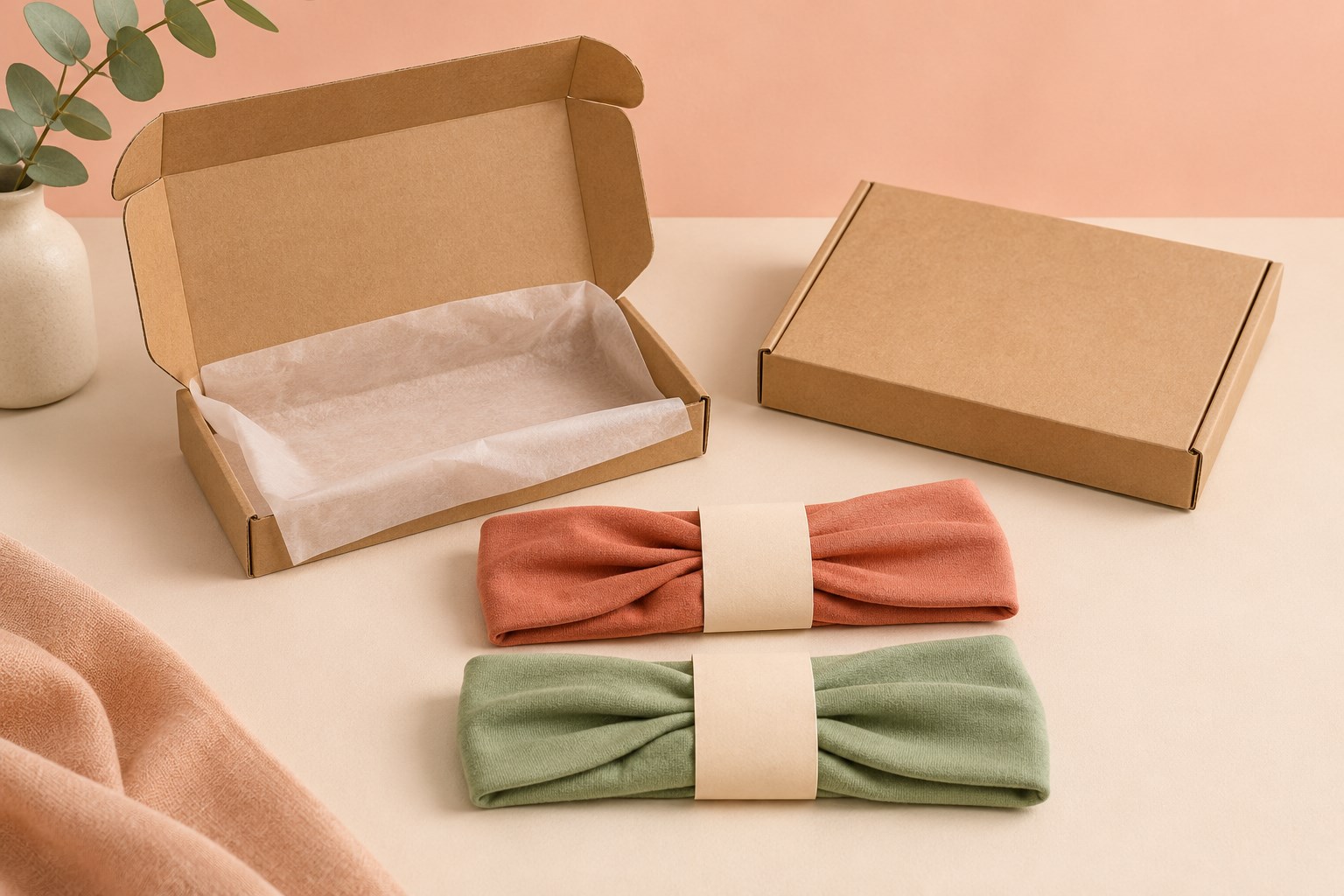
Measure a packed order, not an unpackaged sample. Keep a record of the mailer, protective sleeve, label and any insert used. Weigh the finished parcel on the scale you will use for dispatch. If a bundle changes the parcel thickness, recalculate the delivery charge before promoting it as a postage-saving option.
Set a routine for incoming stock: count the units, compare dimensions with the approved sample, inspect a selection from each carton, record the batch and isolate anything with a defect. If a customer reports a problem, ask for the SKU, order date and a photo when appropriate. Log the cause, action and whether other units from the same batch need checking.
UK distance-selling rules require information before a customer places an order and normally give a 14-day cancellation period after delivery for goods. A seller should explain the business identity and address, product description, total price, delivery costs and arrangements, cancellation information and other applicable details. Read GOV.UK’s online and distance-selling guidance and confirm the rules for your sales route and destination. Product faults and statutory rights are separate from a buyer simply changing their mind.
Write a returns process that a customer can follow. State how to contact you, what information to include and where a return should go. Keep a record of the reason for each return. “Too tight”, “slips on fine hair”, “colour darker than photo” and “seam scratches” point to different fixes. Use those records to change the size guidance, sample criteria, photography or supplier brief.
Clear facts are a stronger basis for trust than sweeping adjectives. Explain the tested fit, the fabric composition, the maker or source where appropriate, the wash method and the process for a question or return. If you use phrases such as “non-slip”, “sweat-wicking”, “sustainable” or “hypoallergenic”, keep evidence that supports the exact claim and the item sold.
Do not imply an endorsement from a sports team, club, athlete or supplier unless you have permission and the relationship is real. Check trademark use before printing a team name or logo. For a custom design, keep the artwork licence or creator agreement with the product records.
A short “how we chose this band” section can explain that you compared fit, wash care and seam comfort across samples. It should describe the work actually done. If you invite testers to submit feedback, ask permission before publishing their name or photo, and do not present one person’s view as proof that the product suits everyone.
Choose a small stock commitment that you can afford to hold and inspect. Publish the core styles, then promote one clear use case at a time. A running-focused message can show the inner grip and movement test; an everyday message can focus on comfort, width and colours. Avoid mixing several unrelated audiences in the same advert.
Set a test period and a small budget limit before launch. Track visits by channel, product-page conversion, average order value, bundle take-up, returns, questions and delivery time. Note the date and any change to price, photography or copy. If those change at once, you will not know which one affected the result.
Use customer questions as product research. If several people ask whether the band fits thick hair, add a clear size note or test another relaxed measurement. If they ask whether the knit covers the ears, photograph the side fit. If buyers like the product but leave the page after seeing delivery cost, test a bundle only after the full order calculation shows room for it.
Do not reorder on speed of first-batch sales alone. Check whether sales came from a one-off event, a discount, friends or paid ads. Compare contribution after all variable costs, stock left by colour, returns, customer feedback and supplier lead time. A modest reorder of the best-supported SKU may be safer than repeating the entire first range.
Define a decision at the start of each week. “Collect five buyer comments about fit” is more useful than “work on marketing”. “Compare actual postage for a single band and a two-pack” gives you a clear result for the pricing sheet. If a small test produces too little information, record that uncertainty and choose a better test rather than forcing a confident answer.
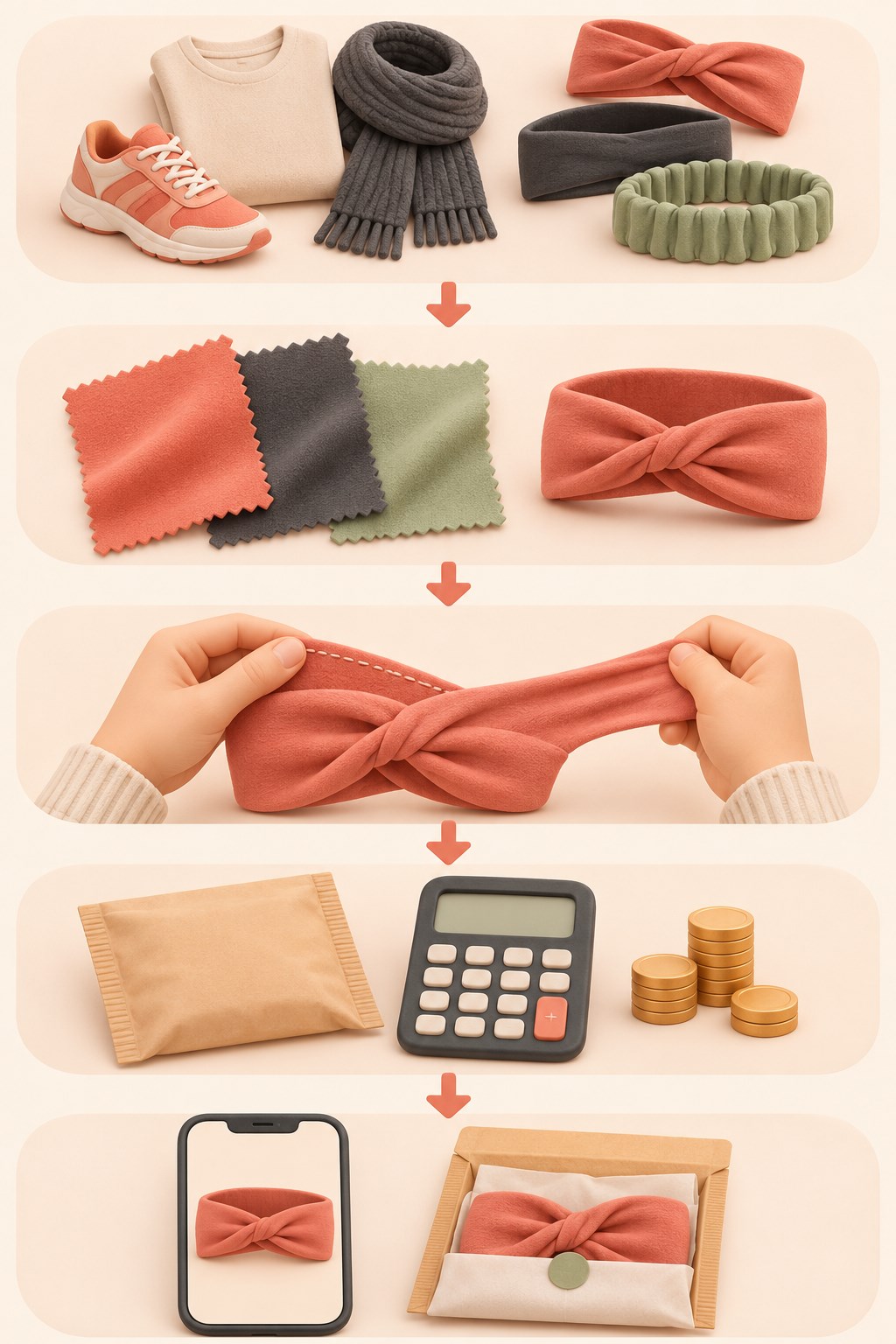
It can be a manageable first test: a headband is small and simple to explain, but a seller still needs evidence of demand, consistent quality and a cost model. Fit, fabric and colour can create returns or slow stock. Start with a small range and compare its contribution after delivery and marketing costs.
There is no fixed number. A new seller could begin with one construction in two widths and a few colours, then add one contrasting style if buyer feedback points to a different need. Keep the opening range small enough to photograph, inspect and restock accurately.
Test the material, width, tension and inner finish on people who match the intended buyer. A grip strip may help some wearers and feel uncomfortable to others. Describe what your sample testers did and avoid claiming that every headband will stay in place for every person.
Textile-labelling rules apply to many textile products, and the GOV.UK guidance for England, Scotland and Wales says labels must show fibre content. Check the current rules for the exact construction and destination, including Northern Ireland, before finalising labels or product information.
Yes, but importing can add tax, customs, lead-time, product-safety and record-keeping duties. Confirm the supplier’s identity and product documents, inspect samples and check which requirements apply in the UK market where you will sell. Build freight and import charges into the landed unit cost.
Start with the price a buyer can compare, then subtract the product landed at your location, packaging, payment fee, postage you cover, pick and pack, returns allowance and customer acquisition. The remainder is contribution before fixed overhead and tax. Check the worked example above and replace every amount with your own figures.
Making them yourself can give you control and a small opening batch, but your production time must be costed. A supplier can increase repeat capacity, but minimum orders and quality checks matter. Compare the finished sample, documented material, lead time, unit cost and defect process before choosing.
Show the front, side, inside seam, fabric texture, relaxed dimensions and how the band sits on a head or display form. Use accurate colour, show the actual item and make a separate close-up for details that are easy to miss in a wide photo.
A strong headband shop begins with a specific buyer, a few well-tested styles and honest information about fit and fabric. Keep the first order small enough to learn from, price the full customer order and let real questions and returns guide the next range decision.
If you have chosen a product and want help turning it into a clear online-store plan, talk through the range, prices, product pages and launch steps with Make Local for Global.
PREFERRED SOURCE
Like what you’re reading? Add Make Local for Global as a preferred source on Google to see more of our articles when you search.

Build your online presence without having to figure out everything yourself.