
READY TO SELL Hair Accessories ONLINE?
Get a store built for you in 5 days, plus training and support to help you start, run, and grow your Alternative business.

Learn how to sell hair accessories online with a focused range, practical grip and finish checks, clear product photos, accurate order costs and a useful launch plan.


Hair accessories can be light to post, easy to style and simple to bundle. That does not automatically make them easy to sell. A claw clip that looks attractive in a supplier photo may not hold thick hair. A satin scrunchie may feel soft but stretch out after a few uses. A headband may suit one head shape and feel uncomfortable on another. The online shop has to make those differences clear before a customer buys.
This guide is for a UK founder who wants to test a focused range of clips, pins, hair ties, scrunchies, headbands or scarves. It covers choosing a customer and first assortment, checking samples, documenting suppliers, presenting fit and scale, calculating the delivered order cost and learning from a small launch. If you manufacture, import, rebrand or sell products specifically for children, check the requirements that apply to your exact role and product before committing to stock.
The useful starting point is not “hair accessories are popular”. It is a defined person, a familiar routine and an accessory that solves a real styling or comfort problem. A range built around that decision is easier to test, photograph, price and improve than a catalogue of unrelated colours and shapes.
Use Pathfinder to set a first customer, a small product range and a route to test sales. This helps you identify the decisions to settle before you place a larger order.
“People who wear hair accessories” is too broad to guide your first product decision. A customer getting ready for work may want an all-day hold that does not tug. Someone with long, thick hair may need a larger claw and stronger spring. A customer with short, fine hair may prefer a small clip that stays in place without feeling heavy. A bridal party may need coordinated pieces for a single date. A gift buyer may value a presentation box and a clear colour story. Those shoppers can all buy hair accessories, but they are not choosing for the same reason.
Pick one primary use to test. You could focus on practical everyday styling, coordinated occasion accessories, comfortable pieces for long or textured hair, simple accessories for school-age routines, or giftable sets for a particular style. These are possible directions, not evidence of demand. Choose one that you can describe in a sentence and reach through a small test. For example: “I want to see whether people with long, dense hair will pay for a large clip that holds a twist without sharp pressure points.” That is more useful than “I will sell fashionable clips.”
Write down the setting, the task, the likely objections and the alternative the customer uses today. The setting might be commuting, sport, work, a wedding or a quick evening style. The task might be keeping hair away from the face, holding a bun, adding a visible accent or matching an outfit. An objection could be pulling, slipping, weight, snagging, colour mismatch or uncertainty about size. A customer may already use a basic elastic, a hairpin or a clip from a high-street shop. Your product has to offer a reason to change, and your photos and copy have to show that reason.
Be specific without making assumptions about identity or hair. Hair length, density, curl pattern, styling habits, head shape and personal preference vary widely. Do not infer that one design fits a whole ethnicity, age group or gender. Instead, describe observable product features: opening width, tooth length, band circumference, elastic stretch, closure type, weight and material. Then explain what you have tested and show a range of users or hair swatches only when you have permission and can represent the product fairly.
Use customer conversations to check whether your description matches a real decision. Ask people who resemble the buyer you chose what they wear now, what makes them replace it and what they need to see before choosing a new design. Show the price and a photo of the actual sample. “Would you buy this?” invites a polite yes. Better questions are “Which of these would you choose for this routine?”, “What would stop you ordering at this price?” and “What information is missing?” Record the answer and the product version shown so you can compare feedback rather than rely on memory.
Hair accessories span several shapes and materials. Start with a compact range architecture, not every item a wholesaler offers. A first range might include one hero claw clip, a smaller companion size, one fabric scrunchie set and a simple headband. Another seller might choose snap clips, barrettes and a matching gift set. Make each item earn its place by serving the same buyer or giving that buyer a clear alternative.
| Product group | What the buyer needs to understand | Useful first test |
|---|---|---|
| Claw clips and jaw clips | Opening width, tooth depth, hinge design and the amount of hair held | Compare one small and one larger size on a few representative hair swatches |
| Scrunchies and ties | Elastic stretch, fabric feel, seam quality and whether the tie is sold singly or in a set | Repeat stretch and fastening checks; compare fabric and size with the price |
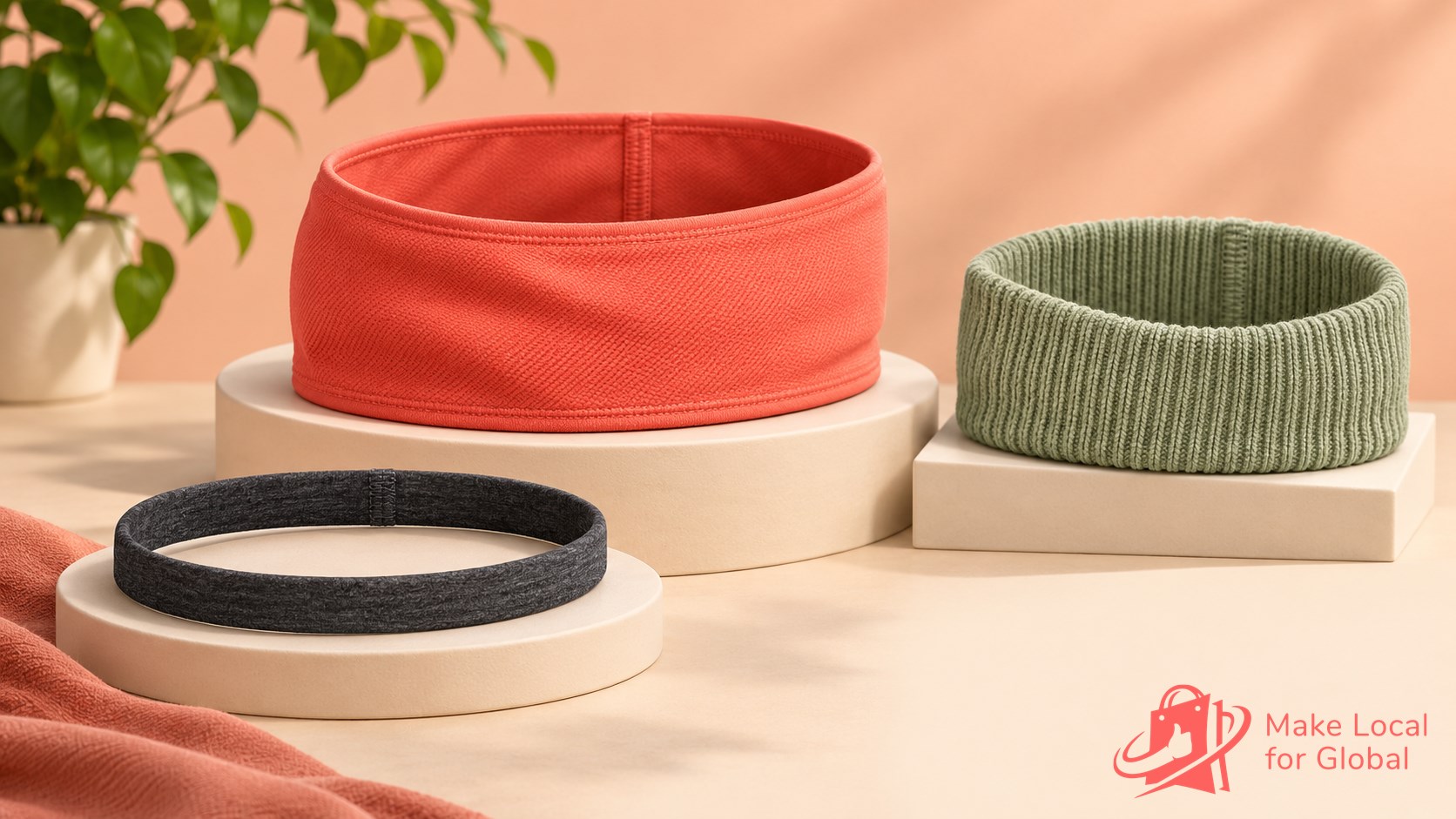
| Headbands and hairbands | Inside width, circumference or flexibility, padding, grip and contact points | Check comfort and slipping during ordinary wear; state dimensions clearly |
| Pins, slides and barrettes | Closure, length, grip, edge finish and the intended styling task | Open and close repeatedly; inspect the hinge, clasp and tips |
| Scarves, wraps and bows | Fabric, dimensions, tying method, colour and care | Show the full item beside a scale reference and demonstrate one tie |
Each product group has different questions, so avoid mixing them into one undifferentiated “accessories” page. A customer comparing a large clip with a soft band needs different details from someone choosing a set of fabric bows. Give each product a distinct description, accurate material information and useful photos. If a set contains several pieces, tell the buyer exactly how many, which colours are included and whether the pictured display items are all part of the order.
Build a range matrix before requesting quotes. List the buyer, use, item type, size, colour, material, supplier, sample status, minimum order quantity, unit cost, lead time and estimated parcel dimensions. Add a reason for every proposed variant. “A second size for finer hair” is a testable reason. “The supplier has ten more colours” is not. A matrix makes it easier to spot duplicate stock and identify which option should be the lead product in a first listing.
Limit early choices. Four sizes across six colours create 24 variants before you know which combination earns a repeat order. Every variant needs stock space, images, a clear SKU, accurate availability and a way to pick the right item. Begin with one or two sizes and a small set of colours that belong together. When there is real evidence for a new colour or size, add it as a deliberate next test rather than a guess.
Choose set logic that improves the buying decision. A “weekday set” might combine two neutral scrunchies in different sizes; an occasion pair might provide a matched clip and pin. Avoid bundles made only to raise the order value if the items do not work together. Tell customers whether a set can be split, whether colours are fixed or selected and what the price would be for buying the pieces separately. That makes the bundle easier to compare and helps you learn whether the convenience is valued.
A narrow range is not a small ambition. It gives a new shop room to show why each item exists. The broader guide on selling fashion jewellery online covers how material, finish and style language can help a customer distinguish pieces. The same principle applies here: describe the choices that affect use, not just the colour name or trend label.
A photo can show shape and colour but not prove that a clip stays put. Before ordering depth, request samples from the same supplier, factory and product version you plan to sell. Check the actual sample against the stated dimensions and materials. A photo sample with a different hinge or fabric is not evidence that the batch you will receive behaves the same way.
For clips, inspect the hinge, spring, teeth, edges and closure. Open and close each sample repeatedly, noting whether the spring returns evenly and whether the teeth line up. Look for sharp mould seams, burrs, cracks, loose decoration and areas that catch fibres. Check that the clip closes without an unexpected gap and that the hinge does not shift. If a tooth breaks or a spring loosens during a modest repeat-use check, pause the product and ask the supplier what inspection or change is available. Do not file or repair items for sale unless the relevant product responsibility and rework process are understood.
For scrunchies, ties and fabric accessories, check the seam, elastic join, fabric recovery, stitching and any decorative attachment. Stretch a sample using the same ordinary action a customer would use, then inspect whether the elastic returns or remains slack. Check whether the seam puckers, the fabric twists or embellishments loosen. Where you make a set yourself, keep a repeatable method for measuring and assembling each unit. One sample that feels sturdy does not show that every unit in a batch is consistent, so inspect incoming stock and keep a record of the batch.
Headbands need a comfort check as well as a style check. Inspect the tips, join, padding, covering and any seams that may press on the head. A rigid band can feel different depending on width, material and fit. Do not promise “all-day comfort” from a quick try-on. If you use wear testing, record who tested the item, for how long, the sample version and the feedback. Treat that as a limited observation rather than a universal result, and do not turn it into a medical or ergonomic claim.
Test grip on more than one hair swatch or volunteer, with clear consent and a simple, consistent method. Note the hair length and approximate thickness or texture rather than making a sweeping claim about groups of people. Try the accessory as intended, then observe slippage, pressure, snagging and ease of removal. Ask the wearer to describe the experience in their own words. Do not pull hard, leave a product in for an unreasonable period or treat an informal wear check as a safety or clinical test.

Keep a sample record for each design: date received, supplier, material or finish stated, measurements, test method, observations, photographs, accepted changes and decision. If you reject a version, record why. If the supplier revises the spring, plating, fabric or packaging, treat it as a new version and repeat the relevant checks. A short log helps you distinguish a genuine improvement from a change that only sounds reassuring in a sales email.
There is no single test that proves an accessory is right for every customer. A useful sample review answers narrower questions: does this clip open as stated, do its edges feel smooth, does the clasp engage, can the scrunchie recover after repeated stretching, and does the headband stay in place for the chosen use? State only what you have actually checked. This protects trust and gives the supplier a specific issue to resolve.
Buy from a supplier who can identify the product and its source, not just send a marketplace image and a low quote. Request the legal business name and address, product specification, material and coating information, available test records, batch or lot identification, packaging details, lead time, minimum order and process for reporting a defect. Ask who manufactured the item, whether the supplier is authorised to sell it and what happens when a component or factory changes.
Keep the order confirmation, invoice, product version and supplier contact together. Match the delivered items with the sample and specification. Save dates and versions for material declarations, test information, care guidance and packaging artwork. If the supplier cannot explain what changed between two samples, do not assume the products are identical. A simple record matters even for lightweight goods because the seller needs to identify which order or batch a complaint refers to.
The Office for Product Safety and Standards says businesses that make, import, distribute or sell consumer products in the UK have responsibilities for product safety. Its product safety advice for businesses explains general duties, including traceability and responding to safety concerns. The precise duties depend on what you do in the supply chain and on any rules specific to the product. Reselling a finished product is not the same role as importing it, putting it under your own name or modifying it.
If you buy from overseas, get clear advice about your role before taking payment or changing the packaging. A business bringing products into Great Britain from the EU may be treated as an importer rather than a distributor, and other routes can carry their own responsibilities. Check the current rules for Great Britain, Northern Ireland and any destination market you plan to serve. Do not rely on a supplier’s broad statement that an item is “UK compliant”; ask which product, version, territory and requirement the statement refers to.
Material claims need proof. Ask whether a “silk” item is silk or a different fibre, whether a metal finish is plated or solid, and whether a “recycled” statement applies to the whole product, one component or just the packaging. Keep evidence for terms such as “hypoallergenic”, “nickel-free”, “organic”, “biodegradable” and “sustainably made”. Do not use a claim just because a factory listing includes it. If evidence covers a material but not the finished accessory, describe the material precisely and leave the broader claim out.
For fabric accessories, ask whether the item falls within the textile fibre labelling requirements in the market where it is sold. GOV.UK’s textile labelling guidance covers fibre-content rules for England, Scotland and Wales. The treatment can depend on the product category and territory, and Northern Ireland may follow different arrangements. Check the exact item rather than assuming every scrunchie, ribbon or scarf is treated identically. Where a label or product page gives fibre content, make sure the statement matches the supplier’s documentation.
Metal components deserve a specific supplier question if they touch skin during normal wear. UK REACH includes nickel-release restrictions for certain articles intended to come into direct and prolonged skin contact; the rule is about the relevant articles and the parts that make that contact, not every metal item in a hair range. The current text is in REACH Annex XVII, entry 27. Ask for appropriate evidence when the design and use make the requirement relevant, and seek product-specific advice if you are unsure. Do not advertise “nickel-free” without evidence for the complete item.
If you design an item for children or style it as a toy, confirm its intended category and applicable safety rules before ordering. Small detachable pieces, sharp points, cords, magnets or decorative parts can change the questions to ask. Do not market an adult accessory as “safe for children” based on its small size or appearance. Age guidance, warnings and product claims should come from a documented assessment for that particular product. A plain fashion accessory does not become a toy automatically, but marketing and foreseeable use matter.
Write down what will stop a product from being sold: sharp or broken parts, a loose attachment, a failed closure, inconsistent dimensions, missing batch information or an unexplained material change. Quarantine affected stock while you ask the supplier for a written response. Record complaints and connect them to the product and batch. The government guide explains that businesses should respond to safety issues and contact the relevant authority when required. If a possible safety problem emerges, pause promotion and seek advice instead of improvising a customer-facing explanation.
Customers cannot pick up a clip through a screen. A strong product page compensates with a small, consistent set of photographs: a clean main image, a scale view, a close-up of the closure or fabric, a view of the reverse and a styled image that shows the item in use. If the item comes in a set, show the complete set together and label the colour choices in text. Keep the photo true to the product and do not retouch out flaws, alter the shade to match a trend or make a small item look oversized.
Use a neutral background and even light so finish and colour remain visible. Photograph the actual stock or a sample that matches the stock. If the tortoiseshell pattern varies naturally, say so and show a representative example. A single close crop can make it hard to judge size, so add a photograph beside a familiar object or show a ruler with clear measurements in the listing. Make sure the scale reference is not included in the order unless you say that it is.
Show the mechanism. For a claw clip, photograph it open and closed, with the teeth and hinge in focus. For a barrette, make the clasp visible and state the length. For a scrunchie, show the circumference and fabric detail, and tell the buyer whether it is a single loop or a multi-pack. For a headband, include the inside curve, padding and any grip detail. For a scarf or wrap, show its full dimensions and demonstrate the tie without hiding the fabric pattern.
If you use a person or hair model, get permission for the images and describe the fit without suggesting that one image represents every wearer. Consider several hair volumes or styling contexts where those examples help a buyer judge the item. A swatch or mannequin can demonstrate dimensions without making claims about a person. Never use an AI-created person as evidence that your real product fits or behaves in a particular way. Generated illustrative imagery can support editorial context, but product photos must match the item being sold.
Write the product facts beside the image: overall size, opening width where relevant, approximate weight if useful, materials, closure, included quantity, care instructions and any variation between handmade pieces. Give the customer a way to compare sizes. “Small, medium and large” is not enough if you do not explain what differs. A comparison chart can show measurement, likely styling task and what to consider, while avoiding promises that a size works for a specific person without testing.
Use alt text to describe what the image contains in context, not to repeat a string of search terms. “Tortoiseshell claw clip shown open beside three hair swatches” helps someone understand the image. “Best hair accessory online clip hair claw buy cheap” does not. Keep the image filename short and descriptive, compress the asset for fast loading, use the correct dimensions and avoid uploading duplicate versions with vague names such as `image-final-new2`.
The product description should answer the customer’s practical questions without turning into a trend essay. Explain what the item is made from, how it closes or stretches, what comes in the order, how it should be cared for and what the seller has actually tested. If colours look different across screens, mention that colour can vary slightly by display. If a pattern is placed differently on every piece, make the variation clear before purchase. This detail can prevent avoidable messages and returns.
Hair accessories may be small, but the details can still be hard to assess online. Make the product information easy to scan: use bullets for dimensions and included items, place close-up images near the relevant explanation and put shipping or care details where they support a decision. Do not hide a limitation in a long paragraph or rely on text embedded in the image. A customer should be able to read the essential facts on a phone before adding the item to a basket.
When the customer, product options and delivery method are clear, map those choices into straightforward product pages and buying steps.
Hair accessories can have a low unit cost, but postage, packaging, payment fees and picking time can consume the difference between price and product cost. Build the model around a complete basket, then calculate what each order contributes before fixed costs and tax. Include the cost of inbound freight, customs charges if applicable, protective packaging, labels, pick-and-pack time, payment processing, delivery, damaged or defective stock, returns handling and customer acquisition. For a handmade range, include your making time and materials rather than treating labour as free.
The example below is illustrative, not a market price recommendation. It assumes a three-scrunchie set sold for £14.00 with delivery included, a seller not registered for VAT and an ordinary small-parcel route. Replace every figure with supplier quotes, payment-provider terms and carrier prices for your own products. If you charge shipping separately, show that income and its cost as separate lines instead of quietly omitting the carrier charge.
| Illustrative cost for one delivered set | Amount |
|---|---|
| Three scrunchies purchased from supplier | £3.10 |
| Inbound freight allocated to the set | £0.48 |
| Backing card, tissue, mailer and label | £0.72 |
| Pick-and-pack labour | £0.55 |
| Payment fee assumption: 2.9% of £14 plus £0.30 | £0.71 |
| Outbound delivery | £3.25 |
| Returns and defect allowance | £0.45 |
| Customer acquisition allocation | £0.95 |
| Estimated variable cost | £10.21 |
| Price paid by the customer, delivery included | £14.00 |
| Contribution before fixed overhead and tax | £3.79 |
The arithmetic is £14.00 minus £10.21, leaving £3.79 before fixed overhead and tax. That is not net profit. It does not yet cover storage, insurance, website fees, accounting, photography, samples, your salary or any tax treatment that applies. The payment line is an assumption; the actual provider may charge a different percentage, fixed fee, currency conversion or dispute cost. Check the current contract and enter the real amount in your worksheet.
Compare several basket structures. A single clip may face nearly the same parcel cost as a two-piece bundle, which can make its contribution weak. A gift set may lift the order value but require a larger box and more assembly. A three-item set may be quicker to pick but needs a clear colour and size combination. Calculate one item, one useful bundle and a larger set separately. Do not assume a multi-buy offer works until the extra handling and packaging are included.
Set a minimum order or free-delivery threshold only after you know the cost of packing and shipping that basket. If the threshold encourages a customer to add a second item, calculate whether the additional contribution covers the extra cost. Avoid using a percentage discount to solve slow stock without checking how much margin remains. You may be better off changing the product page, taking clearer photos, simplifying a confusing bundle or reducing the initial order size.
For wholesale, calculate by case or display unit. Include case quantity, packaging, carton dimensions, delivery to one or several locations, payment terms, the time to prepare a quote and any retailer margin expectations. A stockist may require barcodes, product cards, a display stand or an agreed return process. Quote validity should reflect how long your supplier pricing and stock availability are reliable. A bulk order can reduce postage per item while increasing cash tied up and the cost of a slow-selling colour.
Use a simple review sheet after each small batch: orders, average basket, product cost, postage, packaging, payment fees, returns, damage, acquisition spend and contribution. Compare actuals with the assumptions. If the parcel is heavier than expected, update the shipping line. If a gift box adds time, update the labour line. If customers buy only the two-colour set, adjust the next assortment instead of ordering a broad range to preserve an old forecast.
Ask an accountant or HMRC about VAT and tax for your business. Whether a price should be displayed inclusive of VAT, how VAT applies to goods and delivery, and when registration is required depends on your circumstances and current rules. Do not copy another shop’s treatment. Build the model so it can be updated when your status changes, rather than burying tax assumptions inside the price.
A hair accessory may fit in a small mailer, but a thin product can still arrive bent, scratched or tangled. Select packaging that protects the mechanism and surface without creating unnecessary bulk. Test the actual clip, card, sleeve and mailer together. Check whether a claw can open during transit, a pin can pierce soft packaging, a barrette can bend under pressure or fabric can snag on an exposed edge. Use a protective backing where needed and keep sharp points away from the outer wall.
Send a test parcel through the route you intend to use, with the same packing method and label placement. Look at the parcel dimensions, weight band, drop and compression expectations from the carrier, and the way a customer will open it. A simple pack check can reveal that a rigid card increases the parcel size or that a gift box slides around in a mailer. Record the contents, packing time and final billable size so your price model reflects the actual package.
Pack orders consistently. A short visual checklist can cover the product variant, colour, count, finish, closure, backing card, customer note and outer mailer. Keep picking locations separate when two products look similar. If a set includes selected colours, identify the selection on the pick list rather than relying on memory. Check the parcel against the order before sealing it. A simple process reduces wrong-colour and missing-item messages without adding complicated warehouse software to a small shop.
Choose packaging claims carefully. If you say a mailer or insert is recyclable, compostable or made from recycled material, keep evidence that supports the exact wording and tell customers how to dispose of it where relevant. The product itself and the packaging are separate claims. Avoid placing a broad “eco-friendly” badge on an item just because one component is paper. Practical packaging should protect the accessory, be easy to open and have a clear reason for each layer.
Explain dispatch timing, delivery options, tracking, gift messaging and how to contact you about a problem before checkout. State whether an order is made to order or ready to dispatch. If colours vary slightly or pieces are handmade, explain how that variation works. Do not promise arrival by a date unless the carrier service and your fulfilment schedule support it. Customers should see delivery cost and likely timing before they commit.
Set a returns policy that reflects consumer law and the product. The GOV.UK guidance on online and distance selling explains information duties for online traders, and the returns and refunds guidance covers key consumer rights. Do not assume that a hair accessory is automatically excluded from online cancellation rights because it is worn close to the body. The sealed-goods hygiene exception is specific; get advice before relying on it for a particular accessory or seal. Faulty or misdescribed goods have separate rights.
Make it easy for a customer to report a faulty clasp, broken tooth, loose embellishment or wrong item. Keep the order number, product version, lot or purchase record and customer description together. Ask for only the information needed to understand the issue. If a pattern appears across several orders, stop selling the affected version while you investigate with the supplier. A respectful response and a clear record help you fix a product issue without blaming the customer or promising a remedy before you understand the facts.

An independent website gives you control over the product story, range structure, photography and customer service, but you are responsible for bringing the right people to it. A marketplace can provide discovery but has listing fees, rules, competition and its own customer expectations. A local salon, boutique, wedding supplier or craft market can give you direct feedback, while adding wholesale terms or event costs. You do not need every channel at launch. Choose one primary route and a simple way to learn from it.
| Route | Useful first experiment | Question to answer |
|---|---|---|
| Own ecommerce shop | A focused product page and a small paid or organic traffic test | Can the visitor understand fit, size, options and delivery before checkout? |
| Marketplace | A small set of listings with distinct photos and exact options | Do fees, search competition and marketplace rules leave room for contribution? |
| Salon, boutique or gift shop | A sample set and a written trade price for a named buyer | What display, packaging, margin and reorder quantities does the shop need? |
| Market or pop-up | A small display where shoppers can compare sizes and handle samples | Which features do people ask about and which products lead to a sale? |
For a direct shop, organise product pages around buyer decisions. A category page can separate clips, scrunchies, bands and sets. Product filters should use real distinctions such as size, colour, material and accessory type. Avoid filters that repeat a broad style word but do not help someone choose. Put stock availability, dispatch timing, shipping charges and returns information where the customer can find it. Ensure the mobile experience makes image zoom and variant selection usable without accidental taps.
For a marketplace, check its policy before building a catalogue. Review rules for handmade claims, product descriptions, material terms, variation photos, delivery promises, intellectual property and returns. Use original photos of your actual product; do not copy a competing seller’s photography or product copy. Keep each listing accurate even when you reuse a small amount of brand wording. If an item is available in multiple sizes, use a variation selector only when the options are clearly described and the images match each choice.
For a salon or boutique, ask the buyer how the products will be displayed, what order quantity they would test, which payment terms they use and what information customers ask for. Provide a simple line sheet with wholesale price, retail guidance if requested, case quantity, size, materials, colour options and reorder lead time. A small counter display can make a range easier to browse, but it adds cost and space requirements. Confirm that the display is stable and that product cards remain legible at the point of sale.
When you compare channels, treat “views”, “likes” and “followers” as early signals, not sales. Stronger evidence includes a paid order at the intended price, a buyer asking for a trade quote, a customer choosing between two samples or a retailer placing a small test order. Write down what the offer was, who saw it, the date and the outcome. If the test changed both the photo and the price, you will not know which change influenced the result.
Search copy should explain the product and help a person decide, not force a keyword into every sentence. A page can naturally use a phrase such as “hair accessories online” or “claw clips for thick hair” only where the product genuinely fits that description. The exact wording does not guarantee rankings or sales. Keep the page useful with size, closure, material, colour, care, included quantity, delivery and return details. Use a concise title that says what the item is and what distinguishes it.
Give each product page its own purpose. A large tortoiseshell clip should not have the same title and description as a small snap clip with only the colour changed. Explain the distinction the customer cares about: opening width, number of teeth, closure type, fabric texture, size, set contents or intended styling task. If two products are genuinely near-identical variants, keep their pages consistent but ensure the option names and images make the choice obvious. Do not create near-duplicate pages only to target slight keyword variations.
Use headings to organise the customer journey: choose a size, compare materials, see how it closes, understand care and delivery. Include search terms in a natural product title, a useful introduction and relevant headings when they reflect actual intent. Write a meta description that accurately summarises the item rather than repeating a stack of terms. Keep the URL short and stable. If you change a published slug later, manage the redirect and internal links so existing customers and search engines are not sent to a dead page.
For category pages, curate the range instead of relying on a wall of thumbnails. Group products by meaningful type or task, sort in a way that makes sense and keep variation names consistent. Write a short explanation that helps a new visitor choose between a clip, pin, band or tie. Add internal links when a related guide can genuinely answer the next question. Our guide to selling bridal accessories can help with coordinated occasion ranges, while the article on selling doll accessories discusses matching product scale and intended use. These are related decisions, not a reason to repeat the same copy on every page.
Structured product data, internal links and clear crawlable categories can help search engines understand a shop, but correct implementation matters. Keep price, availability and product details consistent between the page and any feed or markup. Do not mark up a bundle as a single item if the customer is choosing separate products, and do not invent reviews or ratings. Check the visible page on a phone and the page title and snippet in your SEO plugin before publishing. Technical optimisation supports a useful page; it cannot rescue a vague offer.
Use analytics to answer a business question. If visitors open a product page but do not add it to basket, inspect the price, scale, option names, shipping cost and trust information before ordering more stock. If shoppers add a product but abandon checkout, check total price, delivery choices and payment flow. If a colour sells repeatedly, check whether the next order can be replenished within the same quality and lead time. Record what changed and when so that seasonality or a traffic source does not get mistaken for product fit.
A four-week test gives you a way to organise learning; it does not guarantee sales. Define a stop or continue decision before each week begins. Keep the test small enough that you can trace orders, answer customers and inspect every unit. If a supplier, material claim or safety question remains unresolved, pause that product rather than treating the calendar as a reason to launch.
| Week | Work | Evidence to keep |
|---|---|---|
| 1: choose the buyer and range | Select one customer routine, choose a small assortment, write down the product differences and speak with a few relevant buyers. | Buyer notes, range matrix, unanswered questions and go/no-go conditions |
| 2: request and check samples | Get supplier information, inspect samples, check dimensions and closures, test the proposed pack and replace assumptions with quotes. | Sample log, supplier documents, photographs, shipping quote and cost model |
| 3: prepare and show the offer | Create clear product pages or a line sheet, photograph the actual samples, set an honest price and show the offer to a defined audience. | Page version, photos, price shown, customer questions, enquiries and paid orders |
| 4: fulfil and decide | Pack a small batch consistently, record actual costs, ask customers about the experience and decide whether to keep, adjust or stop each SKU. | Order records, pick errors, delivery bills, returns, defects, contribution and reorder decision |

In week one, name the customer, routine and product problem on one sheet. Select one or two product types and make a range matrix with only the details needed to compare them. Ask a small number of people from the chosen audience to react to the actual offer, including the intended price. Listen for repeated questions and objections. If the responses are all about a different use case, revise the buyer statement before requesting a larger assortment.
In week two, compare suppliers on evidence as well as price. Request samples, ask about source and version, confirm materials and ask how faults or changes are handled. Inspect the products using a written check, then test a packed parcel. Replace estimated costs with real quotes. If the supplier cannot provide enough detail to make a safe decision, put that option on hold. A sample that looks good is only one part of the decision.
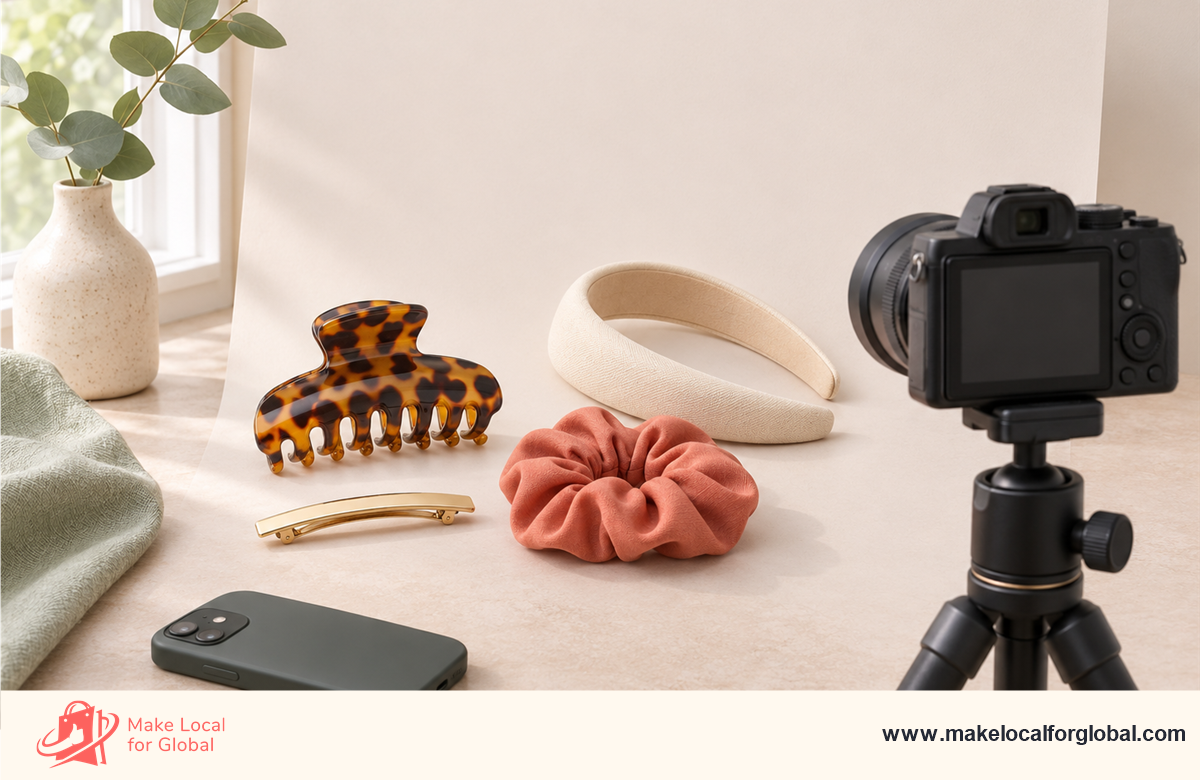
In week three, build the clearest possible version of the offer. Use the thumbnail as an editorial cover rather than as a substitute for product photography. Take accurate images of your real product, add the scale and mechanism views, confirm colours and write exact option names. Put delivery and returns details before checkout. Show the page to a small target group or launch a limited test. Do not change several variables at once; keep a note of the version and date.
In week four, fulfil orders from the stock you have checked. Record which item, colour and batch went into each parcel. Capture actual postage, packaging, fees, handling time and any customer-service work. Ask what detail made the customer choose and what they would improve. Separate product feedback from delivery feedback. At the review, continue only the items where the product evidence, customer response and contribution all support another small step.
A small test can also tell you when not to continue. If interest depends on a claim you cannot support, a very low price that loses money, a material you cannot verify or a supplier who changes the product without notice, stop and find a better option. A no-go decision made before a deep order is useful learning. It keeps cash and attention available for a product that can meet customer expectations and be fulfilled responsibly.
It can be worth testing if you can define a specific customer, choose a product that meets a real styling or comfort need, verify the supplier and price the complete order. The category is broad and competitive, so a generic assortment is difficult to explain. Start with a small sample range and evidence of demand rather than treating category interest as proof that a particular design will sell.
Choose products that serve the same buyer or styling routine, such as one main clip with a complementary size, or a focused set of scrunchies. Check sample quality and supplier terms before choosing depth. There is no best first product for every seller; your customer conversations, sample results, landed cost and available channel should guide the decision.
Measure the clip’s overall length, opening and tooth depth, then test the sample on a few representative hair volumes and styling tasks. Describe the dimensions and show the clip open and closed. Avoid promising that a size is suitable for all hair lengths or textures. If you label a size by a common use, explain what you observed and invite customers to compare the measurements.
Use the smallest number that lets a customer make a meaningful choice. One main style, a second size or a fixed colour set may be enough for a first test. Every extra colour or size creates stock, photography, picking and availability work. Add variants when customers ask for them or when order data supports the next test.
It depends on how the exact item is classified under the textile rules and where it is sold. GOV.UK provides guidance for England, Scotland and Wales, and other territory arrangements may apply. Ask the supplier for accurate fibre details and seek advice on the specific product before deciding how to label it. Do not guess a fibre content from touch or a marketplace description.
Only if reliable evidence supports that statement for the relevant parts of the actual item. Nickel-release rules apply to specified articles and contact conditions, not every accessory in the same way. Ask the supplier for suitable documentation and get specialist advice where the component touches skin during prolonged use. If the evidence is not available, leave the claim out.
You need to establish the product’s intended use, foreseeable users and applicable safety requirements before selling it. Products styled or marketed as toys may bring different rules, and small parts or sharp points deserve careful review. Do not claim “safe for children” without product-specific evidence. Ask the supplier for documents and consult the relevant Trading Standards or product-safety adviser if classification is unclear.
Show real dimensions, how the accessory opens or closes, the included quantity, true colours, materials and care instructions. Add a scale view and close-up photos, and explain any natural variation. Make delivery and return terms easy to find. Track the reason for each return so you can tell whether the problem is fit, expectation, damage, wrong picking or an inaccurate description.
Do not assume that a hygiene seal automatically removes a customer’s cancellation rights. The legal exception is limited to sealed goods that are unsuitable for return for health protection or hygiene reasons when unsealed, and whether it applies depends on the goods and circumstances. Check current consumer guidance and obtain advice for your exact product and packaging. Faulty or misdescribed goods remain subject to separate consumer rights.
Order samples, photograph the real products and show the exact price and delivery terms to a small group from your intended audience. Record which item people choose, what questions they ask and whether they take a concrete step such as paying, requesting a trade quote or joining a clearly described waitlist. Be transparent about availability and dispatch dates. Do not treat compliments or views as sales evidence.
Include the product type, size, material information, colour, closure, quantity, care, current availability, price, delivery timing, returns information and clear contact details. Use images of the real item from several useful angles, with alt text that describes each image. If a claim or material statement depends on supplier evidence, make sure the page does not promise more than the documentation supports.
A hair accessory shop can be small and still feel considered. Choose a clear wearer and routine, inspect samples, keep supplier records, show the product honestly and price the parcel as well as the item. Start with a narrow range, learn from paid orders and add depth only when the evidence supports it. When the product, presentation and fulfilment all agree, customers have a clearer reason to trust the shop and choose a first piece.
Once you know the products, buyer and cost structure, plan the store pages and buying journey that will help customers compare and order with confidence.
PREFERRED SOURCE
Like what you’re reading? Add Make Local for Global as a preferred source on Google to see more of our articles when you search.

Build your online presence without having to figure out everything yourself.