READY TO SELL Feather Pillows ONLINE?
Get a store built for you in 5 days, plus training and support to help you start, run, and grow your Alternative business.

Learn how to source feather pillows, verify fill and labels, inspect samples, calculate delivered order costs and build a clear product page for UK buyers.

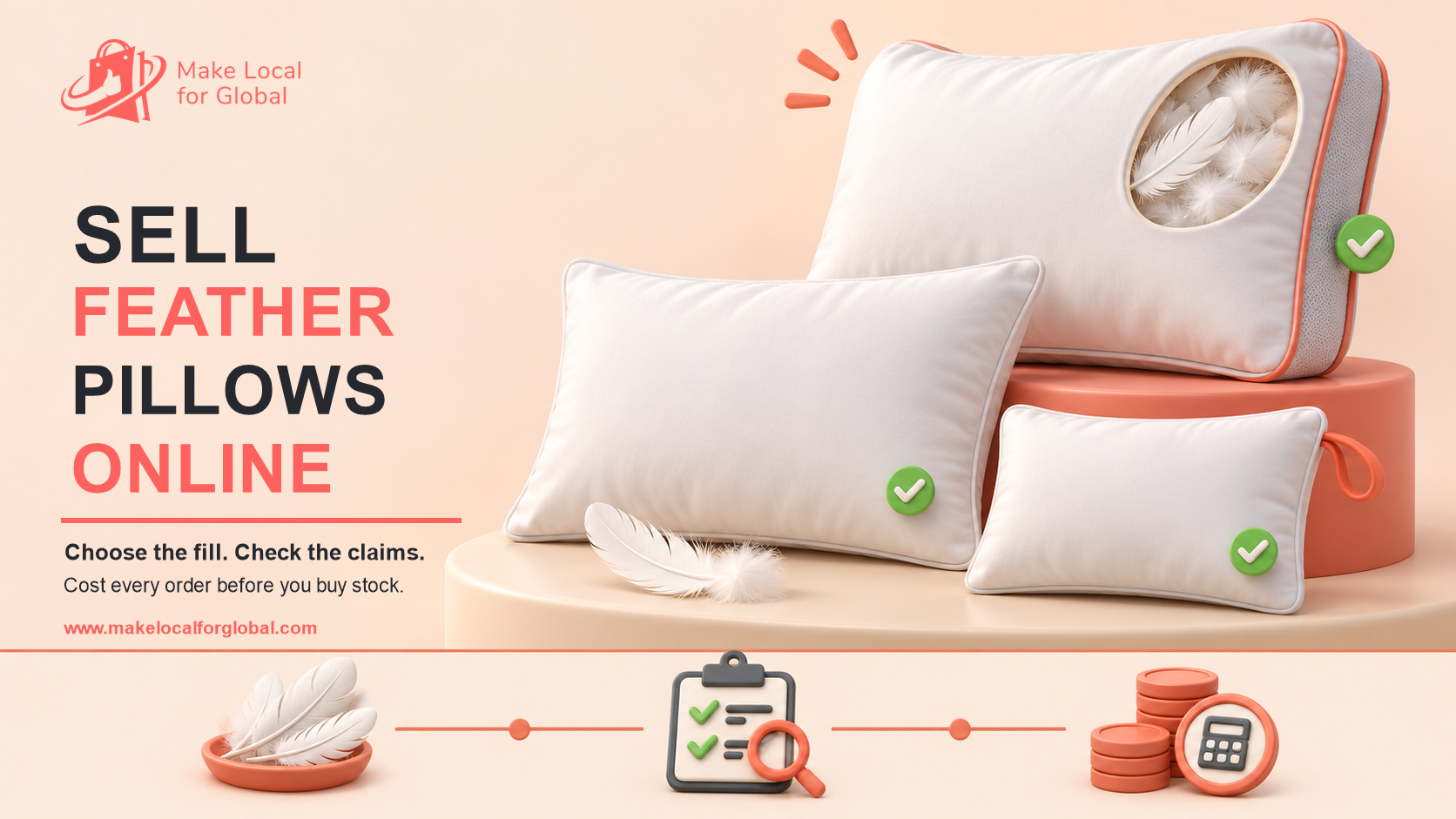
Feather pillows sit in a clear but often confusing part of the bedding market. Buyers compare feel, fill, casing, care, price and the confidence they have in a seller’s claims. A strong first range makes those details easy to check before anyone places an order.
To sell feather pillows online, choose one buyer group, source a small number of clearly specified pillows, verify the filling and labels, inspect samples, price the whole delivered order and publish a product page that answers fit and care questions. The first goal is to learn which product and message earn real enquiries or orders without tying up too much cash in stock.
This is a practical business article about feather and down filled bed pillows. It focuses on sourcing evidence, product descriptions, pricing, delivery and UK seller checks. It does not treat decorative cushions, foam pillows or general bed pillows as interchangeable products. For the wider category, see how to sell bed pillows online and how to sell decorative pillows online.
A feather pillow shop needs clear specifications, useful photos, care details and delivery information. Explore how Make Local for Global helps small businesses set up an ecommerce website, then decide whether that support fits your launch.
“Feather pillow” is often used as shorthand for several different constructions. A pillow may contain mostly feather, a blend of feather and down, or a down rich fill. Buyers may not know how these blends feel, how the product was processed or what the label means. That gap is an opportunity for a seller who gives precise information rather than a vague luxury claim.
Feathers have a central shaft and visible vanes. Down clusters do not have the same quill structure and are valued for their soft, airy form. A product’s behaviour depends on the mix, the amount of fill, the fabric, the seams, the pillow dimensions and how the contents are distributed. Do not infer support, warmth or durability from the word “feather” alone. Request the supplier’s exact composition and the test or labelling basis behind it.
The purchase is tactile. An online buyer cannot squeeze a pillow before checkout. The page needs to replace that missing touch with useful evidence: a side view, close-up of the casing, finished dimensions, filled weight, construction details, care instructions and a plain description of the intended feel. Avoid promises about curing pain, preventing allergies or guaranteeing sleep outcomes. Those claims need strong evidence and can create legal risk.
Start with one clearly defined type of bed pillow. A broad bedding shop can come later. A smaller opening range lets you check the product, photograph each option consistently, learn what buyers ask and understand the parcel cost before committing to a large order.
Choose the person you want to serve before choosing the fill. “People who want a comfortable pillow” is too broad to guide stock, photographs or copy. A better starting point is a guesthouse buying replacement pillows in matching pairs, a homeware gift buyer who wants premium presentation, or a customer comparing natural fill with synthetic alternatives. Each group asks different questions.
For a guesthouse buyer, consistent dimensions, repeat availability, care, reliable delivery and a trade price may matter more than gift wrap. A homeware customer may care about casing fabric, filling origin, return policy and how the pillow looks on a made bed. A sustainability minded shopper may ask how the filling was sourced and whether a claim such as “responsibly sourced” can be verified. Do not assume the last buyer will pay more just because a description uses ethical language.
Test the assumption through conversations, not a large stock purchase. Show a simple product concept with two fill choices, two sizes and a price range. Ask likely buyers which facts they need before they would order. Record their words for feel, firmness and care. Ask accommodation owners how they buy replacement stock, what causes complaints and whether they need single pillows or matched sets. Treat praise as a clue, not proof of demand.
Test a small landing page or waitlist to measure active interest. State that the product is being researched and do not take payment before stock, compliance and delivery are ready. Track completed enquiries, email sign ups from relevant buyers, requests for a trade quote and the exact product variant selected. A click on a social post is weak evidence by itself. A buyer who asks about price, quantity, delivery date and care gives a stronger signal.
Choose one main buyer for the first month. Keep secondary audiences in a notes column. This gives your first product page a clear voice and prevents the range from becoming a collection of unrelated pillow types before you know which one has a realistic route to sale.
Begin with a small range that differs on one or two meaningful factors. For example, offer one standard size in a feather rich fill and a second option with a higher down proportion. If the supplier can provide accurate specifications, these choices let customers compare composition and price without learning six unrelated names. Keep product codes and photographs separate so fulfilment does not send the wrong blend.
Choose a size only after checking the pillowcase dimensions used by your intended customers. “Standard”, “king” and “continental” can differ across regions and brands. List exact finished width and length in centimetres, then check the supplier’s tolerance and the item’s dimensions after filling. A pillow that looks close to a familiar size may not fit a buyer’s existing case well.
Choose a casing that suits the fill and target price. Ask for fabric composition, weight or weave specification where supplied, seam construction, closure method and whether the cover is removable. If the pillow is not designed for a customer to open, say so. A soft casing may feel good in a sample yet allow filling to escape through seams or fabric. Inspect construction rather than trusting a fabric name alone.
Do not create a premium tier by changing only the product name. A higher price needs a verifiable reason such as a measured fill composition, a stated casing material, a documented source claim, a different size or a tested construction. Keep each difference visible in the comparison table and product page. If the supplier’s paperwork does not distinguish two models, buyers are unlikely to understand the price gap.
Bundles can improve the use of a parcel, yet they do not automatically improve margin. Compare a single pillow with a pair and a pillow plus protector. Check packed size, weight, stock cost, delivery band, picking time and the buyer’s reason to purchase the extra item. A bundle should make the buying decision easier. It should not hide the single item price or pressure a customer into a set they do not need.
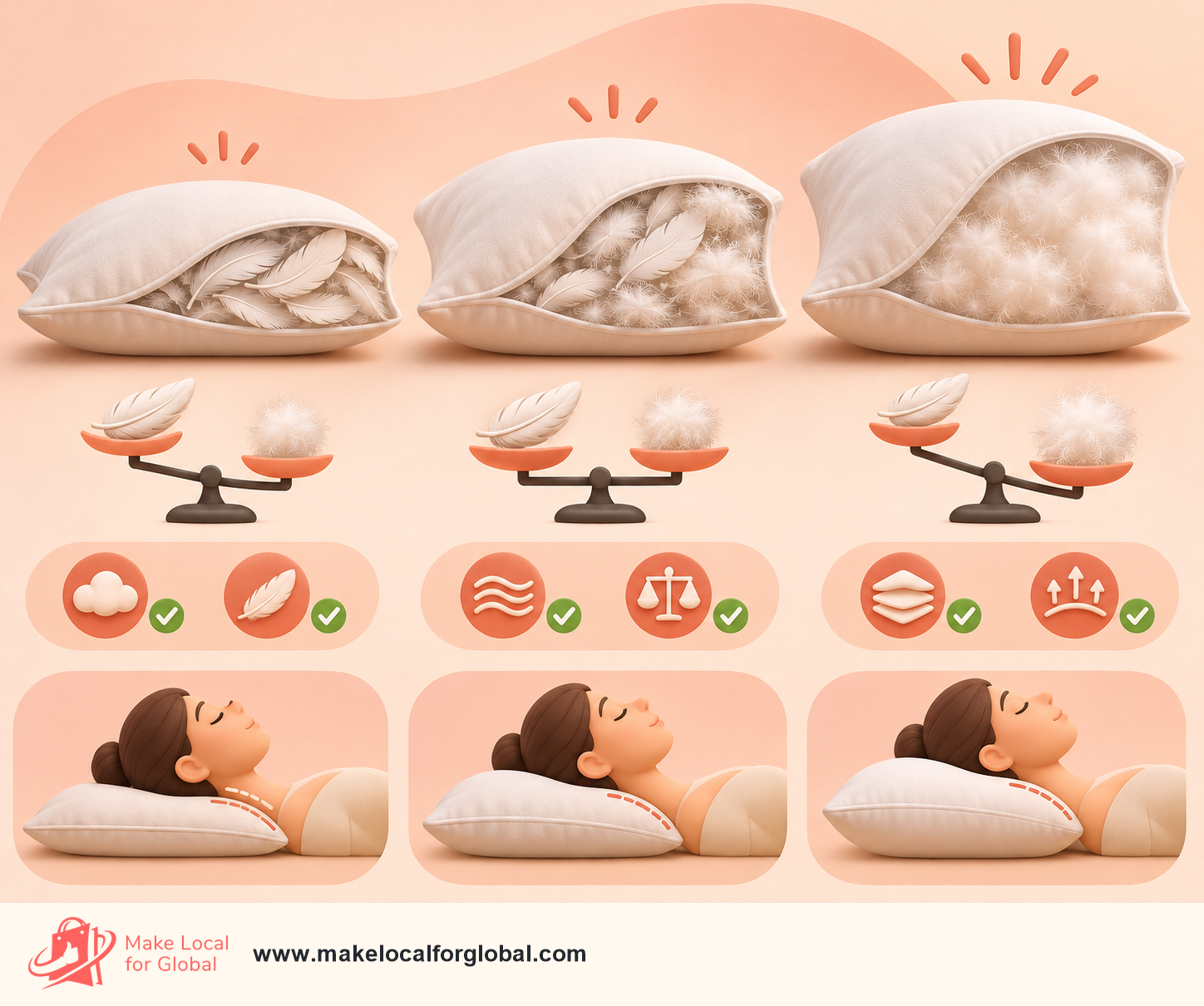
Product names are not a substitute for a composition specification. Ask whether the stated proportions refer to weight, which test or standard was used, what tolerances apply and whether the tested sample represents the finished pillow. Keep supplier documents for each stock keeping unit. If a supplier gives you a phrase such as “down touch” without a percentage or definition, do not convert it into a percentage on your page.
Fill weight and fill composition answer different questions. Fill weight tells the customer how much material is in the pillow. Composition describes what that material contains. A larger number of grams does not prove a softer feel or better quality. A higher down percentage does not, by itself, prove suitability for a particular sleeping position. Use verified measurements and describe what they mean without turning them into a health recommendation.
Ask about fill power only if the supplier provides a test report with the method, units and product context. Fill power is a volume measurement used for down and feather material; test methods condition and measure material in prescribed ways. It is not the same as finished pillow firmness or a universal quality score. IDFL’s explanation of down and feather tests covers composition, fill power and other testing concepts. Use the report to explain a specific verified result, not to make a broad superiority claim.
| What to compare | What to ask the supplier | What to show customers |
|---|---|---|
| Fill composition | What are the tested proportions, expressed by weight, and which method supports them? | The exact verified description, not a loose “feather and down” label. |
| Fill weight | What is the filling mass per pillow and what tolerance applies? | Fill weight in grams, separate from finished pillow weight. |
| Finished size | What are the dimensions after filling and what production variation is expected? | Width and length in centimetres, plus case fit guidance. |
| Casing and seams | What fabric, seam and closure are used, and how is leakage checked? | Fabric composition, construction details and close up photographs. |
| Care | What cleaning method is allowed for this exact pillow? | Care instructions from the verified product label or supplier pack. |
These details make your offer easier to compare. They help customers select a variant and make it simpler to answer a complaint with a batch record rather than an old email memory.
Potential supply routes include a UK wholesaler, a bedding manufacturer, a private label partner or importing finished pillows. A local wholesaler may offer a smaller opening order and faster replacement route. A factory may give you more control over casing, fill blend and packaging, but can require a higher minimum order, longer lead time and more import work. Compare the delivered cost and responsibilities rather than choosing by unit price.
Ask each supplier for a written specification sheet and recent evidence for the exact model. Request country of manufacture, declared fill species or blend, fill percentage basis, fill weight, finished dimensions, casing composition, care label, batch identification, sample availability, minimum order, lead time, payment terms and process for faulty goods. Ask who handles product labelling and who is importer of record if goods cross a border. Resolve unclear responsibilities before ordering.
For down or feather, ask for source and treatment information traceable to the pillow batch. A supplier’s certification logo or ethical claim is not enough on its own. Request the scheme name, scope, certificate holder, validity dates and chain of custody for the model you plan to sell. Check that the certificate is current and applies to the filling in the specific stock, rather than another factory line or a general company statement.
Ask for an independently tested sample or a lab report when a claim matters to the product positioning. The report should identify the tested material, date, method, result and any tolerance. If you receive a report for loose fill, confirm that it relates to the filling used in your finished pillow. Keep the signed specification, invoice, purchase order, batch number and received sample together. Good records help resolve mismatches and support traceability if an issue emerges.
Evaluate suppliers with the same scorecard. Rate each on documentation, sample quality, minimum order, unit cost, landed cost, lead time, communication, packaging and corrective action. A supplier who replies clearly about a mismatch may be a better partner than one with a lower quote and no plan for defects. Ask how they handle seam failure, fill leakage, incorrect composition, odour complaints and delayed replenishment.
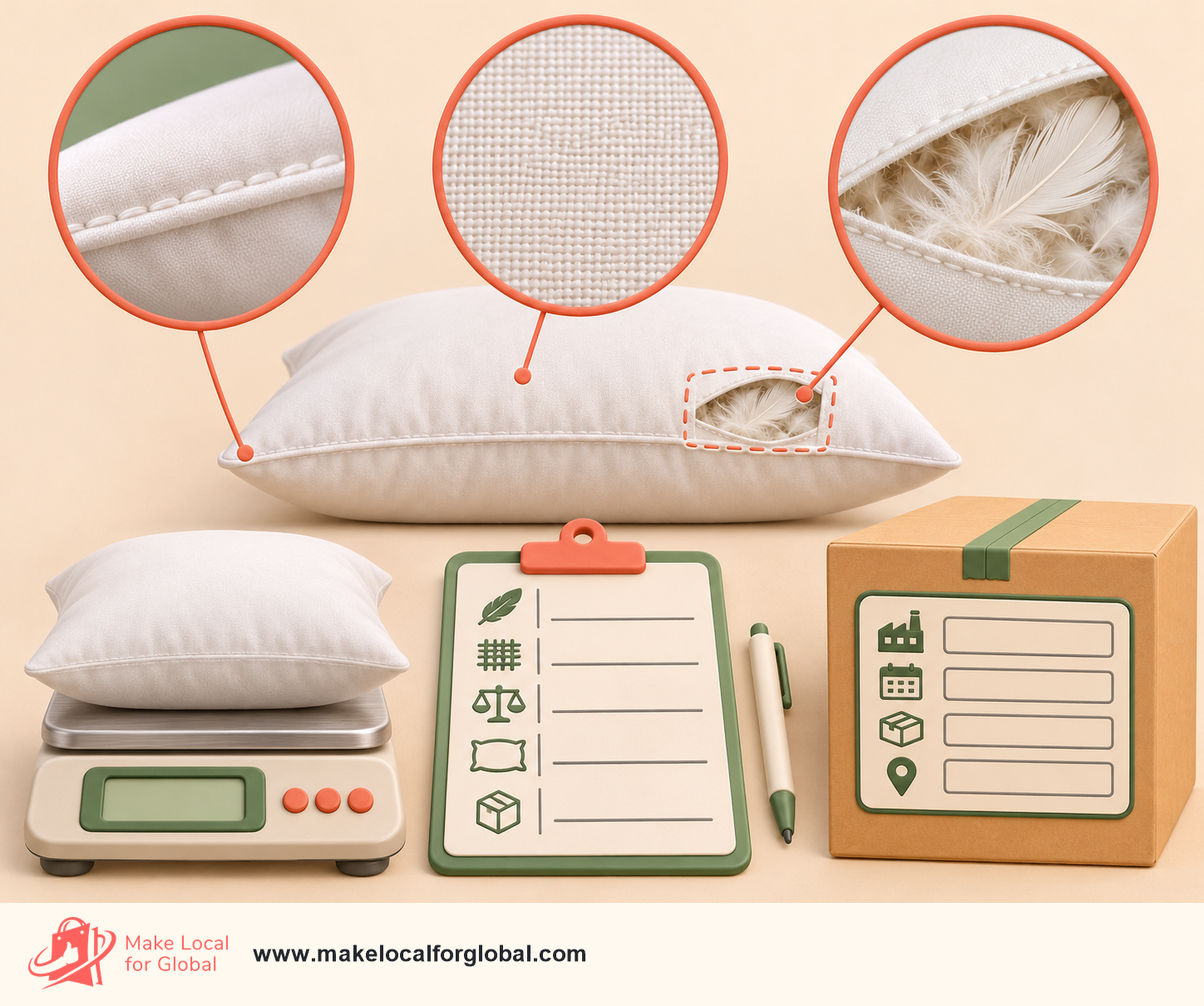
Before committing to a private label design, ask who owns the artwork, whether the supplier permits the label claim, what happens when the fill source changes and how much notice you receive. Product names and photographs should not imply a certification or origin the item cannot support. Put approved wording in writing and retain the version that applied to each order.
Order samples from the supplier you intend to use and treat them as a decision tool. Photograph each parcel on arrival. Record the delivery date, outer packaging, SKU, batch details and any damage before opening it. Weigh the unopened parcel, then the pillow if the pack design lets you do this without damage. Compare the measured weight with the specification, noting that the pillow includes both fill and casing.
Check the finished width and length using the same method for every sample. Let a compressed pillow return to shape before measuring, and record how long that takes. Note whether the shape is even, whether the fill is distributed as expected, whether one side feels different and whether hard quills or lumps can be felt through the casing. Do not make a subjective firmness rating sound like a laboratory result. Use a short scale such as softer, medium or firmer and explain that it is your sample assessment.
Inspect seams, piping, stitching, closure points, loose threads, fabric marks and leakage. Gently handle the casing over a clean surface and note feathers or down escaping. Check for a persistent odour once the pillow has aired according to supplier guidance. If a smell remains or the sample feels damp, isolate it and ask the supplier for an explanation. Do not mask a quality issue with fragrance or a stronger packaging scent.
Follow the care label before any wash or dry test. Some pillows require professional cleaning, and a test that contradicts product instructions can damage the sample and tell you little about ordinary use. Ask the supplier for a documented cleaning method and clarify whether the casing can be machine washed. Record the exact care label wording and use it on your product page. If washability matters to your buyer group, confirm that the exact model has been tested for that routine.
Compare at least two production samples when possible. One sample can hide variation. Ask for a pre-shipment inspection or a retained sample when the order size justifies the cost. Agree in writing on acceptable dimensions, fill weight, stitching, packaging and label before bulk production. Keep a signed-off sample as your benchmark and do not approve a substituted material without checking it again.
Turn the checks into a repeatable receiving form: supplier, purchase order, SKU, batch, arrival date, count, dimensions, casing, fill details, label, smell, seam quality, leakage, packaging, photographs and decision. Mark each line pass, fail or follow up. Quarantine questionable stock. Keep it off the shop floor until the mismatch has been resolved. This routine protects customers and helps you spot a supplier trend before it reaches several households.
A feather pillow can be costly to ship relative to its selling price. The pillow may be light but bulky, and a protective carton can push the parcel into a larger carrier band. Price from packed dimensions and the actual dispatch method, not from unboxed product dimensions or a general estimate. Reweigh and remeasure a packed sample before setting a delivery rate.
Use one order as the cost unit. Include the pillow purchase price, inbound freight and duty where applicable, packaging, pick and pack time, outbound delivery, payment or marketplace fees, expected damage and return cost, discounts and paid customer acquisition. If you sell pairs, build a separate pair calculation. Shared costs such as monthly hosting and insurance belong in a wider break-even plan, though they do not disappear just because the per-order table is simple.
The sample below is illustrative, not a supplier quote or a promise of profit. It assumes one standard pillow sold through a direct shop to a customer in Great Britain. The seller is not VAT registered, and each line is a planning estimate to replace with current quotes. The advertising amount is an average acquisition budget per order, not the spend on one individual click.
| Illustrative cost per order | Amount | How to replace the estimate |
|---|---|---|
| Finished pillow from supplier | £11.40 | Use the quoted unit cost for the selected SKU. |
| Inbound freight, import and handling allocation | £1.60 | Divide landed delivery costs across sellable units. |
| Protective bag, carton and printed insert | £1.10 | Pack one sample and price the full materials. |
| Pick, pack and dispatch labour | £1.80 | Time the task and use a realistic hourly cost. |
| Outbound delivery | £4.35 | Quote the real packed size and delivery service. |
| Payment fee assumption | £1.30 | Replace with your provider’s current fee for this order value. |
| Returns, damage and reship reserve | £2.40 | Review actual outcomes after launch and adjust. |
| Customer acquisition allowance | £5.00 | Divide test campaign spend by paid orders. |
| Total variable cost | £28.95 | Add all eight cost lines. |
| Example selling price | £44.95 | A test price only. Compare buyer response and other offers. |
| Contribution before fixed overhead | £16.00 | £44.95 selling price minus £28.95 variable cost. |
Contribution is not net profit. The £16.00 still has to cover fixed costs such as insurance, software, accounting, storage and website costs, plus tax and owner pay. If VAT applies, rebuild the example on the correct VAT basis. A VAT registered seller who advertises a consumer price that includes VAT cannot treat the full displayed amount as sales income. Ask an accountant to check your pricing model for your business and sales routes.
Run a second calculation with no paid advertising and a third with a higher return reserve. Then test a two pillow pair. A pair may spread the parcel and delivery cost over two products, yet it can raise the cash tied up in stock and the value of a return. Show the customer the single pillow price and pair price clearly. Revisit the table when supplier quotes, carrier bands, payment terms or actual return rates change.
Begin with the amount a buyer may accept, then check whether your full cost structure can support it. A simple pricing formula is: selling price minus variable cost per order equals contribution. Decide how much contribution you need to cover fixed costs and leave room for a viable business. Do not use a competitor’s retail price as proof that your own price will sell. Their buying power, return rate, traffic source and cost base may differ.
Compare like for like: pillow size, stated fill composition, fill weight, casing, care, pack quantity, delivery cost and return terms. A pillow priced at £25 and a pillow priced at £55 may not be comparable if one is sold singly with a lower fill weight and the other is a pair with documented composition. Record the date and delivery charge when noting a competitor price. The advertised amount can change, and a promotion may not reflect the usual offer.
Choose a margin floor before running discounts. If a 10 per cent code removes nearly all contribution, change the offer rather than granting the discount automatically. You could test a pair price, free delivery above a suitable basket value or a simple storage bag, but calculate its cost first. Free delivery still means the seller pays a carrier. It is a pricing choice, not free logistics.
Review actual performance by SKU. Track units sold, gross revenue, discounts, delivery paid by the customer, fees, returns, damage, advertising and contribution. If the entry pillow sells but creates frequent casing complaints, the order count alone hides the issue. Use a weekly sheet with a separate line for each model and batch. Reorder only when sales and quality evidence support the next purchase.
Use a title that identifies the type, size or key verified distinction. “Standard Feather-Rich Bed Pillow, 48 × 74 cm” gives more information than “Cloud Comfort.” The exact wording must match supplier records and the label. Avoid terms such as “orthopaedic”, “hypoallergenic”, “chemical free”, “100% natural” or “sustainable” unless you have evidence for the full claim and have checked any relevant definition.
Start the description with a short explanation of who the model is intended for and what sets it apart. Follow with a compact specification list: finished dimensions, fill weight, verified composition, casing material, closure, care label, country of manufacture where required or stated, pack quantity, included items, dispatch estimate and returns contact. Distinguish facts from your own sample observations. “Our sample felt medium in a hand test” is an observation, not a clinical description.
Photograph the actual product on a plain bed with a scale reference, then show a close-up of the fabric, seam and label. Add a side view that helps shoppers judge height, a photograph beside a standard case and an image of the pair packaging if you sell a set. Use colour accurately. Fill can vary slightly between batches, so do not use a dramatic cutaway that appears to show a tested percentage unless it is an accurate diagram labelled as illustrative.
Give each image a useful description and alt text that tells a screen reader what is visible. Do not repeat the same keyword in every image. A label close-up may use “Care and filling label sewn into the side seam of the standard feather pillow.” A product image may say “White feather-rich pillow shown from the side beside its 48 by 74 centimetre size guide.” The words should match the actual photograph.
Explain feel in plain terms. If you use soft, medium or firm, state whether the rating comes from a supplier specification, a test method or your own comparison. Describe the fill balance and construction without telling customers how their neck or back will feel. Preferences vary, so point people to product facts and invite a question before purchase. Clear wording can reduce mismatched expectations and avoidable returns.
Add a simple comparison table for your own range. Keep rows short enough to read on a phone. Include variant, size, verified fill description, fill weight, casing, care, pack quantity and price. Do not hide material facts inside an image. Keep product facts readable as selectable page text and match them to the package label.
Rules depend on where the pillow is placed on the market, where it was made, its construction and how it is imported. These notes are a starting point for research, not legal advice. Before selling, identify whether the product is sold in Great Britain, Northern Ireland or another market, then check current official guidance for that route.
The UK government’s textile labelling guidance explains fibre composition labelling and says labels must include fibre content, including fur and other animal parts. Check how the rule applies to the finished pillow, its textile casing and its filling. Ask the supplier for label artwork, a material declaration and evidence that composition information is accurate. If you import or relabel the product, do not assume the supplier’s label alone settles your responsibilities.
For processed feather and down fillings, ask whether the composition declaration follows the current relevant standard, such as BS EN 12934:2025. A standard can help define how processed feather and down composition is labelled; do not assume that citing it removes other legal duties. Check the current edition and scope with a standards body or qualified adviser. The BSI listing for EN 12934:2025 describes composition labelling of processed feather and down for use as sole filling material.
Great Britain import controls can apply to feathers, parts of feathers and down as animal by-products. Before buying from outside the UK, check the current commodity specific Import Information Note for treated feathers and down, country eligibility, treatment, documents, border and notification requirements. Do not rely on a supplier’s statement that goods are “treated” without checking the current import route and records required. Requirements can differ by origin and consignment type.
For EU to Great Britain trade, current GOV.UK information says the commercial document for treated feathers, parts of feathers and down must state how they were treated and washed. Read the live animal by-products import guidance and the commodity note before shipping. Great Britain is England, Scotland and Wales for these routes. Northern Ireland has separate arrangements. Check the applicable rules before offering the same supply plan there.
For general consumer product safety, GOV.UK’s product safety advice for businesses describes duties for businesses that make, import, distribute or sell consumer products in Great Britain. Keep supplier, batch and product records; record customer complaints; review risks; and act if a product may be unsafe. In Northern Ireland, the EU General Product Safety Regulation applies from 13 December 2024; see the government’s Northern Ireland product safety note. Ask a product compliance specialist to confirm the route for your product and business role.
Online sellers must present clear trader details, total price, delivery arrangements and cancellation information before checkout. Read GOV.UK’s online and distance selling guidance and current consumer rules. Most online purchases of goods include a cancellation period, with exceptions in specified cases. Do not assume pillows are exempt just because they touch skin or bedding. Set a returns policy that reflects the law, seal and packaging, the actual hygiene facts and customer rights. Get advice before relying on a hygiene exception.
Keep a compliance file for every model: label artwork, fibre and fill declarations, test reports, supplier identity, import documents where applicable, product photographs, purchase order, batch code, customer instructions and complaint records. Keep dated copies so you can show what information applied to stock sold at a given time. If the supplier changes the fill source, treatment, casing or factory, review the page copy and evidence before accepting the next batch.
Claims need the same attention as labels. “Ethically sourced”, “cruelty free”, “recycled”, “responsible” or “traceable” can change a buyer’s choice. Match the wording to the certificate and chain of custody, use the scheme’s permitted wording and disclose limits. A certificate may cover one material or stage, not the complete product. Keep evidence for each claim and remove it if the supply record no longer supports it.
Use a checklist to compare the first range, required documents, expected parcel and full order cost before you commit to a production run.
Pillows take up space, and over-compression can leave them flat or creased when a parcel arrives. Ask the manufacturer whether the product may be compressed, how long it needs to recover and whether a maximum compression period applies. Do not assume a pillow can be vacuum packed just because one sample survived delivery. Use supplier packing instructions and test the finished parcel on the route you intend to serve.
Build the pack for protection and presentation. A clean inner bag helps protect the pillow from moisture and dirt; an outer carton protects it from handling and puncture. Choose a carton that holds the pillow securely without crushing it or leaving so much spare room that it moves. Add an insert with verified care guidance, product name and contact details. Do not put loose feathers or loose fill in the parcel.
Measure and weigh the packed order. Test the parcel at the carrier’s collection or drop off point when practical, then compare the accepted measurement with your label. A small dimension difference can move a bulky pillow into another price band. Check the carrier’s current size rules, insurance exclusions and compensation limits. Pillow fill, fabric, packaging and route can affect eligibility, so confirm the requirements instead of relying on a general parcel guide.

Run a delivery test to a nearby address and one farther away. Record dispatch time, tracking events, delivery condition, parcel dimensions and customer feedback. If the carton is damaged or the pillow arrives compressed, inspect the packaging and carrier handling before changing the product. Keep photos of the pack before dispatch and the returned parcel where a claim requires them.
State the dispatch cut off, working day estimate, tracking method and regions served. Make clear whether weekends and public holidays count. If you cannot dispatch during a busy period, update the shop before orders are placed. Tell customers how to report a damaged parcel and what photographs or order details you need. A useful delivery page reduces checkout uncertainty and gives you a fair way to resolve a problem.
A marketplace can help test customer language and product photos, though its rules, fees, search placement and buyer access are controlled by the platform. Read its current fee and product policies before listing. A brand website gives you more control over education, email capture, product comparisons and repeat customer contact. It asks you to bring visitors through useful content, partnerships, search visibility, social posts or advertising.
Do not launch on every channel at once. Select one main sales path and one supporting traffic source. For instance, run a small website with a detailed comparison page and use a marketplace listing to learn how buyers search. Keep the same verified product facts across both. Maintain a stock count that accounts for sales from each channel so a single pillow is not promised twice.
For search, create pages around buyer questions rather than repeating a keyword. Useful pages might compare feather and down, explain pillow sizes and cases, show the filled weight of each model or describe the return process. A category page can organise standard and king sizes. A product page should stay focused on one model and one verified specification set.
Search phrases to research include “feather pillows online UK”, “feather and down pillow”, “feather pillow pair”, “standard feather pillow size” and the name of your chosen size. Treat these as research examples, not a required phrase list. Use a search tool or marketplace query suggestions to see the language buyers use. Keep the page readable and place natural variants in headings, image descriptions and supporting text.
For internal links, connect the feather pillow page to related bedding choices where a reader benefits. The bed pillow guide covers broad range decisions, the decorative pillow article focuses on home styling and the bed linen range guide covers fabrics and sizing. Use descriptive anchor text that explains each destination. Do not add a link just to repeat “feather pillows” or send readers to an unrelated service.
Show evidence before asking for a purchase. A short comparison video can demonstrate the shape after unpacking, the label and the casing. A photo sequence can show the pillow beside a measured case. A small FAQ can explain the fill description and care instructions. A message to local guesthouses can offer a sample for inspection, with no claim that one pillow will suit every bed or every sleeper.
Test one customer acquisition route at a time. You could contact a small list of guesthouses with a clear trade offer, publish a pillow size explainer, or run a modest search campaign for a tightly defined phrase. Set a spending limit and time window before starting. Track the relevant action: a trade enquiry, qualified product page visit, add to basket or completed order. Do not judge a campaign by impressions alone.
Use customer questions to improve the page. If people ask whether a pillow fits a case, put exact dimensions beside the variant selector. If they ask how filling was sourced, explain what the document confirms and what it does not. If several enquiries mention cleaning, add the actual care label wording near the price. Publish answers only after checking the supplier record.
Ask customers for a product review after delivery, in line with platform rules and consumer law. Do not reward only positive reviews or edit a customer’s words into a different claim. A useful review can mention the product description, packaging, dimensions and delivery experience. Report genuine negative patterns to the supplier and show how you resolved them. Do not imply that one review represents every customer’s preference.
Track stock by exact SKU and batch. A record might include supplier, purchase order, fill blend, casing, size, batch code, date received, quantity received, quantity sold, defects, retained sample and supplier correspondence. If two blends look alike in white packaging, use a clear internal label and separate storage. Check the pick list against the order before sealing the carton.
Set a reorder point using real lead time and sales, not a guess. If the supplier takes six weeks, a short campaign can leave you out of stock before replacement arrives. Keep cash available for a deposit and freight. Ask whether replenishment uses the same fill source and label. A stockout is inconvenient, but an unverified substitute can create a larger product and trust problem.
Prepare support replies for common questions: which size fits a case, how the product is filled, where declared information comes from, how to care for it, how long dispatch takes and how to contact you about damage. Use calm factual wording. If a buyer reports a leak, smell or incorrect label, ask for an order number and clear photos, then compare the concern with the batch record. Escalate a repeated issue to the supplier and pause affected stock if a safety or compliance concern is plausible.
Have a written returns workflow. Check the date and condition, inspect the seal or packaging, document the reason, record the batch and handle the refund or replacement under applicable rules. Do not reject a return solely on an internal rule that conflicts with consumer rights. Review current GOV.UK guidance on accepting returns and giving refunds and take advice on any hygiene related exception before relying on it.
Use return reasons to improve the offer. “Too flat” may indicate unclear photos, a mismatch in fill weight or compression in transit. “Too small” may mean the size chart needs exact dimensions. “Unexpected feather feel” may mean the composition description is vague. Separate preferences from defects and supplier issues. A useful returns log records product, batch, order date, issue, remedy, cost and next action.
Each mistake has a practical check. Keep the quote sheet, approved sample, verified facts and shipping test together. Before adding another pillow, compare it against the same criteria. If a supplier cannot substantiate an important claim, remove the claim or choose a different product.
This plan is for a first small test. It assumes you can request samples and supplier documents during the first two weeks. Adjust the pace for import lead times, compliance checks and production schedules. Do not take payment for a product that is not ready to supply, and do not skip a check to meet a calendar date.
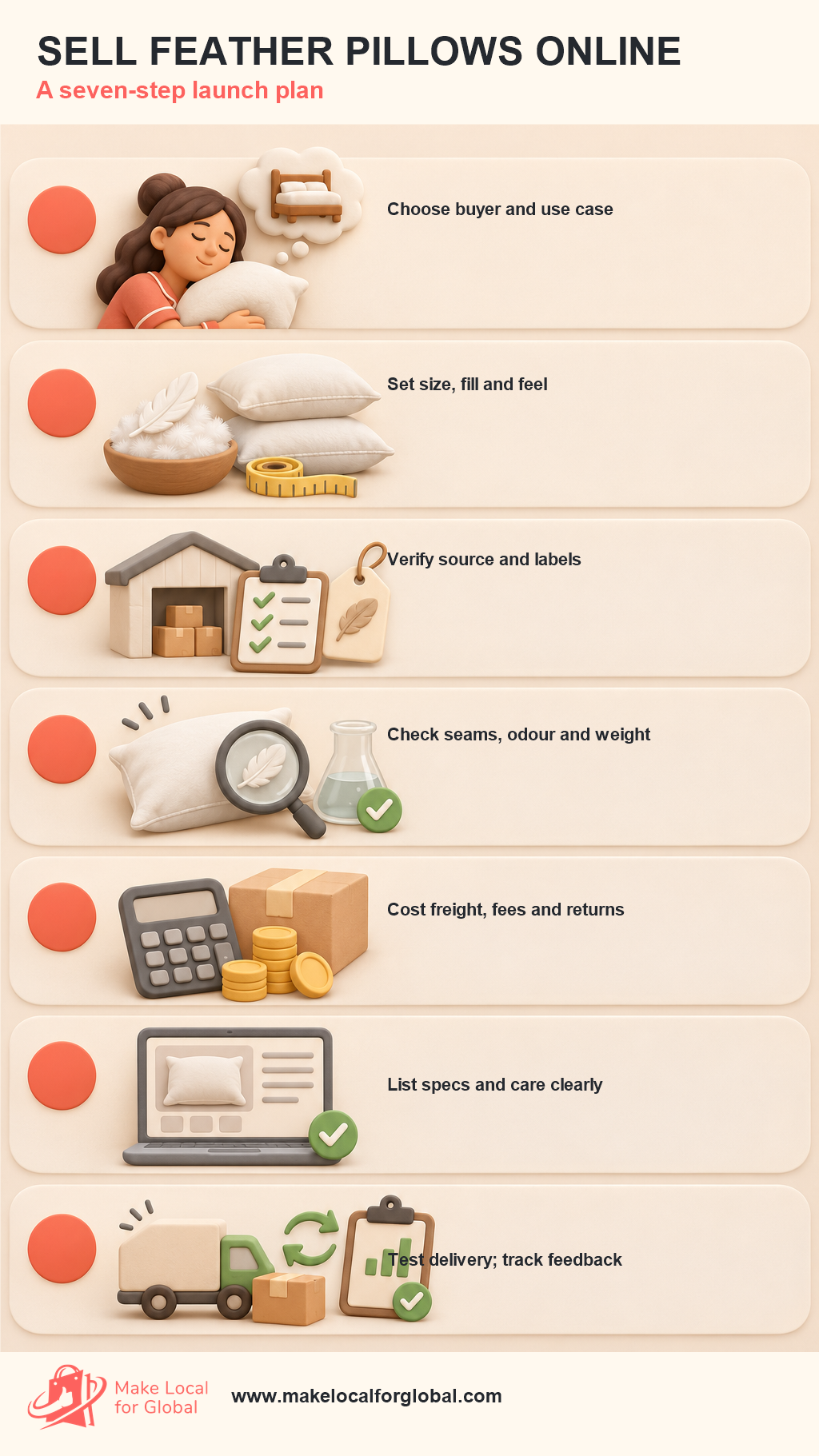
At the end of the test, write one page with the decision, its evidence and the next action. A continue decision might mean ordering a limited quantity of one verified model. A change decision might mean asking for a different casing or correcting the parcel design. A stop decision can protect your cash if landed cost, documentation or demand does not meet your minimum.
Possibly, if a supplier offers a low minimum order and you can fund samples, packaging, a delivery test and an acquisition test. Write down the full amount you could lose before ordering. Include freight, import costs, storage, payment fees and a returns reserve, then compare that total with your cash limit. Do not use all available funds on stock alone.
Feathers have a central shaft and vanes; down clusters have a different soft, branching structure. Pillows can use either material or a blend. The exact feel and performance depend on composition, quantity, casing and construction. Ask for stated proportions and evidence behind them rather than assuming a product name gives the full specification.
Start with as few as you can while giving your chosen buyer a meaningful choice. One size with two verified fill blends can be easier to test than several sizes and colours. Add variants only when buyer requests, supplier evidence, stock management and the cost model support them.
No. You could buy finished products from a UK wholesaler or manufacturer. If you import goods or filling, check current commodity rules, country eligibility, treatment, documents and your responsibilities before placing the order. Do not treat a finished pillow and a shipment of loose down as the same import route.
Calculate variable cost for one delivered order, then subtract it from your test selling price to find contribution. Add the pillow, inbound freight, packaging, labour, outbound delivery, transaction fees, returns and customer acquisition. Keep fixed costs and tax in a wider plan. Replace each illustrative number with current supplier, carrier and payment quotes.
Do not use health or allergy claims without evidence and a check of the rules that apply. A fill description is not proof that a finished product prevents an allergy or relieves pain. Give customers factual composition, care and construction information, and ask a qualified adviser before making a medical or therapeutic claim.
Record the supplier and batch, then compare label, dimensions, weight and construction against the agreed specification. Check seams, fill leakage, casing, shape and persistent odour. Follow the care instructions for any test. Keep photographs and written results, and ask the supplier about a mismatch before approving a larger order.
Online cancellation rights generally apply to goods, subject to specified exceptions. Do not assume pillows are excluded from cancellation rights. Check current consumer rules and obtain advice before relying on an exception linked to sealed goods or hygiene. Your published policy must not take away a customer’s statutory rights.
Test both if buyers have a clear reason for each offer. A single can lower the first purchase cost; a pair may suit a matched bed or accommodation buyer. Calculate the pair’s extra stock, packing, carrier and return costs. Show the number of pillows in each offer next to the price.
Use actual product photographs and exact dimensions, fill details, casing facts, care instructions, delivery estimate and a clear returns route. Link claims to current supplier evidence. Explain what is included and distinguish your sample observations from tested specifications. Add a way for customers to contact you before purchase.
A feather pillow business becomes easier to manage when each decision connects to a record: a defined buyer, verified product specification, inspected sample, costed parcel and page that explains the product accurately. Use the first test to decide which model deserves stock, which questions need clearer answers and which supplier can support repeat orders.
Keep the opening range narrow, check product facts before making claims, price the whole order and review feedback by model and batch. When evidence supports another step, add stock or a second offer with a clear reason. For related planning, read the bed pillows selling article and the bed linens range guide.
Write down your buyer, pillow specification, first order limit, delivery test and cost per order. If you want help preparing a small ecommerce shop, review Make Local for Global’s store setup and pricing details.
PREFERRED SOURCE
Like what you’re reading? Add Make Local for Global as a preferred source on Google to see more of our articles when you search.

Build your online presence without having to figure out everything yourself.