READY TO SELL Garden Pruners ONLINE?
Get a store built for you in 5 days, plus training and support to help you start, run, and grow your Alternative business.

Choose a focused garden pruner range, check suppliers and samples, work out the true cost per order, and create clear product pages with practical guidance on safety, delivery and aftercare.

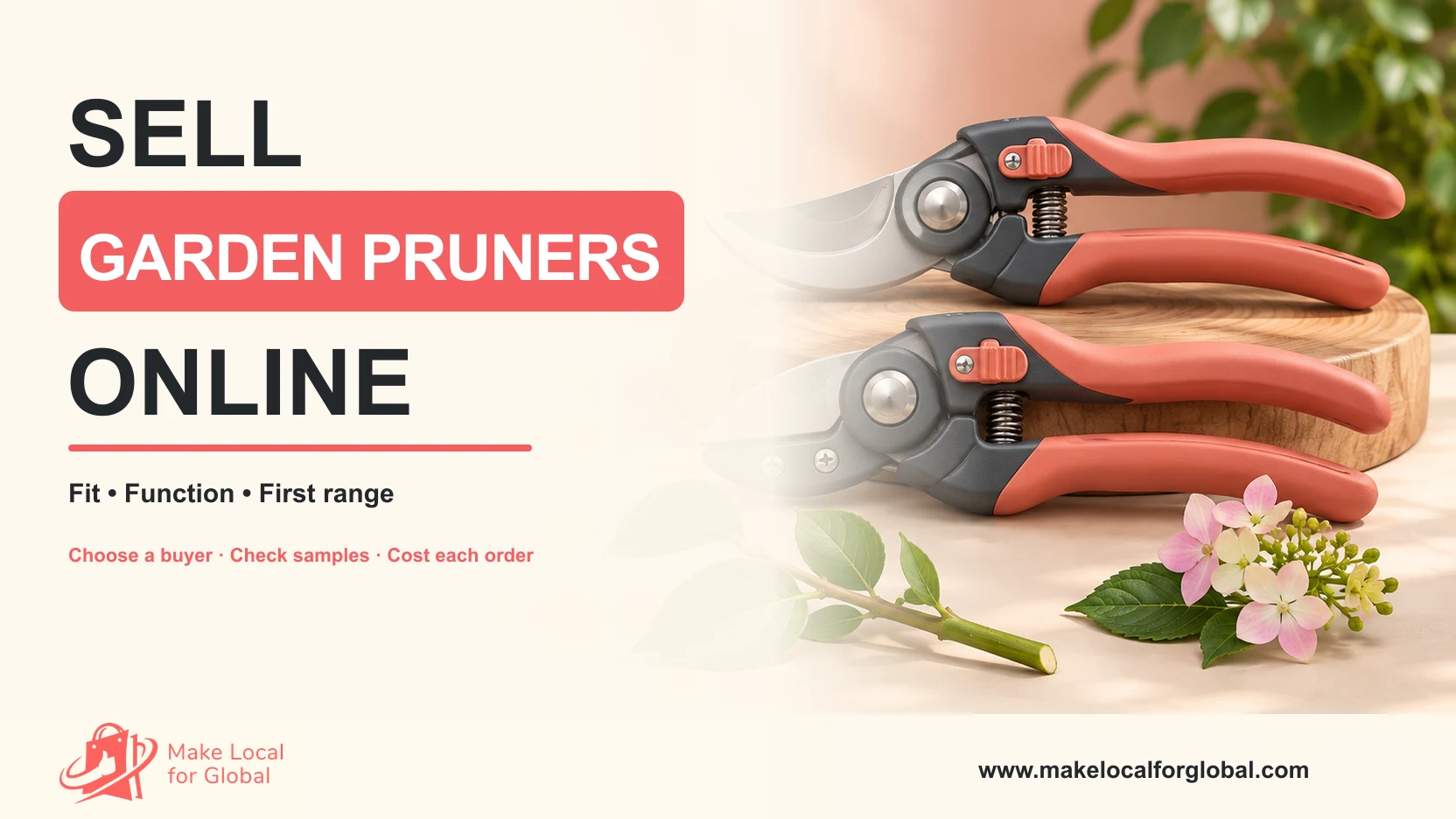
Garden pruners look like a simple product to stock, yet a poor first range can tie up cash in near-identical tools, confusing cutting claims and returns from buyers whose hands or jobs do not suit the model. A small, well-tested range gives a new seller a clearer way to learn what gardeners actually need.
To sell garden pruners online, choose a specific buyer, compare a few useful tool types, test every sample, calculate the full cost of each order and write product pages that make fit and limits clear. Start with one customer group and expand only when enquiries and orders point to a real gap.
Map who you hope to serve, what the first range will include and which assumptions need evidence before you place an order.
“People who garden” is too broad to guide stock or product copy. A home gardener pruning roses has different expectations from a groundskeeper who uses hand pruners throughout a working day, and a person with reduced grip strength may prioritise a very different handle and opening action.
Write a short buyer note before speaking to suppliers. Include the job, how often the tool is used, the buyer’s likely budget, any physical needs, and what would make them choose one tool over another. This note becomes a filter for sample selection, photography and the details shown on each product page.
A beginner who tends a small garden may want one comfortable general-purpose tool, a clear safety lock and instructions that explain care. The buyer may not know the distinction between bypass and anvil blades. Product photographs and plain explanations can answer that question before the item reaches their basket.
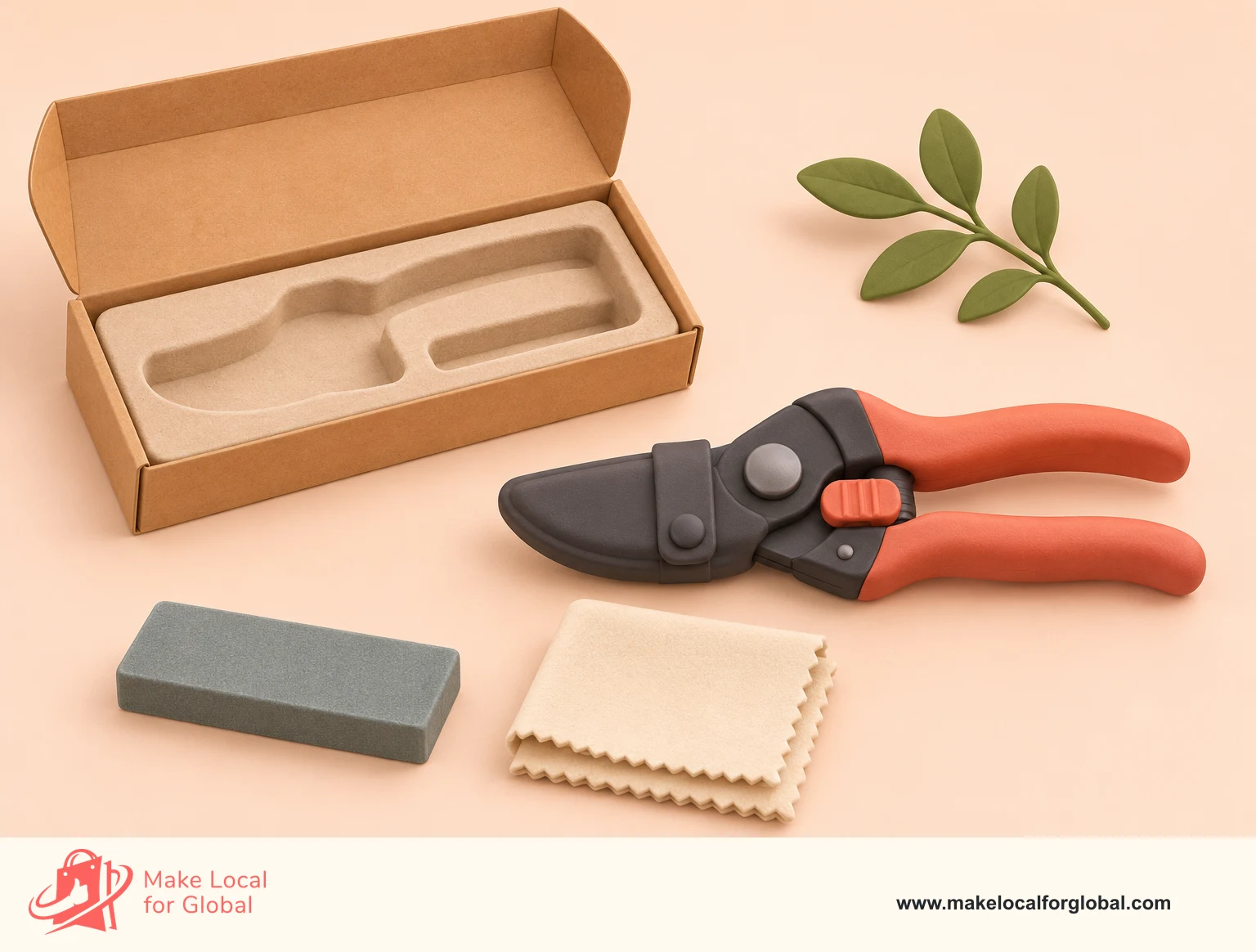
Gift buyers need confidence that the tool suits the recipient. A simple gift set might pair a pruner with a protective holster or spare spring, provided the components are compatible and the package value works. Do not add filler items just to make a bundle look larger. State what is included and show it beside the main tool.
Experienced gardeners may ask about blade replacement, spring availability, handle size and how the lock operates. Florists may care about clean cuts on suitable stems, compact storage and a tool that is easy to wipe down. Garden maintenance teams may need dependable parts and a model that remains comfortable through repeated use.
These are different groups. Choose one to serve first. A trade-focused offer needs evidence about durability and parts; a beginner range needs a helpful explanation of tool types. Trying to speak to both in one vague product page often leaves each group without the information it needs.
Speak with a small set of likely buyers and ask about their last purchase: which pruner they chose, what task it handled, what confused them and what they would replace. Ask people to describe a real experience rather than whether they like a product idea. Compliments are easy to give; a recent purchase or an active search is stronger evidence.
Review questions in gardening groups, retail reviews and search suggestions. Note recurring questions about hand size, cutting limits, replacement blades, locks and sharpening. These observations help shape a useful product page. They do not prove demand by themselves, so compare them with buyer interviews, supplier terms and early order data.
Before buying stock, publish a simple page or email sign-up that describes a proposed range accurately. Ask visitors which model or feature they would want to know more about. Do not advertise goods as ready to ship when you cannot supply them. Record visits, enquiries, sign-ups and paid orders separately; each measures a different level of intent.
Pruners are hand tools that use two handles and a cutting mechanism, but the term covers more than one design. A focused range should explain why each model exists and which job it is suited to. Do not list five tools that differ only by colour or packaging if buyers can see a useful reason to choose among them.
Bypass pruners have two blades that pass one another, similar to scissors. Many gardeners choose this style for suitable live stems where a clean cut matters. Performance depends on blade shape, alignment, sharpness, material and the plant material used. Avoid universal claims such as “cuts every branch cleanly”.
Show the two blades clearly in a close-up. Explain which parts can be replaced, if any, and what care the maker recommends. If you describe a cutting diameter, give the exact figure supplied for that model and identify the test conditions or material where known. A single number without context may set the wrong expectation.
Anvil pruners close a blade against a flat surface. Some buyers prefer them for dry or dead material, but the suitable task depends on the product and maker’s instructions. An anvil can mark or crush plant material if the tool is used for a job it does not suit. Explain the intended use in ordinary language and avoid presenting one blade style as right for every garden.
Ratchet mechanisms let a user make a cut over more than one squeeze. Some people find this useful, though it changes the cutting feel and pace. Ergonomic handles may suit a particular hand shape or grip, but “ergonomic” is not proof that a tool fits everyone. Describe the handle opening, overall dimensions and adjustment options, then invite buyers to compare those measurements with a tool they already own.
Left-handed products deserve a distinct listing where the mechanism is genuinely arranged for left-handed use. A reversible or ambidextrous lock is not the same as a left-handed cutting head. Check this detail with the maker and show the orientation in photographs. If a model is suitable for either hand, say exactly which feature makes it so.
Battery-powered pruners introduce a separate set of questions about batteries, chargers, guards, instructions, maintenance and transport. They are not just a premium version of a hand tool. Check the exact product legislation, conformity evidence, battery shipping rules and support route before listing them. A first-time seller may be better served by starting with manual tools, then investigating powered products once supplier records and aftercare are in place.
| Type | Possible buyer need | What to verify before listing |
|---|---|---|
| Bypass | A clean cut on suitable live stems | Blade alignment, cutting claim, replacement parts |
| Anvil | A tool intended for suitable dry or dead material | Maker’s use guidance, anvil wear and spare availability |
| Ratchet | A staged squeeze rather than one continuous action | Mechanism action, lock operation and return feel |
| Left-handed | A cutting head arranged for left-handed use | Actual blade orientation, not just a reversible lock |
| Electric | Powered cutting with battery and care requirements | Applicable rules, battery data, charger and support |
Models vary. Use the maker’s instructions and test the exact product before making a claim.

You can source garden pruners from a UK wholesaler, a manufacturer, an importer or a maker selling direct. Each route has a different mix of control, minimum order, lead time and responsibility. A wholesaler may let you order fewer units and replenish quickly. Buying direct may offer more choice but can require a larger order and more work on product checks, customs and records.
Ask prospective suppliers for the legal business name, trading address, product codes, country of manufacture, current price list, minimum order, lead time, payment terms and returns process. Request the full product instructions and any safety or compliance documents that apply to the exact model. Keep copies with the supplier invoice and the batch or lot information.
A quoted unit price does not show what stock costs by the time it is ready to sell. Add inbound transport, import duty where applicable, customs and handling charges, packaging changes, inspection time and any cost of replacing defective units. If a supplier quotes in another currency, include the exchange rate used by your bank or payment provider and a sensible allowance for movement before settlement.
Ask whether the quote includes VAT and how the supplier handles shortages or damaged cartons. Confirm the date through which the price remains valid, how the supplier will notify you about a design change and whether the same model code will continue to refer to the same specification. Save written answers rather than relying on a call summary.
Request a sample from the batch you intend to buy, where practical. Product brochures can describe a family of tools rather than the exact handle, blade or lock in your order. Match the sample’s packaging, model code, instructions and spare parts to the supplier record. Ask whether the sample represents current production and what will happen if the specification changes.
If you import or place a product on the market under your own brand, your legal role may carry duties beyond those of a retailer buying from an established UK supplier. Do not assume that a supplier’s logo, declaration or certification label settles the question. Identify the role you hold for the route and product, then check the current official guidance or obtain advice from a qualified product-safety specialist.
The guide to selling garden tools online can help you compare adjacent stock ideas. If gloves are likely to form part of a bundle, review the separate guide to selling gardening gloves online and check that the sizes and materials suit the buyer you have chosen.
A sample check should be repeatable. Write down the model code, sample date, test material, result and any issue. Compare products under the same conditions, and keep a photograph of any defect. Do not treat one sample as proof that every unit in a later batch will behave the same way; repeat checks when deliveries arrive.
Open and close the tool according to its instructions. Look for a spring that returns reliably, a pivot that moves without roughness and a lock that keeps the blades closed in storage. Check whether the lock can be reached comfortably without placing fingers near the cutting edge. If the lock slips, catches or needs force that the instructions do not mention, record the issue and stop using that sample until the supplier has answered.
Inspect screws, rivets, grips and blade edges under good light. Check for loose handles, sharp burrs where the hand rests, uneven coating, corrosion, chips and misaligned blades. Compare both sides of the cutting head. Ask the supplier how to maintain the pivot and whether a replacement spring, blade or anvil can be ordered separately.
Record handle length, maximum opening and weight. Ask testers with different hand sizes to open, close and lock the tool following the instructions. Watch for fingers being crowded, the grip slipping or a user needing to twist the wrist to reach the lock. Ask each tester to describe what felt awkward rather than asking whether the tool is “comfortable”.
Do not use testers to make unsupported medical or accessibility claims. A product page can state measurable dimensions and describe the action in neutral terms. Claims such as “reduces arthritis pain” need strong evidence and may raise legal or regulatory questions. Keep claims within what the manufacturer can substantiate and what you have verified.
Use the supplied instructions and an appropriate test material. Start below the maker’s stated maximum, then check whether the tool cuts cleanly without excessive force, slipping or damage. Record the material and diameter, since a fresh soft stem and a dry woody branch can place different demands on the tool. Never exceed the stated limit to create a more impressive demonstration.
The Royal Horticultural Society’s tree-pruning advice describes secateurs and loppers for certain thin branches below 2.5 cm, but that is gardening guidance, not a specification for every pruner or plant. For product claims, follow the maker’s instructions for the exact model. Direct customers to suitable horticultural advice for pruning technique rather than improvising instructions that could harm a plant or user.

Garden pruners have exposed sharp edges and moving parts. Safe storage, clear instructions and accurate product information matter even for a manual tool. Office for Product Safety and Standards guidance explains that businesses that make, import, distribute or sell consumer products in the UK have responsibilities for product safety. The rules depend on the product and the business’s role in the supply chain.
For Great Britain, the General Product Safety Regulations 2005 provide a general safety baseline where no more specific product rules apply. Northern Ireland follows the EU General Product Safety Regulation from 13 December 2024, alongside any relevant product-specific rules. Check the current rules for the product and territory you serve before importing, branding or selling in another market.
Keep supplier invoices, product identifiers, batch or lot codes where available, instructions, risk or compliance documents and customer incident records. If a buyer reports a blade or lock failure, capture the model, batch, date, use described and any injury or property damage. Pause sales of affected stock if a serious safety concern appears, contact the supplier and follow the appropriate reporting route. OPSS guidance explains duties for businesses and notifications for unsafe or non-compliant products.
Do not add a UKCA or CE mark simply to make packaging look more official. Marking rules apply to specific product legislation and depend on the exact product and market. A manual, non-powered pruner may not fall under rules that require either mark, but related powered models, chargers or included electrical items can have other obligations. Check current UKCA and CE marking guidance for each product rather than copying marks from a supplier photograph.
Offer clear handling and storage information supplied by the maker: keep the cutting edges covered when not in use, store away from children, follow cleaning and maintenance instructions, and do not carry an unlocked tool loose in a pocket or bag. Do not give detailed pruning or repair directions that contradict the manual. Link to the full instructions or include them with the sale where required.
A low wholesale price does not guarantee a workable product. Work from the money received for one order and subtract each cost that changes when that order is placed. Keep fixed monthly costs separate, then use them when reviewing business profitability. This distinction stops a positive contribution per order being mistaken for net profit.
The example below is illustrative only. It assumes one manual pruner sold in the UK for £34.00, with the shop currently not VAT-registered. Replace every figure with quotes from your supplier, carrier and payment provider. If the business is VAT-registered, calculate sales and costs on a consistent VAT basis and check recoverable input VAT with an accountant.
| Per-order item | Illustrative amount | How to replace the estimate |
|---|---|---|
| Customer payment for product and standard delivery | £34.00 | Use the actual checkout total after discounts |
| Pruner purchase cost | -£10.50 | Supplier invoice allocated per sellable unit |
| Inbound freight and import handling | -£1.60 | Divide the delivery and handling bill across units |
| Mailing carton, blade guard and packing | -£1.40 | Weigh the packed item and price materials |
| Tracked customer delivery | -£3.60 | Use the real carrier service and surcharge |
| Payment fee estimate | -£1.05 | Apply the provider’s rate and fixed fee |
| Returns and damage allowance | -£1.20 | Estimate from early return and damage data |
| Customer acquisition allowance | -£4.00 | Divide attributable campaign spend by orders |
| Illustrative contribution before fixed costs | £10.65 | £34.00 less the listed variable costs |
Illustrative arithmetic only. The contribution excludes owner pay, software, insurance, storage, tax, refunds above the allowance and other fixed or variable costs. It is not net profit.
This example leaves £10.65 before fixed costs and tax, not £10.65 of take-home profit. If advertising costs rise from £4 to £8 per order, contribution falls to £6.65. If a £34 price includes VAT after registration, the amount retained before eligible cost recovery will differ. Recalculate before setting a discount or promising free delivery.
Use a small spreadsheet with columns for model, price, unit cost, landed cost, packing, delivery, fees, returns allowance, promotion cost and contribution. Add a second scenario for a returned item: outbound postage may not be recoverable, packaging could be damaged, and the unit may need a careful inspection before resale. Test a bundle separately; a glove or holster can lift order value but it adds cost and may change parcel size.
Track sell-through by model, not just total orders. A popular entry tool may draw visits but produce little contribution after delivery and ads. A higher-priced replacement-blade model may sell less often yet create a stronger basket. Decisions need both demand and order economics.
As of November 2026, GOV.UK VAT guidance states that the standard registration threshold is more than £90,000 of taxable turnover over a rolling 12-month period, or an expectation that taxable turnover will exceed the threshold in the next 30 days. VAT rules can depend on the business and where goods are sold, including Northern Ireland and overseas. Check HMRC guidance for your circumstances and seek tax advice if your position is unclear.
A customer should be able to compare two pruners without guessing. Put the product type, intended use and verified feature in the title, then show specifications in a consistent order. If the item has a cutting limit, describe the maker’s stated limit and its conditions. If no reliable figure is supplied, do not invent one.
An example title might read “Bypass Garden Pruners, 20 cm, Left-Handed, Locking Handle”. Use the actual verified dimensions and hand orientation rather than copying the example. A short opening paragraph can identify the buyer and the task, such as a left-handed gardener seeking a compact bypass tool for suitable stems.
List overall length, weight, handle opening if measured, blade material and coating if confirmed, grip material, lock type, colour, model code and country of origin where required. State whether the item includes a sheath, spare spring, replacement blade, instructions or case. Explain whether any part is sold separately and link to the matching component only after checking compatibility.
Add a photo with a ruler or another familiar object for scale. Include a close-up of the blade, pivot, lock and grip. A hand in the image can help show size, but it should not hide the mechanism. Use descriptive image text for the product and what the image shows rather than repeating a string of search phrases.
Describe the intended task using the maker’s wording and your own sample observations. Distinguish “suitable for stems up to the stated limit under the manufacturer’s test conditions” from a guarantee that every branch below a diameter will cut easily. Identify whether the tool is intended for fresh or dry material where the instructions state this. Avoid “professional grade”, “never blunts” or “lifetime sharpness” without evidence that supports those claims.
Add a short care section drawn from the supplied manual. State how the tool should be cleaned, dried, stored and sharpened, and whether spare parts are available. The RHS gives general advice on garden tool care and sharpening; link readers to that advice rather than offering a technique you have not checked.
Use the words buyers use for the product: garden pruners, secateurs, bypass secateurs, anvil pruners, left-handed secateurs or ratchet pruners where each phrase matches the item. Put the main phrase in the page title, URL, opening copy and a useful heading where it reads naturally. Do not repeat the same phrase in every sentence.
Write category copy that helps shoppers compare tool types and care. A short article or video can demonstrate the lock, dimensions or sample-check process. Show the pruner cutting only suitable test material and disclose the model used. A clear demonstration can reduce misunderstandings; it cannot guarantee that a buyer’s own task or technique will match the test.
A standalone ecommerce shop gives you control over product pages, customer emails and repeat orders, but it requires time for setup, payments, delivery rules and promotion. A marketplace can put your item beside existing gardening products, but you will need to follow its listing policies and include any platform charges in your cost model. A local garden centre or florist may offer a small wholesale test, yet they will expect consistent supply and trade pricing.
Choose one initial route based on the buyer and how you will reach them. If you already meet local gardening customers, a small direct test and local collection may provide feedback before you invest in a wider catalogue. If buyers search by tool specification, a focused ecommerce page with close-up images and clear filters may suit. Avoid launching on several channels at once if you cannot keep stock and prices synchronised.
For consumer sales at a distance, GOV.UK distance-selling guidance says the customer must receive information before ordering, including the seller’s contact details, product description, total price, payment method, delivery arrangements, cancellation details and other applicable terms. GOV.UK returns guidance says a consumer normally has 14 days after delivery to notify the seller of cancellation and a further 14 days to return the goods. Exceptions and special cases exist. Write terms from the current rules, not from a competitor’s returns page.
Make your returns page easy to find. Explain how a customer contacts you, what condition an unwanted tool should be in, who pays return postage where the law permits that choice, and how a faulty or unsafe item is handled. The legal right to cancel is not the same as a voluntary change-of-mind policy or a remedy for faulty goods. Ask for advice if your terms do not clearly fit your sales route.
Compare a focused single-product shop with a wider catalogue, then decide which setup fits your stock, service and budget.
Choose packaging that protects the closed tool and prevents the blade from moving into the parcel or through the carton. Use the supplied blade guard where available, secure the lock in the instructed position and add enough cushioning to stop the item shifting. Pack a sample parcel, shake it gently and check for sharp points, loose components or damage to the retail box.
Measure and weigh the final packed product before setting delivery prices. A slim tool may still need a stronger box than a soft mailer. Check carrier restrictions for sharp tools, batteries and international destinations before offering those services. Keep the packaging test on file with the model and packing materials used.
Track stock by model code and batch. Set a reorder point based on supplier lead time, sales rate and cash available. A very small seller can use a spreadsheet, but it should show units on hand, units reserved, orders due, returns awaiting inspection and stock held for safety review. Count physical stock regularly and compare it with the record.
Write a simple aftercare reply for common questions: cleaning, storage, replacement blades, sharpening and the product manual. Link to the maker’s instructions for model-specific maintenance. Record repeated questions and use them to improve the product page. If customers repeatedly ask whether a tool suits a certain branch size or hand, the page may be missing a useful detail.
A short launch test should answer a decision, not just generate activity. Set a small budget and a clear limit on stock. Choose a buyer, one or two models and a target such as ten qualified enquiries or a defined number of paid orders. If the target is not reached, review the evidence before ordering more units.
Write the buyer note, collect ten questions from real buyers or relevant product reviews, and contact at least three suppliers. Request specifications, instructions, minimum orders, lead times, spare-part details and landed-cost information. Order samples only after checking the supplier and model identity. Record what must be verified before publication.
Inspect each sample using the same checklist. Ask a few likely buyers to compare handle dimensions, weight, lock and product descriptions. Add supplier, packing, delivery, fees, returns and advertising costs in the order model. Remove any product with unresolved safety questions or a contribution that cannot support the shop’s fixed costs and service effort.
Photograph the exact model, write clear specifications, show the lock and blade, and publish accurate availability and delivery details. Invite a small group of target buyers to review the page and name one unanswered question. Correct confusion before paying to attract more visitors. Do not present test samples or stock photos as the item a buyer will receive.
Record visits, product-page actions, questions, orders, cancellations, returns, delivery cost and contribution by model. A page with visits but no basket actions may need clearer fit or price information. Orders with repeated returns may point to a mismatch between the claim and the actual tool. A product with few visits cannot be judged on conversion alone.
Choose one next action: reorder a proven model, revise the page, test a different buyer group, change the acquisition method or stop. Write down the evidence for the choice. Keep cash available for returns and supplier lead times rather than spending every early receipt on new stock.

Pick the model that best matches one defined buyer and one common job. For many starter ranges, a manual bypass model and one meaningfully different option can be easier to explain than a large catalogue. Compare buyer feedback, supplier evidence, fit, spare parts and contribution before deciding what to stock.
Neither type is best for every task. Bypass designs use two blades passing one another; anvil designs close a blade against a flat surface. Explain the intended use stated by the maker and show the distinction clearly. Do not promise a particular result on every plant or branch.
Do not assume that every manual tool needs either mark. Marking applies under particular product rules, and requirements depend on the exact item and market. Check current government guidance for the model you plan to sell. Powered tools, chargers or batteries can bring other rules and transport conditions.
There is no universal number. Start with as few as you need to serve the chosen buyer and test a meaningful distinction, such as a different blade design or hand orientation. Each added model creates more stock, content, inspection and support work. Add another when customer evidence shows what the current range does not cover.
You may be able to, but own-brand selling can change your role and responsibilities in the supply chain. Confirm who manufactures the product, what evidence and records exist, which labels and instructions are required, and what product-safety duties apply in Great Britain and Northern Ireland. Obtain qualified advice before placing a branded product on sale.
Use accurate photographs, list dimensions and weight, explain hand orientation and lock operation, and state the maker’s cutting limit with context. Keep delivery and cancellation information easy to find. Log return reasons by model and update the page when a recurring misunderstanding appears. A clear page can reduce avoidable mismatch, but it cannot remove a buyer’s legal rights.
Check destination rules, product-safety requirements, import taxes, customs documents, carrier restrictions and return costs before enabling a country. A sale to Northern Ireland or an EU consumer may involve different obligations from a sale within Great Britain. Start with one destination you can support, then add others after verifying the full route.
Track stock by model and batch, supplier lead time, visits, questions, orders, delivery cost, cancellations, return reasons and contribution per order. Keep safety complaints separate and act on them quickly. These records show whether a product needs a clearer page, a different supplier or a stop-sale review.
For a seller comparing several garden product ideas, the guides to garden kneelers, garden carts and garden fences cover different buyer needs and shipping decisions. Use the linked topics to compare the work each product would add to your range.
Review the product, buyer, cost and support questions you have answered, then decide whether to test a small first range or speak with MLFG about an online shop.
PREFERRED SOURCE
Like what you’re reading? Add Make Local for Global as a preferred source on Google to see more of our articles when you search.

Build your online presence without having to figure out everything yourself.