READY TO SELL Garden Tools ONLINE?
Get a store built for you in 5 days, plus training and support to help you start, run, and grow your Alternative business.

Plan a focused garden-tool range, verify suppliers and samples, check relevant UK product rules, write clearer product pages and price the packed order.

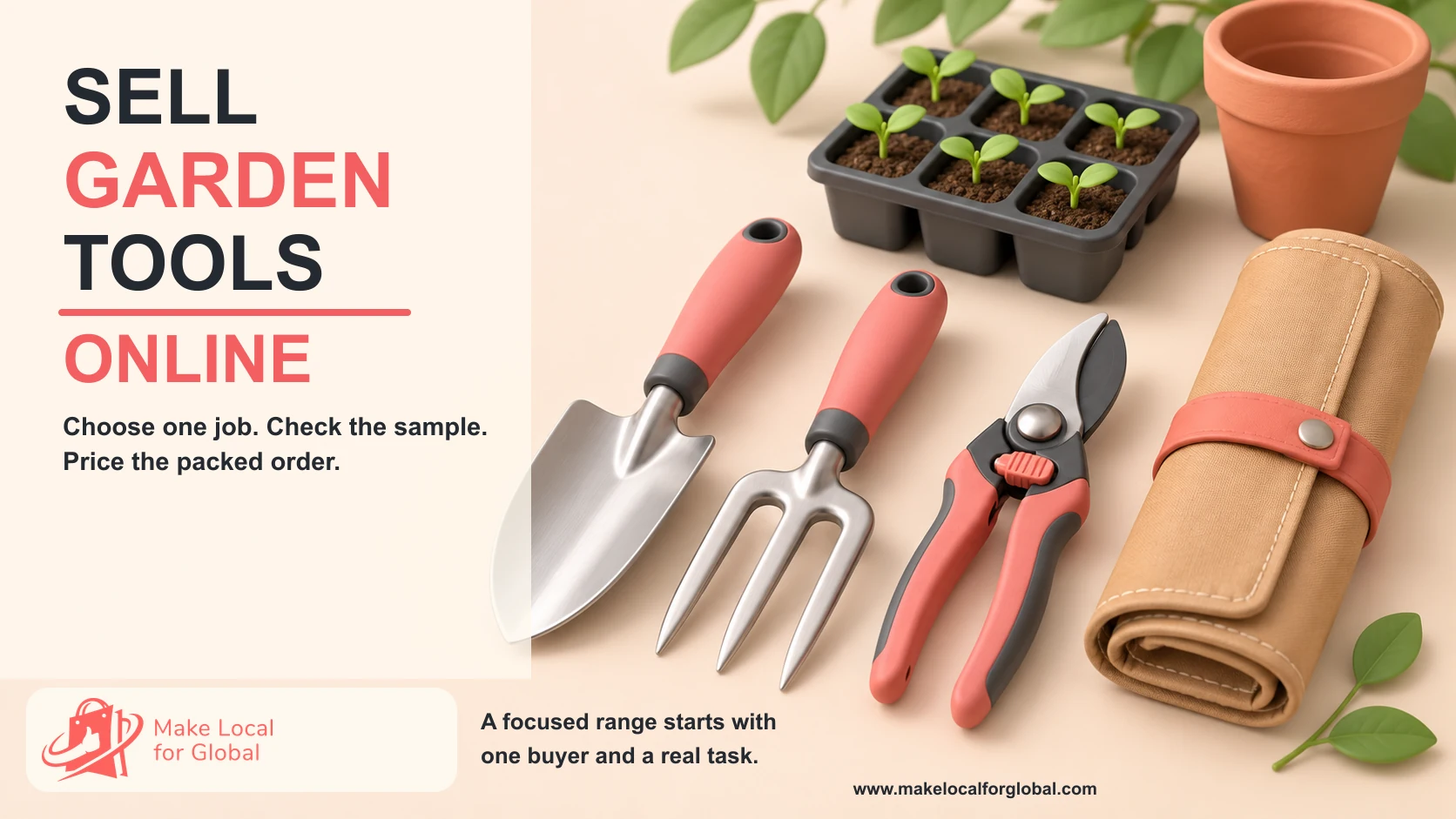
A garden tool can be a small hand tool, a long-handled implement or a powered machine with a battery, charger and safety instructions. Those differences affect who will buy it, how you check quality, what you must say on the product page and how the parcel moves. A seller who treats every item as a generic gardening accessory can end up with a broad catalogue and unclear product information.
To sell garden tools online, choose a specific customer and job, build a compact range around that use, test real samples, verify the product documents and calculate the packed order cost before you buy repeat stock. Hand tools are often a simpler first range than powered machinery, though a hand tool still needs to be safe, durable and described accurately. Add battery or petrol equipment only when you can confirm the applicable safety, noise, transport and after-sales requirements for each model.
This plan is for a UK business preparing to sell new garden tools to consumers. It covers choosing a range, validating samples, product pages, sourcing, costs and a first launch. It is not a repair or safe-use manual. Follow the exact manufacturer's instructions for use, maintenance and protective equipment.
Write down the buyer, the gardening job, the supplier questions and the cost assumptions you still need to check.
“Garden tools” is too broad to guide an opening range. It covers hand pruners, trowels, forks, hoes, loppers, spades, lawnmowers, hedge trimmers, leaf blowers, irrigation accessories and storage. Each serves a different task and can bring a different level of risk, parcel cost and customer support.
Start with a customer you can describe without guessing. It might be someone growing herbs in containers, a new allotment holder, a person maintaining a small patio garden, a community garden volunteer or a homeowner replacing worn hand tools. Do not assume that every beginner wants the same kit. A person growing salads in pots may value a narrow trowel and a small watering accessory. A gardener pruning shrubs may need bypass secateurs and clear blade-care information.
Write down the job the buyer wants done, the space where they do it and what makes choosing a tool difficult. For a beginner with raised beds, the choice may involve handle length, grip, storage and whether a tool suits soil or containers. For a buyer replacing a pruner, the questions may be cut capacity, left- or right-handed use, blade locking and replacement parts. Specific questions produce a more useful range than a broad demographic label.
| Product family | Buyer decision | Sample checks | Selling complication |
|---|---|---|---|
| Hand trowels and forks | Head shape, handle grip, length and soil use | Join between head and handle, finish, sharp edges, balance | Small differences in shape change the task a tool suits |
| Secateurs | Bypass or anvil action, hand size, cut rating and spare parts | Blade alignment, lock action, spring, grip, clean cut on suitable test material | Claims about cut diameter need model-specific evidence |
| Long-handled tools | Working length, head shape, grip and storage | Straightness, connection, handle finish, head attachment | Long parcels may cost more to store and ship |
| Watering tools | Capacity, connection size, spray settings and material | Leaks, joint fit, trigger return and supplied parts | A compatibility claim should identify the connection standard or dimensions |
| Powered garden equipment | Power source, duty, battery system, noise and support | Instructions, guards, stop controls, runtime claim basis and supplied accessories | Product safety, machinery and outdoor-noise rules may apply |
The table is a planning aid, not a substitute for instructions or legal checks. A range of hand tools has fewer moving parts than a powered mower, but sellers still need product traceability, accurate specifications and a process for dealing with a safety concern.
Choose one main buyer and one main job before selecting products. A useful starting statement is: “I am testing a small set of tools for people maintaining raised beds, with hand tools that are easy to identify, compare and store.” That sentence is narrow enough to shape product selection, images and search terms. It does not prevent you from expanding later.
Ask potential buyers what they currently use, which tool they replace most often, what failed on the last one and what information they needed before buying. Show a photo or sample and ask them to compare a real choice, such as short versus long handle. Record exact objections. “I would buy it” is weaker evidence than a buyer asking for the price, delivery date or a specific dimension.
Look at search suggestions, marketplace reviews and questions on competing products to collect language and unanswered questions. Treat those signals as research clues rather than proof of demand. Reviews can reveal complaints about loose heads, difficult locks or poorly labelled sizes; they cannot show that your version will sell. Check the date, model and market behind each review before using it to change your range.
Create a one-page demand log with the product idea, buyer, evidence, unresolved question and next test. If nobody can distinguish your proposed tool from dozens of similar listings, do not solve the problem by adding more products. Test a narrower use case, a clearer bundle or a better product demonstration first.
Use the MLFG Business Idea Stress Test to organise the assumptions about the buyer, supplier, costs and first test. The result is a planning aid. It does not forecast orders or replace conversations with potential customers.
A first catalogue should make one useful decision easier. For a raised-bed customer, that might mean a small tool set for digging, planting and light pruning. For a buyer focused on container growing, a narrow trowel, hand fork and plant labels could form a more coherent group. The products should relate to a real job, not merely share a colour.
Start with a lead product, a sensible alternative and a bundle only when the bundle saves the buyer a real selection step. For example, a trowel might be offered in a standard and narrow head shape, with a hand fork as an optional companion. If buyers need to choose handle length or hand orientation, make those choices visible before checkout. Too many variants can create stock mistakes and make product photography confusing.
An entry choice can be one well-specified tool. The core choice could combine two or three items for a defined job. A higher-value option might include a storage roll or spare part if it is genuinely useful and the supplier can maintain the same specification. Do not use a larger kit only to make the price look better. State every item, size and accessory included.
Test bundle arithmetic by comparing the total price with the cost of buying each item separately, then check whether the bundle still covers packaging, picking time and delivery. A set with different parcel dimensions may cost more to pack than one tool. If you sell tools that come in multiple handle lengths, make sure the bundle's photograph and written list show the exact version a buyer receives.
Avoid unsupported labels such as “professional grade”, “unbreakable” or “lifetime tool”. Replace them with verifiable details: blade material stated by the maker, handle length, head width, supplied spare parts or a specific warranty term. If you use a claim about recycled material, sustainability or carbon impact, keep evidence for the exact model and wording.
Powered machinery can increase price and order value, but it brings stronger technical checks, service arrangements and customer support. Petrol equipment can raise additional transport and storage questions. Battery tools bring a power-system decision: whether the tool includes a battery and charger, whether buyers already own compatible batteries, and how replacements or warranty claims work.
Do not list every accessory shown in a supplier catalogue. Choose stock that you can inspect and explain. If you cannot confirm what is in the box or where a replacement blade can be obtained, put the product on hold. A small, consistent range is easier to photograph, count and fulfil.
You can source through a UK wholesaler, a manufacturer, a trade supplier or a producer making tools locally. Each route affects minimum quantities, lead time, customisation, documentation, packaging and responsibility if a product fails. A marketplace listing may help you find suppliers, but it is not a substitute for checking the business and the actual product.
Ask for the supplier's registered business details, trading address, product catalogue and a named contact for quality or safety questions. Request the exact product code, specification sheet, instructions, material details and warranty terms. For powered equipment, request the conformity documentation and any model-specific noise information that applies. Confirm who handles repairs, missing parts, recalls and product incidents.
If you buy from an overseas business and bring products into the UK, your legal role may differ from buying from a UK distributor. Businesses importing into Great Britain can have extra responsibilities. Do not assume a supplier's statement that a product is “CE approved” proves that the exact model is ready for every UK market. Check the current rules and documentation for the product family and territory where you intend to sell.
Request a sample from the same model and specification you plan to list. A showroom sample or a similar product with a different SKU cannot answer questions about your batch. If you intend to sell a bundle, sample each included item and test how they fit together in the proposed package.
Create a record with product name, supplier, SKU, batch or lot details, order date, specification, documents, sample notes and customer issue history. Photograph the packaging and product marks when stock arrives. Save supplier invoices and correspondence in a place you can retrieve quickly.
This record helps when supplier changes occur. A supplier may alter a handle, blade coating, battery pack or included accessories without changing a listing headline. Compare each reorder with the approved sample and written specification. If a change affects the buyer's decision or safety instructions, update the page and product documentation before dispatching the new version.
Vague answers should delay the purchase. Ask for a document or sample that resolves the uncertainty. If a supplier will not identify the model or provide applicable safety information, choose another source.
Inspect each sample before you write the listing. Do not test a tool in a way that could injure someone or go beyond the manufacturer's instructions. For hand tools, begin with visual checks and simple functional checks on suitable material. For powered equipment, use the manual, stated operating conditions and competent procedures. Do not remove guards or bypass controls.

Check that the head and handle sit straight and that the joint does not move under ordinary hand pressure. Look for burrs, cracks, sharp edges where the design should be smooth, corrosion, coating gaps and loose fasteners. Run the tool through its normal lock, release or adjustment action. Compare the sample with the supplier's stated dimensions and weight.
For secateurs, confirm the blades meet as intended, the lock holds, and the spring returns the handles consistently. If the maker publishes a cut capacity, treat it as a product-specific claim and check the instructions for the permitted material. A home sample test on one branch does not prove the rating for every condition. For trowels and forks, check head attachment, handle finish, edge shape and whether the product bends during a suitable test consistent with its intended use.
Check that left-handed or small-hand options are real variants, not generic page copy. Test the handle grip with the intended user group if possible. A comfortable grip is subjective, so describe dimensions and material first, then use opinions only when they come from a genuine and accurately represented test.

Confirm the tool, battery, charger and accessories match the same model system and the listing. Review operating instructions, maintenance guidance, warnings, parts diagrams and warranty support. Check guards, switches and safety interlocks only as the manufacturer directs. Keep a record of what you observed and what remains uncertain.
Do not make your own electrical or noise compliance judgement from a logo or a brief supplier email. Confirm which regulations apply to the equipment and which party is responsible for conformity. For certain outdoor machines, UK noise rules require a guaranteed sound-power label, technical documentation and a declaration of conformity. The list includes specific equipment such as lawnmowers, lawn trimmers, chainsaws and leaf blowers. The scope and requirements vary by type and territory. Check the current GOV.UK outdoor-equipment noise guidance before you list a powered model.
If a sample arrives damaged or differs from its specification, stop. Photograph it, log the batch and ask the supplier for a written resolution. Do not quietly remove the issue from your notes on the assumption that the defect is cosmetic. The next customer may see the same problem across the batch.
The rules depend on the product. A hand trowel and a battery hedge trimmer are not interchangeable from a compliance perspective. Product safety rules apply to consumer goods, and product-specific requirements can take precedence where they cover the same issue. Great Britain and Northern Ireland can have different provisions. A seller planning to serve both should check the rules for each territory rather than assuming one set of labels applies everywhere.
The Office for Product Safety and Standards says businesses that make, import, distribute or sell consumer products in the UK share responsibility for product safety. Sellers should keep traceability records, provide appropriate instructions and respond to safety concerns. Read the GOV.UK product safety advice for businesses and product-specific guidance before choosing stock.
For machinery placed on the Great Britain market, check the applicable Supply of Machinery (Safety) rules and marking guidance for the product type. Current GOV.UK guidance says GB businesses can use CE or UKCA marking for machinery within the covered rules. Northern Ireland has separate rules. Do not convert this into a blanket claim that every garden product needs a CE or UKCA mark. Verify the exact category and supply role first.
If you sell outdoor machinery that falls within the noise regulations, check the required guaranteed sound-power label, technical documentation and declaration of conformity. The GOV.UK guidance on outdoor equipment noise has separate material for Great Britain and Northern Ireland, with the list of machinery in scope. A hand tool does not become regulated outdoor machinery simply through garden use.
Decide whether the product is sold bare, with a battery, with a charger or as a kit. Make that choice clear in the title, photographs, specifications and what's-in-the-box list. Do not promise compatibility with a brand's entire battery range without checking the exact voltage, connector, platform and model requirements.
If your business is the first in the selling chain to make batteries available on the UK market, you may count as a battery producer. Registration and reporting duties depend on battery type and volume. A retailer supplying at least 32kg of portable batteries a year must offer free take-back and have a collection point at every premises from which it supplies batteries, including online and mail-order sales. Read the GOV.UK waste-battery producer guidance and retailer responsibilities to see which duties fit your business.
Transport rules for batteries can depend on battery chemistry, state of charge, packaging and carrier. Get the carrier's current instructions before accepting a parcel containing a lithium battery. Do not rely on a supplier's packing method for outbound orders unless it matches your carrier's requirements and your own fulfilment setup.
Packaging rules depend on your turnover, the weight of packaging and what role your business plays. Packing orders yourself, importing packaged tools or supplying goods under your own brand may affect who must count that packaging. DEFRA's EPR packaging guidance describes the current thresholds and activities. Keep records of packaging materials and weights so you can check your position with the official guidance or a qualified adviser.
This article gives a checklist for planning, not a legal opinion for a particular product. Ask the supplier for records, check current official guidance and seek qualified compliance help when the product, territory or your importing role is not clear. Do not publish a product with a safety claim you cannot substantiate.
A supplier quote is only one part of the sale. Include the delivered cost of stock, packaging, outbound delivery, platform and payment fees, a reasonable allowance for returns or defects and any cost to acquire the customer. A product that looks profitable before postage can leave little contribution after a long parcel or paid advertisement.
Suppose a seller tests a three-piece set at £54.99, with the customer price inclusive of any applicable VAT for this simplified illustration. The seller is not VAT registered in this example and pays delivery. The figures are estimates, not current market quotes or a recommended retail price.
| Cost per completed order | Illustrative amount |
|---|---|
| Tool set purchase cost | £18.40 |
| Inbound freight allocation | £1.30 |
| Protective packaging | £1.10 |
| Seller-paid parcel delivery | £4.25 |
| Payment or marketplace fees estimate | £1.75 |
| Returns and defect allowance | £2.00 |
| Customer acquisition allowance | £4.00 |
| Total estimated variable costs | £32.80 |
| Selling price | £54.99 |
| Contribution before fixed overheads, labour and tax | £22.19 |
The arithmetic is £54.99 minus £32.80, which leaves £22.19 contribution. That figure is not net profit. It does not cover website subscriptions, insurance, accounting, storage, owner time or tax. Replace every estimate with your actual supplier quote, courier rate, platform fee and return data.
If you charge delivery separately, include that delivery income and the associated payment fees in the calculation. If you offer free delivery, the delivery cost still sits with the business. If you become VAT registered, rebuild the calculation on a consistent VAT basis with appropriate advice. A discount can remove a large part of the contribution, so test the discounted order before advertising it.
Run the calculation for each parcel shape. A long-handled hoe may incur a different carrier rate or packaging cost from a compact hand tool. A bundle may save pick-and-pack time but use a larger carton. The MLFG online product pricing guide offers another way to organise the assumptions.
The product page should help a buyer decide whether the tool fits their job and space. Give each listing a distinct title that names the tool and the feature buyers compare. “Stainless steel narrow trowel with ash handle, 30 cm” is more useful than “Premium garden tool”. Use only specifications confirmed by the exact product record.
For a real example of the level of detail a buyer can compare, Spear & Jackson lists its Traditional Stainless Dutch-Style Trowel as model 5180DT, with a stated overall length of 475 mm and weight of 330 g. The product page describes a stainless-steel head and ash-wood handle, and states a 10-year guarantee. Those are that maker's own details for one model, not a general performance claim or evidence that a different supplier's tool shares those qualities. See the manufacturer's 5180DT specification. Use this kind of model-level record when comparing samples, then write your listing from your own supplier's verified specification.
List each item, quantity, dimensions and material. State whether a battery, charger, blade cover, spare part or storage pouch is included. If a photograph shows props or accessories that are not supplied, label them clearly or use a different photograph. Make variant differences visible in the selector and repeat the selected size in the order confirmation where your store supports it.
For a set, include a top-down image of the complete contents and a short list. Show the total number of pieces and identify each one. If a tool has a replaceable part, say whether a replacement is available and where the customer can find it. Do not imply a spare is included when it is sold separately.
Photograph the exact model, not a visually similar supplier item. Include the handle, tool head, attachment point, lock or controls, scale reference and package contents. A dimensions graphic should label measurements and units. Do not digitally lengthen a handle, deepen a blade or recolour a product so the image no longer represents what will arrive.
A short demonstration can show the normal action of a hand tool on suitable material. For powered tools, use only the instructions and safety setup that apply to the model. A demonstration should not show a removed guard, unsafe grip or a task outside the stated use. Caption the clip with the model and the condition in which the demonstration was made.
Title: Narrow planting trowel, 29 cm, stainless-steel head
Opening: “A narrow trowel for planting in containers and raised beds. This model has a 29 cm overall length and a 7 cm wide head. Check the dimensions below against the space you need to reach.”
Specifications: Overall length; head width and depth; handle material; head material as stated by the maker; product weight; care instructions; model code; package contents; warranty terms; delivery size.
This example shows the level of detail, not a claim that a particular model has those measurements. Measure the actual sample and confirm the specification sheet before publishing.
Answer common questions on the page: does the kit include a battery, how wide is the tool head, can the blade be replaced, which hand is the grip intended for, what does the warranty cover, and how long is the parcel? A buyer should not have to contact you to learn whether the charger is included.
Your own online shop gives you control over the product story and customer service, but you need to bring visitors and manage checkout, stock and delivery. A marketplace can introduce listings to shoppers already searching, but fees, category rules and competing products affect the economics. Start with one primary channel that you can operate well. Add another only after you know the stock and support process works.
Use product-specific search phrases as page topics, not as a list of repeated keywords. People may search for “hand fork for raised beds”, “bypass secateurs replacement blade” or “garden trowel length”. Use the phrase only where the product genuinely answers that search. Add accurate dimensions, care advice and a comparison image to the page rather than repeating “garden tools” in every heading.
Make useful content around a decision: a photo comparing two trowel shapes, a clip showing the lock on a pruner, or a simple table listing kit contents. Link the content to the exact product page. For related product ideas, compare this plan with selling apple slicers online or selling framed art prints online to see how a narrower product category changes the buyer questions and fulfilment details.
Set a small test budget that you can afford to lose. Track qualified product-page visits, add-to-basket actions, completed orders, delivery questions, cancellations, returns and contribution after acquisition cost. A large number of video views does not prove that a tool range can support its costs. If visitors leave after seeing delivery charges, check whether the parcel quote or product price needs attention before buying more traffic.
Compare landed product cost, parcel charges, fees and your returns allowance before committing to a tool set.
Ask local allotment groups, gardening clubs or small community gardens what tool problem they see repeatedly. Ask before posting promotional material and follow each group's rules. You can use their feedback to refine a page or bundle, but do not present a single person's opinion as proof that a market exists.
Count stock by SKU and variant. Keep each tool's barcode, model code and batch reference linked to its location. Small products can still be confused when the handle length or head shape differs only slightly. Use a bin label with the full SKU and photograph the correct variant for the pick list.
Pack the sample you intend to ship. Protect blades and sharp points with a secure cover that cannot slide off. Prevent a metal head from rubbing through a carton or scratching another item. Long handles need a box that resists bending, not a soft mailer. Put any battery in packaging specified by the maker and carrier. Weigh and measure the finished parcel, including the protection and shipping label.
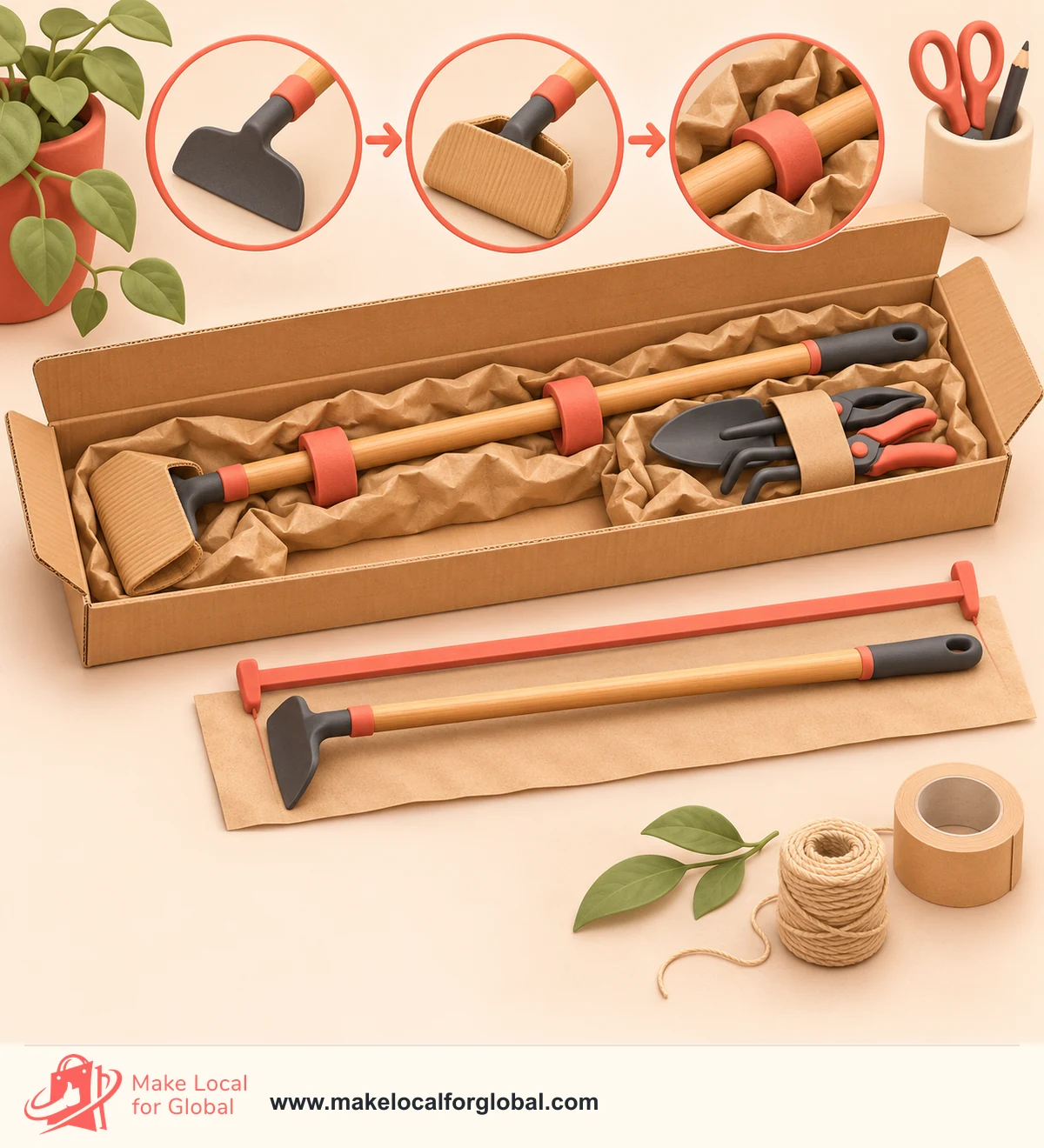
Run a drop and movement check on the packed sample only as a practical packaging test, not as a guarantee against every courier impact. Shake the box gently to detect movement. Check that the carton closes without pressing on a trigger, blade lock or fragile component. Photograph the pack before sealing and keep the packing method with the SKU record.
Display the delivery service, price and expected delivery timeframe before the buyer commits. The exact dispatch and delivery promise should match your stock and carrier service. For online consumer orders, GOV.UK says sellers must provide required information and a cancellation period, and deliver within 30 days unless another period is agreed. Read the distance-selling guidance for businesses and set a returns process that distinguishes a change-of-mind request from a faulty or misdescribed product.
When a customer reports a defect, ask for the order number and enough detail to identify the model and issue. Keep a record of the batch, photographs, supplier contact and resolution. If a complaint suggests a safety risk, pause the affected stock and follow official reporting and supplier procedures. Do not send a replacement from the same batch until you understand whether the issue is isolated.
Prepare short answers for product dimensions, included items, care, spare parts, delivery, returns and warranty coverage. For a powered product, direct the customer to the manufacturer's instructions for operation and maintenance. Do not improvise repair instructions or advise the buyer to bypass a safety feature.
If a tool is returned, record the reason using clear categories: wrong size, unclear listing, damaged in transit, part missing, product fault or no longer wanted. Count the reasons monthly. A cluster of “not as pictured” points to a product-page or supplier-image problem. Several damaged handles may point to the carton design. A return log can guide a concrete change, unlike a general aim to improve service.
Review questions before expanding the range. If several buyers ask whether a replacement blade fits a specific model, add a compatibility table only after checking the SKU. If buyers repeatedly ask about a battery, make the included-battery information more prominent. Do not solve a support issue with a broad claim that has not been checked.
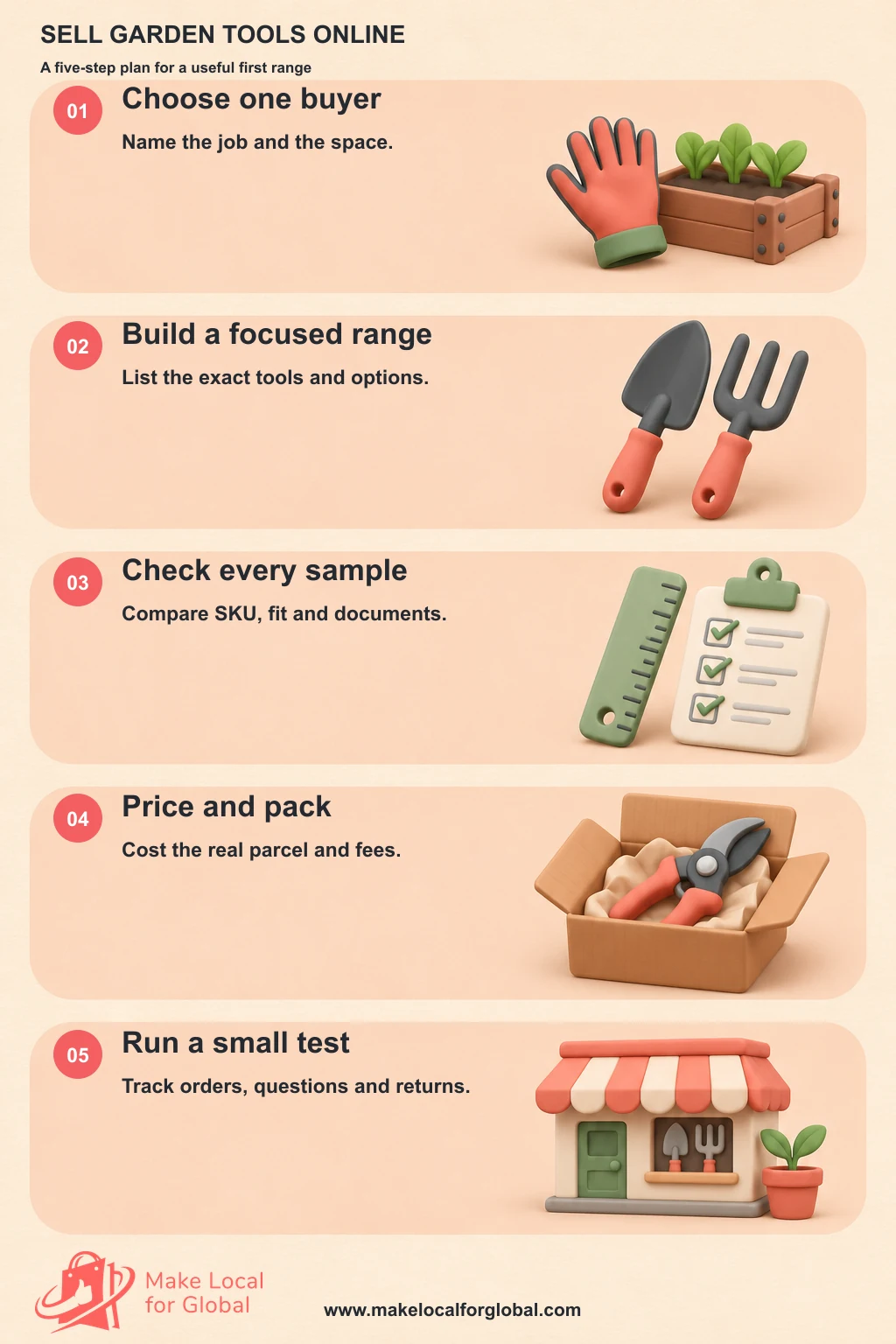
Choose one buyer and task. Compare a small set of product formats and note the questions that separate them. Speak to a few potential buyers or gather specific feedback from a relevant group. Record what they currently use and what information they need. Set a maximum amount you can afford to commit to samples and testing.
At the end of the week, choose one lead product and a backup. If you still cannot say who the tool serves or what makes it a useful choice, keep researching before you place a stock order.
Request the exact model code, sample, dimensions, materials, instructions, warranty information and applicable documents. Check the supplier's ability to replace parts and notify you about changes. Inspect the sample using the product-specific checklist. Save photographs and notes against the SKU.
For powered equipment, add a review of machinery, outdoor-noise, battery and carrier requirements. Confirm the relevant documentation for each model and market. Do not treat a week as a compliance deadline; wait for complete information before listing a product.
Measure the packed parcel. Obtain real carrier and platform quotes. Complete the cost table with delivery, fees, returns and acquisition estimates. Set a price and test whether a small discount leaves enough contribution. Take accurate photographs and write a page that shows dimensions, contents, care and warranty terms.
Ask someone who has not seen the product to explain what they would receive and which tool choice they would make. If they misunderstand the bundle or variant, revise the page before launch.
Publish the listing only after stock, checkout, delivery and support are ready. Use one primary channel and one small, trackable promotion. Record visits, add-to-basket actions, orders, buyer questions, delivery exceptions and return reasons. Do not add models on the strength of a few early views.
At the end of the month, decide whether to reorder, revise the offer, test another buyer group or stop. Compare actual contribution and customer feedback with the assumptions you wrote at the start. A useful test may show that a product should not be stocked. That information can save the next order from being a guess.
Choose one compact product group linked to a specific task, such as container planting or light pruning. Compare sample quality, parcel costs and the information buyers need before choosing exact models. A focused hand-tool range can be simpler to test than powered machinery.
Hand tools usually have fewer technical components and no battery or charger decisions. They still require safe products, accurate descriptions, traceable suppliers and suitable packaging. Powered equipment can add machinery, noise, battery, transport and after-sales checks that depend on the model and market.
Check the exact model, blade alignment, lock, spring, grip, dimensions, care instructions and replacement-part availability. Use a cutting-capacity claim only when the manufacturer supports it for that model. Do not infer a universal capacity from a single sample test.
No single answer applies to every product. Product-specific rules depend on what the item is and where you sell it. Some machinery has marking requirements. A basic hand tool may follow different product-safety rules. Check the exact category and current Great Britain or Northern Ireland guidance.
Retailer take-back duties apply when a business supplies 32kg or more of portable batteries per year. The guidance covers online and mail-order sellers, with requirements for collection points and customer information. Check the current rules and whether your role or battery type creates additional producer duties.
Add the landed cost of each tool, inbound freight, packaging, delivery, fees, returns or defect allowance and customer acquisition. Subtract those variable costs from the sale price to find contribution before overheads, labour and tax. Check that a discount or larger parcel does not erase the contribution.
State the exact model, dimensions, materials supported by the supplier, product weight, package contents, care instructions, warranty, delivery and relevant compatibility. For battery products, say whether the battery and charger are included. Use photographs of the model the buyer will receive.
You can test a dropship arrangement only after checking sample quality, stock accuracy, delivery times, returns handling, product documents and who responds to safety issues. A supplier shipping the parcel does not remove your obligations to the customer. Test an order before making delivery promises.
Before ordering repeat stock, connect the buyer's task to one exact model, a checked sample, supplier records, a product page and a packed-parcel cost. If each piece agrees, run a small sales test and learn from real questions and orders. Expand only when the evidence supports another tool or bundle.
Once your sample, product page and fulfilment plan agree, map the store pages you need for a focused launch.
PREFERRED SOURCE
Like what you’re reading? Add Make Local for Global as a preferred source on Google to see more of our articles when you search.

Build your online presence without having to figure out everything yourself.