READY TO SELL Compression socks ONLINE?
Get a store built for you in 5 days, plus training and support to help you start, run, and grow your Alternative business.

A practical UK guide to selling compression socks online: check samples, explain sizing, price each order and market the product responsibly.

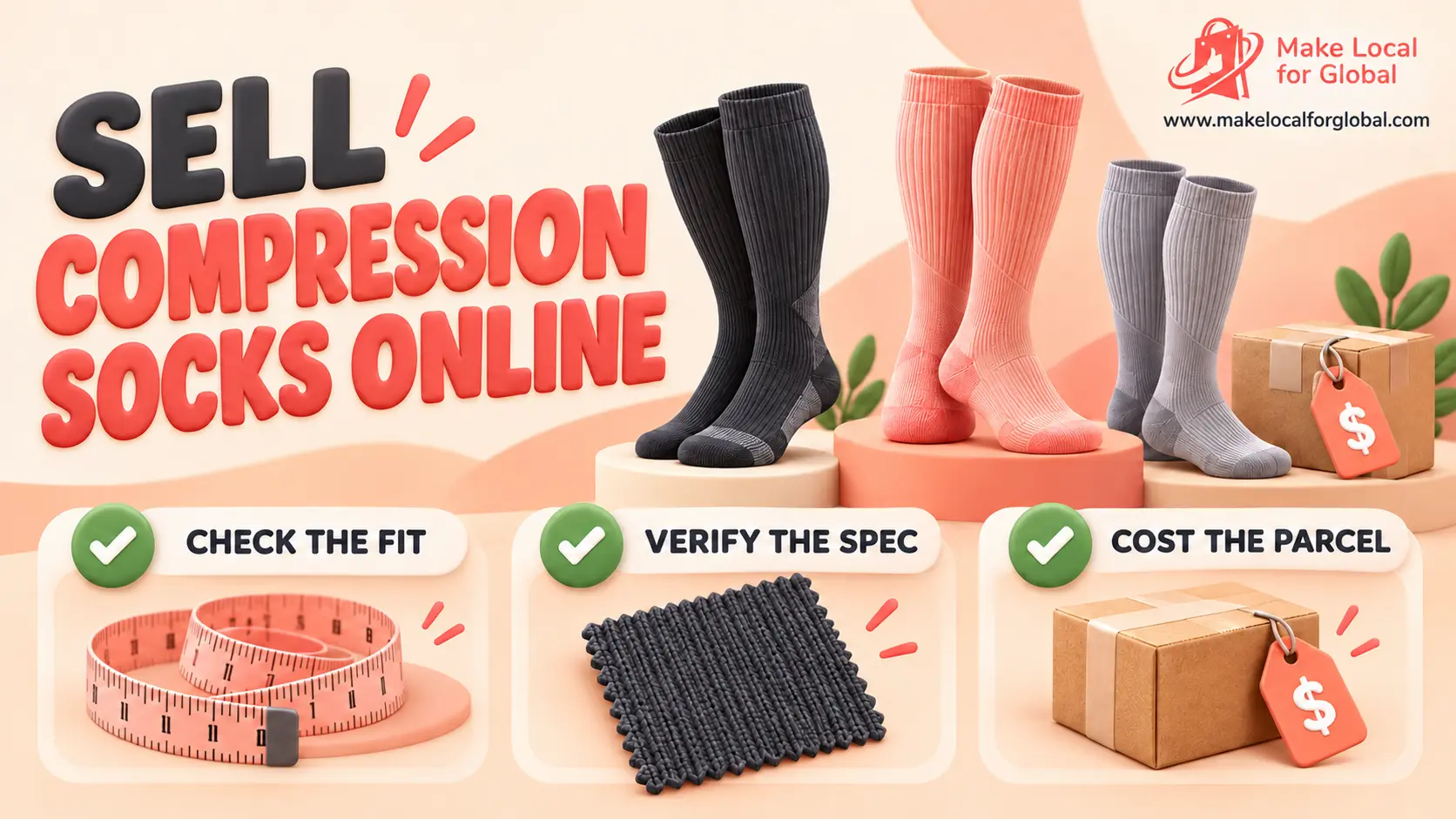
Compression socks are a focused product category with practical buyer questions: how should they fit, what does the product actually do, and which pair suits a long shift or journey? If you want to sell compression socks online, build your offer around clear sizing, reliable product information and careful marketing. This guide covers the decisions that matter to a UK seller, from samples and costs to product pages, fulfilment and a first-month launch plan.
Start with ordinary apparel positioning only when that matches the product’s design and intended purpose. Compression products can cross into regulated territory depending on their intended purpose, claims and presentation. Before importing or describing a product for a medical use, check the MHRA guidance on borderline products and get appropriate regulatory advice.
“Everyone who stands or travels” is too broad for a first collection. Select one primary use case, then make each product difference easy to understand. You might serve commuters, hospitality staff, frequent travellers or style-conscious everyday wearers. These are audience hypotheses to test, not guaranteed markets.
Do not invent a pressure rating, performance feature or benefit. Ask the supplier for the product specification, test information, care guidance, material details and intended purpose. Keep the original documentation and match it to the exact style and production batch you sell.

Do not commit to a large order based on a catalogue photo. Request samples in more than one size and colour, then record what you inspect. Compare the delivered items with the supplier’s specification and retain dated photos and notes.

Show the product on a person and on its own. Include a close-up of the knit, cuff, heel and toe. Use accurate colour, unfiltered lighting and photographs from the sample you will sell. Add a measurement diagram and make the size chart visible beside the size selector.
For each listing, include the length, fibre composition, available sizes, care instructions, what is included in the pack, dispatch times, delivery charges and returns information. Explain how to measure using the manufacturer’s own method. If you give a between-size suggestion, base it on verified fit testing and state any limits.
Use specific, supportable wording such as “knee-high knitted socks with a 72% nylon, 28% elastane blend” only when the specification confirms it. Avoid claims that the product treats, prevents or relieves a condition unless you have established the product’s regulatory status and the claim is permitted and substantiated. The ASA’s OneCompress ruling shows why medical claims for compression socks require particular care.
For broader shop planning, see our guide to choosing and selling a focused product range and our practical article on building clear product pages for an online shop.
A margin calculation that includes only the supplier’s unit price can make a low-price item look more profitable than it is. Estimate the contribution from each order after stock, inbound freight, packaging, payment fees, postage, expected returns and customer acquisition. Replace these illustrative assumptions with your own supplier, carrier, platform and advertising quotes.
| Illustrative single-pair order | Example cost | What to verify |
|---|---|---|
| Customer price paid | £18.00 | Test against comparable products and your target buyer |
| Landed stock cost | £4.20 | Unit cost plus allocated inbound freight and import charges |
| Packaging | £0.60 | Mailing bag, label and any insert |
| Payment fee assumption | £0.60 | Use your provider’s current rate and fixed fee |
| Postage paid by seller | £3.20 | Use your actual service, parcel size and zone |
| Returns allowance | £0.90 | Estimate from your own category and policy |
| Customer acquisition allowance | £4.00 | Use measured cost per first order |
| Illustrative contribution before overhead and tax | £4.50 | Not net profit; excludes fixed costs and any VAT effect |
The figures are an example, not a forecast. VAT treatment depends on your circumstances and whether prices are VAT-inclusive; take appropriate advice. Compare single-pair orders with two- and three-pair bundles, but account for the extra product cost and any higher parcel weight. A bundle only helps when the additional contribution covers its added costs.
Planning a product business? Use the free consultation to map your product range, costs and store requirements.
Socks are compact, but delivery still affects your margin and customer experience. Weigh the packed order, compare suitable postage services, and check whether the parcel format is accepted at your chosen thickness. Use packaging that protects the item without making dispatch unnecessarily expensive.
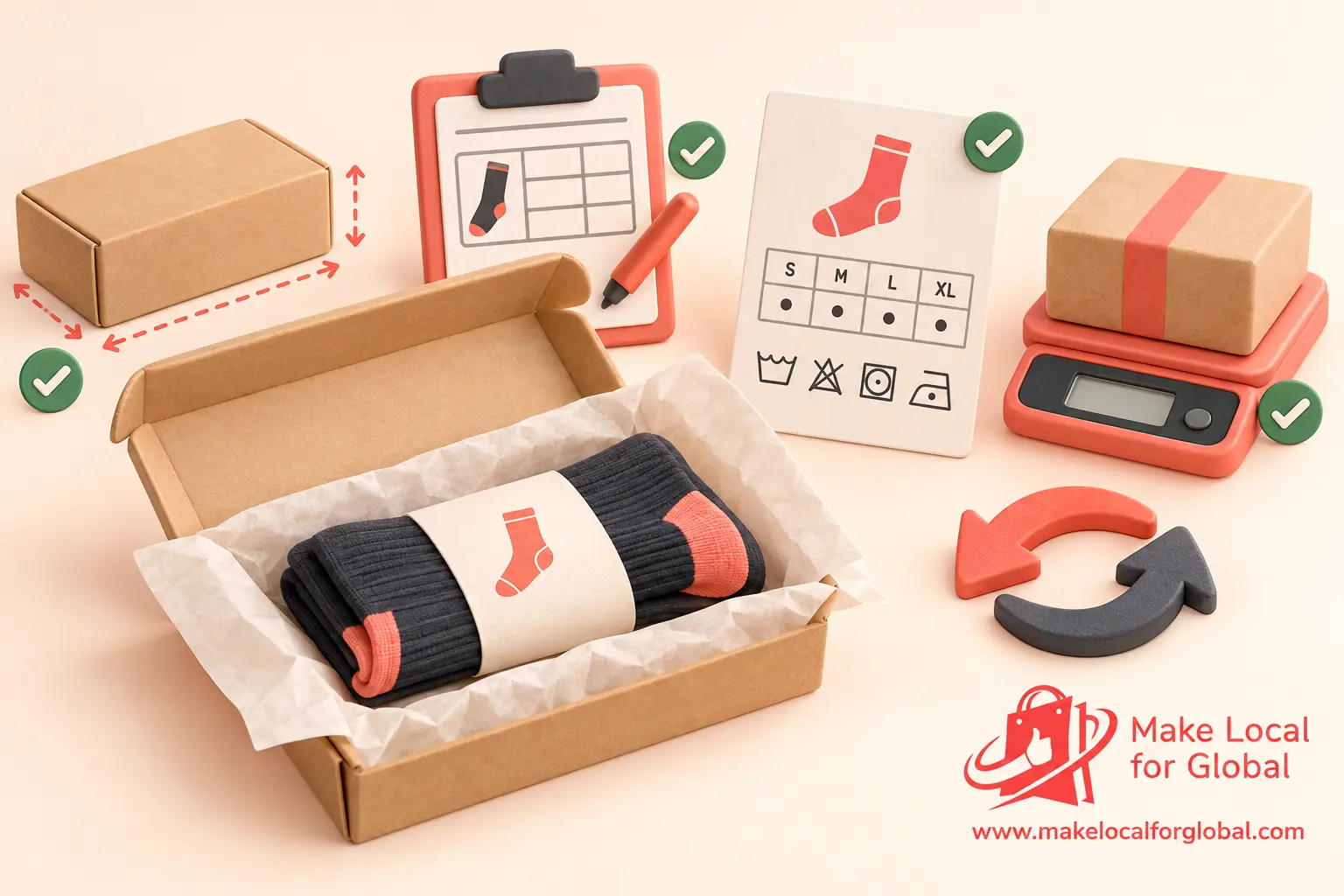
Before taking orders, publish your seller contact details, full prices, delivery terms and cancellation information. UK distance-selling rules generally give customers 14 days from delivery to cancel, subject to exceptions and the required process. Read the government’s online and distance selling guidance and make your own policy clear.
If you import, distribute or sell consumer products, check the relevant product-safety duties and keep traceable supplier records. The Office for Product Safety and Standards explains business responsibilities in its product safety advice. Requirements can differ by product type and UK nation, so verify the rules that apply to your product and market.

Use actual customer questions to improve the sizing guide and photographs. Do not treat early sales, clicks or social engagement as proof of lasting demand. Reorder when the product quality, unit economics and customer feedback support it.
Need an ecommerce home for your range? Learn about website options for small businesses and choose a setup that fits your products and budget.
Yes, but first confirm the product’s intended purpose, specifications and any rules that apply to your claims and presentation. Set up accurate product information, consumer terms, delivery arrangements and traceable supplier records before selling.
Use the supplier’s verified chart and explain each measurement in plain language. Include the shoe-size range and any required calf or leg measurements, plus a clear illustration. Do not add sizing advice that you have not checked against real samples.
Do not make medical claims unless the product’s regulatory status allows them and you hold the evidence and approvals needed for the specific claim. Intended purpose can be inferred from the wording and presentation as well as the label, so review the full product page and promotions.
Start with customer revenue and subtract landed stock, packaging, payment fees, postage, expected returns and acquisition costs. The result is contribution before overhead, tax and other fixed costs, not net profit.
Test a single pair alongside one simple bundle if the supplier and fulfilment costs support it. Measure contribution and customer response for each offer before expanding colours, sizes or pack options.
Ready to shape your idea into a store? Talk to Make Local For Global about a practical next step.
PREFERRED SOURCE
Like what you’re reading? Add Make Local for Global as a preferred source on Google to see more of our articles when you search.

Build your online presence without having to figure out everything yourself.