

Make Local for Global Logo

READY TO SELL artisan bread ONLINE?

Get a store built for you in 5 days, plus training and support to help you start, run, and grow your Alternative business.

How to sell artisan bread online and build a profitable micro-bakery business

A practical guide to selling artisan bread online – build a small repeatable menu, run weekly pre-orders, protect freshness with local fulfilment, price for profit, and grow with bundles and subscriptions.

Make Local for Global

Table of content

Artisan bread sells because people can taste the difference.

They’ll happily pay more for a loaf that smells incredible, has a proper crust, and feels like something made with care – not something that travelled 200 miles in plastic.

The challenge is that bread is also one of the hardest products to sell online because it’s perishable, timing matters, and shipping can ruin the experience if you get it wrong.

If you want to sell artisan bread online, you need a plan that protects freshness, reduces waste, and makes ordering simple for customers.

This guide shows you how to do that in the UK, whether you’re a home baker scaling up, a weekend market seller moving online, or building a small micro-bakery brand.

Pick your lane: what kind of artisan bread business are you building?

“Artisan bread” covers a lot, and different bread types suit different selling models.

If you try to sell everything from day one, you’ll drown in production and waste.

Pick a lane and build a repeatable rhythm.

Artisan bread lanes that sell well

  • Local pre-order bakery: baked to order, collection or local delivery.
  • Subscription bread: weekly loaf drop, predictable demand.
  • Special occasion loaves: weekend treats, limited drops, gifting.
  • Sandwich and lunch loaves: practical everyday bread, repeat customers.
  • Dietary niche: for example, sourdough-first, rye, or spelt (avoid health claims).
  • Bake-at-home kits: lower freshness risk, good for wider delivery.

For most small sellers, local pre-order plus weekly rhythm is the easiest and most profitable place to start.
Tip: If you are early-stage, avoid nationwide shipping at first. Start with pre-orders and local delivery. Freshness and timing are everything in bread.

Choose a small menu that you can bake consistently

The most successful micro-bakeries don’t have huge menus.

They have a few loaves they do brilliantly, every week, and customers learn the rhythm.

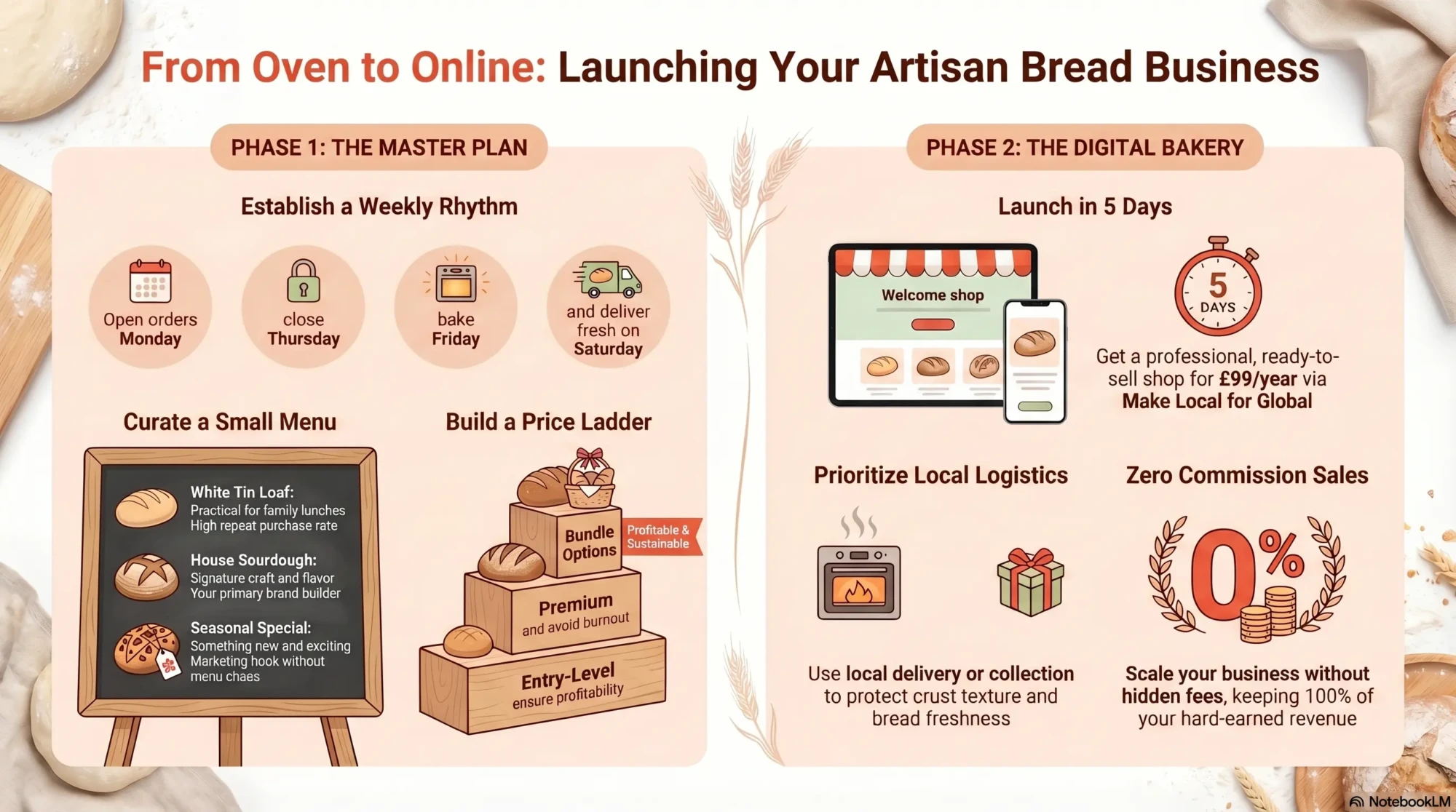
A simple artisan bread menu that works

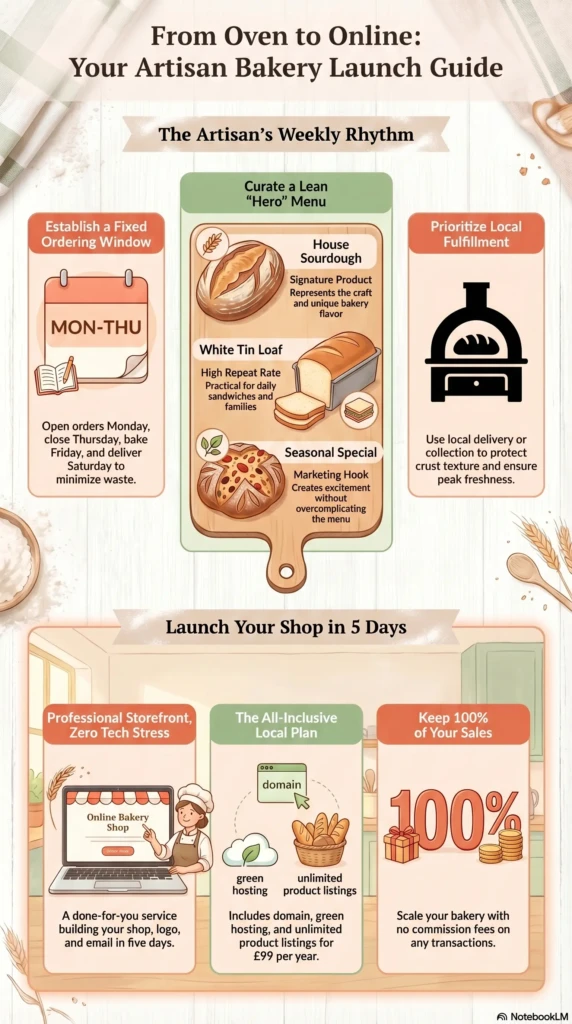
  • House sourdough: your hero loaf.
  • White tin loaf: practical, family-friendly, repeat buyer magnet.
  • Seeded loaf: premium feel, great for toast.
  • Seasonal special: one rotating loaf or focaccia each week.

Why a tin loaf matters

It’s not as “Instagram” as a rustic boule, but it’s a repeat purchase.

People want a loaf that slices well for lunches, and they reorder it constantly once they trust you.

Keep your specials controlled

Specials are great marketing, but they can wreck your production schedule.

One special per week is enough.

It creates demand without chaos.

Make selling bread online practical: ordering, timing, and fulfilment

Online bread selling works when customers know exactly when they’ll get their loaf.

If you let people order “any time” with unclear fulfilment, you create stress and waste.

The cleanest model: weekly pre-order windows

This keeps your baking schedule sane.

Example structure:

  • Orders open Monday morning
  • Orders close Thursday evening
  • Bake Friday
  • Collection or delivery Saturday

You can adjust days to suit your life, but the principle is the same: fixed order windows reduce waste and protect quality.

Local delivery beats shipping for fresh bread

Fresh bread is fragile in transit. Crust softens, loaves get squashed, and delays ruin the experience.

Local delivery lets you control the experience and charge a fair delivery fee.

If you want wider delivery, consider bake-at-home or par-baked

This is where artisan bread businesses scale without destroying quality.

You can sell:

  • Par-baked loaves that customers finish in the oven
  • Focaccia kits
  • Sourdough starter kits and feeding guides
  • Mix packs (dry ingredients measured out)

It also creates a nice upsell path: local fresh loaves plus nationwide kits.

Tip: “Finish at home” loaves are a great compromise. Customers get fresh-from-the-oven vibes, and you avoid the worst shipping problems.

Packaging and storage: protect the loaf experience

How you package artisan bread affects taste and texture.

Plastic keeps it soft and can ruin crust quickly.

Paper breathes but dries faster.

Your packaging choice should match your fulfilment model.

For local collection and delivery

  • Use paper bags for crusty sourdough style loaves
  • Use breathable packaging that protects shape
  • Add a simple care card: how to store and revive crust

For loaves that will travel longer

  • Use packaging that prevents crushing
  • Consider par-baked or bake-at-home models
  • Include clear reheat instructions for best results

Sell storage guidance as part of the product

Customers love being told what to do with a great loaf.

It also prevents complaints like “it went stale” when they left it on the counter unwrapped for two days.

Include simple guidance like:

  • Store cut-side down on a board for the first day
  • Freeze slices for later
  • Refresh in a hot oven to revive crust

Pricing artisan bread so you don’t burn out

Pricing bread is emotional. People compare to supermarket bread, which is not your market.

You are selling craft, ingredients, time, and a local experience.

If you price too low, you will be exhausted and broke.

Know your true costs

  • Flour, salt, starter maintenance, inclusions (seeds, olives, etc.)
  • Electricity or fuel costs
  • Packaging
  • Your time (mixing, folding, shaping, baking, admin)
  • Waste allowance (unsold loaves, mistakes)
  • Delivery costs if you offer it
  • Fees from payment processing and ecommerce

Create a simple price ladder

  • Entry: white tin loaf or smaller loaf option.
  • Main: house sourdough.
  • Premium: seeded loaf, rye, or special inclusions.
  • Bundle: 2-loaf weekend pack or family pack.
  • Subscription: weekly loaf drop at a slightly better value.
OfferBest forWhy customers buy itWhy it helps you
White tin loafFamilies and lunch useSlices well, practicalHigh repeat purchase rate
House sourdoughMost customersFlavour and craftYour signature product
Seasonal special loafFood loversSomething new and excitingMarketing hook without huge menu
Weekly subscriptionRegularsNever run out of good breadPredictable demand and income

Product pages that convert: sell flavour, not just ingredients

Bread buyers buy with their senses.

Your product pages should help them imagine the crust, the crumb, and what they’ll eat it with.

What to include on every bread listing

  • Flavour and texture: one short paragraph describing crust and crumb.
  • Weight: approximate loaf weight.
  • Ingredients list: keep it clear and honest.
  • Allergen notes:</strong especially for seeds, nuts, dairy, etc. (be clear).
  • Bake day:</strong when it’s baked and when it’s delivered/collected.
  • Storage guidance:</strong short and practical.

Add “best eaten with” suggestions

This is a sneaky conversion booster because it makes the bread feel like an experience:

  • “Perfect for toast with salted butter and jam.”
  • “Great with soup and winter stews.”
  • “Ideal for sandwiches and packed lunches.”
Tip: Put your bake day and collection day right at the top of the product page. Bread buyers need to know timing before they buy.

Marketing artisan bread without sounding like everyone else

There are a million “sourdough” posts online.

So your marketing needs to feel local, real, and specific.

Marketing angles that work

  • Freshly baked schedule:</strong “Order by Thursday, baked Friday.”
  • Local micro-bakery:</strong real person, real kitchen, real craft.
  • Behind the scenes:</strong shaping, scoring, oven spring (people love it).
  • Seasonal specials:</strong one new loaf a week keeps attention.
  • Subscriptions:</strong “never run out of proper bread.”

Content ideas that drive sales

  • Short videos of scoring and oven spring
  • Crumb shots (people are obsessed for a reason)
  • “What’s on the menu this week?” posts
  • Customer stories: “Saturday breakfast with our sourdough”
  • Freezing and reheating tips (builds trust)

SEO searches to include naturally

  • “Artisan bread delivery near me”
  • “Sourdough bread pre order”
  • “Micro bakery”
  • “Fresh bread delivery”
  • “Weekly bread subscription”

Build an online shop that makes pre-orders easy

Bread businesses fall apart when ordering is messy.

You want a simple pre-order system that shows availability and makes checkout quick.

What your bread shop needs on day one

  • Clear bake days and order deadlines
  • Product pages with storage and allergen info
  • Options for collection or local delivery
  • Bundles and subscriptions
  • A “How it works” page explaining the weekly rhythm

Done-for-you ecommerce helps you look professional fast

If you’re baking, you do not want to spend evenings fighting with website setup.

Make Local for Global offers a done-for-you ecommerce setup that’s ideal for small sellers who want to launch quickly.

You can book a free consultation to plan your pre-order model, delivery options, and weekly menu structure.

Or choose the simple option to Get your website for £99/year.

Tip: Add a “subscribe and save” option once your weekly rhythm is stable. Subscriptions make small bakeries calmer and more profitable.

How to get your first 200 bread customers

Bread businesses grow through rhythm, reliability, and repeat customers.

Step 1: Nail one hero loaf

Make one loaf consistently brilliant (usually sourdough or a house tin loaf) and build your reputation around it.

Step 2: Set a weekly ordering rhythm

Fixed pre-order windows reduce stress and make your business predictable.

Step 3: Offer a weekend bundle

A “Weekend bread pack” (two loaves or loaf + focaccia) increases order value and makes buying feel easy.

Step 4: Build reviews and local trust

Ask customers to mention freshness and flavour. Those two words sell bread.

Step 5: Add a subscription

Once you have regulars, subscriptions create stable income and make planning easier.

Common mistakes when selling artisan bread online

These mistakes create waste and stress.

Trying to ship fresh bread nationwide too soon

Start local, then scale with bake-at-home options if you want wider reach.

Too big a menu

More menu items usually means more waste. Keep it tight and repeatable.

Unclear bake days and deadlines

Customers need to know when they’ll get the bread. Make it obvious.

Underpricing

Your time and ingredients matter. Price like a craft product, not a supermarket loaf.

Not teaching customers storage

Storage guidance reduces complaints and increases satisfaction.

FAQ: selling artisan bread online

Can I sell artisan bread online as a small business?

Yes. Many micro-bakeries grow through online pre-orders with local collection or delivery. The key is a fixed weekly ordering rhythm so you can bake to demand and reduce waste.

What’s the best bread to sell first?

A house sourdough and a practical tin loaf are strong starters because they create repeat customers. Add one weekly special for marketing without expanding your menu too much.

How do I keep bread fresh for customers?

Local delivery and collection protect freshness best. For wider delivery, consider par-baked or bake-at-home options and include clear reheat instructions.

How do I price artisan bread?

Price based on ingredients, time, energy costs, packaging, waste allowance, and profit. Use bundles and subscriptions to increase order value and make demand predictable.

Do I need a website to sell artisan bread?

You can take orders manually, but a website makes pre-orders smoother, reduces admin, and helps you look professional. A done-for-you ecommerce setup can get you selling faster without tech stress.

A sensible next step

If you want to sell artisan bread properly, start with a small menu, set a weekly pre-order rhythm, and focus on local fulfilment to protect freshness.

If you want a professional ecommerce shop without the setup headache, Get your website for £99/year.

And if you want help structuring your pre-orders, delivery options, and weekly menu, book a free consultation.

Bread businesses grow one repeat customer at a time. Make ordering easy, make the loaf excellent, and they’ll come back every week.

PREFERRED SOURCE

Keep finding us on Google

Like what you’re reading? Add Make Local for Global as a preferred source on Google to see more of our articles when you search.

Newsletter Form in Blog

Sign up for our
FREE ecommerce newsletters!


By providing your email, you agree to our Privacy and Cookie Policy, as well as our Terms and Conditions.


DOWNLOAD FREE GUIDE
ebookmockup 1

How to sell artisan bread Online

Join 5,000+ others who downloaded
Blog to PDF Form
No spam, Unsubscribe any time.

Ready to Start Your Online Business?

Build your online presence without having to figure out everything yourself.

DOWNLOAD FREE GUIDE

How to sell artisan bread online

A simple plan to get your first steady online orders
ebookmockup 1
  • What to do first (so you don't waste time)
  • How to price and present your artisan bread
  • How to get traffic and turn it into orders
  • Join 5,000+ others who downloaded this
Blog to PDF Form
No spam, Unsubscribe any time.

Start Selling

artisan bread

Withing 5 days

You’ve read the guide. Now see if you qualify for a done-for-you online store for artisan bread sellers.
Find out if this is right for you in under 60 seconds.
  • No tech skills neeed
  • Store ready in 5 days
Qualifying / Questionnaire Form
  • Step 1
  • Step 2
  • Step 3
  • Step 4
  • Step 5

Answer a few quick questions and I’ll point you in the right direction.