
READY TO SELL baking cookbooks ONLINE?
Get a store built for you in 5 days, plus training and support to help you start, run, and grow your Alternative business.

Learn how to sell baking cookbooks online with a clear reader, focused title range, tested recipes, print-quality checks, full order costs and a practical 30-day launch plan.

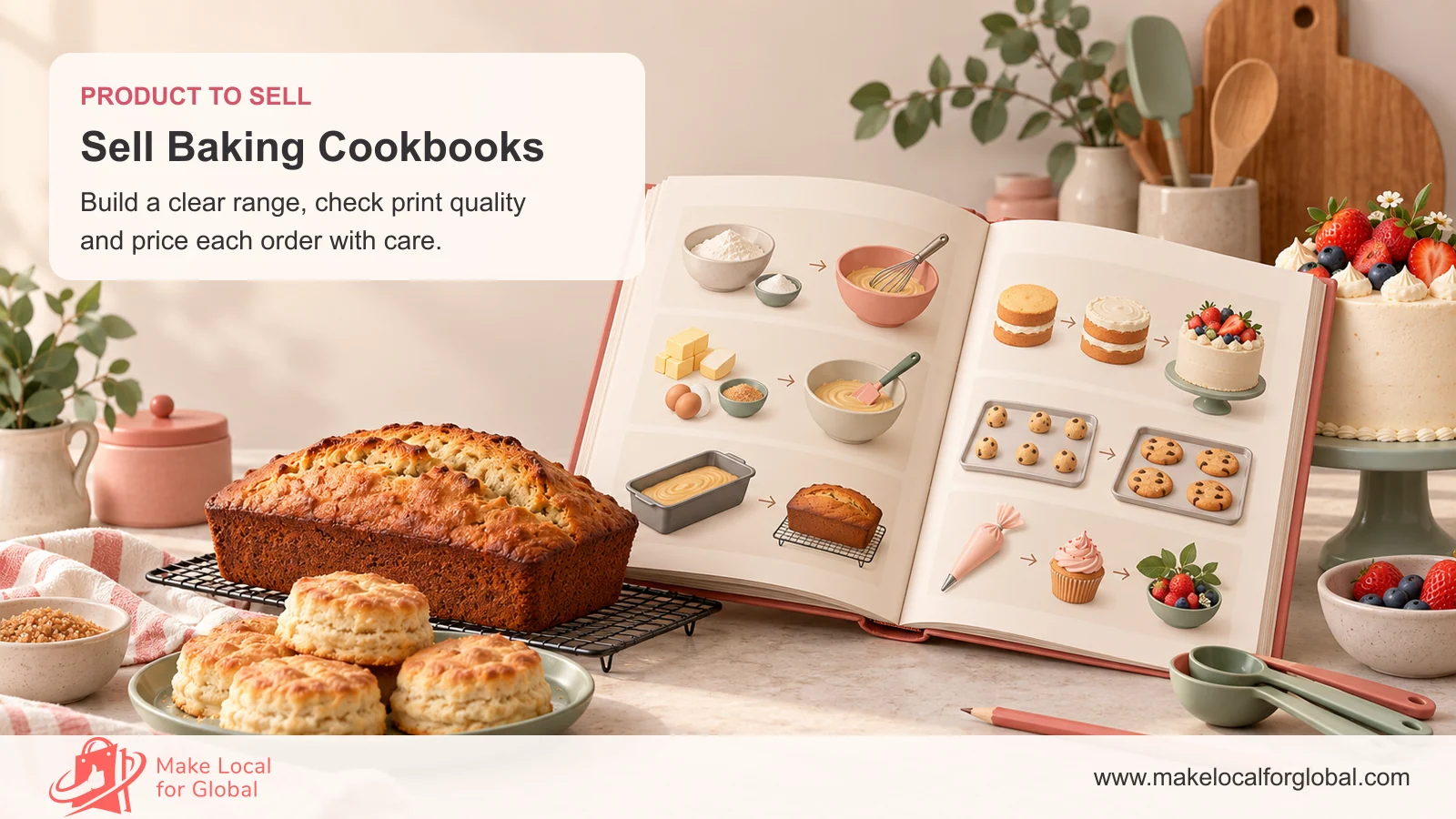
You can sell baking cookbooks online by choosing a specific reader, testing the recipes and the offer, then pricing every cost attached to a real order. Start with one clear title and a small print or digital test. Expand after buyers show what they value.
A baking book may be a paperback, hardback, downloadable file, print-on-demand title or a second-hand book you are authorised to resell. Each route has a different cash requirement and fulfilment workload. Your first decision is which kind of reader and purchase the book will serve.
Plan the product page, checkout and order flow before you take your first order.
“Baking” covers a wide set of skills and occasions. A beginner learning loaf cakes needs different recipes from a sourdough baker, a parent baking with children or a decorator preparing celebration cakes. Pick one group and one situation your title will help with.
For example, “reliable traybakes for busy home bakers using supermarket ingredients” describes a buyer and a use. It gives you a practical test for every recipe, photograph and product detail. A broad promise such as “a book for everyone who loves baking” gives shoppers little reason to choose your title.
Write down the decision rule before the test. For instance, you might require 20 sample requests or a set number of pre-orders before ordering 200 copies. The right threshold depends on your budget and the quote in front of you.
Start with a lead cookbook and one or two related products. A small collection is easier to explain, cost, photograph and keep in stock. Each title should meet a distinct need rather than repeat the same recipes under a different cover.
A first range might include a loaf-cake book, a biscuit collection and a seasonal celebration title. You could group by skill level, equipment, ingredients or baking occasion. Ask readers which grouping they recognise fastest.

You can offer different price points without creating three unrelated books. An entry product might be a short digital collection of tested recipes. The core offer could be a full paperback. A gift option could pair it with a second title or a signed message card.
State exactly which formats and titles are in a bundle, show their individual prices and explain the saving. Check the packed weight and parcel size before setting the delivery price. A related guide to selling artisan bread online may help if your product range reaches home bakers who sell what they make.
Compare suppliers using the same specification: page count, finished dimensions, paper, colour pages, binding and quantity. Request a physical sample or printed proof. The cheapest per-copy figure does not show the whole cash commitment or the cost of getting books to buyers.
| Route | May suit | Questions to ask |
|---|---|---|
| Print on demand | A small launch or a seller who wants to avoid storing a large batch. | Copy price, paper and colour options, dispatch times, delivery areas, returns process and sample quality. |
| Short print run | A title with reader evidence and a confirmed sales plan. | Minimum quantity, total delivered cost, payment timing, storage, proof approval and reprint lead time. |
| Digital file | A tested collection that readers want to access on a device. | File type, phone and tablet readability, secure delivery, customer support and digital cancellation steps. |
| Authorised resale | A seller with a reliable source of published baking books. | Invoices, edition and condition, stock reliability, resale terms, postage and accurate listing details. |
Supplier terms and costs vary. Compare current written quotes for the same book specification.
A useful cookbook lets its reader complete the recipe with the equipment, ingredients and skill level promised on the cover. Test every recipe from start to finish in a normal kitchen. Log ingredient weights, tin sizes, oven temperatures, timings, yield and any step where a photograph would prevent guesswork.

Original writing, photographs and illustrations receive copyright protection in the UK. Get permission or a suitable licence before you reproduce someone else’s protected words, photographs, artwork or page design. Read the GOV.UK copyright overview and its guidance on using another person’s copyright.
For a commissioned photograph, recipe or cover, agree in writing who can use it, in which formats and for what commercial purposes. Keep the agreements with your final print files, recipe tests and image licences.
If you want trade ordering for a printed edition, check whether you need an ISBN. Nielsen’s UK guidance says separate formats and revised editions need separate ISBNs. Confirm the right setup for your route with the UK ISBN Agency.
Use a supplier quote and the parcel you will actually send. This example is hypothetical: it shows one paperback sold for £24.99 with standard delivery included. Replace each assumption with your own print quote, postage, channel rate and advertising cost.
| Order item | Example | What it covers |
|---|---|---|
| Customer price | £24.99 | One paperback with standard delivery included. |
| Printed copy | £7.10 | Assumed price for one finished copy. |
| Mailer and protection | £0.85 | Materials to protect the cover and corners. |
| Outbound postage | £3.40 | Assumed parcel service cost. |
| Payment and channel fees | £1.35 | Replace with your actual channel fees. |
| Returns and replacements | £0.60 | A planning allowance, not an observed return rate. |
| Customer acquisition | £2.50 | Example promotion cost assigned to one sale. |
| Total variable cost | £15.80 | £7.10 + £0.85 + £3.40 + £1.35 + £0.60 + £2.50. |
| Contribution before overhead and tax | £9.19 | £24.99 minus £15.80. |
Planning example only. Figures are assumed, not a supplier quote, market price or profit promise. Include fixed costs, your working time and the tax treatment that applies to your business.
Marketplace fees change the calculation. Etsy’s fee policy lists a 6.5% transaction fee on the displayed price plus delivery and gift wrap, with other fees possible. Check its current fees policy before using the platform in your forecast. Our product pricing guide shows how to compare assumptions with a selling price.
Put print, packaging, delivery, channel fees and promotion beside the price for a real order.
Use a title that names a reader or a result, such as “Small-Batch Biscuit Cookbook: 40 Tested Recipes for Home Ovens”. Use counts, dietary descriptions and skill claims only when they are accurate and supported by the book.
Place format, page count, dimensions, binding, language, edition date, dispatch estimate and included extras near the top. Add a front-cover image, a readable spread, a close view of one recipe and a sense of the book’s scale. A sample recipe or a few preview pages help the buyer judge the layout.
Use a distinct page title and search description that explain the offer in plain language. See how to improve a product page for Google. Write for the reader’s question instead of repeating the same search phrase in every heading.
A marketplace can place your title beside related books, but its charges and policies affect the order cost. Your own shop gives you more control over the page and bundles; you need a route to bring readers there. Some sellers test both and keep the stock, price and dispatch promise aligned.
Test one marketing idea at a time. Show a recipe technique, explain how a page is laid out, share a reader review with permission or offer a short preview. Track visits, questions, email sign-ups and paid orders. If a social post receives attention but few people reach the product page, test its link and call to action.
Useful search phrases depend on the recipes and buyer, such as “beginner bread baking book”, “small batch cake cookbook” or a particular biscuit style. Check actual reader wording. Browse other Product To Sell ideas and link related pages when they help a visitor choose a next step.
Choose a close-fitting book mailer that limits movement. Pack the finished title, then check whether the corners shift or the cover bends. Weigh and measure the packed parcel, including gift wrap or bundle inserts, before choosing a delivery service.

UK online sellers must provide required details about the business, product, full price, payment, delivery and cancellation. Read the GOV.UK distance selling guidance. For a digital download, GOV.UK says the buyer must agree to start the download and acknowledge the loss of the 14-day cancellation right before access begins. The order confirmation needs to record this information. Check the current online selling guidance and configure checkout for the digital product you sell.
HMRC lists printed books and recipe books among zero-rated printed matter. Qualifying e-publications may have a zero rate too, depending on the supply. Read the current VAT notice for books and printed matter. Check the rules for bundles, audio, mixed supplies and overseas orders with a qualified adviser.

No. A print-on-demand service or a small proof order can help you check demand, quality and cost before committing to a larger batch. Compare the copy price with storage, postage and fulfilment work.
Yes, if you own or have permission to use the content and your product page explains the file, delivery method and contents. Set out the digital cancellation steps before the download starts and keep the order confirmation.
Your publishing and sales route determines which identifiers it accepts. If you want trade ordering, check the UK ISBN Agency guidance for the edition and format you plan to sell.
Add print or stock cost, packaging, postage, fees, promotion and an allowance for returns or replacements. Compare the remaining contribution with overheads, tax and the time spent on each order.
Do not copy another book’s words, photographs, illustrations or page design without checking the rights and obtaining permission or a licence where needed. Develop original material and keep written records for commissioned work.
Start with one title, one clear buyer and a tested order cost. Make Local for Global can help you set up an online shop and learn how to manage product listings and orders.
PREFERRED SOURCE
Like what you’re reading? Add Make Local for Global as a preferred source on Google to see more of our articles when you search.