

READY TO SELL Bath Mats ONLINE?
Get a store built for you in 5 days, plus training and support to help you start, run, and grow your Alternative business.

A practical plan for selling bath mats online, from choosing materials and sizes to checking samples, pricing each order and answering care and delivery questions.

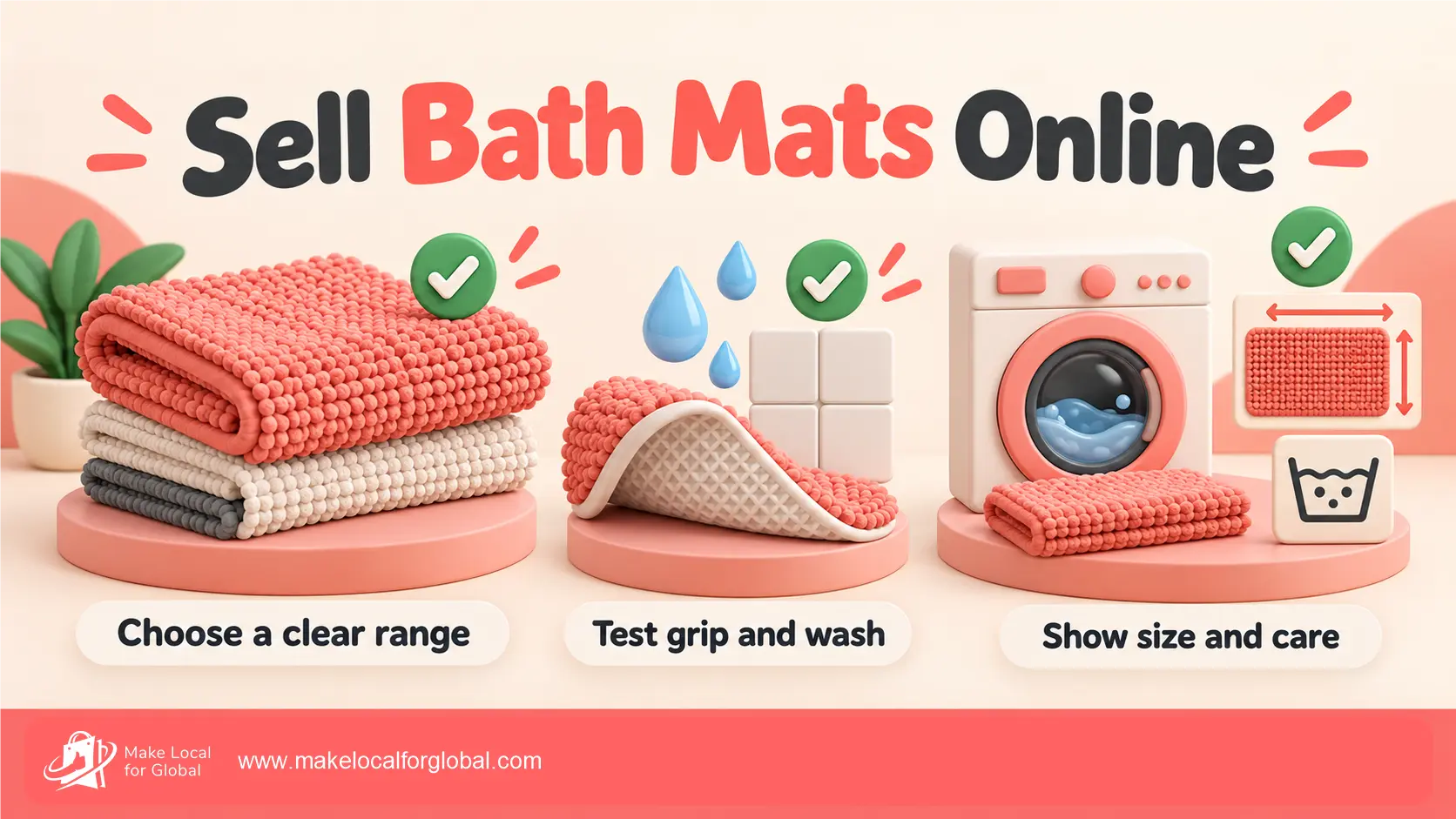
A bath mat looks simple until a customer needs to choose its size, feel, drying time, backing and washing routine. Clear answers to those questions can help someone decide with confidence—and reduce avoidable returns.
Start with one buyer group, a small set of tested designs and honest product details. Then calculate the full cost of each order, photograph the useful details and keep a note of questions customers still ask.
A focused online store can make it easier to compare products, understand delivery and ask a question. Review MLFG’s service options and decide whether they fit your plans.
“For anyone who wants a soft bath mat” is too broad to guide a useful first range. A renter with a narrow shower exit may need a compact washable mat. A family bathroom used several times a day may prioritise durability and quick drying. A gift buyer may want a coordinated set with attractive packaging.
Write one sentence describing your first customer, room and reason for buying. For example: “A renter wants a washable mat that fits beside a compact shower and coordinates with neutral towels.” Use that sentence to choose the size, material, colour and photos you test first.
A narrow audience makes early learning easier. It can also prevent you spending on a wide colour range before you know why each option belongs.
Bath mats vary by fibre, pile, backing, shape and intended position. Cotton, polyester and blended textiles feel and dry differently. Slatted wood or hard absorbent designs have different care and packing needs. The product description should reflect the exact item, not a generic category promise.
For a sense of the formats already available, IKEA lists a 50 × 80 cm cotton terry mat, a 40 × 60 cm polyester mat with latex backing and a round 65 cm microfibre design. These are examples of product specifications, not evidence that a new shop will sell the same items. Check live product details before using comparisons.
| Range choice | Buyer question | What to verify |
|---|---|---|
| Cotton pile | How does it feel and wash? | Fibre content, care label, shrinkage and drying |
| Synthetic or microfibre pile | How thick is it and how does it dry? | Exact composition, backing and performance evidence |
| Compact or round shape | Will it fit the floor area? | Finished dimensions, edge shape and a scale photo |
| Matching towel set | Do the items coordinate? | Colour, dimensions, stock and combined parcel cost |
One opening range might include a standard cotton rectangle, a thicker synthetic option and a compact size for smaller bathrooms. Keep the colour chart modest until orders show what earns its place. Bundles can increase order value, but leave single products available and check that the combined price covers its costs.
If a gift set includes bath salts, link readers to MLFG’s bath salts selling guide as another relevant product idea.
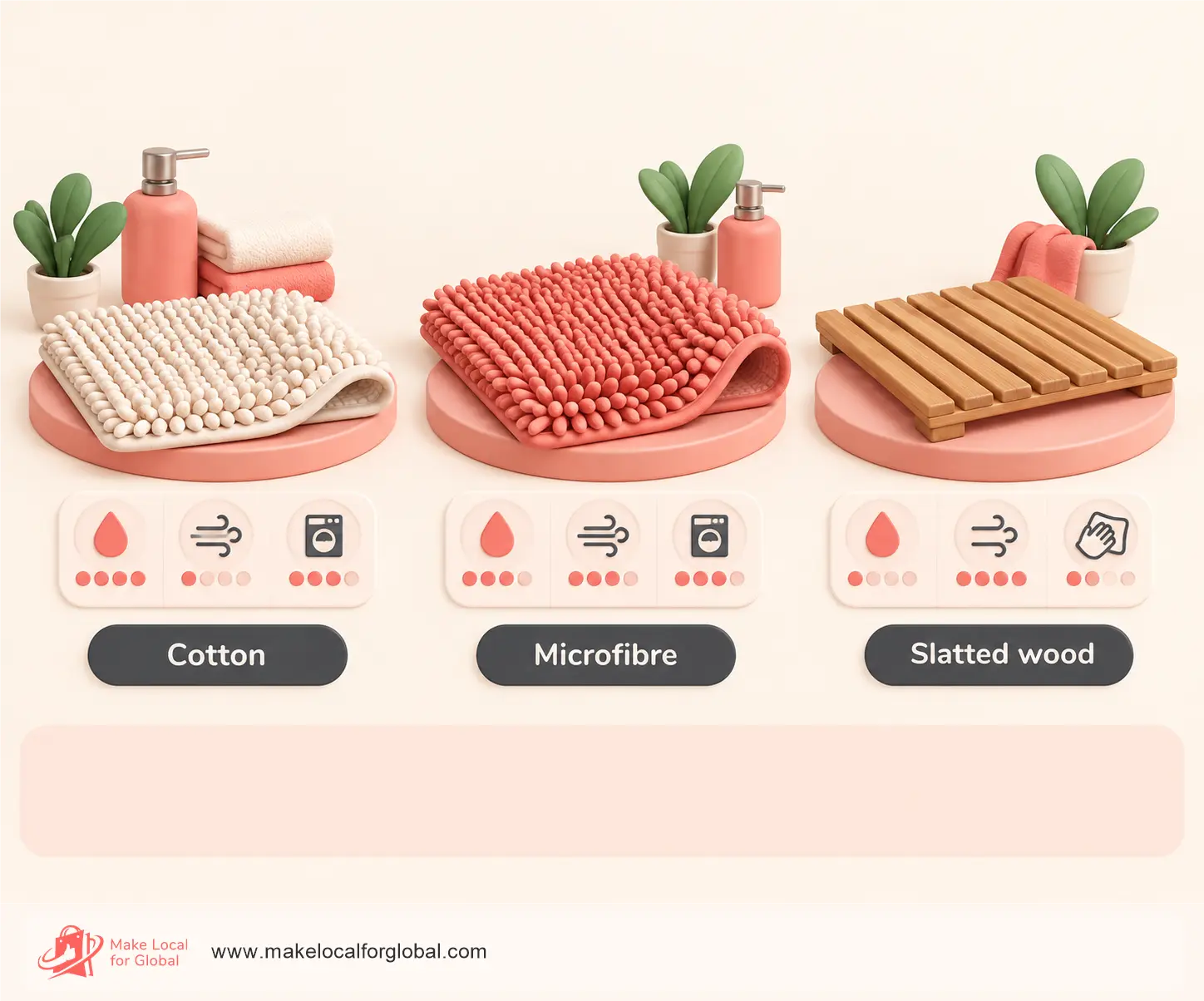
Ask for a written specification before comparing quotes. Confirm fibre percentages, backing material, finished dimensions, item weight, care symbols, country of origin, packaging, minimum order and lead time. Ask whether the sample comes from the same production batch planned for your order.
For textile products, UK government textile-labelling guidance explains fibre-composition labelling duties in England, Scotland and Wales. Check current rules for Northern Ireland and seek advice for mixed-material products where needed.
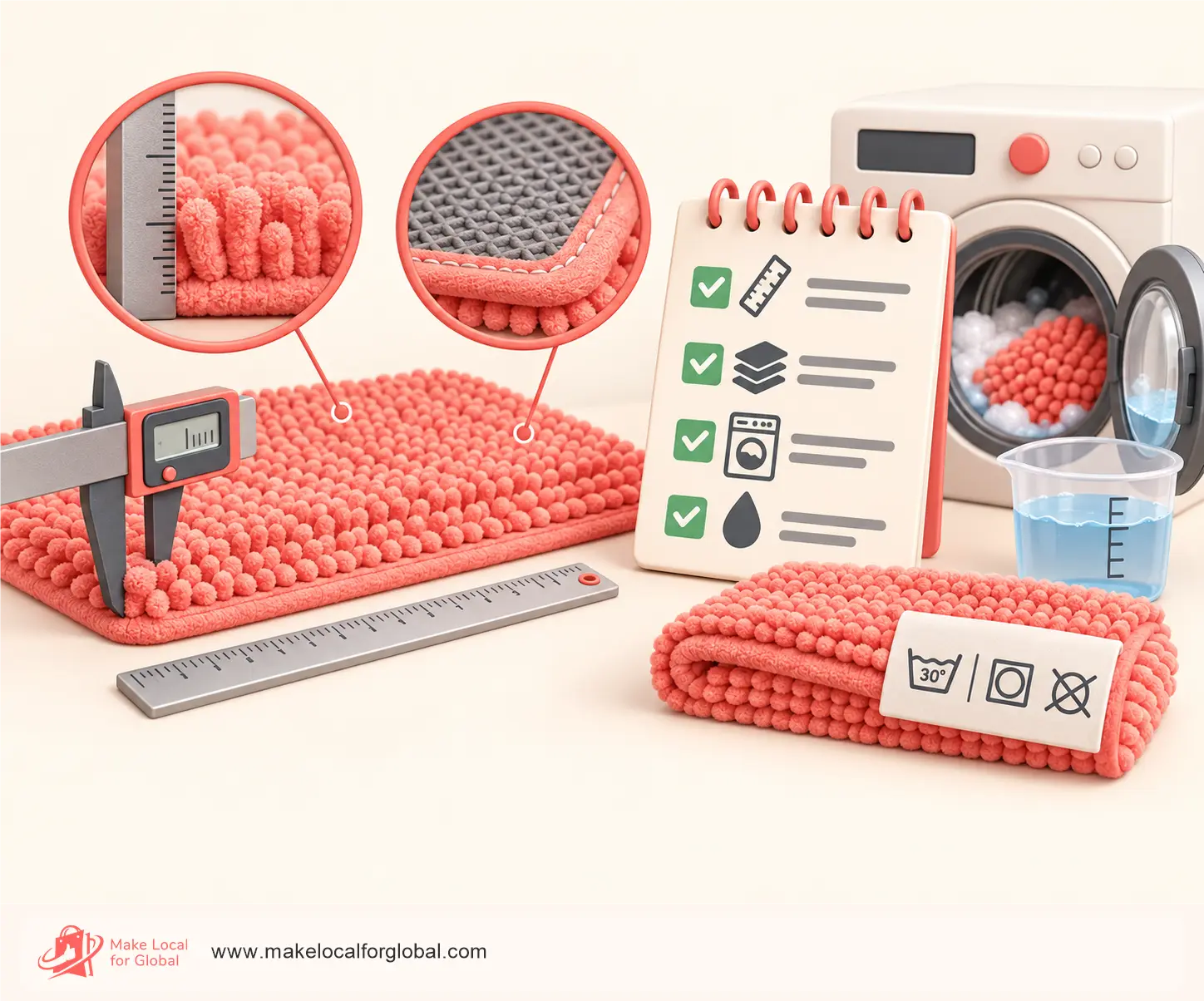
Bath mats are used around water, so product claims need care. State the exact backing and intended placement, and provide the supplied care instructions. If you use words such as “quick drying”, “recycled” or “anti-slip”, keep evidence for the particular item and conditions described.
UK product-safety guidance for businesses explains responsibilities across the supply chain. The Competition and Markets Authority’s Green Claims Code says environmental claims should be clear, accurate and supported. These sources are starting points, not product-specific legal advice; check the rules in each market you serve.
A low unit cost can hide freight, packaging, payment fees, delivery subsidies and returns. Build a per-order cost sheet before choosing a price, then update it when supplier terms or parcel rates change.
| Example item at £32 | Amount |
|---|---|
| Customer payment (example assumes no VAT registration) | £32.00 |
| Mat purchase cost | −£8.00 |
| Inbound freight share | −£1.10 |
| Packing materials and time allowance | −£0.70 |
| Delivery paid by seller | −£3.20 |
| Payment and shop fee allowance | −£1.30 |
| Returns and damage reserve | −£0.90 |
| Advertising assigned to order | −£4.00 |
| Contribution before fixed overheads and tax | £12.80 |
These figures are illustrative, not a recommended price or supplier quote. The arithmetic leaves £12.80 before fixed overheads and tax. Add your own costs and model VAT if registered using current HMRC guidance. Compare single-mat, two-mat and gift-set orders; if free delivery removes most of the contribution on one item, test a transparent delivery charge or basket threshold.
When the range, delivery terms and care notes are ready, a focused store can give each option a clear page. Review the service details and ask MLFG about your requirements.
Use a specific title such as “Cotton bath mat, 50 × 80 cm, machine washable” only when those facts match the item. Give dimensions in centimetres, fibre composition, backing, pile height where known, care instructions and packed parcel size.
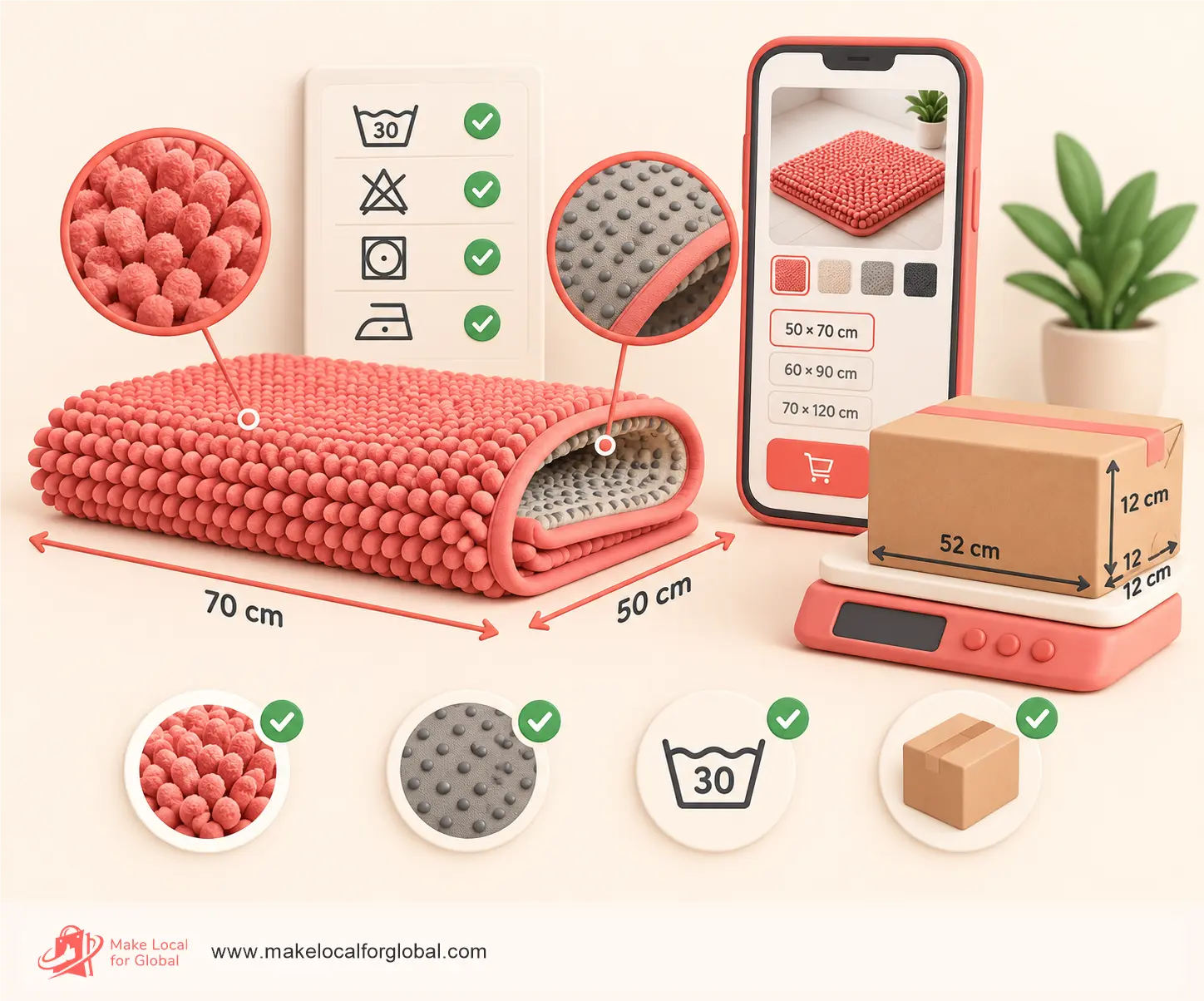
Fold and pack a sample exactly as it will ship, then measure and weigh the parcel. Label colours and sizes in storage and record product codes, batches, quantity received, quantity sold and quality concerns. Clear records make it easier to investigate a later complaint.
Publish readable delivery and returns information. GOV.UK distance-selling guidance says customers can cancel most online goods within 14 days of delivery. Check how the rules apply to your business and target market; do not assume ordinary bath mats are exempt.
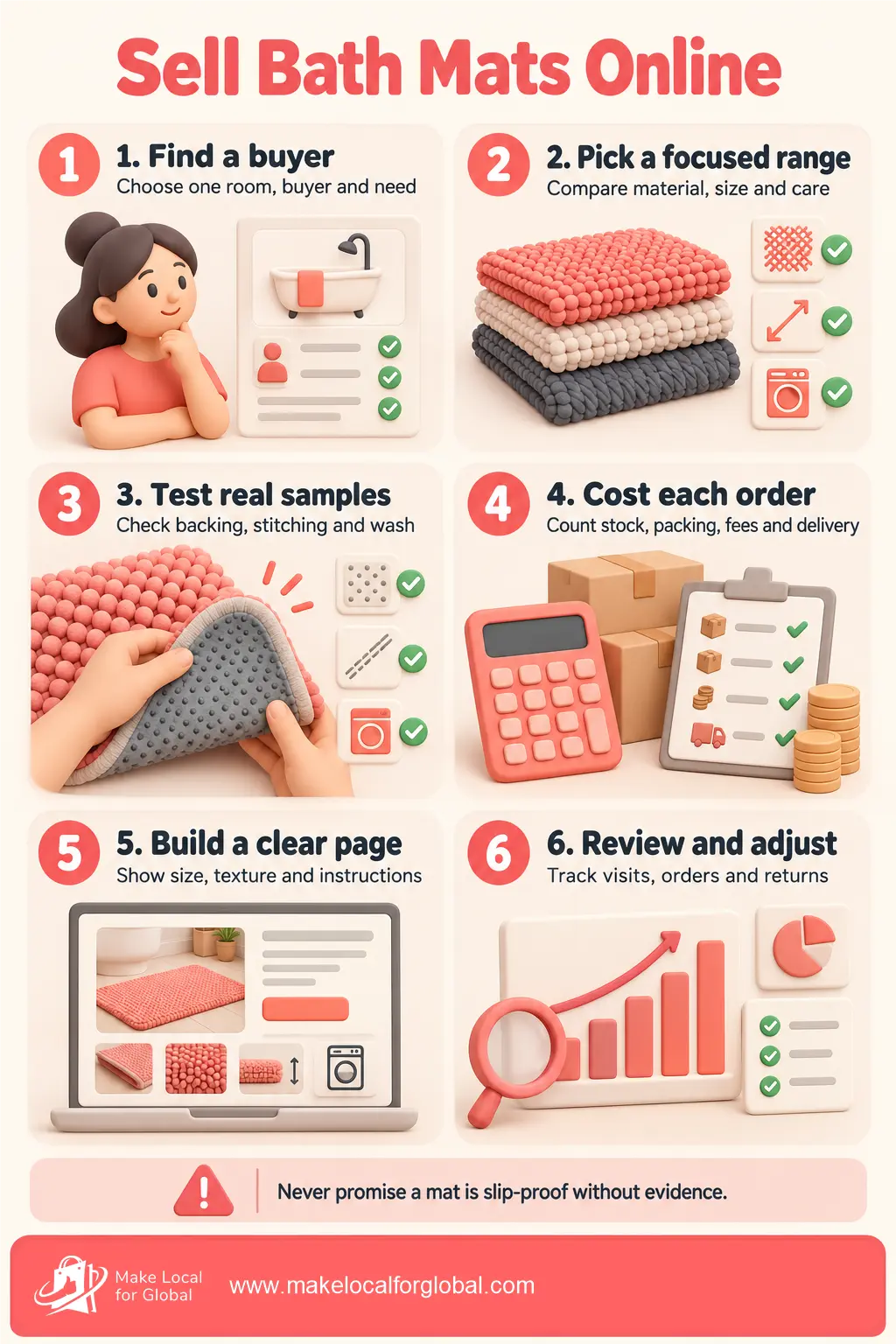
After the month, keep the options with customer interest and workable order costs. Improve any page that leaves people asking the same question. Wait for sample quality and actual order records before making a larger reorder.
Begin with a small choice linked to one buyer need, such as a standard rectangle in two colours and one compact size. Add materials only when customer feedback and sample checks justify them.
Only make a performance claim that is accurate for the exact mat and conditions described, and retain suitable evidence. Do not promise that a product prevents slips or injuries.
Show the whole mat, scale, pile, backing, edge and care label. Include the parcel or bundle when its size or contents could affect a buying decision.
Bring your sample notes, sizes and order costs together before committing to a larger order. MLFG can answer questions about its store services and help you choose a sensible next step.
PREFERRED SOURCE
Like what you’re reading? Add Make Local for Global as a preferred source on Google to see more of our articles when you search.

Build your online presence without having to figure out everything yourself.