

READY TO SELL beard trimmers ONLINE?
Get a store built for you in 5 days, plus training and support to help you start, run, and grow your Alternative business.

Planning to sell beard trimmers online? Learn how to choose a focused range, test samples, calculate delivered costs and prepare clear product pages and UK selling policies.

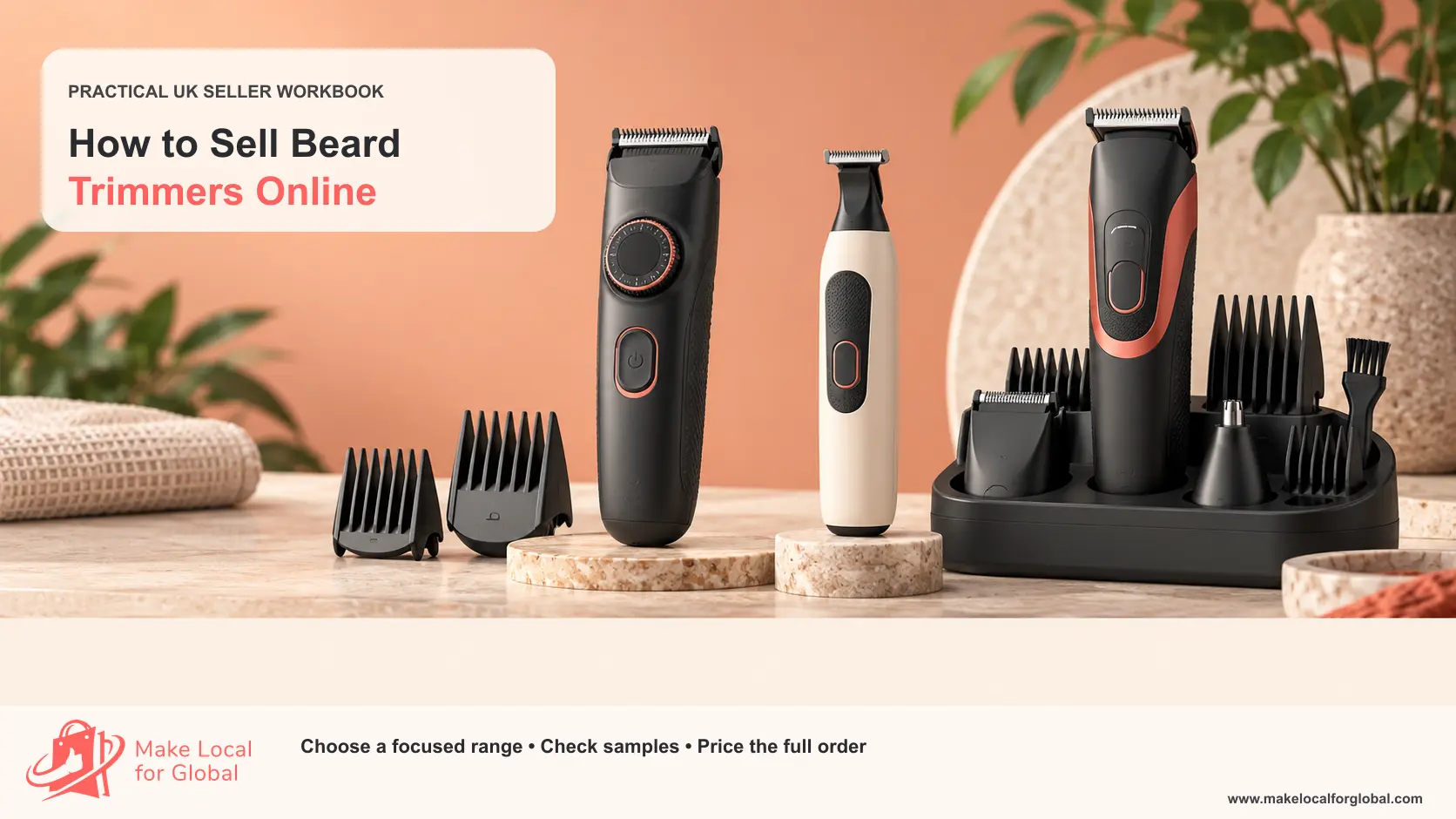
A beard trimmer looks simple until a buyer tries to compare cutting lengths, attachments, charging and cleaning. A good online range makes those details easy to understand before someone orders.
To sell beard trimmers online, begin with one clear customer group, compare a short list of models with distinct uses, test samples and calculate every cost from supplier to doorstep. Then build product pages that answer practical questions and check the rules for electrical goods, batteries, returns and shipping.
MLFG helps new sellers plan and set up an online store, with product pages, payments and training in the setup route.
“For everyone” is a difficult place to start. A first range can serve people who maintain short stubble, shape a longer beard, tidy edges or want one compact kit for travel. Each group has its own questions.
Write one sentence for the first buyer. For example: “A person who trims a short beard twice a week and wants repeatable length settings without a large grooming kit.” Use that sentence to judge every product, image and claim you add.
Look at marketplace listings and buyer questions for repeated needs: guard lengths, battery life, cleaning, replacement parts and whether a charger comes in the box. Record the questions, not just the number of search results or reviews.
Next, ask a small group of likely buyers which task they want to solve and what they currently find confusing. A simple interest page can compare two honest offers, such as a compact stubble trimmer and a beard-and-detail kit. Measure sign-ups or replies before committing to a minimum order. Do not take payment for stock you cannot supply.
For a related personal-care product example, see our earlier article on selling beauty blenders online. For both product categories, buyers benefit from clear use instructions, close-up photography and a straight answer about what is included.
A dozen similar trimmers can make the choice harder without giving buyers a useful reason to pick one. Start with a few products that serve clear purposes, offer useful length choices or include distinct attachments.
| Range option | Likely use | Details to compare | Watch-out |
|---|---|---|---|
| Adjustable beard trimmer | Regular length maintenance | Setting range, step size, guard stability, run time | A dial is not useful if its marks are hard to read |
| Detail trimmer | Edges, moustache and close shaping | Blade width, control, protective cap | Be clear if it is a detail tool rather than a full-beard model |
| Multi-groom kit | Buyers who want several grooming attachments | Attachment count, storage, cleaning and compatibility | More pieces mean more chances for a missing part |
| Travel model | Packing and occasional use away from home | Size, travel lock, voltage and protective case | Check charging plug and travel claims for the target market |
Use the maker’s actual specifications. Features and suitability vary by model.

Build an entry, core and premium offer only when each has a clear reason to exist. The entry model might cover basic length control, the core model could add a stronger set of guards and a travel pouch, and the premium option might include verified extra attachments or longer tested runtime.
Describe a product as waterproof, suitable for wet shaving or safe to rinse only when its own instructions support that exact use. For instance, the Philips Series 5000 product page lists one model’s length settings, charge time and runtime. Treat those numbers as model-specific examples, not as promises for the whole category.
A bundle can lift order value when the extra items solve a real task. A compatible spare comb set, travel pouch or cleaning brush may make sense; an unrelated add-on can make the offer feel padded. Confirm compatibility and whether each item is genuinely included.
You can buy from a UK wholesaler, import finished goods, commission a private-label model or work with a maker. A UK supplier may make replenishment and communication easier. Direct importing may give more choice, yet the importer can take on extra product duties. Compare the full landed cost and your responsibilities, not just the unit price.
Ask who makes the trimmer, where it is made, which legal entity imports it, and what model or batch identifiers appear on the product and packaging. Request the relevant conformity documents, English instructions, charger details, battery data, warranty process and written rules for replacement parts.
For Great Britain, read the current Electrical Equipment (Safety) Regulations guidance and the government’s product marking guidance. The duties vary by role and product. A CE or UKCA symbol by itself is not proof that a supplier has given you the documents and traceability you need. Northern Ireland has its own product rules for some categories, so check the market you intend to serve.
Keep supplier invoices, product identifiers, test records, customer reports and any corrective action together. UK product safety advice says sellers need traceable supplier records and that businesses must act on safety concerns. If you import or sell under your own brand, get competent product-compliance advice before listing.

Order samples from the same model and supplier you plan to sell. Test them with the supplied instructions and record what happens; do not rely on a single first impression.
Keep dated photos and notes. If a supplier changes the motor, battery, charger or blade source, request fresh samples and updated documents before the next order.
The unit price is only one line. Include transport into your stock, customs or import charges where relevant, packaging, delivery to the buyer, payment processing, customer acquisition and an allowance for returns, damage or replacements.
| Illustrative order at £39.99 | Cost | Working assumption |
|---|---|---|
| Trimmer purchase | £15.00 | One tested model from a supplier |
| Inbound freight and import allocation | £2.50 | Allocated across the order quantity |
| Retail and dispatch packaging | £0.75 | Protective packing for one unit |
| Tracked delivery to buyer | £3.20 | Example domestic parcel label |
| Payment processing | £1.30 | Planning estimate only, not a provider quote |
| Customer acquisition | £3.00 | Average cost attributed to this order |
| Returns and damage allowance | £1.25 | Reserve spread across expected orders |
| Estimated variable cost | £27.00 | £15 + £2.50 + £0.75 + £3.20 + £1.30 + £3 + £1.25 |
| Contribution before fixed costs | £12.99 | £39.99 − £27.00 |
Illustrative figures only, not supplier or carrier quotes. This example treats £39.99 as sales revenue before VAT and excludes fixed costs, tax and owner pay. Rework the model for your VAT position, channel fees, actual postage, returns and advertising data.
The £12.99 is contribution, not net profit. Hosting, software, insurance, bookkeeping, unsold stock, refunds and tax still affect the business. If a marketplace adds a percentage fee, add it to the model before you set a price.
Run a second calculation for a bundle. Add the true cost of every attachment and extra parcel weight, then compare the contribution with a single-unit order. A bundle that adds £8 to the selling price but £10 in stock, packing and fees reduces the amount left over.
Use the MLFG Website Brief Builder to map your buyer, offer, pages and launch tasks before paying for a large order.
Use a plain, specific title, such as “Cordless Beard Trimmer with 10 Length Settings and 4 Comb Guards”. Only use a number or feature after checking it against that exact model and the box contents.
List the length range in millimetres, adjustment increments, guard names, battery type, charge time, stated runtime, cleaning method, voltage, included charger or cable, dimensions, warranty route and compatible replacement parts. If the maker says a USB adaptor is not included, make that visible before checkout.
Show the trimmer from front, side and close range. Add a photo of every attachment laid out beside the unit, a size reference in a hand or travel pouch, and one image that explains how the length control works. Use your own tested sample so the photos match what arrives.
Start with the task: “Set a repeatable short-beard length with the adjustable comb, then remove the guard for edging if the maker’s instructions allow it.” Follow with the exact length choices, box contents and cleaning steps. Avoid claims such as “barber quality” or “hypoallergenic” without evidence for that product.
Explain dispatch timing, delivery options, support contact and the returns process in plain language. If you sell outside Great Britain, check the product rules, plug requirements, taxes and consumer rights for each destination before opening delivery there.
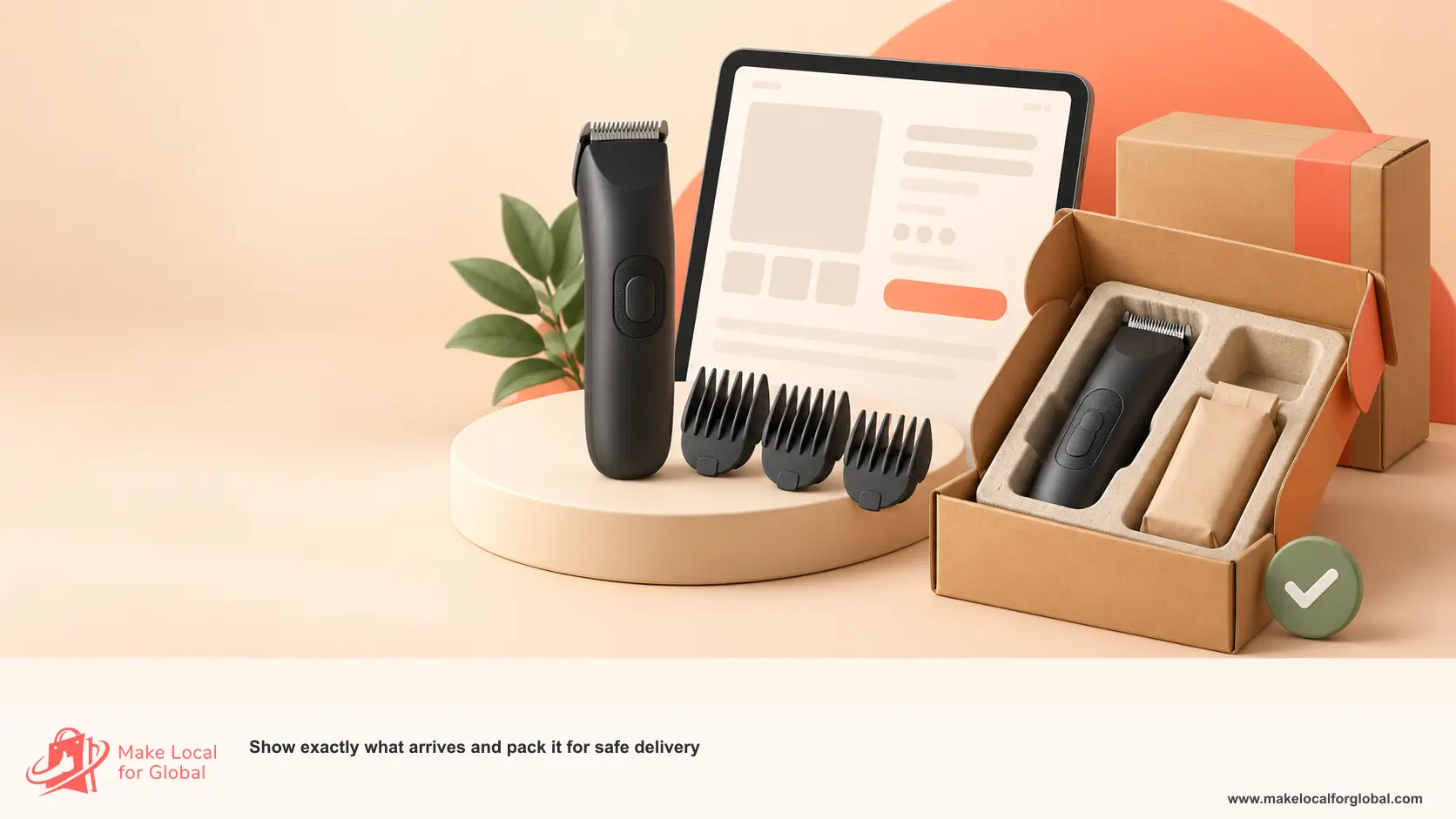
Electric grooming products call for extra checks. Great Britain guidance covers manufacturer, importer and distributor duties under the Electrical Equipment (Safety) Regulations. If you import from outside the UK or put a product under your own brand, confirm who is the responsible manufacturer or importer, which conformity assessment applies, and where the English instructions and traceability details appear.
A trimmer with a rechargeable battery can raise producer-responsibility duties. If your business is the first in the supply chain to make batteries or battery-equipped products available in the UK, read the current waste-battery producer guidance. Retailers and distributors that supply 32kg or more of portable batteries in a year have a take-back duty under the battery retailer rules. Importers may have a separate role for electrical and electronic equipment under the WEEE producer guidance.
For online orders, customers usually have a 14-day period after delivery to tell a seller they want to cancel, then another 14 days to return the item. The rules contain an exception for certain sealed goods that cannot be returned for hygiene reasons once opened. Do not assume that it applies to every beard trimmer; check the specific product and current GOV.UK returns guidance before writing a policy. Faulty or misdescribed goods carry separate rights.
Before offering international dispatch, ask the carrier about its current conditions for parcels with lithium batteries installed in equipment. Royal Mail lists batteries among its restricted-item categories, and its rules vary by service and route. Start with the Royal Mail UK sending guidance or the equivalent instructions for your own carrier; do not rely on a supplier’s general statement.
A marketplace can put your product beside existing grooming offers, but listing fees, returns expectations and competition affect the margin. Your own store gives you more control over the product range, explanations and customer follow-up, though you need a plan to bring people to it. Some sellers test one channel first, then add another after fulfilment works.
Make a small content plan from real buyer questions. Show how each attachment serves a grooming task, explain how to read the length range, show how the case stores the kit, and answer whether a charger is included. Use search phrases such as “beard trimmer with adjustable comb”, “travel beard trimmer” or “beard trimmer replacement guards” only where they match the products you stock.
Track visits, product-page engagement, add-to-basket rate, completed orders, support questions, returns and contribution per order. If people visit but do not add the product, inspect price clarity, delivery cost and missing specifications. If they buy but return it, compare the reason with your product claims, sample records and packing checks.
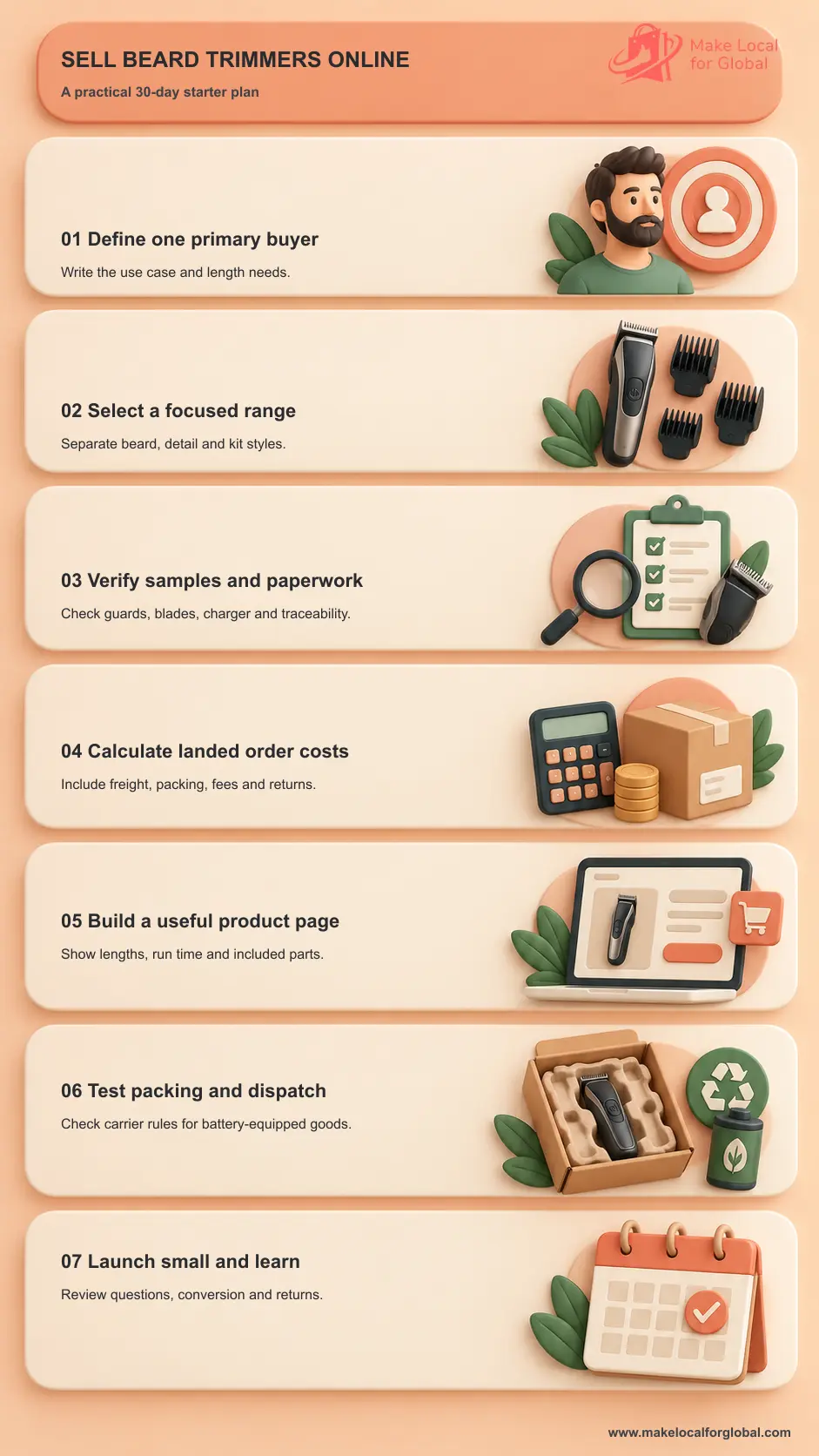
Days 1–7: Learn the buyer’s routine. Write one target-buyer statement, collect ten real questions from likely customers and review comparable listings. Record which features matter and which claims are hard to verify.
Days 8–14: Compare suppliers and test samples. Request documentation, full delivery costs and replacement-part information. Test at least two units from a potential supplier, record charging and guard fit, and rule out any model with unclear safety information.
Days 15–21: Set prices and build the first pages. Finish the unit-cost model, select a small opening range, photograph real samples and write specifications in millimetres. Prepare delivery, battery-shipping and returns information before accepting orders.
Days 22–30: Run a limited launch test. Promote a small set of pages and measure visits, questions, orders, delivery performance and contribution. Keep stock commitments modest until the numbers and customer feedback show which model deserves replenishment.
It can suit a seller who can source compliant stock, make model choices clear and support customers after purchase. Test the buyer need, supplier quality and contribution before making a large stock commitment.
Check sample quality, exact model identity, conformity records, English instructions, charger and battery details, importer information, warranty support and replacement-part availability. Ask who is responsible for each record if there is a safety issue.
There is no single figure. Budget for samples, initial stock, inbound freight, packaging, delivery, store or marketplace charges, payment fees, product-compliance advice, returns and customer acquisition. Start with the number of units you can afford to test and reorder.
Possibly, but selling under your own name or mark can change your role and duties. Check the applicable product-safety rules, technical records, labelling and battery responsibilities before approving branded production.
Online cancellation rules include limited exceptions for certain sealed goods that are unsuitable for return for hygiene reasons once unsealed. Whether a specific trimmer fits that exception depends on the product and facts. Get advice and explain the policy accurately; faulty-product rights remain separate.
Start with one buyer, a few clearly positioned models and a written sample checklist. Once the product documents, delivered cost and buyer questions are clear, you can decide whether to expand the range or keep the first offer focused.
See how MLFG’s online store setup works, compare the plans and decide whether the service fits your launch.
PREFERRED SOURCE
Like what you’re reading? Add Make Local for Global as a preferred source on Google to see more of our articles when you search.

Build your online presence without having to figure out everything yourself.