

READY TO SELL bed canopies ONLINE?
Get a store built for you in 5 days, plus training and support to help you start, run, and grow your Alternative business.

Learn how to sell bed canopies online with fit checks, sample tests, clear product details, a worked UK order-cost example and a practical 30-day launch plan.

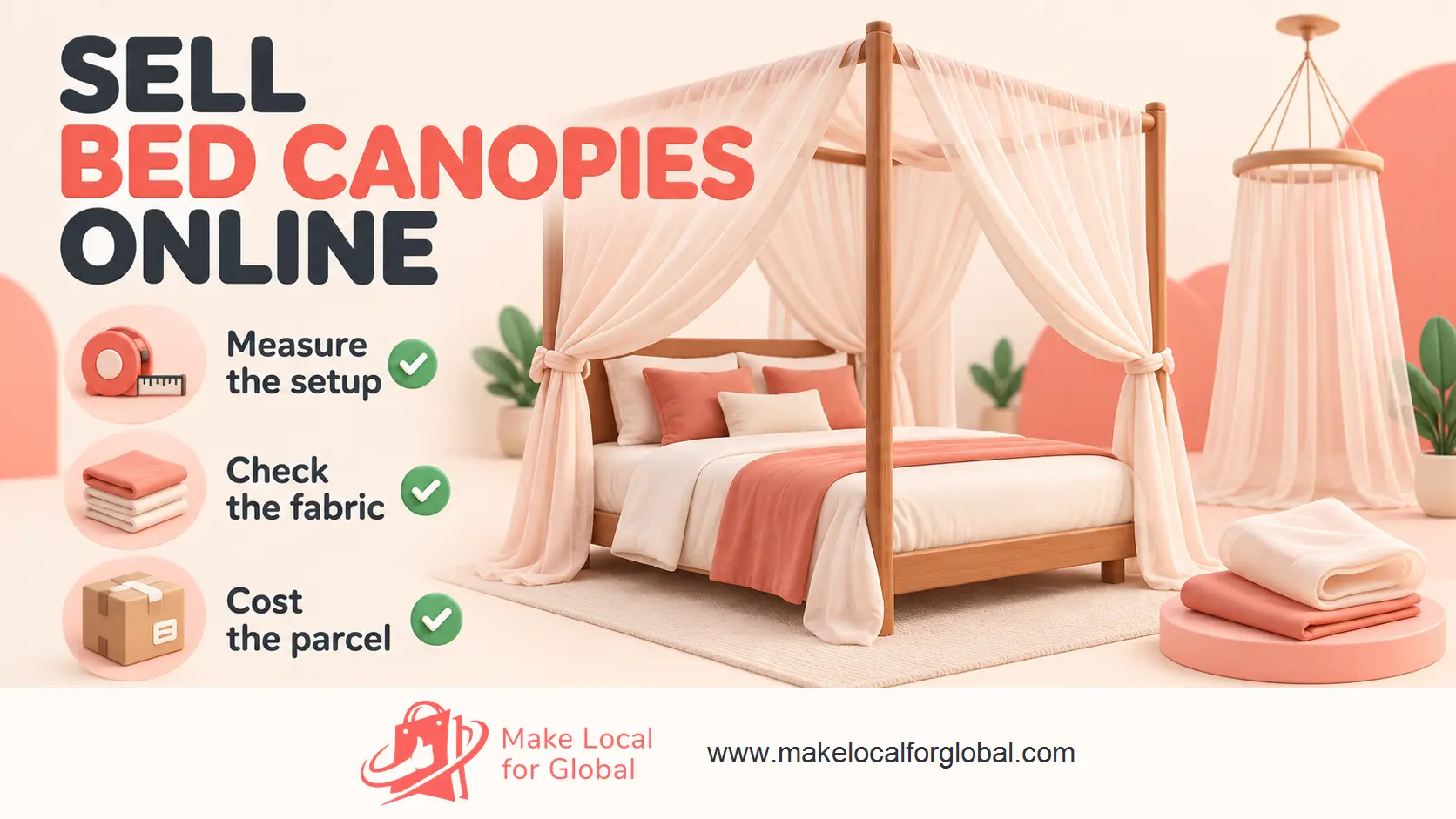
A bed canopy can look simple in a product photo, yet buyers need to know whether it fits their bed, how it hangs, what comes in the parcel and how to care for the fabric. A focused range answers those questions before you buy stock in depth.
To sell bed canopies online, choose one clear buyer and one mounting style first. Order samples, record the measurements and hardware, cost a real parcel, then test a small set of listings before placing a larger order. The steps below show how to do that for adult bedroom décor and bed-specific products.
Start with the buyer, product type and costs. MLFG’s business tools can help you organise early decisions before committing to stock.
“Bed canopy” can mean a ceiling-hung ring with sheer fabric, curtains for a four-poster frame, or a fitted tent made for a named bed model. Those products need different measurements, photographs, instructions and packing. Treat them as separate product families in your first range.
A useful first customer might be an adult refreshing a bedroom, a renter looking for a removable ceiling-hung option, or a parent buying a bed-specific play tent for an older child. Avoid positioning decorative fabric as a baby sleep product. NHS safer-sleep advice says to keep a baby’s sleep space clear of items that could cover the mouth or nose or make the baby too hot.
The existing bed-frames selling article can help you compare adjacent customer needs. Canopies can sit beside bedsheets, bed linen and pillows in a bedroom range, but a bundle only makes sense when sizes, colours and delivery costs work together.
Use a short range with a clear entry, core and premium option. For example, an entry product could be a simple ring-and-fabric set; a core product could offer two drops or colour choices; a premium offer might add a better-finished fabric or a confirmed frame-specific fit. Keep the differences visible in the product page.

| Format | Buyer needs to know | First stock check |
|---|---|---|
| Ceiling-hung ring | Ring diameter, canopy drop, fixing method, ceiling suitability and hardware supplied | Confirm the parts, instructions and safe installation details for the specific model |
| Four-poster curtains | Frame dimensions, panel count, attachment method and fabric coverage | Measure a compatible frame and check seam placement and panel drop |
| Bed-specific tent or canopy | Exact bed model, age guidance, dimensions, materials and care | Test fit on the named frame and retain the maker’s instructions |
Use the maker’s verified specifications for each item. This comparison is a planning aid, not a fit guarantee.
Order a sample from the same supplier and production route you expect to use. A catalogue image will not show how sheer the fabric looks in daylight, whether the hem hangs evenly or if small hardware parts are present. Keep a dated record of the sample and ask the supplier how a production batch will match it.

A product may be decorative, but its mounting parts and intended use still matter. Ask the supplier for the product’s material details, installation instructions, warnings, traceability information and evidence behind any safety claims. Do not make claims such as “safe for every ceiling” or “keeps insects away” without relevant proof.
The UK government says businesses that make, import, distribute or sell consumer products have product-safety responsibilities. The rules differ by location: Great Britain has its own product-safety regime, and Northern Ireland follows applicable EU product-safety requirements. Check the current rules for where you sell and source, and get product-specific advice when the design or intended user creates extra risk.
For textile products sold in Great Britain, fibre-composition labelling rules apply. If a product contains parts with different fibre compositions, the information may need to identify those differences. Check the current GOV.UK textile labelling guidance and the regulations for the product you sell. Do not copy a supplier’s label without checking that it matches the actual item.
Online listings need clear trader identity, product description, total price, delivery information and cancellation information. For qualifying distance sales, consumers usually have 14 days after receiving goods to cancel, followed by a further 14 days to return them. Faulty-goods rights still apply. Read the current distance-selling guidance and returns and refunds guidance before setting your policy.
Take extra care with products promoted for children. A bed-specific tent is not the same as a decorative adult canopy. Do not market ordinary hanging fabric for cot or infant sleep use. Keep age guidance, installation information and warnings consistent with the manufacturer’s evidence, and ask a product-safety specialist if you plan a child-focused design.
Use the first screen to say what the canopy is, which bed or mounting type it fits and what the customer receives. Make the title specific, such as “Sheer four-poster canopy panels, set of four, 210 cm drop” only when those details are accurate. Include a drawing or labelled image with measurements.
Write a short FAQ from real questions: Does it fit a standard four-poster? What is included? How should it be washed? Is a ceiling fixing supplied? Avoid “standard size” unless you define the exact measurement and evidence.
A canopy can be light but bulky. Measure the folded package and obtain a parcel quote for the destination zones you plan to serve. Add fees based on the actual sales channel and the full order amount where the platform calculates fees that way. Etsy’s current fee guidance, for example, describes a transaction fee on the total order amount, with payment processing and other charges potentially separate. Check the live Etsy fees page before listing.
| Illustrative order item | Amount |
|---|---|
| Canopy item | £49.00 |
| Delivery charged to customer | £4.95 |
| Supplier cost | −£15.00 |
| Inbound freight share | −£2.40 |
| Protective packaging | −£1.25 |
| Parcel delivery | −£4.95 |
| Selling and payment fees assumption | −£5.13 |
| Customer acquisition allowance | −£5.00 |
| Returns or damage allowance | −£2.50 |
| Contribution before overheads and tax | £17.72 |
Illustrative arithmetic only: £53.95 proceeds less £36.23 variable costs = £17.72. The fee assumption is 9.1% of £53.95 plus £0.22, not a platform quote. Figures are before overheads, income or corporation tax, and any VAT treatment. Replace every figure with your own supplier, delivery, returns and channel costs.
This contribution is not net profit. Add fixed costs such as insurance, storage, software, photography and accountancy, then review your own VAT position. If you sell bundles, calculate the cost and parcel size for each combination rather than assuming the extra item adds no delivery cost.
Map the costs behind each price before you order a larger batch. MLFG’s pricing resource can help you review the inputs and assumptions in your plan.
A marketplace can put a product beside related home items, but fees, competition and listing rules vary. Your own website gives you more control over product education and customer follow-up, but you need to bring visitors. You can start with one channel and add another after you understand which questions, images and search terms lead to enquiries or orders.
For search, build one clear page per distinct product type. Use a natural title, readable product details, descriptive image alt text and useful links to related bedroom items. The Product To Sell article collection has other product-range examples to compare.

Fold the canopy in a repeatable way, protect delicate fabric from snagging and keep hardware away from the panels. Check whether the parcel stays within the courier’s size bands once packed. Include the product identification and care details required for your item, plus simple instructions that match the listing.
A four-week test keeps decisions small. Decide what evidence you need before each week begins, then review it before spending more.
Choose one use case and two or three canopy formats to compare. Speak to at least five likely buyers or review relevant questions from your existing customers. Record the most common fit, fabric and mounting concerns.
Request samples from suppliers that can answer specification and traceability questions. Measure the product, inspect seams and hardware, check care information, photograph it in daylight and write down any mismatch. Reject a sample that cannot be described accurately or safely.
Pack a sample and obtain delivery quotes. Complete a contribution calculation for each product. Photograph a full room view, a measurement view and close details. Write product pages that state dimensions, fit, material, package contents, care and delivery terms.
Publish a small range or test page and share it with a defined audience. Set a modest budget you can afford to lose. Review qualified visits, questions, saves, orders, delivery cost and returns. Continue with the format that earns useful buyer evidence and has workable costs.

You can investigate supplier fulfilment or made-to-order models, but confirm stock accuracy, dispatch times, packaging, returns handling and product records first. Order a sample yourself so your listing and photographs describe the item customers receive.
State the canopy drop, panel width and count, ring dimensions or frame model, attachment method and package contents. For a bed-specific product, name the exact compatible model and explain how the buyer checks it.
Do not position an ordinary decorative canopy as infant sleep equipment. NHS safer-sleep advice calls for a clear sleep space and warns against items that could cover a baby’s mouth or nose or make them too hot. Seek specialist product-safety advice before designing or selling anything for infant use.
There is no reliable profit figure without your own prices, costs, sales volume, returns, advertising and fixed overheads. The worked example above shows contribution on one hypothetical order; it is not a forecast or a net-profit estimate.
Compare inspected samples, calculate parcel and channel costs, test clear listings with likely buyers and review actual demand signals. Increase stock only when the product details, supplier quality and order economics hold up.
Use buyer questions, sample evidence and full order costs to shape a small test before expanding your range.
PREFERRED SOURCE
Like what you’re reading? Add Make Local for Global as a preferred source on Google to see more of our articles when you search.

Build your online presence without having to figure out everything yourself.