

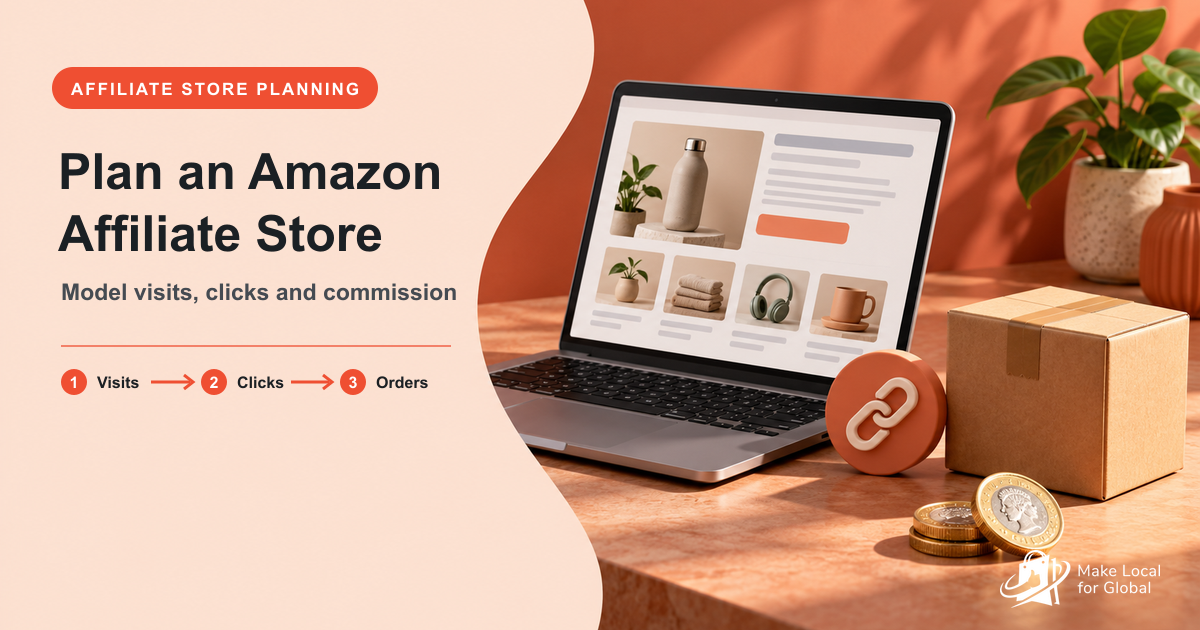
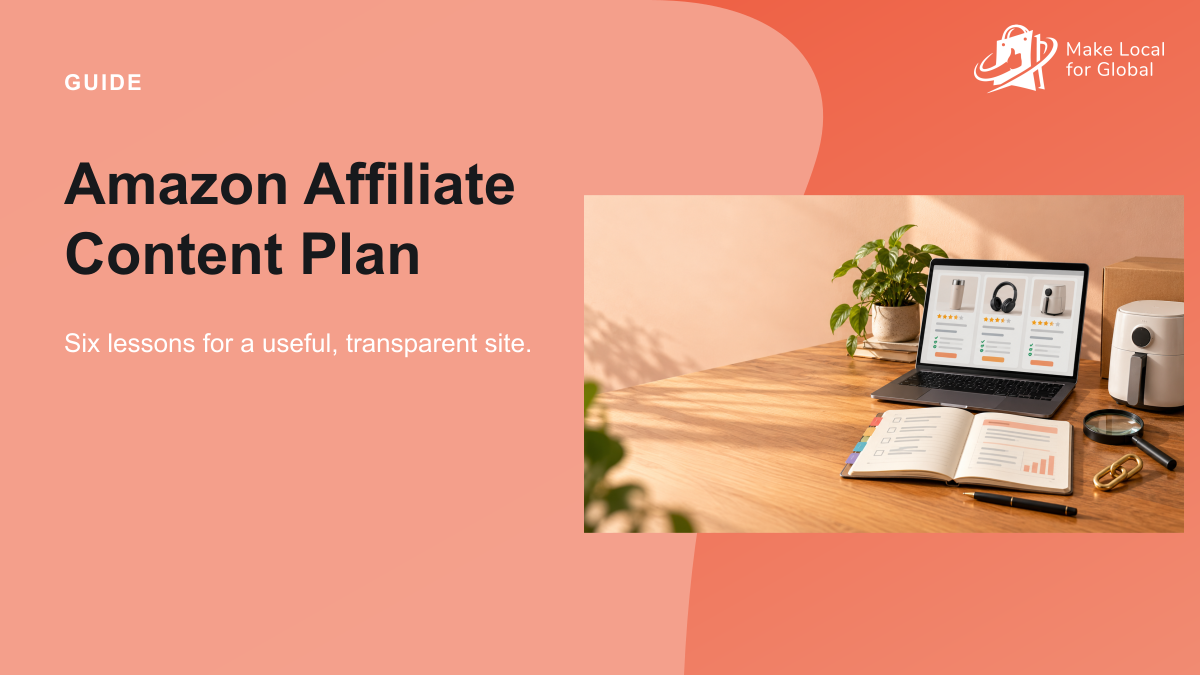
Use this UK checklist to plan an Amazon affiliate website, create original content, disclose links and review programme policies before your first publishing test.


An Amazon affiliate website is built on more than product links. You need a clearly defined reader, original and useful content, accurate recommendations, transparent disclosures, current programme checks and a repeatable way to review results. This UK guide turns those foundations into a practical launch plan without treating a checklist as proof of eligibility or future earnings.
Use the free assessment to review eight areas, record your evidence and choose one sensible next action before publishing a small content test.
An affiliate publisher creates useful content that helps a defined audience understand products or solve a problem. When a reader follows a properly configured affiliate link and makes a qualifying purchase, a commission may be earned under the programme’s current terms. The publisher does not normally control the retailer’s checkout, fulfilment, stock, returns or commission rules.
That makes the work a publishing activity, not a shortcut to passive income. Your site needs a reason to exist beyond sending visitors elsewhere. Product comparisons, practical tutorials, genuinely tested reviews and careful buying guides can help readers make a decision, but only when the information is accurate and the content adds something of its own.
Start with a group of people you can describe in one sentence. “People who are new to home coffee and want equipment that fits a small kitchen” is more actionable than “everyone who likes gadgets”. A specific reader helps you decide which questions deserve an article and which products are relevant.

Write down three recurring questions that person asks before buying. Look for evidence in customer questions, forums, search suggestions, product manuals and your own conversations. Treat this as research, not a promise that a topic will attract search traffic. If you already have an audience, use its questions as a starting point and check them rather than guessing.
Before publishing recommendations, make the site understandable and usable. A visitor should be able to tell what the site covers, who is responsible for it and how to contact you. Add clear navigation, an About page, a working contact route and the privacy information appropriate to your setup. Test every page on a phone as well as a desktop screen.
Keep the first version focused. A small set of well-organised pages is easier to maintain than a large catalogue of thin or unfinished content. Our website brief guide can help you record the audience, pages, features and launch responsibilities before you build.
A product image, copied specification list or collection of retailer descriptions is not a useful editorial angle by itself. Explain how you reached your recommendation. You might compare dimensions against a real use case, explain a setup step, describe your testing method, highlight a trade-off or clarify which reader should look at a different option.
Amazon’s UK programme materials describe original content as content that includes commentary, analysis or transformation which adds value. Programme requirements and policies can change. Review the official list of agreement and policy changes and the current Associates Program policies before relying on an older guide.
The assessment helps you organise audience, content, policy and measurement checks. It does not approve an account or predict commission income.
Each page should answer a distinct question. A beginner’s guide can explain what to look for, a comparison can make trade-offs visible, and a review can describe a product’s fit and limitations. Avoid creating many near-identical pages that repeat the same claims with only a product name changed.
| Page idea | Reader question | Evidence to prepare |
|---|---|---|
| Beginner’s guide | What should I understand before choosing? | Definitions, practical constraints and reliable sources |
| Comparison | Which differences matter for my situation? | Consistent criteria, verified specifications and trade-offs |
| Review | What was tested, and who is it suitable for? | A clear method, observations, limitations and date checked |
| How-to article | How do I complete a related task? | Steps, screenshots or examples and a route for troubleshooting |
Readers should not need to hunt for the commercial relationship. Amazon’s Operating Agreement currently requires associates to clearly and prominently identify themselves on their site using the statement “As an Amazon Associate I earn from qualifying purchases.” The agreement also points to applicable legal disclosure requirements. The ASA says affiliate marketing content should be obviously identifiable as advertising where the commercial nature is not otherwise clear.

For a blog article, keep the disclosure close to the relevant recommendations and links, in language readers can understand. Do not rely only on a footer or a vague phrase. Social platforms, newsletters and other formats may have additional rules, so check the channel as well as the programme. Read Amazon’s disclosure guidance and the ASA’s affiliate marketing advice. This article is practical information, not legal advice.
Use the approved link tools for your account and territory. Check that each special link opens the intended product page, carries the correct tracking identifier and works on mobile. Avoid making claims about eligibility, commission rates, product availability or purchase qualification unless the current official source supports them.
Amazon’s programme terms include rules about links, content, trademark use and qualifying purchases. The UK agreement and policies are authoritative for current programme requirements. Revisit them when Amazon announces a change and before publishing advice that depends on a specific rule. Do not treat a score in a planning tool as a compliance audit.
Product details, availability and terms can change. Add a date checked to pages where freshness matters, keep a simple review schedule, and remove or update links when you can no longer verify the recommendation. If you display current prices or product data, use a permitted source and follow its current licence and display requirements. Do not invent prices or leave old prices looking current.

Decide what you will review and how often. Useful observations might include which pages receive visits, whether links work, which topics bring relevant questions, and what the official account reports say about clicks, qualifying purchases, reversals or commissions. Keep the source and date of each observation so you can compare like with like.
A click is not the same as a purchase, and a reported purchase may later be adjusted under programme rules. A short publishing test can help you learn whether the content is useful and whether the process is manageable. It cannot establish that future traffic, commissions or business outcomes will follow.
The free app asks you to rate eight foundations: website basics, audience and product focus, original content, editorial maintenance, disclosure, current policies, link attribution, and reporting. It records a short project label, then shows the scores you selected, a strongest signal, a gap and three practical next actions. You can download a three-page summary after entering your name and email.
Use the output as a planning prompt. A lower score can point to a question worth investigating, not a verdict. A high score means only that you selected more documented checks in this self-assessment. It does not certify legal compliance, confirm Amazon acceptance or predict earnings.
Start with a manageable set of useful pages. A smaller scope makes it easier to check facts, link behaviour and presentation before you build more.
Explain how a feature affects the reader’s situation, show your method, note limitations and update the page when important details change. Do not imply you tested a product if you did not.
Make the relationship easy to understand at the point it matters. Keep programme decisions with the programme and legal questions with a suitably qualified adviser.
Programme eligibility and permitted channels depend on the current terms and your account. The UK agreement describes eligible sites and channels, but you should check the latest official requirements for your own situation before applying or publishing links.
There is no universal number that guarantees acceptance. Review the current Amazon requirements, make sure your site presents original and useful content, and avoid relying on old third-party claims about a fixed article count.
No. It organises self-reported evidence and suggests areas to review. It does not forecast traffic, purchases, commissions or business success.
Do not assume that. Amazon requires a clear and prominent site identification statement, and its guidance says link-level disclosure must also be clear and conspicuous. The ASA advises that affiliate marketing should be obviously identifiable as advertising when required. Check the current programme terms, applicable rules and each platform’s guidance.
Choose one reader, prepare one useful page and document the checks that matter before you expand the site. Use the assessment to make that work visible, then return to the official programme sources when terms change. If you want a broader comparison of online models, see our guides to online business models in the UK and choosing an ecommerce business.
Review the eight foundations, save your next actions and build the site around the readers you want to help. MLFG plans currently start at £99 per year; check the pricing page for the latest inclusions before deciding.
Educational information only. Programme terms, policies, commission reporting and product availability can change. Check current Amazon and ASA guidance and seek professional advice for legal, tax or financial questions. The app does not assess compliance, eligibility or likely earnings.
PREFERRED SOURCE
Like what you’re reading? Add Make Local for Global as a preferred source on Google to see more of our articles when you search.














Build your online presence without having to figure out everything yourself.
