

Learn how to structure crowdfunding reward tiers, cost each pledge and check delivery assumptions before you publish your campaign.

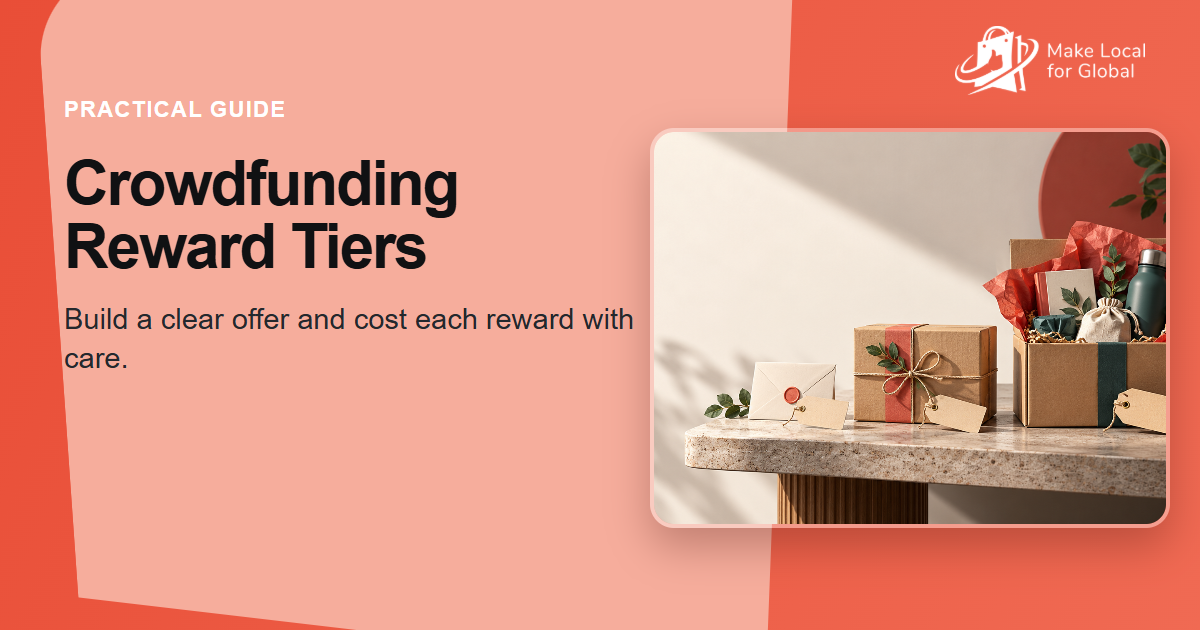
Crowdfunding reward tiers turn a campaign idea into a clear choice for supporters. The strongest structure is usually simple: one accessible way to support the project, one main reward, and one higher-value bundle. Before publishing any pledge amount, work out what each reward costs to make, pack, post and process.
Compare pledge levels, estimated backers, fulfilment costs and fee assumptions before you decide what to offer.
A reward tier is a defined pledge option. It should tell a supporter what they receive, how many items are included, whether delivery is included or charged separately, and when you currently expect to fulfil it. Make those details easy to compare. A supporter should not have to decode several similar tiers to understand the difference.
Begin with the project, not with a long menu of perks. What is the central thing you are making? Which supporter would value it? What small additional item genuinely improves the offer without adding a fragile production or delivery promise? These questions help you keep the campaign understandable and the work manageable.

Three levels are a useful starting point, not a rule. A smaller number of well-explained offers can make a campaign easier to scan and easier to deliver. You can add a limited edition or a carefully costed add-on only when it serves a real supporter need and your fulfilment plan can handle it.
| Tier role | What it can do | Cost check |
|---|---|---|
| Supporter entry | Offer a low-complexity way to back the project, such as a thank-you or digital extra. | Include payment fees and the time needed to create or send it. |
| Core reward | Put the main product or experience at the centre of the campaign. | Check production, packaging, postage, replacements and handling. |
| Bundle or premium | Add a meaningful extra, quantity or limited experience for a higher pledge. | Price every added item and confirm the bundle still fits the delivery plan. |
Do not compare a pledge only with the product’s materials cost. A physical reward can involve production, assembly, packaging, postage, payment processing and the time it takes to prepare an order. Add a realistic allowance for damaged or replacement items where appropriate. If shipping is collected separately, it still needs to be estimated and explained clearly.

For example, imagine a £35 core reward with a £11 product cost, £1.25 packaging cost and £3.50 postage assumption. With the planner’s default illustrative fee assumptions of 5% platform fee, 1.5% processing fee and £0.20 per pledge, the estimated fees are £2.48. The model leaves about £16.78 per pledge after those listed costs. That is not profit: it excludes any costs you have not entered, such as design, setup, tax, overhead, marketing or your own time.
Fee rules differ by platform, country, payment method and campaign setup. The example uses the app’s starting values to show how the calculation works, not to state a current platform rate. Check the current fee information for the service you plan to use, then replace the defaults with your own assumptions. Kickstarter’s official fees page is one example of a platform source to review.
Enter a plausible backer estimate for each tier to compare how different mixes affect the total. Keep the estimate grounded in evidence: conversations with likely supporters, a small audience test, previous sales or a transparent planning scenario. Do not treat a calculator output as a prediction that people will pledge or as proof that a campaign will reach its goal.
In the Reward Tier Planner, add up to six tiers, then compare the pledge amount and estimated supporters with reward, packaging and postage costs. The planner applies its fee assumptions and shows gross pledges, fulfilment, fees and the estimated amount remaining for each tier and in total. You can edit the assumptions, compare alternative mixes, reset the sample values and download a three-page plan after completing the name and email form.
Use your own backer estimates and supplier figures to see which reward choices need more evidence before you publish them.
Postage is easy to underestimate when a product has not yet been packed and weighed. Check the packed dimensions and weight, not just the item on its own. Ask a carrier or fulfilment provider for current prices, then record the service level and delivery area your figure represents. Keep domestic and international assumptions separate if they differ.

Also decide how you will communicate delivery timing. A date is an estimate, not a guarantee, especially when production depends on supplier lead times or a minimum order quantity. Before making a promise, confirm what is known, what could change and how you will update supporters. Kickstarter’s Creator Handbook offers platform-specific guidance; read the current terms and help pages for whichever service you choose.
If the answer to a question is not yet known, record it as an open task rather than hiding it inside a confident pledge description. If your reward is a physical product, see our guide to testing, costing and launching a physical product online, then use the Crowdfunding Mini Course to organise your next planning actions.
Too many near-identical options. More tiers can create more decisions and more fulfilment combinations. Start with a small set and add a new option only when it serves a distinct supporter need.
Pricing from materials alone. The item cost is only one part of the order. Include packaging, postage, fee assumptions and time, then check whether the remaining amount still covers other campaign costs.
Offering an untested bundle. Extra variants and add-ons can introduce sourcing, assembly and support work. Confirm that each component is available and that the complete parcel can be delivered as described.
Using a single postage guess. A light unboxed sample may not represent the packed item. Check final dimensions and weight, and verify rates for the destinations you intend to serve.
There is no universal best number. A few clearly differentiated tiers are easier to explain and plan than a long list of overlapping choices. Choose only as many as you can cost, describe and fulfil reliably.
That depends on your platform, product, audience and delivery regions. Whichever approach you use, make the total cost clear before a supporter chooses a reward. Check the platform’s current rules and the actual packed-item postage estimate.
Start with the reward’s production cost, then include packaging, fulfilment, delivery, platform and payment fees, and a sensible allowance for replacements where relevant. Review other campaign costs separately so the amount left per reward is not mistaken for profit.
No. The defaults are illustrative starting assumptions. Fees vary and may change. Verify current terms with your chosen platform and payment provider, then enter the figures that apply to your campaign.
Build a short list of reward ideas, check each one against likely supporters and supplier evidence, then compare the costs before you publish the campaign page. The Crowdfunding Reward Tier Planner is an educational tool for testing those assumptions. It does not forecast demand or guarantee campaign results.
Compare up to six pledge options, see the costs behind each one and download a planning summary for your next review.
Need help choosing a practical next step for your store or campaign? Talk with MLFG.
PREFERRED SOURCE
Like what you’re reading? Add Make Local for Global as a preferred source on Google to see more of our articles when you search.


















Build your online presence without having to figure out everything yourself.