

Want to start an online business in the UK? This guide compares business models by cost, skill, risk, fulfilment and beginner suitability.

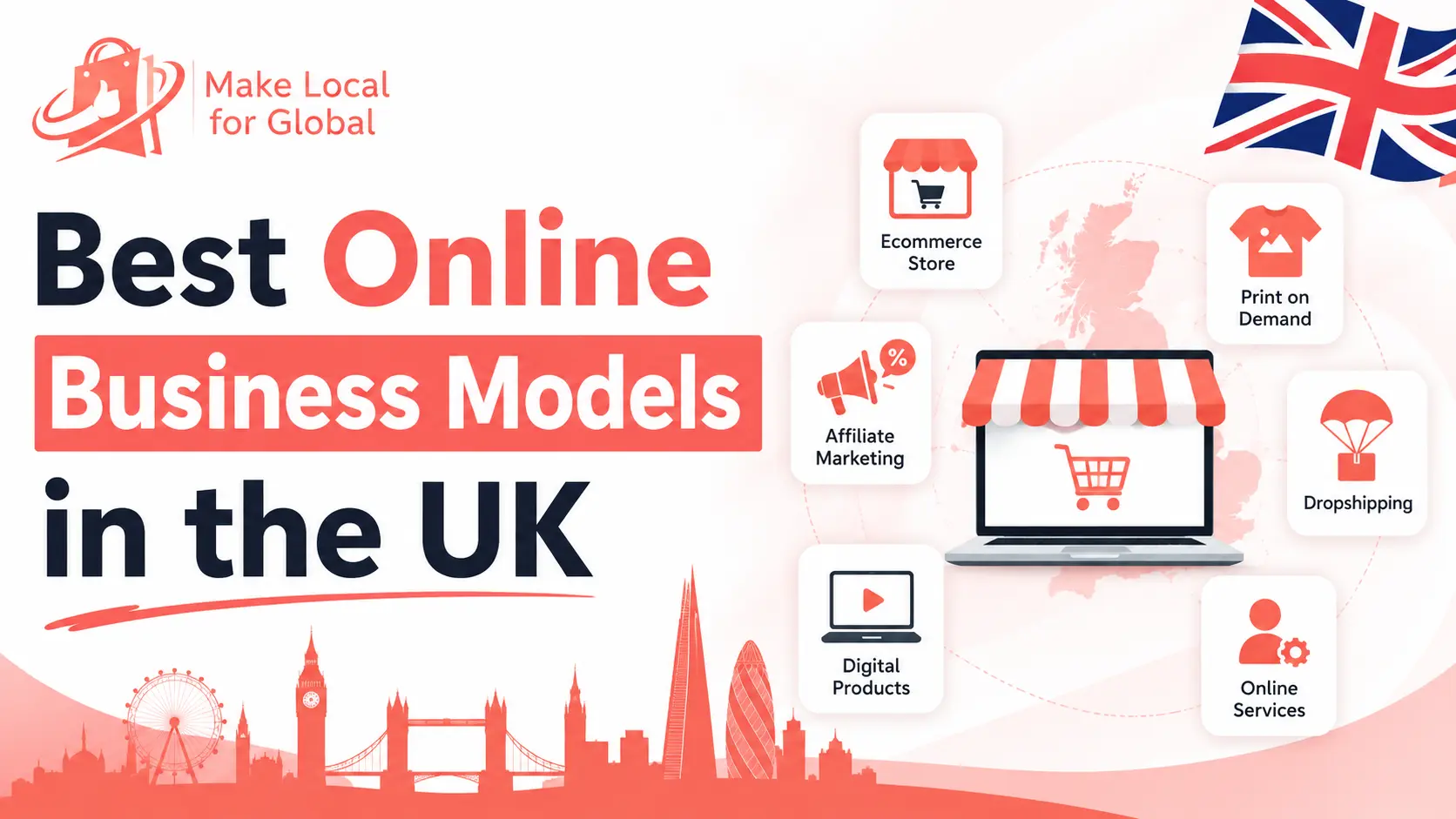
Starting an online business in the UK can be a good way to test an idea, sell products, offer services or build income around your skills.
The hard part is choosing the right business model. Some online businesses need stock. Some need content. Some need creative skills. Some need supplier checks. Some need customer support every day.
This guide compares the best online business models in the UK for beginners, creators, hobbyists, startups and small businesses.
Make Local for Global helps hobbyists, artists, startups and small businesses launch a WordPress and WooCommerce website without needing technical skills.
Plans start from £99/year. Your website can be ready in 5 days.
The best online business model in the UK depends on your budget, skills, product idea and how much fulfilment work you want to manage.
For many beginners, these are practical starting points:
The best first model is usually the one you can explain clearly, test cheaply and run consistently.
| Business model | Best for | Startup cost | Beginner difficulty |
|---|---|---|---|
| Print on demand | Artists, creators, niche brands | Low to medium | Low to medium |
| Digital products | Educators, designers, creators | Low | Medium |
| Affiliate marketing | Bloggers, reviewers, content creators | Low | Low to medium |
| Dropshipping | Product testers and trend-led sellers | Low to medium | Medium |
| Service business | Freelancers, consultants, skilled workers | Low | Low to medium |
| Handmade ecommerce | Makers, artists, crafters | Low to medium | Medium |
| Subscription business | Repeat-use products or memberships | Medium | Medium to high |
| Private label | Brand builders with more budget | Higher | High |
A good beginner model should help you test demand without creating too much pressure too early.
Before choosing, compare:
UK beginner note: online business still has responsibilities. Check tax, consumer rights, privacy, product safety, advertising claims, payment provider rules and supplier terms before launch.

Print on demand lets you sell custom products without ordering stock upfront. Products are normally printed after the customer places an order.
Common products include t-shirts, hoodies, mugs, phone cases, posters, notebooks, tote bags, stickers and wall art.
This model is a good fit for UK artists, designers, creators, hobbyists and niche communities.
Generic designs are hard to sell. You need a clear niche, good mockups, samples and honest delivery information.

Digital products are files, downloads, access or online resources sold through a website.
Examples include ebooks, digital planners, Canva templates, Notion templates, spreadsheets, online courses, printables, stock photos, presets, design files, digital art and guides.
This model can be low cost because there is no parcel shipping, packaging or physical stock.
Customers need to trust what they are buying. Show previews, file formats, screenshots, usage instructions and refund terms clearly.

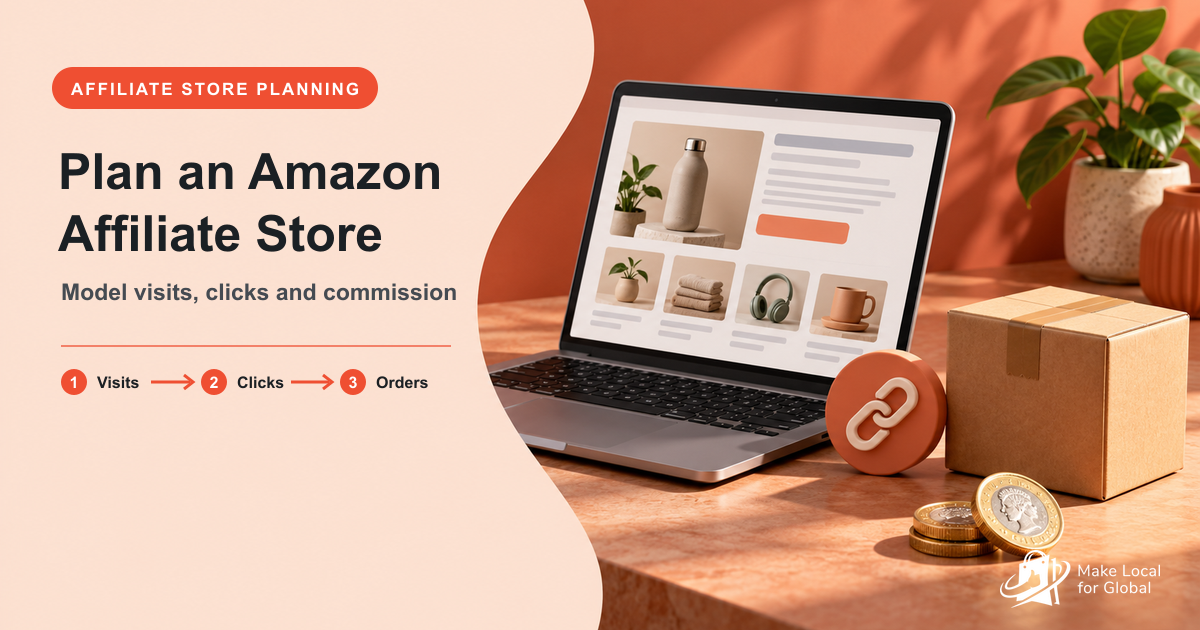
Affiliate marketing is a content-led business model where you recommend products or services and may earn commission when someone buys through your link.
It can work through blogs, comparison pages, YouTube videos, TikTok, newsletters, resource pages and product guides.
You need traffic and trust before commission income grows. Commercial relationships should be disclosed clearly where required.

Dropshipping lets you sell products through your online store while a supplier holds and ships the stock.
The customer buys from your website. The supplier fulfils the order, but customer questions usually come back to you.
Supplier quality, shipping times, refunds and product accuracy affect customer trust. Order samples and check delivery times before sending traffic to your store.
Make Local for Global can help you launch a WordPress and WooCommerce website for print on demand, dropshipping, digital products, affiliate content, service businesses, single product stores or multi product stores.
An online service business sells your skills rather than a physical product.
Examples include copywriting, virtual assistance, bookkeeping, coaching, consulting, web design, social media support, photography editing, tutoring, admin support, marketing help and design work.
This is often one of the cheapest routes if you already have a skill people need.
Services rely on your time. If every sale needs your direct work, growth can be limited unless you raise prices, productise the service or add team support.
Handmade ecommerce suits people who make products themselves or in small batches.
Examples include candles, jewellery, soap, ceramics, art, stationery, knitted items, craft kits, home decor, leather goods and personalised gifts.
Price your time properly. Include materials, failed batches, packaging, postage, fees, customer support and admin when setting prices.
A single product store focuses on one main product, offer, course, kit, download or solution.
This can suit a strong product idea, launch campaign, invention, specialist item, handmade product, digital product or print on demand design range.
The business depends heavily on one offer. Test demand before spending heavily on stock, branding or ads.
A subscription business charges customers repeatedly for products, access, membership or ongoing support.
Examples include subscription boxes, coffee subscriptions, skincare refills, stationery boxes, digital memberships, paid newsletters, learning libraries and community access.
Subscriptions need retention. Cancellations, failed payments, fulfilment timing and customer expectations can create more work than a simple one-time purchase model.
Private label means selling products made by a manufacturer under your own brand name.
It can work for skincare, candles, beauty tools, homeware, clothing, accessories, food, stationery and niche product brands.
Private label is rarely the cheapest first step. Check minimum order quantities, product safety, labelling, insurance, supplier terms and cash flow before ordering stock.
| Your skill | Best model to consider | Why |
|---|---|---|
| Design or art | Print on demand or digital products | Your creative work can become products, prints, templates or downloads |
| Writing or teaching | Digital products, courses, affiliate content | Helpful knowledge can become guides, lessons or recommendations |
| Making or crafting | Handmade ecommerce | You already control product quality and story |
| Research | Affiliate marketing or dropshipping | You can compare products, suppliers and customer intent |
| Professional service | Online service business | You can sell your skill before creating physical products |
| Community building | POD, memberships or niche products | Audience knowledge can guide product choice |
| Budget level | Models to consider | Be careful with |
|---|---|---|
| Very small budget | Affiliate marketing, digital products, service business | Stock-heavy ideas and paid ads too early |
| Small budget | Print on demand, dropshipping, single product store, digital downloads | Untested suppliers and large product ranges |
| Medium budget | Handmade store, multi product store, niche stock range | Buying more stock than you can sell |
| Higher budget | Private label, subscription, wholesale | Minimum order quantities and fulfilment pressure |
Different business models have different responsibilities. Before launch, check the basics for your situation.
Make Local for Global does not support products or services that are unlawful, unsafe, restricted, misleading, harmful, counterfeit or unsuitable for ecommerce. If you are unsure whether your product can be sold online, check before listing it.
For a new UK startup, the best model is usually one that can be tested before too much money is committed.
Print on demand, digital products, affiliate content, dropshipping, service businesses and single product stores can all work because they can start smaller than wholesale or private label.
If you already have stock, a product range or supplier access, a multi product ecommerce store may be the better route. If you only have one clear offer, a single product store may be easier to launch first.
| Your situation | Model to consider | Reason |
|---|---|---|
| You are an artist or designer | Print on demand or digital products | You can sell designs, art, prints, templates or downloads |
| You want to work from home with low stock risk | Digital products, affiliate marketing or print on demand | These models avoid bulk stock at the start |
| You already make products | Handmade ecommerce | You control product quality and story |
| You want to test products from suppliers | Dropshipping | Supplier fulfilment can reduce stock risk |
| You have one strong product idea | Single product store | A focused website can support one clear offer |
| You have professional skills | Online service business | You can sell expertise before creating products |
| You want repeat income | Subscription or membership | Recurring payments may suit repeat-use products or ongoing access |
| You want your own branded product range | Private label later | Best after customer demand and budget are clearer |
Make Local for Global helps you get your website built, launched and ready to manage without doing the technical setup yourself.
Plans start from £99/year. Website ready in 5 days.
The best online business model in the UK is the one that fits your skills, budget, customer and delivery method.
Print on demand suits creative sellers. Digital products suit people who can create useful files or learning resources. Affiliate marketing suits content-led beginners. Dropshipping suits product testers who are willing to check suppliers. Service businesses suit people with a skill. Handmade ecommerce suits makers. Subscription and private label models can work later when you have more proof, budget and systems.
Start with a simple model, a clear customer and one offer you can test. Once there is proof that people want it, add more products, content or systems.
For beginners, print on demand, digital products, affiliate marketing, service businesses, dropshipping and focused ecommerce stores are often practical starting points.
Affiliate marketing, digital products and online services can be low-cost because they do not need stock. Print on demand can also be low-cost because products are made after orders.
Yes, many online businesses can start from home. You still need to check tax, consumer rights, privacy, product safety, payment provider rules and any sector rules that apply.
You may need to register for Self Assessment or set up a business structure depending on your income and circumstances. Check GOV.UK or speak to a qualified adviser for your situation.
Dropshipping can work in the UK, but supplier quality, delivery time, returns, product information and customer support must be checked carefully.
Yes, especially for artists, creators and niche brands. Good design, clear delivery information and product samples matter.
Yes. WooCommerce can support physical products, digital downloads, affiliate products, print on demand, dropshipping, single product stores and multi product stores with suitable setup.
Be careful with restricted products, high-return products, unclear suppliers, large stock orders, weak margins, misleading claims and products you do not understand.
PREFERRED SOURCE
Like what you’re reading? Add Make Local for Global as a preferred source on Google to see more of our articles when you search.









Build your online presence without having to figure out everything yourself.