

READY TO SELL body butter ONLINE?
Get a store built for you in 5 days, plus training and support to help you start, run, and grow your Alternative business.

Learn how to sell body butter online with a focused range, supplier checks, UK cosmetics rules, pricing, clear product pages and a careful shipping plan.


Body butter can look simple to sell: a jar, a scent and a label. A customer still needs to trust the formula, understand how it feels, know what is in it and see the full delivery cost before buying.
To sell body butter online, start with a small range from a supplier who can provide the safety documents and batch information your business needs. Build product pages around texture, scent, ingredients, size and use. Work out the contribution on a delivered order before you commit to a large batch.
Plan a shop for your body butter range
Once you know which formulas and pack sizes you can sell, plan a store that presents them clearly on mobile and desktop.
Body butter is a rich leave-on skin product, so shoppers often compare how it feels, how it is scented, how much comes in the pot and what the formula is meant to do. Pick one buyer group before you build a catalogue. A gift buyer may care about scent names, presentation and a ready-to-wrap set; a repeat customer may prefer an unscented option, a larger refill or a straightforward reorder.
Write a short customer profile using real conversations: who buys, which body areas they use it on, when they use it and what stops them from ordering? Avoid medical or treatment language. A cosmetic claim must match the product’s evidence and regulatory status.
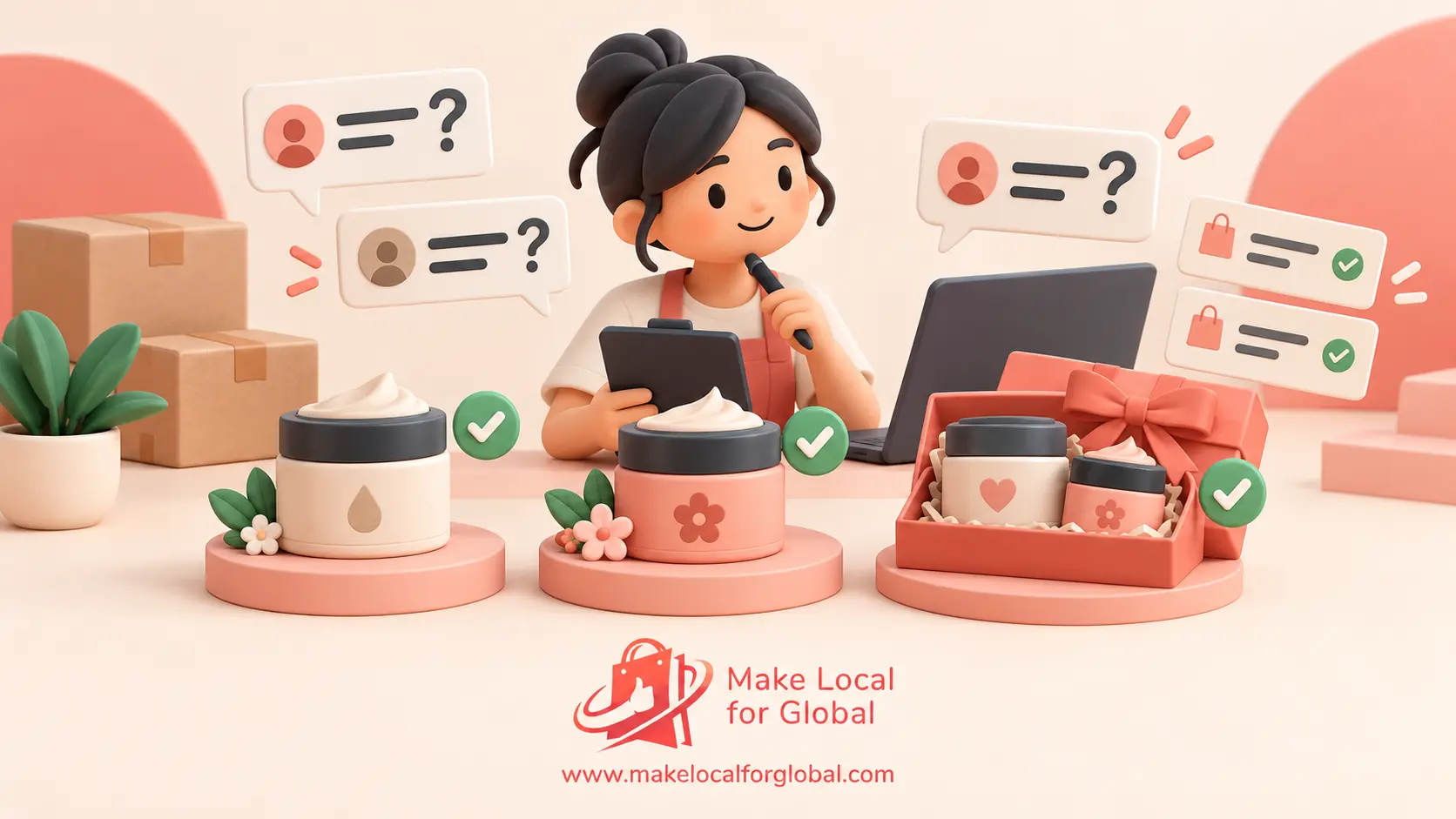
A focused first range is easier to explain and keep in stock. For example, one core formula could be offered in a fragrance-free version and one signature scent, with a gift set added only after the packaging, batch cost and demand are clear.
| Range role | What it helps a buyer decide | What to check before listing |
|---|---|---|
| Core 200 g tub | Is this the everyday size and scent for me? | Net weight, full ingredient list, opening and closing instructions |
| Fragrance-free option | Can I choose a product without added fragrance? | Formula and claims; do not promise it suits every sensitive skin type |
| Gift set | Is the set ready to give, and what is included? | Each cosmetic product’s compliance, set contents, outer packaging and gift wrap costs |
| Travel or sample size | Can I assess the texture before ordering a full pot? | Legal information still applies to samples; validate the small pack label and notification route |
These are possible range roles, not claims that a particular formula is suitable for every customer.
You might make the product, contract a manufacturer, buy a compliant finished formula for resale, or commission a private-label range. Your legal role can change with the arrangement. In Great Britain, a seller who places a product under their own name or trademark may take on Responsible Person duties. An importer can have duties too. Confirm the role in writing before you pay a deposit.
Ask each prospective supplier for the exact product specification, full ingredient list, safety assessment status, product notification details for your market, batch traceability, stability information, minimum order quantity, lead time and complaint procedure. For a private-label product, ask who will be the named Responsible Person and who holds the Product Information File (PIF). Do not rely on a generic certificate that does not identify your formula, market and pack.
For a water-containing cream or butter, ask the qualified assessor and formulator how preservation and microbiological safety are addressed. Do not copy a recipe from a video and sell the result without the required safety assessment and manufacturing controls.

Body butter sold for use on skin is a cosmetic product. In Great Britain, each product needs a Responsible Person with a UK-established address, a safety assessment completed by a qualified assessor, an up-to-date PIF and notification to the Office for Product Safety and Standards before it is made available. The PIF includes the product safety report, manufacturing information and evidence for product effects. It must be kept for ten years after the last batch is made available.
Read the current GOV.UK guidance for making cosmetics available in Great Britain and the OPSS Great Britain regulations guide. This is a seller’s checklist, not a substitute for advice from the assessor or a regulatory specialist.
Northern Ireland follows the EU cosmetics regime for relevant product rules. Its Responsible Person and notification arrangements differ from the GB route. Read the OPSS Northern Ireland regulations guide before selling there. Do not assume a GB notification covers a separate NI or EU duty.
The container and packaging need legible product information. Depending on the product and applicable exceptions, this includes the Responsible Person’s name and address, country of origin for imports, nominal weight, durability or period-after-opening information, precautions, batch identification, the product’s function and ingredient list. Check required wording and symbols with the Responsible Person before ordering labels. Small jars can make label space tight, so agree the use of an enclosed leaflet or attached information before printing.
Design the jar and outer packaging so a child is not likely to mistake the cosmetic for food. Avoid sweet-shop styling that makes a whipped butter look edible. A clear product name, normal cosmetic jar shape and sensible storage instructions help set the right expectation.
Every product claim needs evidence that supports the finished formula, not just an ingredient supplier’s description. “Contains shea butter” is a factual composition statement if it is true. “Heals eczema”, “treats psoriasis” or “repairs damaged skin” can move beyond a cosmetic purpose and may create medicinal claims. Ask a regulatory specialist before making health or treatment statements.
Words such as “natural”, “organic”, “hypoallergenic”, “non-toxic” and “safe for sensitive skin” need careful evidence and a clear meaning. The GB rules require cosmetic claims not to imply a function the product does not have; the OPSS guide sets out criteria such as truthfulness, evidence, honesty and informed choice. Review the CMA Green Claims Code before using environmental language. State the precise attribute you can prove, such as the percentage of a named ingredient that is certified, rather than making a broad claim about the whole product.
Keep a claims file with the wording, evidence, source, date checked, products covered and approval from the Responsible Person. Use the same approved claims on the label, product page, ads and social posts. A change in formula or supplier can make an old claim inaccurate.
A product page should help someone compare body butter without needing to message you for basic facts. Write for a shopper who cannot open the lid, smell the fragrance or judge the texture from a screen.
If you are comparing richer butters with a lighter daily option, see our practical article on selling body lotion online. Keep the formulas and claims separate on your shop so buyers can see what each product is meant to do.
Offer a scent comparison that helps a customer choose without making medical claims. Name the fragrance notes only if the manufacturer confirms them, and say whether added fragrance is present. A clear size reference can reduce “smaller than expected” complaints: show the jar beside a familiar object, but make sure the net weight remains easy to find.
For more product-page photo checks, see our article on why a product page can look wrong on Facebook or X. The wider Product To Sell collection has more product-specific launch examples.
Turn a safe formula into a clear product listing
A product range needs useful photos, variant details, stock information and checkout terms. Explore MLFG’s body butter store page to see the support available for this product type.
Include formula or wholesale stock, inbound delivery, jar and label, outer parcel, pick-and-pack time, payment fee, customer delivery, damaged orders, returns and the cost of finding a customer. If you make the product, include labour, batch loss and quality checks. A pot that looks profitable before fulfilment can leave little contribution after a low-value single-item order.
| Illustrative 200 g order | Amount |
|---|---|
| Customer pays, delivery included (VAT-inclusive) | £20.00 |
| Sales revenue after 20% VAT | £16.67 |
| Body butter stock cost | −£5.10 |
| Jar, label and protective packing | −£0.90 |
| Pick and pack time allowance | −£0.60 |
| Tracked parcel delivery | −£3.20 |
| Payment fee allowance | −£0.88 |
| Customer acquisition allowance | −£2.00 |
| Leakage, damage and returns reserve | −£0.50 |
| Estimated contribution before overhead | £3.49 |
Illustration only, not a market price, quote or typical margin. It assumes a VAT-registered seller, 20% VAT on the sale, eligible input VAT recovery, a £20 delivery-included order, and a payment fee allowance of 2.9% plus 30p on the amount paid. Replace costs and fees with current supplier, carrier and provider quotes. Contribution is before rent, software, insurance, tax and other overhead.
In this example, the payment allowance is (£20 × 2.9%) + £0.30 = £0.88. The net sales figure is £20 ÷ 1.20 = £16.67. The listed costs total £13.18, leaving about £3.49 before overhead. If the seller is not VAT registered, the calculation changes; if an input cost includes VAT that cannot be recovered, use the gross cost. Check current HMRC rules and your accountant’s advice before setting a price.
Test a single pot against a two-pot bundle. The bundle may absorb delivery and acquisition costs more effectively, but only if the discount still leaves a useful contribution and customers want the extra scent or size. Use our product pricing worksheet and method to list your own cost inputs.
Check the exact jar and formula after normal parcel handling. Screw lids can loosen; a tub may crack; labels can lift if oil reaches the adhesive. Test a packed sample with the parcel provider you plan to use and record the result. Use a tamper-evident seal where the manufacturer’s packaging design supports it, and protect the lid from opening in transit.
Ask the supplier about storage conditions, temperature limits and stability before setting dispatch or storage rules. Do not promise the product will stay unchanged in every climate. Rotate stock by batch and expiry, store it under the manufacturer’s conditions, and pause a listing if a batch is recalled or its records are incomplete.
For UK online orders, explain delivery and cancellation information before checkout. The standard distance-selling rules include a 14-day cancellation period for many purchases. A hygiene seal may affect the right to cancel after unsealing in specific circumstances; do not apply a blanket “no returns on cosmetics” rule. Read the GOV.UK distance-selling guidance and get advice for your exact returns process.

Interest in a scent is not the same as a paid order. Once your product and labels meet the rules, test a small compliant offer with real customers and track what they buy, not just what they like in a poll.
Search pages can answer specific buyer questions such as “body butter vs body lotion”, “fragrance-free body butter”, “how much body butter is in a 200 g jar” and “body butter gift set UK”. Build helpful pages from questions customers actually ask. Keep product claims within the evidence held for the formula.
Use the first month to check the business case and compliance route, not to rush a cosmetic product to market.
You can only make a cosmetic available after the applicable product safety, responsible person, notification, product information, labelling and manufacturing requirements are met. A home workspace does not remove those duties. Speak with a qualified safety assessor and confirm your manufacturing controls before selling.
Do not assume it does. Ask whether the safety report and PIF identify the exact formula, packaging, label, intended use, Responsible Person and target market. Get written confirmation from the person responsible for compliance before listing the product.
Only use a claim whose meaning is clear and supported by evidence for the finished product. “Natural” can mean different things to shoppers; “suitable for sensitive skin” needs relevant substantiation and approval. Ask your Responsible Person or regulatory adviser to review the wording.
Do not guess. Notification and product identity depend on the formula and applicable system. Ask the Responsible Person and check the current official guidance for every variant before making it available. A new fragrance can change the formula, safety documentation and label information.
Add the cost of every compliant product, gift box, filler, labour, parcel, payment fee, promotion and expected damage or returns. Compare the contribution on the complete order with the separate items. Do not set a discount until the bundle still covers your costs and overhead allowance.
Check the NI route before taking orders. Northern Ireland follows the EU cosmetics regime, with a different Responsible Person and notification arrangement from Great Britain. Use the current OPSS NI guidance and get advice for your supply chain.
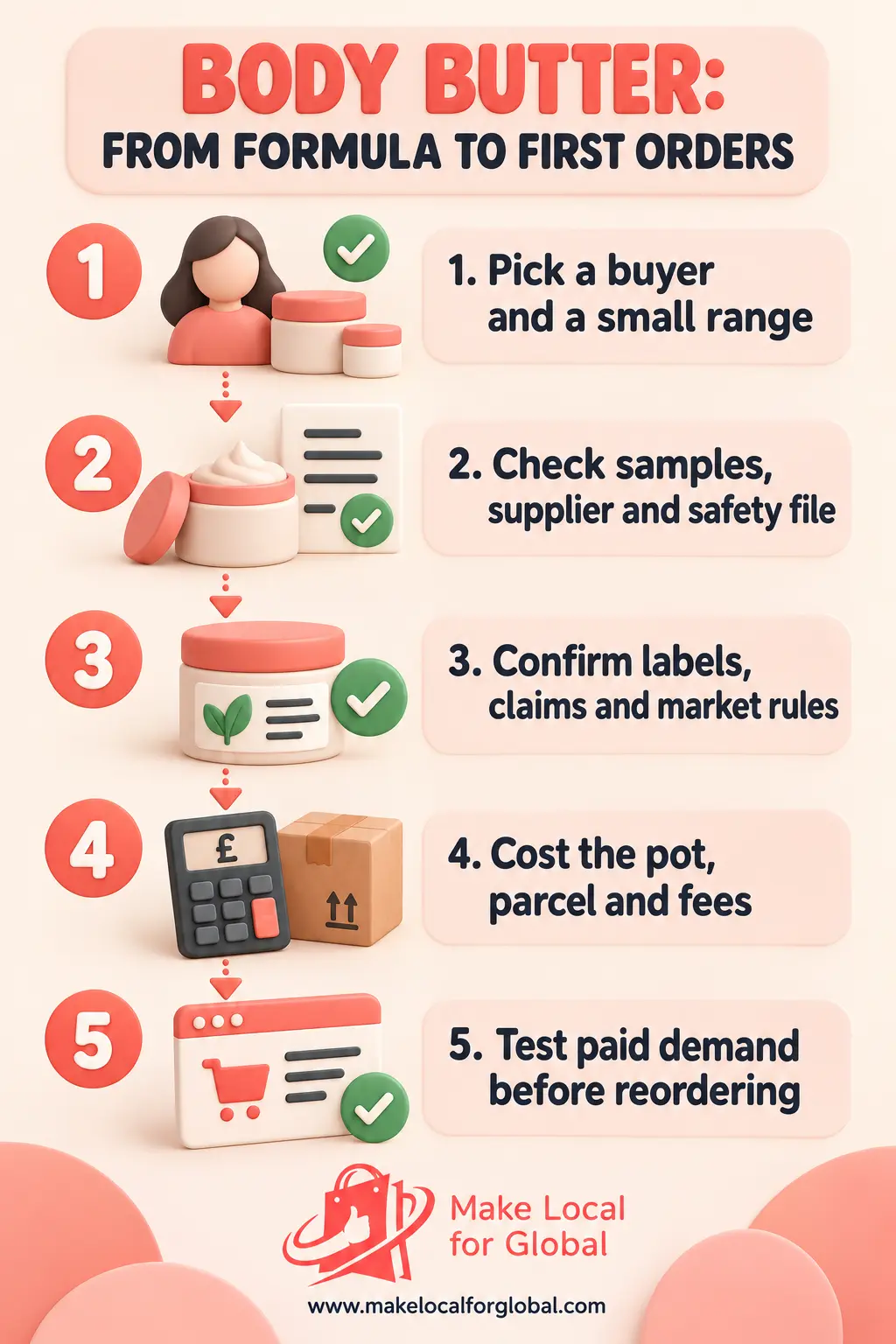
To sell body butter online with a range customers can understand, start with a product you can document, describe and ship with confidence. Verify the formula and legal role first, offer a small range with clear differences, then use the delivered-order cost and real paid demand to guide stock decisions.
Set up your body butter store
When your product details and fulfilment plan are ready, MLFG can help you plan an online store for your body butter range, with training and support for setup and day-to-day use.
PREFERRED SOURCE
Like what you’re reading? Add Make Local for Global as a preferred source on Google to see more of our articles when you search.

Build your online presence without having to figure out everything yourself.