

READY TO SELL cookie cutters ONLINE?
Get a store built for you in 5 days, plus training and support to help you start, run, and grow your Alternative business.

Learn how to sell cookie cutters online: choose a baking niche, test sample cuts, check food-contact evidence, price packed orders and plan a small launch.

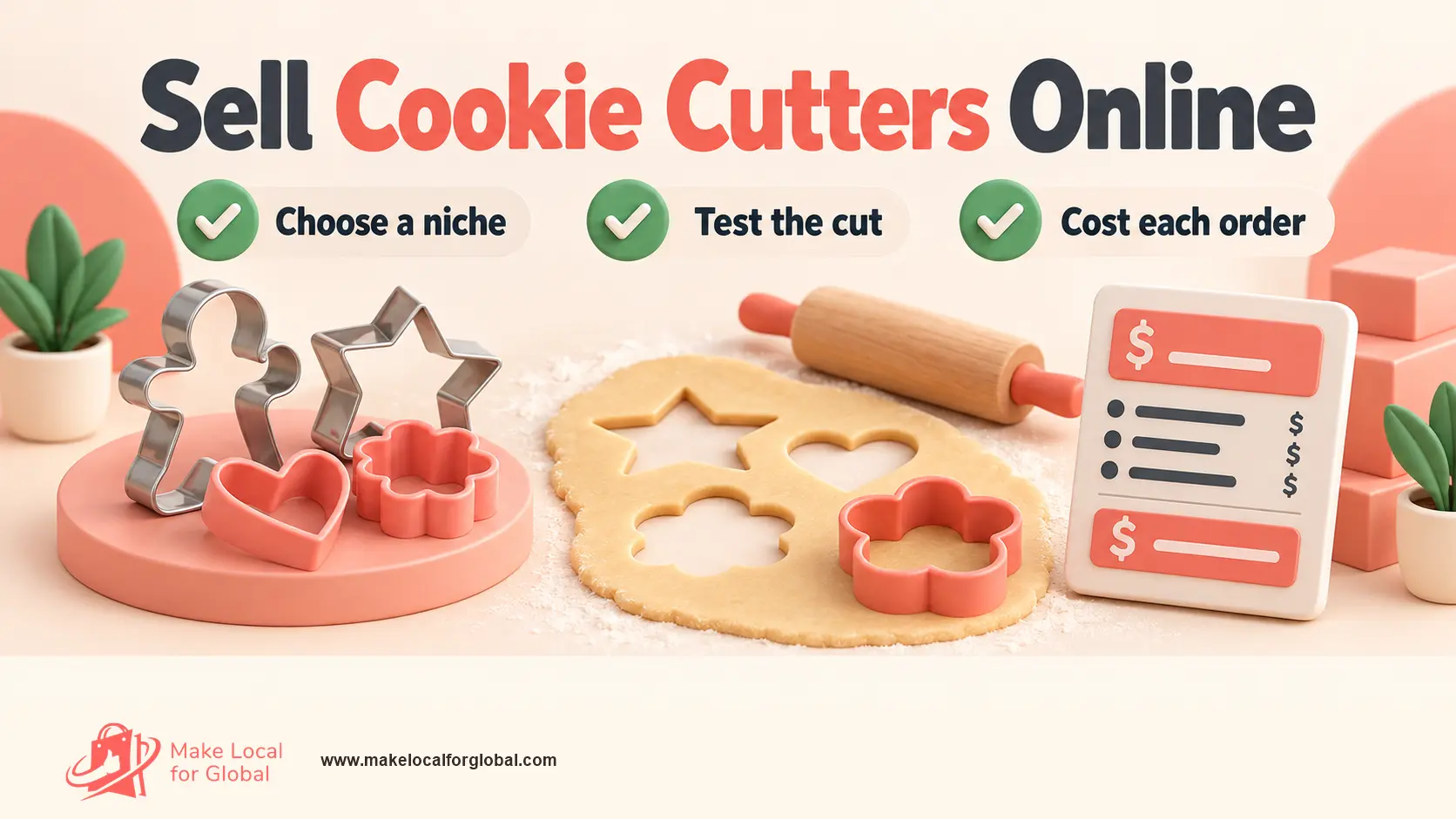
A cookie cutter can be a small, light product with a strong gift and baking angle. To sell cookie cutters online, choose a clear buyer, test the cut on real dough, verify material claims and price the packed order before you buy stock.
Map your sample spend, opening stock and order costs before you commit to a large range.
Cookie cutters suit home bakers, parents planning parties, cake decorators and people buying small gifts. Pick one buyer and one occasion first. “Space-themed birthday cutters for parents making a party tea” gives you a clearer first range than a shop with unrelated shapes and no reason to return.
Speak with five likely buyers. Ask what they baked last month, which shapes were hard to find, what size they need and whether they would buy a single cutter or a set. Show rough sketches or samples and ask people to choose between them. Record which shapes attract real questions, sign-ups or pre-orders. A compliment alone is weak evidence of demand.
Choose a theme you can make or source with permission. Character names, logos and recognisable artwork can be protected by intellectual-property rights. Get a licence before selling branded designs. Original seasonal shapes, local landmarks or simple baking themes can give a small shop room to develop its own look.
Keep the first set simple enough to explain and pack. Give each option a clear job, then add designs when buyer feedback supports them. State the finished cutter dimensions and how many pieces a set contains.
| Range role | Possible offer | Buyer question | First stock check |
|---|---|---|---|
| Starter | One familiar shape in two sizes | Will it suit the biscuits I plan to make? | Test both sizes and list exact measurements. |
| Core | Three-piece birthday theme | Do the shapes work together on one tray? | Cut, bake and pack the full set. |
| Premium | Larger seasonal set with storage tin | What is included and how is it stored? | Check every piece, insert and box. |
| Add-on | Matching stamp or icing guide | Does it fit the cutter and is it sold separately? | Show how each component works. |

A useful starter might pair a single star shape with a three-piece celebration set and one gift-ready seasonal collection. Avoid ordering many colours before you know whether colour matters to your buyers. If you sell a stamp and cutter together, say which tool makes the outline and which presses a pattern.
For ideas about adjacent products and gift bundles, browse other Product To Sell articles and this article on selling cupcake toppers online. Use related items only when the same buyer has a reason to add them.
Compare kitchenware wholesalers, local metalworkers, manufacturers and small-batch makers. Ask about minimum order quantities, sample prices, lead times, repeat supply, defect handling, packaging and who makes the product. If you import cutters, clarify your responsibilities before sale and retain supplier records and product references.
Cookie cutters touch dough, so ask for evidence relevant to food contact. The Food Standards Agency guidance on food-contact materials and Regulation (EC) No 1935/2004 set out the general framework for materials intended to contact food. Rules can differ by material and market. A supplier’s “food safe” wording or a resin name on its own does not establish that the finished cutter is suitable for your intended use. Ask for evidence that matches the exact product and destination.
Take extra care with 3D-printed cutters. A filament described as food-grade does not, by itself, establish the safety of the finished print, its additives, production process, surface or cleaning method. Ask the maker for product-specific supporting information and do not make a food-contact claim you cannot substantiate.
Use the sample on the kind of dough your buyer is likely to use. Chill it as recommended by the recipe, press the cutter straight down and lift it without twisting. Check whether the shape releases cleanly, narrow corners hold together and the edge leaves an even outline.
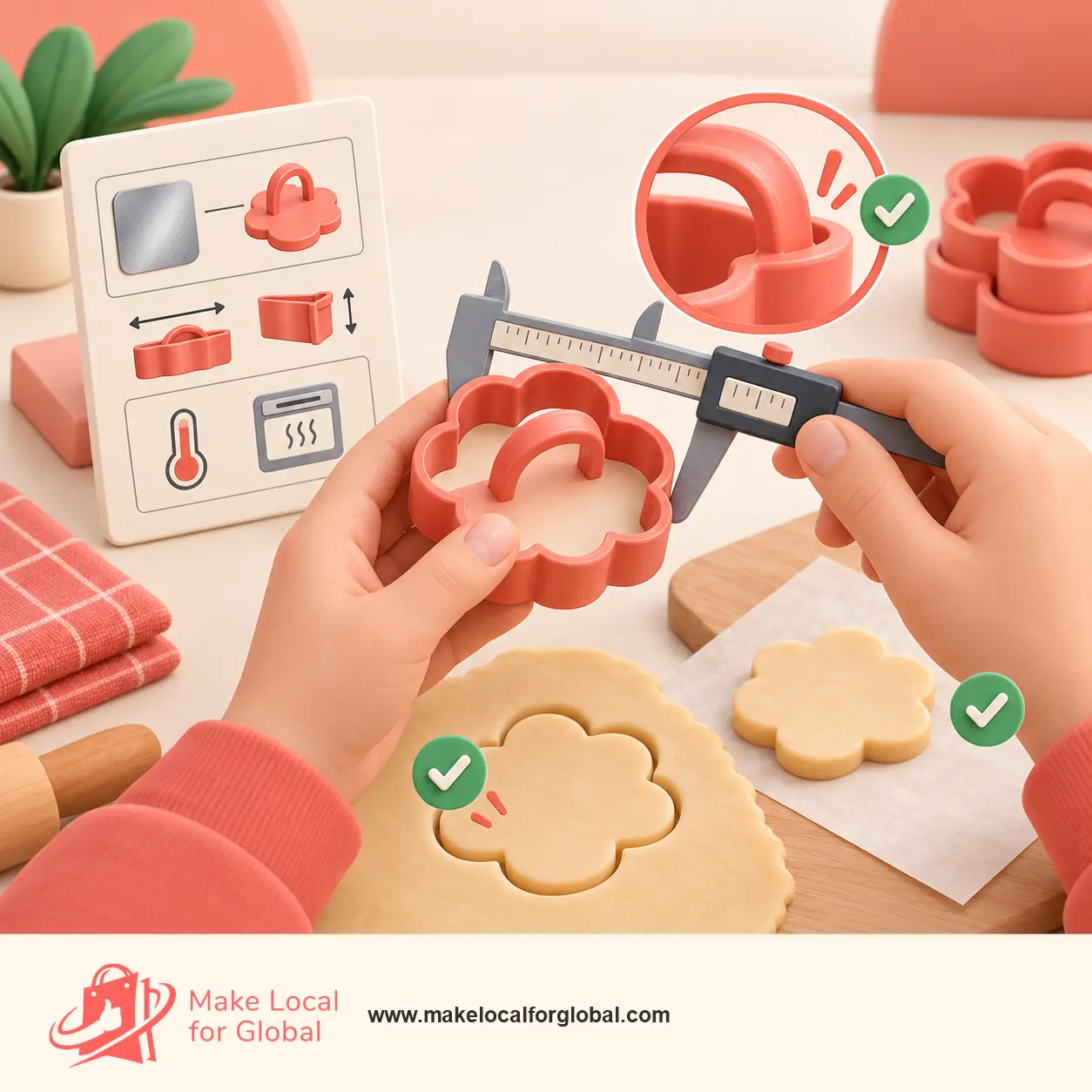
Photograph faults beside a ruler and ask the supplier to explain the fix in writing. Keep an approved sample or dated photographs for comparison with later batches. This record helps you spot changes before they become customer complaints.
Use your own supplier, postage and payment figures before you set a selling price.
Here is an illustrative online order of £24 with standard delivery included. It assumes a UK seller who is not VAT-registered. Replace each figure with a supplier quote, carrier rate and real payment fee. The example is a contribution calculation, not a profit promise.
| Order cost | Illustrative amount |
|---|---|
| Customer payment | £24.00 |
| Cutters and inbound freight share | −£5.20 |
| Mailing box and protective insert | −£1.25 |
| Picking and packing time | −£1.60 |
| Seller-paid postage | −£3.45 |
| Payment fee allowance | −£0.75 |
| Damage and return allowance | −£0.60 |
| Customer acquisition allowance | −£2.50 |
| Contribution before fixed costs and tax | £8.65 |
Illustration only: £24.00 minus £15.35 in listed costs leaves £8.65. Add VAT where it applies, shop fees, insurance, equipment, unsold stock and other overheads.
Compare the contribution on a single cutter with a themed set. A bundle can spread postage across several pieces, yet extra components add packing time and more chances for a missing part. Test a real parcel before you advertise a delivery charge.
A clear listing tells a baker what will arrive and what it can do. Use exact measurements in centimetres and inches, name the material supplied by the manufacturer, state the number of pieces and show a ruler beside the cutter. Include care instructions only when verified for that model.
Online sellers need clear information before the order. GOV.UK’s online-selling guidance covers product descriptions, prices, delivery costs and checkout information. The returns and refunds guidance explains distance-sale cancellation rights. Check the rules for the market where you sell and make your own terms clear.
Place each cutter in a sleeve or fixed position so pieces cannot bend or scrape one another. Protect narrow tips and corners with an insert. Put the retail pack inside a measured mailer or box, then weigh the finished parcel. A cutter that is light can still need a larger parcel if it has a tall handle or gift tin.
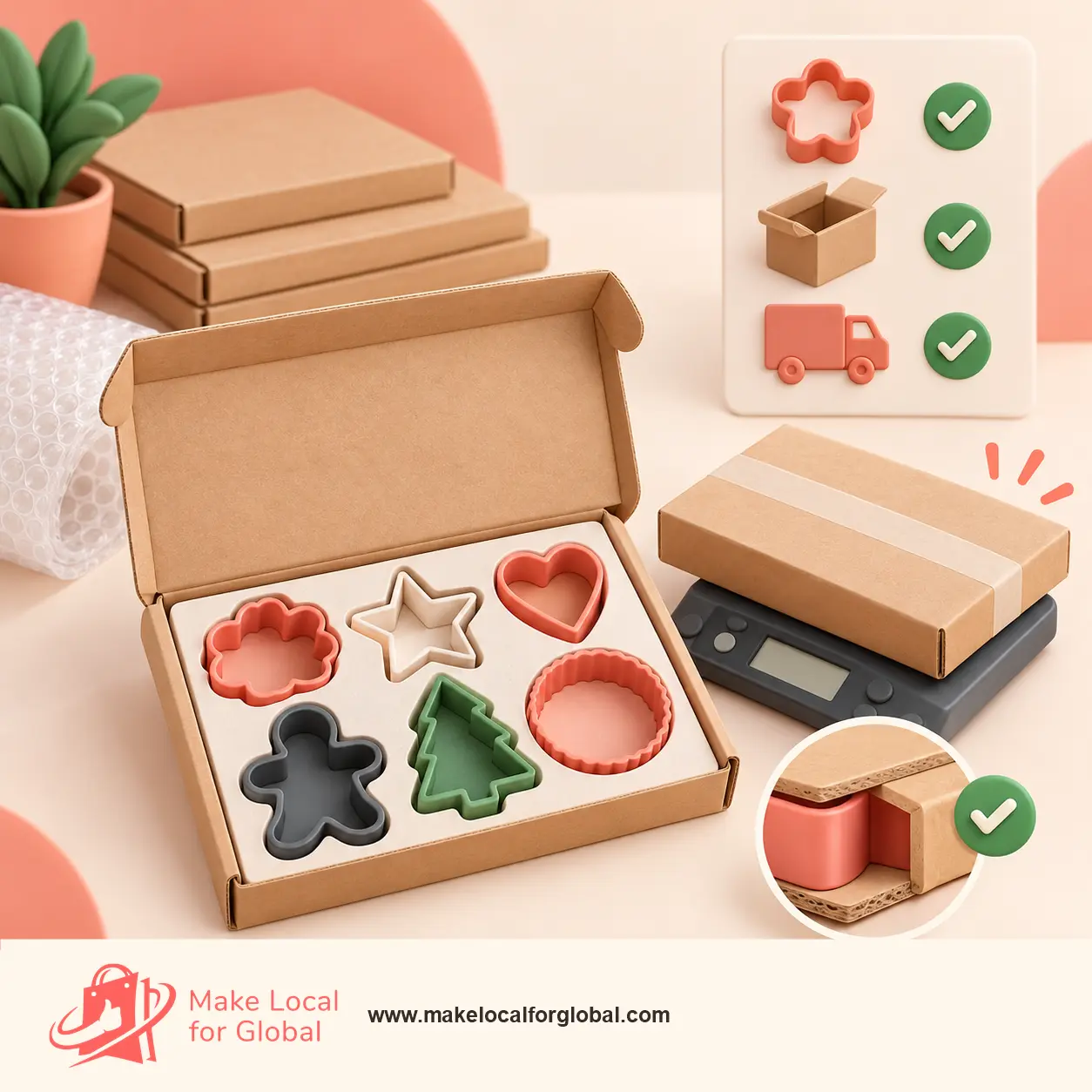
Pack and post one sample to yourself or a colleague. Check for bent edges, loose pieces, crushed corners and movement inside the mailer. Record the parcel size and packed weight, then compare the carrier charge with the amount in your cost sheet. If a cutter arrives damaged, photograph the packaging and product, check its batch and resolve the supplier or carrier issue before sending more.
Product safety applies to consumer goods. Great Britain guidance under the General Product Safety Regulations 2005 covers safe normal and foreseeable use, producer and distributor duties. Northern Ireland uses different rules; check the current Northern Ireland product-safety guidance if selling there. Keep product references and supplier records, and get specialist advice if the product or your role raises questions.
Choose one first sales route: your online shop, a suitable marketplace, a local baking event or a mix you can manage. Compare platform fees and listing rules before choosing. Share useful product details in baking groups only where promotion is allowed. Ask a local cake maker to test a sample and offer specific feedback; do not present a gifted sample as an independent review.
Build pages around real buyer searches, such as “small star cookie cutter”, “three-piece birthday cookie cutter set” or “cookie cutters for fondant”. Use those phrases naturally in titles and descriptions. Link from each listing to a clear size chart and related shapes. Product photography tips can help you plan useful close-ups and scale images.
Review visits, product-page questions, add-to-cart activity, paid orders, packing time and damage reports each week. Decide in advance how much you will spend on a small traffic test. Keep one offer variable at a time, such as the main image or set size, so you can see what changed.
For more ideas on building a specialist shop, read the chocolate box range example and the guide to taking product photos for an online store. Those pages show adjacent planning topics; adapt the details to cutters and baking buyers.
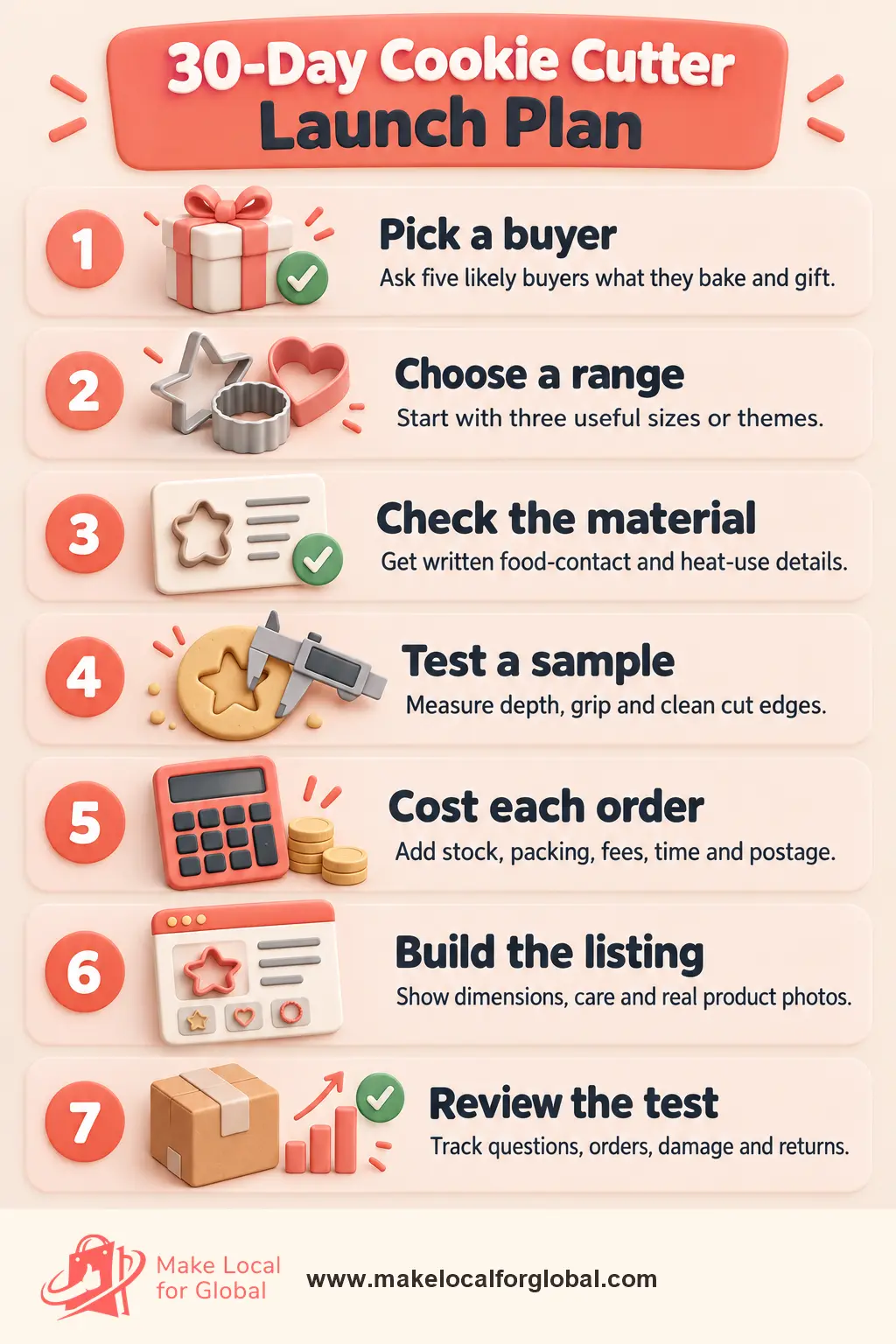
At day 30, choose one next action: restock a proven shape, change a weak listing or test another design. Keep the batch small until the figures and product checks support a wider range.
Start with a small theme for one buyer or occasion, such as a three-piece birthday set. Ask likely customers to compare the options, then order samples for the designs that earn concrete interest.
Cutters intended to touch dough fall within food-contact considerations. Ask for evidence that applies to the finished product, its material and intended use. Check current regulator guidance for your destination market.
You can explore the product idea, yet a filament label alone does not prove the finished cutter is suitable for contact with food. Get evidence for the print, material, process, cleaning method and market before making a claim.
Measure its widest points and height with a ruler or calliper. State the dimensions of the actual cutter, show a scale photo and explain how the pressed dough shape may change during baking.
Many online purchases have a cancellation period. Check the current distance-selling rules for the buyer’s market, explain the return process before checkout and inspect returned products for damage or use.
A strong first range starts with a buyer, a sample you have tested and a price built from the full packed order. Use what customers ask and what the sample proves to shape your next listing. If you need an online shop for a focused product range, explore MLFG website design or contact the team.
Present cutter sizes, sets, shipping details and product photos in a shop customers can use.
PREFERRED SOURCE
Like what you’re reading? Add Make Local for Global as a preferred source on Google to see more of our articles when you search.


Build your online presence without having to figure out everything yourself.