

READY TO SELL day planners ONLINE?
Get a store built for you in 5 days, plus training and support to help you start, run, and grow your Alternative business.

Learn how to sell day planners online with a focused range, print quality checks, a full order-cost model, a customer-friendly product page and a practical 30-day launch plan.

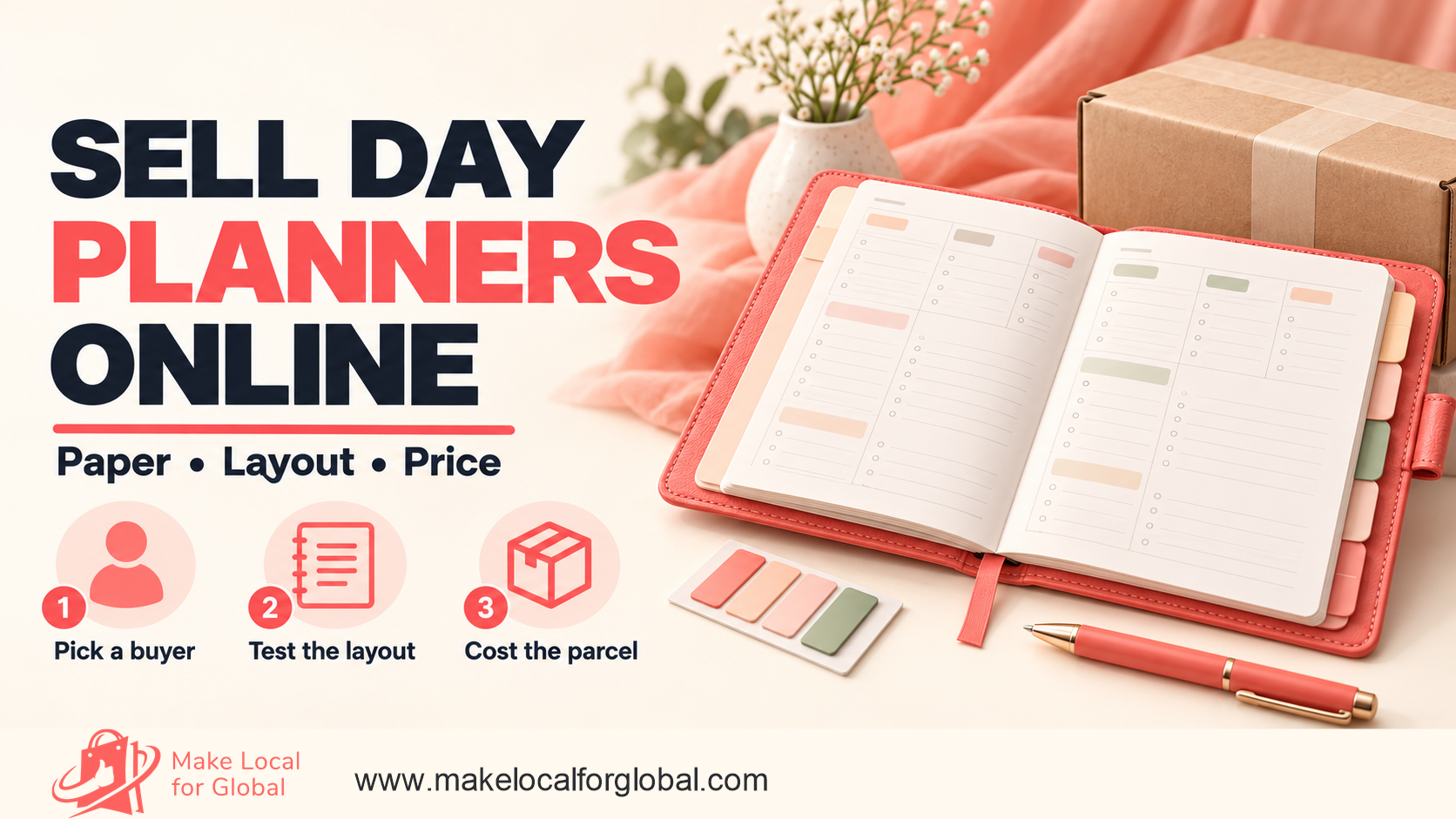
A day planner looks simple until a buyer has to decide whether its dates, page layout, size, paper and binding fit the way they plan. A seller has to make those decisions before ordering stock, then explain them clearly enough that the customer knows what will arrive.
To sell day planners online, start with one defined buyer and one planning problem, build a small range around that need, inspect a printed sample, and calculate the full cost of a packed order. Test demand with real product pages and a small launch before you commit to a wide range or large print run. A focused stationery offer is easier to explain, photograph, price and improve than a catalogue of unrelated notebooks.
This article covers paper planners sold as physical goods. Digital planner files use different fulfilment, compatibility, file licensing and cancellation considerations, so treat them as a separate product. The opening example below assumes a small UK seller and uses hypothetical figures. Replace every figure with supplier quotes and platform costs for your own business.
Give buyers one place to compare the format, dimensions, page layout and delivery details before they order.
“Day planner” can mean a dated diary, a weekly organiser, a daily schedule pad, a work planner, a study planner, or a notebook that combines calendars with habit tracking. That broad label is useful for discovery, but too broad for a first product range. A buyer needs to see the specific job the planner is built to do.
Start by writing a one-sentence product promise that describes the use, not a guaranteed outcome. For example: “A compact undated weekly planner for freelancers who need to see appointments, priorities and notes across one spread.” It tells a buyer what the object contains and whom it may suit. It does not claim that the planner will make someone more productive or remove stress.
The product should be built around a repeatable use case. A student may need term dates, assignment deadlines and revision blocks. A self-employed buyer may need client appointments, work priorities and space to record invoices. A household planner may need meal planning, appointments and shopping notes. Each use case changes the page layout and the questions a listing must answer.
A physical book or pad gives the customer a tangible product and a familiar writing surface. It brings print, stock, storage, packing and delivery costs. A printable PDF has no physical parcel, but buyers need to know its page size, file type, print instructions, personal-use terms and whether it works with their equipment. A tablet planner may need a particular page ratio or annotation app, and compatibility claims need to be accurate.
Avoid combining all formats in a single listing if the buyer may confuse them. Give a physical planner its own photographs and delivery estimate. Give a download its own preview pages and instructions. If you later offer both, make the selection explicit before checkout and send the correct format automatically.
Print on demand can reduce the amount of stock held at home. It may cost more per copy, and the provider’s production time, packaging, product options and delivery experience become part of the offer you sell. A small batch can give you more control over presentation, but it ties up cash and needs storage. Compare those routes after you understand the product rather than selecting a model from a generic promise of low startup cost.
For a wider comparison of selling models, see [how print on demand is priced](/how-to-price-print-on-demand-products/) and [the difference between print on demand and private label](/print-on-demand-vs-private-label/). Those decisions affect how your day planner is produced, branded and delivered.
Good product research begins with observed needs. A vague idea such as “people want to be organised” does not tell you which pages to print or whether anyone will pay for them. Look for a specific routine, a recurring frustration and a clear moment when the buyer is likely to use the planner.
Potential buyer groups include students managing coursework, teachers planning lessons, freelance workers coordinating client work, carers tracking appointments, wedding planners preparing a short-term event, and people who prefer a paper weekly view. These are research starting points, not proof of demand. A group may contain very different users with different budgets and expectations.
Choose one group for the first test. Write down what they plan, when they plan it, what they already use and what makes the current method awkward. A student who needs an academic year planner may care about term dates and assignment pages. A freelancer may care more about an undated format, meeting notes and a compact size that fits a work bag.
Use short conversations, an email poll, a simple landing page or a small in-person sample review. Ask people to describe their last planning session rather than asking whether they “like” a design. Praise is easy to give; a buyer’s past behaviour is more useful evidence.
Useful questions include:
Show a page mock-up or sample spread. Ask the person to point to where they would write a task, appointment or note. If they cannot tell what a page is for, the layout may need more explanation. Do not ask only friends who want to encourage you; include people who fit the buyer description but have no reason to flatter the idea.
You can test search language without making a claim about search volume. Look at marketplace autocomplete, customer questions, review wording for competing planners and the terms people use in your conversations. Record the exact phrases, then use them naturally in product names and page descriptions where they fit. Do not copy a competitor’s listing or page design.
Before printing a larger quantity, run a test with a sample image and a clear pre-order or interest form. State whether the product is available now or planned for a later date. A click, email sign-up, deposit or completed order represents a different level of commitment, so track which one occurred. If several people ask the same question about dates or size, answer it in the listing before sending more traffic.
A broad range can make production harder before it makes the shop easier to buy from. Each new format creates another decision about paper, cover, pages, print setup, stock quantity, product photography and order fulfilment. Keep the initial offer narrow enough to inspect every version.

One possible first range is a core undated weekly planner, a smaller desk pad using the same visual language, and one simple gift bundle. The smaller product should address a different use or price point, rather than repeating the same planner with a new cover colour. A dated academic version can be a later test after calendar accuracy and seasonal timing have been checked.
| Range level | Example offer | Job it serves | Check before launch |
|---|---|---|---|
| Entry | Undated daily pad | Quick daily priorities beside a desk | Tear-off quality and writing space |
| Core | Undated A5 weekly planner | A portable weekly view with notes | Spread readability and binding |
| Premium | Weekly planner with habit and project pages | More structured planning for a regular routine | Page count, weight and print cost |
| Bundle | Planner with matching note pad | Coordinated gift or desk set | Combined parcel size and bundle discount |
The table is a design exercise, not a recommendation to launch four items at once. Choose the one offer people understand most clearly and the one adjacent option that addresses a different need. A simple range can show whether customers value portability, page space, a particular cover or a bundle.
Dated planners have an obvious period of use. The buyer can open them and see a calendar ready to fill in. Their risk is seasonality and incorrect dates. A dated planner can lose appeal after its start period, and a printing error may make the entire edition difficult to sell.
Undated planners can be used at any time of year. The buyer writes the date, which avoids unused pages when they start late. The product page should show how the dates are entered and how much blank setup work is required. Some people value that flexibility; others prefer a calendar that is ready to use.
Academic planners may include terms, holidays, exam windows or assignment pages. Dates vary by institution and country. Do not imply that one set of term dates applies to every school or university. A safer first product may leave dates blank or provide an undated structure, unless you can define the institutions and regions covered.
If you do print dates, maintain a source file for the calendar, a named reviewer and a final page-by-page proof process. Check leap years, month lengths, day/date alignment, week starts, public holiday wording and the date range. Public holiday calendars differ across England and Wales, Scotland and Northern Ireland; refer readers to the relevant official calendar instead of assuming one schedule applies to everyone. The current GOV.UK bank holiday calendar lists the UK nations separately.
The physical dimensions affect how the planner feels, what it can hold and how much it costs to post. A small format may travel well but leave little writing room. A large format may be comfortable on a desk, yet feel heavy in a bag. List finished dimensions in millimetres and, if useful, inches. Do not rely on “A5 size” alone when a finished cover includes tabs, rings or a coil.
Binding changes how a planner behaves on a desk. A wire or coil binding may open flat, while a perfect-bound spine may keep the book compact and protected. A stitched binding can suit certain book styles but may open differently from a coil. Ask the printer for exact construction details and check a physical sample in the way the buyer will use it.
Page planning should follow use. A weekly spread might show seven days, a notes area and a small list of priorities. A daily page may need appointment times and a separate section for tasks. A habit tracker can help users record a chosen behaviour, but too many trackers make a planner crowded. Every page should justify its space.
Create a paper prototype before the final artwork. Print a few pages at actual size, bind them temporarily and write in the boxes. Check whether handwriting fits, whether lines are too close together and whether pale colours remain visible on ordinary printers. View the page under common indoor lighting. A layout that looks calm on a large monitor may be hard to use in a small printed book.
You can create the layout yourself, commission a designer, buy a commercial template, use a print-on-demand catalogue or work with a printer on a small run. Each route has different cost, control, lead time and rights. Ask who owns the artwork, which sales uses are allowed, whether the licence covers commercial printing, and whether the design may be changed.
A commercial-use label is not enough detail. Read the licence and keep a copy with the asset. Check whether it restricts print quantities, digital resale, sublicensing, use on marketplaces or use in products sold as a finished planner. If a designer supplies the layout, agree in writing what files you receive and whether you can edit, reprint and sell the finished product. UK government guidance explains that online content is not free to use simply because it is visible; check the rights and licence before using it. See GOV.UK guidance on using someone else’s copyright.
Avoid protected characters, logos, sports teams, song lyrics, celebrity images and copied competitor pages unless you have permission for the exact use. Do not assume that changing the colour or moving a few boxes makes someone else’s page original. The commercial product should reflect your own design or a licence that clearly covers the way you plan to sell it.
Print on demand can be useful for checking an idea when you cannot fund a large stock order. Before selecting a provider, order a proof, measure the real item, inspect the print and test the shipping presentation. Confirm the base price, production time, dispatch location, delivery tracking, packaging options, branding limits, customer support route and process for damaged or lost parcels.
Ask whether the supplier charges for a reprint when its production is faulty, what evidence it needs and how long it takes to resolve a case. Your customer bought from your business, so you need a clear process for replying while the provider investigates. State delivery estimates that reflect the provider’s real production and shipping times. Do not copy the supplier’s most optimistic estimate without testing it.
A short print run can reduce per-unit cost at higher quantities, yet the quote is only one part of the decision. Include setup, proofing, freight to you, import costs if relevant, storage, packing materials, payment fees, postage, unsold units and your time. Cash spent on stock cannot be used elsewhere while those planners wait to sell.
Ask printers for the same specification so the quotes can be compared. Include finished size, page count, paper weight and finish, cover stock, binding, colour, packaging, delivery address, quantity and proof type. Request a quote for at least two sensible quantities, such as 50 and 150 copies, and calculate the total cash required for each.
Get the response in writing and save it with the product specification. Useful questions include:
Do not treat a supplier’s sales sample as proof of the final production run. A sample can use a different paper or finishing process. Ask the supplier to confirm which specifications match the order you will place.
Approve a physical proof at actual size, not only a screen preview. A digital proof can show the wrong trim area, scale or paper feel. If the printer offers a first article or press proof, confirm whether that is the same material and process planned for your batch.
Open and close the planner repeatedly. Lay it flat at the desk and at a comfortable writing angle. Turn pages from the front and back. Look for a coil that catches, a spine that does not open enough, a cover that curls, corners that dent easily or a book that is awkward to carry.
Test different pens on the supplied paper. Check whether ink feathers, smears, ghosts through or bleeds to the other side. A small amount of show-through can be normal for thin paper; the important question is whether it interferes with the next page. Photograph the test under ordinary indoor light and compare it with the product page images.
Check page order, margins, trim, calendar dates, headings and page count. Read every instruction, date label and sample entry. A calendar alignment error is easy to miss when viewing only a few spreads. Ask another person to proof it with a checklist and then compare the approved proof to the supplier’s final production copy.
Create one record per sample so improvements do not depend on memory. Note the supplier, date, product code, page file version, paper and cover specification, binding, sample cost and result. Photograph the cover, open spread, paper test and packaged item. If you compare two printers, use the same checks for both.
| Check | What to do | Record |
|---|---|---|
| Dimensions | Measure closed planner and page area | Finished width, height and thickness |
| Binding | Open and write near the inner margin | Flatness, movement and usable space |
| Review fine lines, colour blocks and text | Defects, contrast and colour shifts | |
| Paper | Try the pens your buyer may use | Feathering, smearing and show-through |
| Dates | Verify calendar and sequence | Reviewer initials and file version |
| Parcel | Pack and weigh the finished item | Parcel size, mass and protection |
Do not approve a sample only because it looks attractive. It must be clear to use and consistent with the specification, photos and description. If one issue is fixable, update the file and request a revised proof before committing. If an issue affects usability or sales claims, pause the order and decide whether the product promise needs to change.

Price from a cost model and a market comparison, then test whether the result makes sense to the buyer. A competitor’s price is context, not a cost calculation. A supplier’s unit price is one input, not your profit.
The example below assumes one planner sold for £24.00, with postage charged separately at checkout. All amounts are illustrative and shown before any recoverable VAT treatment. The fee line is a placeholder for a hypothetical payment and marketplace combination; use the actual rate and fixed charge for the route you choose. Do not assume a platform’s fee applies to every channel.
| Per-order item | Illustrative amount |
|---|---|
| Planner print cost | £6.20 |
| Inbound freight allocation | £0.70 |
| Mailer and protective board | £0.85 |
| Payment and marketplace fees | £1.65 |
| Postage paid by the seller | £3.45 |
| Returns, damage and reship allowance | £0.90 |
| Customer acquisition allocation | £3.00 |
| Total variable cost per order | £16.75 |
| Selling price | £24.00 |
| Contribution before fixed overhead and tax | £7.25 |
The arithmetic is £24.00 minus £16.75, leaving £7.25 contribution before fixed overhead, business tax and owner pay. If the customer pays postage separately, record the postage income and postage expense as separate lines rather than pretending delivery is free. If the channel collects VAT or applies fees to delivery, reflect that in the actual calculation.
The returns allowance is not a legal substitute for a proper return policy. It is a planning estimate for expected costs such as a damaged copy, a lost parcel or a return that cannot be resold as new. Replace the £0.90 with evidence once orders exist. Keep statutory consumer rights separate from any voluntary return promise.
Your full order economics can include artwork, proof copies, sample shipping, barcode or listing costs, packaging tests, storage, payment disputes, support time, advertising and unsold inventory. Some costs are fixed or one-off, so allocate them carefully if you want to estimate a break-even quantity. Do not divide every fixed cost by one order and call it a recurring unit cost, then forget that the same order may carry several different obligations.
For example, suppose you spend £180 on design and pre-production, then expect 60 units to sell. A simple allocation is £3 per unit. That helps with planning, but only if the 60-unit estimate is plausible. If only 20 sell, the realised cost per sold planner rises to £9. Show the allocation separately from variable contribution so you can see the effect of a slower launch.
For a print-on-demand model, replace the print cost, inbound freight and some packing costs with the supplier’s base product and delivery charges. Add marketplace fees, transaction charges, payment fees, customer support and any refund or reprint amount you may owe. A supplier may send the package, but your price still needs room for the costs incurred in selling it.
Contribution is what remains after the variable costs attached to an order. It can help pay fixed costs such as website subscriptions, insurance, software, accounting and design, then leave a result for tax and owner pay. It is not the same as net profit.
Set a minimum contribution that fits your plan. If you want £7.25 per order but a paid campaign costs £8.00 to acquire a customer, that campaign loses contribution before fixed costs. You may need a higher price, lower variable cost, a bundle, repeat purchases or another acquisition route. Any change should preserve the buyer’s view of value and the product’s quality.
Test bundle arithmetic with a calculator. A two-planner bundle might reduce postage per unit, but it may need a larger box. A matching note pad can raise the order value, yet introduce a second product cost and a new quality check. Never assume that more items in a basket means more money left over.
If the business’s taxable turnover may exceed the current VAT threshold, check the live GOV.UK VAT registration thresholds and the rules that apply to the business. The displayed consumer price, reclaimable VAT, sales channel and input costs can change the model. Seek qualified tax advice for your circumstances; this article does not calculate a seller’s tax position.
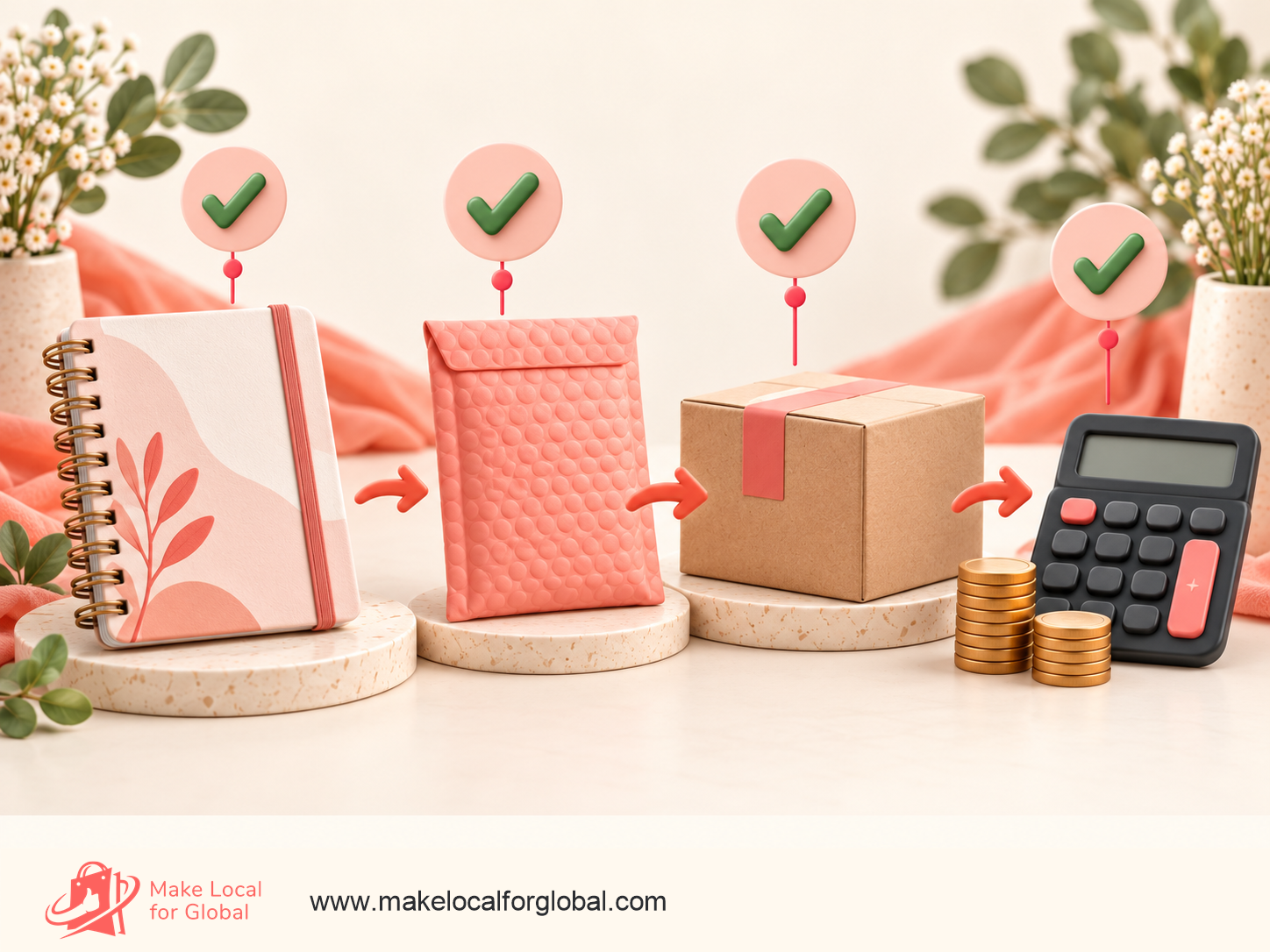
Compare production routes and model the full order cost before you settle on a price.
A useful product page lets a buyer understand the planner before paying. The first screen should show the type of planner, who it is intended for, its format and the reason it may fit the buyer’s routine. Avoid vague claims such as “the only planner you need” or claims that promise a particular productivity, health or wellbeing result.
Use the words a buyer might use, followed by a concrete differentiator. A working title could be “Undated A5 Weekly Planner for Freelancers, with Priorities and Notes”. If the planner is dated, include the year only after dates and stock have been checked. Avoid adding every audience, feature and search phrase to one title; readability comes first.
Describe the product plainly in the first paragraph. State whether it is a book, pad, digital file or set. Tell the buyer if dates are pre-printed, what the page week begins with, what sections are included, how many pages there are, and how it is bound. If the cover colour varies by print batch, explain what range of variation to expect.
Photograph the cover and an actual internal spread. Include a close-up of the binding, a page beside a familiar object or ruler for scale, and a photograph that shows the planner closed. A photo of a hand writing can demonstrate scale, but the hand should not cover the feature the customer needs to inspect.
For a dated product, show a representative month and week and identify the year. For an undated product, show the blank date field and how the customer fills it in. Use a readable close-up of small text. Do not place sample copy in an image that could mislead the buyer into thinking personalisation, accessories or extra items come with the order.
Text alternatives should describe what is actually visible. For example: “Open A5 undated weekly planner showing seven day columns, a notes area and coral priority boxes.” Avoid repeating the same keyword list in every image description. Caption images when a short note helps someone understand a feature.
Write a concise specification list with:
Use qualified wording for paper features. “Suitable for most ballpoint pens tested on our sample” describes a test and its limit. “No bleed through with every pen” is an absolute claim that is unlikely to be supportable. If the paper test is a selling point, name the pen types you tried and show the result.
Add sizing context with the planner beside a hand, bag, laptop or desk surface, while keeping the measurement graphic accurate. Show a page at its real aspect ratio, not stretched in editing. If a product has a visible coil or ring, make the thickness clear enough that a buyer can judge how it will fit in a bag.
Include answers to questions you already heard in interviews and sample reviews. State how the product is shipped, whether the outside packaging reveals the purchase, where orders ship from and how a customer can contact you. If the supplier prints on demand, tell the customer the realistic production and delivery estimate rather than using language that implies same-day dispatch.
If you allow gift messages or personalisation, explain what information the buyer needs to provide and when the order becomes final. If you do not provide those options, say so before checkout. A buyer should not have to ask whether a planner is refillable, whether a pen is included, or which year the dates cover.
Choose a channel that matches the product and your ability to answer customers. A marketplace can put a product beside existing stationery, but it has rules, fees, listing competition and account requirements. Your own online shop gives you control over product presentation and customer journey, but you need to bring relevant visitors and manage the store. In-person fairs let buyers handle the sample, though the event fee, travel, table display and card processing need to go in the cost model.
You do not need to open every channel at once. Start where you can show a real sample and answer the buyer’s questions. Make one product page and one fulfilment process work before duplicating the listing. If you add another channel later, keep stock counts and dispatch promises aligned so the same copy is not sold twice.
Write for the job the buyer is trying to do. Phrases such as “undated weekly planner for freelancers”, “A5 student study planner” or “academic planner with assignment pages” may describe a product if each phrase is accurate. Do not put a student phrase on a planner without study or assignment features merely to attract a broader audience.
Useful content can answer questions about choosing a dated versus undated planner, setting up a weekly spread, checking planner size or selecting paper for fountain pens. If you publish examples, use the product you actually sell and disclose any limitations. A short video showing the planner opening flat may answer more questions than a long description of how organised the customer might become.
For an online store, see [how to compare beginner ecommerce models](/best-online-business-models-uk/) and [how to sell colouring books online](/sell-coloring-books-online/). The product details differ, yet the useful lesson is similar: show the format, explain fulfilment and make the total offer easy to understand.
Try one small acquisition test at a time. Share a page with a relevant community only where promotion is allowed. Ask a stationery shop, study group or coworking space whether it will display a sample. Create a short demonstration video with a clear product link. If you run paid adverts, set a small capped budget and record impressions, clicks, add-to-basket actions and completed orders.
Use a weekly review to find where people leave. Few impressions may point to reach or search language. Impressions with no clicks may point to the image or title. Page visits without basket actions may point to price, unclear specifications or a mismatch between the ad and the product. Basket activity without payment may point to delivery cost, checkout friction or a missing trust detail. Each possibility needs a different test.
Do not change the title, photos, price and product design on the same day and then assume you know what improved the result. Keep dated notes, change one major variable at a time and compare similar time periods where possible. A small sample gives weak evidence, so record counts and avoid reading too much into one sale.
Paper goods can arrive with crushed corners, bent covers or moisture damage. Test the actual parcel by packing one planner and sending it through the delivery method you plan to use. Check its thickness and weight after packing, since the supplier’s product-only measurement does not include protective board or a mailer.
Choose packaging that protects the corners without adding unnecessary bulk. A rigid mailer, a board insert or a small book box may work, depending on planner size and the carrier’s rules. Use a protective sleeve if it helps prevent scuffs or moisture, then test whether the customer can open the parcel easily. Avoid packaging claims such as plastic-free unless the complete packaging specification supports them.
Record the packed dimensions and the accepted postage option. Rate changes and service limits can shift, so recheck the live price before changing your product price or free-delivery threshold. If you include postage in the displayed price, write down the separate expense and review it after the first orders.
For small stock, label boxes by product format, year, design version and quantity. Keep dated products separate from undated stock. Use a stock sheet or shop inventory count and reconcile it after fairs, replacements and damaged copies. Store paper away from damp, direct sunlight, heat and heavy objects that can warp the covers.
Online UK buyers normally have a cancellation period for many goods bought at a distance. The details depend on the goods and exceptions. GOV.UK says online, mail and telephone order customers can usually tell the seller within 14 days of receiving the item that they wish to cancel; they then have another 14 days to return it. See the current GOV.UK returns and refunds guidance and distance selling rules.
The product description and checkout should provide the information required before an order is placed, such as your business contact details, product description, price including taxes, delivery arrangements, cancellation information and relevant terms. The exact obligations depend on the business, product and customer location. Do not assume that a planner becomes exempt from cancellation rights merely because it is printed after a customer orders; check whether a specific exception applies before writing the policy.
Make the support route easy to find. Ask a customer to send the order number, a short description and a photograph if the planner arrived damaged. Respond with the next step and an expected reply time. Keep records of defects by product batch and supplier so you can decide whether a repeat issue needs a production hold or revised packaging.
If an order is delayed, tell the customer as soon as the problem is known. Do not leave the buyer to discover a missed dispatch estimate through a tracking page. A calm response and a concrete update can prevent a small supplier problem from becoming a dispute.
This article focuses on paper stationery sold in the UK. Product, tax, packaging, privacy and consumer rules can vary by location and product design. Adding a pen, electrical accessory, adhesive or other component can introduce obligations that do not apply to a plain paper planner. Check the rules for the actual product you put on sale.
Keep material and origin claims accurate. If you use recycled paper, confirm the supplier specification and the percentage basis for the claim. If a cover is described as leather, vegan, recyclable or made locally, retain evidence and define what the statement means. A vague claim can mislead even when the underlying product is well made.
Save supplier invoices, proof approvals, product specifications, licences, customer terms and issue records. They help you track a repeat print defect or answer a customer query. Review public product claims whenever the supplier or material changes.
Use these as diagnostic prompts. A quiet launch does not automatically mean the product is poor. It may indicate a mismatch in audience, product page, price, search language or distribution. Gather enough evidence to identify which part deserves a test.
This plan assumes you can access a printer or print-on-demand sample within the month. Supplier lead times vary, so move the sample and launch dates when the real quote requires it. Do not promise customers a date until production and shipping have been checked.
Pick one buyer and one planning routine. Interview at least five people who resemble that buyer, and record their current method, the pages they need, preferred format and last relevant purchase. Five conversations will not prove a market; they can expose unclear assumptions before you pay for a large print run.
Review competitor listings as research, not templates to copy. Note common formats, questions, prices, dimensions and photograph angles. Verify supplier details independently. Write a one-page specification: product type, audience, size, page count, binding, paper, date status, initial quantity and target selling price.
Draft a sample spread. Ask two or three potential buyers to locate a weekly task, a meeting and a note. Watch silently and note where they hesitate. Update the layout if users misunderstand the headings or run out of space.
Request like-for-like print quotes or compare print-on-demand providers. Ask about proof copies, production windows, defective goods, dispatch location, package size and rights to any adjustments. Order a physical proof. Save the version number and specifications.
Build the first version of the cost sheet. Add unit cost, freight, packaging, channel fees, postage, expected returns or reship costs and customer acquisition. Separate fixed setup spend from variable order costs. Calculate contribution at the planned price and at a lower conversion-friendly price, then note the minimum acceptable amount.
Create a list of missing facts: paper weight, supplier return route, delivery window, rights, VAT treatment or product dimensions. Resolve the points that could change the product, legal wording or price before you prepare a listing.
Inspect the proof with the sample checklist. Correct print files, dates, margins, binding or packaging where needed. If a correction changes a critical feature, request another proof. Keep a clear reason for approval and the exact version sent to production.
Photograph the cover, an open spread, a useful close-up, a size reference and the packed parcel. Prepare the product title, description, specifications, price, dispatch estimate, returns information and frequently asked questions. Ask someone unfamiliar with the project to tell you what they think is included after viewing the page.
Prepare one channel first. Set stock quantity, order confirmation, dispatch process, support contact and refund procedure. Test checkout or print-on-demand data with the provider’s supported preview steps. Do not create a false order or charge a customer as a test.
Publish the offer when the sample, listing and fulfilment route are ready. Start with an audience you can observe: a relevant email list, a local event, a small community where promotion is permitted, or a capped advertising test. Set the amount and time limit before spending.
Record weekly impressions, page visits, add-to-basket actions, orders, support questions, refunds and delivery issues. With a low number of visits, treat the result as early evidence rather than a verdict. If people click but do not buy, ask whether they understand the format and price. If they buy but report cramped pages, update the next print version instead of arguing with the feedback.
At the end of the month, decide among three actions: repeat the current test, change one part of the product or page, or pause spending and gather different evidence. Make that choice from orders, user comments, print quality and contribution rather than from social likes alone.

They can produce positive contribution if buyers value the design and the price covers production, fees, packaging, delivery, returns and customer acquisition. A low unit print price does not prove that a planner is profitable. Model a real order and compare contribution with fixed overhead and owner pay.
Choose based on the buyer’s use. Dated planners feel ready to use and need accurate calendar data, while undated planners avoid a fixed start date and ask the buyer to fill in dates. Test a sample with intended buyers and state the format clearly in the listing.
Yes, if the provider offers a suitable product and your rights cover the artwork. Order a physical proof, check product and shipping costs, test delivery times and write customer support steps. The supplier may fulfil the order, yet you still need to manage the product page and buyer experience.
Check finished dimensions, page order, readability, binding, cover, paper, ink behaviour, calendar dates and packaging. Write on several pages with pens relevant to your audience. Compare the sample against the exact production specification before approving a larger quantity.
There is no single amount. A print-on-demand seller may pay for design, samples, a store and marketing, while a small-batch seller needs cash for proofs, printing, freight, packaging and storage. Request a quote for your specification and calculate the total cash required before choosing the quantity.
Start with the space and portability needs of the buyer. A compact book can fit a bag but leave less writing room; a desk planner can give more space and weigh more. Measure the finished item, test it in the setting where it will be used and show the dimensions on the product page.
UK distance sales normally carry cancellation rights for many goods, subject to the rules and exceptions that apply. Read current GOV.UK returns guidance and the online and distance selling requirements. A made-to-order description does not, by itself, settle whether an exception applies.
Only when you have permission, a suitable licence or a valid legal exception for the intended commercial use. Read the licence and keep a record. Do not copy another seller’s distinctive pages, artwork, character or brand because a search result makes it easy to download.
State the format, dimensions, page count, date status, binding, paper details you can verify, layout features, parcel contents and realistic delivery estimate. Show a cover and real internal pages. Explain whether a pen, insert or accessory in a photo comes with the order.
Show a specific page mock-up to people who match the intended buyer, collect responses to the exact price and format, and order a physical proof. You can use an interest form or transparent pre-order, but state the timeline and availability accurately. Count paid commitments separately from compliments and likes.
Start with one core design and add an adjacent option only when it serves a different buyer need or price point. Each version adds proofing, stock, photography and product-page work. A small range makes it easier to learn which feature people value.
Read the behaviour and questions together. Low page visits suggest a reach or search problem; visits without basket activity may signal unclear value, missing specifications or price friction; usability complaints after delivery point to the product itself. Change one major variable and record the result.
Write one buyer statement, one page specification and one full-order cost calculation before asking a printer for a large run. Approve a physical sample, show the actual format online and test a small launch against a fixed budget and a defined period.
If you want support setting up the store around a focused product offer, visit Make Local for Global. The homepage explains current store options. Keep your product, supplier and fulfilment details at the centre of the launch decision.
Set up a focused offer, document the costs and choose one small route to reach likely buyers.
PREFERRED SOURCE
Like what you’re reading? Add Make Local for Global as a preferred source on Google to see more of our articles when you search.

Build your online presence without having to figure out everything yourself.