

READY TO SELL dress shoes ONLINE?
Get a store built for you in 5 days, plus training and support to help you start, run, and grow your Alternative business.

Learn how to choose a dress-shoe buyer, test styles and sizes, inspect suppliers, price real order costs, build a fit-first listing, pack orders and handle returns.

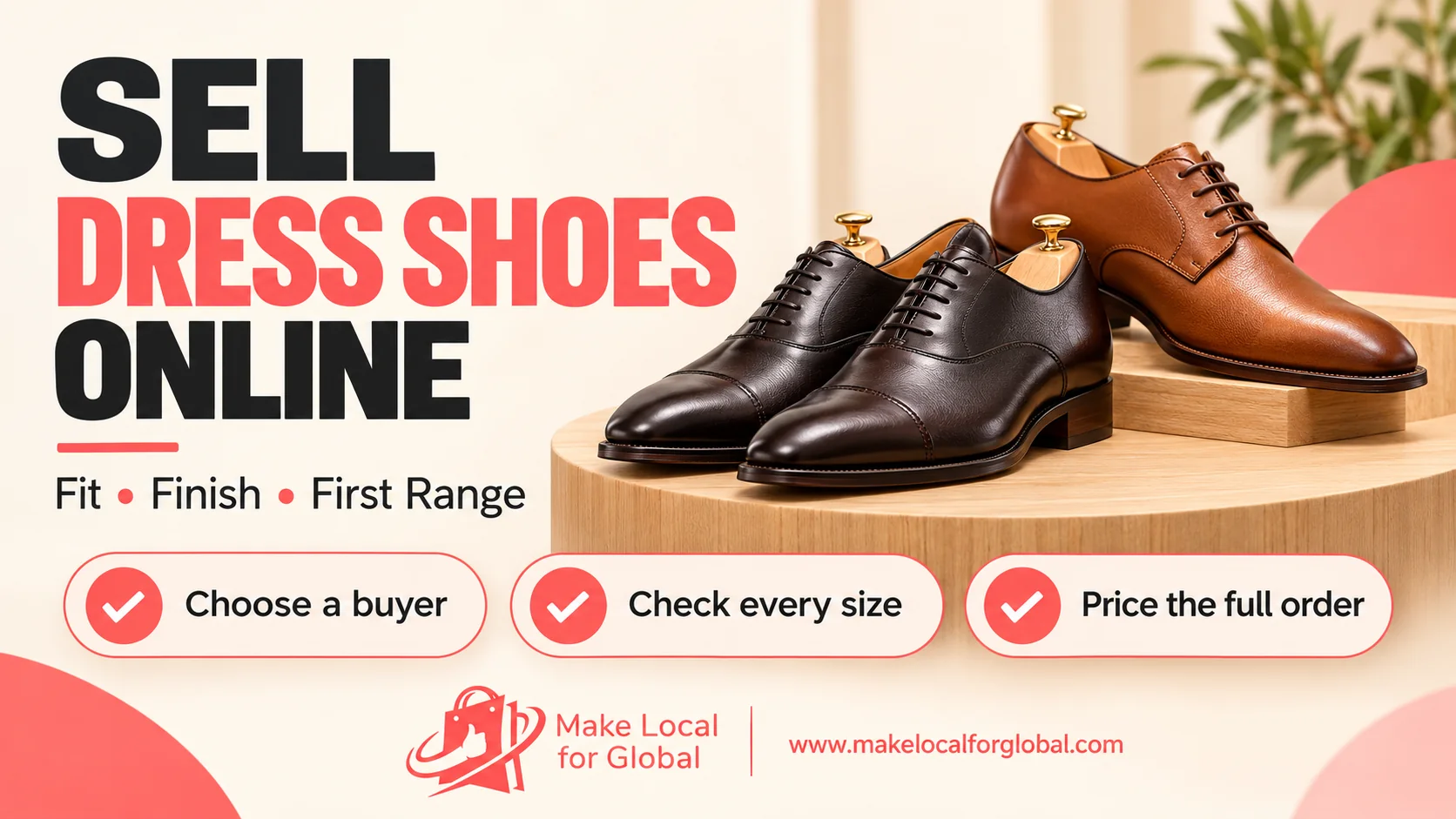
If you plan to sell dress shoes online, your first range may look simple on a product grid: a few leather Oxfords, a Derby, perhaps a loafer. The work sits behind that grid. Shoppers need to judge fit and finish from photographs, stock is split across sizes and widths, and a single return can absorb the contribution from several successful orders. A seller who tests fit information and true landed cost before buying a broad size run can make better first decisions.
This article is for a new UK seller planning a small online range of dress shoes. It covers who to serve, which styles to test, what to ask suppliers, how to inspect a sample, how to explain sizing and materials, how to price the full order and how to learn from the first month. It does not assume every dress shoe is leather, formal or made for one occasion. Describe the actual product and the buyer it suits.
Compare one audience, a small set of styles and the fit questions buyers need answered before you order stock.
“Dress shoes” covers products with different use cases. Someone looking for a first interview shoe may prioritise a restrained design, easy care and a fair price. A wedding guest may be choosing a colour and style to match an outfit for one date. A worker who wears formal footwear every weekday may put comfort, repeat availability and repairability near the top of the list. A buyer seeking a wide fitting needs reliable width information before style details can help.
Choose one first audience and write down what they need to decide. Avoid claiming your offer suits everyone. A small shop can speak more clearly to “a simple work shoe for office days” than to every customer who has ever searched for formal footwear. A narrower audience helps you choose product details, imagery, price points and the questions your product pages must answer.
Describe the customer in practical terms: what they wear the shoes for, the surfaces they walk on, whether they travel in them, how often they might wear them, the range of sizes they need and the problems they have had with previous purchases. This is a hypothesis, not proof of demand. Ask potential buyers about the last pair they bought, what was difficult to compare and why they kept or returned the shoes. Listen for repeated details rather than asking whether they “like the idea”.
Before you sell dress shoes online, compare search wording, marketplace listings and customer conversations to learn how people distinguish styles. Record the phrases customers use, such as “black work shoes”, “wedding Oxfords”, “wide-fit smart shoes” or “brown Derby shoes”. A phrase can reveal an occasion or a fit concern, yet it cannot tell you how many pairs you will sell. Use it to form testable product-page and range ideas, not as a sales forecast.
Ask a small number of potential buyers to compare three specific sample concepts. Show the style, colour, material description, size chart and price you might charge. Ask which one they would shortlist, what detail they would need before checkout and what could make them return it. Record the answers without turning positive feedback into an order projection.
You can test interest with a landing page or a short waitlist, provided the wording is honest about availability and delivery. Do not take payment for stock you cannot supply on the stated terms. Track useful actions: a buyer joins a list, asks about a particular width, opens a size chart or requests a delivery date. A large count of low-intent clicks is weaker evidence than a small number of specific, repeated questions.
A promise should match the item and evidence. “Made from full-grain leather” needs supplier documentation and product verification; it cannot be inferred from a glossy appearance. “Comfortable all day” is a performance claim that needs a defensible basis and still varies by foot and activity. “Wide fit” needs a maker’s width specification, not a roomy-looking photograph.
Make a short promise around something the buyer can check: a documented material, a particular construction, a clearly stated return process or photographs of the exact model. The promise should stay true across every size and colour in the listing. If supplier information is incomplete, leave the unsupported claim out and request the missing evidence before ordering.
Oxford shoes have closed lacing, where the eyelet panels sit beneath the front section. They often appear in formal wardrobes, especially in black, but design and finish matter: a heavily brogued or casual-soled Oxford will read differently from a plain, polished cap-toe pair. Do not market one silhouette as suitable for every dress code.
Derby shoes have open lacing, with eyelet panels stitched over the front section. Many buyers find the opening visually more adjustable, but construction alone does not guarantee a fit. A loafer has no lace closure and may use a strap, tassel or plain apron. Its hold depends on last shape, instep and the exact design. A monk-strap shoe fastens with one or two buckles. A dress boot adds ankle coverage and may be relevant to a seasonal or weather-conscious range.
Brogue describes decorative perforation patterns, not a separate fastening system. A brogued shoe can be an Oxford or Derby. Explain the actual combination in the title and product details so the customer does not have to decode a style name.
For a small first buy, one practical way to sell dress shoes online is to select one principal style family and one or two neighbouring designs with a clear reason to exist. For example, a black plain-toe Derby and a brown cap-toe Oxford may serve different occasions. Adding five near-identical black shoes creates more SKU and photography work without necessarily helping a buyer choose.

A range plan should list the exact product variants you can source and support. Define a price ladder only where each step has a reason: an entry pair with a simpler finish, a core offer with the details your first audience asked for, and a premium pair with verifiable material or construction differences. Do not use “premium” to disguise a higher price when the evidence is the same.
Choose colour from the occasion and buyer interviews. Black may be relevant for formal and work wear; brown can fit some business-casual, wedding and daytime outfits. The actual shade needs to appear accurately in images. A screen cannot promise a perfect match under every light, so photograph the shoe in consistent light and give a plain colour description.
Decide whether you will sell leather, textile, synthetic or mixed-material shoes. Describe the upper, lining and sole separately where supplier information supports it. Avoid broad labels such as “vegan” or “eco-friendly” when the complete product does not, components and evidence support the claim. Be precise about coated materials and components rather than letting a single headline imply the whole shoe uses that material.
Consider width availability as an actual range decision. If you only stock one width, state the maker’s designation. If you plan more than one, check that each size-width combination is reliably available from the supplier and can be replenished. A width option that regularly disappears can leave an incomplete size run and frustrate customers.
Do not copy a size curve from a different shoe business and assume it fits your buyer. A split of sizes that works for one customer group, brand or country may leave your own stock in the wrong place. Start with supplier minimums, size availability, returns terms and your cash limit. Use a small test buy if terms permit. Keep stock shallow until order and fit-question data show where demand is clustering.
Make a stock sheet with style, colour, material, width, maker’s size, any regional size shown on the box, supplier SKU, batch, cost and units on hand. Treat each size and width as a separate inventory unit. If a supplier substitutes a last, factory or component, record that change: two models with the same size label may fit differently.
Ask how long the supplier needs to replenish a size and whether a small reorder is possible. A short replenishment window can support a tighter first buy; a long lead time makes missed variants more costly. Ask for stock-feed accuracy and how substitutions are communicated. Do not sell a size that the supplier has not confirmed as available for the delivery window you publish.
When customers begin ordering, track sell-through by variant, not just total shoe sales. Pair the numbers with return reasons. A size that sells often but returns frequently may indicate a weak size chart or a fit issue. A size with fewer sales may still be required for a complete range. Use several weeks of evidence before changing a size run, and note seasonal events such as wedding periods or uniform-buying cycles.
A brand or manufacturer may offer consistent model specifications and repeat orders, subject to minimum quantities and terms. A wholesaler can combine labels or styles, yet stock depth and future availability may change. A UK-based distributor may reduce the complexity of importing for a first test, so ask who made the product and where it was produced. Direct overseas sourcing may change unit cost, lead time, payment terms, customs paperwork and responsibility for product information.
Closeout and surplus stock can reduce the initial price but often comes with gaps in popular sizes, limited repeat supply or mixed packaging. Pre-owned shoes require a different inspection and description process. Keep used and new inventory separate in your records, state condition honestly and inspect wear on soles, heels, lining, fastenings and uppers. A polished shoe may conceal abrasion or sole separation.
Ask every supplier the same questions so you can compare answers: What is the factory and origin? Which materials are used in upper, lining-and-sock, and outer sole? What label is attached to each pair? Which last and width does the maker use? What is the size chart for this model? Can you buy one sample? What defects qualify for credit? How are replacements and shortages handled? Can you reorder individual sizes? Who pays the freight, duty and clearance charges?
For a direct import, identify the importer and the entity placing footwear on the UK market. Get the commercial invoice, commodity-code advice where available, origin and material details, product labels, packaging specification and freight assumptions before committing. Customs tariff treatment depends on product classification and origin. Use the UK Trade Tariff to research a likely code and seek qualified customs support for a live shipment rather than relying on a supplier’s informal estimate.
Before you sell dress shoes online, request a physical sample from the same model, material, colour and production route you plan to use. A catalogue photo is not a substitute. Check that the sample arrives in a condition you could confidently dispatch. Compare its size label, inside markings, hangtags, box and invoice with the specifications sent by the supplier.
If a supplier uses a term such as “genuine leather”, “full-grain”, “handmade” or “made in Britain”, ask what evidence supports it and what part of the shoe the statement covers. Get information in writing and link it to a model and batch. “Italian leather” might refer to a leather component, not the full shoe or its manufacturing origin. Do not restate a partial supplier phrase in a way that gives the customer a broader impression.
Check that all footwear labels are present and legible. UK guidance says the material making up at least 80% of the surface area must be identified for the upper and for the lining and sock, and the outer sole. If no single material reaches that threshold for a part, the two main materials need to be shown. The manufacturer is responsible for supplying accurate labelling; retailers must check that footwear sold carries the correct label. See GOV.UK footwear labelling guidance. If imported stock has missing or unclear labels, pause the listing and resolve it with the supplier rather than guessing the composition.
Keep a supplier file with orders, invoices, product specification, label evidence, sample notes, batch details, inspection results and any corrective action. This helps resolve a quality dispute and makes a later reorder easier to compare. It provides a record if the factory changes a material or size chart without notice.
Use the same checklist for every model. Open the box and photograph the pair as received. Check the left and right shoe side by side for length, toe shape, colour, heel height, sole shape and visible symmetry. Small handmade variations can occur, but a clear mismatch or defect should trigger a supplier question before you buy a batch.
Inspect stitching around the toe, quarters, heel and sole join. Look for skipped stitches, loose thread, open seams or adhesive visible where it should not be. Check the lining for folds, rough seams and residue. Run a hand over the footbed and collar for hard spots that might irritate a wearer. Look inside the heel for secure lining and consistent padding.
Inspect the sole and heel under good light. Check the bond around the perimeter, heel attachment, outsole finish and any slip-resistant claims. Do not make a safety promise based on a quick test on one indoor surface. If the product is described as resoleable or made with a named construction, verify the construction on the sample or through reliable technical documentation.
Check laces, eyelets, buckles and decorative components. Fasten and unfasten them repeatedly. Check that eyelets are set evenly and that buckles do not have sharp edges. Confirm a spare lace or care insert is included only if the listing says it is. If a style uses a detachable accessory, check that it is packed securely and replacement availability is clear.
Record pass, fail or investigate for each point, with a photo and the supplier’s response. Agree defect standards before production: what counts as a cosmetic mark, when the pair is unsellable, what evidence is needed and how a credit or replacement is issued. For a larger order, sample more than one size and colour. One sample cannot prove that every size in a batch has identical fit or finish.
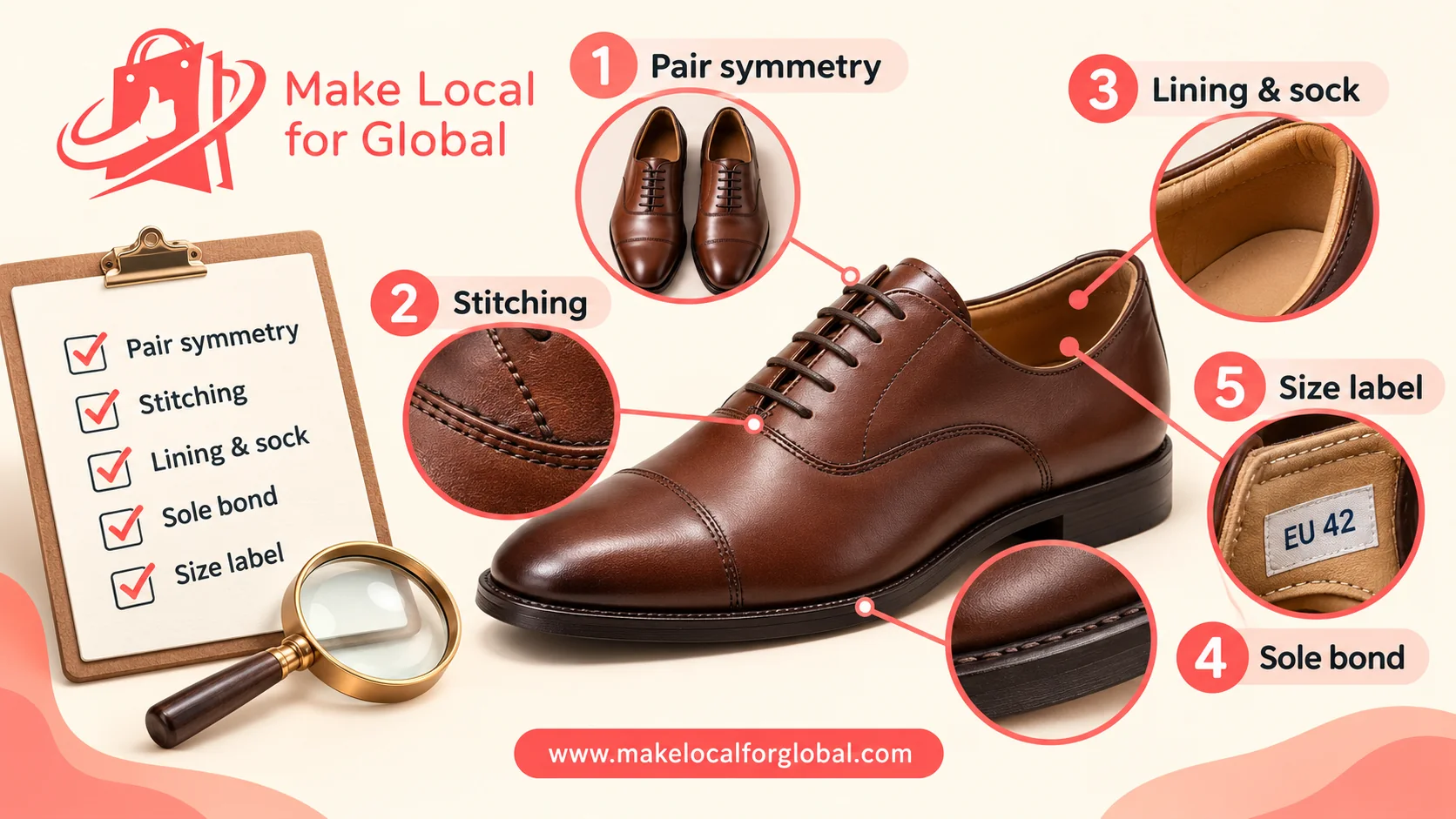
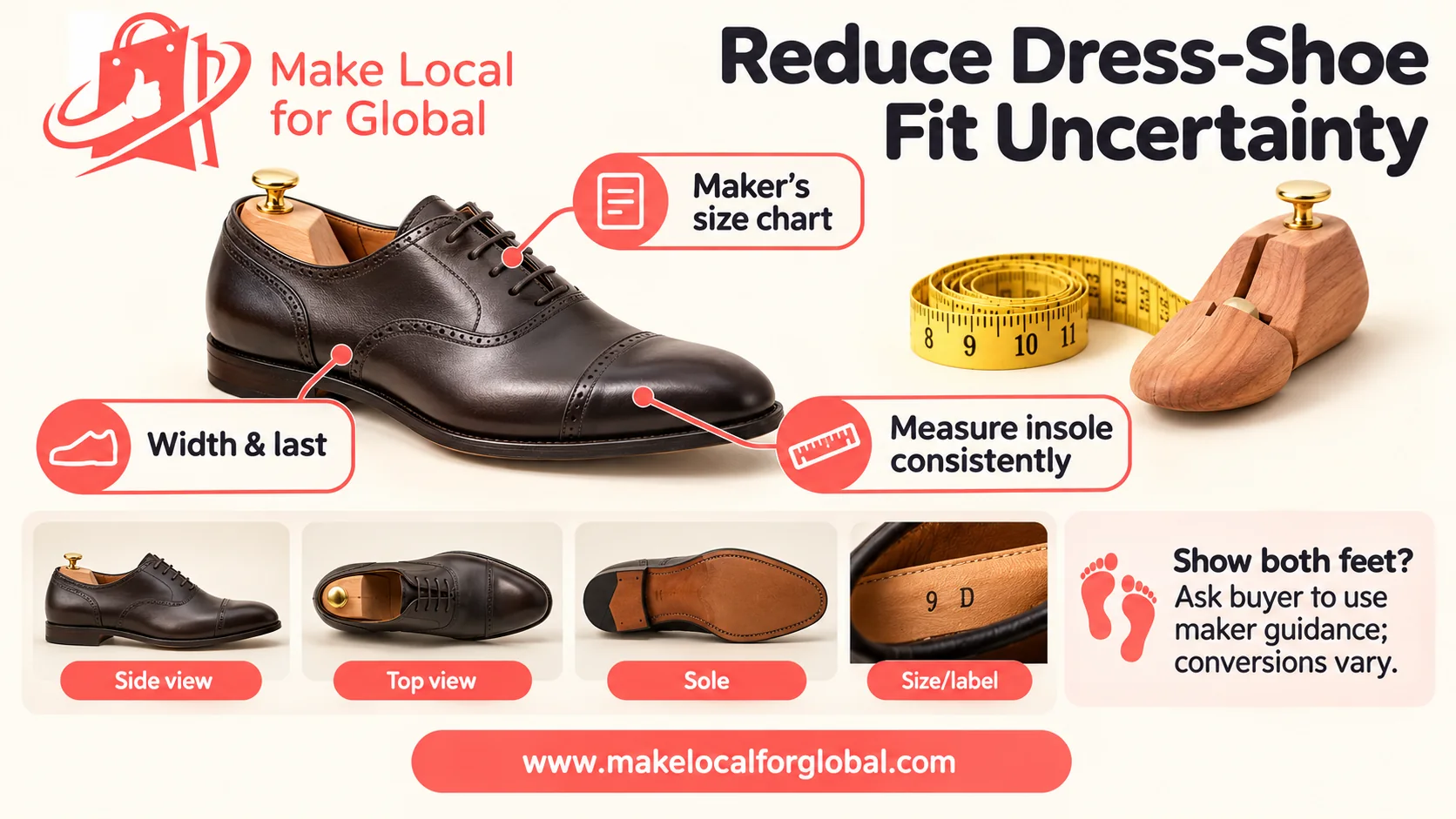
Footwear size labels vary between manufacturers and models. A chart that maps UK, EU and US numbers may be a useful reference only when it is the maker’s chart for the exact shoe. It cannot guarantee equivalent width, toe volume, heel hold or length across every last. Show the original size label and box information, name the sizing system and identify the manufacturer’s specific chart.
Where the maker provides width codes, reproduce those codes with a plain explanation from the supplier. Do not convert a width label to “wide” or “narrow” without knowing the maker’s definition. If a shoe is available in one width only, say so. If you have measured an insole, explain exactly how it was measured and make clear that the measurement is a reference, not a universal foot-size conversion.
Tell buyers how to compare the information. Suggest that they follow the brand’s fit guidance, check both feet and consider the socks they plan to wear with the shoe. For uncertainty, invite a question before purchase. Avoid giving clinical advice or asserting that a buyer should size up or down without manufacturer testing and clearly documented that advice for the exact model.
Use a consistent setup, neutral background and soft light that shows the shape and finish. Include a side profile, front and toe, top view, rear, outsole and close-up of material, lining and fastening. Show the pair together and each shoe individually. If colour changes under studio lighting, add a reference image in daylight. Do not retouch scratches, smooth natural grain into a different material or recolour the shoe.
For each model, take a clear image of the size label and the manufacturer’s packaging information where that helps identify the product. Remove private supplier details, barcodes tied to internal systems and personal information. A product image must reflect the colour and finish the customer will receive. Use the same lighting and angle across colour options so customers can compare them fairly.
Add images that answer questions rather than fill space. A close-up of closed or open lacing can help distinguish Oxford and Derby. A sole photograph can show the actual tread and material. A shot of the inside can show lining texture and the label. Add alternative text that states the visible subject naturally, such as “Brown leather Derby shoe, side profile with open lacing”, rather than repeating the target phrase in every image field.
Lead with the model’s defining facts: style, colour, upper material, lining, sole, closure, maker’s size system, width and origin if verified. Separate a confirmed detail from a claim you have not checked. If composition varies by colour or batch, disclose that variation on the relevant product page.
Describe finish in observable terms: polished, matte, pebbled, smooth, burnished, perforated or plain. Terms such as “luxury” are less useful than a close-up and material detail. If you sell seconds or pre-owned pairs, list visible marks and grade each pair consistently. An overall condition label should never replace photographs of the actual flaw.
Explain the shape and style without telling the customer it will fit. “Closed-lacing Oxford with a plain cap toe” is a useful description. “Perfect fit for every foot” is not verifiable. State whether the product runs on a named last only if documented. If the maker changes its last, size chart or construction, update the listing and product record before the next sale.
Start with the cost to get a sellable pair into your stock location. Include unit price, freight to you, duty or import charges where applicable, payment or foreign-exchange charges, inspection and inbound damage. If an order contains several products, allocate freight consistently by weight, volume or unit count and keep the method in your spreadsheet. The chosen method is an estimate; review it when actual shipping documents arrive.
Then add what happens after an order: box and protective wrap, pick-and-pack time, outbound postage, payment processing, platform commission if relevant, customer acquisition cost, expected return handling, exchanges, defects and markdowns. A shoe box can increase parcel dimensions and postage class. Get a quote for the packed parcel size and weight rather than assuming a pair costs the same to send as a small accessory.
Payment costs vary by card type, provider and sales channel. For illustration, Stripe’s published UK price for a standard UK card is 1.5% plus 20p at the time this was checked; other cards and payment options can cost more. Check current Stripe UK pricing and the terms of your own payment provider before using a figure in a live price model.
The following example is illustrative, not a supplier quote or a profit forecast. It assumes a £125 selling price, no customer-paid delivery and a direct website sale. Replace every line with your own quote and actual return data. The card fee shown uses the published standard UK Stripe card rate above; premium and non-UK cards can differ.
| Order cost | Illustrative amount |
|---|---|
| Pair landed in stock, including inbound freight | £44.00 |
| Protective wrap and packing materials | £2.25 |
| Pick-and-pack labour | £3.00 |
| Outbound postage | £5.25 |
| Card payment fee at 1.5% + 20p on £125 | £2.08 |
| Customer acquisition allowance | £8.00 |
| Returns, exchange and defect reserve | £12.00 |
| Total variable costs | £76.58 |
| Contribution before fixed costs and tax | £48.42 |
Illustrative calculation only: £125.00 − £76.58 = £48.42. Assumes no customer-paid delivery and uses the published standard UK card rate cited in the article. Replace figures with actual quotes, payment fees, return experience and VAT treatment.
The £30.25 remainder is a contribution estimate before fixed monthly costs, tax, corporation or income tax, VAT treatment, owner pay and any costs not listed. It is not net profit. One refunded pair may still consume outbound or return postage, packing labour and payment-provider charges under the provider’s terms. A pair returned in resellable condition may be sold again, but it still creates handling work and can miss a seasonal buying window.
The example assumes that £125 is the amount you retain as item revenue. If you are VAT-registered, the VAT-inclusive selling price is not all revenue for the margin calculation. Use the applicable VAT treatment, check whether input tax is recoverable and get accounting advice for your business. Keep a second version of the model for promotions: a 10% discount reduces the selling price by £12.50 before the other costs change.
Calculate a break-even selling price from the costs that move with each sale. Include your acquisition cost and return allowance. Then review competitor prices for the exact style, brand, construction, material and included delivery. A competitor’s price is context, not proof that customers will pay your intended amount or that you can source at the same terms.
Set a minimum acceptable contribution for each order. If a discount takes the contribution below that floor, change the promotion, bundle, delivery offer or product cost before launching it. A free-delivery threshold can lift average order value, yet it may make a one-pair order unprofitable if the postage is hidden in the price.
Keep price changes attached to a reason: shipping quote changed, supplier cost changed, a measured return rate increased, or a promotion reached its end. Record dates and outcomes. Do not use a short burst of clicks as a reason to reorder stock without those clicks leading to meaningful customer actions.
A marketplace may give a new seller access to shoppers who are already searching for shoes, but it can charge listing, commission, payment, fulfilment or advertising fees and set its own product rules. Read the current fee schedule and returns requirements for each channel. Compare the cost of a marketplace sale with the cost and effort of bringing a customer to your own site.
An independent online store gives you more control over brand presentation and customer communications. It asks you to set up payment, delivery, support and policies, then attract visits. A social account can help demonstrate product details and answer questions, but it should point to a reliable place where the buyer can compare sizes, read terms and complete checkout.
For a practical next step, review MLFG’s Oxford shoes selling page if that is your product focus, and compare it with the wider business suits selling page for formalwear context. The pages describe MLFG store support; they are not evidence that shoes will sell at a particular volume.
Use a clear product title such as “Men’s black cap-toe Oxford shoe, leather upper, UK sizes 7–12” only when each detail is confirmed. Do not put unsupported gender or size assumptions in the title. If the shoe is unisex, say how the maker labels sizes and explain any conversion in the exact-model chart.
Put the facts near the size selector: available size and width, stock status, dispatch timing, delivery charge, return route and a link to the model’s size information. A customer should not need to scroll through brand storytelling to learn whether their size is available. Keep the selected variant and its price visible before checkout.
Describe material composition in a simple breakdown. For example: “Upper: supplier-confirmed leather. Lining and sock: [verified material]. Outer sole: [verified material].” Fill those brackets only from reliable documentation. Make the footwear composition label easy to inspect. If the label includes pictograms, explain them using approved manufacturer information rather than inventing your own meaning.
Answer the questions that reduce avoidable returns: Is the sole stitched or bonded? Is the finish high shine or matte? What is included in the box? Does the lace style match the photos? Is a width option offered? Which size chart applies? How long does dispatch take? What does a customer do if the pair arrives damaged or the size feels wrong? Keep each answer precise and consistent with your terms.
Include a direct support route. Before launch, prepare a short reply template that asks for the model, labelled size and the customer’s question, without pressuring them to purchase. If a fit answer depends on an unknown foot measurement, say what you can verify and point to the manufacturer’s guidance. A careful answer can prevent the sale of an unsuitable pair and reduce the cost of a return.
See how MLFG presents a related formalwear business, then compare the options with the work and support your own shoe range needs.
Test the actual packed parcel. Keep the original shoe box presentable when it forms part of the product. Place each shoe in a bag or paper wrap to prevent scuffing; protect buckles, polished surfaces and decorative pieces from rubbing. Prevent movement inside the box with suitable paper or supports. Avoid overfilling until the lid bows or the corners crush.
Put the shoe box inside an outer carton or suitable mailer where your chosen service requires one. A product box is not automatically a shipping carton. Check the outer package against the carrier’s size and weight limits, and test one sample through the parcel network before you place a larger stock order. Photograph the packed parcel and record the final dimensions, weight and materials.
Use packaging that can be removed without damaging the shoe and does not transfer ink or adhesive onto the finish. If you include a care card, keep advice appropriate to the verified material. A leather cream may not suit every coating, suede or synthetic finish. Recommend the maker’s care instructions, and do not claim a treatment makes a shoe waterproof without manufacturer support.
An online customer in the UK normally has 14 days after receiving goods to tell the seller they wish to cancel, then another 14 days to send them back. The seller must refund within 14 days after receiving the returned goods or evidence they have been sent, and the standard delivery charge is included in the refund. Customers may handle an item as they could in a shop, including trying shoes on. The GOV.UK returns and refunds guidance explains the rule and exceptions. Get legal advice for unusual cases or a policy designed for multiple jurisdictions.
Make the return steps visible before checkout and send them in a savable order confirmation. State how to contact you, where a return goes, whether the customer pays return postage for a change-of-mind cancellation under your stated terms, and what to do if the item is faulty or not as described. A policy cannot remove statutory rights. Keep instructions calm and avoid language that suggests trying shoes indoors removes the right to cancel.
On arrival, record the order, date, variant, condition, packaging and reason the customer gave. Check the sole, upper, lining and any signs of wear using the same standard each time. Do not treat every opened shoe box as damaged stock. If the item has been handled beyond what is needed to establish its nature, characteristics and functioning, legal rules can permit a deduction for diminished value in certain circumstances; obtain advice before applying one and explain the evidence clearly.
Return reasons are product evidence. Group them into fit by size, width, style description, material/colour expectation, delivery damage, defect, changed mind and other. Review the comments, photos, size data and supplier batch together. If “too narrow” repeats on one model, update the width information or stop reordering it until the fit claim is resolved.
The UK footwear labelling rule described by GOV.UK applies to manufacturers, distributors and sellers. The label states the material making up 80% of the upper surface area, lining and sock, and outer sole; where no material reaches that share, the two main materials are shown. Retailers have responsibility for checking correct labels on shoes they sell. Keep supplier documentation and inspect labels on samples and delivered stock. If selling a model with mixed materials, do not infer the label from its appearance.
If you import or sell across borders, do not assume a UK label automatically meets every market’s rules. Confirm the target country, language and local product requirements with an appropriate source before listing internationally. Store the evidence for each market and SKU. Update packaging and web descriptions together if a material or label changes.
Before the buyer orders, present the main characteristics, business identity and address, total price, payment and delivery arrangements, cancellation information and any return costs that apply. Provide order confirmation and contractual terms in a format the customer can save. GOV.UK’s online and distance selling information explains the information and delivery rules. The buyer’s 14-day cancellation rights apply to many online purchases, with exceptions set by law.
Set a dispatch promise you can meet and update stock without delay. GOV.UK says businesses must deliver within 30 days except where another time has been agreed with the customer. If a pre-order or supplier delay changes the date, contact the buyer with clear choices and follow the agreement and consumer law. A product page should not imply “in stock” when you are waiting on a supplier allocation.
Keep the product description, photos, composition label, size and width details accurate. Under UK consumer law, goods must match the contract. A return policy cannot make a buyer responsible for a mismatch or defect that the seller must address. For advice on your own policies, contact a qualified adviser or Trading Standards.
New shoes should be safe and consistent with the description. Pre-owned pairs require close condition checks. UK OPSS guidance says commercially sold second-hand goods must be safe and can have risks from worn or modified parts that are not immediately visible. Shoes do not carry the same hazards as every product type, yet worn heels, loose soles, damaged fastenings, mould, contamination or hidden structural changes still matter to the customer and seller.
Do not sell a pair with a loose sole or unstable heel as normal stock. Isolate it, photograph the problem and contact the supplier. For pre-owned stock, inspect both shoes and state age or provenance only when known. Describe wear in a way the buyer can judge, photograph it at close range and grade each pair consistently. Keep records linking a pair to its source and intake date.
Maintain supplier invoices, order numbers, product identifiers, batch or lot information where available, quality records, customer complaints and corrective action. Ask the supplier how it handles product recalls or safety notices. If a serious issue suggests a safety risk, stop sale of the affected stock as you establish the facts and seek appropriate advice.
To sell dress shoes online, build each product page around the question a shopper is trying to answer. A style page can explain how Oxford, Derby and loafer designs differ. A size page can explain the maker’s specific chart and widths. A care page can give material-specific advice. These pages should answer real buyer questions, not repeat the same copy to target every city or keyword.
Use natural search terms that describe the product: “black Oxford shoes”, “brown Derby shoes”, “wide fit dress shoes”, “men’s wedding shoes” or “leather work shoes” only where relevant and substantiated. A category page should help people compare models. Give each product a distinct title, photo set and material/fit details. Avoid repeated introductory text that makes multiple URLs compete for the same shoe.
Build internal links where they help a reader choose a related item or next step. A formalwear store may link to business suits online from an occasion or outfit section. A product-range article can link to the Product To Sell collection when the reader is still comparing ideas. Use descriptive anchor wording so the destination is clear.
Choose one audience channel at a time. You might contact a local wedding supplier about a referral arrangement, post a detailed comparison of two shoe styles, email existing customers who have agreed to hear from you or test a small search campaign with a daily cap. Set a time window and a spending limit first. Observe visits to product pages, size-chart use, questions, add-to-basket actions, completed sales, cost per sale and returns.
Keep the product, price, photo and promotion stable during a test where possible. If you change all four at once, you will not know what caused the result. Do not judge a channel only by reach or follower count. An audience that asks about width and delivery may be more useful than a larger audience with no product intent.
Use customer support questions as a content backlog. If buyers repeatedly ask whether a Derby is less formal than a plain Oxford, create a short comparison with photographs. If they ask about sole type, add a close-up and a factual caption. If they ask which chart applies, put a labelled link by the size selector. Resolve the information gap before increasing traffic.
Update available stock after every order, cancellation, return and supplier receipt. Keep a separate record for display stock, damaged pairs and pairs being checked. Reconcile supplier invoices and delivery charges against the cost model. Avoid tying all working cash up in a full size run before you have fit and reorder evidence.
Set reorder points by variant using supplier lead time, recent sell-through and cash available. A spreadsheet can flag when one size is low, but the seller still needs to check whether demand is steady, seasonal or driven by a single event. A reorder rule can include minimum units, target cover and a stop condition if returns or defect reports rise.
Review the full order contribution, not sales revenue alone. Track returns and exchanges by model. If a pair sells at a good gross margin but costs more to ship, has a high return rate and takes extra support time, its value to the business may be lower than the margin first suggested.

Select one audience and one buying occasion. Compare three possible styles, then speak with at least five potential buyers or existing customers. Ask what they look for, what fit information they trust and what caused their last return. Write a one-sentence offer and list every claim that needs supplier evidence.
Check competitor listings for how they show sizes, widths, materials, delivery and returns. Record links, prices and product details with the date. Do not treat one competitor’s copy as a legal standard or a reliable size guide. Identify a product gap you can test, such as clearer model-specific fit information or photographs of the actual outsole.
Request samples and collect written supplier specifications. Inspect each pair using the same checklist, photograph any defects and ask for a written answer. Compare labels with the composition evidence and product description. Confirm minimum quantities, size availability, reorder terms, inbound freight, customs assumptions and expected dispatch date.
Before you sell dress shoes online, build a worked-cost sheet with your own unit cost, packing, postage quote, card fees, expected acquisition spend and a transparent return allowance. Add a VAT scenario if applicable. Decide the maximum first order and a stop point if sample quality, size availability or contribution fails your target.
Prepare a photo set that shows style, shape, material, fastening, sole, label and box details. Build a size guide from the maker’s exact-model chart. State width availability and avoid universal conversion promises. Write product specifications, delivery information, cancellation instructions and a savable returns summary.
Ask two or three people unfamiliar with the product to locate the price, size, material and return instructions. Note where they hesitate. Revise the page if a buyer needs to hunt for those facts. Check that the title, product variant and photographs describe the same model and colour.
When you start to sell dress shoes online, release a limited set of variants you can fulfil. Check stock, payments, shipping labels and customer email from the buyer’s perspective. Send the product to one or two potential testers only under clear, agreed terms; do not publish a testimonial without permission and an honest account of the relationship.
For each week, record product visits, size-chart views, questions, add-to-basket actions, orders, cancellations, dispatch time, delivery issues and returns. Compare the actual contribution with the cost model. Hold off on a wider reorder if customer fit evidence is weak or a supplier has not resolved a repeat defect.
At the end of the month, choose one action: replenish a proven variant, improve the fit information, change the product mix, renegotiate supplier terms or stop the test. Write down what evidence led to that choice. The next order should follow what customers did and reported, not a guess that a larger range will sell more.
A wide catalogue feels like choice, but each variation needs a sample, a correct description, photographs, stock records and after-sale support. Begin with a small set of models that differ in a way the buyer can understand. Add variants after buyers show a clear preference or ask for a missing size, width or colour.
A generic UK-to-EU table can mislead when the last or maker’s sizing differs. Use the exact model chart, state the system on the box and describe the width. Update it when the manufacturer changes specifications. Track fit questions by product and size rather than responding with a guess that one size up will work.
A discounted unit may have limited sizes, weak repeat availability, freight charges or defects that need extra handling. Compare the total cost to receive, inspect, list, ship and support the pair. Ask for written terms before paying a deposit. Keep enough cash for replacements and refunds.
Supplier text may use a material term loosely, refer to one component only or describe a different batch. Confirm the composition and origin. Check the label on physical stock. Remove claims you cannot support and avoid implying a process or benefit the evidence does not show.
A single angled image cannot show toe shape, colour, sole or size label. Include several informative views and a close-up of the actual finish. Photograph the product truthfully and use the same lighting across colours. Keep the listing aligned with the stock in the box.
Fit uncertainty is part of online footwear retail. Build return postage, handling time and resale checks into the order model. Make cancellation and return instructions easy to find. Learn from patterns rather than treating each return as a separate nuisance.
An early sale is encouraging but does not validate every size, channel or promotion. Wait for enough order and return evidence to separate one-off interest from a repeatable pattern. Check available cash and supplier terms before restocking.
It can be, if the price leaves contribution after stock, delivery, payment fees, packaging, customer acquisition, returns and support costs. The worked example is illustrative only. Your own supplier terms, VAT treatment, channel fees and return experience will determine the result.
Start with one customer and a few styles with a clear role. A plain Oxford, Derby or loafer may suit different occasions and preferences, but test the buyer and the exact model before ordering depth. Keep the size and width range within the cash and replenishment terms you can support.
Use the manufacturer’s chart for the exact model, name the sizing system, show width availability and photograph key details. Answer questions without universal conversion promises. Track return reasons by model and size, then adjust the listing or range based on repeated evidence.
UK footwear labelling guidance requires material information for the upper, lining and sock, and outer sole. The 80% rule applies to each part; where no single material meets it, the two main materials are shown. Retailers must check that shoes carry correct labels. See the GOV.UK footwear labelling guidance.
Yes, but check and describe condition accurately. Inspect both shoes for sole separation, worn heels, damaged stitching, lining wear, mould or undisclosed alterations. Photograph marks, grade pairs consistently, keep source records and do not sell items you believe are unsafe.
Base the first order on sample quality, cash available, supplier minimums, size availability and realistic reorder time. A smaller test can limit cash exposure, but it still needs enough variants to learn what customers choose. Do not apply a size curve copied from a different shoe business without your own sales and return data.
Show the style, colour, confirmed material composition, fastening, sole, maker’s size system, width options, exact-model size chart, dispatch time, delivery cost and return steps. Add photographs of the side, toe, top, heel, outsole and label. Keep claims factual and state any visible defect.
For many UK distance purchases, the customer has 14 days after receiving goods to tell the trader they wish to cancel and a further 14 days to return them. The trader normally refunds within 14 days after receiving the item or return evidence, including standard delivery. Check the current GOV.UK returns guidance and get advice for your sales model.
A marketplace may bring existing shopper searches but has fees, policies and competition. Your own website gives you greater control, but you must bring visitors and manage checkout, support and delivery. Compare the full cost and work for your buyer, then start with a channel you can measure and maintain.
Choose one buyer, inspect the actual shoes, verify the labels and calculate the complete order cost before you buy depth. Launch with a small test, explain fit without overpromising and use returns and customer questions as product evidence. If you are still deciding what to sell, explore the wider Product To Sell collection and compare ideas against the cash, sourcing and support work you can handle.
Compare your buyer evidence, product checks and order costs with other product ideas before you decide what to launch or restock.
PREFERRED SOURCE
Like what you’re reading? Add Make Local for Global as a preferred source on Google to see more of our articles when you search.

Build your online presence without having to figure out everything yourself.