

READY TO SELL Fire Extinguishers ONLINE?
Get a store built for you in 5 days, plus training and support to help you start, run, and grow your Alternative business.

Plan a specialist fire extinguisher shop with a buyer-led range, supplier evidence checks, approved delivery and full-order costing.

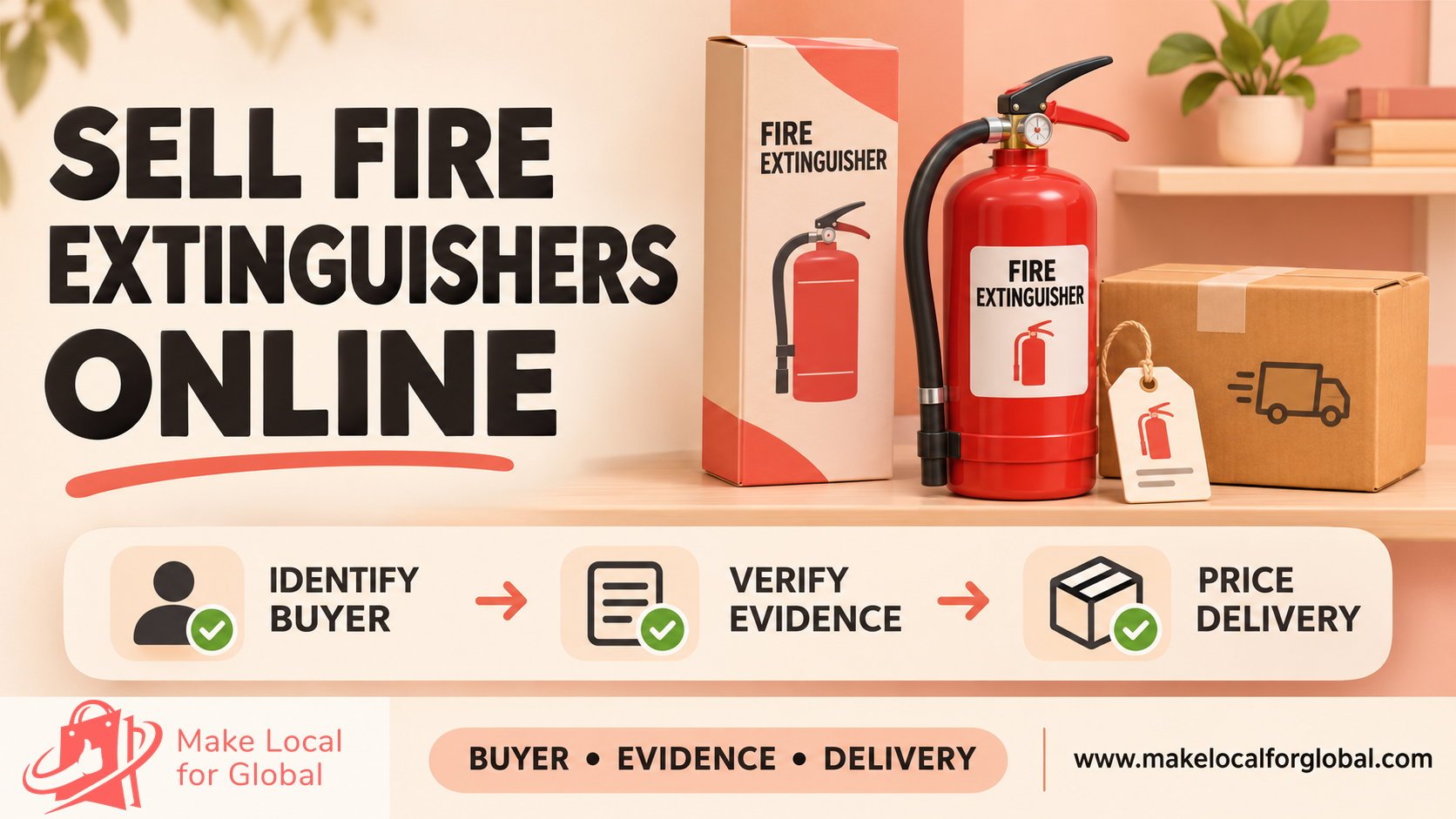
Fire extinguishers are not ordinary household accessories. They are pressurised safety products that may be relied on during an emergency, so a small online seller needs a traceable supply route, accurate product information and a delivery method that accepts the exact unit. A wrong match, unclear maintenance record or unsupported safety claim can create risk for a buyer and for the seller.
You can build a specialist fire extinguisher shop by choosing a buyer group, confirming the product’s intended use and conformity documents, checking samples without opening or discharging them, and costing storage and carrier requirements before buying stock. A business buying for premises must make its own fire-risk decisions. The seller’s product page cannot replace a competent fire risk assessment.
Map a buyer, supplier route, product evidence and first-order cash requirement before you commit.
Different buyers need different support. A small property manager may be coordinating equipment for several sites. A tradesperson may be buying a unit for a vehicle or workshop. A household buyer may want an approved product for a particular space. A marine customer may have a separate specification and certification route. These are separate audiences with separate rules, buying triggers and service expectations.
Start with one group you can reach and serve. Write down the job the buyer is trying to complete, where the equipment will be used, who will decide the type and who will maintain it. The answers help you decide which products to research and which questions your page must answer.
Small landlords, property managers, shops, cafés and community venues may ask about documented performance, installation or mounting options, inspection and servicing, delivery to multiple sites and invoice terms. They may not know which type is appropriate for a specific premises. Ask whether they already have a competent assessor or fire-safety provider. Direct them to that person for premises-specific selection rather than recommending an extinguisher from a photograph or a short chat.
A practical offer may focus on straightforward ordering of a model specified by the customer’s fire-safety adviser, with the exact product code and support documents shown. If you sell bundles, keep the product line clear and make any installation, commissioning or servicing a separately scoped service carried out by a competent provider.
Builders, engineers, mobile caterers and van-based services may want compact equipment, a bracket, a protective case or delivery to a work address. Vehicle fit, vibration, temperature exposure, mass, dimensions and the buyer’s operating rules matter. Do not state that a product meets a vehicle rule unless you have a current authoritative source for that vehicle, use and territory.
Ask buyers what they already specify: model, agent, capacity, certification and holder. A seller may make the purchase easier by matching the documented specification, while leaving the safety decision to the person responsible for the vehicle or workplace.
A household buyer may be comparing kitchen, garage, workshop or caravan needs. Outdoor and marine customers may need gear that has route-specific corrosion, temperature, vibration or certification requirements. Treat these as specialist use cases, not simple variants of one general extinguisher.
Before offering consumer advice, check the product manual and appropriate fire-service guidance. A camping or preparedness audience can compare related items such as survival and emergency-preparedness products, but a general kit guide should not suggest a particular extinguisher is suitable for every trip or hazard.
Search results, marketplace listings and social comments can show what people ask, yet they do not establish that a product is suitable or that a market will support your margin. Talk to likely buyers before placing a large order. Focus the conversation on how they specify equipment, how they buy, what documents they request and who handles installation or maintenance.
Speak with a handful of people who match one audience. Ask how they currently source units, what information slows a purchase, whether they repeat orders, which site or vehicle details affect delivery and which evidence they expect. Ask them to describe the last purchase rather than whether they like your idea. Past actions give clearer signals than polite encouragement.
Do not collect unnecessary details about a customer’s fire risks or ask them to disclose confidential site assessments. You are learning how a purchase is made, not conducting an assessment.
Build a non-transactional landing page for one defined use case. State that the page is gauging interest and is not accepting orders. Show the model only if you can substantiate its specifications. Ask visitors which information they need, whether they buy as a business or consumer, and where they expect delivery. Do not advertise stock as available if it has not been checked.
Record qualified enquiries, requests for documents, delivery locations and objections. A property manager asking for a quote on a known model is a different signal from a visitor clicking a generic image. Set a spending ceiling and a decision rule before promotion. If people repeatedly ask for an installation or inspection service you cannot deliver, either find a competent service partner or remove that offer from the plan.
Search competitor marketplaces to learn how buyers describe products and which specification fields appear. Do not copy product claims, ratings or certificates from another seller. Use manufacturer documentation and a certificate body’s live directory to confirm the item you intend to sell.
The phrase fire extinguisher covers several agent types, capacities, cylinder designs and use conditions. Water, foam, powder, carbon dioxide, wet chemical and water-mist products are not interchangeable. Products that look similar can carry different fire ratings, operating limits, ingredients, maintenance needs and instructions. Use the exact manufacturer’s documentation and model identity throughout research, product copy and fulfilment.
A responsible product page describes what the maker claims, the conditions and limitations stated in the instructions, the contents of the parcel and the evidence supplied. It does not tell a buyer which device will protect a particular workplace or home unless that assessment is within your professional competence and service scope.
| Product family | What to compare | Questions for the supplier |
|---|---|---|
| Water-based | Agent formulation, rated applications, size, temperature limits and maintenance | Which model and documented rating apply to the exact size and market? |
| Foam | Agent composition, fire ratings, environmental statement and disposal route | What safety data, formulation and use limits belong to this batch? |
| Dry powder | Agent type, model rating, discharge characteristics, residue and cleaning | What limitations and clean-up details must appear in customer information? |
| Carbon dioxide | Capacity, discharge horn, temperature warning, cylinder and servicing terms | What handling, room-use and post-discharge guidance is in the manual? |
| Wet chemical | Agent details, exact rated use, size and service or replacement route | Does evidence match the model, intended environment and market claim? |
| Water mist or specialist agents | Model-specific certification, fire ratings, application limits and instructions | Which exact tests and independent certificates cover this product? |
The table is a research prompt, not a selection chart. It does not identify which agent is safe for any particular premises, fire or person. Ask the responsible person’s competent fire-safety adviser to choose the product for that location. The adviser may need to consider the hazards, occupants, escape route, equipment, environment and emergency plan.
Do not write a universal promise such as ‘works on every fire’, ‘safe for all electrical equipment’ or ‘ideal for every kitchen’. Never build a bundle that mixes products without checking whether the buyer’s adviser specified them together.

Begin with a narrow catalogue that you can identify, document and support. Three carefully chosen products with clear specifications are easier to check than a large collection of near-identical cylinders. A suitable opening range depends on enquiries and supplier evidence; do not choose a standard set of home, office and vehicle models based on familiar-sounding labels.
Create variants only where they change a useful purchasing detail: the manufacturer’s model, agent, nominal capacity, bracket, packaging, service route or delivery format. Display the exact model reference and product image for each. If two variants differ only by an unverified marketing label, do not present one as a better safety choice.
If you can source a model with a verified compatible bracket or cabinet, list it as an optional accessory only after confirming exact compatibility. Include dimensions, fixings, material and whether fitting is part of the sale. A bracket is not an installation service and it does not prove that the placement is appropriate.
Use a product-data sheet as the single source for each SKU. Store manufacturer name, model code, agent, nominal charge, gross mass, dimensions, fire ratings exactly as documented, approved standards, temperature range, installation parts, instructions version, batch or serial identification, warranty and service details. Label each field as confirmed, pending or not provided. Publish only values you have checked.
Keep one live SKU table with source dates and the person who verified the evidence. When a supplier changes a product without changing the marketing name, compare the model plate and documentation again. Do not assume that a later shipment matches the first sample.
Holding stock can shorten delivery but requires suitable storage, insurance, stock rotation and controls around damaged or returned cylinders. A source-to-order model can reduce cash tied up in stock, yet it adds supplier lead time and makes availability dependent on another business. Dropshipping does not remove your duty to give accurate information or monitor a product that you place on the market.
A third option is to refer installation, servicing or fire-risk assessment work to a competent provider under a clear agreement. Do not advertise another business’s service as yours or promise an appointment time you cannot control. Describe which party takes the order, who answers safety questions and what the customer should do if the specified model is unavailable.
Fire extinguishers are pressurised containers with safety-critical components. Vet the manufacturer and the exact model before you accept a quotation. Request documents early; a low unit price cannot compensate for missing identity, conformity evidence, clear instructions or a service route.
For each SKU, request the manufacturer’s legal name and address, model and size identifiers, batch or serial system, current product label, manual, data sheet, declaration of conformity where applicable, test or certification records, warranty, service requirements and any safety data for the agent. Ask which regulatory regime applies in each territory where you plan to sell.
Compare documents against the cylinder label, nameplate, valve or head, packaging and manual. A certificate that lists another factory, model series, size or agent may not cover your SKU. Ask the certificate body to confirm the scope if the supplier cannot show a direct match. A marketing badge on a website is not evidence on its own.
Buying from a UK manufacturer or established distributor can simplify communication, product training, documentation and replenishment. It does not remove your responsibility to check what you are selling. Ask whether the supplier notifies customers about design changes, batch issues and revised instructions.
Direct importing can give you a wider range or more control over packaging, but it can move you into the importer role for product rules, labels, records and safety follow-up. The Office for Product Safety and Standards advice for manufacturers and importers says businesses must demonstrate compliance before placing goods on the market, provide safe-use information, keep product traceability and act on risks. Read the current rules for the exact item before taking on that role.
Private label carries further work. If the product is marketed under your own name or mark, the relevant rules may treat your business as the manufacturer. Confirm the manufacturer’s duties, technical file, instructions, brand rights, change control and product-liability insurance with qualified advisers before launch. A label applied to a factory product does not make the paperwork transfer automatically.
Create a pass, hold or reject decision for every supplier. Pass only when the model is identified, required documents match, carriage is understood, the sample and packaging are acceptable and a competent service route is clear. Hold a product when a supplier has promised documents but has not sent them. Reject a model when identity or safety evidence cannot be verified.
Do not accept scanned logos, partial certificates, undated spreadsheets or generic declarations as a substitute for checking authenticity. Request the original file or a direct record from the issuing body. Keep the correspondence, quote, purchase order, batch details and approved product page together so that a later complaint can be traced back to the supply lot.
The rules depend on product design, pressure, agent, role in the supply chain and place of sale. This section gives an initial checklist; it is not a conformity assessment or legal opinion. Contact the relevant authority or a competent product-safety specialist if the supplier’s documentation leaves a gap.
The Health and Safety Executive explains that the Pressure Equipment (Safety) Regulations apply to relevant pressure equipment with a maximum allowable pressure above 0.5 bar and set design, manufacture and conformity-assessment requirements. Its current Pressure Equipment (Safety) Regulations overview notes that new covered equipment placed on the Great Britain market must use an applicable UKCA or CE route and be supplied with instructions in English. The proper route depends on product classification and the current regime.
The Office for Product Safety and Standards’ Great Britain Pressure Equipment guidance was updated in March 2025. It describes obligations for manufacturers, importers and distributors and explains that some goods may use the CE route in Great Britain. Do not assume every extinguisher needs the same marking or that a mark alone proves all claims. Check the model’s category, declaration, conformity route, marking and instructions.
Portable fire extinguishers appear explicitly in the pressure-equipment regulations’ conformity framework. A manufacturer or importer should be able to explain which assessment procedure covers the exact item and which technical documents support it. If your supplier’s answer is only “all our products are CE certified”, request the model-specific documents and do not sell until the route is clear.
Northern Ireland has a separate pressure-equipment guidance route under the Windsor Framework. The GB rules and mark arrangements should not simply be copied into a listing for NI. Read the current Pressure Equipment (Safety) Regulations guidance and select the Northern Ireland documents when you plan to serve that market.
Fire-safety duties differ by UK nation. GOV.UK explains that workplace fire-safety rules differ in Scotland and Northern Ireland from those in England; check the workplace fire-safety responsibilities and the devolved authorities’ current guidance before writing territory-specific advice. Wales has its own official fire-safety guidance. State clearly which territory your product page covers.
In England and Wales, the Regulatory Reform (Fire Safety) Order 2005 requires the responsible person to provide appropriate fire-fighting equipment where necessary. Appropriateness depends on factors such as the premises’ size and use, equipment present, substances likely to be present and the number of people. The official Fire Safety Order says provided equipment must be accessible, simple to use and indicated where needed.
GOV.UK directs responsible persons to carry out and regularly review a fire risk assessment. The assessment considers fire hazards, people at risk, risk reduction, recorded findings, emergency planning and training. The official fire risk assessment guidance identifies fire-fighting equipment as one part of that work. A product seller must not present a standard package or online quiz as a substitute for the assessment.
If you provide a selector tool, have it reviewed by a qualified fire-safety professional, show its limits, and do not return a purchase recommendation where the information is incomplete or complex. A safer commerce flow can ask the customer for the product code already named by their adviser. Keep the purchase process separate from any professional assessment.
A consumer page should identify your business, show the product’s main characteristics, total price, delivery terms, contact route and applicable cancellation information before checkout. Read the current GOV.UK online and distance selling rules and returns and refunds guidance. A website statement such as “no returns on fire products” does not remove statutory rights.
For a product that you make, import or sell under your own name, check your duties around safe design, conformity, instructions, traceability, customer complaints and reporting risks. The OPSS manufacturer and importer guidance explains that a business remains responsible for safety after the product reaches the market and may need to report risks to local Trading Standards. Keep records long enough to support any applicable legal retention period.
If the product contains a foam or other chemical agent, request the composition, current safety data and the supplier’s assessment of applicable chemical restrictions and disposal rules. Product formulations and environmental regulation can change. Do not claim a product is environmentally safe, fluorine-free, non-toxic or approved without evidence that applies to the exact SKU and current market.
Do not copy a competitor’s wording to solve legal questions. When the product is outside your competence, refer the matter to a fire risk assessor, product-safety adviser, solicitor or conformity-assessment body with the relevant expertise.
Your sample review checks identity, condition and documentation. It does not replace pressure testing, certification, servicing or a competent functional inspection. Never open, refill, discharge or pressure-test a unit yourself. Do not use a sample as a demonstration device unless a qualified professional has set up a controlled training environment and the activity is within the maker’s instructions.
Photograph the unopened carton, labels, cylinder, seal, pin, hose or horn, pressure indicator where fitted, mounting bracket and instruction leaflet. Record the manufacturer, model, size, batch or serial number and date received. Compare each marking to the documentation. If a label is missing, a seal is broken or a model code does not match, quarantine the sample and ask the supplier before proceeding.
Check for dents, corrosion, paint damage, leakage indicators, bent handles, loose fittings, damaged hoses, missing accessories, illegible instructions and packaging punctures. Do not use the gauge or appearance alone to state that a product is safe or serviceable. Report signs of damage to the supplier and follow their written safety instructions.
Lay out the contents against the manual and product page. Confirm that brackets, fixings, instructions, warranty information and any accessories match the offer. Confirm that instructions are supplied in the language required for the destination. Check the product code in every place: carton, cylinder, manual, certificate, invoice and ecommerce variation.
Ask a competent service company to review the service route and confirm the customer will be able to arrange any required commissioning, maintenance, refill or replacement. If the manufacturer recommends periodic service, show that in the offer and avoid implying that the extinguisher never needs attention.
Before the shipment arrives, decide which fields you will inspect on every unit and which you will sample. The appropriate plan depends on product risk, supplier performance, lot size, storage conditions and professional advice. A tiny start-up shipment may allow inspection of each unit; a larger shipment can require a written sampling method and a defined response to any failure.
A simple receiving record can store purchase order, SKU, lot, number received, sample count, label check, paperwork check, visible condition, carton condition, result and action. Separate units that fail inspection from stock that can be sold. If the failure could affect safety, ask the manufacturer or a competent product-safety adviser whether the lot should be held or reported.
Test your proposed parcel on a non-pressurised packaging sample or empty carton. Confirm the carton protects the cylinder, valve and gauge from impact and movement. Do not test the actual pressure vessel by dropping, heating, puncturing or otherwise stressing it. For carrier packing standards, follow the approved dangerous-goods instructions for the exact product.
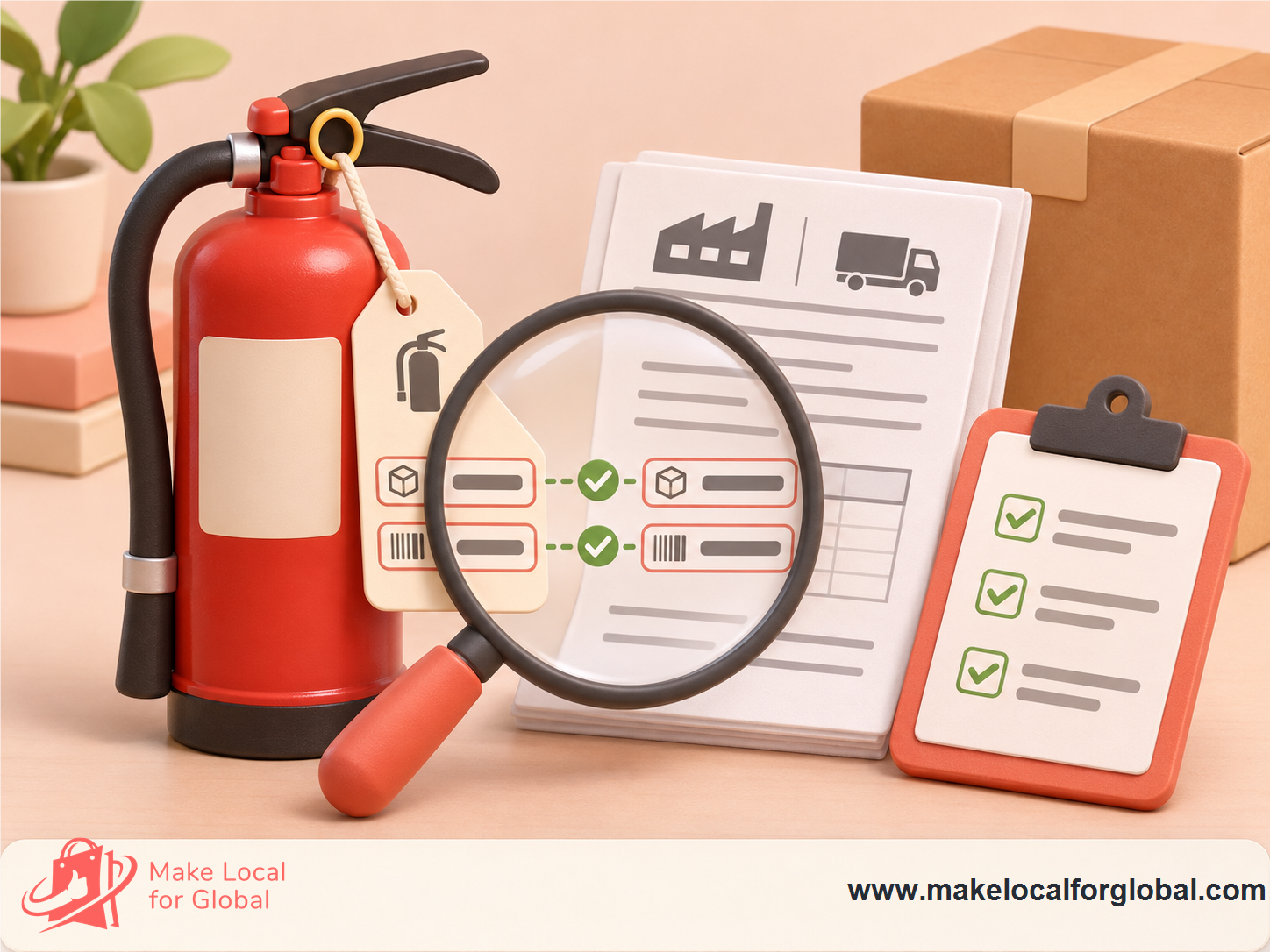
A customer should be able to confirm the exact item, what comes in the box and what the product does not promise. Put the model code near the product title. Use manufacturer-supported details instead of a vague name such as “professional fire extinguisher” or “universal safety cylinder”.
A clear title could read: “Manufacturer Model [verified code], [agent] portable extinguisher, [verified nominal charge], bracket included”. Replace each bracket with a fact from the current documentation. If the unit is sold without a bracket, say so in the title or the contents list. Do not use fire ratings as a headline unless you have checked the certificate and model scope.
“Order the [exact model] for a specification already confirmed by your competent fire-safety adviser. This model is supplied with [verified accessories] and the manufacturer’s instructions. See the data sheet for its documented ratings, operating limits, installation details, inspection and service information. This listing does not assess which extinguisher your home, vehicle or premises needs.”
That kind of introduction is less dramatic than a claim that the device will protect every room, yet it describes the sale without turning the shop into a fire risk assessor. Keep the same limits in ads, marketplace listings, email quotations and packaging inserts.
Use your own product photography for the cylinder label, valve or head, bracket, accessories, carton and manual. Keep the photo of the actual product separate from an illustrative room scene. Do not add a generic certification seal, edit out a caution label or depict a different-size unit.
If you offer a range, create a side-by-side table showing model and documented product features. Do not label the rows “best for home”, “best for warehouse” or “best for kitchens” unless a competent person has approved that exact guidance. A comparison can help the customer identify the SKU their adviser specified without replacing their decision.
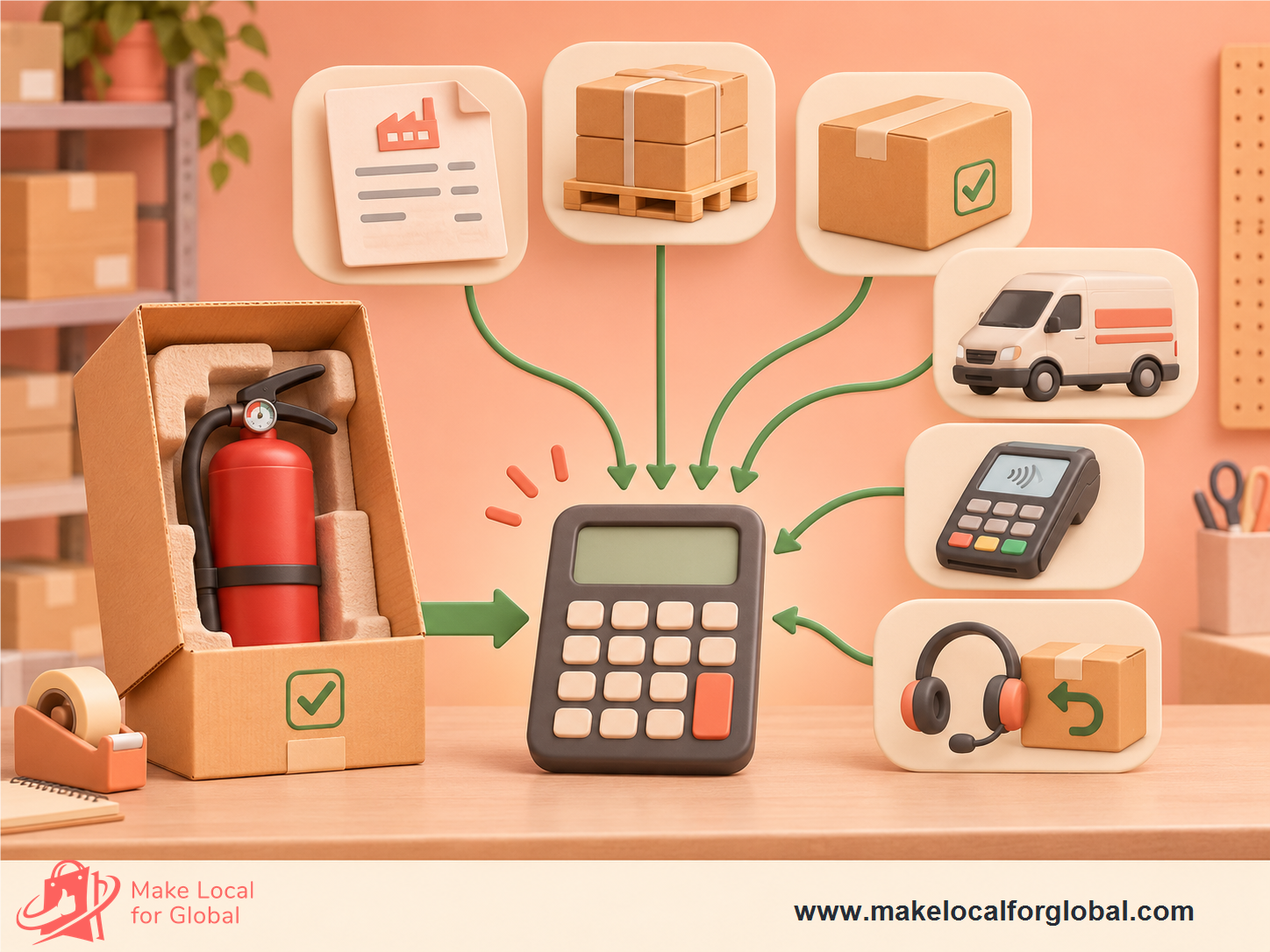
Extinguishers often cost more to handle and deliver than small accessories. Your landed cost includes purchase, inbound transport, inspection, storage, packing, carrier charges, payment fees, returns or defects, and the cost of finding a buyer. A price based only on the supplier’s unit quote can leave the shop with a loss on each parcel.
The example below is hypothetical. It is not a supplier quote, a recommended retail price or a forecast. Assume one extinguisher sells to a UK customer for £95. The seller is not VAT registered, so cash cost amounts are used. A VAT-registered business should calculate sales and recoverable input VAT using the treatment that applies to its business and product.
| Variable order cost | Illustrative amount | Basis to replace |
|---|---|---|
| Extinguisher purchase cost | £34.00 | Supplier invoice for this model and batch |
| Inbound freight allocation | £4.50 | Actual shipment cost divided by units received |
| Protective outer packaging | £2.50 | Tested carton, inserts, tape and packing labour |
| Approved carrier charge | £12.50 | Quote for destination, model, weight and service |
| Payment fee | £3.06 | Assumed 2.9% of £95 plus a £0.30 fixed fee |
| Return, fault and support allowance | £4.00 | Early estimate, later replaced by actual experience |
| Customer acquisition | £8.00 | Promotion spend divided by first orders attributed |
| Total listed variable cost | £68.56 | Add the lines above |
| Selling price | £95.00 | A test price, not a recommendation |
| Contribution before overhead and tax | £26.44 | Selling price less listed variable cost |
Arithmetic: £34.00 + £4.50 + £2.50 + £12.50 + £3.06 + £4.00 + £8.00 = £68.56. Then £95.00 − £68.56 = £26.44 contribution. This is not net profit. It leaves out rent, insurance, professional services, website costs, bookkeeping, unpaid time, fixed staff costs, tax and any other unlisted expense.
The £12.50 carrier line is only an example. Do not price from it until a carrier confirms that it accepts your specific model, packaging, route and shipping profile. If you cannot obtain an approved delivery service, do not offer standard checkout delivery as if the item travels like an ordinary parcel.
For a property manager or reseller, a multi-unit quote may spread some inbound or service costs across more products. It can increase credit exposure, packing time and the chance of a delivery problem across several addresses. Write down the quantity break, payment terms, delivery assumption and return process for every quotation.
For direct-to-consumer checkout, include the payment fee, customer support and a realistic acquisition allowance. Marketplace fees and fulfilment charges vary by category and programme. Check the live fee schedule before you set the public price. If your offer includes an installation or service appointment, put the provider’s charge and scheduling terms into a separate line.
Keep a low, expected and high-cost case. A low case can use quoted freight, no paid acquisition and no return. An expected case uses a measured order route and a modest support allowance. A high case includes a second delivery attempt, a carrier surcharge or replacement packaging. If the shop cannot withstand one costly return, reduce the first stock commitment or pause the offer.
Include the unit, inbound freight, packing, permitted carriage, transaction fees and a support allowance.
A pressurised extinguisher can be subject to carrier and dangerous-goods requirements. Do not assume that a standard post office counter, marketplace label, local courier or overseas carrier accepts it. Classification, packaging, quantity, route and mode change what you can send.
Ask the manufacturer or a dangerous-goods adviser for the product’s transport classification, UN number where applicable, packaging instruction, valve protection, limited quantity status if any and the documents a carrier needs. The Department for Transport’s dangerous-goods transport overview explains that road, air and sea movements use different rules. A carrier’s written acceptance for one service does not automatically cover another.
Some extinguishers with compressed or liquefied gas are listed as UN 1044 in transport references. A UK road-carriage exemption may depend on specific ADR provisions, including strong outer packaging and protection from inadvertent discharge. Do not assume that a parcel meets an exemption from its description alone. Check the current ADR provisions and the carrier’s conditions with a competent dangerous-goods adviser before advertising shipping.
Do not send these items by air or sea until the carrier has confirmed its acceptance and the required documentation, marks, packaging and trained handling. Do not use a general-purpose parcel service if its prohibited-items list includes pressurised or dangerous goods. Put accepted destinations and delivery services into the checkout rules; block countries or postcodes you cannot serve safely.
Store only under the maker’s conditions. Protect cylinders from heat, impact, water, contamination and unauthorised access. Keep them away from escape routes and places where they can be knocked over. Follow any separation, stacking, ventilation and stock-control requirements provided by the manufacturer and insurer. Ask a competent fire-safety adviser about your storage premises if quantities or the agent create additional risk.
Record the batch on receipt and maintain a stock location list. Do not hide an inspection failure in an open carton or return a damaged unit to saleable stock. Put a clear hold label on the item and restrict access until the supplier or a competent service provider advises what to do.
A missed delivery can leave a pressurised product in a depot. Agree what happens to refused parcels, address errors and damaged outer packaging before you accept orders. Confirm whether the same carrier will return the shipment and what documentation is needed. Tell the customer how to contact you if the carton is punctured, wet or visibly damaged on arrival.
Create separate routes for unopened unwanted products, damaged cylinders, used units and suspected faults. Do not instruct customers to discharge, puncture or remove a valve. Do not put an extinguisher into household waste or ordinary recycling. Follow manufacturer instructions, the carrier’s return rules and local waste guidance. A damaged or leaking product may need specialist handling.
Prepare a short written script for common questions and an escalation route for anything outside the product sheet. Staff can confirm model codes, box contents, delivery status and the maker’s published manual. They should not advise a buyer which extinguisher to use on a fire, whether a particular premises is protected or how long to stay near a fire.
Escalate a question about a hazard, fire class, electrical risk, premises, installation or legal compliance to a competent fire-safety professional. Escalate any damaged cylinder, missing seal, pressure indicator concern, altered label, leak, failed service record or repeat complaint to the manufacturer or responsible supplier. Record the product code, batch and customer’s description without asking them to handle the unit further.
Make a product hold or stop-sale decision process. If a batch may be defective, pause its sale, isolate available units and contact the manufacturer. Ask whether the regulator or Trading Standards should be notified. Keep a record of the decision and communications. A replacement unit does not justify deleting a complaint.
For consumer orders, apply the relevant legal rights for cancellations and faulty goods. The policy can explain how a return is arranged, yet cannot transfer hazardous-goods handling to the customer. For business orders, contract terms can allocate collection and inspection work; confirm the terms with a solicitor and the carrier.
When a buyer returns an extinguisher, do not place it back into stock until the model, seal, condition, age and history have been reviewed by the appropriate provider. An item that has been used, tampered with or stored in unknown conditions should not be resold as new.

A direct ecommerce store gives you control over the model details, checkout questions and customer communication. It makes you responsible for accurate product content, stock status, support and delivery restrictions. A marketplace may bring discovery, yet its category rules, dangerous-goods policies, fees and returns requirements can differ. Read the live rules before you list.
For trade buyers, a quote form can collect a model reference, quantity, destination and requested delivery window. Do not use a generic form that asks visitors to describe a fire hazard and then produces a product recommendation. If the customer has no model specification, route them to a competent fire-safety adviser.
Search content can answer commercial questions such as what product records a trade buyer may ask a supplier for, how to compare distributor and importer routes, which costs belong in a quote, and how to verify that a certificate matches a model. Keep any fire-safety article reviewed by a qualified professional. Do not publish general instructions for choosing or operating an extinguisher as marketing filler.
Write separate pages for product specifications, service boundaries, delivery restrictions, returns and warranty. Link model pages to the manufacturer’s instructions when you have permission to reproduce or link them. Keep a copy of the document version you relied on. If a specification changes, update the listing, structured data, feed, ads and reseller sheet together.
If the product interest comes from emergency kits or outdoor commerce, you can link readers to related planning such as selling adventure gear online and to MLFG’s first aid kit business page. Make clear that products in the same kit have different safety standards and should not be treated as a single approved package.
A launch should be a sequence of evidence checks, not a deadline for buying a large stock order. Keep the buyer interview notes, product records, cost model and customer questions in one working file. Decide before each week what evidence would justify moving to the next step.
Select one audience, such as small property managers who already receive fire equipment specifications from an adviser. Speak with several people in that audience. Record who makes the specification, who authorises the purchase, whether orders repeat and what delays delivery. Draft a one-page buyer profile and a list of facts your store must show.
Request product files for two or three candidate SKUs. Match the names, model identifiers, dimensions, ratings and conformity documents. Confirm which role your business has if it imports or sells under its name. Ask an adviser about open questions, and contact the certificate body if a model reference is unclear. Do not advance a product that fails the evidence gate.
Receive a sample through the intended route. Photograph its identifiers and compare every document with the delivered unit. Check visible condition, instructions, included components and packaging. Do not test discharge or pressure yourself. Obtain a carrier quote for each service you hope to sell and calculate low, expected and high order costs.
Write the page, returns information and support scripts. Have a competent fire-safety or product-safety professional review any statement that could be read as a use recommendation. Restrict checkout to verified stock, destination and delivery options. If a live order route is not ready, use an enquiry page and label it accurately.
Review qualified enquiries, requested documents, quote acceptance, stock turn, delivery exceptions, support time, returns and contribution per order. Compare actual data with the plan. Continue, revise the model, find a competent service partner or stop. A handful of clicks or one successful shipment is not enough evidence to scale.
A seller cannot infer the correct extinguisher from an online description of a shop, home or vehicle. Refer site-specific decisions to a competent fire risk assessor and fulfil an identified specification.
A logo from a different product, size or factory can mislead. Match each mark, declaration and certificate to the exact model and current supply documents.
A gauge, pin or intact seal gives only limited information. It does not confirm product identity, test history, service status or suitability for a particular location.
A courier quote for a box of the same weight does not prove the carrier accepts a pressurised extinguisher. Confirm classification and acceptance in writing for each service.
Private label can change who carries manufacturer obligations. Review the role, technical documents, insurance, warranty and incident plan before adding your brand to a cylinder or package.
A returned cylinder may have been stored, handled or used in unknown conditions. Put it on hold and obtain the maker’s or competent service provider’s direction.
An extinguisher is one part of fire safety. Avoid any claim that the product makes a site compliant, prevents loss or guarantees that people will be safe.
Yes, if you understand the exact product, supply-chain role, product rules, documents, customer information, storage and delivery route. Check the current rules for Great Britain, Northern Ireland and each destination you plan to serve. Ask a competent adviser when the classification or conformity route is unclear.
There is no one-size-fits-all answer for every premises. In England and Wales, the responsible person’s fire risk assessment determines whether equipment is needed and what is appropriate. The premises, hazards, use and occupants matter. The seller should not promise a standard set will satisfy a customer’s duties.
Do not recommend an extinguisher for a specific risk unless that advice is within your professional competence and the service has been properly scoped. Ask the customer for the model specified by their competent fire-safety adviser or direct them to that adviser.
Request the manufacturer, exact model, declaration or conformity records where applicable, test or certification evidence, product label, instructions, technical data, warranty, service details and batch or serial traceability. Check that the documents refer to the item you will sell.
No. A mark does not answer every safety, performance, conformity or supply-chain question. Confirm which regime applies, what procedure was used, whether the model falls within the certificate’s scope and whether required instructions and records accompany the unit.
A supplier can fulfil orders for you, yet you still need to check the product information, your role, stock claims, customer support and legal obligations. Confirm that the supplier and carrier accept the specific product and can provide batch traceability and incident support.
Only if that courier’s current service rules accept the exact extinguisher and packaging for the route. Ask the manufacturer or a dangerous-goods adviser for its classification and confirm written carrier acceptance. A standard parcel rate is not proof that carriage is allowed.
Do not open, recharge, pressure-test or discharge a sample as a seller. Use the manufacturer’s inspection instructions and have any functional or service check carried out by a competent fire-extinguisher provider.
Keep it out of saleable stock, prevent casual handling and ask the manufacturer or competent service provider for instructions. Follow the carrier and local waste route. Do not tell the customer to discharge or puncture it.
Use a per-order model with product, inbound freight, storage, inspection, packaging, permitted delivery, transaction fees, acquisition, returns and support. Replace illustrative numbers with invoices and current carrier and platform quotes. The remaining contribution is before fixed overheads and tax.
Begin with a model specified by a buyer group you can reach and supported by complete supplier evidence. Choose the product only after checking the use, certification, logistics and service route. A competent adviser should select equipment for a particular premises or hazard.
A fire extinguisher shop succeeds or fails on the match between a real buyer, a traceable product, supported claims and a delivery plan that accepts the item. Keep product selection in the hands of the customer’s competent fire-safety adviser. Your store can make the correct specified model easier to identify, buy, receive and service.
Start with one audience and a small number of documented products. Review each supplier file against the unit, calculate every order cost, secure written carrier acceptance and prepare a safe process for complaints and returns. Expand only when the records and customer evidence support another step.
Show buyers the exact model, documents, delivery limits and support route they need to make an informed purchase.
PREFERRED SOURCE
Like what you’re reading? Add Make Local for Global as a preferred source on Google to see more of our articles when you search.

Build your online presence without having to figure out everything yourself.