

READY TO SELL Fire escape ladders ONLINE?
Get a store built for you in 5 days, plus training and support to help you start, run, and grow your Alternative business.

Learn how to research, source and sell residential fire escape ladders online with model-specific evidence, accurate product pages, full costings and responsible customer support.

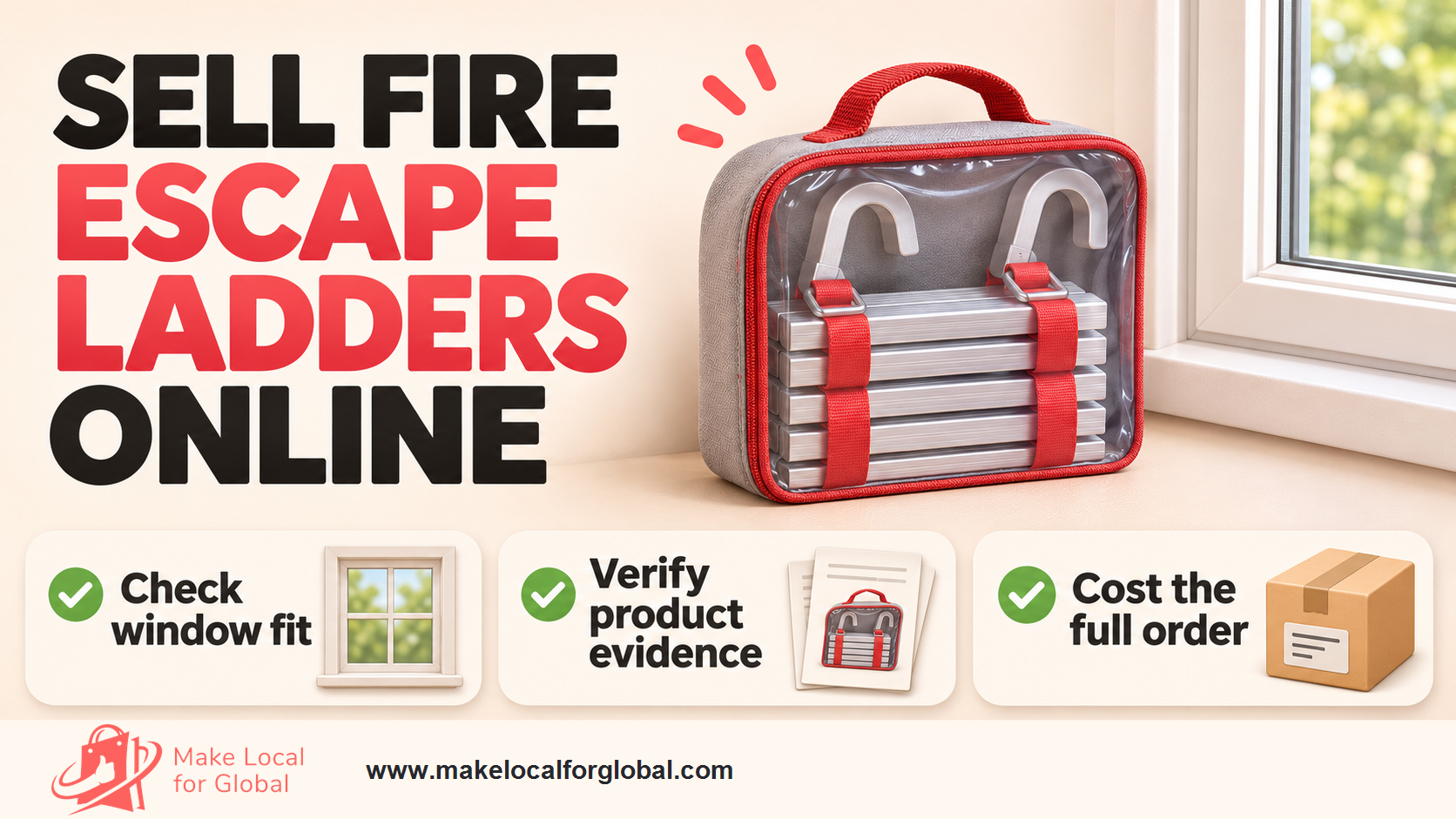
Selling residential fire escape ladders online calls for careful sourcing, model-specific evidence and restrained claims. Buyers need to identify exactly what the product is, what its documents cover, how the maker describes compatibility and where to get qualified advice. A ladder listing should never imply that buying the product creates a complete fire plan or guarantees a safe escape.
This seller-focused article covers buyer research, supplier checks, product evidence, page content, pricing, fulfilment and customer support. It is not emergency, building-control, installation or product-certification advice. Follow current rules for the markets where you sell and refer technical decisions to qualified professionals.
Map buyer need, supplier evidence and the full landed cost before committing to a high-responsibility product range.
A residential emergency escape ladder is safety-related equipment. People may be considering one for an upstairs room, a particular window layout or a home where the usual exit raises questions. Your first task as a seller is to understand what kind of product they are searching for and what information they need to make a careful decision. Do not begin with fear-based copy, dramatic accident imagery or promises of peace of mind. The product page should help someone identify the model, its limits and the manufacturer’s instructions.
Separate consumer buyers from trade buyers. A homeowner may need an accurate model page and a clear route to ask about fit. A landlord, property manager or installer may need product documentation, model traceability, packaging details and a dependable supply route. Ask prospective customers what they are trying to verify, whether they can find a particular detail, not merely what colour or price they prefer. If someone is unsure which escape arrangement is appropriate for their building, direct them to the local fire and rescue service or a competent building or fire-safety professional rather than making a judgement for them.
Before ordering stock, review how people describe the problem. Read questions on retailer listings, ask trade buyers what documentation they expect and speak with local suppliers about common product categories. Keep a note of the source and date. A repeated question about window fit is useful evidence that the page needs a compatibility section. A request for a certificate or test report is a buying requirement that you should be able to satisfy before listing the product.
Test the commercial idea with a low-risk research page or waitlist that clearly says the product is being evaluated and is not ready to ship. Do not accept money for an item you cannot supply under the promised terms. Record qualified enquiries separately from page views or social engagement. Ask what exact model, building context and documentation the person needs. The goal is to learn what a responsible offer must include, not to imply that a visitor has solved their household fire-safety plan by viewing a page.
Suppliers may describe portable, temporary, fixed or permanent escape ladders, window-hung models, rope designs or rigid-rung designs. These labels are not enough to determine suitability or regulatory status. Compare the model reference, intended use, installation method, attachment design, maximum permitted height, storage requirements and manufacturer instructions. A product meant for a specific window type or building condition should not be presented as a universal answer.
Keep rescue or fire-service equipment separate from residential consumer products. BSI lists BS EN 1147 as a standard for portable ladders for fire-service use. That label alone does not demonstrate that a residential emergency ladder complies with an applicable requirement. Describe the item by its intended use as stated by the manufacturer and confirm that any technical standard cited actually covers the product and claim you are making.
A first range could include two or three products only when each has a documented reason to exist. For instance, two models may differ by intended window arrangement, permitted mounting method or model-specific height range. Do not create a “basic, better, best” ladder tier from appearance or price alone. In a safety-related category, a premium label can imply superior performance. Use a comparison table only for verified distinctions taken from the current model documentation.
Keep each model’s information separate. Give every item a distinct SKU, manufacturer reference, batch record and image set. Do not reuse one product page across models that have different hooks, rungs, instructions or installation limits. If the manufacturer changes a component or specification, update the listing and any retained product evidence before you sell the revised item. Separate accessories and storage bags from the ladder in the product definition so an image cannot make a bundle look more complete than it is.
Ask for the supplier’s legal business name, address and contact route. Request the exact model number, manufacturing location, written specification, batch-identification method, instruction leaflet and supporting test records. Ask how often the design or production site changes and how the supplier will tell you. An online catalogue image or a general assurance that the product is “tested” is not a substitute for documents tied to the item you plan to sell.
Clarify who imports the goods, who checks the documents, who keeps the technical file and who handles corrective action if a defect appears. Obtain written answers about minimum quantity, sample provenance, inspection, packaging, lead time, replacement parts and complaint escalation. If the supplier expects you to make the technical claims, request the evidence first. If a document is incomplete or unclear, pause the order and seek competent product-safety advice rather than filling gaps with assumptions.
ASTM F2175-23 is a published specification for portable and permanent emergency escape ladders for residential use. It describes test areas such as static load, rung strength, attachment stability, deployment weight and designed length. It is an ASTM standard; referencing it does not by itself prove UK legal compliance or certify a particular ladder. Ask whether the exact model was assessed, which edition was used, who performed the work and whether the report covers the complete product.
BSI’s listing for BS EN 1147 identifies portable ladders for fire-service use. Do not cite that standard as proof for a household escape ladder only where qualified advice confirms that it applies to the exact product and claim. Likewise, a test for one component does not establish the performance of every strap, rung, hook or attachment system. Keep the source document, scope, product reference and date together, and ask a specialist to interpret anything outside your expertise.
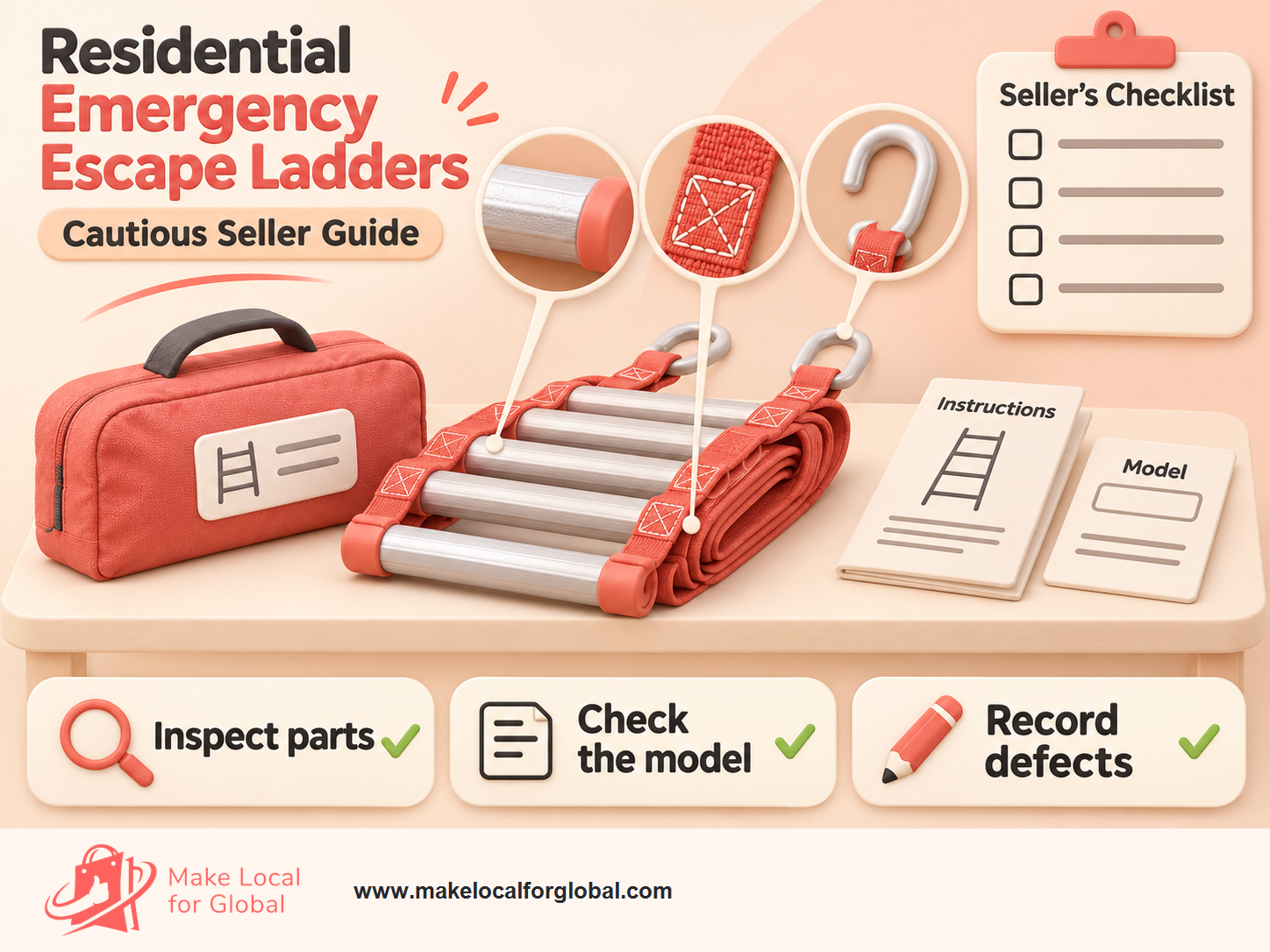
Order samples and compare each with the supplier’s description and documents. Visually inspect the storage case, hooks, rung finish, side straps or ropes, seams, fasteners, labels and included instructions. Record model identifiers and batch information. Note visible damage, sharp edges, missing parts, poor stitching, uneven finish, packaging defects or a mismatch between the sample and specification. Do not load-test, hang or deploy the ladder yourself as an informal demonstration.
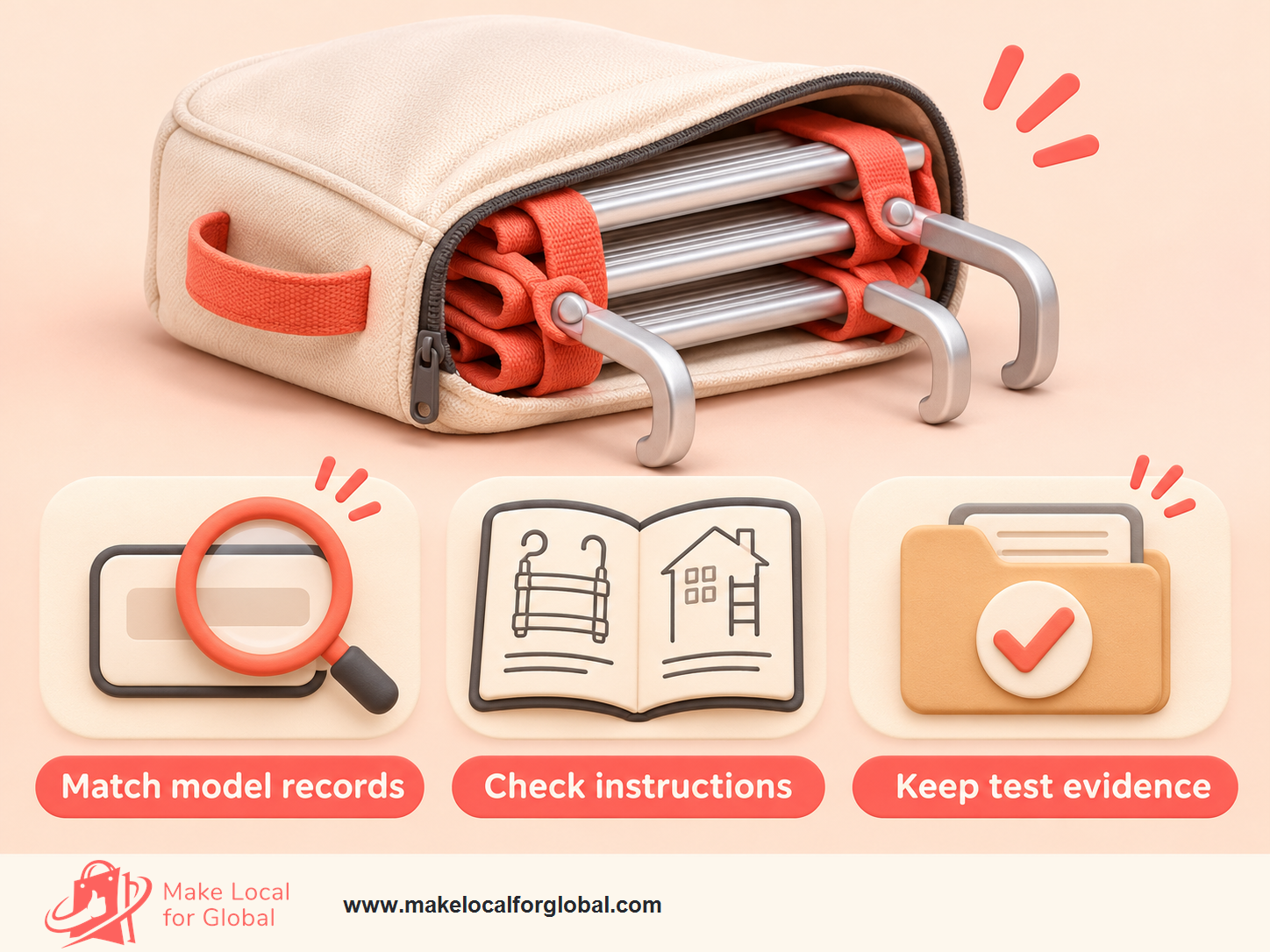
Ask the manufacturer or a qualified test provider about approved inspection and verification procedures. If a formal test is needed, use the correct laboratory or competent professional and preserve the report. Your internal sample check should be limited to documented identity, completeness and visible condition when you have an approved test method. The accompanying illustration shows a record-keeping check only; it is not a user test or proof of performance.
A buyer may need to compare a ladder model with a particular window, sill, exterior surface and building arrangement. Ask the manufacturer for a fit diagram, approved measurements, permitted installation conditions and exclusions. Show where the measurement begins and ends, use the manufacturer’s units, and keep any diagram tied to the correct model revision. Do not copy a measurement from a retailer page or infer fit from a photograph.
Do not tell a buyer that a ladder will fit their home based on a rough description or a few measurements. Window construction, opening method, sill shape, exterior obstructions and floor height can all matter. Make the product page clear about what can be confirmed from its documentation and when the buyer should consult the manufacturer, a competent installer, local fire and rescue service or building professional. A pre-sale compatibility checklist is not an installation guide.

Businesses that make, import, distribute or sell consumer products in the UK have product-safety duties. GOV.UK says products must be safe in normal or reasonably foreseeable use and sellers should retain records that identify suppliers. Great Britain and Northern Ireland have different frameworks. Read the Office for Product Safety and Standards’ current product-safety advice for businesses and the linked guidance for each market where you sell.
Before placing an order, obtain competent advice on classification, applicable standards, conformity assessment and technical records for the exact ladder. Do not assume that a manufacturer’s mark, laboratory logo, CE label, UKCA mark or foreign test reference proves suitability or compliance for your sales territory. Preserve the exact model and document scope. If evidence is missing, pause the listing until you can resolve the point with a qualified adviser.
Claims such as “tested”, “certified”, “compliant”, “safe for children”, “fits any window” and “supports a family” can shape a buyer’s decision. Ask which evidence supports each phrase, which model and configuration it covers, who performed the assessment and what limits apply. A report for one strap or rung is not proof about the full ladder system. Keep a claim register linking each statement in the listing to the current supporting document.
The ASA’s substantiation guidance says marketers should hold documentary evidence before publishing objective claims that consumers are likely to regard as factual. Match every word to the report’s scope. Do not turn a laboratory finding into a guarantee for a particular home. Seek legal or product-safety advice for technical claims, and remove a claim if the supporting document expires or no longer identifies the model you sell.
A household fire is frightening; sales copy should not exploit that fear. Avoid countdowns, accident images, claims that families are unprotected without your product or statements that a purchase creates a complete fire plan. Explain what the ladder is, which model documents are available and where the buyer can get qualified advice. Put limits near the purchase decision rather than at the bottom of a long page.
Do not show children, older people or other vulnerable users on a ladder in an advertisement. Avoid pictures of a person climbing, hanging or descending, including generated images. Product images should show the stored ladder, documents or a safe seller-side check. Do not use unverified testimonials about saved lives, fabricated approval seals or claims that imply a building or product has been professionally approved when it has not.
Give buyers manufacturer-approved dimensions, permitted mounting conditions, window types and exclusions, all tied to the current model revision. Include a diagram with measurement points only when the maker supplies or approves it. The supplied window-fit image makes clear that the comparison is pre-sale information and not installation advice. A seller can help a shopper locate product documents; a seller should not decide whether a ladder suits a specific property from a message or photograph.
UK government home-fire guidance advises households to plan the normal escape route, keep exits clear and consider a second route. It recommends asking local fire and rescue services for advice. Building regulations provide separate rules for means of escape and egress windows. Link to GOV.UK fire safety at home and the relevant Approved Document B. These sources do not certify a ladder.
A ladder can have a higher landed cost and larger parcel than a typical household accessory. Add purchase price, inbound freight, duty or import costs, packaging, payment fees, marketplace charges, outbound delivery, likely support and returns, customer acquisition tests and specialist advice. Include inspection, insurance and translation costs where applicable. If these costs are absent from a price model, the apparent contribution may not cover the work needed to sell responsibly.
The example below uses a hypothetical £79.99 selling price and illustrative costs. It does not describe a real supplier or a market average. Subtracting the listed variable costs leaves £19.39 before fixed overhead and tax. That figure is contribution, not net profit. Recalculate it for the exact model, parcel, sales channel, provider fee schedule and return experience. Keep a dated source beside each assumption and refresh quotes before an order or price change.
| Order cost | Illustrative amount | Check before launch |
|---|---|---|
| Ladder landed cost | £42.00 | Supplier quote, freight and duty allocated to saleable units |
| Outer packaging | £2.20 | Protective carton, inserts and shipping label |
| Payment or marketplace fees | £3.10 | Current channel rate and fee basis |
| Delivery paid by seller | £5.80 | Packed dimensions, weight and destination |
| Support, return or damage provision | £3.50 | Use real return, service and replacement data |
| Customer acquisition test | £4.00 | Controlled test budget allocated per order |
| Variable cost total | £60.60 | Sum of the listed assumptions |
| Illustrative selling price | £79.99 | Test against supplier and channel data |
| Contribution before overhead and tax | £19.39 | £79.99 minus £60.60; not net profit |
Illustrative figures only. They are not a market price or forecast. Excludes fixed software, storage, labour, insurance, specialist compliance advice and tax. Replace each number with a current quote and your own operating data.
Before you publish, confirm that the model, compatibility notes, documents and order costs are easy to find. If you need help planning a practical online presence, MLFG can discuss website design options with you.
Put the maker and exact model reference near the start. State the intended use as the manufacturer describes it, identify included components, show the storage case and link to the current instruction leaflet. Use the model’s current photographs. Where revisions exist, identify the version or publication date so a buyer can distinguish a current page from an older document. Do not combine specifications from similar-looking models.
Organise details under clear labels: dimensions, intended window or mounting context, maker-stated limits, contents, storage, inspection and instructions. Include only details that you can verify. Tell shoppers how to contact you with a model question and where to ask for building-specific advice. If you do not know whether a particular window or floor arrangement is suitable, say so and refer the person to the manufacturer or an appropriately qualified adviser.
Search phrases might include emergency escape ladder model, residential escape ladder, window-hung ladder, storage dimensions, instruction leaflet or model compatibility. Treat these as questions to research, not terms to repeat. A product page should describe the exact item. An advice page can explain how to find the model reference or what documents to request from a manufacturer, with links to official fire-safety and product-safety information.
Google’s Search Essentials ask site owners to create helpful, reliable, people-first content and use clear language for titles, headings, image alt text and links. They do not promise a ranking. Avoid dozens of near-identical pages that differ only by model number. Improve the page where search questions or customer enquiries show a genuine gap, and correct a technical detail quickly when a supplier updates its instructions or specification.
A specialist ecommerce site gives you room for model documents, limitation statements, support contacts and an accessible product comparison. You are responsible for bringing visitors, managing payments and maintaining supplier records. Marketplaces may already attract relevant shoppers, but each has category rules, document requirements, fees and return processes. Read the current seller terms before listing and check that the exact product is allowed in the destination country.
Trade orders may come from specialist retailers, property suppliers or installers. A trade sheet should identify each model, revision, evidence file, lead time, minimum order, warranty route and technical contact. Confirm who will answer pre-sale fit questions and how a safety complaint reaches the manufacturer. Do not describe a retailer as an installer or a product as professionally approved only when that role or review has been verified.
Measure and weigh the packed product, not just the ladder case. Ask a carrier for a quote using the real dimensions, weight, destination and service. Protect the case, model label and documents from damage in transit. Use packaging that prevents crushing and excessive movement without compressing the product against maker instructions. Photograph a sample packed order and record the materials used for each model.
Record the supplier, model, revision, batch or serial number when available against each incoming delivery and order. Save the invoice, test documents, instructions and shipment record together. If a fulfilment provider handles stock, confirm how it receives the product, checks the model, quarantines returns and escalates a safety complaint. Review the current packaging EPR guidance if your packaging activity and business size may make it relevant.
Online consumer purchases normally include cancellation rights. GOV.UK says distance-sale customers usually have 14 days from receiving the goods to tell the trader they want to cancel and another 14 days to return them; exceptions and conditions apply. Read the current returns and refunds rules and marketplace terms. Do not assume that a safety label or emergency purpose removes cancellation rights.
Set out how to contact you, where a return goes and how refunds are handled. Do not put a returned ladder back into saleable stock until its identity, completeness, condition and inspection status are known. Record the complaint, model and batch where available, customer description, action and supplier contact. If a report suggests a product risk or repeated defect, pause affected stock and seek qualified advice on traceability, reporting and corrective action.
Specialist emergency equipment may sell less often than everyday home goods. A large minimum order can tie up cash for a long period. Start at a level that supports a responsible test and meets supplier conditions. Consider lead time, model revisions, storage needs and whether a new specification could make existing stock difficult to sell. A lower unit quote does not justify buying more than the business can support.
Keep model code, revision, batch, supplier, receipt date, quantity, inspection result, location and sale status in one inventory record. Separate samples, returned products and quarantined units from available stock. Set reorder points from measured sales and lead times, then review them after every delivery. Reserve cash for returns, technical advice, insurance and customer support rather than using every available pound for stock.
Prepare answers to common questions about model identity, document versions, package contents, storage and returns. Use the current manufacturer information and record the source. If a question concerns building layout, a particular escape route or a person’s ability to use the product, do not guess. Direct them to the manufacturer, local fire and rescue service, building professional or other competent adviser as appropriate.
Write an incident procedure before a complaint arrives. Record the description, model, serial or batch if available, order date, photographs if offered, actions taken and supplier contacts. If a customer reports a failed component or mismatch with the product page, investigate the remaining stock and content. Keep the affected item out of circulation until its status has been checked. Make sure staff know who can pause a listing and who contacts the supplier.
Educational content can explain where to find a model number, how to request the maker’s current instructions, what a test document should identify and where to ask for local fire-safety advice. These topics are useful without implying that a shop page can approve a buyer’s home. Keep paid advertisements, marketplace text, packaging and email consistent with the evidence and limits.
Do not target anxious families with claims that they are in immediate danger if they do not buy. Avoid dramatic images, fabricated approval marks, false countdowns and unverified testimonials about lives saved. If you mention a fire service, testing body or building professional, confirm the relationship and obtain permission. A calm factual description helps shoppers understand what the item is and what they still need to verify.
Days 1–7: define the product category, buyer and intended sales market. Ask prospective buyers and trade contacts which documents they expect. Compare suppliers and write a go/no-go rule before spending on samples. Do not accept money for a product you cannot supply under the stated terms.
Days 8–14: obtain samples and exact-model documentation. Check model identity, package contents, visible condition, storage, instructions and fit data. Do not carry out informal load or deployment tests. Resolve document gaps with the maker or a qualified adviser. Select a model only if you can support the listing and the responsibilities that come with the sale.
Days 15–21: calculate landed and order-level costs. Prepare the model-specific page, original images, accurate limitations, instructions link, contact route and returns information. Ask an independent reader to find the model code, included components and technical documents. Correct any point they cannot locate without help.
Days 22–30: run a limited launch or compliant enquiry test. Track qualified questions, orders, support time, parcel cost, returns and product reports. Review the listing after each enquiry. Continue only when the commercial evidence and model documentation support another order. Keep a decision log and record what would cause you to pause sales.

Put one folder behind each model you sell. Keep the supplier identity, invoice, model and batch references, instructions, product images, evidence supplied for the product and the date each file was received. Write down who checked each item and what question remains open. A tidy evidence file helps you answer marketplace checks and identify the relevant stock if the maker changes a design or document.
Ask the supplier to confirm in writing that the documents apply to the exact model, materials, construction and intended use you plan to list. Check whether a report is a complete report, a summary, a test laboratory certificate or a supplier declaration. These items do not mean the same thing. A laboratory’s accreditation, the date and scope of testing, the tested configuration and any exclusions all matter.
For example, ASTM F2175-23 is a published specification for portable and permanent emergency escape ladders for residential use. A reference to it in a supplier email does not by itself prove that a particular SKU was tested or that the product meets UK requirements. Read the scope directly at ASTM’s F2175-23 listing, then have the supplier identify the report and model it covers. BS EN 1147 is for portable ladders for fire-service use; do not present it as a household escape ladder standard. Check the scope at the BSI standard listing.
If the supplier cannot answer a basic model question, do not fill the gap with a guess. Ask for a written answer or hold the listing. Keep a dated note of the decision. When a maker changes a component, label, packaging or instruction sheet, repeat the check rather than assuming the old record still applies.
Read the page as a customer who has never seen the model. Can they tell which size or length they are viewing? Can they find the model code, included parts, stated compatibility, limitations, instructions and support contact? If any answer depends on a sales chat, add the missing verified detail to the page first.
This review is not a safety certification. It tests whether the listing communicates what you can substantiate and directs technical questions to the right source. For building design and means-of-escape matters, refer to current Approved Document B and an appropriately qualified professional. It is not product approval.
Buying by appearance alone: attractive packaging and a low unit price tell you little about model evidence, traceability or support. Compare supplier records and landed costs before selecting stock.
Combining unlike models: one listing for several lengths can hide model-specific instructions and compatibility. Separate options clearly and connect every option to its own verified details.
Borrowing a competitor’s claim: a claim on another shop’s page is not evidence for your product. Keep substantiation for objective advertising claims, as the Advertising Standards Authority’s substantiation guidance explains.
Testing a unit informally: a one-off demonstration is not a controlled product test and may create a hazard. Use the maker’s approved inspection process and competent laboratory evidence. Never put a person on a ladder to create promotional footage.
Using alarm as a sales tactic: fear-based copy may pressure people and can overstate what the product can do. Explain verified features in neutral language. Keep general home fire-safety questions with the fire and rescue service or official guidance.
Ignoring the after-sale workload: orders bring questions about model choice, documents, damaged packaging, returns and reports. Set a support route and escalation process before taking payment, not after a difficult enquiry arrives.
Assuming every UK market is identical: Great Britain and Northern Ireland can follow different product rules. Check the current requirements for the place of sale, your role in the supply chain and the product. GOV.UK provides separate guidance for General Product Safety Regulations in Great Britain and product-safety advice for businesses. Obtain specialist advice when your role or market is unclear.
There is no single answer that applies to every product and market. The seller’s role, product design and destination market affect the duties and evidence to check. Ask the maker for the applicable documents for the exact model, verify their scope and seek qualified regulatory advice if the position is unclear. Do not describe a supplier document as government approval without evidence.
No. ASTM F2175-23 is a specification for residential emergency escape ladders. A reference alone does not establish that your exact model was assessed, nor that all UK market duties are met. Obtain and review the relevant model-specific report and check the applicable rules for the market where you sell.
Do not present it as a residential escape-ladder standard. The BSI listing describes BS EN 1147 as covering portable ladders for fire-service use. Confirm the standard’s scope and ask a competent adviser which evidence applies to the household product you intend to sell.
Do not stage a person using or descending a ladder for promotional content. It may encourage unsafe imitation and does not prove the product’s performance. Use accurate product images, maker-approved material and clear links to the model’s official instructions instead.
Ask for the exact maker and model identity, instructions, parts list, batch or serial traceability, applicable test documents, material and construction details, change-control process, defect reporting route and product-liability information. Confirm in writing which market and model each document covers. Check samples only through the maker’s safe inspection guidance.
A fulfilment arrangement does not remove the need to understand your legal role or keep the product and order traceable. Before listing, confirm stock identity, dispatch controls, packaging, support responsibility, return address and how a safety report reaches you. Ask a qualified adviser to review the arrangement if responsibility is uncertain.
Use only manufacturer-approved dimensions and compatibility information for the model. Tell shoppers which dimensions the maker specifies, how the information was obtained and what the page cannot confirm. Do not give installation instructions or promise fit based on a photo or a general measurement.
Answer only from the maker’s documented product information and approved instructions. Do not predict an outcome or advise on the customer’s building. Point them to the manufacturer and appropriate fire-safety or building professional. If the question concerns an immediate emergency, direct them to the emergency services.
Set out the policy before checkout and check consumer rules for your market and product. For many UK online purchases, customers have a 14-day period to notify the retailer that they wish to cancel, then a further 14 days to return goods, subject to the rules and exceptions. Read the current GOV.UK distance-selling returns guidance and get advice for your specific terms.
Pause affected listings or orders until you identify the changed model, review the new instructions and evidence, update images and specifications, and decide whether existing stock is affected. Keep the supplier communication and your decision record. Do not assume an older test file covers a later design change.
No. Product information explains the product and its documented limits. It cannot assess a particular home or replace a household fire plan, emergency instructions, building advice or guidance from the local fire and rescue service. Keep those roles distinct in your shop copy.
For a related product-range example, see our guide to selling first-aid kits online. A complementary range still needs its own product records, supplier checks and accurate claims.
Use MLFG’s Business Idea Stress Test to organise your evidence, costs and next research questions before committing to stock.
PREFERRED SOURCE
Like what you’re reading? Add Make Local for Global as a preferred source on Google to see more of our articles when you search.

Build your online presence without having to figure out everything yourself.