READY TO SELL First Aid Kits ONLINE?
Get a store built for you in 5 days, plus training and support to help you start, run, and grow your Alternative business.

Plan a focused UK first aid kit range, verify supplier documents, inspect samples and expiry dates, calculate each delivered order and write a clear product page.

A first aid kit looks like a simple box of supplies, yet the product behind that box needs careful checking. Buyers need to know what is inside, how items are labelled, whether the case suits the setting and what the parcel will cost to receive.
To sell first aid kits online, choose one buyer group, source complete and traceable kits from a supplier you can verify, inspect representative samples, publish accurate contents and expiry information, and calculate the full delivered order before setting a price. Start with an established pre-packed product. Private labelling or putting a kit together yourself can bring additional device and product-safety responsibilities.
The article is for sellers planning a product range. It is not first-aid training, a kit specification for a particular workplace or advice on treating an injury. Employers choose their workplace provision from a first-aid needs assessment, not from a universal online list. HSE explains that assessment-led approach in its workplace kit guidance and employer guidance.
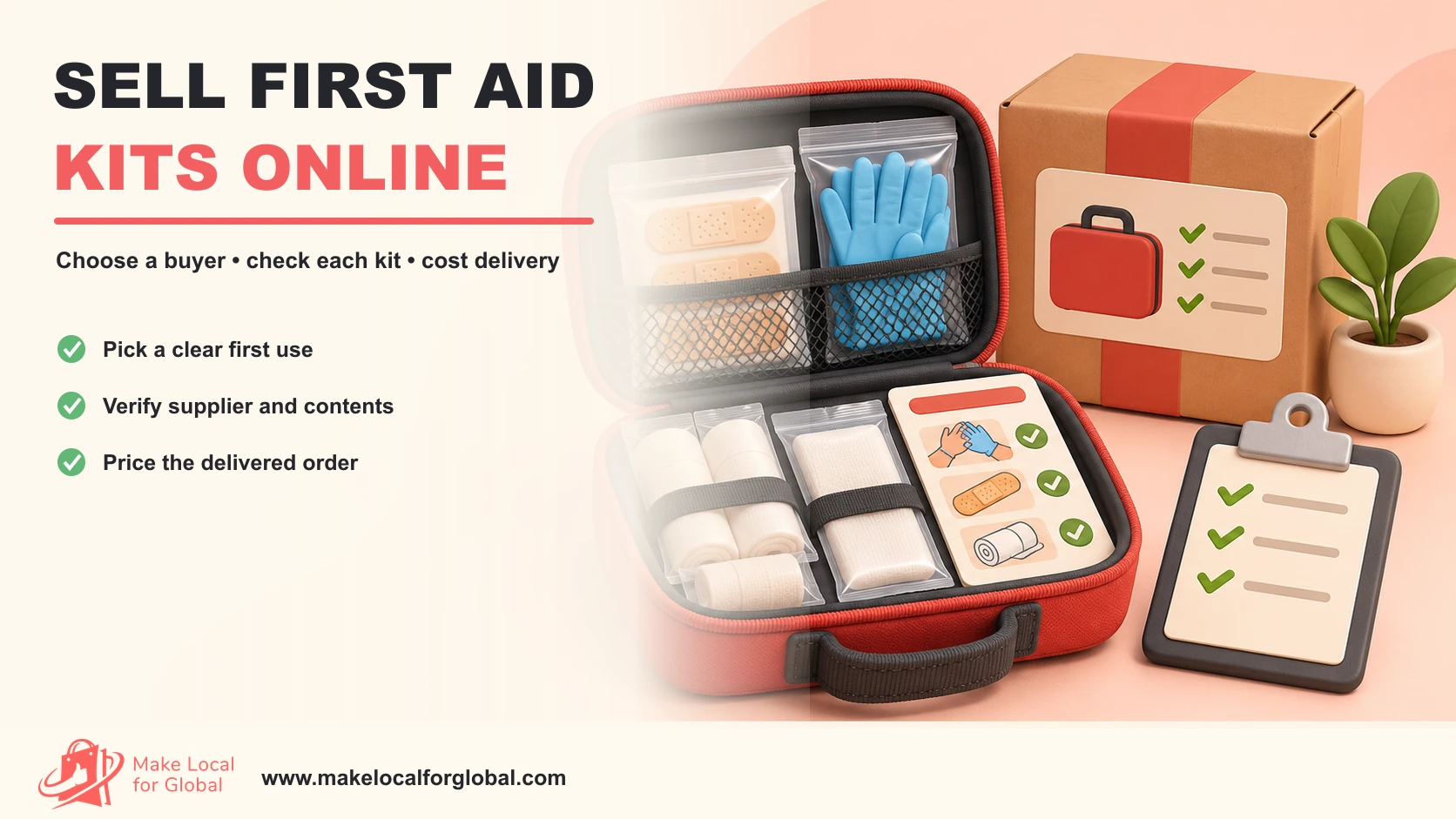
Clear contents, verified supplier details and delivery information help a customer assess the exact kit on offer.
“Everyone needs first aid” is not a useful first customer definition. It says nothing about why a person buys, what type of case suits the setting, the information a buyer needs or how your shop could reach them.
Choose one narrow starting group. Build a product page and sample offer around that group’s buying situation. A focused offer is easier to explain, inspect and cost than a store with a dozen nearly identical kits.
Small offices, workshops, warehouses, salons, schools and community venues may buy first aid supplies for staff, visitors or a work vehicle. Their requirements vary with the workplace, workforce, hazards, layout and distance from help. An office kit is not automatically suitable for a workshop or a large multi-floor site.
A seller can explain the specification and show the kit’s contents. The buyer remains responsible for deciding what their workplace needs. HSE says employers should assess the workplace, workforce and hazards, then make adequate and appropriate arrangements. A kit should be accessible, checked frequently and restocked soon after use.
Potential buyers might be office managers, facilities teams, trades businesses or independent employers. Ask what they currently buy, how they check dates, who approves the product, what creates a reorder and whether they need invoices or multi-site delivery. Do not promise that one kit makes a workplace compliant.
Commuters, delivery drivers, van owners and touring households may value a compact case that can be secured and found quickly. A vehicle kit must withstand storage conditions better than a product kept indoors. Ask suppliers about case closure, material, temperature guidance and the shelf life of the contents.
Avoid saying that every private vehicle is legally required to carry a particular first aid kit. Do not imply that your kit replaces an employer’s assessment for staff who drive for work. Some occupational settings have specific duties, so an employer should check their own circumstances and current rules.
For travel, useful listing details include the packed dimensions, weight, case closure, contents count and any relevant storage instructions. If a kit is for a particular activity or trip, explain the use case without presenting it as medical advice.
Campers, walking groups, sports organisers and event teams may need a case that packs neatly and contents that remain protected from dust or damp. Event organisers may care about access, placement, quantities, replenishment and who takes responsibility for checks. A domestic buyer may prefer a compact case with clear compartments and a legible contents list.
These groups may share some products, but their needs differ. A seller could test one compact outdoor kit and one larger venue kit as two distinct offers. Ask buyers which details matter before selecting colours, bundles or extra accessories.
Outdoor-product sellers can compare the audience and fulfilment decisions in our guides to selling camping stoves and selling fishing rods. Each product has different parcel and buyer questions, yet the same habit applies: validate the use case, record the specification and price the full order.
Avoid adding medicines or supplements to a workplace first-aid box. HSE recommends that tablets and medicines are not kept in the workplace first-aid box. Consumer products with medicine claims create a different regulatory question; leave them out of a first range unless a qualified adviser confirms the product and claims are suitable.
Write a short buyer interview script. Speak to ten potential buyers from the same group and ask about the last time they purchased a kit, what they needed to verify, what annoyed them, how they store it and who approves a reorder. Ask to see the checklist or purchasing criteria they already use, when they can share it.
Do not ask, “Would you buy my kit?” People often say yes to be polite. Show a clear product concept with a proposed contents list sourced from an actual supplier, a real sample photo, the price range you are considering and the delivery promise you can meet. Ask what they would need before placing an order and whether they would request a sample or a quote.
Record actions, not compliments. A buyer who requests a quote, introduces a procurement contact, asks for sample terms or agrees to a small paid trial gives stronger evidence than someone who says the idea sounds useful. Keep notes about the buyer type, objections and follow-up date. Do not treat a handful of conversations as proof of broad demand.
Organise the range around use context and case design. Do not create variants by changing only the case colour. Each product needs a reason to exist and an explanation buyers can check.
An opening range might have three roles:
You could start with only one product if the sample and buyer evidence point to a single clear use. Three products are not a target. Every extra SKU brings stock, storage, product-page and date-control work.
Customers need information they can verify, not a long list of vague benefits. Ask the supplier for exact model details and include the information that changes a purchase decision.
| Listing field | What to publish | What to verify |
|---|---|---|
| Product identity | Brand, model, product type and supplier reference | Labels match the current supplier specification |
| Contents | Item names, quantities, packaging and sterile status where stated | Count a sample and compare every line with the approved specification |
| Dates and traceability | How expiry dates and batch details appear | Check actual stock before promising a minimum shelf life |
| Case | Dimensions, weight, material, closure and compartments | Open, close and inspect the exact sample |
| Intended context | The use named by the manufacturer or supplier | Do not extend the intended purpose with your own claim |
| Order details | Pack quantity, dispatch window and parcel size | Confirm carton dimensions, weight and delivery service |
Use photographs of the actual product and packaging wherever possible. If a product changes, update the product page and retain the date of the approved specification. Do not use a photograph of a different model to make a new product look fuller or larger.
Some buyers may want a wall bracket, refill pouch, storage label, inspection log or extra case. Treat each add-on as its own SKU or clearly state that it is included. Check compatibility and the supplier’s use instructions before bundling an accessory with a regulated device.
A refill pack needs a specific contents list and an explanation of the kit or model it fits. “Universal refill” is a broad claim. Confirm fit across each named model, and state any items that are not included.
Avoid bundle names that imply medical results, guaranteed workplace compliance or professional approval. “Office refill pack, model ABC” is clearer than “Complete compliance solution.” The second phrase promises more than a box of supplies can establish.

One seller might begin with a compact travel case and a supplier-prepacked workplace model. Another might choose a wall-mountable case for small offices and a durable outdoor pouch. Let buyer evidence set the first pair.
Track the reason for every variant in a range sheet: target buyer, model, contents, supplier, case dimensions, cost, date information, minimum order, shipping method, margin assumption and the test you will run. Remove variants that cannot be distinguished by verified details.
If a buyer asks for a different contents list, treat it as a custom request. Do not make a new bundle first and check the regulatory consequences later. The combination itself may affect the rules that apply.
The lowest unit price is not a full supplier assessment. A first aid kit contains multiple items that can have different expiry dates, labels, manufacturers and supply histories. Your supplier needs to answer detailed questions in writing.
Resell a complete branded kit. A specialist wholesaler supplies a sealed product under an established manufacturer’s brand. You keep the original labelling and contents intact, check the delivery and traceability records, and list the exact product. This is often the simplest route for a new seller, though distributor and general product-safety duties remain.
Sell an established private-label kit. A manufacturer supplies an existing product under a retailer’s label or branding. Clarify which firm acts as manufacturer, which company is named on the pack, who owns the artwork, who holds regulatory documentation and who handles complaints or recalls. A logo change can alter the responsibilities; do not assume it is a routine print job.
Assemble a kit from individual components. The business selects items, combines them, packages the result and sells it as one kit. This gives control over the offer, yet it can bring the assembler within medical-device requirements if the pack meets the definition of a system or procedure pack. Compatibility, intended use, declarations, device markings and registration all need careful review before launch.
The MHRA’s guidance on systems and procedure packs explains that packs fall within the regulations and that using devices outside their manufacturers’ intended purposes can make the assembler responsible as a manufacturer. Its registration guidance says systems or procedure packs containing at least one medical device need to be registered before placement on the Great Britain market. Do not infer that every ready-made first aid kit has the same classification. Check the actual product and your role.
Request the manufacturer and UK supplier details, product model, current contents specification, labels, declared intended purpose, conformity documents where applicable, batch or lot information, expiry policy, storage conditions, complaint contact and recall process. Ask which company is responsible for any private label or pack assembly.
For each device in an assembled product, ask how the supplier has verified compatibility and whether items remain within the manufacturer’s stated purpose. Ask who will retain the assembly record and declarations. A supplier saying “we do it for other customers” is not evidence that your label, pack or use claim is covered.
Request a quotation that separates unit price, minimum order, samples, freight, packaging, artwork, setup charges, payment terms and lead time. Ask which costs change at the next order quantity. A price excluding VAT should be clearly distinguished from one including VAT.
Check the supplier’s business identity, trading address and contact route. Search the manufacturer’s official product information where available. Keep the quotation, approved specification, invoice, delivery record and email trail in a product folder. Use a supplier whose answers match the physical sample.
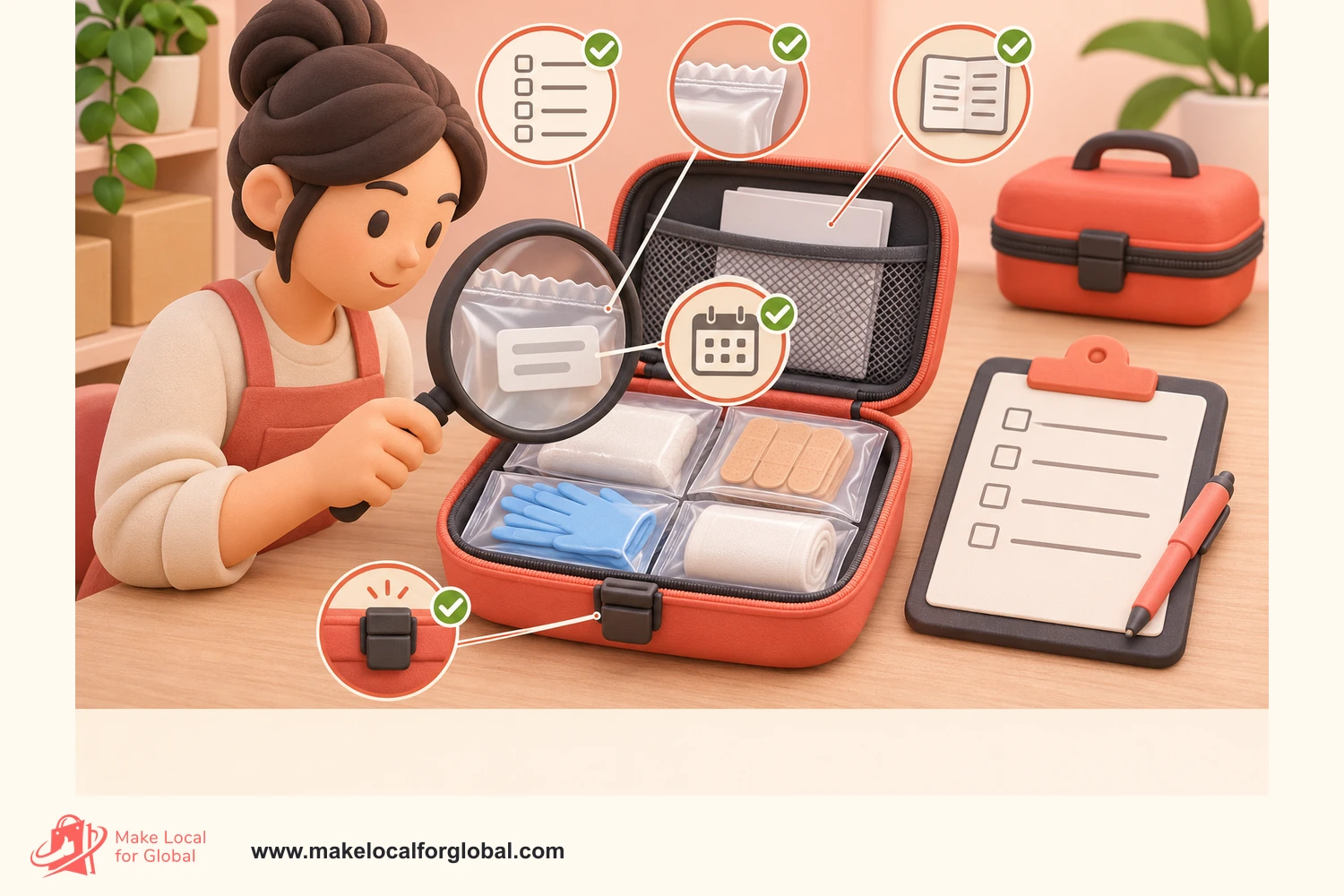
Order a sample before placing stock. Give it a written inspection checklist. Compare the model reference, contents list, seals, labels, expiry dates, batch identification, case dimensions and closure with the quotation. Photograph the sample and retain the supplier’s specification version.
Ask a second person to count the contents without looking at your count. Compare the label with the actual components. Check that small items are not hidden beneath a tray or omitted from the pack. Record any substitution and get written approval before accepting it.
If the sample fails, record the exact issue and request a corrected sample. Do not accept a verbal promise to fix every production unit. If a sample differs from the delivered batch, pause sales, quarantine the affected cartons, compare batch records and ask the supplier for corrective action.
A first aid kit may contain several products. The legal status depends on the item, its intended purpose, composition, claims, supply route and the way you package or present it. A seller should not classify a product from its name alone.
MHRA guidance treats system and procedure packs as products within the medical-device rules. A pack assembler must verify the compatibility of the items, follow their manufacturers’ instructions and comply with the requirements that apply to the pack. Replacing an item with a different one, changing the use claim or selling under your own name can change the analysis.
Before an own-assembled or private-label offer goes live, get a product-specific assessment from a competent regulatory adviser and check the current MHRA guidance for each market. Confirm which business is the manufacturer or assembler, whether registration is required, what declarations or records are needed, and who responds to an incident. Put the answer in the supplier contract.
MHRA registration is not approval, certification or endorsement. Do not use an MHRA logo or imply the regulator has endorsed a kit. For Great Britain, the government confirmed on 21 October 2026 that CE-marked medical devices will continue to be recognised on a long-term basis; the UKCA route remains in place. Check the current device regulation guidance for the specific product and market. Northern Ireland has separate registration rules; since 28 May 2026, most non-custom-made devices for the EU and NI markets fall under EUDAMED registration. Verify the requirements for your role before selling there.
Keep product claims factual. A seller can state the model, verified contents, case dimensions, storage advice, labelled expiry information and supplier-stated intended use. Claims about treatment, protection, compliance, suitability for all workplaces or emergency outcomes need evidence and may trigger additional rules.
Do not write “HSE approved,” “MHRA certified,” “compliant for every workplace,” “guaranteed to save lives” or “meets all legal requirements” unless a specific, valid basis supports the exact wording. HSE does not approve general workplace kits. A standard mark is not a government endorsement.
If your supplier says a kit conforms to BS 8599, ask for the model, part, current edition and evidence for the exact contents. BS 8599-1 concerns workplace first aid kits; BS 8599-2 concerns vehicle kits. The standard is voluntary under HSE guidance. For workplaces, kit contents must still reflect the employer’s needs assessment. Check the BSI standard listing and do not treat a supplier badge as independent proof.
Cleaning wipes, antiseptics, burn gels, sprays and other liquids can have different regulatory classifications. The result may depend on what the product does, its ingredients, packaging and marketing claims. A wipe sold for cleaning a surface is not necessarily the same regulated product as one presented for use on skin or a wound.
Ask the manufacturer for its classification and intended purpose. Do not change a product label, remove directions, decant a liquid or write a new medical claim without checking the legal consequences. A simpler first catalogue can stay with supplier-prepacked products whose identity and documentation are clear.
Your sample check is a business quality record. It does not certify the product or replace a manufacturer’s testing. Use it to compare the delivery with the approved specification and to catch issues before customers receive the kit.
For every sample, record the date, supplier, model, batch, outer carton condition and the name of the person checking it. Photograph the outer label, opened contents and any marks that matter to the specification.
Check:
Do not test sterile products by opening them. Do not carry out a medical-use trial or claim a treatment result. If packaging appears compromised or dates are unclear, quarantine the unit and ask the manufacturer or supplier for written direction.
Ask suppliers how they define “fresh stock,” whether they will confirm a minimum remaining shelf life at dispatch and how much notice they give when a batch approaches its date. Get the commitment in writing. A kit with a printed expiry date is not automatically suitable for a customer if too little time remains for their expected storage and use.
Before dispatch, inspect date-sensitive stock at goods-in and record the earliest date in the batch. Put that date in the stock record. Keep batches separate where practical. If items have different dates, do not substitute or top up a kit without checking the approved contents and product rules.
Use first-expiry-first-out rotation. This means pick the saleable batch with the earliest expiry first, within the supplier’s stated handling conditions. Review stock monthly, set a reorder point that accounts for lead time and sales, and remove stock that is expired, damaged, recalled or outside your written sale policy.
HSE advises employers to check kits regularly and replace expired items. Your shop needs its own records too: goods-in date, supplier, batch or lot, expiry date, number received, number sold, number quarantined and action taken. Keep them long enough to support traceability and any product-specific record duty.
A low unit cost can disappear once packing, parcel charges, payment fees, returns and customer acquisition are counted. Build the model for one completed order and make the assumptions visible.
The figures below are illustrative, not supplier quotes or a market forecast. Assume a UK seller is VAT-registered, the kit and delivery are standard-rated for VAT, and input VAT is recoverable on the listed cost lines. The kit is advertised at £34.99 including VAT.
| Order line | Illustrative amount, excluding recoverable VAT |
|---|---|
| Selling price after removing output VAT | £29.16 |
| Kit purchase | £12.00 |
| Inbound freight per kit | £0.80 |
| Protective outer packaging | £1.60 |
| Tracked outbound parcel | £4.50 |
| Payment processing allowance | £0.80 |
| Pick and pack time | £1.50 |
| Damage and return reserve | £1.20 |
| Advertising cost allocated to the order | £3.50 |
| Total variable cost in this example | £25.90 |
| Contribution before fixed overhead and tax | £3.26 |
Calculation: £34.99 ÷ 1.20 = £29.16 net sales, rounded to two decimal places. The listed variable costs total £25.90. £29.16 − £25.90 = £3.26 contribution before rent, software, insurance, accounting, unpaid owner time, corporation or income tax and any costs not listed.
If the seller is not VAT-registered, or the product has a different VAT treatment, this calculation changes. A VAT-registered seller cannot treat output VAT as revenue. Input VAT recovery depends on the business’s circumstances and invoices. Check the current HMRC VAT guidance and ask an accountant to confirm the product’s treatment before launch.
Get a supplier invoice price at your intended quantity. Divide inbound freight by the number of saleable units received, not the number ordered if some are samples, damaged or reserved. Record packaging by product size. Use a live courier quote for the packed dimensions and weight, including any remote-area or surcharge terms.
Payment costs may contain a percentage and a fixed amount. Use your actual provider’s current fee schedule. A returns reserve is a planning allowance, not a substitute for handling a customer’s legal rights. Ad cost per order should come from your own campaign data; do not lift a competitor’s number.
Create at least three price scenarios: organic sale, paid acquisition and a multi-unit order. For each, vary courier cost, return rate, supplier price and average discount. See whether the order still contributes after each change. Do not call contribution profit.
The Wholesale Retailer Margin Lab can support a product-margin check. Enter your own prices and costs, then compare the result with a separate order-level model that includes the customer parcel and marketing expense.
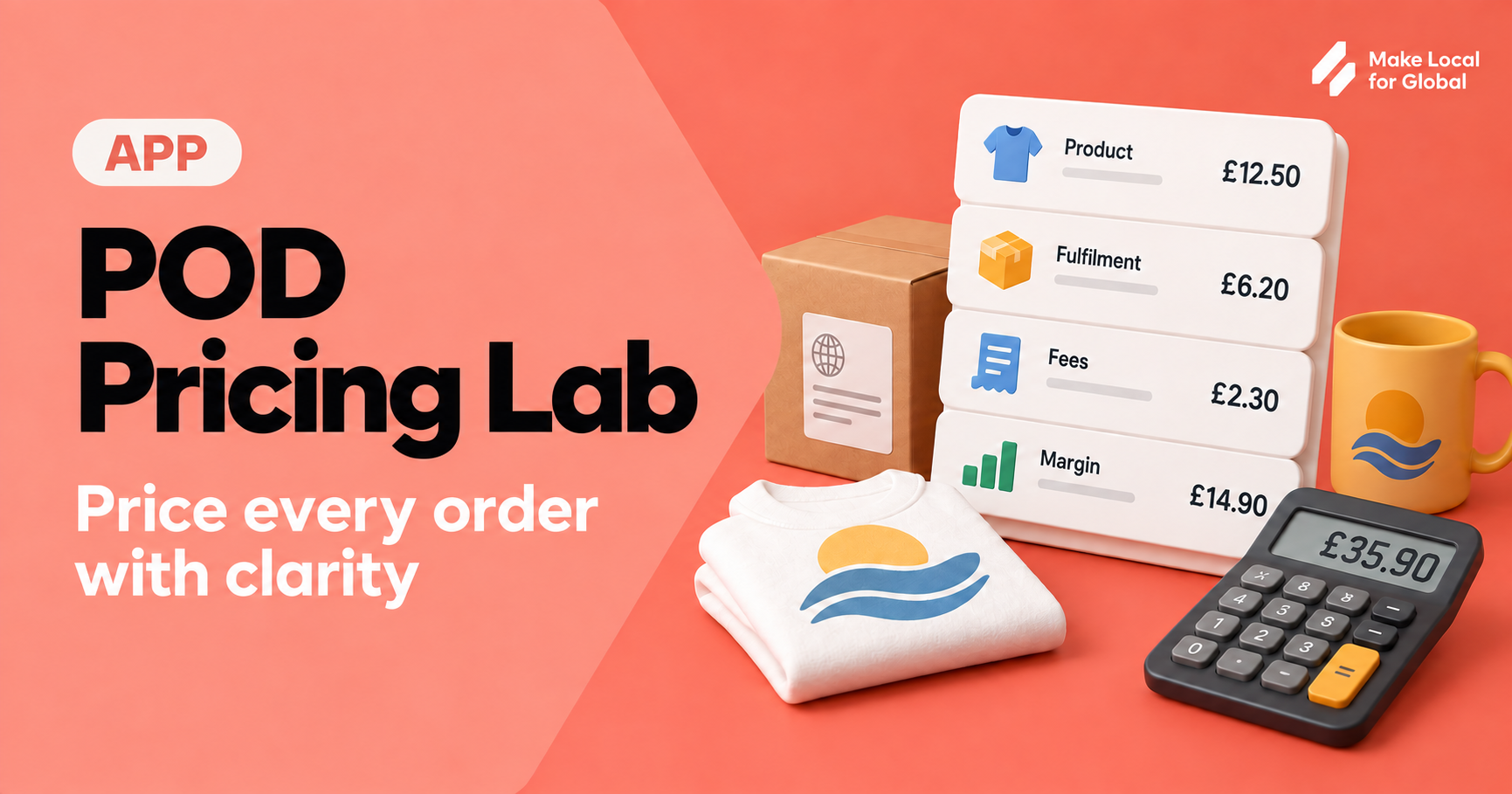
Compare your stock price with packaging, delivery, fees and returns before setting a price.
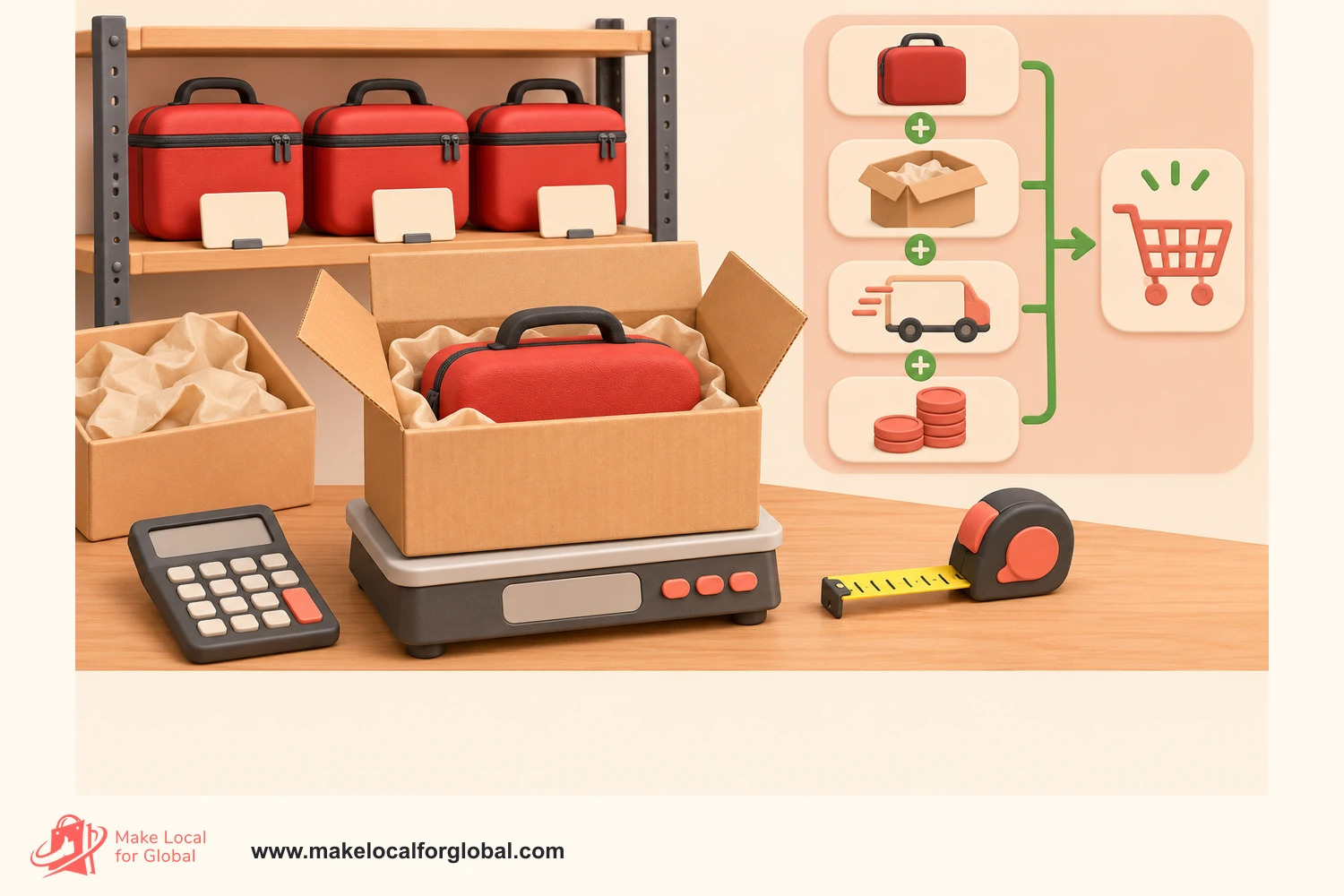
A workplace buyer may ask for ten kits, a quote, a purchase order or delivery to several addresses. Volume can reduce per-unit packaging or freight, yet it can raise pick time, payment exposure and support work. Price the full order and delivery arrangement, not only the kit count.
Set minimum order quantities only when a supplier or fulfilment cost supports them. Quote a separate price for each delivery location if the courier charges by parcel. Confirm who pays for delivery, when the invoice is due, whether a sample is charged and how a substitution is approved.
Avoid a wholesale discount that leaves no room for the buyer’s margin or your own costs. For each trade price, show net and gross treatment clearly where relevant, state whether delivery is included and review the account after the first order.
An accurate page can reduce pre-sale questions and returns. Buyers should find the product identity, contents, limits, price and delivery information without guessing.
Use a clear product title such as “Compact Vehicle First Aid Kit, Model ABC.” State the intended context from the manufacturer’s documents, not a new use invented for search traffic. Put the model and contents link near the start.
Show photographs of the exact kit, closed and open, with a scale cue for size. Photograph the outer label and contents list if legibility permits. Do not alter the image to make the product look fuller or more protective. If you show an example component, label it as a sample only when it may not be included.
List the contents line by line with quantities and packaging details. State where the supplier publishes an expiry date and how remaining shelf life is confirmed at dispatch. Give packed dimensions, weight, case material, closure and storage details. State whether a bracket, refill pack or accessory is included.
Place price, VAT treatment where applicable, payment choices, dispatch window, delivery cost and estimated timing before checkout. Include your business name, address and contact details and the legally required cancellation information. GOV.UK explains the pre-order information for distance sales.
Use a short note for buyers who need workplace support: “Employers should assess their own workplace first-aid needs. This product page describes this model’s supplied contents; it does not decide whether those contents are sufficient for a particular workplace.” This reduces the chance that a buyer reads a general product page as a compliance assessment.
Useful questions concern dimensions, contents, manufacturing model, batch traceability, expiry date, case type, delivery and returns. If you cannot answer from the product file, contact the supplier before publishing.
Do not add a medical advice section or directions for using a dressing. Link to the manufacturer’s instructions where that is permitted and relevant. Make sure the product is sold for the purpose stated by its maker. Include only claims you can support from documentation.
If a customer asks whether one kit is enough for a specific workplace, direct them to their risk assessment and HSE’s first-aid guidance. Do not design a kit for their hazard profile unless your business is qualified and authorised to provide that service.
An outer carton protects the case and keeps it presentable. Test a real packed order using the same carrier service you plan to sell. Weigh and measure the completed parcel, record its cost and check the packaging for damage after a short handling test.
Keep kit stock in the supplier’s stated storage conditions. Separate saleable, sample, quarantined, damaged and expired goods. Use a bin or shelf label that identifies model and batch. Match the picked kit to the order record before sealing the parcel.
At goods-in, count cartons and units, inspect outer damage, compare the order with the packing slip and sample-check a defined share of the received batch. If the supplier changes a component, get the new list and review the page, images and any applicable regulatory documentation before selling it.
For returns, inspect the exact state of the item when it comes back. Do not resell a kit if seals are broken, a date cannot be verified, the contents are missing or storage history raises doubt. Keep returned and quarantined goods away from saleable stock.
Customers buying online typically have 14 days after delivery to tell the seller they wish to cancel, then a further 14 days to return the goods. Exceptions apply, including some sealed products that cannot be returned for health or hygiene reasons once opened, but do not assume that opening any first aid kit automatically qualifies. Read the GOV.UK returns guidance and get advice for your exact product and policy. Your return terms cannot remove statutory rights.
If a buyer reports a damaged seal, missing component, unclear date or possible safety issue, record the order, product model and batch. Stop dispatch from the affected batch until the supplier advises you. Keep the complaint, photos, supplier response and action in the product file. GOV.UK’s product safety advice for businesses describes responsibilities for businesses supplying consumer products.
Start where your buyer already makes a purchase or requests a quote. A direct shop gives you control over the product page and customer questions. A marketplace can expose your listing to active shoppers but may add fees, category rules, restricted-claim review and return processes. Check the current policy and full fee for the exact category before pricing.
For business customers, prepare a short quote sheet with model, contents, quantity, delivery terms, VAT, quote expiry and supplier-backed lead time. Offer a sample only if you have stock and a process to record the recipient, model and return status. A sample request is evidence of interest, not a confirmed order.
Make a list of local organisations that match your first offer: small employers, event venues, outdoor clubs, vehicle fleets or schools. Use public business contact details and follow the applicable marketing and privacy rules. Ask who buys supplies and what documentation they require. Do not send a generic claim that their current kit is wrong.
Search pages should answer a real task, not repeat one keyphrase. Build a product page around exact model details. Add a buying page about comparing contents, a business page about reorder checks and a short FAQ on expiry and delivery. Link between them when the link helps a customer reach the relevant information.
First-party measurement can stay simple: visits to the product page, sample requests, quote requests, completed sales, cancellations, support questions, damage reports and reorder interval. Review by buyer group and channel. Pause a paid campaign if the contribution per order stays below its cost. A high number of clicks does not prove that the price or range works.
For other selling decisions, the Business Idea Stress Test can help structure an early demand check. For a dedicated ecommerce store, MLFG website design and the contact page provide routes to discuss the project. No tool or service can promise ranking or sales.
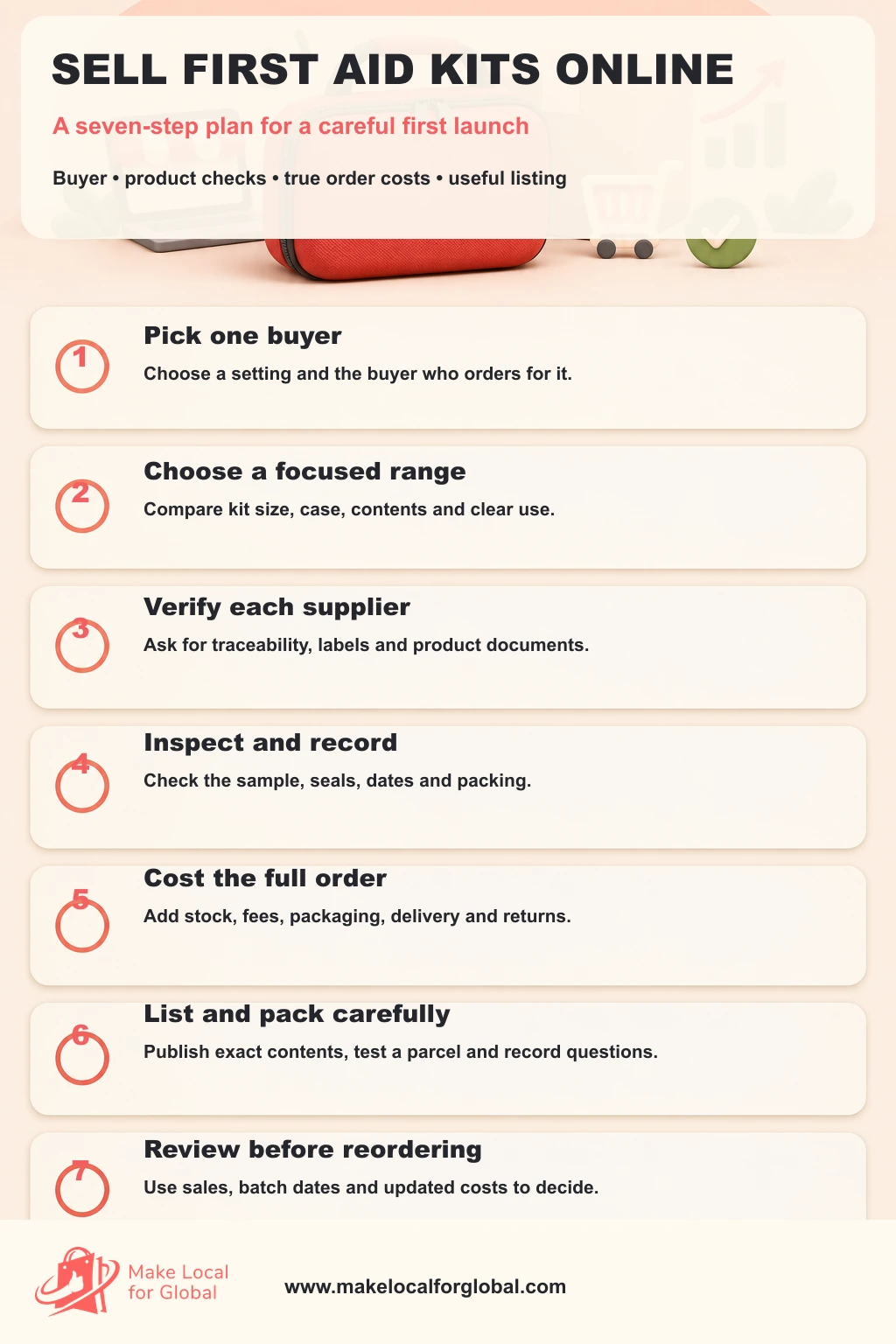
Select one buyer group. Speak with ten people who make or influence purchases in that group. Ask for the last purchase, supplier criteria, reorder process and product-page questions. Write down actions and objections. Pick one use case only if several buyers describe the same unresolved need.
Contact three suppliers with the same written questions. Compare identity, complete product specification, price, minimum order, expiry policy, delivery lead time and return or recall support. Order the best sample. Inspect it against a dated checklist and resolve every material difference before approving stock.
Get current inbound and outbound delivery prices. Build a line-by-line cost model with VAT assumptions stated. Draft a product page with a contents list, actual product photos, delivery terms and cancellation information. Ask three target buyers to identify anything they still need to know.
Place only an order size supported by the test and available cash. Publish one direct product page or a small trade offer. Record views, quote requests, sales, refunds, questions and contribution. Review the batch, expiry dates and packaging after the first fulfilment. Reorder only when buyer behaviour and the updated cost model support it.
The launch is not a pass or fail on revenue alone. A small number of well-qualified quote requests, specific sample feedback or a buyer willing to reorder can tell you what to change. A lack of interest at the offered price can mean the buyer, specification, evidence or channel needs a revision. Do not put more stock on order just to validate your original idea.
Yes, provided your business meets the consumer product, medical-device and online selling requirements that apply to the exact products and your role in the supply chain. A straightforward resale of a complete manufacturer-prepacked product differs from assembling a kit, changing its intended purpose or selling it under your own brand. Check the documents before listing.
HSE says BS 8599 is not a legal requirement. Employers decide their workplace provision from their first-aid needs assessment. A seller should describe a product’s verified standard claim accurately and should not promise that a kit is suitable for every workplace.
Do not state a universal legal requirement for private cars. Requirements can depend on the use of the vehicle and the work context. A business should review its own obligations and assessment. Your consumer product page can describe the kit and intended use without claiming every driver must carry it.
Do not treat relabelling as a simple graphic change. Own-brand presentation or changes to the pack can affect who is treated as manufacturer and which medical-device duties apply. Ask the supplier to name the legal manufacturer, provide the applicable documentation and confirm the proposed brand and market in writing. Seek competent advice before ordering private-label stock.
Possibly, but assembling a combination of medical devices can place the pack within system or procedure pack rules. Compatibility, intended purpose, declarations, inspection, registration and records may apply. The exact outcome depends on the items and activity, so get a product-specific regulatory assessment before sale.
There is no single figure that suits every kit and buyer. Ask the manufacturer for a minimum remaining shelf life at dispatch, consider the customer’s storage and reorder cycle, then make your own acceptance rule explicit. Do not promise an expiry date you have not checked against the batch you will ship.
Only after verifying the exact product’s classification, claims, instructions and market requirements with its manufacturer. Wipes, gels and liquids can fall under different product rules depending on what they contain and what the label claims. Keep your first offer simple if the documentation is unclear.
Show the exact model, full contents and quantities, case dimensions, weight, supplier-stated context, relevant labels, expiry information, storage details, price, VAT treatment where applicable, delivery cost and timing, contact details and cancellation terms. Explain that a workplace buyer must assess their own needs.
Online cancellation rights and hygiene exceptions depend on the exact item and circumstances. Do not assume that opening any kit removes the right to cancel. Review statutory guidance and a legally checked returns policy, then inspect every returned unit before deciding whether it can be resold safely.
Choose an amount that your buyer evidence, minimum order, expiry profile, cash and storage process can support. Compare the cost of one sample, a small first order and the next price break. A lower unit cost is not helpful if too much stock will sit unsold or approach expiry.
Profit depends on your actual supplier price, shipping, packaging, payment fees, marketing, returns, storage, overheads and tax position. The example above leaves £3.26 contribution before fixed overheads and tax under its assumptions. Use current quotes and real sales data before deciding whether that margin works for your business.
Record the supplier, model, batch and dates at goods-in. Pick the earliest saleable expiry first, inspect before dispatch and quarantine expired, damaged or uncertain stock. Set calendar reminders for stock reviews and reorder from observed sales and lead time.
Choose one customer group and ask ten buyers about their last kit purchase. Then compare two supplier samples against a written checklist and calculate the delivered-order contribution with real quotes. Keep the product page factual, the batch traceable and any workplace suitability decision with the employer’s needs assessment.
Use buyer evidence, sample results and the delivered cost model to pressure-test your first offer.
PREFERRED SOURCE
Like what you’re reading? Add Make Local for Global as a preferred source on Google to see more of our articles when you search.

Build your online presence without having to figure out everything yourself.