

Build a clear print on demand price model with product, fulfilment, fees, promotion and margin checks, then choose one practical test.

Pricing a print-on-demand product is not just choosing a number that feels competitive. You need to know what one order really costs, what can go wrong and how much room is left for a useful margin. The free POD Pricing Lab turns those questions into a short, practical check.
Answer six focused questions about product, fulfilment, fees, promotion, refunds and your margin guardrail. The app highlights your biggest gap and suggests one next test.
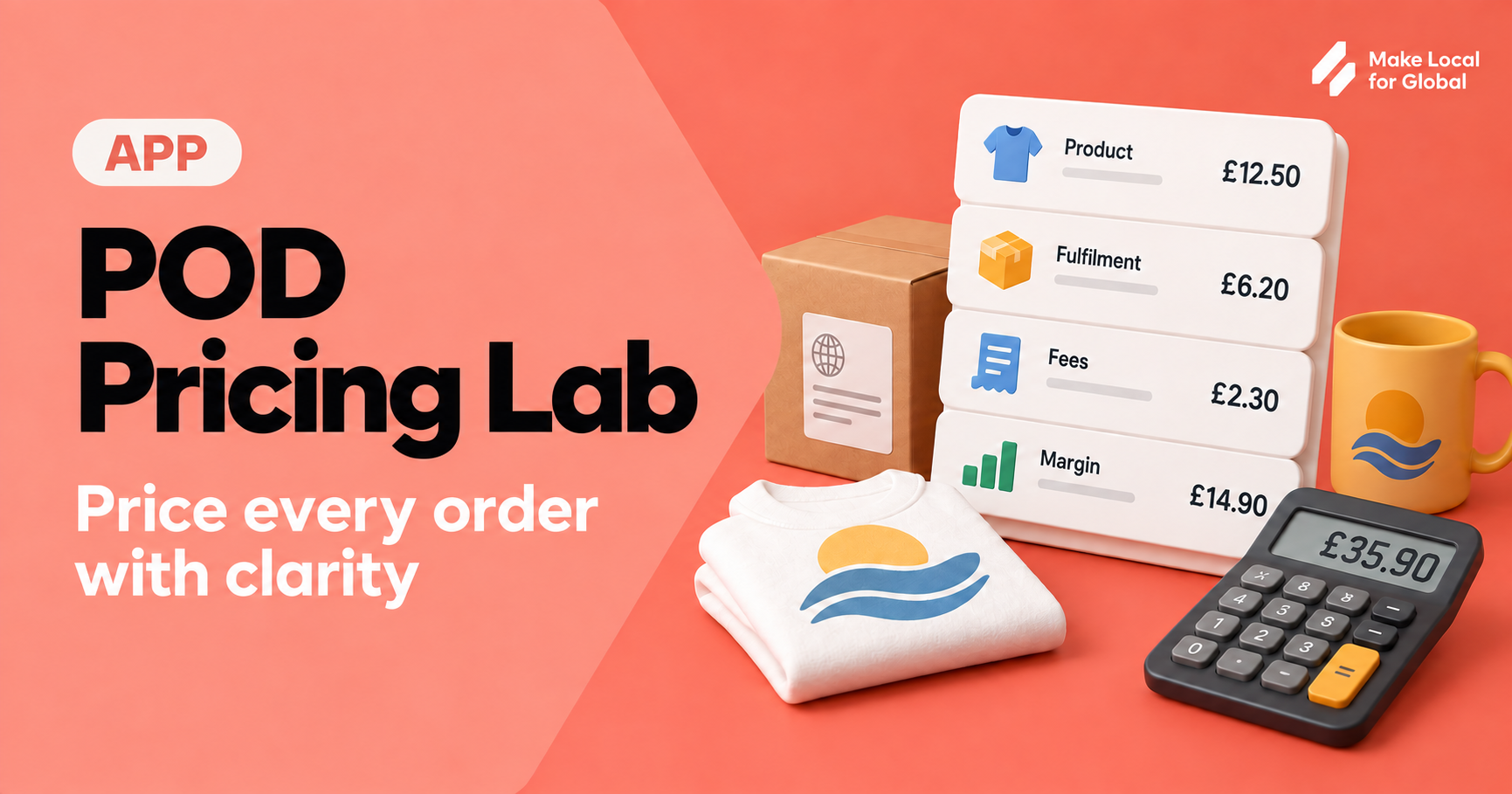
A supplier quote is only one part of your order model. Imagine a personalised sweatshirt with a £12.50 product cost. If fulfilment and delivery add £6.20, payment and platform fees add £2.30, and you expect £4.00 of promotion cost per order, the visible cost is already £25.00. A £29.00 selling price leaves very little room for refunds, replacements or your time.
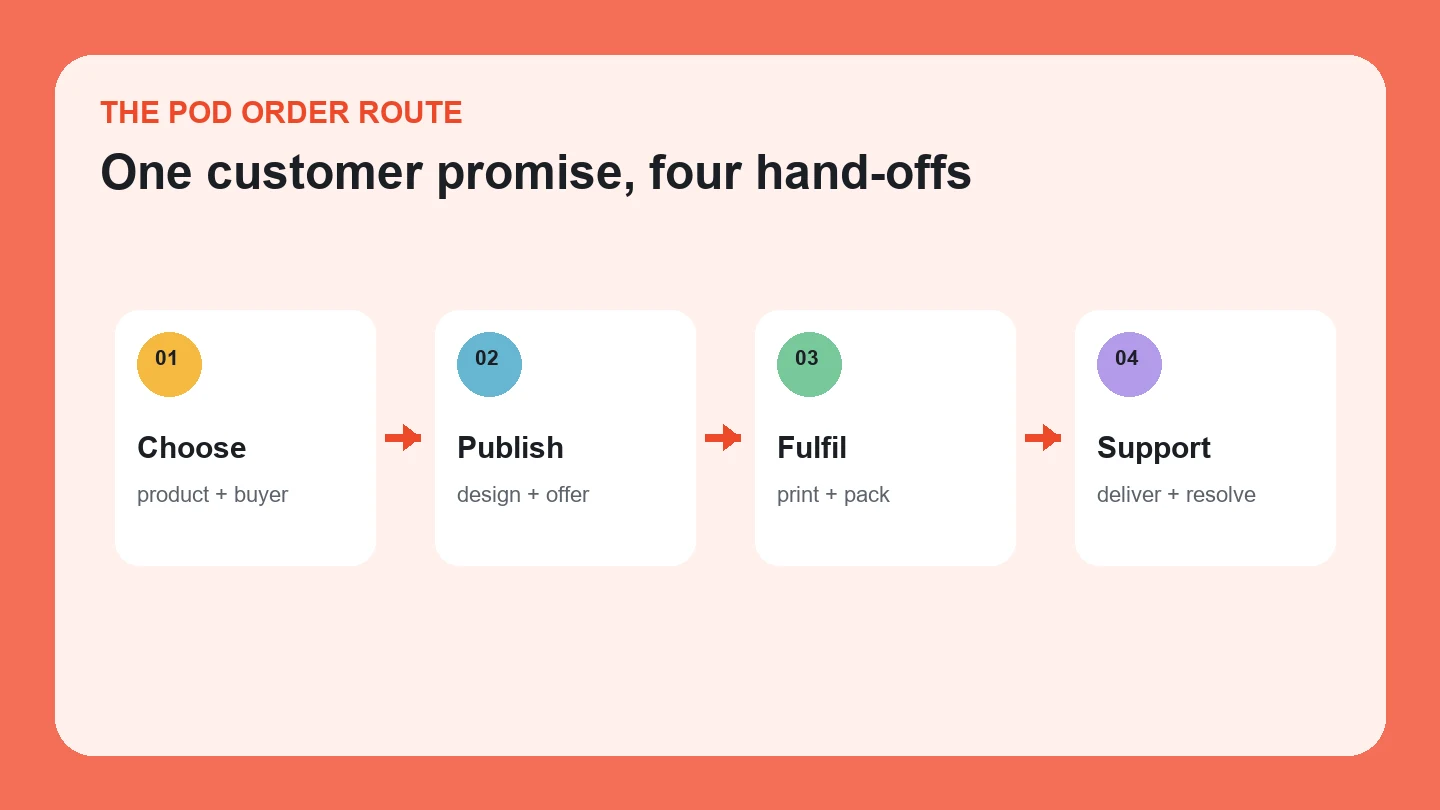
This is why the app asks about the complete route rather than a single supplier number. You are not trying to predict every future order. You are building a transparent first model that can be tested and improved.
Include the blank item, print or personalisation, packaging and any per-order handling charge. If you only have a rough estimate, label it as an assumption. A sample-based cost is more useful than a catalogue headline.
Record the route to the buyer, including delivery, tracking and replacement handling. A £6.20 delivery estimate may be reasonable for one service and wrong for another. Note the service level and the destination you are modelling.
List payment fees, platform fees and any tax treatment that applies to your situation. Keep a separate note for questions that need an accountant. The app is an educational planning tool, not tax advice.
Promotion is part of the model. If a small test costs £40 and produces eight first orders, the observed acquisition cost is £5 per order. Keep that figure separate from your product cost so you can see what changes when the promotion changes.
Allow for replacements, refunds and support time. You do not need a perfect forecast. Write down the common issue, who handles it and the cash cost of resolving one case.
Set a minimum contribution that makes the test worth running. For example, if the full variable cost is £25.00, you might set a £10.00 guardrail and test a £35.00 price. That is a decision rule, not a promise of profit.
| Order line | Example | Why record it |
|---|---|---|
| Product | £12.50 | Confirms the finished item cost |
| Fulfilment and delivery | £6.20 | Shows the route to the buyer |
| Fees and tax allowance | £2.30 | Prevents platform costs being forgotten |
| Promotion test | £4.00 | Links marketing spend to an order |
| Full variable cost | £25.00 | Creates a baseline for the price test |

Use the result to choose one gap to resolve first. You can then repeat the app after a supplier quote, sample order or small promotion test.
A ready-to-test result means you have enough evidence to run one controlled price test. A close-the-gaps result points to a missing cost, route or guardrail. A full-model result means the next useful step is gathering evidence before changing your public price. None of these labels guarantees demand or profit.
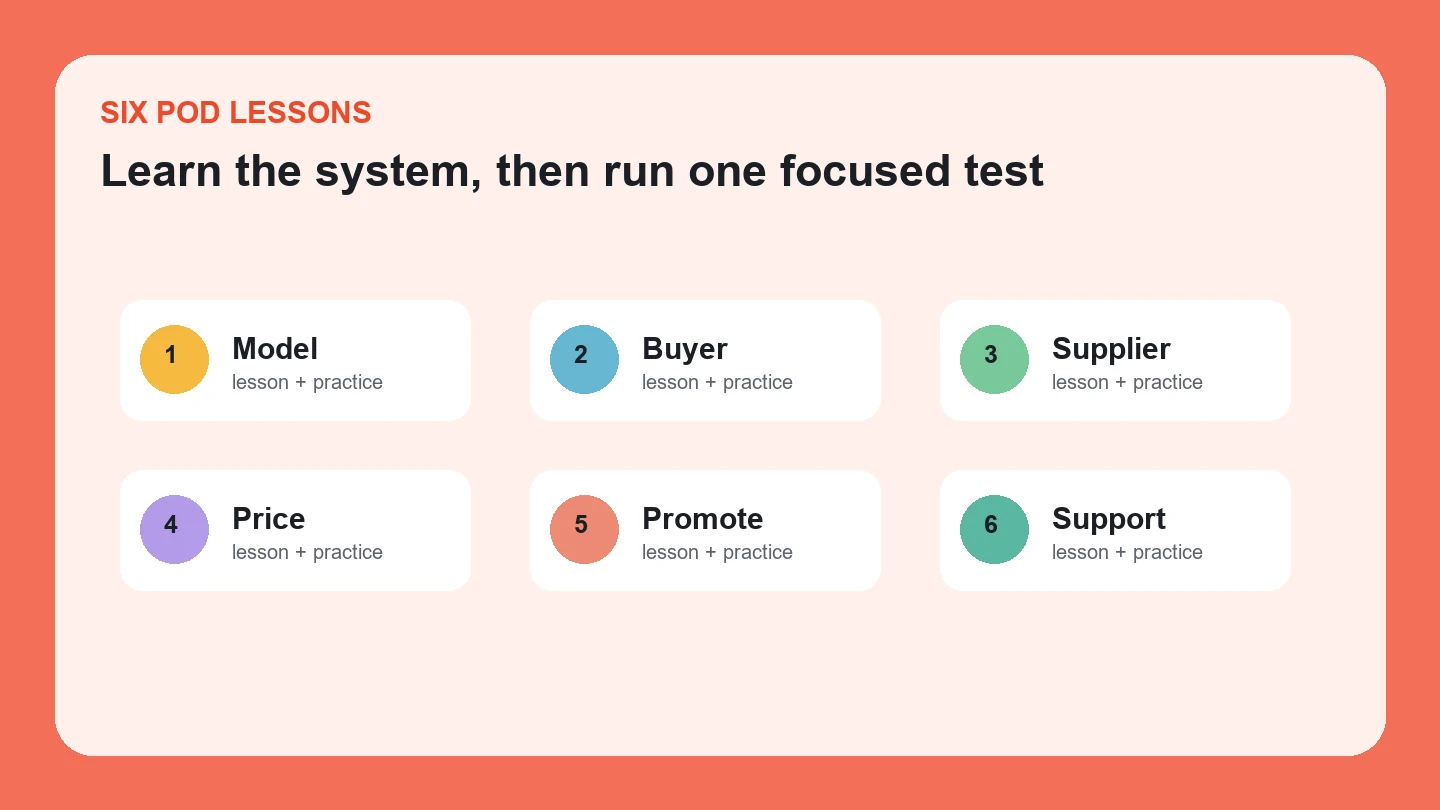
Common mistakes include copying a competitor’s number without matching their route, treating delivery as free, ignoring support time, and changing price and promotion at the same time. Keep the test narrow so you can learn what caused the change.
Keep the evidence: Save the supplier quote, delivery service, fee assumptions and test date alongside your price model. If a number changes, you will know why.
Record the tax treatment that applies to your business and market, and ask a qualified adviser when you are unsure.
Use a clearly labelled assumption, then replace it with an observed figure after a small test.
No. It organises evidence and suggests a safer next test. The final price still depends on your offer, buyer, route and observed response.
For more context, compare this exercise with the Product Viability Assessment and read the MLFG pricing philosophy. When you are ready for implementation, see pricing and contact.
Use the free POD Pricing Lab, download your result and choose one practical next test.
PREFERRED SOURCE
Like what you’re reading? Add Make Local for Global as a preferred source on Google to see more of our articles when you search.
























Build your online presence without having to figure out everything yourself.