

READY TO SELL Floral Wreaths ONLINE?
Get a store built for you in 5 days, plus training and support to help you start, run, and grow your Alternative business.

Learn how to sell floral wreaths online: choose fresh, dried or faux designs, test seasonal demand, cost the packed order and protect wreaths in transit.

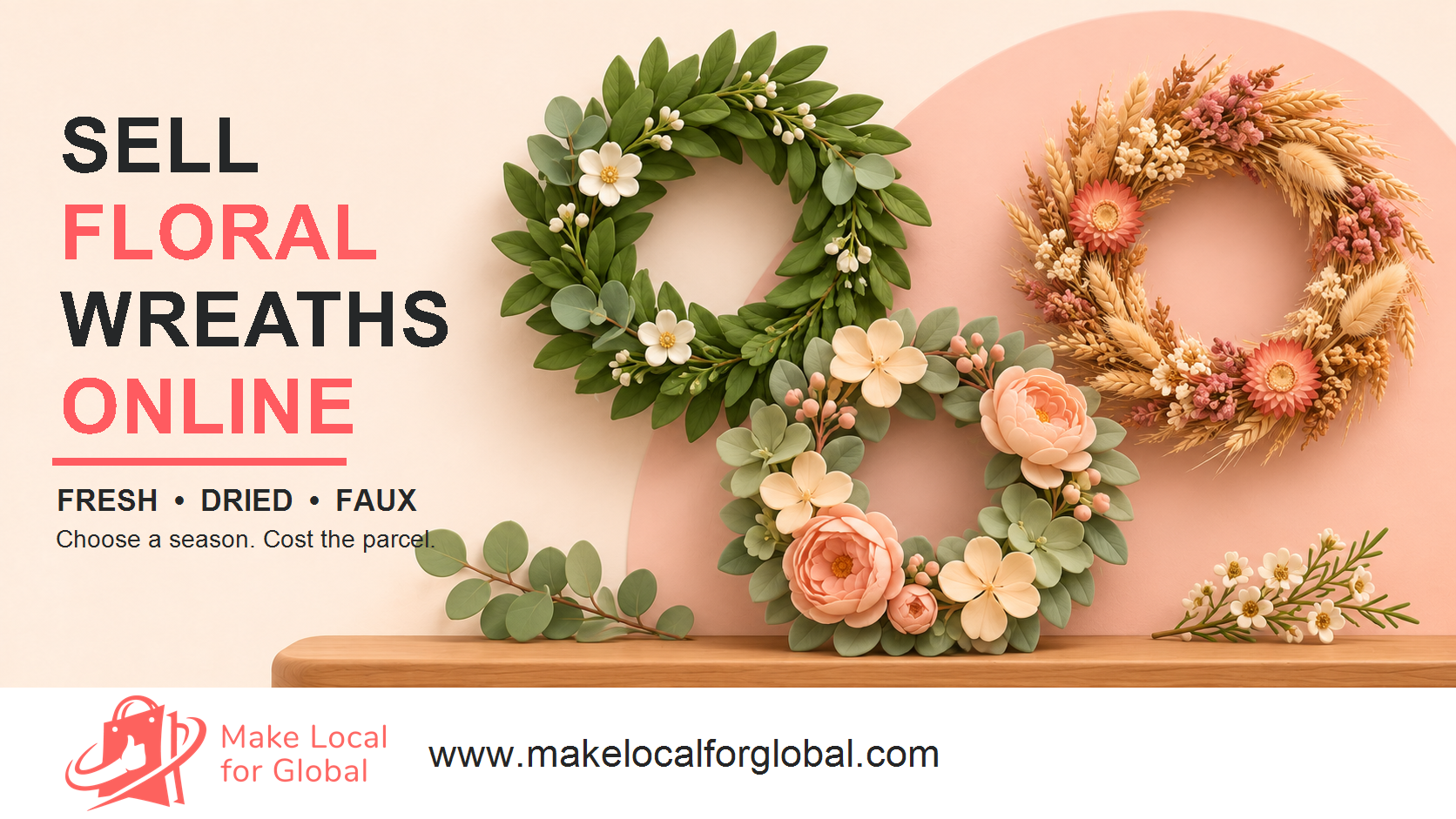
A floral wreath can be a door decoration, a seasonal gift or a made-to-order centrepiece. Selling it online means solving more than the design: buyers need to know its size, materials, care, hanging method and arrival date before they order.
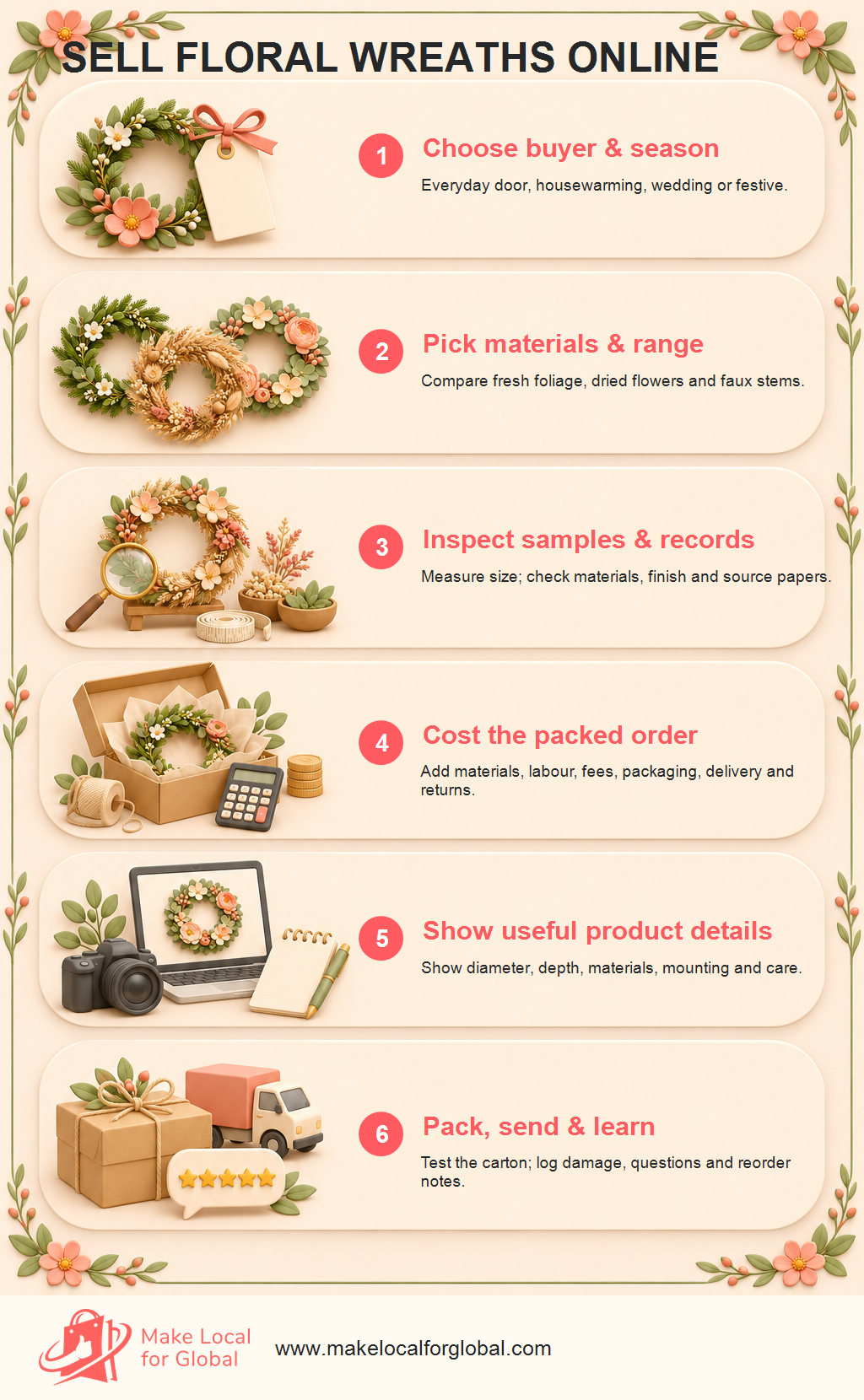
To sell floral wreaths online, choose one buyer and occasion, test a small group of designs, inspect a real sample, cost the packed parcel and publish clear delivery and care details. Fresh, dried and faux wreaths need different stock, quality and fulfilment plans, so a small focused range is easier to manage than a catalogue built from every flower and colour combination.
Use MLFG business tools to organise your product questions, first costs and launch tasks before you order stock.
“Wreath buyer” can describe several different people. One may want an everyday foliage ring for the front door. Another is looking for an autumn table decoration, a housewarming gift, a wedding welcome piece or a Christmas wreath that arrives on a chosen date. Each use changes the material, finish, price and delivery promise.
Write a short offer brief before contacting suppliers or buying wire. Include:
Make the use visible in the product description. A wreath for an outdoor door needs a truthful statement about exposure, weather and care. A delicate dried wreath may be better described for an indoor wall or a sheltered position, subject to the material maker’s instructions. Do not call a product weatherproof unless the maker’s evidence covers the actual material and construction.
Ask people who might buy the item to compare two concrete options. For example, show a small dried-flower hoop for a bedroom wall beside a fuller fresh foliage wreath for a sheltered entrance. Ask which one they would consider, what size they expect, when they would need it and what would stop them ordering.
Record answers in the words people use. “Will it fit between the door and the glass?” points to an installation question. “Can it arrive on the Friday before the party?” points to a dispatch promise. “Does it include the ribbon?” points to a contents detail. Those questions can become the first product-page improvements.
An expression of interest is not a sale forecast. A small test can use an email list, a simple landing page, an in-person craft fair or an enquiry form. Choose one measure before the test, such as qualified enquiries for a particular date, a paid sample order or a stated preference between two designs. Set a spending limit and a stop date before buying a large quantity of foliage.
Seasonal demand needs its own test. A Christmas wreath can have a short ordering and dispatch window. An everyday wreath, wedding design or housewarming gift can give the shop a longer selling season, though buyers may search for different colours and sizes. Compare the lead time for materials with the date customers expect to receive the product. Do not take more pre-orders than the team can make and ship on time.
Wreath materials change the production process and customer promise. Start with a few designs that differ in a useful way, then add options when buyer questions or sales data support the extra stock.
| Wreath type | Buyer use | Seller checks before listing |
|---|---|---|
| Fresh foliage and flowers | Seasonal entrance or event decoration | Source, freshness on arrival, natural variation, moisture, dispatch window and care instructions |
| Dried flowers and grasses | Indoor decoration or a longer-lasting gift | Brittle stems, colour variation, shedding, humidity guidance and protective packaging |
| Preserved foliage | Decorative design with treated plant material | Preservation method, care limits, supplier claims, colour consistency and country of origin |
| Faux flowers and leaves | Reusable decoration or colour-specific design | Material description, finish, shape retention, colour consistency and safe attachment |
| Wreath-making kit | Buyer who wants to assemble a design | Complete parts list, tool needs, clear instructions, sharp wire ends and age-appropriate presentation |
Explain what “fresh”, “dried”, “preserved” and “faux” mean in your catalogue. Do not use the words interchangeably. A customer choosing a wreath from a photograph cannot touch the petals or tell whether a leaf is fabric, plastic or a treated natural material.
A first range might use one ring shape in two sizes, or one core design with two colour options. A florist could test a fresh foliage wreath and a dried version with a similar palette. If you plan to grow materials yourself, compare the planning questions with our guide to selling flower seeds online; seeds are a separate product with different storage and sales checks. A maker buying faux flowers might offer one neutral design and one seasonal colour story. The point is to learn which product people understand and buy before adding many near-identical listings.
For a neighbouring home-gift category, see our guide to selling candle holders online. Wreaths need a different material and care description, but both ranges benefit from a clear first assortment, honest photographs and a tested parcel.
Make each variation traceable. Use an internal code for each size and material combination. Keep a bill of materials, supplier name, batch or purchase date, finished dimensions, care notes and packaging choice beside the code. If the supplier changes a leaf shape, wire gauge, flower colour or base, record the change and inspect the new version before reusing photographs.
An entry, core and premium structure can help a buyer compare. An entry item might use a small grapevine base with limited decoration. A core wreath could add a fuller mix of foliage and a hanging loop. A premium or bespoke option might include a named palette, a specific size or a custom ribbon. These are positions to test, not proof that buyers will pay more. Price each one with its own labour and packing time.
Bundles can work when they solve a clear occasion. A wreath with a matching gift card, spare ribbon or care card may add convenience. A bundle with a second large decorative item can change the parcel size and damage risk. Work out the new packing dimensions before advertising a set price.

There are three practical ways to supply wreaths: make each one in-house, buy finished products from a maker or supplier, or sell a kit that the customer assembles. A shop can combine these models later, but the first model should fit the time, skills and delivery promise available now.
Making after purchase can reduce the number of finished wreaths stored on a shelf. It can suit seasonal colours or custom palettes, though the maker needs a reliable stock of bases, foliage, wire, ribbons and packaging. A listing should give a realistic dispatch window based on the time needed to make, inspect and pack the order.
Time a complete sample from material preparation to final packing. Include design work, wiring, tying, cleaning loose leaves, writing the care card, photographing the finished item and packing it for dispatch. A wreath that takes 50 minutes to assemble and 15 minutes to prepare for a parcel needs a different price from a simple item made in 20 minutes.
Set a daily order limit for busy periods. If a single maker can finish eight wreaths in a normal working day, accepting twenty same-day orders creates a late-delivery risk. Keep capacity realistic for weekends, supplier delays and time spent answering customer questions.
Buying finished wreaths can speed up launch, but the seller still owns the customer-facing description and service. Ask for the exact materials, finished measurements, weight, packaging specification, lead time, colour codes, country of origin and available care information. Ask what happens if a batch arrives damaged or if the supplier substitutes a material.
Request a sample from the same production method that will supply customer orders. A one-off handmade prototype may look more carefully finished than a production batch. Agree in writing what can vary naturally and what counts as a fault: for instance, a different leaf mix may be acceptable if the overall colour and size remain as shown, while a loose hanging loop may not be.
For fresh foliage, confirm how often the supplier can replenish stock and whether a public holiday changes the cut or dispatch schedule. For dried and faux designs, ask about batch variation, replacement parts and whether a discontinued stem has an approved substitute. Do not promise a design remains available for a full season until the supplier confirms stock.
A kit has a different product promise from a finished wreath. List every part, the number of pieces, the tools required, the approximate working space and the skill level the supplier supports. Test the instructions with a person who has not seen the design. Note the step where they stop, ask a question or use a piece incorrectly.
Count the components for several kits from one batch. A missing wire ring or a short roll of binding can prevent completion and lead to a support request or refund. Package stems so a buyer can identify them without having to compare every piece with a photograph. If the kit contains sharp wire or small parts, give suitable handling instructions and check the product-safety duties for the actual item.
Use the same questions with each supplier so the answers can be compared. Ask for a written specification linked to the exact model or product code, not a general catalogue description.
Save the answers against the product code. A supplier’s “natural”, “eco”, “preserved” or “weatherproof” description is not a substitute for knowing what the product contains. If a claim will appear in your own listing, ask what evidence supports that wording and whether it applies to the complete design.
Inspect the wreath in good light against the written specification. Measure it across the widest point, across the inside opening and at its deepest point. Record the finished weight and test the hanging method on a stable fixture that suits the intended display. Do not tell customers to hang a wreath from an adhesive hook or door fitting unless that use is within the maker’s instructions.
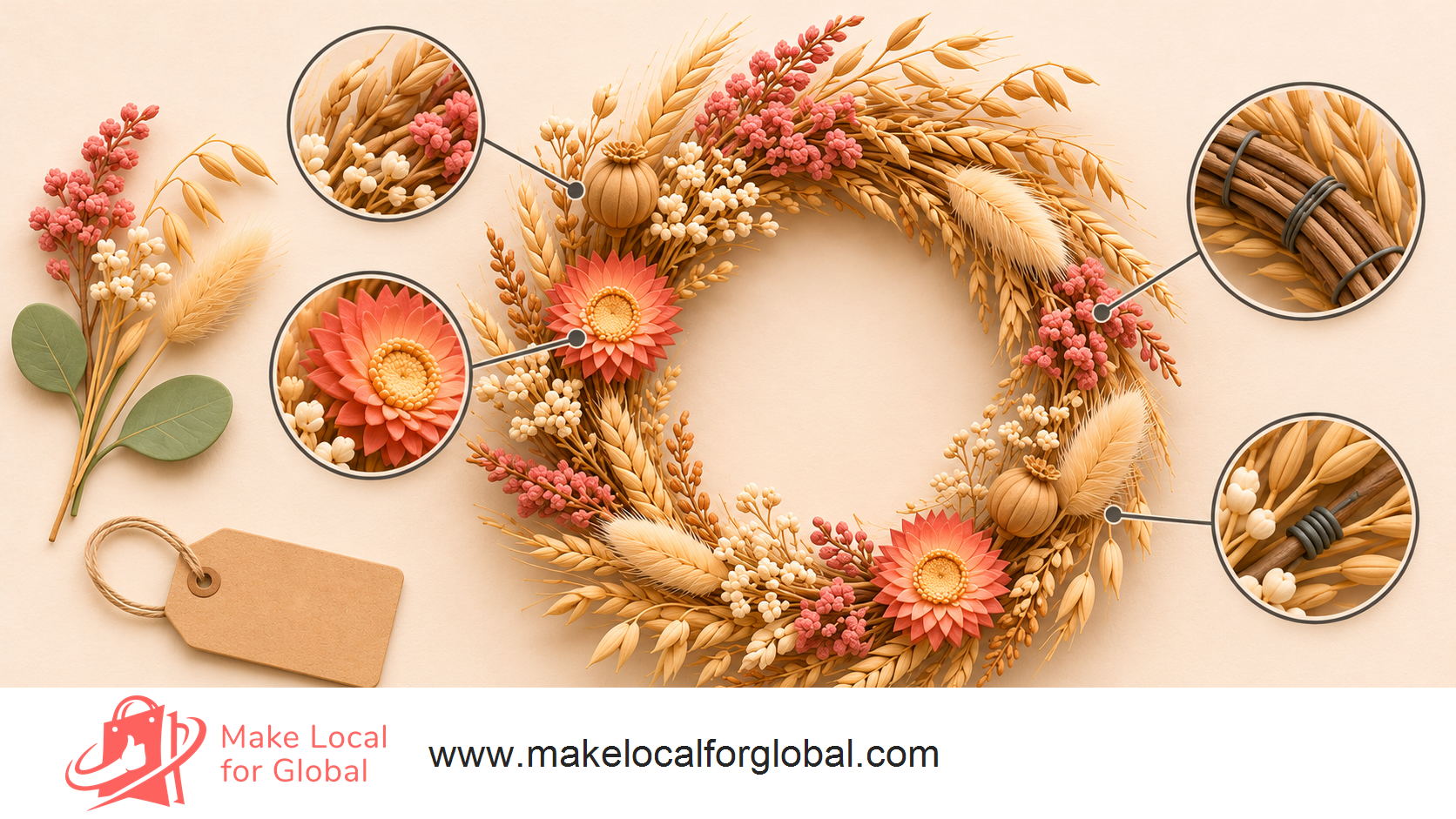
For a natural or dried wreath, look for loose leaves, brittle stems, mould, damp areas, insects, scent variation and material that rubs off during ordinary handling. Natural variation is expected, but the photographs and description should explain the range of variation customers can receive. A close-up of each material helps a buyer see whether a design is dense, airy, rustic or neatly trimmed.
For a faux wreath, inspect the wire frame, tied joints, glue points, sharp ends, colour match and retention of the flower heads. Rotate it slowly and check the rear. A clean front can hide uneven wiring or a thin back that becomes visible on a glass door. Shake it gently above a clean sheet and record any loose parts before listing the sample.
For a kit, count every piece, test the instructions and check that the tools listed are actually included. Mark each bag with a simple part name or number. Ask a beginner to build a sample without help; record any point where an instruction needs a clearer photograph, measurement or safety note.
Inspect packaging as part of the product. Put the sample in the proposed box, close the lid and check that the flowers do not touch or press against it. Turn and tilt the sealed parcel. If the wreath slides, add a retaining method that holds the base without crushing delicate petals. A one-off test parcel sent through the intended carrier route can show whether the box needs a stronger rim, a suspended support or more protection at the corners.
Keep dated photographs of the front, back, side profile, hanging method and packed parcel. Save the supplier code, checked dimensions, batch notes, defects and next action: accept, request a correction or reject. If a correction is made, inspect the next sample; a conversation alone does not prove the production version changed.
Rules depend on the species, product form, country, destination and your role in the supply chain. A dried floral wreath, a fresh foliage ring, a faux wreath and a wreath-making kit are not automatically covered by the same requirements. Check the actual product before importing, moving regulated materials or writing a compliance claim.
Ask the supplier to identify the botanical name or a sufficiently specific material description, the country of origin, whether it is fresh, dried or treated, and what documents accompany the shipment. Keep the invoice and supplier details with the product code. If the material is changed, repeat the check for the new species or source country.
Great Britain has separate import guidance for EU and non-EU plant products. The non-EU guidance lists parts of trees used as decoration and cut flowers and foliage among goods that can require a phytosanitary certificate. EU goods use a risk-based system with categories and controls that can change. Check the current GOV.UK import rules for the EU route and for non-EU imports before placing a commercial order. Ask APHA or the relevant plant-health authority if it is unclear how a finished wreath or a particular material is classified.
Certain plants and plant products need a UK plant passport when moved by professional operators within Great Britain. APHA’s plant passport guidance explains the scope and the distance-selling position. Check the current commodity list for each species. Do not assume all wreath makers need a passport, or that an assembled decorative wreath is exempt without checking its materials and route.
Northern Ireland has different plant-health arrangements from Great Britain. A seller taking orders across the UK should check the destination-specific rules before dispatching plant material. The plant-health controls apply to imports and movements; they do not turn the product page into a substitute for the required paperwork.
The Office for Product Safety and Standards says businesses that make, import, distribute or sell consumer products have responsibilities for product safety. Its business guidance describes the general safety baseline and the need to keep records identifying suppliers. Check whether a more specific rule applies to the exact product or any accessory sold with it.
Wreath-specific checks can include sharp wire ends, secure hanging points, small loose decorative pieces, stable packaging and clear use instructions. Keep claims about load capacity, outdoor use, treatment, fade resistance and material origin tied to supplier evidence. Do not advertise a decorative wreath as a toy or say a design is safe for a cot or child’s room without confirming the relevant requirements.
Keep candles, open flames and electrical lighting out of the first product range unless the business has checked the extra risks and requirements. Dried foliage can burn. Tell customers to keep decorative materials away from heat and flame when this warning fits the actual product, and do not combine a wreath with lights or batteries until the supplier documents cover the finished combination.
A wreath selling price needs to cover materials, maker time, packaging and delivery to the customer. A low-cost ring base can still produce a poor contribution if flowers take an hour to place, a large carton raises the postage band or damaged natural materials must be replaced.
Use a cost sheet for each code and size. Include:
The following is a hypothetical example for a dried wreath. The shop charges £64 for the wreath and £8.50 for delivery. The actual materials, labour, courier rate and platform charges must come from the seller’s own figures. The example is before fixed overheads and tax, and does not assume a VAT-registered seller.
| Cost or income line | Example amount |
|---|---|
| Wreath materials and base | £12.50 |
| Maker labour, 60 minutes at £15 per hour | £15.00 |
| Protective carton, insert and care card | £3.25 |
| Carrier charge for the packed order | £7.50 |
| Etsy listing fee | £0.15 |
| Etsy transaction fee, 6.5% of £72.50 order total | £4.71 |
| Etsy Payments processing, 4% plus £0.20 | £3.10 |
| Damage, waste or replacement allowance | £2.50 |
| Promotion cost assigned to this order | £4.00 |
| Total variable order costs | £52.71 |
| Customer payment for wreath and delivery | £72.50 |
| Contribution before fixed overheads and tax | £19.79 |
Etsy’s UK seller information currently lists a 6.5% transaction fee and 4% plus £0.20 payment processing for an Etsy Payments sale; transaction charges can apply to postage as well as the item price. Check the live Etsy fee information and your account before using any rate. The listing fee and any advertising, currency conversion, VAT or regulatory charges may affect the real order cost.
The arithmetic is £12.50 + £15.00 + £3.25 + £7.50 + £0.15 + £4.71 + £3.10 + £2.50 + £4.00 = £52.71. The buyer pays £72.50 including postage, leaving £19.79 before rent, tools, software, insurance, accountancy, tax and unpaid business time. That amount is contribution, not net profit.
If your material cost rises from £12.50 to £16 after a supplier changes the foliage, the same price and work would leave £16.29 before overheads. If a damaged parcel requires a replacement wreath and a second carrier charge, the cost may exceed the reserve. Test what happens to contribution when materials, dispatch, platform fees or return rates change. Use a separate row for every item that changes the cost.
If you are registered for VAT, ask an accountant to review how VAT applies to the selling price, inputs and fees. A seller who is not registered may still have VAT included in supplier invoices that cannot be reclaimed. Do not copy the illustrative total as a quote for your own shop.
Build a simple calendar from the occasions your customers name, not just from a holiday list. Include when a buyer might browse, the final order date for each material, production time, packing days and the latest safe dispatch date. A wreath arriving after a wedding or seasonal event may be unusable even if it is in perfect condition.
Use three statuses for natural materials: available, reserved for paid orders and at risk of waste. For fresh stock, ask the supplier how long material can be held under the stated care conditions. Do not infer usable life from a photograph or a supplier’s general statement. For dried foliage, protect stock from damp, crushing and direct light according to the maker’s material guidance. For faux materials, prevent bent wires and colour transfer during storage.
Forecast with small batches. If a first seasonal test receives ten qualified enquiries and three orders, record the actual dates, designs, price questions and dispatch outcomes. Compare this evidence with saved listings or likes, which do not show whether customers were ready to buy. Set a reorder trigger that accounts for supplier lead time and the number of days left in the sales window.
Made-to-order capacity needs a clear queue. Keep a visible count of paid work, promised dispatch dates, material shortages and hours available. Pause promotion or adjust the stated lead time when the queue reaches the limit. A calendar that includes school breaks, public holidays and courier collection days can prevent an unrealistic promise.
Compare the product, packaging, delivery and selling costs before you set the first price.
Choose packaging from the final wreath and carrier route. Measure the packed parcel after placing the wreath in its protective structure. Record outside length, width, height and weight. Couriers may set price or acceptance limits by dimensions, weight, destination or service; the loose wreath measurement is not enough to request a reliable quote.
A shallow box can reduce crushing if the wreath is secured in a support that holds the ring without pressing petals flat. Test a card cradle, simple tie points or a fitted insert. Keep the anchor points on the base, not on a fragile bloom or projecting seed head. Add protection where loose parts can move. Check the space above the highest flower so the lid does not touch the design.
Fresh wreaths may need a dispatch process built around their material condition and the supplier’s care instructions. Confirm how the supplier packs the product and whether a moisture barrier, liner or ventilation is appropriate for that exact design. Set dispatch days so a parcel is less likely to sit over a weekend. State the expected delivery window and the time-sensitive cut-off before payment.
Dried and faux wreaths can travel through a different parcel workflow. Protect the outer ring, add a support that prevents rotation, and keep brittle stems from catching on the carton. A kit may need separate compartments for rings, wire, stems and instructions. Add a packing checklist that includes product code, contents, condition, care card, parcel dimensions and shipping label.
Run a test shipment to a real destination before promising broad coverage. Photograph the sealed carton, inspect it when it arrives and record any broken stems, flattened flowers, loose pieces, dampness or box damage. Ask a second person to open it as a customer would and check whether the wreath can be removed without pulling on the decoration.
Write a clear delivery note. Explain whether the item arrives ready to hang, whether the customer needs a hook, what areas you ship to, how the parcel is tracked and what to do if it arrives damaged. State any access or signature requirement. If the item is fresh, give a direct contact method for time-sensitive issues.

A good product page shows what the customer will receive. A title should name the design, type and a useful feature. For example: “Dried Meadow Flower Wreath, 35 cm, Blush and Straw” works only if the size, materials and palette match the actual item. “Beautiful wreath gift” gives a buyer little information for comparison.
Start the description with the product type, intended display location, size and contents. Then explain the materials, colour variation, hanging method, care, packaging and estimated dispatch time. If you use natural materials, say that a finished wreath may vary slightly from the sample and show the range in photographs. If the product is one of a kind, photograph the exact unit that will ship.
A useful specification list can include:
Do not invent dimensions from the artwork. Measure a real unit and use the same method on future batches. If a wreath is handmade, give a measured range when the variation is real and repeatable. A phrase such as “approximately 35 cm across” should reflect actual checks, not a guess.
Give useful image captions and alt text. “Dried floral wreath with straw flowers and dusty coral petals” describes a close-up. “Three wreath types: fresh foliage, dried flowers and faux blooms” describes a comparison image. Do not repeat the full search phrase in every image description. Put a measurement diagram near the size details and photograph the back, edge and hanging point when those details affect the purchase.
“A dried flower wreath made with a straw-coloured ring, pale grasses and dusty coral blooms. The sample measures 35 cm across, 8 cm deep and weighs 420 g. Each wreath is made to order, so the placement of individual stems will vary slightly; the colour family and overall shape remain as shown. Hang indoors using the integrated loop. A hook is not included. Packed in a shallow protective carton and dispatched within the lead time shown at checkout. Keep away from damp areas and direct heat; follow the care card included with the parcel.”
Every detail in this example needs verification before a seller uses it. Replace the sample figures, materials, care, display location and lead time with information for the actual product. If the wreath is fresh, the care and dispatch copy will need a different explanation.
An own-brand shop offers control over product pages, variations and customer messages. A marketplace can give shoppers a familiar search and checkout, yet its listing rules, fees, returns process and delivery settings need to fit a fragile or time-sensitive product. Local florists, garden centres, wedding suppliers and craft fairs can let customers see texture and scale before buying.
Compare channels using the full work they create:
Do not put the same listing on many channels before stock and dispatch records can remain accurate. A fresh wreath shown as available in three places can be oversold after a material shortage. Start with a primary channel, a backup route and a stock process that updates each order.
For wholesale, prepare a sheet with product codes, sizes, materials, minimum order, carton dimensions, lead time, care and trade terms. Ask retailers how they handle seasonal stock, display samples, breakage and unsold products. A wholesale price needs to cover the margin expected by the retailer and the maker’s full production cost.
Use one page for one clearly different design or a well-managed group of variations. A dried wreath made for an indoor wall may need its own page from a fresh seasonal ring with a short delivery window. Avoid making separate near-identical pages for every synonym. Give each page a clear title, a useful description and photographs that match the search intent.
Google Search Central’s SEO Starter Guide recommends descriptive titles and useful page content. Write the main phrase naturally in the title or opening and use related terms only where they help describe the actual product. Related search phrases could include “dried flower door wreath”, “fresh foliage wreath delivery”, “wreath-making kit” and “everyday floral wall decoration”. Choose phrases that match products you stock and questions you answer.
Plan useful content around buyer decisions: how to measure a door, what fresh and dried wreaths need for care, how a wreath is packed, what a wreath kit contains or how to choose a display location. Add internal links to related shop categories or a relevant seasonal collection when they make the next step easier. Do not add a list of unrelated keywords beneath every description.
For images, use a descriptive file name and text alternative. Google’s image guidance advises providing context and useful alt text. Compress image files so product photographs load smoothly, keep the original colour truthful and show the customer the actual material. Do not hide key information in text inside the image alone.
If you claim a wreath is recycled, sustainable, locally sourced, compostable or better for the environment, keep evidence and state what the claim covers. The ASA’s current guidance on environmental claims warns that broad claims need substantiation and a clear basis. A natural-looking photograph does not prove that the product has a lower environmental impact.
Before checkout, give the customer the business name and contact details, product description, total price, delivery cost, payment methods, dispatch window and cancellation information. GOV.UK’s distance-selling guidance lists information traders need to provide and explains the usual online cancellation period.
The cancellation rules have exceptions for goods made to a customer’s specification or clearly personalised, and for some goods liable to deteriorate rapidly. The Consumer Contracts Regulations set out those exceptions. Do not assume a standard design is exempt just because it is made after an order, decorated by hand or contains fresh material. Check how the rule applies to the exact sale and explain the terms accurately. Customers’ rights for faulty or misdescribed goods still need to be handled correctly.
GOV.UK’s returns and refunds guidance explains distance-sale returns and refund processes. Use it alongside advice relevant to your own business. State who pays return postage when the customer changes their mind, what to do for a damaged parcel, how quickly the seller responds and whether the item is made to an individual specification.
If a wreath arrives damaged, ask for the order reference and clear photographs of the item and parcel. Compare them with the dispatch checklist and sample record. Decide whether to replace, refund, repair or request more information under the relevant consumer rules. Make the customer’s next step clear; do not make them negotiate with the carrier before the seller reviews the issue.
Choose one occasion and a buyer. Review current listings for size, materials, delivery terms, care, photograph quality and customer questions. Record what sellers say, but treat listing pages as descriptions, not proof of sales. Speak to potential buyers or local florists and ask them to compare two specific designs and prices.
Contact suppliers with the same specification questions. Ask for a sample from the strongest candidate. Make a list of required plant-health checks if natural materials cross a border or move within a regulated supply chain. Do not order a large batch until the material, price, lead time and documents are clear.
Measure the sample, record its weight and inspect the front, rear, base and hanging method. Photograph the materials and any normal variation. Try the chosen carton and protective insert. Arrange one test shipment through the intended service and note whether the wreath arrives intact and can be unpacked easily.
Check current plant-health rules for the species, country and route. Ask a competent adviser or relevant authority if you cannot establish which certificate, passport or record applies. Save written supplier answers with the product code.
Time the making and packing process. Enter material, labour, packaging, selling fees, carrier cost, promotion and a reserve for waste or damage. Compare a standard and custom order. Decide the quantity or daily capacity you can support without missing the stated dispatch window.
Write one product page with verified measurements, materials, care, hanging information, contents and dispatch details. Take photographs of the actual wreath from several angles. Ask someone unfamiliar with the item to read the page and say what they expect to receive. Correct any gap between the listing and their understanding.
Publish one offer or a small pre-order test only after the stock, payment, dispatch and customer terms are ready. Set a spending cap and a stop date. Track qualified enquiries, orders, cancellations, delivery outcomes, questions and damage reports. Record which design and dispatch promise people chose.
At day 30, compare the result with the decision rule. Continue if the material supply, time, price and parcel route work together. Change one variable if the questions show a clear problem, such as uncertain size or colour. Pause if the margin depends on unpaid time, a plant-health question remains unresolved or the carrier cannot meet the promised delivery window.
Once the first product sells, write down the steps that made the order work. Record the supplier, product code, design recipe, unit time, care text, box dimensions, parcel price, dispatch service and customer questions. A simple sheet can show material use, orders due, stock at risk and margin after actual fees.
Review the record when a supplier changes a plant species, flower colour, base, binding wire or packaging. Update the listing and photograph when the visible product changes. If the parcel service changes its size limits or price, recalculate delivery before accepting the next season’s orders.
Ask each buyer which information helped them choose and what they still needed to ask. If several customers ask about the ring size, add a diagram. If a colour appears different when delivered, improve natural-light photographs and explain variation. Use questions to improve one part of the range before adding several new designs.
When the range and delivery process are ready for a dedicated shop, MLFG’s ecommerce apps can help organise business tasks. If the website, product pages or selling setup need a discussion, contact MLFG or review the current pricing options and decide what fits the business.
When the product, paperwork and delivery route are clear, discuss the practical steps for putting the offer online.
Yes, if your materials, production, parcel and dispatch process work for the condition of the actual wreath. Check supplier care information, set a narrow delivery window where needed and test a real parcel. Check plant-health requirements for the species and route before importing or moving regulated material.
Start with one buyer and occasion, then test two or three designs that differ in material, size or finish. A narrow range makes it easier to measure labour, take accurate photographs and manage stock. Add a new style when buyer questions or order records support it.
They may have a different storage and dispatch process, but dried flowers can be brittle and shed. Test the finished item in the intended box and through the intended carrier. Do not rely on the word “dried” as proof that a parcel will arrive in good condition.
Record outside diameter, inside opening, depth and finished weight. Explain whether the measurements are approximate and how natural or handmade variation affects the finished item. Add a scale photograph or diagram to help a buyer compare the wreath with their door or wall.
It depends on the species, whether the material is fresh or processed, its origin, the destination and your role in the supply chain. Check current government import and plant-passport guidance for each material. Ask the supplier or plant-health authority to confirm any requirement you cannot resolve from the official list.
Use “bespoke” only if the buyer’s specification genuinely changes the product. A wreath assembled after an order from a standard design or colour list may still be a standard product for consumer-contract purposes. Check the relevant rules before deciding that cancellation rights do not apply.
Price the outer carton, protective support, packing time, carrier charge and any delivery-related platform fee. Use the final parcel size and weight. Keep a separate line for replacement or damage costs when your order records show that risk.
Keep the ring from moving without compressing the flowers. Protect projecting stems, allow clearance above the highest part and test the sealed parcel. Inspect the item after a real test shipment before using that box for customer orders.
Offer a small number of options only if materials and production time can be tracked. Set out the available colours and the information needed from the buyer. Price added design and message time, then show realistic photographs of the finish.
Online cancellation rules have exceptions for some goods made to a customer’s specification, clearly personalised or liable to deteriorate rapidly. The exact result depends on the product and sale. Check the current rules and do not assume every made-to-order or handmade wreath is exempt.
Work back from the delivery date using supplier lead time, production capacity, packing time and carrier collection days. Publish a final order date that leaves room for those steps. Close orders or show a longer delivery window when the production queue reaches its limit.
Yes, if the parts list, instructions, tool needs and safety information are clear. Test the kit with a beginner and check that each unit contains the full set of parts. Cost customer support and packing separately from a finished wreath.
Show the front, back, edge, hanging point, close-up materials and a scale reference. Photograph the actual item in natural light and include a plain background image that shows the full circle. Identify any styling items that are not included.
Record paid orders, product code, time spent making and packing, material waste, postage, fees, customer questions, dispatch performance, damage and cancellations. Compare actual contribution with the cost estimate and update it before expanding the range.
A floral wreath shop becomes easier to run when the design, material record, product page and parcel describe the same item. Start with one clear occasion, test the real wreath and use buyer questions to decide what belongs in the next range.
PREFERRED SOURCE
Like what you’re reading? Add Make Local for Global as a preferred source on Google to see more of our articles when you search.

Build your online presence without having to figure out everything yourself.